# IPO Related Articles

HTX News Center provides the latest articles and in-depth analysis on "IPO", covering market trends, project updates, tech developments, and regulatory policies in the crypto industry.

From 'Cash Incinerator' to 'Money Printing Machine': ChangXin Technology's Remarkable Turnaround, Raking in 50 Billion in Half a Year

Changxin Technology: From "Money Incinerator" to "Money Printer" in Six Months Changxin Technology, a Chinese DRAM chipmaker once dubbed a "money incinerator" for years of massive losses, has staged a staggering financial turnaround. Its updated IPO prospectus reveals explosive 2026 first-half results: revenue forecast of 110-120 billion yuan (up 613-677% year-on-year) and net profit of 50-57 billion yuan (up 2244-2544% year-on-year). This half-year profit rivals that of major state-owned energy giants. The reversal stems from a historic memory chip super-cycle fueled by AI. Massive demand from AI servers, consuming 8-10x more DRAM than traditional servers, coupled with a supply crunch as major players shift capacity to premium HBM, has driven DRAM prices to multi-year highs. As China's only large-scale DRAM IDM (integrated design and manufacturing) firm, Changxin was positioned to capitalize. With upgraded product lines (DDR5/LPDDR5) and high capacity utilization, it achieved both volume and price increases, doubling its global market share to 7.67% in just half a year. This follows a decade of heavy investment and losses totaling 36.65 billion yuan, a gamble led by Chairman Zhu Yiming, who famously vowed to take no salary until the company was profitable. The IPO aims to raise 29.5 billion yuan, implying a valuation that some analysts project could reach 1-2 trillion yuan long-term. Debate persists over the sustainability of profits given DRAM's cyclicality, but supporters point to structurally sustained AI demand and Changxin's strategic national importance. The story is a textbook financial comeback, rewarding persistent investment in a critical industry.

marsbit05/18 13:04

From 'Cash Incinerator' to 'Money Printing Machine': ChangXin Technology's Remarkable Turnaround, Raking in 50 Billion in Half a Year

marsbit05/18 13:04

China's AI Circle Has Just Established a Pecking Order, and Capital Is Already Changing the Rules Again

The article describes how the valuation logic for major Chinese AI model companies has undergone three dramatic shifts between 2022 and 2026, driven by capital's changing priorities. The first phase (around 2022) was **technology-driven valuation**, where funding was based on model performance and benchmark scores. This logic was disrupted when DeepSeek's R1 model demonstrated that comparable capabilities could be achieved at a fraction of the cost, challenging the notion of technical superiority as an unassailable moat. The second phase shifted to **IPO window-driven valuation**. Following favorable listing conditions in Hong Kong, capital flowed to companies like Zhipu and MiniMax with the clearest path to a public listing. However, this focus on liquidity over fundamentals became apparent as their Annual Recurring Revenue (ARR) lagged far behind international peers like Anthropic. The third and current phase is **national strategy-driven valuation**. This shift was marked by the state-backed "Big Fund" leading a major investment in DeepSeek, signaling that leading domestic AI models are now viewed as strategic national assets comparable to semiconductor manufacturing. This new logic, combined with soaring US valuation benchmarks (e.g., OpenAI at $850B), propelled the combined valuation of China's top AI firms ("The Four Dragons"/"Five Strong") past 1 trillion RMB. The article presents a "pricing leap model": each shift is triggered by a key event that invalidates the old logic, leading to rapid capital reallocation under a new narrative before its flaws (particularly the gap in fundamental ARR metrics) become evident. It concludes that the next major test for these valuations will be a return to scrutinizing core business fundamentals, specifically ARR growth, suggesting a fourth pricing shift is imminent.

marsbit05/18 10:42

China's AI Circle Has Just Established a Pecking Order, and Capital Is Already Changing the Rules Again

marsbit05/18 10:42

Conversation with Patagon Founder: Revealing the Inside Story of Anthropic's Secondary Market

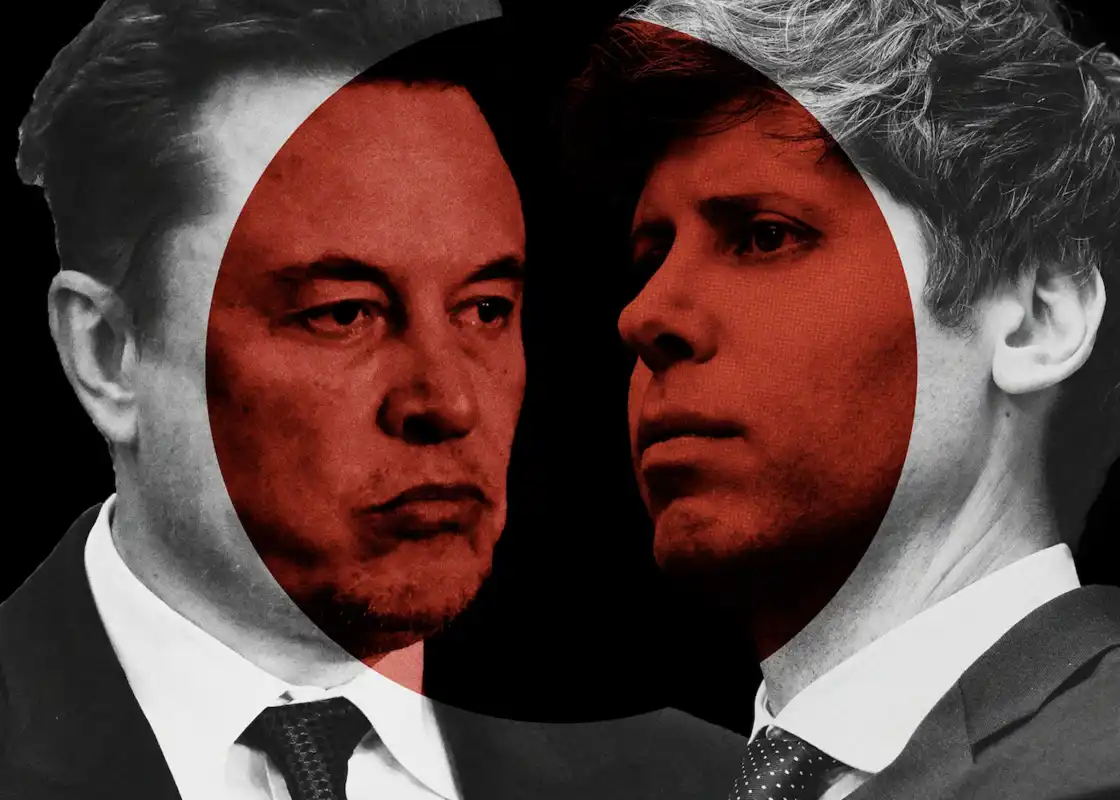
**Summary: Inside Anthropic's Massive, Opaque Secondary Market** In a revealing interview, Patagon founder Dio Casares pulls back the curtain on the booming, high-risk secondary market for shares in companies like Anthropic. This private market, fueled by companies staying private longer and massive funding rounds, is estimated to involve hundreds of billions of dollars. Casares distinguishes between two types of "secondary" trading: 1. **Company-approved SPV (Special Purpose Vehicle) sales:** Where new capital flows into the company, often facilitated by select private equity firms. Anthropic supports this to manage liquidity and pre-IPO selling pressure. 2. **The "gray" market:** Platforms like Hive and Forge that match buyers and sellers, often creating pricing confusion and competing with official funding rounds. These intermediaries are widely disliked by companies. The market structure is complex and fragmented, relying heavily on personal connections. Brokers connect buyers and sellers, often layering multiple SPVs to pool capital, with single transaction fees as high as 10%. Strikingly, some finance professionals earn more from this trading than from their primary investment roles. **Key risks highlighted include:** * **High Fraud Rates:** An estimated 10-20% of transactions involve fake stock certificates or sellers who take payment without having the shares. * **Complex, Risky Structures:** Nested SPVs, "forward contracts" on employee equity, and tokenized private equity create layers of opacity. This is exemplified by a recent incident where an xAI employee's shares were revoked after an espionage allegation, leaving buyers empty-handed. * **Post-IPO "Settlement Hell":** After an IPO, delays in distributing shares through multiple SPV layers and decisions by fund managers to hold onto shares could trigger years of lawsuits as downstream investors are locked out. **For small investors** holding positions through tokenized vehicles or layered SPVs, it's often impossible to verify the underlying asset. Casares advises caution: if the investment feels wrong, consider exiting. As the private market now surpasses IPO fundraising, this "wild west" ecosystem faces a looming reckoning. While it will likely professionalize, the post-IPO period for a company like Anthropic could unleash a wave of disputes, exposing the vulnerabilities built into this frenzied, largely unregulated marketplace.

marsbit05/17 01:08
Conversation with Patagon Founder: Revealing the Inside Story of Anthropic's Secondary Market

marsbit05/17 01:08

Winter for Crypto IPOs: Consensys and Ledger Withdraw Applications

The crypto IPO window is tightening significantly in 2026, marked by prominent companies delaying or pausing their public listing plans. Following a successful 2025 "harvest year" that saw Circle, Bullish, and Gemini go public amidst a bull market, the tide has turned. Consensys, developer of MetaMask, recently postponed its IPO until at least fall 2026. Hardware wallet leader Ledger also suspended its planned US listing due to unfavorable market conditions, with Kraken having previously delayed its own plans. This shift is driven by a cooling market in 2026, characterized by a significant Bitcoin price correction, declining trading volumes, and reduced investor risk appetite for crypto stocks. The poor post-IPO performance of 2025 listings like Circle and Bullish, which saw major share price declines, has heightened investor caution. This contrasts sharply with the current AI sector, where companies like SpaceX, OpenAI, and Anthropic are commanding massive valuations and investor enthusiasm based on narratives of stable, exponential growth. Crypto companies now face pressure to transition from hype-driven models to demonstrating reliable cash flows and robust compliance. While the paused IPO plans may lead to valuation resets and affect ecosystem liquidity, they also accelerate industry consolidation toward stronger, more compliant infrastructure players. A potential recovery in Bitcoin's price and clearer regulations could reopen the IPO window in the latter half of 2026.

marsbit05/16 10:59

Winter for Crypto IPOs: Consensys and Ledger Withdraw Applications

marsbit05/16 10:59

Breaking: OpenAI Undergoes Major Reorganization, President Brockman Assumes Command

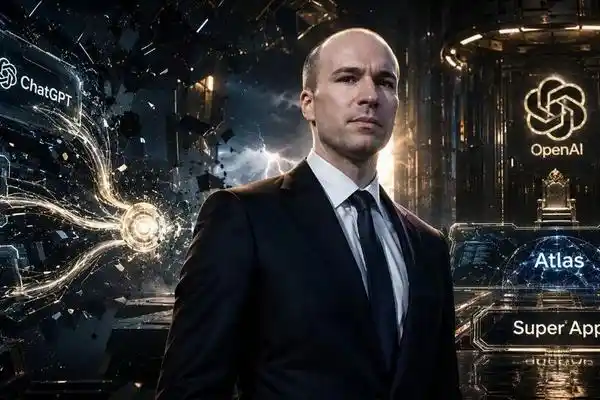
OpenAI has announced a major internal reorganization just months before its anticipated IPO. The company is merging its three flagship product lines—ChatGPT, Codex, and the API platform—into a single, unified product organization. The most significant leadership change involves co-founder and President Greg Brockman moving from a background technical role to take full, permanent control over all product strategy. This follows the indefinite medical leave of AGI Deployment CEO Fidji Simo. Additionally, ChatGPT's longtime lead, Nick Turley, has been reassigned to enterprise products, with former Instagram executive Ashley Alexander taking over consumer offerings. The consolidation, internally framed as a strategic move towards an "Agentic Future," aims to break down internal silos and create a cohesive "Super App." This planned desktop application would integrate ChatGPT's conversational abilities, Codex's coding power, and a rumored internal web browser named "Atlas" to autonomously perform complex user tasks. The reorganization occurs amid significant internal and external pressures. OpenAI has recently seen a wave of high-profile departures, including Sora co-lead Bill Peebles and other senior technical leaders, leading to concerns about a thinning executive bench. Externally, rival Anthropic recently secured funding at a staggering $900 billion valuation, surpassing OpenAI's own. Google's upcoming I/O developer conference also poses a competitive threat. Analysts suggest the dramatic restructure is a pre-IPO move to present a clearer, more focused narrative to Wall Street—streamlining operations and demonstrating decisive leadership under Brockman to counter internal turbulence and intense market competition.

marsbit05/16 07:09

Breaking: OpenAI Undergoes Major Reorganization, President Brockman Assumes Command

marsbit05/16 07:09

活动图片