OpenAI Century Lawsuit, Musk Loses

marsbitPublished on 2026-05-19Last updated on 2026-05-19

Abstract

"OpenAI Century Lawsuit, Musk Loses: Jury Unanimously Rejects Elon Musk's $150 Billion Case" In a rapid verdict, a jury has unanimously dismissed Elon Musk's $150 billion lawsuit against OpenAI and its founders, Sam Altman and Greg Brockman. The case, centered on accusations of violating charitable trust and unjust enrichment, was rejected purely on procedural grounds: Musk filed the lawsuit too late. California law sets a three-year statute of limitations for such claims, and evidence showed Musk was aware of OpenAI's shift towards a for-profit model as early as 2021, yet did not sue until February 2024. The trial, spanning three weeks with testimony from numerous Silicon Valley figures, revealed internal details about OpenAI's founding and transition. Despite the legal loss for Musk, the trial exposed internal tensions and questions about governance. The ruling removes a major legal obstacle for OpenAI's planned trillion-dollar IPO. Meanwhile, the AI race intensifies, with both OpenAI (valuing GPT-5.5 and massive cloud compute deals) and Musk's xAI (preparing a SpaceX-xAI merger IPO and training multiple large models) on paths toward potential trillion-dollar valuations. Musk's legal team has announced plans to appeal.

Original Editor: Moses Peaches

Original Source: New Zhiyuan

Just now, the Silicon Valley century trial has reached its conclusion!

The $150 billion sky-high lawsuit filed by Musk against OpenAI was unanimously dismissed by the jury in less than two hours.

All charges were dismissed without exception.

And the sole reason that completely shattered this lawsuit: Musk filed too late, the statute of limitations had expired......
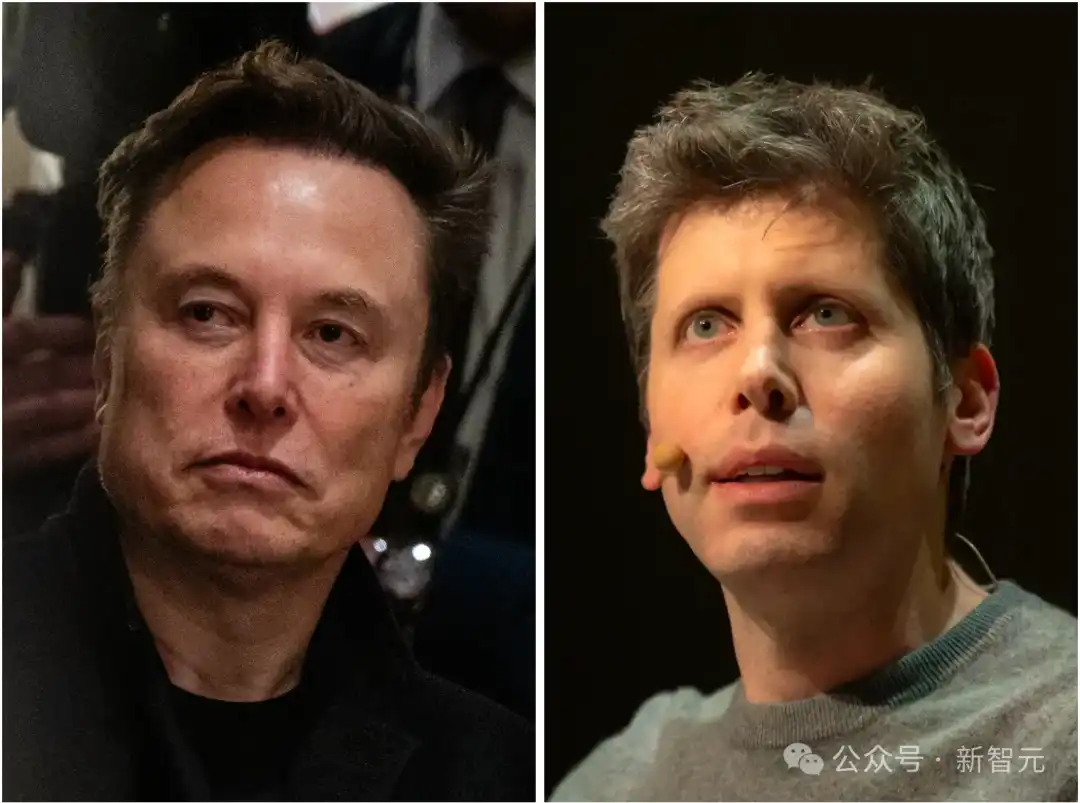
This might be the most absurd courtroom scene of 2026.

Before this, it was a high-profile tug-of-war——

Three weeks of trial, 11 days of testimony, dozens of top Silicon Valley figures taking turns on the stand, hundreds of pages of private emails, text messages, and diaries turned inside out.

However, just as everyone held their breath, the jury swiftly and decisively rejected it all.

Judge Yvonne Gonzalez Rogers stated in court that she fully agreed with the jury's conclusion.

The verdict sparked an uproar online. Countless netizens expressed confusion: Was the entire three-week spectacular trial just a farce?
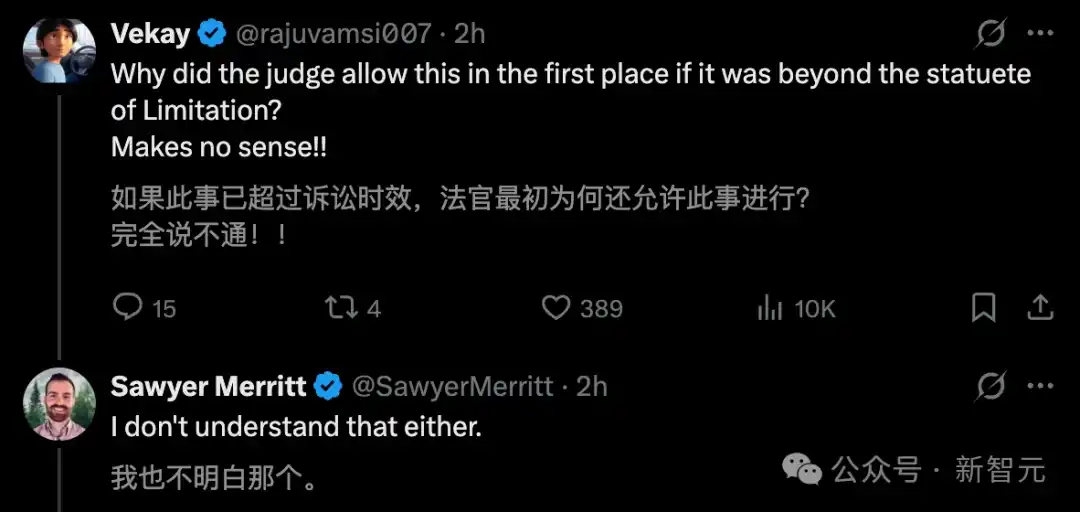

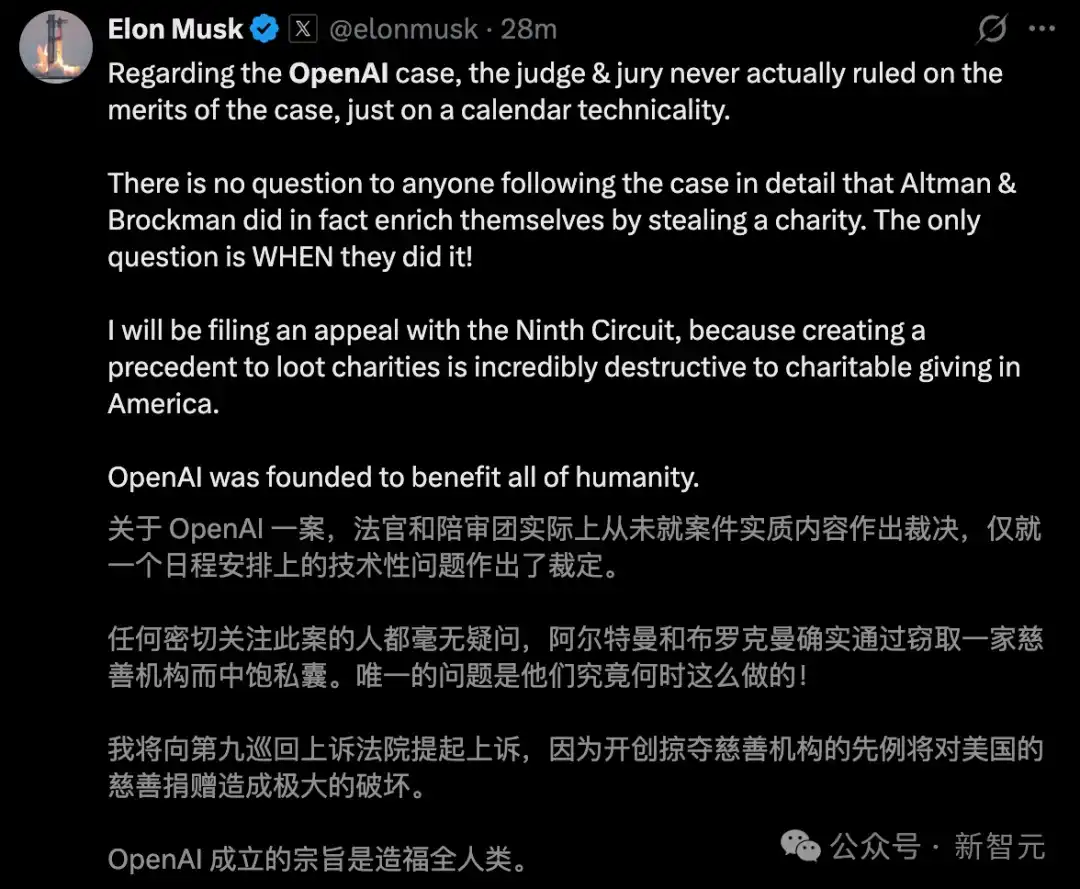
In response, an indignant Musk posted again——

Altman and Greg Brockman's actions amount to stealing a charity for personal enrichment.

Next step: continue appealing.
OpenAI Century Lawsuit, All Three Men Absent

Monday morning at 8:30 AM, the jury began closed-door deliberations.

At 10:23 AM Pacific Time, court clerk Edwin Cuenco handed the judge a note.

The judge announced: "We have a result."

From deliberation to verdict: 90 minutes.
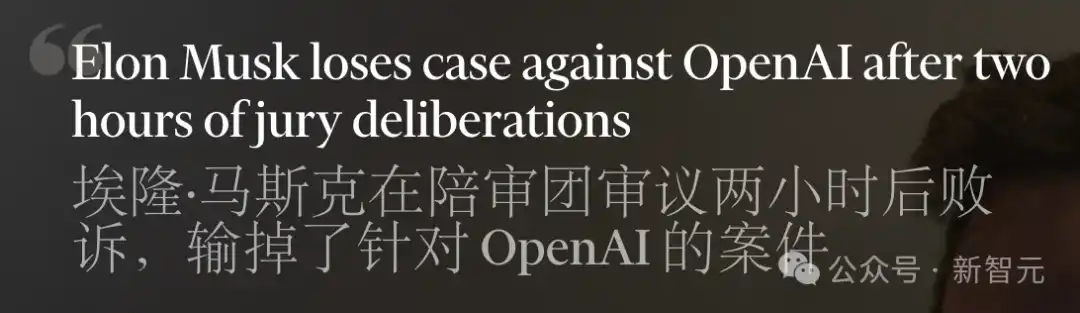
This speed was absurdly fast. Musk alone spent three days on the witness stand.

Brockman testified for five hours.

The massive accumulation of evidence and testimony from three weeks of trial was essentially glanced over by the jury, who made their decision primarily based on the timeline.

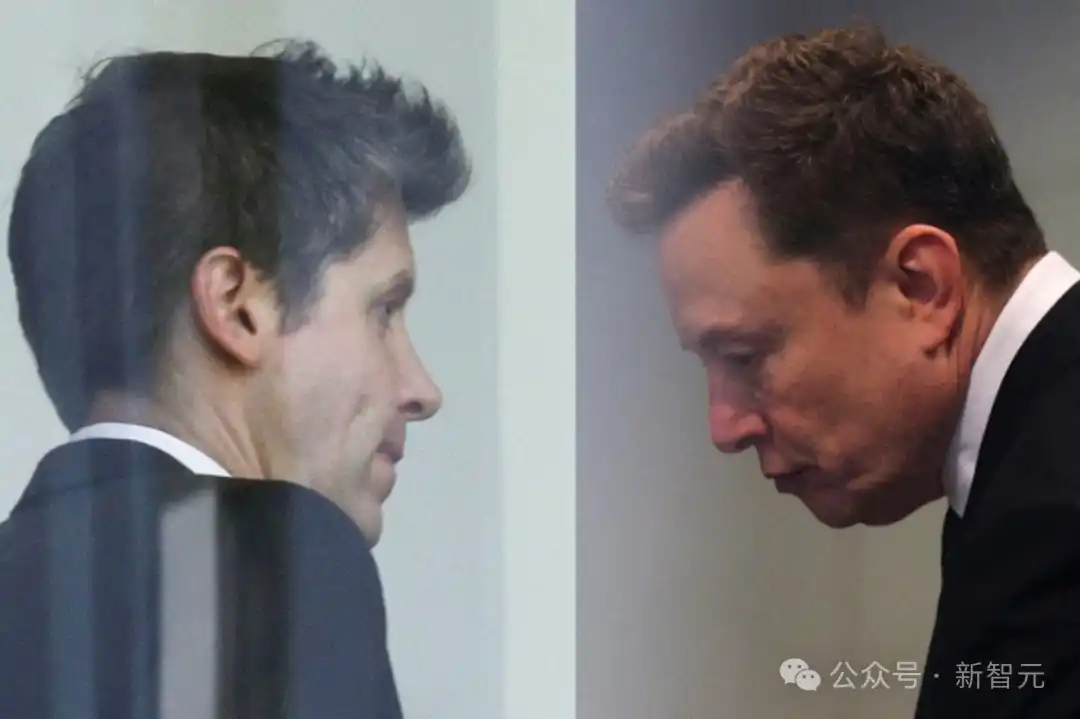
Even more surreal, at the moment of the verdict, the three protagonists of this century battle—Musk, Altman, and Brockman—were not present in the courtroom.

A $150 billion lawsuit verdict, plaintiff and defendant collectively absent.
Both sides' legal teams, however, provided ample emotion.

During a brief court recess after the verdict, lawyers for OpenAI and Microsoft hugged and patted each other on the back in the courtroom corridor in celebration.

Musk's lead lawyer, Marc Toberoff, walked out of the courtroom doors and, faced with swarming reporters, uttered only two words.

"Appeal."

Musk, Defeated by Time

The jury's verdict logic was actually very simple.

California law stipulates that the statute of limitations for lawsuits alleging breach of charitable trust is "three years," and for unjust enrichment, two years.

And OpenAI's lawyers proved a crucial fact. Musk knew about OpenAI's shift towards for-profit as early as 2021.

He himself sent a text to Altman, reading "I am troubled to see OpenAI having a $20 billion valuation" "It's a wolf in sheep's clothing."

That was around late 2022 to early 2023. But Musk didn't file the lawsuit until February 2024.

The jury determined that the time limit had expired, the lawsuit was too late.
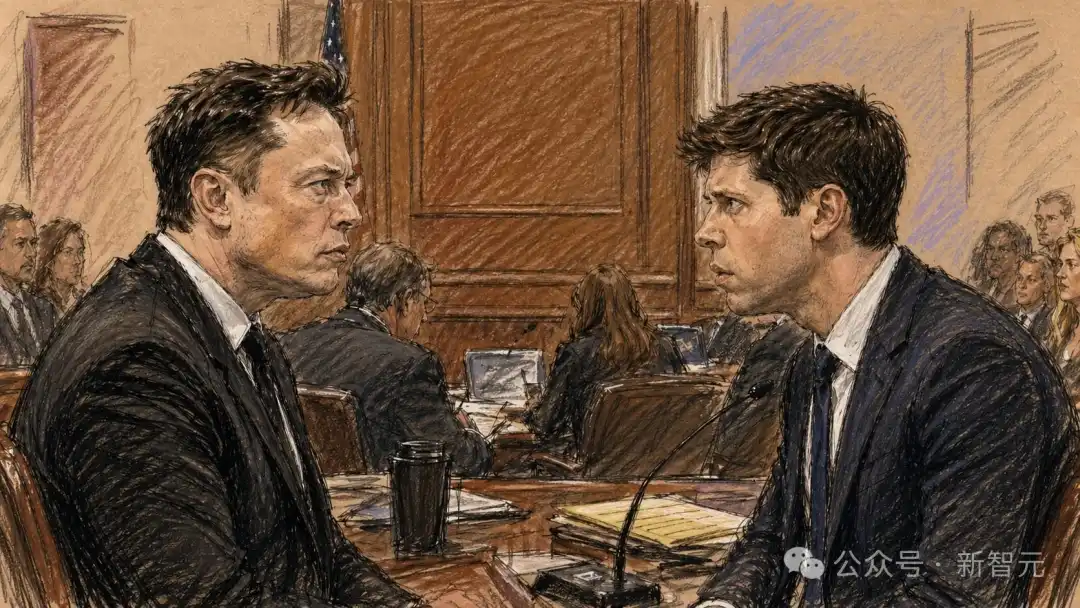
Musk's explanation in court was that he kept believing Altman's assurances until Microsoft's $10 billion investment landed in 2023, and he realized "the for-profit entity was the tail wagging the dog."

"Suspecting someone might steal your car and someone actually stealing your car are not the same thing," Musk said on the witness stand.

"If I had known they had stolen the charity, I would have sued long ago."

But the jury wasn't buying it.

Due to this procedural hurdle of the statute of limitations, the jury never entered substantive deliberations.

Meaning, Musk's three core charges—"breach of charitable trust," "unjust enrichment," and "Microsoft's aiding and abetting"—were never formally discussed.

All those explosive testimonies, staggering figures, dramatic fallouts—in legal terms, they might as well have not happened.

That Night of the Mansion Party, OpenAI Turned Towards For-Profit

Although the jury didn't adjudicate the substantive charges, the three-week trial laid bare OpenAI's most secretive inner workings over the past 11 years.

Some details even the old Silicon Valley gossipers hadn't heard.

In the summer of 2017, OpenAI's AI defeated the world's top players in Dota 2.

Musk immediately sent an email: "Time to take the next step. This is the trigger event."
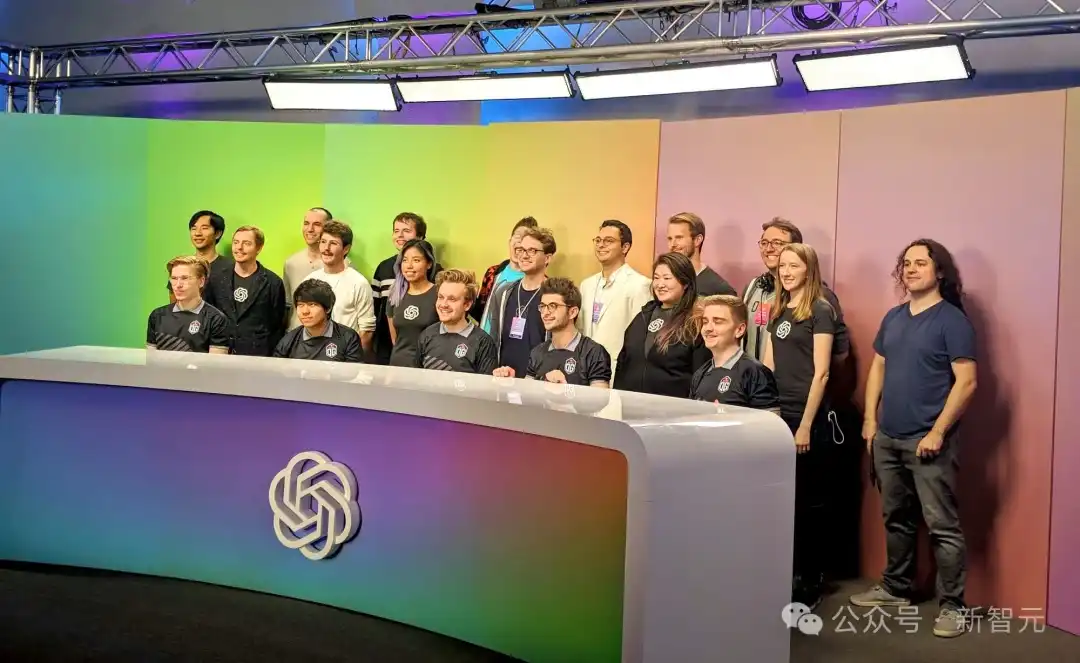
He called the core team to his 16,000-square-foot mansion in South Bay, known in the circle as the "Haunted House."

Brockman recalled in his testimony that upon entering, he saw confetti scraps and plastic cups from the previous night's party scattered across the floor.

In this living room amidst the party aftermath, the discussion to move OpenAI towards a for-profit model officially began.

Musk's lawyer, Steven Molo, projected Brockman's electronic diary onto the courtroom screen during the trial. One entry written during negotiations that same year read: "What gets me to $1 billion?"

Another from November 2017: "Turning into a B Corp without him (Musk) is morally bankrupt."
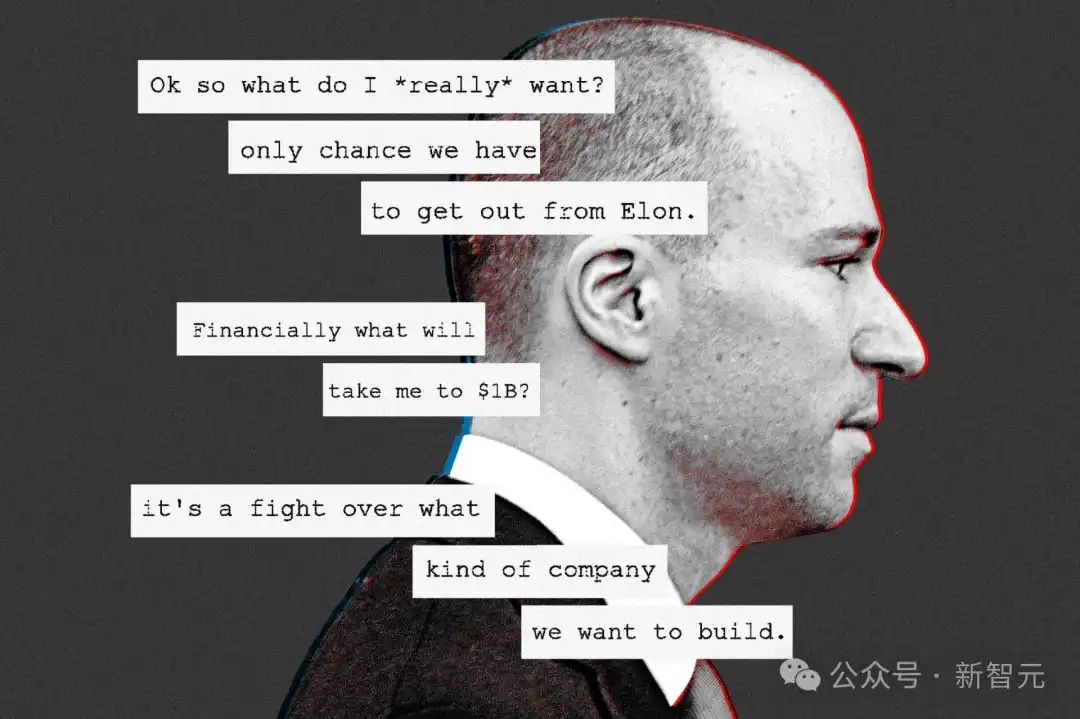
Nine years later, he sits on $30 billion in equity while under cross-examination.

Court evidence also unveiled other hidden plotlines——

Musk and Zuckerberg exchanged texts discussing a joint acquisition of OpenAI;

OpenAI even seriously considered using cryptocurrency for funding in its early days. The financing path from crypto to Microsoft's $13 billion is itself an epitome of an era.

This trial could be a documentary, but the jury turned the page in 90 minutes.

The Trillion-Dollar IPO Is About to Begin, There's No Pause Button in the Finals

After the trial concluded, OpenAI lawyer Savitt told reporters——

OpenAI is an organization driven by a non-profit mission, has been in the past, and will continue to be in the future.

Microsoft also swiftly issued a statement: "The facts and timeline of this case have been clear for some time, and we welcome the jury's dismissal of these claims on timeliness grounds."

Although OpenAI's win was not a graceful one.

The revelations during the three-week trial——

Brockman cashing out $30 billion at zero cost, Altman lying about safety approvals, Cerebras related-party transactions, Ilya's 52 pages of evidence, Murati's "chaos and distrust" allegations—this content won't vanish from public memory just because the "statute of limitations expired."

When Altman was asked on the witness stand, "Are you completely trustworthy?" he couldn't even give a straightforward "yes."

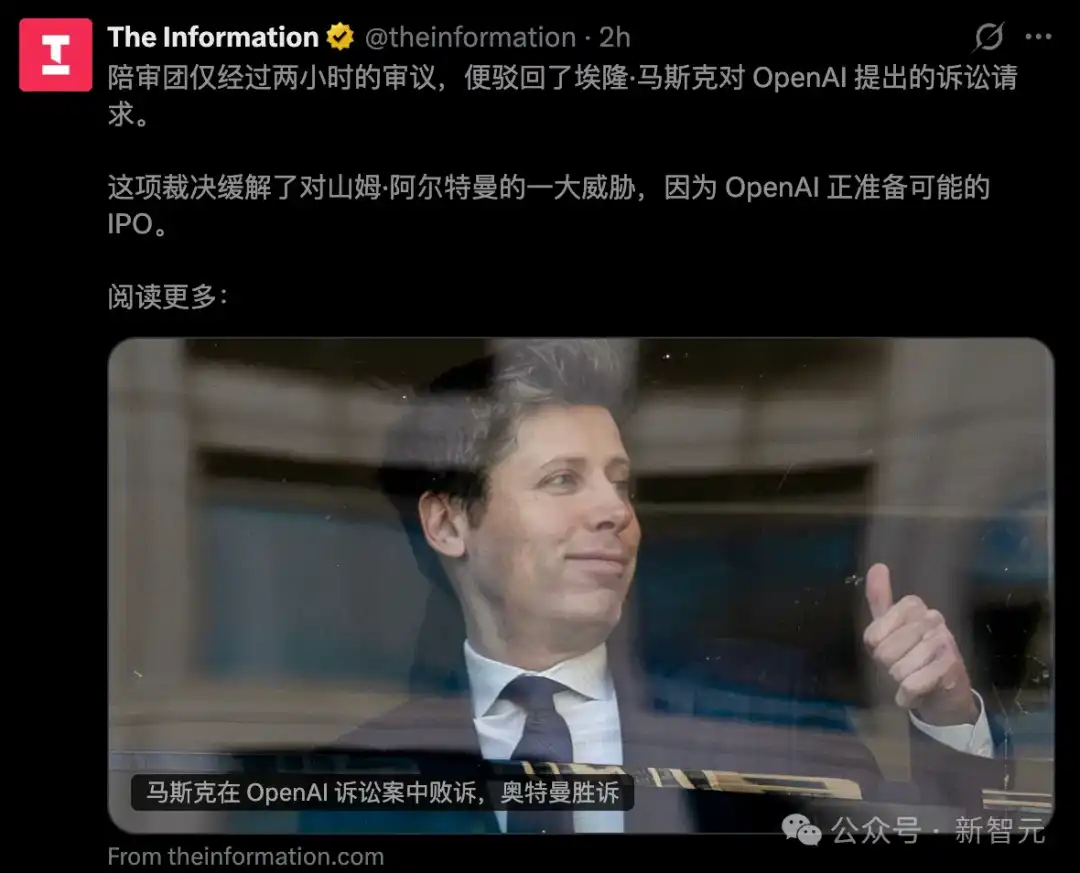
But the biggest impact of this verdict is clearing the biggest legal obstacle on OpenAI's path to an IPO.
ASI Ultimate Showdown, Imminent

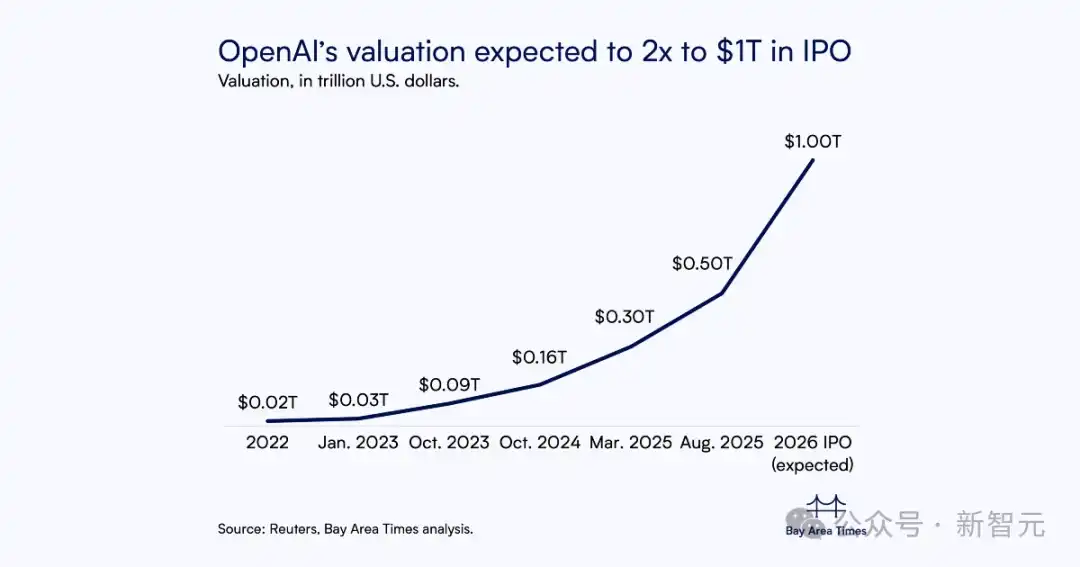
This March, OpenAI just completed a $122 billion funding round, valuing it at $852 billion.

The 2025 for-profit restructuring hasn't been overturned, Microsoft's over $100 billion partnership hasn't been revoked, Altman and Brockman haven't been ousted from management. The road to a trillion-dollar IPO is now clear.

Supporting this astronomical valuation is OpenAI's true trump card:

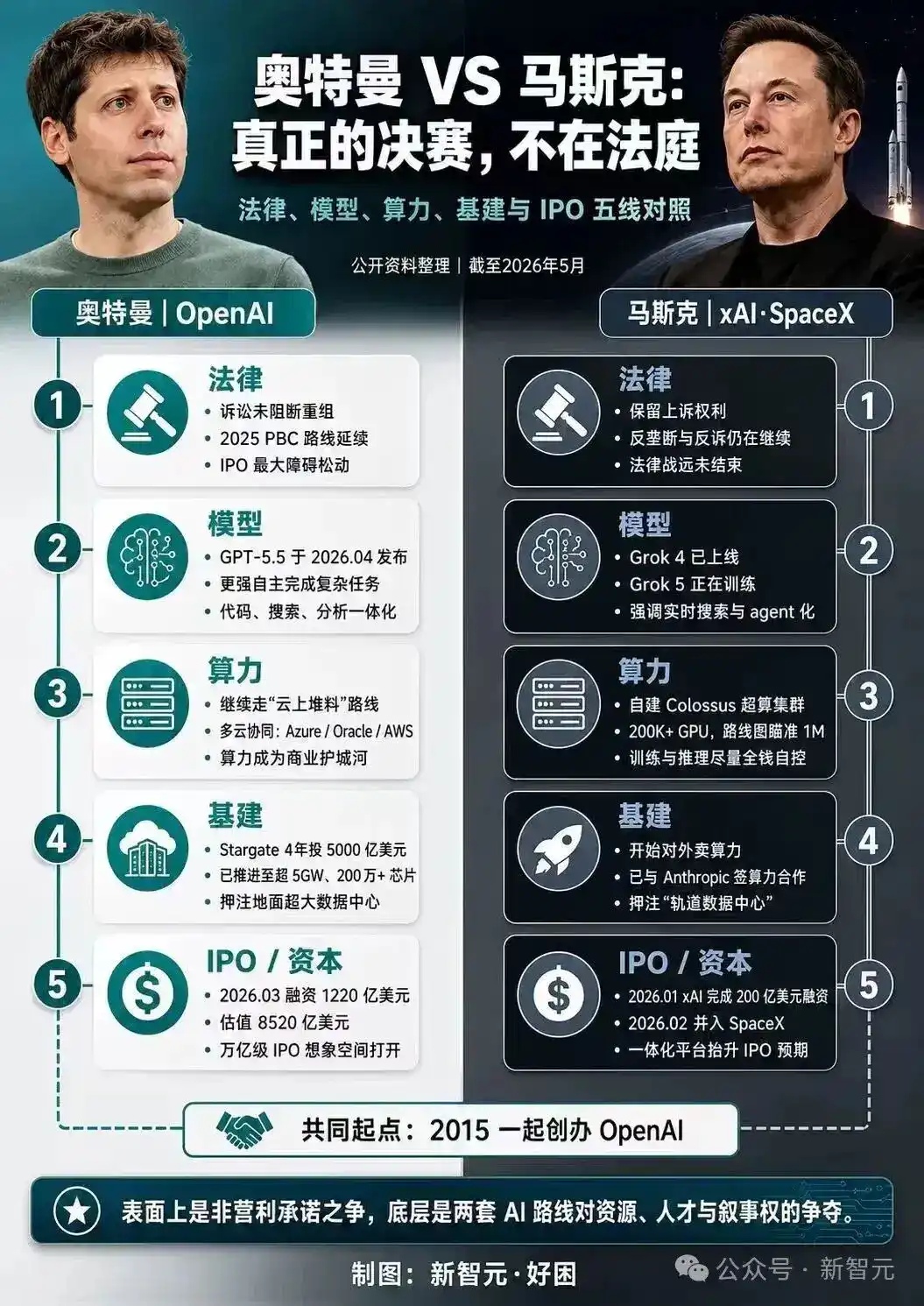
GPT-5.5, released in April, which focuses on independently completing complex tasks without humans feeding step-by-step instructions, from writing code to data analysis in one go.

In terms of compute power, Altman is betting on the traditional path: throwing money at cloud computing.

The scale of compute procurement has ballooned to the level of $600 billion, spanning five cloud providers including Microsoft Azure, Oracle, and AWS.
On Musk's side, SpaceX secretly filed for an IPO in April; after merging with xAI, the valuation has reached $1.25 trillion, with the prospectus expected to be public as soon as this week.

In terms of models, they are taking a more radical path: 7 large models training simultaneously, burning roughly $1 billion per month.

From the full series of Grok 4.4 to Grok 5, among which Grok 5 is several times the parameter scale of GPT-5.5, all running on Colossus 2.
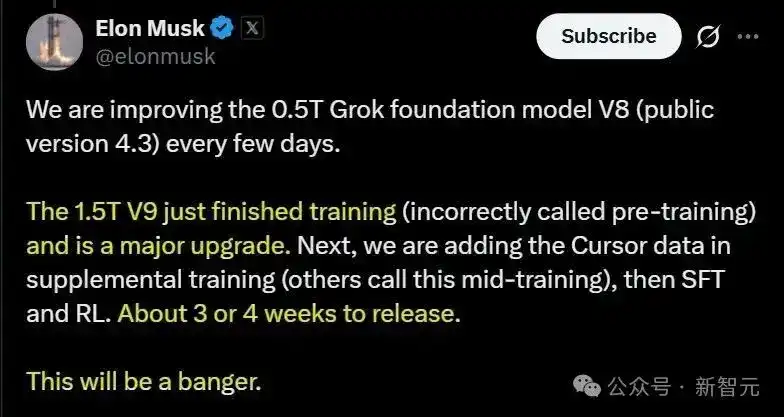
But one detail is even more intriguing: In early May this year, Colossus 2 signed a compute power contract with Anthropic, beginning to sell compute externally.

This means Musk isn't just building models; he's becoming an AI era arms dealer——

Training his own models with one hand, selling compute power to competitors with the other. This kind of playbook has almost no precedent in tech history.

Now, the two men who once co-founded OpenAI together are each sprinting towards their own trillion-dollar IPOs.
But the lawsuit isn't truly over.

Musk's lawyers have explicitly reserved the right to appeal, although the judge's attitude makes a turnaround seem slim.

More importantly, this is just one of multiple fronts——

xAI's antitrust lawsuits against OpenAI and Apple, xAI's trade secret misappropriation lawsuit against OpenAI, OpenAI's countersuit against Musk, are all still ongoing.

The legacy of this trial lies not in the verdict itself.

It was the first time the core governance issues of the AI industry were brought into a federal courtroom for the whole world to see.

On the road to ASI, issues of trust and safety won't disappear with a single verdict.

As for Musk, the next episode's "appeal" storyline isn't finished.

References:

https://www.bloomberg.com/news/articles/2026-05-18/elon-musk-loses-case-against-sam-altman-to-force-openai-overhaul

https://www.cnbc.com/2026/05/18/musk-altman-openai-trial-verdict.html

https://www.reuters.com/legal/government/elon-musk-loses-lawsuit-against-openai-2026-05-18/

https://www.wired.com/story/musk-v-altman-jury-verdict/

https://nypost.com/2026/05/18/business/elon-musk-loses-lawsuit-against-openai-in-unanimous-verdict/

Related Questions

QWhat was the primary reason the jury dismissed Elon Musk's lawsuit against OpenAI?

AThe jury dismissed the lawsuit because it was filed after the statute of limitations had expired. California law has a three-year limit for breach of charitable trust claims and a two-year limit for unjust enrichment, and Musk sued in February 2024 despite evidence showing he was aware of OpenAI's shift to a for-profit structure as early as 2021.

QWhat significant event happened at Elon Musk's mansion in 2017 regarding OpenAI's future?

AIn 2017, after OpenAI's AI defeated top Dota 2 players, Musk convened the core team at his mansion to initiate formal discussions about transitioning OpenAI into a for-profit entity.

QHow did the trial's outcome potentially impact OpenAI's business plans?

AThe dismissal of the lawsuit is seen as removing a major legal obstacle for OpenAI's planned initial public offering (IPO), which is targeting a trillion-dollar valuation.

QWhat unconventional strategy is Elon Musk's xAI employing in the AI competition according to the article?

AxAI is not only training its own large language models but has also started selling computing power from its Colossus 2 supercomputer to competitors like Anthropic, positioning itself as an 'arms dealer' in the AI era.

QWhat was a notable absence during the reading of the verdict in the trial?

ANone of the three main figures in the case—Elon Musk, Sam Altman, or Greg Brockman—were present in the courtroom when the verdict was announced.

Related Reads

Robots Begin to 'Consume Data': The Hidden Production Chain from Indian Data Factories to Billion-Dollar Humanoid Robots

Robots have started to 'consume data,' driving the formation of a new industrial supply chain focused on producing training data for embodied AI. Unlike large language models, which are trained on vast internet text corpora, embodied AI models face a 'data desert' in the physical world. This has created a massive demand for first-person perspective video data (Ego Data), captured by workers wearing cameras in places like Indian garment factories. Companies like Neocambrian AI are establishing 'data factories' where workers perform standardized tasks (e.g., sorting clothes, kitchen organization) to generate thousands of hours of video. Research, such as NVIDIA's EgoScale, demonstrates that scaling this human demonstration data predictably improves robot performance, particularly for dexterous manipulation. This has validated a training path combining large-scale human data for pre-training with smaller amounts of robot-specific data for fine-tuning. The value of different data types varies significantly, forming a 'data pyramid.' The base consists of low-cost, large-scale internet and Ego Data. Higher layers include more expensive motion-capture data (e.g., from data gloves), simulation/synthetic data, and the most costly and scarce layer: real robot teleoperation data. This demand has spawned a layered ecosystem of data suppliers: low-cost data factories, motion capture and alignment specialists, robot-native teleoperation service providers, simulation data companies, and platforms aiming for data standardization. Robot companies themselves are adopting a 'layered procurement' strategy: outsourcing generic Ego Data while building in-house capabilities for robot-specific adaptation data and the critical deployment/failure data generated in real-world applications. The industry is shifting focus from hardware and basic mobility to the data pipelines required for general-purpose capability. While parallels exist to data labeling companies like Scale AI in the LLM boom, the physical complexity of robot data—involving action success ambiguity and sim-to-real gaps—requires more integrated solutions for data collection, annotation, and a continuous feedback loop. The race is on to build the data engines that will teach robots to operate reliably in the unstructured real world.

marsbit2h ago

Robots Begin to 'Consume Data': The Hidden Production Chain from Indian Data Factories to Billion-Dollar Humanoid Robots

marsbit2h ago

Spicy Commentary | Michael Saylor's 'Player Talk'; 60-Year-Old Aunt Liquidated After 'Scamming a Young Man'

**"Spicy Commentary": Three Tales of Crypto's Wild Week** This week's "Spicy Commentary" column highlights three dramatic stories from the cryptocurrency world. First, **MicroStrategy's Michael Saylor** addressed the controversy over his company potentially selling Bitcoin. At the BTC Prague event, he clarified, "I never said the company can't sell Bitcoin. I told *you* never to sell *your* Bitcoin." This "do as I say, not as I do" stance was criticized by netizens as peak linguistic gymnastics, noting a history of him previously stating the company would "never" sell. Second, a **bizarre fraud case** emerged from Beijing. A 60-year-old woman, obsessed with getting rich from crypto but unwilling to risk her own savings, posed online as the 20-something "god-daughter" of a high-ranking official. She catfished a young man, convincing him to give her over 200,000 yuan for fabricated emergencies. She then invested all the stolen money into cryptocurrency with 10x leverage, only to lose everything in a market crash. The woman was sentenced to four years in prison for fraud. Finally, a **sobering trader's tale** surfaced on Reddit. A user posted "Tale of a crypto trader," confessing their net worth had plummeted from a peak of $45 million to roughly $17,200, primarily due to holding meme coins too long. The post, described as a crypto "book of confessions," sparked reactions ranging from sympathy to critique about greed, poor risk management, and the perils of treating meme coins as long-term investments instead of taking profits. The column concludes that this week featured masterful rhetoric, elaborate scams, and extreme financial volatility, stitching together another chapter in crypto's unpredictable theater.

Foresight News2h ago

Spicy Commentary | Michael Saylor's 'Player Talk'; 60-Year-Old Aunt Liquidated After 'Scamming a Young Man'

Foresight News2h ago

Tremble Humans, AI Continues Its Accelerated Sprint

Trembling, Humans: AI Continues Its Accelerated Sprint Yes, AI is still rapidly accelerating. While deep learning seemed to stall quickly in its early years, large models after years of development show no sign of hitting their ceiling. At the Zhiyuan Conference 2026, the focus is on enabling AI to move from the digital world into the physical world. Scaling Law remains effective, continuing to drive advancements in both large language models and multimodal models. The industry is now entering a phase of pursuing World Models, though unresolved technical paths and data issues mean this exploration may take 3-5 more years. Concurrently, breakthroughs in Agents are accelerating AI's real-world application in fields like healthcare and meetings. Making Agents truly useful requires key hardware-software co-design, evident from the strong presence of chip vendors at the conference. We stand at a new historical threshold where AI is becoming a foundational force reshaping the world. The first day of the conference highlighted AI's evolution from "knowing how to chat" to "knowing how to work." Scaling Law persists, World Models are the next key battleground, and Agents are transitioning from usable to好用 (user-friendly). Scaling Law is not ending but diversifying. New models like Anthropic's Fable 5 demonstrate scaling through parameter size, synthetic data, and reinforcement learning. Advancements in AI Coding and Agent deployment are enabling a trend of AI self-evolution, potentially allowing AI to take over digital world iterations. World Models represent the next frontier for large models extending into the physical realm, but no current model is truly impressive at solving real-world problems. Technical consensus is lacking, with debates on data sources (video, simulation, real-world). Different approaches are emerging: language-centric, pixel-centric, 3D-structure-centric, and visual-representation-centric models. Zhiyuan Institute is exploring a fifth path: unified latent space modeling fusing language and visual representations, and introduced its own under-development World Model, Physis-v0.1. On the product side, Agents are key to bringing AI into daily life. Since 2025, the "Year of the Agent," products have become more proactive and capable of complex tasks. Zhiyuan showcased four vertical Agents for cardiac diagnosis, autonomous research, meeting summarization, and protein risk discovery. However, technical challenges remain, particularly in context engineering like memory and orchestration. "Harness" – the engineering framework around an Agent – is crucial for maximizing its capabilities by clarifying intent, designing workflows, and incorporating validation and feedback. In summary, AI's breakneck pace continues on multiple fronts: foundational model scaling, the ambitious pursuit of World Models for physical understanding, and the ongoing refinement of practical Agents. The journey from capable to truly reliable and useful AI systems is well underway.

marsbit2h ago

Tremble Humans, AI Continues Its Accelerated Sprint

marsbit2h ago

The Backside of Musk's Trillion-Dollar Fortune: 85% Can't Be Sold

Elon Musk becomes the world's first trillionaire, driven by SpaceX's IPO valuing the company at $1.77 trillion. However, his vast wealth is largely illiquid: he holds over 85% voting control, likely through super-voting shares that are subject to lock-ups and selling restrictions. While his net worth surpasses $1 trillion across SpaceX, Tesla, and private holdings, only a tiny fraction (potentially under 2% annually) could be converted to cash without jeopardizing control and market confidence. SpaceX's IPO also creates paper millionaires for roughly 4,400 employees, but their holdings face lock-up periods, exercise costs, and taxes, delaying and reducing actual cash proceeds. Only 4.2% of total shares are initially available for public trading, making the stock price highly sensitive to limited net buying or selling pressure. A major test will come when lock-ups expire for the remaining 96% of shares. The article contrasts SpaceX's wealth distribution with potential AI IPOs. Anthropic and OpenAI could generate employee wealth pools 20 times larger than SpaceX's in paper value, due to their higher valuations relative to revenue and potentially more distributed ownership. However, sustaining those high price-to-sales multiples post-IPO is uncertain. A key financial puzzle for SpaceX investors is its xAI unit. While it has locked in an estimated $26 billion in annual compute revenue from clients like Anthropic and Google, the unit reported a $6.4 billion loss in 2025. More critically, estimated annual capital expenditures of ~$30.8 billion exceed that revenue. The long-term viability of SpaceX's AI narrative hinges on whether this compute income can eventually cover the unit's massive ongoing investments and losses.

链捕手3h ago

The Backside of Musk's Trillion-Dollar Fortune: 85% Can't Be Sold

链捕手3h ago

Trading

Spot
Futures
活动图片