# Inflation Related Articles

HTX News Center provides the latest articles and in-depth analysis on "Inflation", covering market trends, project updates, tech developments, and regulatory policies in the crypto industry.

Bitcoin Price Surge in August. A Temporary Spike or the Start of a New Cycle

"Bitcoin Price Surge in August: Temporary Spike or Start of a New Cycle?" The cryptocurrency market is ending August with a recovery attempt following a prolonged downtrend that began in October 2025. Bitcoin has seen confident growth recently, aided by macroeconomic and market factors. However, analysts agree it's too early to call a trend reversal, with bearish risks remaining and sideways price movement expected in the coming months within a wide range. Bitcoin's current dynamics fit the classic four-year cycles historically marked by alternating bull and bear trends. These cycles are linked to Bitcoin's halving events. Based on this pattern, the recent lows might indicate a local bottom and an attempt to break the October 2025 downtrend. Many key players statistically predict the cycle's bottom for autumn 2026. Analysts highlight persistent pressure from external macroeconomic factors, including high interest rates and the US Federal Reserve's firm stance, alongside geopolitical uncertainty. However, if recent positive inflation trends continue, the likelihood of Fed policy easing could increase, benefiting BTC and other risky assets. De-escalation in Iran-related tensions could also provide the Fed more room to soften its policy. Another pressure factor is competition from other asset classes, notably semiconductors and AI development. Mining companies are reportedly selling accumulated coin reserves and shifting towards providing computing power for AI, a more profitable and predictable business. This trend is mirrored by institutional investors who have seen higher returns and volatility in traditional assets, contributing to outflows from spot Bitcoin ETFs and reduced trading interest in crypto. Nonetheless, Bitcoin ETFs have attracted over $3.5 billion since early August, signaling a recovery in institutional demand. From a technical perspective, analysts do not expect explosive growth. Strong resistance is seen around $86,000, with a potential correction toward an accumulation zone near $74,000. If this support holds, a path could open toward $96,000 and then $100,000. A broader forecast suggests Bitcoin may enter a wide sideways range between $60,000 and $85,000 until Fed rhetoric softens or interest in semiconductors and AI sectors subsides.

cryptonews.ru16h ago
Bitcoin Price Surge in August. A Temporary Spike or the Start of a New Cycle

cryptonews.ru16h ago

QCP Capital: Bitcoin's Rally to $80,000 is Supported by Spot ETFs, Not Leverage

QCP Capital's report "Trial of Trust" analyzes Bitcoin's surge towards $80,000 ahead of the Jackson Hole Symposium, attributing it primarily to spot ETF inflows rather than leverage. The rally coincides with markets assessing the Federal Reserve's balancing act between persistent inflation and broader financial conditions, especially amid new pressure on the long end of the US Treasury yield curve. This pressure followed the US Treasury's August 19 announcement to at least double its buyback operations for 10-30 year bonds starting September 9, which lowered long-term yields and boosted assets like Bitcoin and gold. Meanwhile, inflation remains sticky, with July's core PCE at 3.3% year-on-year, keeping the Fed's September rate decision uncertain. The risk-on environment is also supported by the AI investment cycle, highlighted by Nvidia's strong earnings. However, this capital-intensive cycle contributes to demand for funding, influencing long-term bond yields. Crucially, Bitcoin's price increase from ~$63,5K to ~$80K occurred alongside eight consecutive days of net inflows (~$2.8B) into spot Bitcoin ETFs. Simultaneously, futures open interest declined and funding rates remained subdued, indicating the rally was driven by spot demand and short covering, not new leveraged long positions. The options market is now showing increased demand for calls. Bitcoin is approaching a supply zone of $81K-$86K. The key question is whether the uptrend remains supported by organic spot demand or becomes increasingly reliant on leverage. The market awaits Fed Chair Kevin Warsh's Jackson Hole speech for clues on the Fed's inflation framework and its view on long-term yield dynamics.

cryptonews.ru18h ago

QCP Capital: Bitcoin's Rally to $80,000 is Supported by Spot ETFs, Not Leverage

cryptonews.ru18h ago

What to Watch for as Walsh Takes the Stage at Jackson Hole?

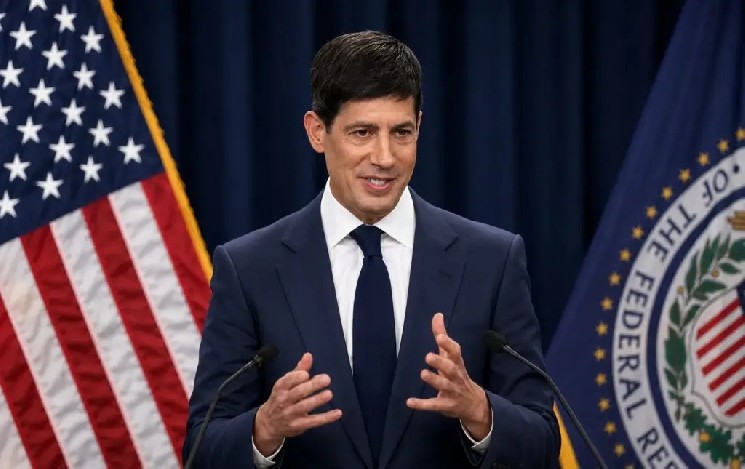
Fed Chair Kevin Warsh is set to speak at the Jackson Hole symposium at a critical juncture for U.S. monetary policy. With inflation still above the 2% target, long-term Treasury yields near 2007 highs, and fiscal interventions adding complexity, investors seek clarity on how the Fed will navigate conflicting priorities. The core challenge extends beyond potential rate signals. Warsh’s communication style, which avoids detailed forward guidance, has created a market "uncertainty premium." Investors, lacking a clear framework, demand higher compensation for risk, impacting bond yields and global borrowing costs. Meanwhile, the Treasury’s recent expansion of long-term bond buybacks—aimed at improving liquidity—has blurred the lines between monetary policy and debt management, raising questions about the Fed’s independence amid political pressure to lower financing costs. Warsh appears willing to let elevated long-term yields do some of the tightening work traditionally done by short-term rates. While this approach has logic, it risks undermining policy credibility if markets perceive the Fed is accommodating political goals. The key test at Jackson Hole is whether Warsh can outline a coherent, testable policy framework that explains how the Fed will achieve its inflation target, assess the role of long-term rates, and maintain its operational independence. Absent this, market uncertainty and the associated premium are likely to persist.

marsbit23h ago

What to Watch for as Walsh Takes the Stage at Jackson Hole?

marsbit23h ago

One Vote Could Make SOL's Daily Burn Rate Soar 14 Times

Solana's first formal on-chain governance vote concluded on August 27th, coinciding with SOL hitting a yearly high. Three key proposals aimed at reshaping the network's tokenomics were decided. Solana's core challenge is a massive usage-to-value capture gap. Despite processing 120x more transactions than Ethereum and leading in DEX volume, its fee revenue is significantly lower due to its fee structure. Currently, most fees (priority fees) go to validators, with only a small base fee partially burned. This results in high net inflation (approx. 6k SOL issued vs. ~650 burned daily). The three proposals seek to address this: **SGP-0001** establishes the formal governance framework. **SGP-0002** (Double Deflation Acceleration) proposes doubling the annual reduction rate of new SOL issuance from 15% to 30%, aiming to reach the terminal inflation rate by 2029 instead of 2032, reducing issuance by an estimated 18.9 million SOL. **SGP-0003** (Resource & Entry Fee Restructuring) would split the base fee into a fixed "entry fee" for block producers and a variable, fully burned "resource fee." This could increase daily SOL burns by ~14x to 7,500-9,000. Major stakeholders like Helius, Jupiter, and Jito support the changes. However, opposition exists, notably from Solana Company (HSDT), whose revenue is 99.4% from staking. They argue rapid changes could disrupt institutional adoption. Critics also highlight a potential conflict where validators can vote against reduced staking yields using delegated SOL without explicit voter consent. The outcome of these votes provides a directional mandate. If passed, they represent a significant step towards aligning Solana's immense network activity with tangible economic value for SOL holders.

marsbit23h ago

One Vote Could Make SOL's Daily Burn Rate Soar 14 Times

marsbit23h ago

Scott Bessent's Risky Bond Buyback Operation Could Fuel Bitcoin Price Surge

Bitcoin returned to the $80,000 level on Thursday, breaking past a key $79,000 resistance point, on news of an upcoming $92 billion U.S. Treasury bill auction scheduled for August 31st. The price recovery saw Bitcoin reach a daily high of $80,808, though it faced brief selling pressure. The cryptocurrency was trading around $80,400 by late morning EST, marking a roughly 3% daily increase and pushing its market cap back to $1.61 trillion. This surge positions Bitcoin for a monthly gain of over 20%, a sharp reversal from July's flat performance. The volatility led to $105 million in leveraged Bitcoin positions being liquidated in 24 hours, with short positions accounting for the majority of losses. Analysts note the large-scale Treasury auction could drain short-term market liquidity, potentially pushing yields higher and pressuring risk assets like stocks and crypto. Furthermore, a recent article in The Economist warns that U.S. Treasury Secretary Scott Bessent's policies risk undermining confidence in the American financial system. The report criticizes measures to artificially cap long-term bond yields and a shift towards issuing more short-term T-bills, which shortens the overall debt duration and increases vulnerability to future rate hikes. This approach, along with distorting market pricing mechanisms, could jeopardize long-term investor trust in U.S. sovereign debt. Prominent figures like Ray Dalio suggest such policies are reducing the inflation-adjusted yield of traditional fixed-income assets, potentially driving capital seeking a store of value towards alternatives like gold and Bitcoin, whose prices have risen since the Treasury's announcements.

cryptonews.ruYesterday 20:06

Scott Bessent's Risky Bond Buyback Operation Could Fuel Bitcoin Price Surge

cryptonews.ruYesterday 20:06

Solana Proposals Could Lead to Reduction in Staking Yields to 2.25% and Cut Emissions by $1.5 Billion

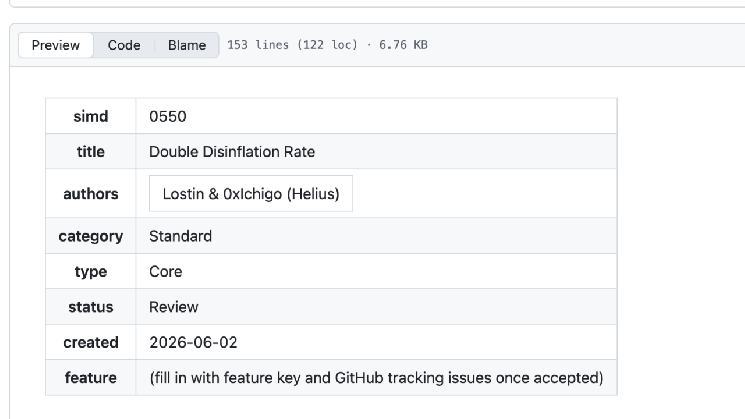
Solana is moving towards a stricter monetary model that could lead to a SOL deficit and significantly reduce staking rewards for holders. Two governance proposals drive these changes. SIMD-550, currently under vote, would double Solana's annual disinflation rate from 15% to 30%, accelerating the timeline to reach a final inflation rate of ~1.5% to the first half of 2029. The second, SIMD-553 (already approved), introduces additional token burning tied to computational units used on the network. Together, these measures could reduce SOL emission by an estimated $1.4-$1.5 billion over six years. The immediate impact would be lower staking yields, potentially falling from the current ~5.25% to approximately 4.34% in year one, 3% in year two, and 2.25% by year three. Analyst Matt Mena from 21Shares suggests inflation should be tied to economic metrics to help offset this decline. The changes also raise concerns for validator economics, with some potentially becoming unprofitable as inflation rewards decrease and voting costs may rise. However, the lower passive yield might push a significant portion of the 67.9% staked SOL into Solana's DeFi ecosystem for activities like lending and trading. This shift could boost network fee revenue to compensate for lower inflation rewards. The proposals aim to trade lower yield today for less dilution tomorrow, betting that network growth and usage will make this a worthwhile trade-off for SOL holders.

cryptonews.ruYesterday 16:27

Solana Proposals Could Lead to Reduction in Staking Yields to 2.25% and Cut Emissions by $1.5 Billion

cryptonews.ruYesterday 16:27

The Analysts Who Accurately Predicted the Silver Crash: Bitcoin Has Peaked in the Short Term, May Experience an 'Ultimate Washout' Dropping to $40,000 Between September and October

CMT analyst AG Thorson analyzes recent market movements driven by the US Treasury's bond buyback announcement. The move pushed the US Dollar below its 200-day moving average, fueling a strong rally in precious metals (gold, silver, platinum), which are seen as having confirmed major mid-year lows. Miner stocks (GDX) have surged over 40% from their bottom and are expected to lead the sector, potentially hitting new all-time highs before the metals themselves. Bitcoin also saw a sharp spike due to the Treasury news and a pro-crypto White House event, triggering a record $3 billion in short liquidations. However, Thorson maintains a cautious outlook for BTC. While admitting his confidence is wavering due to Bitcoin's reclaim of the 200-day MA, he still anticipates a potential final "washout" decline in September, possibly testing the $40,000 area (near the Bitcoin Equilibrium Price of $39,880) by October. He argues such a move is needed to shake out remaining bullish sentiment. If this drop does not materialize by September, his timing for a cycle bottom may be off by roughly three months. In summary, the analyst is bullish on precious metals and miners post their mid-year lows but remains watchful for one last significant dip in Bitcoin before a potential sustained upward move.

marsbitYesterday 09:11

The Analysts Who Accurately Predicted the Silver Crash: Bitcoin Has Peaked in the Short Term, May Experience an 'Ultimate Washout' Dropping to $40,000 Between September and October

marsbitYesterday 09:11

活动图片