# Ecosystem Related Articles

HTX News Center provides the latest articles and in-depth analysis on "Ecosystem", covering market trends, project updates, tech developments, and regulatory policies in the crypto industry.

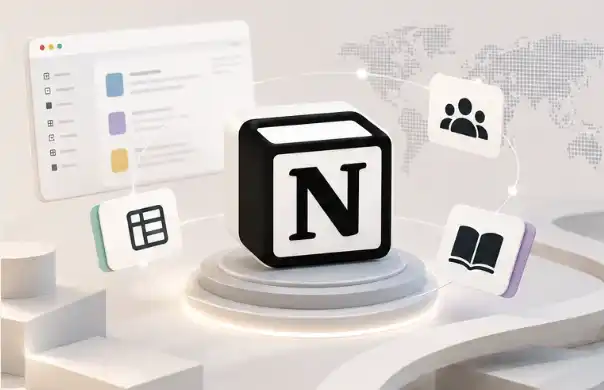
Deconstructing Notion's Growth: From a Note-taking Tool to 100 Million Users—How Notion Built a Triple Growth Flywheel Through Product, Templates, and Community

Notion's growth from a niche note-taking tool to a platform with 100 million users is powered by three interconnected flywheels: Product-Led Growth (PLG), a Template Economy, and Community-Driven Growth. First, Notion's PLG strategy relies on a highly flexible, "plastic" product that users can adapt to countless personal and team workflows. Its freemium model lowers the barrier to entry, while features like page sharing and collaboration drive organic, usage-based viral growth as users naturally invite others. Second, the Template Economy solves the "blank page" problem. Templates, created by both Notion and its community, transform abstract product capabilities into concrete, copyable solutions for specific scenarios (e.g., project management, content calendars). This dramatically lowers activation costs for new users and fuels SEO-driven discovery. Third, a vibrant Community acts as a distributed growth engine. Users and official Ambassadors create tutorials, share use cases, and host local events. This community not only educates users but also fosters a sense of identity around pursuing "better ways of working," strengthening loyalty and enabling global, low-cost expansion. Together, these flywheels create a self-reinforcing ecosystem: a great product attracts users who create templates and community content, which in turn attracts more users and deepens engagement. This system allowed Notion to scale from individuals to teams and enterprises through a bottom-up adoption path. Looking ahead, AI integration promises to accelerate these flywheels further by making templates smarter and the platform a potential AI-native work operating system. Ultimately, Notion's defensible advantage is not just its features, but this deeply entrenched network of user assets, creators, and community trust.

marsbit06/18 12:03

Deconstructing Notion's Growth: From a Note-taking Tool to 100 Million Users—How Notion Built a Triple Growth Flywheel Through Product, Templates, and Community

marsbit06/18 12:03

Behind HYPE's Repeated Record Highs, the 'Minions' in the Ecosystem Can't Keep Up

While HYPE, the native token of the Hyperliquid ecosystem, surges to new all-time highs above $76 and attracts significant institutional ETF inflows, a starkly different reality unfolds within its HyperEVM application layer. Multiple core DeFi protocols across lending, NFTs, stablecoins, and DEXs have announced shutdowns between May and June. The article argues HYPE functions more like an "application stock" than a traditional ecosystem token. Its value is anchored to the trading fees from Hyperliquid's core perpetual contracts platform (HyperCore), which boasts a diversified revenue stream from crypto, commodities, and indices. Approximately 97% of protocol fees fund buybacks and burns of HYPE. This means HYPE's price is largely decoupled from the health of projects built on HyperEVM. The closures of significant projects like lending protocol HypurrFi (peak TVL >$300M) and NFT marketplace Drip.Trade highlight a structural tension. Hyperliquid's minimalist philosophy offers infrastructure without official grants, liquidity support, or marketing coordination for HyperEVM projects. This forces protocols into a fiercely competitive environment from day one. Furthermore, the success of HyperCore creates a liquidity vacuum, and mechanisms like HIP-3 (allowing direct perpetual market deployment) divert user attention and capital away from application-layer projects. The stronger the core perpetual trading business becomes, the more difficult it is for peripheral "DeFi lego" projects to survive and capture value, despite the flagship token's rising price.

Foresight News06/17 06:33

Behind HYPE's Repeated Record Highs, the 'Minions' in the Ecosystem Can't Keep Up

Foresight News06/17 06:33

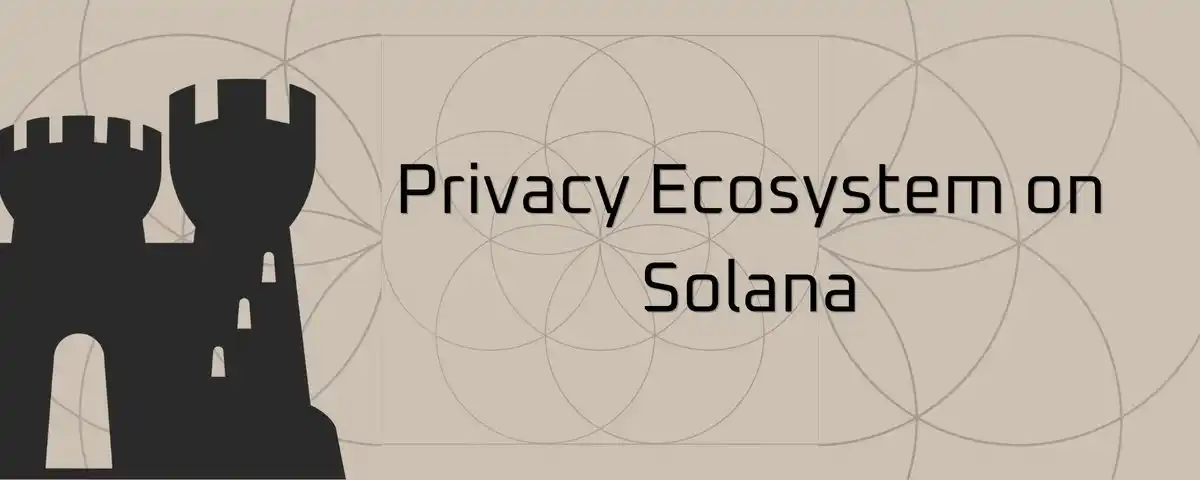
A Panoramic View of the Solana Privacy Ecosystem: The Complete Privacy Stack from Computation to AI

**Solana Privacy Ecosystem: A Comprehensive Overview from Computation to AI** Solana's privacy ecosystem, while nascent, is rapidly evolving to address key challenges across multiple layers. Key figures like Helius CEO Mert acknowledge that Solana has lagged in privacy but highlight its unique potential for scalable, composable privacy protocols, potentially leveraging technologies like ZK compression without persistent rollups. The foundational layer is **Private Compute**, addressed by providers like Arcium and Magic Block. Arcium utilizes Multi-Party Computation (MPC) networks to process encrypted data off-chain with final settlement on Solana, supporting use cases like confidential payments (via its C-SPL token standard) and encrypted data analysis. Magic Block employs Trusted Execution Environments (TEEs) to create private, ephemeral rollups, offering confidentiality, scalability, and composability. Both enable private order books, dark pools, and DeFi rails. Building on this infrastructure are applications for **Private Transfers and Balances**. Umbra, built on Arcium, offers encrypted token accounts with amount, balance, and sender-receiver linkage privacy, plus compliance features. Privacy Cash uses Tornado-style shielded pools for SOL, while Hush provides private staking and trading with integrated swaps via Jupiter. To eliminate **On-Chain Trails** from everyday activities like trading, protocols like encifherio and VanishTrade are emerging. encifherio privately routes swaps through Jupiter by encrypting transaction details within TEEs. VanishTrade routes trades through shielded liquidity pools. Darklake offers a ZK-native "blind slippage" AMM and private perpetuals to hide trading intent and prevent front-running. More advanced applications include **Private Prediction Markets**. Platforms like Melee Markets use Arcium's MPC to encrypt order books, allowing participants to place hidden bets without revealing their market position until settlement. Finally, the ecosystem is expanding into **Private AI**. Loyal leverages both Magic Block and Arcium to create a decentralized protocol where user-AI interactions, queries, and preferences are encrypted on-chain, giving users ownership and control over their data while enabling private transactions and yield generation. In summary, Solana's privacy stack is developing from core compute and transfer privacy towards sophisticated applications in DeFi, prediction markets, and AI, aiming for a future where Fully Homomorphic Encryption (FHE) and Zero-Knowledge (ZK) proofs combine for a complete privacy solution.

marsbit06/17 04:37

A Panoramic View of the Solana Privacy Ecosystem: The Complete Privacy Stack from Computation to AI

marsbit06/17 04:37

Solana Privacy Ecosystem Panorama: A Complete Privacy Stack from Compute to AI

**Title: The Solana Privacy Ecosystem: A Full-Stack View from Compute to AI** **Summary:** This article provides a comprehensive overview of the emerging privacy landscape on the Solana blockchain, characterizing it as still in early development. It identifies two primary verticals—Neobanks and Private DeFi—as key drivers, while noting gaps in tooling and user experience. The discussion centers on two main approaches to private computation: Arcium, which utilizes Multi-Party Computation (MPC) networks (Multi-Party eXecution Environments) to process encrypted data with final settlement on Solana; and Magic Block, which leverages Trusted Execution Environments (TEEs) via its Private Ephemeral Rollup (PER). Both enable confidential applications like dark pools and private DeFi with minimal code changes. Building on this infrastructure, projects are creating privacy-focused applications. Umbra, built on Arcium, offers Encrypted Token Accounts (ETAs) for private balances, transfers, and selective disclosure for compliance. Other wallets like Privacy Cash and Hush provide mixer-like functionality for SOL. For private trading, encifherio uses TEEs to encrypt swap details routed through Jupiter, while VanishTrade and Darklake focus on shielding transaction intent and liquidity routing, with Darklake introducing a "blind slippage pool" to prevent front-running. Further applications include private prediction markets (e.g., Melee Markets using Arcium's encrypted order books) and private AI. Loyal exemplifies the latter, using both Magic Block and Arcium to enable decentralized AI agents that store user data, conversations, and transactions confidentially on-chain. The article concludes by framing privacy not as a single technology but as an evolving "ultimate privacy stack," with experts like Helius's Mert envisioning a future combination of Fully Homomorphic Encryption (FHE) and Zero-Knowledge proofs (ZK). Helius Privacy itself is developing a ZK-based UTXO privacy layer for Solana.

Foresight News06/16 11:14

Solana Privacy Ecosystem Panorama: A Complete Privacy Stack from Compute to AI

Foresight News06/16 11:14

AMD Launches Compact AI Host, Directly Challenging NVIDIA DGX Spark

In June 2026, AMD announced the Ryzen AI Halo, a compact AI developer desktop to rival NVIDIA's DGX Spark. Both feature 128GB unified memory for running 200B+ parameter models locally. Priced from $2,949 to $3,999, AMD undercuts NVIDIA's $3,999+ DGX Spark. The core divergence lies in architecture and philosophy. Ryzen AI Halo uses an x86-based Ryzen AI Max+ 395 APU (CPU+GPU+NPU), runs standard Windows/Linux, and emphasizes general-purpose PC flexibility. DGX Spark uses an ARM-based Grace Blackwell Superchip, runs a custom DGX OS, and includes a high-speed ConnectX-7 NIC for cluster prototyping, anchoring it to NVIDIA's full-stack CUDA ecosystem. AMD's ROCm software has improved, with simpler installation and support for major frameworks, but still lags behind CUDA's 17-year maturity in community support and cutting-edge library availability. AMD's broader strategy focuses on becoming a viable second-source supplier. Key moves include acquiring design capabilities via ZT Systems (while outsourcing manufacturing) and securing two major 6GW GPU supply deals with OpenAI and Meta in late 2025/early 2026. These contracts validate AMD's role in diversifying the AI supply chain, rather than outright beating NVIDIA. NVIDIA counters with a tightly integrated stack from desktop (DGX Spark) to data center, emphasizing seamless scalability and enterprise software subscriptions (AI Enterprise). In summary, Ryzen AI Halo represents AMD's pragmatic path: offering a cost-effective, open-ecosystem alternative for developers wary of vendor lock-in, while its large data center contracts aim to capture share from customers seeking a second GPU supplier. The choice boils down to a familiar, flexible PC environment with potential software gaps (AMD) versus a premium, optimized, but locked-in ecosystem (NVIDIA).

marsbit06/16 09:14

AMD Launches Compact AI Host, Directly Challenging NVIDIA DGX Spark

marsbit06/16 09:14

Ethereum Reaches the Milestone of One Million Developers, Sharplink CEO Delves Deep into Ethereum's Future Possibilities

Ethereum Surpasses One Million Developers Milestone: A Look at Its Unshakeable Dominance and Future Joseph Chalom, CEO of Sharplink, reflects on his recent Asia trip where he engaged deeply with Ethereum developers and ecosystem leaders. The most striking takeaway was not just the industry's vibrancy, but the rigorous, long-term vision of local builders. This context brings to life a pivotal statistic: Ethereum has now surpassed one million cumulative developers (1,012,824), with approximately 232,000 remaining active in the past year—a talent pool unmatched by any other crypto ecosystem. The critical question isn't which blockchain is fastest, but where top developers choose to build long-term. Ethereum's answer is unequivocal. Its decade-long lead stems from a unique convergence of technology, institutional culture, economic systems, and composability, cementing its role as the foundational operating system for programmable finance. This massive developer base is tackling the industry's hardest problems, continuously strengthening Ethereum's moat. Key initiatives include: * **The Glamsterdam Upgrade (planned 2026):** Introducing ePBS and Block-level Access Lists for parallel execution and higher throughput while preserving core values like credible neutrality and fair MEV distribution. * **Synchronous Composability:** Projects are working to enable atomic transactions across dozens of Rollups, making them function as one unified chain and eliminating ecosystem fragmentation. * **Post-Quantum Security:** Ethereum is far ahead in preparing for quantum computing threats, with a dedicated foundation working group and testnets targeting a full migration by ~2029—a crucial factor for institutional adoption. Beyond developers, Ethereum's core network effects are its unparalleled composability and unified standards (like EVM and Solidity), which create a powerful flywheel: more developers → better tools → greater liquidity → more institutional participation. Its other decisive advantages include credible neutrality (over 900k validators), a secure modular architecture with interconnected Rollups, and a deeply entrenched culture shaped by top-tier researchers. Ultimately, there's a vast difference between generating short-term activity and becoming the trusted, long-term coordination layer for global native finance. Major institutions prioritize security, trust, and liquidity—areas where Ethereum holds dominant mindshare. The industry's trajectory shows resources consolidating around unified standards, deep liquidity, and developer consensus. After meeting the builders in Seoul and Hong Kong, Chalom is more convinced than ever: Ethereum's unshakeable future is being built right now.

Foresight News06/16 08:10
Ethereum Reaches the Milestone of One Million Developers, Sharplink CEO Delves Deep into Ethereum's Future Possibilities

Foresight News06/16 08:10

Without Tencent, What's Left for Suiyuan?

The article centers on the crucial question posed in the title: what is Seyond Technology really worth if its dominant customer, Tencent, were to stop purchasing its AI chips? As the last of China's "Four AI Chip Dragons" to secure approval for a public listing, Seyond's IPO filing reveals a profound and controversial dependency. In 2025, 74.9% to over 80% of its revenue came from Tencent. The piece argues that this extreme customer concentration is not merely a vulnerability but a strategic outcome of China's AI industry evolution. It contrasts Seyond's path with its peers (Moore Thread, Biren Technology, and MetaX), noting that while others raced to market with ambitious stories, Seyond focused first on securing and delivering for a major client. Its explosive revenue growth—with Q1 2026 up 1474.85% year-on-year—is driven by concentrated orders from Tencent, which itself faces massive, escalating AI compute demands for products like its Yuanbao and Hunyuan models. The relationship is framed as a deliberate, symbiotic cultivation of a supply chain. As both a major shareholder (20.26%) and primary client, Tencent is actively fostering Seyond to build a controllable, stable alternative to NVIDIA, similar to how global tech giants historically nurtured key suppliers. The high switching costs—involving software stacks and deployed systems—create a deep "ecological moat" for Seyond within Tencent's ecosystem. The analysis positions the AI chip landscape in three tiers: NVIDIA as the global leader, Huawei's Ascend as the state-backed player, and commercial firms like Seyond competing for market orders. Seyond is increasingly seen as "Tencent's compute foundation," with its product roadmap closely aligned with the tech giant's needs. The conclusion is that the industry's metric for success is shifting from fundraising and technical specs to real orders, delivery capability, and ecosystem binding. Seyond's value, therefore, lies not just in its chips but in holding a massive, multi-year procurement order from China's largest internet company—a tangible asset arguably more telling than any technical whitepaper in the current climate. The core insight is that for domestic chips, the ultimate challenge isn't just catching up technologically with NVIDIA, but earning the trust, scenarios, and recurring orders from a major anchor client.

marsbit06/15 23:15

Without Tencent, What's Left for Suiyuan?

marsbit06/15 23:15

Fully Entering the AI Era: Alipay Bets on Conversation, WeChat Holds Fast to Social

In May 2026, Alipay announced over 300 million AI payment transactions. Shortly after, WeChat opened its mini-programs for AI integration, sparking controversy by requiring developer source code access. This highlights their diverging approaches to AI integration. Alipay is testing "Project Treasure," an optional AI-native interface replacing traditional app grids with a conversational window. Users can command complex tasks (e.g., "book a ride and order coffee") handled end-to-end by AI. This shift follows an abandoned standalone AI app, focusing instead on enhancing its existing user base. For unmodified mini-programs, Alipay's AI uses "screen-reading" to simulate user interactions, bypassing the need for developer overhaul. It also introduced "Token Pay" for micro-transactions and "AI Wallets" for autonomous agent spending. WeChat, prioritizing its core social function, is taking an embedded approach. Its AI agent will operate within existing contexts like group chats and official accounts, assisting without a separate interface. To enable this, WeChat offers developers two paths: granting source code access for direct AI control ("Automatic Mode") or manually encapsulating services into standardized "Skills." Both place significant burden on developers. Key differences emerge in handling legacy services: WeChat demands developer cooperation (code or labor), while Alipay's screen-reading offers immediate, if potentially less stable, compatibility. Alipay's 3 billion AI transactions demonstrate user acceptance of AI-driven commercial actions. The divergent strategies may reshape mini-program ecosystems—Alipay passively "AI-fying" services, WeChat potentially favoring resource-rich developers—and set competing technical standards. Ultimately, the competition centers on where users entrust the command to "help me get things done."

marsbit06/15 12:00

Fully Entering the AI Era: Alipay Bets on Conversation, WeChat Holds Fast to Social

marsbit06/15 12:00

活动图片