# Capital Related Articles

HTX News Center provides the latest articles and in-depth analysis on "Capital", covering market trends, project updates, tech developments, and regulatory policies in the crypto industry.

The article "Strategy" examines in detail 6 securities built on bitcoin

In the article "Strategy," six securities based on Bitcoin are examined. Strategy Inc. (Nasdaq: MSTR) announced investor materials detailing its common stock and five preferred securities. Executive Chairman Michael Saylor emphasized this with the comment, "Six securities. One Strategy." While each targets different investor goals, all depend on Strategy's financial health and capital management decisions. The capital structure positions common shares of MSTR at the bottom, absorbing profit or loss after debt and priority claims. These shares represent a residual stake in the company's net reserves, including its software and capital markets businesses, but provide no direct claim on specific bitcoins. The five preferred securities offer varied cash flows and priority levels: - STRC: Variable cumulative dividends, currently 12% annually on a $100 stated value, with twice-monthly cash payments. - STRF: Higher priority, paying fixed 10% annual cumulative dividends with quarterly cash payments. - $STRK: Lower priority, combining 8% cumulative dividends with a conversion right into MSTR shares. - STRD: Offers 10% annual dividends but has the weakest claim; its quarterly cash dividends are non-cumulative. - STRE: Denominated in euros, offers 10% cumulative dividends on €100, with quarterly cash payments and a priority ranking between other issues. Strategy's broader "Digital Debt Capital" concept involves maintaining a dollar reserve for dividend and interest payments, and permitting limited Bitcoin sales to fund this reserve. However, this does not make the preferred securities direct, collateralized claims on the company's Bitcoin holdings. Investors face risks beyond Bitcoin's price volatility, including issuer credit risk, interest rate changes, dividend decisions, liquidity, and capital structure priority. These securities add potential dividend income to Bitcoin exposure, making returns contingent on the company's financial stability, Bitcoin's performance, and management's capital allocation decisions.

cryptonews.ru08/20 20:17

The article "Strategy" examines in detail 6 securities built on bitcoin

cryptonews.ru08/20 20:17

Michael Saylor, Founder of MicroStrategy, and CEO Phong Le Have Made Some Interesting Announcements! They Publicly Disclosed Their Bitcoin Price Forecast

During a Q&A session moderated by Natalie Brunell, Michael Saylor, founder of MicroStrategy, and CEO Phong Le discussed the company's strategy regarding its balance sheet, stock dynamics, and Bitcoin's role in the global financial ecosystem. Saylor described Bitcoin as the fundamental "capital asset" of the digital world, stating the company is building its future growth plans directly on this foundation. He argued that Bitcoin is not a traditional payment method or everyday currency, but digital capital, and that attracting capital from traditional finance is key to Bitcoin's growth. The company's digital credit instruments are designed to facilitate this capital inflow. CEO Phong Le addressed investor concerns about stock dilution and price volatility, asserting that capital raises and new instruments create shareholder value if they increase the amount of Bitcoin per share. He noted that a 50% drop in Bitcoin naturally leads to stock price fluctuations of up to 75%, emphasizing that MicroStrategy employs a long-term model of debt and equity financing, not short-term Bitcoin trading. The company also outlined its treasury management approach, stating it may dynamically buy BTC, repurchase credit instruments, or accumulate dollar reserves based on market conditions. Saylor reiterated his belief that Bitcoin could eventually reach $1 to $10 million as the company accumulates a larger share of its supply. He dismissed the idea of paying Bitcoin dividends as financially illogical, advocating instead for borrowing in low-cost, inflation-resistant fiat currencies (like dollars or yen) to invest in Bitcoin, which he views as the strongest appreciating asset. *This is not investment advice.

cryptonews.ru08/18 20:00

Michael Saylor, Founder of MicroStrategy, and CEO Phong Le Have Made Some Interesting Announcements! They Publicly Disclosed Their Bitcoin Price Forecast

cryptonews.ru08/18 20:00

Hefei 30 Billion for 1 Trillion: The First Year of Equity Finance, Who Can Copy This Assignment

In July 2026, Hefei’s state-owned assets system reaped over 1 trillion RMB in floating gains from the IPO of ChangXin Memory—a return stemming from a cumulative investment of less than 30 billion RMB over the preceding decade. This marks a prominent case of China’s emerging “equity-based fiscal model,” where local governments act as long-term industrial investors rather than relying solely on land sales. The story traces back to 2016, when Zhu Yiming, founder of Gigadevice and later ChangXin, sought funding for a domestic DRAM chip project amid high risks and intense international competition. Hefei, despite its limited fiscal resources, committed to the venture. Over the next ten years, ChangXin accumulated over 36 billion RMB in losses, yet Hefei’s state capital persisted, providing continuous funding and “nanny-style” support while building a surrounding industrial cluster. This approach—now termed the “Hefei Model”—originated earlier with the city’s 2008 decision to pause subway construction to invest in BOE’s struggling LCD panel production line. That bet later spurred a display industry ecosystem in Anhui. Similarly, ChangXin’s eventual profitability in 2026, driven by AI-driven demand for memory chips, validated Hefei’s patience. The model reflects a strategic shift in Chinese local public finance: from land-revenue dependence to nurturing strategic industries through equity participation, leveraging state capital to attract private investment, and ultimately securing long-term fiscal and industrial benefits. However, replicating Hefei’s success is challenging. It requires exceptional political continuity across administrations, professionalized state-capital management teams, precise timing in catching industry cycles, and the resilience to endure prolonged losses without withdrawing—factors not easily copied through policy documents or study tours. Beyond the headline financial gains, Hefei’s deeper achievement lies in cultivating a robust semiconductor cluster, with over 450 upstream and downstream firms and a sevenfold increase in integrated circuit industry output from 2016 to 2025. While the equity-fiscal concept is spreading, the patience, expertise, and historical contingencies behind Hefei’s execution remain its distinctive, hard-to-replicate core.

marsbit08/18 12:26

Hefei 30 Billion for 1 Trillion: The First Year of Equity Finance, Who Can Copy This Assignment

marsbit08/18 12:26

Bank of Russia Limits Cryptocurrency Share in Market Brokers' Portfolios to 25%

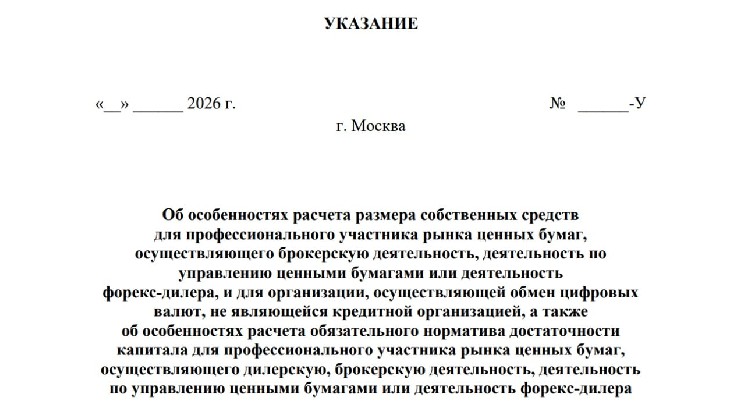
The Central Bank of Russia has published a new draft decree setting requirements for professional market participants, such as brokers, trust managers, Forex dealers, and cryptocurrency exchanges, regarding the inclusion of crypto assets on their balance sheets. These assets, if admitted for trading on exchanges, can constitute up to 25% of a firm's total declared equity capital (prudential limit). To be counted, crypto assets must also be registered with cryptocurrency depositories for state verification. The bank stated that this measure aims to account for crypto-related credit and market risks in capital adequacy assessments, helping ensure the financial stability of intermediaries engaged in cryptocurrency operations. This step is seen as part of Russia's ongoing process of crypto legalization, allowing users to evaluate the reliability of regulated entities based on their crypto holdings. It also marks the beginning of deeper state oversight and control over domestic crypto transactions by operators, while keeping the role of crypto assets in the Russian economy limited. The draft follows the State Duma's approval of comprehensive crypto regulations, which permit both qualified and non-qualified investors to trade cryptocurrencies domestically, though non-qualified investors are limited to annual purchases of up to 300,000 rubles (approx. $3,800). The use of cryptocurrencies for domestic payments remains prohibited, while exporters and importers can use them without restriction for cross-border settlements, including stablecoins, to legally circumvent risks from secondary sanctions.

cryptonews.ru08/18 05:17

Bank of Russia Limits Cryptocurrency Share in Market Brokers' Portfolios to 25%

cryptonews.ru08/18 05:17

Hash Global Research Report: Bitcoin Hasn't Risen Yet, Why Are We Starting to Think the Bear Market Might Be Over?

Hash Global Research Report: Why We Think the Bear Market Might Be Ending Even Before Bitcoin Rises Over the past six months, AI has dominated market attention, causing a significant shakeout in crypto. Bitcoin has tested the $58-60K support three times since February, with volatility hitting multi-year lows. Despite stagnant prices, key underlying dynamics are shifting. The forces that drove the market down are weakening: macro tightening fears are easing as US inflation and jobs data cool, the perceived systemic risk from large holders like MicroStrategy selling is diminishing as they shore up finances, and institutional outflows have stopped. Simultaneously, on-chain data shows a rare concentration of over 240,000 BTC (approx. 12% of supply) accumulated in the $61-65K range, forming a new, consolidated base reminiscent of historical bottoms. Meanwhile, the AI trade is cooling, potentially redirecting capital towards undervalued crypto assets, as seen in July's relative outperformance. The current phase, where AI money hesitates and crypto veterans await a final dip, creates a "no-man's-land" investment opportunity—a potential entry point before a new consensus forms. While a definitive upturn isn't guaranteed, the confluence of weakening bearish pressures, improved on-chain structure, and a possible capital rotation suggests the window for positioning for the next cycle is opening.

marsbit08/13 03:26

Hash Global Research Report: Bitcoin Hasn't Risen Yet, Why Are We Starting to Think the Bear Market Might Be Over?

marsbit08/13 03:26

Hong Kong Stock Market in July: Super IPOs Coexist with Wave of Breakings, Hard Tech Still the Main Theme

The Hong Kong IPO market in July presented a "two-tiered" scenario characterized by both a mega-IPO and a significant wave of new stock listings falling below their issue price ("breaking issue"). The highlight was Zhongji Innolight's (stock code: 03308.HK) listing on July 30, which raised approximately HK$53.41 billion. This marked the largest IPO on the Hong Kong exchange in nearly seven years since Alibaba's secondary listing. A prominent trend was the continued dominance of A+H listings, with companies like Luxshare (02475.HK) and others contributing significantly to the total monthly fundraising of around HK$116 billion. In stark contrast, the market saw a sharp rise in "broken issues." Out of 17 new listings for the month, 7 broke issue on their debut, with the rate climbing to 47% by month-end. Factors contributing to this included an intense concentration of listings (15 in one week), profit-taking by investors, and a market reassessment of valuations, particularly for companies with unclear commercial prospects. Despite the sell-off, hard tech remained the core theme, accounting for over 70% of July's listings. Key sectors were semiconductors and AI/autonomous driving. However, market enthusiasm became highly selective, with extreme over-subscription for certain niche players while others were heavily sold off. This signals a shift from speculative fervor towards a more value-driven assessment. Looking ahead, recent listing reforms by the Hong Kong Exchanges are expected to attract more tech firms. With a large pipeline of over 350 companies awaiting listing, including potential large offerings like SHEIN, the market is poised for continued activity. Analysts view July's correction not as a downturn but as a healthy valuation reset, emphasizing the need for investors to carefully discern company fundamentals.

marsbit08/04 02:59

Hong Kong Stock Market in July: Super IPOs Coexist with Wave of Breakings, Hard Tech Still the Main Theme

marsbit08/04 02:59

活动图片