SIREN, Another Leveraged Scam

marsbitPublished on 2026-03-24Last updated on 2026-03-24

Abstract

The article "SIREN, Another Leveraged Scam" discusses the cryptocurrency $SIREN, which experienced a significant but suspicious price surge, briefly ranking among the top 30 cryptocurrencies by market cap. The token, initially launched during a meme-driven period, saw its liquidation volume reach $23.25 million, placing it fourth globally. The piece identifies $SIREN as a "leveraged scam," where manipulators control the majority of the supply (over 88.5% on-chain) and exploit low liquidity on exchanges like Gate.io to create extreme price volatility with minimal capital. For instance, a $100,000 trade could cause a 40% price swing. The scam involves pumping the price, luring short sellers, and then triggering liquidations through coordinated pumps and dumps. Similar patterns were observed in other tokens like $PIPPIN, $RIVER, and $BEAT. Despite denials from entities like DWF Labs, evidence suggests controlled manipulation. The article concludes that such schemes are detrimental to the market, favoring only a few informed traders while exposing most retail participants to unfair risks.

$SIREN, a token that launched during the "Broccoli" era of guessing CZ's dog's name on Binance Alpha and futures, has almost been forgotten.

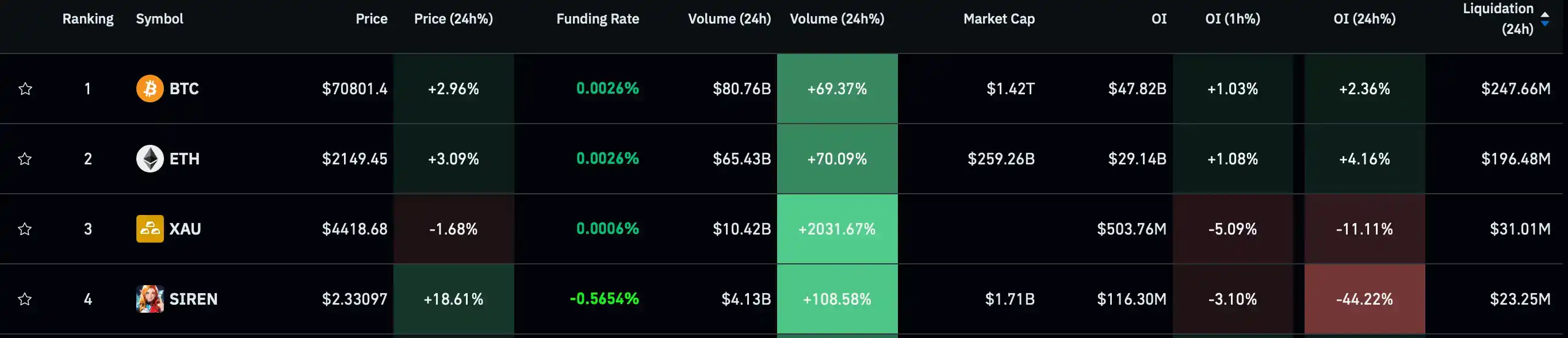
But just two days ago, when the internet was abuzz with its "surge," the token's liquidation volume across the network ranked fourth, just behind Bitcoin, ETH, and XAU, with approximately $23.25 million. If it weren't for Trump's TACO boosting gold's volatility, SIREN would have been third.

The token's price once approached $5, corresponding to a market cap of about $3.675 billion, briefly squeezing into the top 30 of the total cryptocurrency market cap rankings, surpassing established tokens like OKB and UNI.

In a sluggish market, this is not the first time we've seen such a phenomenon. $PIPPIN, $RIVER, $BEAT, $MYX... By examining the questions surrounding $SIREN, what lessons can we draw from these similar situations?

Are "Leverage Scams" Predictable?

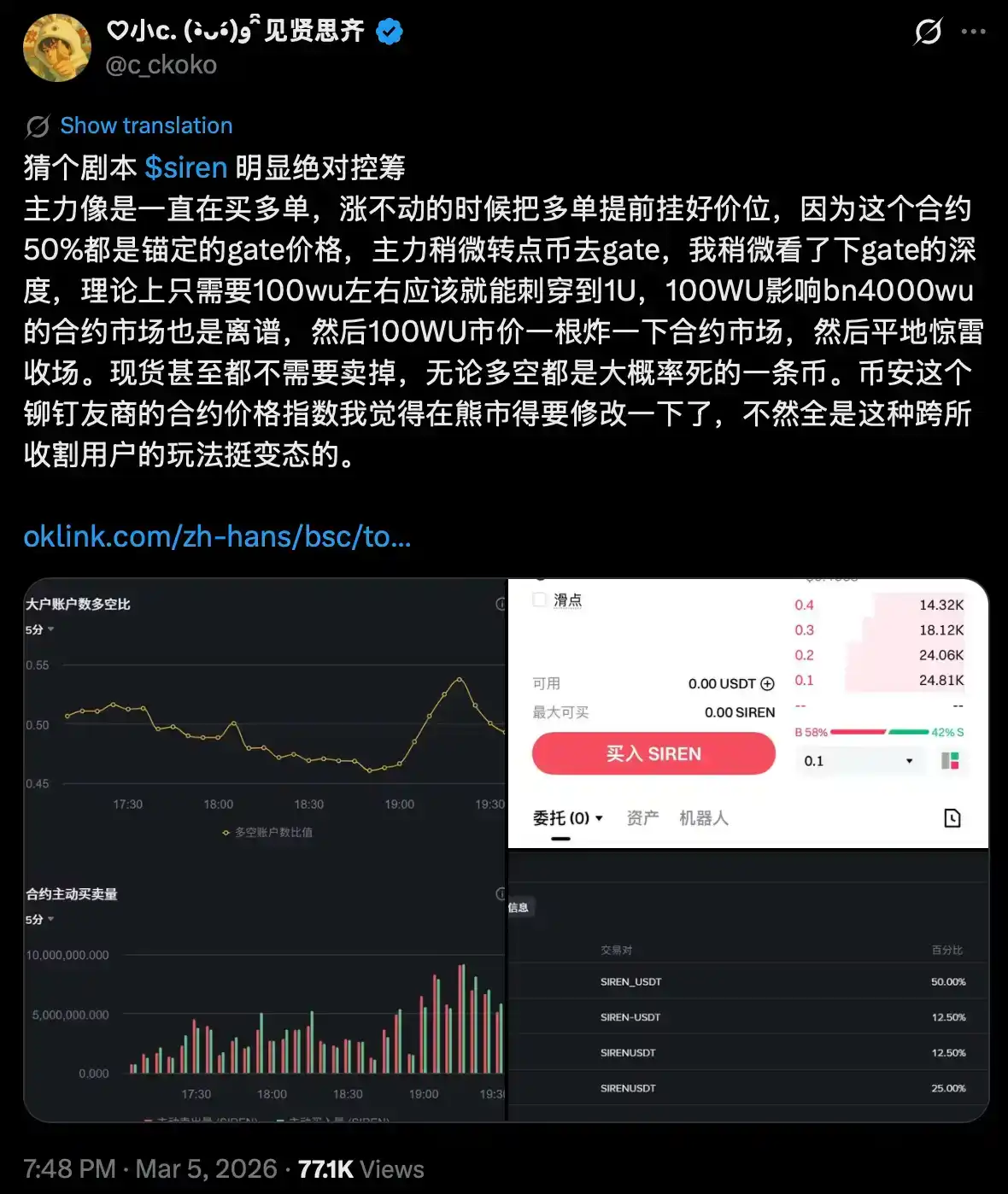
As early as March 5, @c_ckoko posted a tweet pointing out, "$SIREN is clearly under absolute control of holdings; this is a cross-exchange method to harvest users."

His tweet well explains how this "leverage scam" operates: the poor spot liquidity on exchanges allows for creating large fluctuations with small amounts of capital, which then affects the Binance futures price for harvesting.

Moreover, as suggested at the end of his tweet, the $SIREN futures price index was adjusted. When he posted the tweet, the weightings for the $SIREN Binance futures price index were: Gate spot 50%, Kucoin spot 12.5%, Binance futures 12.5%, and Binance Alpha 25%. After that, following two adjustments, the current futures price index weightings are: Gate spot 25%, Kucoin spot 12.5%, Binance futures 12.5%, and Binance Alpha 50%.

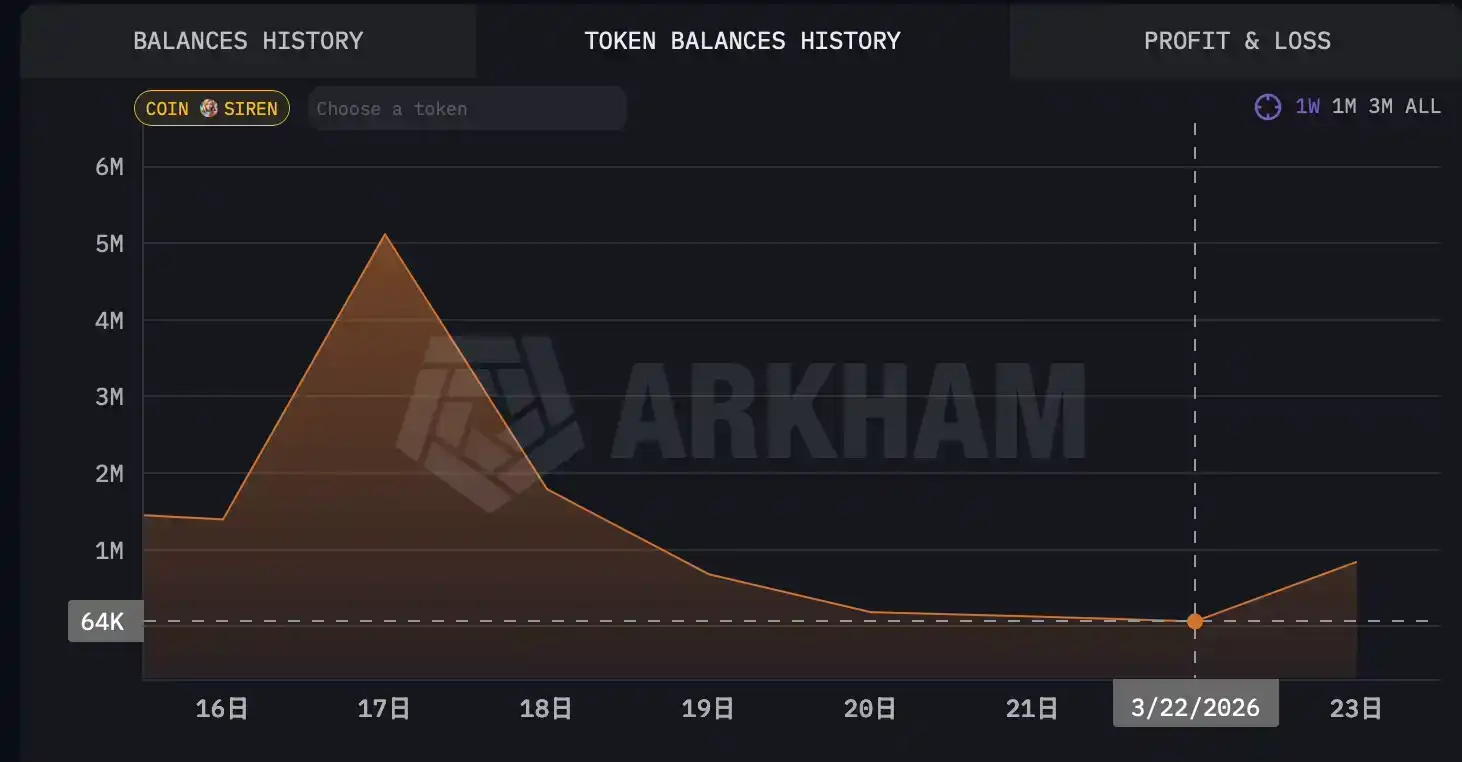
According to Arkham data, Gate's $SIREN holdings on March 22 were only 64,000 tokens.

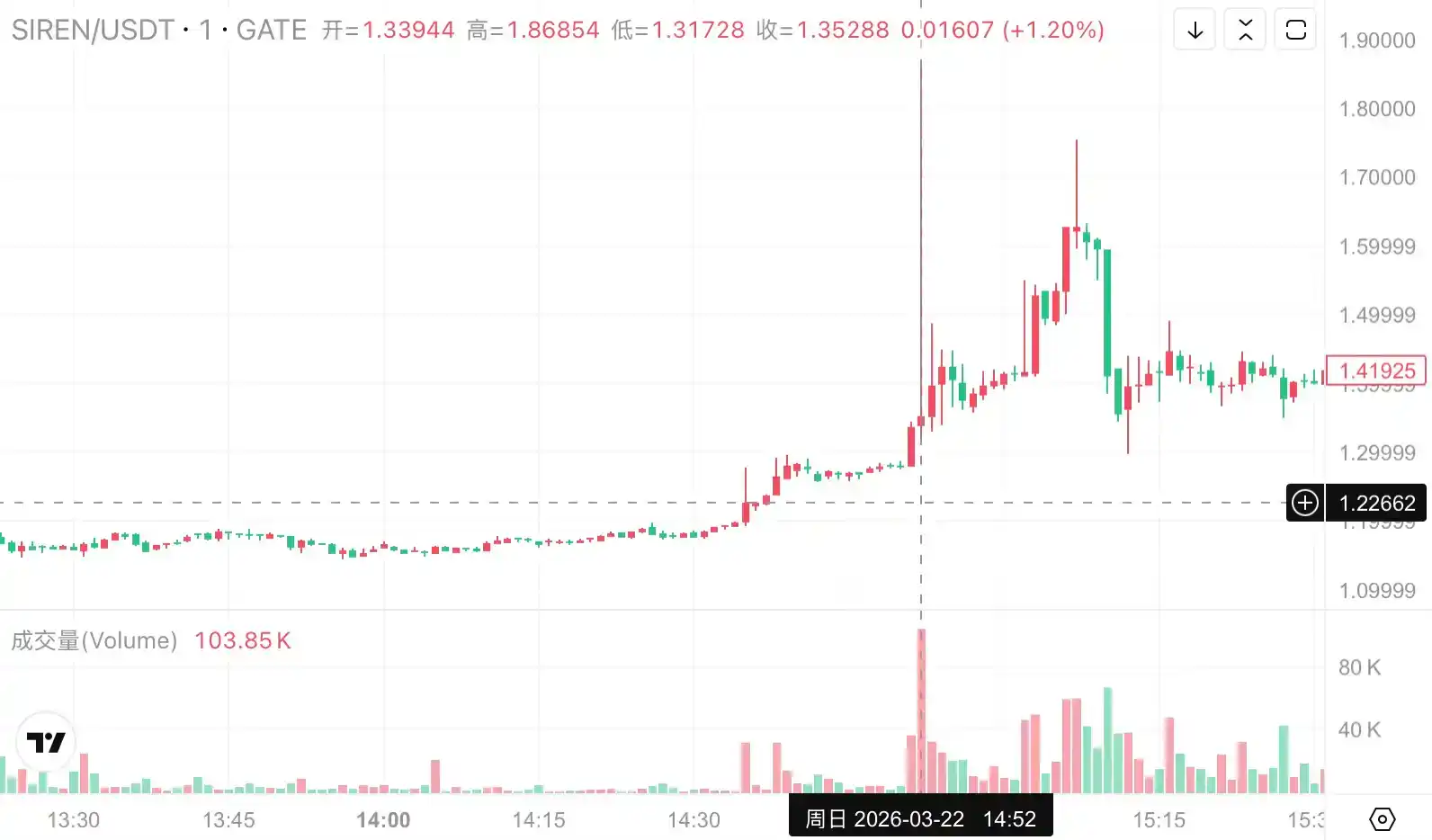
In this situation, a trading volume of $100,000 could create a minute-level candle with nearly a 40% fluctuation.

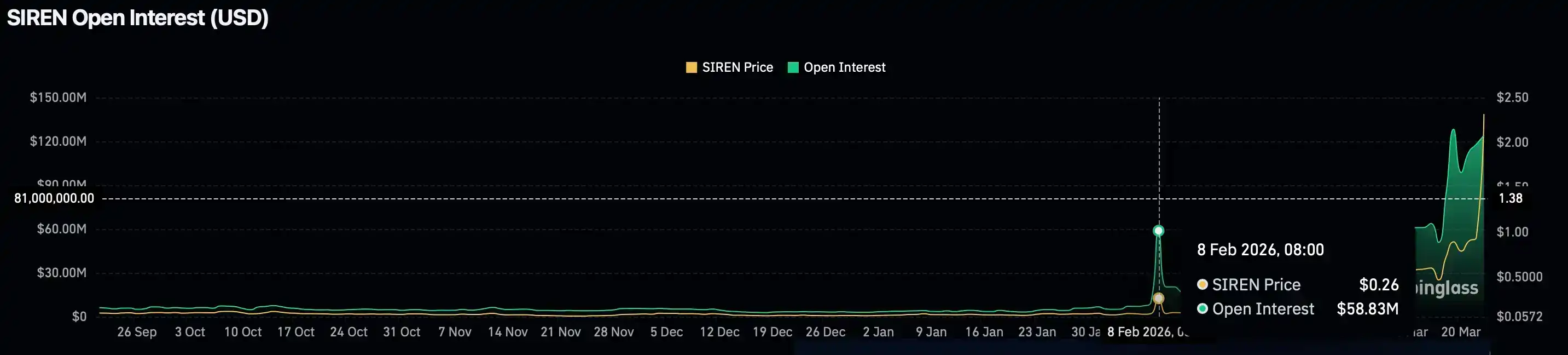
Looking at the open interest, $SIREN showed obvious abnormalities starting from February 8. The open interest, which had long hovered between $3-5 million, suddenly surged to $58.83 million.

Of course, abnormal signs do not necessarily lead to a specific inevitable outcome. After all, the chips are in the hands of the controlling whales, and we cannot be sure how they will execute.

Methods

First, control of holdings: hoarding a large amount of spot tokens, also opening large long positions, pushing the price very high.

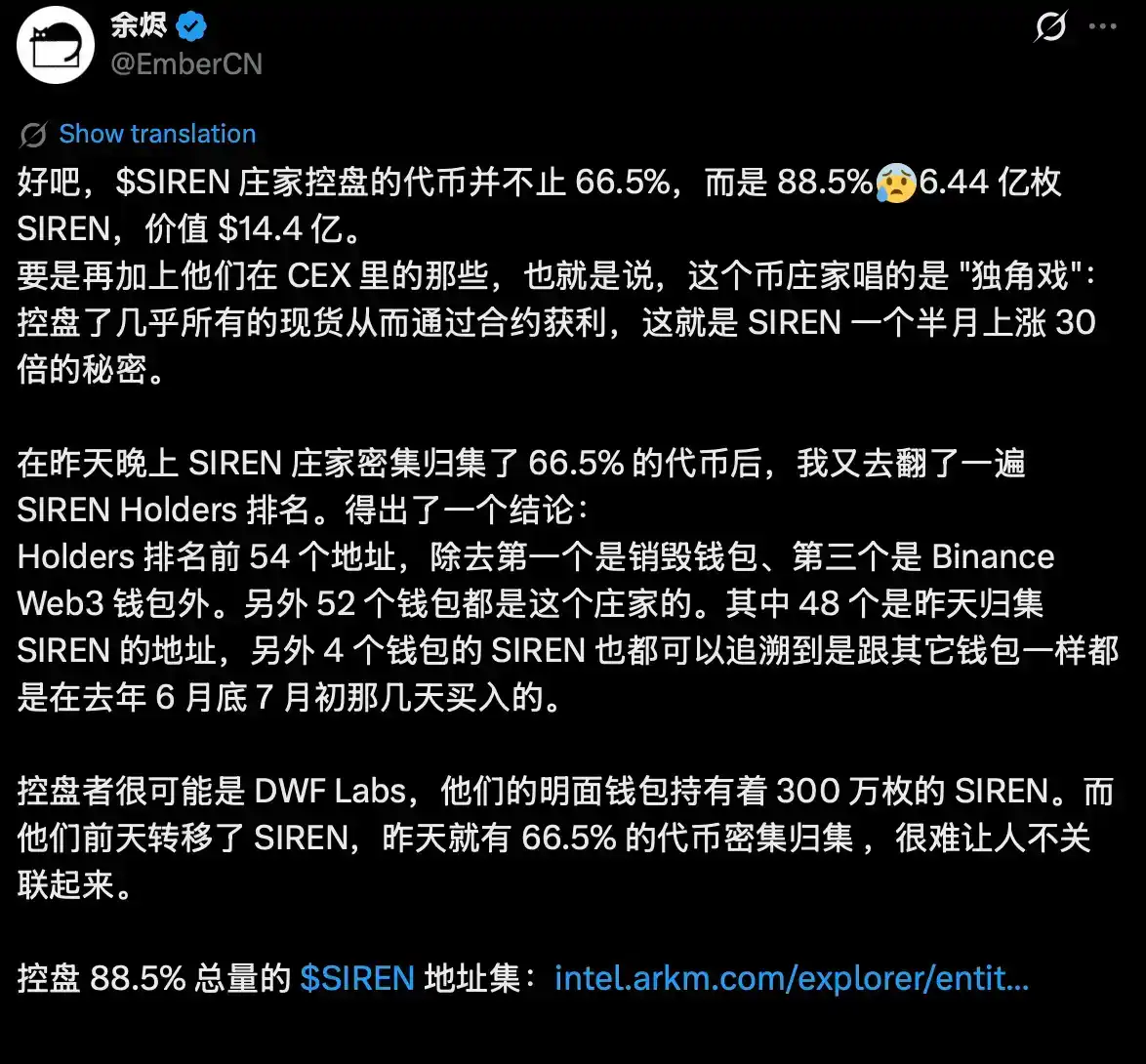
On-chain analyst Ember (@EmberCN) compiled the control situation of $SIREN and found that, just from on-chain data, the $SIREN controlled by the whale amounts to 88.5%. If including the portions deposited by the whale into CEXs, this number would be even higher.

The above tweet also pointed out that DWF Labs might be the controller in this event, but DWF Labs co-founder Zac denied this claim in a group chat.

After pushing the price high, the whale lures in short sellers, laying down short positions to make retail investors think the阶段性 top is coming.

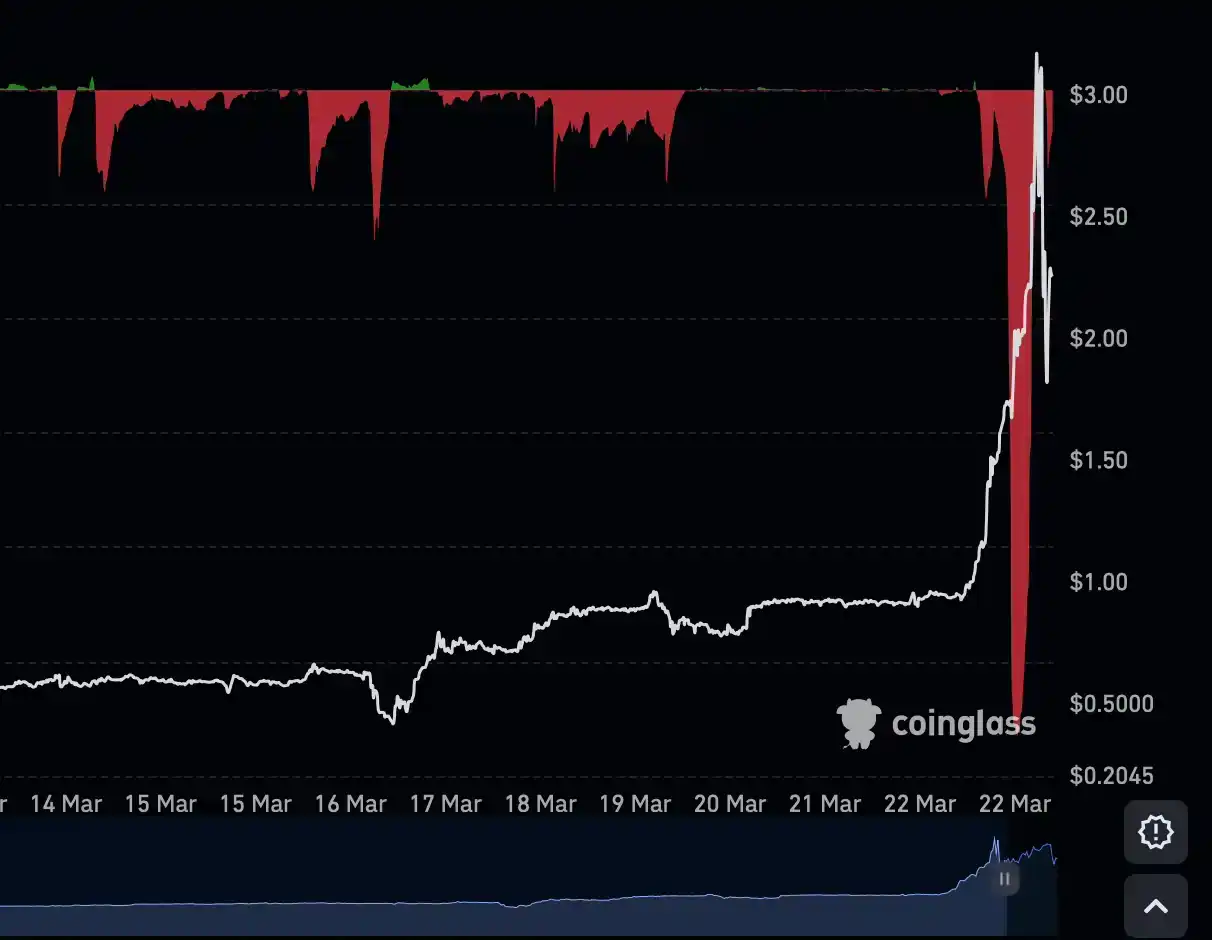
From the funding rate chart above, it can be seen that starting from March 14, $SIREN frequently had high negative funding rates. Short sellers continuously paid funding to the whale's long positions, and the whale used these "free" funds to continue pushing the price higher. In the early hours of March 23, another violent fluctuation of 78% occurred on Gate spot within 10 minutes, corresponding to a trading volume of only about $450,000. The price of $SIREN rose from $2.75 to nearly $5. This means many people were liquidated.

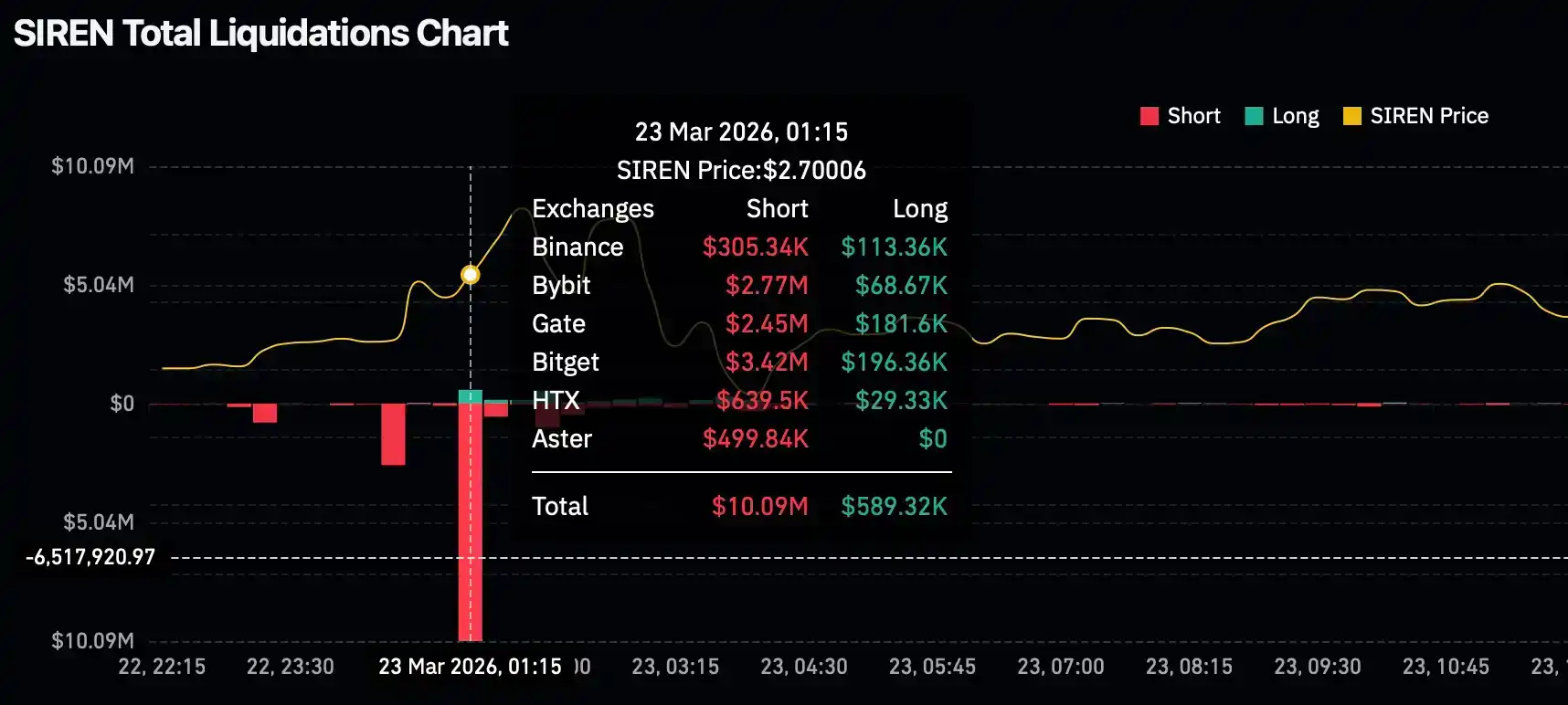
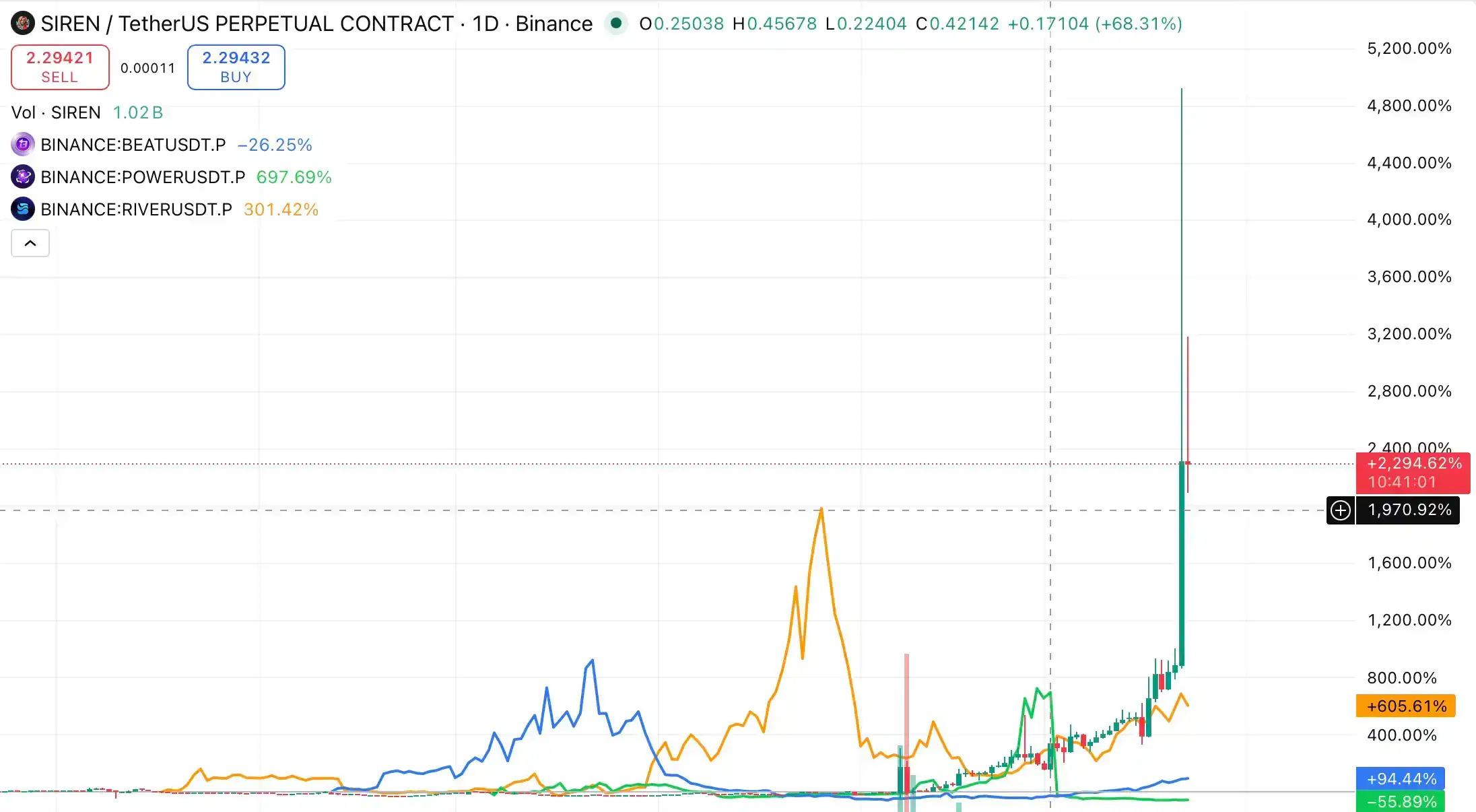
At this point, $SIREN might not be over yet. Because,刻舟求剑地来看, the whale could next close the long positions, dump the spot tokens, creating a huge bearish candle, and then close the short positions at a cost far lower than the opening price. Comparing the trends of $RIVER, $POWER, and $BEAT with $SIREN in one chart, it seems that $SIREN is still missing the final net closing.

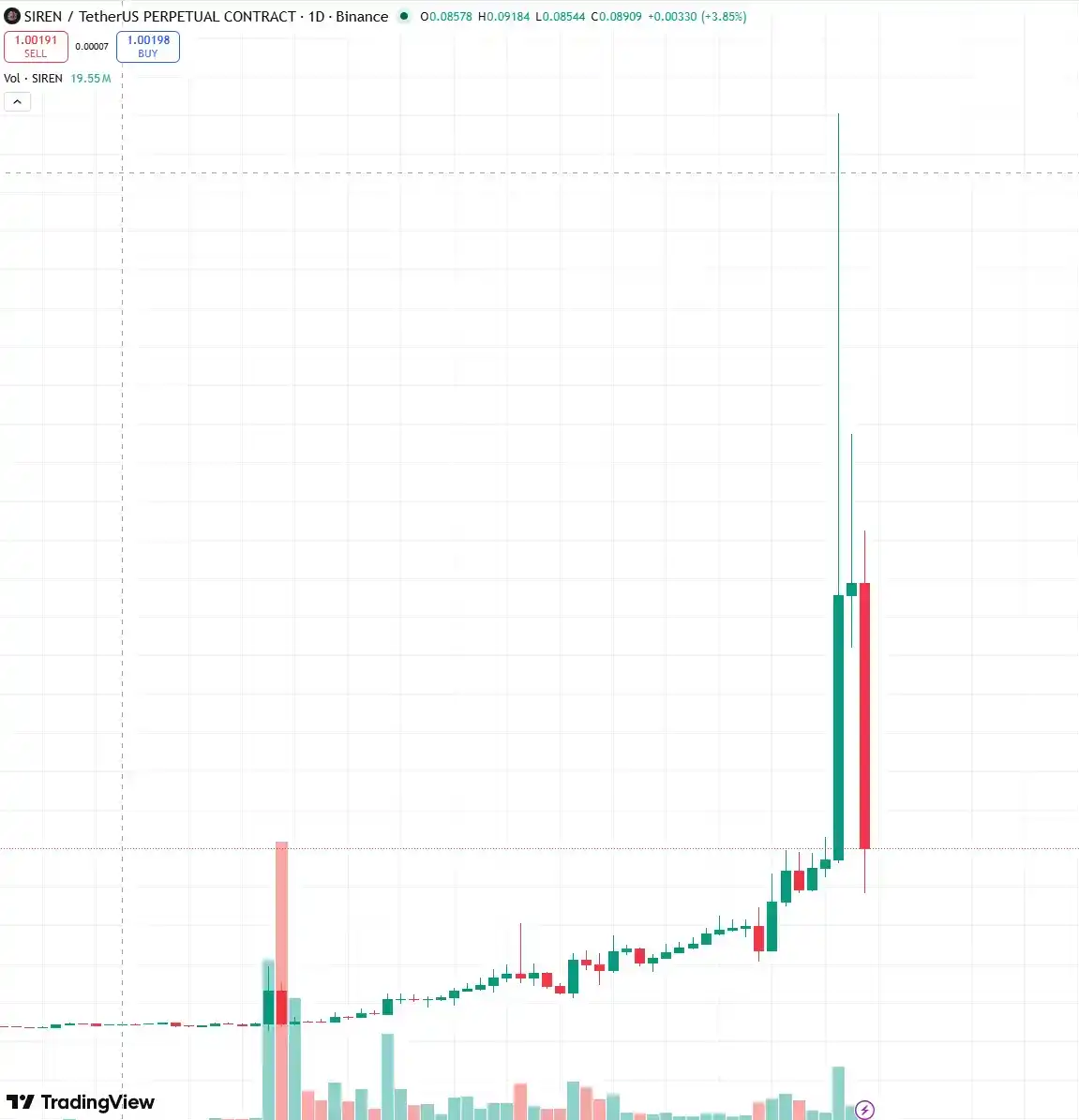
By the time this article was about to be published, the above speculation was confirmed:

Conclusion

Regardless of whether the current market is sluggish, the emergence of such harvesting schemes is always bad. Admittedly, some trading experts can get a share of the whale's soup amidst the information fog, but for the vast majority of retail investors, it is nothing more than an utterly unfair gamble.

When such a blatant harvesting scheme once appeared in the top 30 of the cryptocurrency market cap, I can only sigh.

Related Questions

QWhat is the main argument of the article regarding the SIREN token?

AThe article argues that SIREN was a leveraged scam, where a few entities controlled the majority of the supply and manipulated its price across exchanges to liquidate leveraged traders.

QHow did the low liquidity on exchanges like Gate contribute to the SIREN price manipulation?

AWith only 64,000 SIREN tokens on Gate, a small trade of around $100,000 could cause a price swing of nearly 40%, allowing manipulators to create extreme volatility with minimal capital.

QWhat evidence does the article provide to suggest that SIREN was heavily controlled by a few parties?

AOn-chain analysis showed that entities controlled 88.5% of the SIREN supply, and the open interest for SIREN futures surged abnormally from $3-5 million to over $58 million, indicating concentrated control.

QAccording to the article, what trading strategy did the manipulators use to profit from SIREN?

AThe manipulators accumulated a large现货 position and long futures, pushed the price up, then induced short selling from others. They used the negative funding rates paid by shorts to further fund the price pump before causing a sharp price drop to liquidate both longs and shorts.

QWhat was the significance of the adjustment to Binance's SIREN futures price index mentioned in the article?

AThe adjustment reduced the weight of Gate's spot price in the index from 50% to 25% and increased Binance Alpha's weight to 50%, making it harder to manipulate the futures price by exploiting low liquidity on a single exchange.

Related Reads

Why Do You Always Lose Money on Polymarket? Because You're Betting on News, While the Pros Read the Rules

Why do you always lose money on Polymarket? Because you bet on news, while the pros study the rules. This article explains how top traders ("che tou") profit by meticulously analyzing market rules, not just predicting events. Polymarket, a prediction market platform, often sees disputes over event outcomes due to ambiguous rule wording. For instance, a market asking "Who will be the leader of Venezuela by the end of 2026?" was misinterpreted by many who bet on Delcy Rodríguez, assuming she held power. However, the rules specified "officially holds" as the formally appointed, sworn-in individual. Since Nicolás Maduro was still recognized as president officially, he won the market—even being in prison. To resolve such disputes, Polymarket uses a decentralized arbitration system via UMA protocol. The process involves: 1. Proposal: Anyone can propose a market outcome by staking 750 USDC, earning 5 USDC if unchallenged. 2. Dispute: A 2-hour window allows challenges with a 750 USDC stake; successful challengers earn 250 USDC. 3. Discussion: A 48-hour period on UMA Discord for evidence and debate. 4. Voting: UMA token holders vote in two 24-hour phases (blind then public). Outcomes require >65% consensus and 5M tokens voted; otherwise, four re-votes occur before Polymarket intervention. 5. Settlement: Results are final and automatic. Unlike traditional courts, Polymarket’s system lacks separation between arbitrators and stakeholders—voters often hold market positions, creating conflicts of interest. This leads to herd mentality in discussions and non-transparent outcomes without explanatory rulings, preventing precedent formation. Thus, success on Polymarket hinges on deep rule interpretation, not just event prediction, exploiting gaps between reality and contractual wording.

marsbit1h ago

Why Do You Always Lose Money on Polymarket? Because You're Betting on News, While the Pros Read the Rules

marsbit1h ago

DeepSeek Funding: Liang Wenfeng's 'Realist' Pivot

DeepSeek, a leading Chinese AI company, has initiated its first external funding round, aiming to raise at least $300 million at a valuation of no less than $10 billion. This move marks a significant shift from its founder Liang Wenfeng’s previous idealistic stance of rejecting external capital to maintain independence. Despite strong financial backing from its parent company, quantitative trading firm幻方量化 (Huanfang Quant), which provided an estimated $700 million in revenue in 2025 alone, DeepSeek faces mounting challenges. Key issues include a 15-month gap in major model updates, delays in its flagship V4 release, and the loss of several core researchers to competitors offering significantly higher compensation. The company is also undergoing a strategic pivot by migrating its infrastructure from NVIDIA’s CUDA to Huawei’s Ascend platform, a move aligned with China’s push for technological self-reliance amid U.S. export controls. However, DeepSeek lags behind rivals like智谱AI and MiniMax—both now publicly listed—in areas such as product ecosystem, multimodal capabilities, and commercialization. The funding round, though relatively small in scale, is seen as a way to establish a market-validated valuation anchor, making employee stock options more competitive and facilitating talent retention. It also signals DeepSeek’s transition from a pure research-oriented organization to a commercially-driven player in the global AI ecosystem.

marsbit2h ago

DeepSeek Funding: Liang Wenfeng's 'Realist' Pivot

marsbit2h ago

Trading

Spot
Futures

Hot Articles

Discussions

Welcome to the HTX Community. Here, you can stay informed about the latest platform developments and gain access to professional market insights. Users' opinions on the price of S (S) are presented below.

活动图片