Le XRP recule face à son rival XLM : Pourquoi les traders de détail abandonnent l'un pour l'autre

bitcoinistPubblicato 2026-06-03Pubblicato ultima volta 2026-06-03

Introduzione

La rivalité entre XRP et Stellar (XLM) s'intensifie, notamment en Corée du Sud où les traders de détail abandonnent massivement le XRP au profit du XLM. Sur la plus grande plateforme locale, Upbit, le volume d'échange du XLM (252,3 millions de dollars) a largement dépassé celui du XRP (125,7 millions de dollars) sur 24 heures, une première. Cet engouement est alimenté par l'intérêt croissant pour le rôle de Stellar dans la finance tokenisée, renforcé par des projets récents liés au DTCC. Conséquence : le XLM a grimpé de plus de 55% en une semaine, tandis que le XRP est en difficulté, tombant sous les 1,3 dollar malgré sa popularité historique en Asie. Parallèlement, certains analystes anticipent un possible rallye bull pour le XRP, arguant qu'il pourrait suivre la trajectoire haussière du XLM, avec des objectifs de prix très ambitieux à long terme.

La rivalité entre XRP et Stellar (XLM) dure depuis des années, les investisseurs comparant souvent ces deux cryptomonnaies axées sur les paiements en raison de leurs origines communes et de leurs cas d'utilisation similaires. Bien que XRP ait longtemps maintenu une plus grande présence sur le marché, XLM semble prendre le dessus dans certaines régions. Un nouveau rapport montre que les traders de détail en Corée du Sud abandonnent désormais le XRP au profit du XLM, alimentant une flambée de la valeur de marché de Stellar tandis que le prix du XRP continue de baisser.

Le XLM dépasse le XRP en volume d'échange en Corée du Sud

Le token natif de Stellar, XLM, a devancé XRP lors d'un changement majeur sur la plus grande plateforme d'échange de crypto de Corée du Sud, Upbit. Ce développement intervient alors que les traders de détail affluent vers le XLM, poussant son activité de négociation au-dessus de celle de l'un des actifs numériques les plus populaires du pays.

Les données partagées par l'analyste de marché Xaif Crypto montrent que le XLM a enregistré environ 252,3 millions de dollars de volume d'échange sur 24 heures sur Upbit. En comparaison, le XRP a affiché environ 125,7 millions de dollars sur la même période, soit moins de la moitié du volume observé pour le XLM. Cet écart stupéfiant marque la première fois que le XLM dépasse le XRP en volume d'échange, se plaçant désormais en tête sur Upbit.
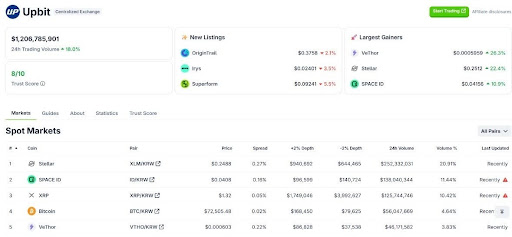
Source : CoinCodex

Cette dernière flambée survient après un regain d'intérêt pour le rôle de Stellar dans la finance tokenisée en Corée du Sud. Les traders ont réagi positivement aux récents plans reliant le réseau blockchain à des efforts de tokenisation impliquant le Depository Trust & Clearing Corporation (DTCC) américain, l'une des plus grandes entreprises d'infrastructure de marché financier au monde.

Les nouvelles du DTCC ont alimenté une nouvelle demande pour le XLM parmi les investisseurs sud-coréens, qui préféraient habituellement échanger du XRP. Il est à noter que le XLM a également enregistré de fortes hausses de prix parallèlement à l'augmentation de l'activité de négociation. Les rapports montrent que le token a grimpé de plus de 55% pour atteindre 11 dollars au cours de la semaine dernière, alors que l'élan continuait de se construire sur le marché. Le XRP, quant à lui, a eu du mal à suivre la hausse, tombant même en dessous de 1,3 dollar, malgré sa popularité de longue date parmi les traders sud-coréens.

Ce changement d'intérêt et de demande est notable car le XRP a historiquement été l'une des cryptomonnaies les plus échangées sur les marchés asiatiques comme la Corée du Sud, le Japon et la Thaïlande. Il y a seulement quelques semaines, le XRP menait le volume d'échange sur Upbit en Corée du Sud, devant le Bitcoin et l'Ethereum. Cependant, les derniers chiffres suggèrent que l'attention des traders de détail s'est désormais tournée vers le XLM alors que ces derniers cherchent à suivre l'élan le plus fort du marché.

Un analyste prévoit un rallye haussier pour le XRP après celui du XLM

Dans une analyse séparée, l'analyste crypto CW estime que le XRP pourrait être le prochain grand gagnant après la récente percée de Stellar. Dans un message partagé sur X, l'analyste a déclaré que le rallye haussier pour le XLM a déjà commencé et a suggéré que le XRP se trouve maintenant dans une position similaire avant son propre mouvement à la hausse.

Selon CW, le XRP attend un "signal de départ" et se négocie actuellement autour du même niveau où se trouvait le XLM avant son récent rallye de prix de 57%. L'analyste a soutenu que le XRP pourrait suivre la trajectoire haussière du XLM si l'élan continue de se renforcer.
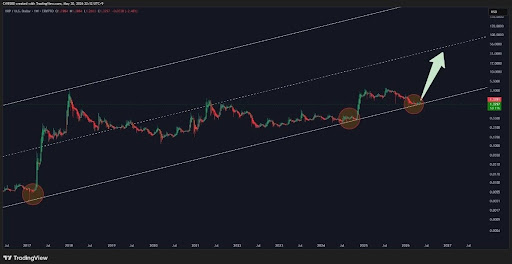
Source : X

Cependant, le graphique de CW projette un mouvement beaucoup plus important pour le XRP, visant de potentiels nouveaux sommets historiques près de 56 dollars. Bien que cette prédiction reste très spéculative et ambitieuse compte tenu du prix actuellement bas de la cryptomonnaie, elle reflète un optimisme croissant parmi certains participants du marché qui pensent que le XRP n'a pas encore réalisé son plus grand mouvement dans le cycle actuel.

Le prix suit la trajectoire baissière du marché | Source : XRPUSDT sur Tradingview.com

Domande pertinenti

QPourquoi les traders de détail en Corée du Sud abandonnent-ils le XRP au profit du XLM ?

ALes traders réagissent positivement à l'annonce récente reliant le réseau Stellar aux efforts de tokenisation impliquant la DTCC (Depository Trust & Clearing Corporation), l'une des plus grandes entreprises d'infrastructure des marchés financiers au monde. Cette nouvelle a stimulé la demande pour le XLM, tandis que le XRP a du mal à suivre la hausse.

QQuelle est la différence de volume de négociation entre le XLM et le XRP sur Upbit en Corée du Sud ?

ASur Upbit, le plus grand échange de crypto-monnaies en Corée du Sud, le XLM a enregistré un volume de négociation sur 24 heures d'environ 252,3 millions de dollars, tandis que le XRP n'a affiché qu'environ 125,7 millions de dollars pour la même période. C'est la première fois que le XLM dépasse le XRP en volume sur cette plateforme.

QSelon l'analyste CW, quelle pourrait être la prochaine étape pour le XRP après la forte hausse du XLM ?

AL'analyste CW estime que le XRP pourrait être le prochain grand gagnant. Il suggère que le XRP se trouve dans une position similaire à celle du XLM avant sa récente hausse de 57%. Sur la base de son analyse graphique, il cible des sommets historiques potentiels près de 56 dollars pour le XRP, bien que cette prédiction soit très spéculative.

QQuel facteur a historiquement fait du XRP une crypto-monnaie très négociée sur les marchés asiatiques ?

ALe XRP a historiquement été l'une des crypto-monnaies les plus négociées sur les marchés asiatiques comme la Corée du Sud, le Japon et la Thaïlande en raison de sa popularité de longue date et de son cas d'utilisation axé sur les paiements. Il y a quelques semaines à peine, il dépassait même le Bitcoin et l'Ethereum en volume sur Upbit.

QComment le prix du XLM a-t-il évolué récemment par rapport au XRP ?

AAu cours de la semaine écoulée, le XLM a connu de fortes hausses de prix, grimpant de plus de 55% pour atteindre environ 11 dollars, alimenté par l'intérêt croissant pour la finance tokenisée et l'annonce de la DTCC. Pendant ce temps, le XRP a eu du mal à suivre cette dynamique et a même chuté en dessous de 1,3 dollar, malgré sa popularité traditionnelle.

Letture associate

Fed's Internal Doves Flock to Hawkish Stance, Warsh's Debut "Between a Rock and a Hard Place"

U.S. Federal Reserve officials who previously advocated for rate cuts, including Governor Christopher Waller, have recently shifted their stance, with many now not ruling out the possibility of future rate hikes. This sets a challenging stage for new Fed Chair Kevin Warsh's first policy meeting. Appointed by President Trump based on his dovish views, Warsh now faces a committee where the debate has pivoted from "when to cut" to "whether to hike," driven by persistent inflation above 3%, a strong labor market, and supply-side pressures from AI infrastructure demands and geopolitical tensions. Key figures illustrate the shift. Governor Waller, once concerned about employment, now says data has pushed him toward considering rate increases. Even moderate voices like Governor Lisa Cook, while expecting inflation to ease, have indicated readiness to hike if it fails to do so. Long-time hawks such as regional Fed presidents Beth Hammack, Lorie Logan, and Neel Kashkari have grown more vocal, arguing that the real policy rate is effectively falling and that action may soon be needed. The upcoming Fed meeting is expected to keep rates steady but will likely remove the "easing bias" from its statement, signaling a neutral stance between cuts and hikes. The quarterly "dot plot" is anticipated to show most officials projecting no cuts this year, with some potentially indicating hikes. Chair Warsh, a critic of the Fed's reliance on forward guidance like the dot plot, must navigate communicating this pivot using tools he has questioned, all while steering policy in a direction counter to the preferences of the president who appointed him. The consensus suggests the Fed's next move could well be a rate increase.

marsbit7 min fa

Fed's Internal Doves Flock to Hawkish Stance, Warsh's Debut "Between a Rock and a Hard Place"

marsbit7 min fa

The Trillion-Yuan Market Cap 'Yi Zhong Tian': Who is the True Value King?

The article analyzes the three leading Chinese optical module companies, collectively nicknamed "Yi Zhong Tian": Xinyisheng, Zhongji Innolight, and TFC Optical Communication. It evaluates their "cost-performance" not by current stock price, but through three lenses: PEG ratio (growth vs. valuation), earnings quality, and premium/discount for certainty. Xinyisheng shows the most attractive PEG ratio and high profitability, but its valuation reflects discounts for risks like high customer concentration and reliance on overseas markets. Zhongji Innolight, the most expensive, commands a premium for its market leadership, dominant share in key products like 800G/1.6T modules, and higher earnings certainty, though it faces geopolitical risks. TFC Optical, as an upstream component supplier ("water seller"), has the highest gross margin and bets on the long-term CPO/NPO architecture trend, but trades at a high valuation with more stable, less explosive growth. The core argument is that while these companies dominate module assembly, the true profit pool and technological moat lie upstream in laser and switch chips, currently controlled by U.S. firms like Lumentum and Coherent. The long-term "cost-performance" for these Chinese leaders hinges on whether the domestic industry, exemplified by companies like Yuanjie Technology, can successfully move up the value chain into high-power laser chips. Otherwise, their high growth may remain confined to the lower-margin assembly segment.

marsbit17 min fa

The Trillion-Yuan Market Cap 'Yi Zhong Tian': Who is the True Value King?

marsbit17 min fa

Has the Crypto Market Bottomed? Here's What Institutions Think

The crypto market is in a period of significant debate, with leading institutions offering differing views on whether a bottom has been reached. Three prominent firms have published detailed analyses: * **Galaxy Digital** argues Bitcoin has **not yet bottomed**. Their analysis of 13 historical indicators across six dimensions (valuation, profit-taking, miner pressure, etc.) shows only four are fully met. They project a potential bottom range between $30k and $54k. * **NYDIG** states a bottom is **possible but not likely**. While metrics are close to historic bear market extremes, they note the absence of a classic panic-selling event. They also suggest increased institutional adoption may have structurally altered the market cycle, potentially leading to a shallower downturn. * **Standard Chartered Bank** asserts the **bottom has already occurred** at around $59k. They cite two key factors: potential US-Iran diplomatic progress and the anticipated SpaceX IPO, which they believe absorbed capital and caused ETF selling pressure that is now subsiding. They forecast a year-end price target of $100k. Despite the surface-level disagreement, the reports share critical common ground more valuable for long-term investors: 1. All three believe the market bottom will form **within this year**. 2. All agree the current price is **closer to the bottom than to previous highs**. 3. All maintain a **bullish long-term outlook** for Bitcoin and a new cycle. The core takeaway is that while the exact bottom price ($40k, $50k, or $60k) is debated, the consensus is that a bottom is imminent. For long-term holders, the primary focus should not be pinpointing the absolute low, but on the future potential for prices to reach $100k, $200k, or higher. The fundamental thesis for Bitcoin—sovereign debt accumulation, inflation, declining trust in centralized institutions, global digitization, and improved accessibility—remains intact and is arguably strengthening. The overall landscape is viewed as more favorable than in previous crypto winters.

marsbit27 min fa

Has the Crypto Market Bottomed? Here's What Institutions Think

marsbit27 min fa

The 'Chip' Challenge and Breakthroughs in China's Optical Industry Chain

China's Photonics Industry: Bottlenecks and Breakthroughs In the global AI race, computing chips dominate the narrative, but the underlying bottleneck increasingly defining the scale of AI clusters is light—or more specifically, optical connectivity. Optical modules, which translate electrical signals to light and vice versa, are crucial for connecting thousands of GPUs in AI data centers, preventing data congestion and ensuring efficient model training. High-speed modules (800G, 1.6T) are now standard, with performance hinging on advanced DSP (Digital Signal Processor) chips. This is where a critical dependency lies. Two US giants—Marvell and Broadcom—collectively dominate over 90% of the high-end DSP chip market. Chinese optical module leaders like Zhongji Innolight and Eoptolink rely on these chips to manufacture modules for overseas AI customers, primarily in North America. While this creates a supply chain vulnerability, complete decoupling is difficult. Marvell derives over half its revenue from Greater China, and the US firms depend on Chinese partners for chip packaging and optical components. The risk from laser chips (e.g., from Lumentum), another key component, is considered more manageable due to multiple global suppliers and faster progress in domestic alternatives from companies like YOFC and Accelink. To mitigate risks, China's industry is pursuing a multi-pronged strategy: diversifying supply chains and locking in long-term orders; fostering a domestic market ecosystem to adopt homegrown DSPs from firms like Huawei HiSilicon and CETC; accelerating R&D in high-speed DSPs and advanced packaging; and investing in next-gen technologies like silicon photonics and Co-Packaged Optics (CPO) to reduce reliance on discrete DSPs. The ultimate solution lies not in short-term博弈 but in persistent advancement of domestic high-end chip R&D and manufacturing. While challenges remain in performance, certification, and ecosystem building, China's vast domestic market and manufacturing base provide a crucial buffer, buying time for the industry to achieve greater technological independence.

marsbit41 min fa

The 'Chip' Challenge and Breakthroughs in China's Optical Industry Chain

marsbit41 min fa

Behind SpaceX's $2 Trillion Market Cap: Why Does Musk Always Have the Next Move Planned?

On June 12th, SpaceX debuted on the Nasdaq, reaching a valuation that briefly touched $2 trillion. This marked the culmination of a 24-year journey from its founding in 2002, driven by Elon Musk's frustration at the high cost of buying rockets. The company's path was defined by early failures, with its first three Falcon 1 launches ending in explosions before a successful 2008 flight opened the era of commercial spaceflight. Key to its model was a fixed-price NASA contract, incentivizing cost reduction. SpaceX mastered rocket reusability, first achieving a Falcon 9 landing in 2015, which drastically cut launch costs. This enabled its profitable Starlink satellite internet constellation, envisioned years before reusability was proven, to create an internal market for frequent launches. Similarly, the next-generation Starship rocket was in development long before its first flight, with its business case evolving from Mars colonization to supporting the emerging concept of in-orbit data centers for AI—a story now central to its valuation. The company's recent IPO, a reversal of its long-standing "no IPO" stance, is funding this ambitious "space-based compute" vision. While major tech players like Google, Blue Origin, and others are investing heavily, significant technical and cost hurdles remain. Ultimately, SpaceX's history is one of creating its own demand: first with Starlink and now with space-based AI compute, betting that its next rocket will enable its next giant market.

marsbit44 min fa

Behind SpaceX's $2 Trillion Market Cap: Why Does Musk Always Have the Next Move Planned?

marsbit44 min fa

Trading

Spot
Futures

Articoli Popolari

Cosa è XRP 2.0

XRP 2.0: Una Nuova Frontiera nel Paesaggio delle Criptovalute Introduzione a XRP 2.0 Nel mondo in continua evoluzione delle criptovalute, nuovi progetti emergono continuamente, cercando attenzione e adozione. Una tale iniziativa promettente è XRP 2.0, un nuovo progetto di criptovaluta progettato per sfruttare avanzate tecnologie blockchain e metodologie di crittografia robuste. Anche se il nome richiama alla mente l'XRP di Ripple, è fondamentale notare che XRP 2.0 opera in modo indipendente, concentrandosi sul miglioramento della sicurezza delle transazioni, della privacy e della scalabilità. Mentre il panorama finanziario digitale abbraccia sempre di più soluzioni decentralizzate, XRP 2.0 mira a contribuire in modo significativo al web3 e all'espansione generale dei progetti crypto. Cos'è XRP 2.0? Alla sua base, XRP 2.0 è un progetto di criptovaluta che mira a creare un ecosistema di valuta digitale sicuro e decentralizzato. La sua tecnologia fondamentale integra principi di blockchain sofisticati con tecniche di crittografia all'avanguardia. L'obiettivo principale di XRP 2.0 è quello di affermarsi come una piattaforma affidabile ed efficiente in grado di consentire un'esecuzione rapida delle transazioni, dando priorità a migliori protezioni della privacy per i suoi utenti. Il progetto è promosso come una soluzione a molte limitazioni affrontate dalle criptovalute esistenti, proponendo un sistema in grado di gestire un volume maggiore di transazioni con migliorata velocità e privacy. Questa versatilità pone XRP 2.0 come un significativo competitor in un mercato affollato di varie valute digitali. Chi è il Creatore di XRP 2.0? L'identità del creatore dietro XRP 2.0 è stata segnalata come 'Wilbur'. Tuttavia, i dettagli completi riguardanti Wilbur o l'entità associata rimangono sfuggenti. L'anonimato di molti creatori di criptovalute non è un fenomeno raro nel settore, spesso progettato per mantenere un certo grado di privacy e sicurezza. Chi sono gli Investitori di XRP 2.0? Al momento, informazioni specifiche relative alle fondazioni o organizzazioni di investimento a supporto di XRP 2.0 non sono disponibili pubblicamente. Nel settore delle criptovalute, il supporto di investitori rinomati può influenzare significativamente la credibilità e il successo di un progetto, tuttavia la trasparenza riguardo ai sostenitori finanziari di XRP 2.0 non è stata stabilita. Come Funziona XRP 2.0? XRP 2.0 si distingue per l'impiego di una combinazione di tecnologia blockchain e algoritmi di crittografia avanzati che garantiscono transazioni sicure e decentralizzate. La sua struttura innovativa include caratteristiche uniche progettate per promuovere il coinvolgimento degli utenti e ampliare le funzionalità oltre le transazioni convenzionali delle criptovalute. Tra queste caratteristiche, XRP 2.0 incorpora capacità alimentate da intelligenza artificiale, come funzionalità di testo in immagini e testo in voce. Queste aggiunte sono progettate per migliorare l'esperienza interattiva per gli utenti, promuovendo una maggiore applicabilità in vari settori. Unendo progressi tecnologici con design incentrati sugli utenti, XRP 2.0 mira a catturare l'attenzione di una vasta gamma di individui e aziende che cercano di integrare soluzioni di criptovaluta nei loro framework operativi. Cronologia di XRP 2.0 Comprendere XRP 2.0 richiede di esaminare i traguardi che hanno definito il suo percorso fino ad ora: 23 luglio 2023: XRP 2.0 viene introdotto come un nuovo progetto di criptovaluta, mirante a rivoluzionare le capacità di transazione sicura e decentralizzata nel dominio blockchain. 8 settembre 2023: Si verifica il lancio di un altro progetto, XRP20, marcando l'emergere di un token ERC-20 sulla blockchain di Ethereum che resta non correlato a XRP 2.0. 13 novembre 2023: Il ledger XRP subisce un significativo aggiornamento con il rilascio della versione 2.0.0 del software server rippled. È essenziale notare che questo sviluppo è scollegato dal progetto di criptovaluta XRP 2.0. Punti Chiave su XRP 2.0 Per distillare l'essenza di XRP 2.0, emergono diversi fattori critici: Caratteristiche Uniche: L'inclusione di funzionalità come il testo in immagini e testo in voce alimentato da intelligenza artificiale diversifica ulteriormente le potenziali applicazioni di XRP 2.0. Tecnologia Blockchain: Il framework utilizza meccanismi blockchain avanzati e protocolli di crittografia, garantendo un ambiente sicuro e decentralizzato per le transazioni. Scalabilità e Privacy: XRP 2.0 dà priorità a migliori protezioni della privacy nei processi di transazione e alla scalabilità necessaria per accogliere una base di utenti in crescita. Nessuna Affiliazione con Ripple: È importante notare che, nonostante il suo nome, XRP 2.0 non ha alcuna fedeltà o collaborazione con l'XRP di Ripple, distinguendo il proprio framework operativo e obiettivi all'interno dell'ecosistema delle criptovalute. Conclusione XRP 2.0 rappresenta un'ambiziosa venture nell'ambito delle criptovalute, mirante a offrire una combinazione di sicurezza, privacy ed efficienza nelle transazioni digitali. Integrando tecnologie sofisticate e caratteristiche user-friendly, il progetto si propone di ampliare gli orizzonti di ciò che le criptovalute possono realizzare nell'economia digitale odierna. Sebbene l'anonimato del suo creatore e la mancanza di investitori dichiarati possano sollevare domande per alcuni, il focus di XRP 2.0 su funzionalità avanzate e decentralizzazione ne amplifica l'appeal in un mercato crypto sempre più affollato. Man mano che il panorama delle criptovalute continua a evolversi, XRP 2.0 potrebbe emergere come un attore decisivo nell'espansione di soluzioni blockchain sicure e scalabili.

166 Totale visualizzazioniPubblicato il 2024.04.05Aggiornato il 2024.12.03

Cosa è XRP 2.0

Come comprare XRP

Benvenuto in HTX.com! Abbiamo reso l'acquisto di XRP (XRP) semplice e conveniente. Segui la nostra guida passo passo per intraprendere il tuo viaggio nel mondo delle criptovalute.Step 1: Crea il tuo Account HTXUsa la tua email o numero di telefono per registrarti il tuo account gratuito su HTX. Vivi un'esperienza facile e sblocca tutte le funzionalità,Crea il mio accountStep 2: Vai in Acquista crypto e seleziona il tuo metodo di pagamentoCarta di credito/debito: utilizza la tua Visa o Mastercard per acquistare immediatamente XRPXRP.Bilancio: Usa i fondi dal bilancio del tuo account HTX per fare trading senza problemi.Terze parti: abbiamo aggiunto metodi di pagamento molto utilizzati come Google Pay e Apple Pay per maggiore comodità.P2P: Fai trading direttamente con altri utenti HTX.Over-the-Counter (OTC): Offriamo servizi su misura e tassi di cambio competitivi per i trader.Step 3: Conserva XRP (XRP)Dopo aver acquistato XRP (XRP), conserva nel tuo account HTX. In alternativa, puoi inviare tramite trasferimento blockchain o scambiare per altre criptovalute.Step 4: Scambia XRP (XRP)Scambia facilmente XRP (XRP) nel mercato spot di HTX. Accedi al tuo account, seleziona la tua coppia di trading, esegui le tue operazioni e monitora in tempo reale. Offriamo un'esperienza user-friendly sia per chi ha appena iniziato che per i trader più esperti.

1.6k Totale visualizzazioniPubblicato il 2024.12.10Aggiornato il 2026.06.02

Come comprare XRP

Discussioni

Benvenuto nella Community HTX. Qui puoi rimanere informato sugli ultimi sviluppi della piattaforma e accedere ad approfondimenti esperti sul mercato. Le opinioni degli utenti sul prezzo di XRP XRP sono presentate come di seguito.

活动图片














