起底“类国债”STRC,谁在为Saylor的比特币豪赌买单

比推Published on 2025-11-14Last updated on 2025-11-14

来源:BitMEX Research

原标题:A Bit Of A Stretch

编译及整理:BitpushNews


(此处表达的任何观点均为作者个人观点,不应作为投资决策的基础,也不应被解释为参与投资交易的推荐或建议。)

摘要:

我们来看一下 Stretch($STRC),这是一种极其新颖的 MSTR 债务类工具,旨在通过根据债务的市场价格每月调整股息率来实现价格稳定。

因此,该产品被宣传为低风险产品,并与短期美国国债进行比较。这是Saylor先生为积累更多比特币,在金融系统规则中进行的又一次「钻营」。

image.png

我们解读美国证券交易委员会(SEC)的文件后发现,只要MSTR愿意,它可以随时放弃维持价格稳定的目标,并每月将股息下调最多25个基点。

这意味着,只需三年多,股息率就可能降为零。因此,我们认为该产品条款极大地倾向于MSTR方,从投资角度看,其风险远高于短期国债

概述

2024 年 11 月,我们发布了关于 MSTR 的帖子,即"我们做了庞氏数学"帖子:

https://x.com/BitMEXResearch/status/1859559585301909660

这相对简单,只看了股票。除了股票,MSTR 还有一整套金融产品可供投资。特别是一波相对较新的优先永久证券:
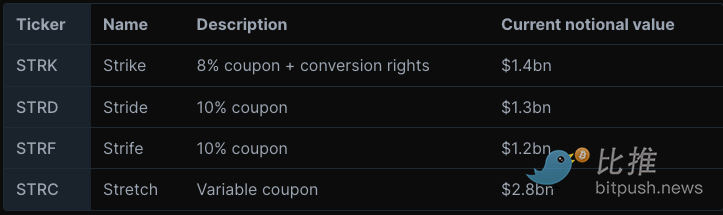
截屏2025-11-14 上午11.14.25.png

在本文中,我们将重点关注我们认为四种产品中最有趣的 STRC。

特别是,继我们 2024 年 11 月在 X 上的帖子之后,STRC 是导致我们收到最多问题的产品。

问题诸如:

  • 当音乐停止,新资金流入 MSTR 枯竭时会发生什么?

  • MSTR 届时如何负担 STRC 的股息支付?

  • MSTR 会被迫出售比特币吗?

  • STRC 是庞氏骗局吗?

鉴于所有这些问题,我们决定写下这篇简短的说明,阐述我们对 STRC 的基本看法。

什么是 STRC?
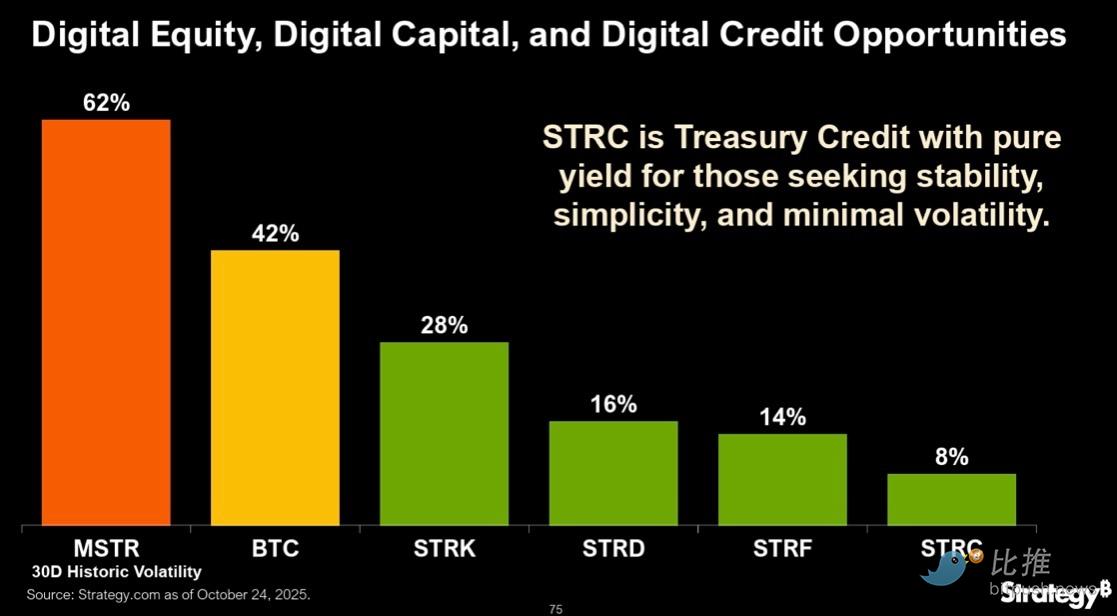
image.png

来源:https://assets.contentstack.io/v3/assets/bltf8d808d9b8cebd37/blt9b84fb10213f43b9/6903bc2de0bf2aa118a4627f/q3-2025-strategy-earnings-presentation.pdf

STRC 被宣传为 MSTR 投资产品套件中风险最低的部分。风险如此之低,事实上,可以与美国国债或稳定币相媲美。

只不过,收益率远高于这些低风险替代品。您可以在下面看到 MSTR 最近投资者演示中的一张图片,其中 STRC 与"国债信贷"进行了比较。

STRC 的价格最近交易价格高达 100 美元的票面价值。这表明它取得了一定的成功,价格相对稳定。
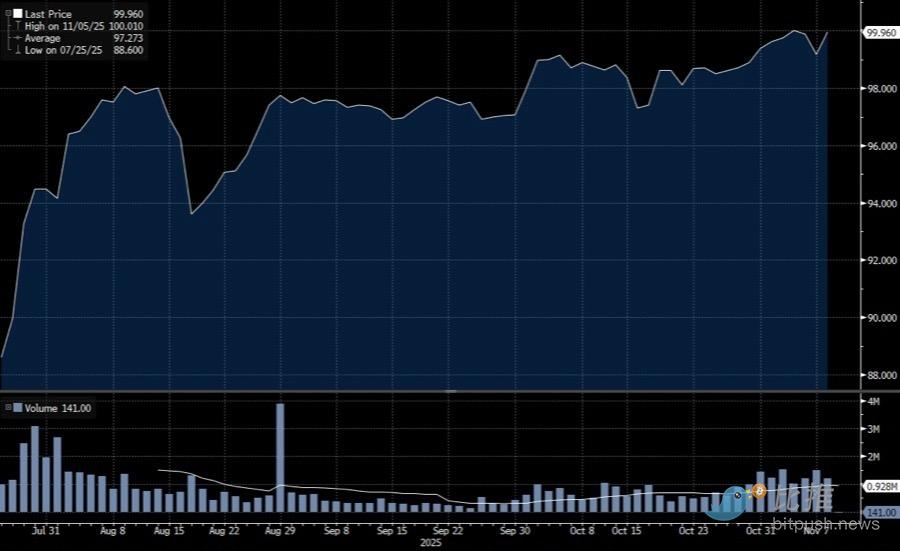
image.png

利率是如何确定的?

STRC 的目标似乎是使其交易价格达到或接近 100 美元。股息通常每月支付一次,并且公司可自行决定调整股息。

其理念是,如果 STRC 交易价格低于 100 美元,可以增加股息支付,这应该会推高 MSTR 的价格。

在另一种情况下,如果 STRC 交易价格高于 100 美元,可以减少股息金额,理论上这应该会将价格推低至 100 美元。

因此,该工具应该非常稳定,并且始终在 100 美元或附近交易。这使得 STRC 成为一种类现金工具,是短期国债的替代投资。与国债的一个关键区别在于,发行 STRC 所筹集的资金用于购买比特币。这是为了购买更多比特币而对金融系统进行的又一次黑客攻击尝试。

据我们所知,STRC 是一种新颖的产品。没有其他类似的债务工具。

债务工具通常具有固定票息或可变票息,其中利息根据经济中的其他利率(例如联邦基金利率)而变化。

我们不知道有任何其他债务工具的利率会为了保持债务的市场价格稳定而变化。

看起来 MSTR 很有信心,因为他们之前黑客金融系统(以溢价出售自己的股票来购买比特币)的成功,使他们想出了一个更厚颜无耻的黑客手段:发行债务来购买比特币,并且由于一些新颖的技巧,该债务看起来具有与短期国债相同的风险。

表面上看,这种新的债务发行模式立即让人感觉对一家公司来说可能不可持续。

如果一家公司有固定票息并陷入困境,其负债保持不变。

然而,如果一家公司拥有可变票息,且其变化旨在保持债务价格稳定,那么如果公司陷入困境且信用风险增加,则需要增加票息支付以保持债务价格稳定。这意味着随着公司陷入困境,其负债将会增加。

因此,可能会出现向下的死亡螺旋,公司的信用度不断下降,直到破产。因此,这些新颖的工具可能会增加公司的不稳定性。就 MSTR 而言,可能是比特币价格下跌导致 STRC 价值下降,这可能会增加 MSTR 的月度支付负债,从而导致下行螺旋。

关于利率的规则是什么?

鉴于上述机制,值得关注的是月度股息支付是如何设定的规则,而不仅仅是 STRC 价格稳定的目标。特别是关于票息率降低的规则。规则如下所述,但由于法律语言的原因可能难以理解。

"然而,我们将不被允许降低适用于任何常规股息期的每年度月度常规股息率:

(i)超过以下金额,相较于前一个常规股息期适用的每年度月度常规股息率:(1)25 个基点之和;以及(2)(x)在该前一个常规股息期的第一个营业日的'月度 SOFR 年率'(在本招股说明书补充文件中定义)超过(y)在该前一个常规股息期从(含)第一个营业日至(含)最后一个营业日期间营业日出现的月度 SOFR 年率的最低值的超出部分(如有);

或(ii)降至低于在我们提供下一个常规股息率通知之前的营业日有效的月度 SOFR 年率的年率。"

来源:https://www.sec.gov/Archives/edgar/data/1050446/000119312525165531/d852456d424b5.htm

注:SOFR 是美国基于市场的基准隔夜利率。它旨在取代更容易被某些银行操纵的 LIBOR。

我们对上述内容的理解是,MSTR 可以绝对自主地每月将股息率降低最多 25 个基点,无论其他情况如何发生。

无论 STRC 价格或更广泛的市场发生什么,股息率每月都可以降低 25 个基点。这相当于每年 300 个基点或 3 个百分点。

因此,基于当前 10% 的股息率,以允许的最大下降速度,将利率降至零需要三年零四个月。在某些情况下,如果更广泛经济中的市场利率也在下降,公司每月可以更快地降低股息率。

例如,如果市场隔夜利率在一个月内下降 100 个基点(从月初到最低点),那么 STRC 股息率在任何给定月份可能下降 100 个基点 + 25 个基点 = 125 个基点。如果基准利率下降,这似乎是公平的,STRC 应该能够进行调整。

还有一些关于 MSTR 未能支付已宣布的票息时会发生什么的复杂规则。如果发生这种情况,则未付股息会继续累积。

我们的理解是,在支付完这笔累积股息的未结清余额之前,MSTR 不能支付"任何类别的股息平价股票的股息",除非它也支付 STRC 股息,并且这与累积未付股息的比例不低于支付股息的另一类股票的相同比例。

也就是说,累积未付股息越高,就越难支付任何其他类别股票的任何重大股息。

因此,如果 MSTR 开始累积 STRC 的未付股息,则支付任何其他股票工具的款项就变得更加困难。然而,仍然没有任何形式的担保或破产风险,并且如果公司不愿意,它根本不必向 STRC 持有人支付股息。

STRC 是庞氏骗局吗?

现在我们了解了 STRC 的机制,我们可以解决它是否与庞氏骗局有共同特征的问题。当然它字面上不是庞氏骗局,因为它不是基于谎言或欺诈,然而,如果某事物与庞氏骗局有很多共同点,例如它为投资者带来明显强劲且持续的回报,但为此回报提供资金依赖于新资本持续流入系统,以至于当资金流停止时,该事物会严重崩溃,那么将其与庞氏骗局进行对比是公平的。

从现金流的角度来看,STRC 成本高昂,发行量约为 30 亿美元,按 10% 的利率计算,每年需支付 3 亿美元的股息。MSTR 在不筹集新资金或出售比特币的情况下无法负担这笔费用,因此,从这个意义上说,这种工具有点像庞氏骗局。

然而,当考虑到股息支付可以根据公司的绝对酌情权优雅且逐渐下降,使得股息支付变得可负担时,这就完全不像庞氏骗局了。

因此,总的来说,我们会说 STRC 并不真的像庞氏骗局。然而,我们不相信以 100 美元的价格投资 STRC 属于「投资眼光绝佳」。我们认为,与短期美国国债相关的风险相比,STRC 的风险要大得多。

结论

当这场游戏结束、MSTR面临困境时,它未必需要抛售比特币,反而完全可以抛弃之前关于STRC追求稳定的说辞,选择一条对它更轻松的路:只需每月将STRC股息率下调25个基点。以当前10.5%的利率计算,大约三年半后股息就会降为零。在此期间,随着股息率下降,公司的支付压力将越来越小。这对MSTR极为有利,也使得股息支付变得可持续且负担得起。

当然,这也意味着STRC的价格可能会暴跌约87%,跌至其未来三年半股息现金流的现值。

MSTR的剧本或许和许多怀疑者预想的不同。在我们看来,其债务不一定会引发比特币的强制抛售和螺旋式下跌,更不一定导致MSTR自身破产。必须明白,MSTR的这些债务工具并非传统产品,它们由公司自行设计、完全服务于自身利益。Saylor绝非等闲之辈,他是当代的资本运作天才,总能设计出对自身极度有利的融资方案。

无论比特币走势或资本环境如何变化,MSTR大概率能安然度过;而当音乐停止时,承受损失的更可能是投资者。STRC正是这一逻辑的完美体现。


Twitter:https://twitter.com/BitpushNewsCN

比推 TG 交流群:https://t.me/BitPushCommunity

比推 TG 订阅: https://t.me/bitpush

说明: 比推所有文章只代表作者观点,不构成投资建议

Trending Cryptos

Related Reads

Behind Robinhood's Chain Launch and Tokenized Stocks: No Equity Rights, How Far Can This Packaging Game Go?

Robinhood is launching its own Layer 2 blockchain (Robinhood Chain) and "tokenized stocks," but these are not actual equity shares. The tokens are legally structured as debt securities or derivatives, offering economic exposure to a reference stock without granting voting rights or direct ownership. This move represents Robinhood's strategy to expand from a traditional brokerage into a "financial super app," building a user-friendly, programmable financial interface on top of complex, legally compliant, and jurisdiction-specific backend structures. The company's existing business remains strong, driven by options, event contracts, and stock trading. The new blockchain and tokenization efforts are an ambitious layer of infrastructure built atop this core, aiming to make financial products more portable and globally accessible via crypto rails. Key components include the Robinhood Wallet, Bitstamp acquisition (for institutional reach), the Lighter perpetual contracts platform, and Robinhood Earn (DeFi yield). The central challenge is the "brokerage chain paradox": maintaining a simple, intuitive user experience while the underlying assets are highly structured, regulated, and legally distinct from direct ownership. The success of this strategy depends on users, developers, and regulators accepting this model. If the complexity is misunderstood or deemed misleading, it could create product liability issues and stall expansion. The initiative is a significant infrastructure play, but its long-term viability hinges on navigating this fundamental tension between simplicity and legal reality.

marsbit41m ago

Behind Robinhood's Chain Launch and Tokenized Stocks: No Equity Rights, How Far Can This Packaging Game Go?

marsbit41m ago

Zhipu, Afraid of Becoming the Next MiniMax

Title: Zhipu, Fearing to Become the Next MiniMax In July 2026, amid the success of its coding-focused AI, Zhipu's founder, Tang Jie, issued an internal letter titled "The Giant Wave Has Come." It notably avoided celebrating recent triumphs, such as Zhipu's trillion-HKD market cap and booming MaaS revenue driven by its GLM-5.2 model in coding applications. Instead, the letter pivoted the narrative to future-oriented concepts like Long Horizon Task, Autonomous Agents, Self-Evolving systems, and AGI. This strategic shift in messaging followed the sharp devaluation of its competitor, MiniMax. After its lock-up period expired, MiniMax's stock plummeted as the market began evaluating it with traditional SaaS metrics like ARR and user growth, rather than as a frontier AI pioneer. Seeing this, Tang Jie aimed to preempt a similar revaluation of Zhipu. He fears that if the market starts viewing Zhipu primarily as a profitable "AI coding company," its valuation would become anchored to conventional financial metrics, losing the premium associated with AGI potential. Therefore, the letter reframed Zhipu's mission. While acknowledging that coding was the current commercial driver, Tang positioned Zhipu on the "infrastructure path," akin to OpenAI and Anthropic. The new focus is on developing agents capable of complex, long-term planning and autonomous operation—moving from assisting individuals (OPC: One Person Company) to automating entire organizations (NPC: No People Company). This "Touch High" plan explicitly prioritizes long-term AGI research over short-term monetization. The article frames this as a critical divergence in China's AI landscape: the "commercialization path" (exemplified by MiniMax) versus the "infrastructure path" (chosen by Zhipu). The former risks being judged harshly by internet-era metrics once growth slows, while the latter risks failing if technological breakthroughs stall. Tang Jie's letter is thus a calculated move to secure Zhipu's identity as an AGI contender, buying time before the inevitable market demand for commercial proof. The core question remains: can Zhipu's "mo gao" (reach high) plan achieve genuine technological leaps fast enough to outpace the market's diminishing patience for stories over substance?

marsbit41m ago

Zhipu, Afraid of Becoming the Next MiniMax

marsbit41m ago

Trading

Spot

Hot Articles

What is $BITCOIN

DIGITAL GOLD ($BITCOIN): A Comprehensive Analysis Introduction to DIGITAL GOLD ($BITCOIN) DIGITAL GOLD ($BITCOIN) is a blockchain-based project operating on the Solana network, which aims to combine the characteristics of traditional precious metals with the innovation of decentralized technologies. While it shares a name with Bitcoin, often referred to as “digital gold” due to its perception as a store of value, DIGITAL GOLD is a separate token designed to create a unique ecosystem within the Web3 landscape. Its goal is to position itself as a viable alternative digital asset, although specifics regarding its applications and functionalities are still developing. What is DIGITAL GOLD ($BITCOIN)? DIGITAL GOLD ($BITCOIN) is a cryptocurrency token explicitly designed for use on the Solana blockchain. In contrast to Bitcoin, which provides a widely recognized value storage role, this token appears to focus on broader applications and characteristics. Notable aspects include: Blockchain Infrastructure: The token is built on the Solana blockchain, known for its capacity to handle high-speed and low-cost transactions. Supply Dynamics: DIGITAL GOLD has a maximum supply capped at 100 quadrillion tokens (100P $BITCOIN), although details regarding its circulating supply are currently undisclosed. Utility: While precise functionalities are not explicitly outlined, there are indications that the token could be utilized for various applications, potentially involving decentralized applications (dApps) or asset tokenization strategies. Who is the Creator of DIGITAL GOLD ($BITCOIN)? At present, the identity of the creators and development team behind DIGITAL GOLD ($BITCOIN) remains unknown. This situation is typical among many innovative projects within the blockchain space, particularly those aligning with decentralized finance and meme coin phenomena. While such anonymity may foster a community-driven culture, it intensifies concerns about governance and accountability. Who are the Investors of DIGITAL GOLD ($BITCOIN)? The available information indicates that DIGITAL GOLD ($BITCOIN) does not have any known institutional backers or prominent venture capital investments. The project seems to operate on a peer-to-peer model focused on community support and adoption rather than traditional funding routes. Its activity and liquidity are primarily situated on decentralized exchanges (DEXs), such as PumpSwap, rather than established centralized trading platforms, further highlighting its grassroots approach. How DIGITAL GOLD ($BITCOIN) Works The operational mechanics of DIGITAL GOLD ($BITCOIN) can be elaborated on based on its blockchain design and network attributes: Consensus Mechanism: By leveraging Solana’s unique proof-of-history (PoH) combined with a proof-of-stake (PoS) model, the project ensures efficient transaction validation contributing to the network's high performance. Tokenomics: While specific deflationary mechanisms have not been extensively detailed, the vast maximum token supply implies that it may cater to microtransactions or niche use cases that are still to be defined. Interoperability: There exists the potential for integration with Solana’s broader ecosystem, including various decentralized finance (DeFi) platforms. However, the details regarding specific integrations remain unspecified. Timeline of Key Events Here is a timeline that highlights significant milestones concerning DIGITAL GOLD ($BITCOIN): 2023: The initial deployment of the token occurs on the Solana blockchain, marked by its contract address. 2024: DIGITAL GOLD gains visibility as it becomes available for trading on decentralized exchanges like PumpSwap, allowing users to trade it against SOL. 2025: The project witnesses sporadic trading activity and potential interest in community-led engagements, although no noteworthy partnerships or technical advancements have been documented as of yet. Critical Analysis Strengths Scalability: The underlying Solana infrastructure supports high transaction volumes, which could enhance the utility of $BITCOIN in various transaction scenarios. Accessibility: The potential low trading price per token could attract retail investors, facilitating wider participation due to fractional ownership opportunities. Risks Lack of Transparency: The absence of publicly known backers, developers, or an audit process may yield skepticism regarding the project's sustainability and trustworthiness. Market Volatility: The trading activity is heavily reliant on speculative behavior, which can result in significant price volatility and uncertainty for investors. Conclusion DIGITAL GOLD ($BITCOIN) emerges as an intriguing yet ambiguous project within the rapidly evolving Solana ecosystem. While it attempts to leverage the “digital gold” narrative, its departure from Bitcoin's established role as a store of value underscores the need for a clearer differentiation of its intended utility and governance structure. Future acceptance and adoption will likely depend on addressing the current opacity and defining its operational and economic strategies more explicitly. Note: This report encompasses synthesised information available as of October 2023, and developments may have transpired beyond the research period.

733 Total ViewsPublished 2025.05.13Updated 2025.05.13

What is $BITCOIN

Discussions

Welcome to the HTX Community. Here, you can stay informed about the latest platform developments and gain access to professional market insights. Users' opinions on the price of BTC (BTC) are presented below.

活动图片