连遭血洗,币圈慌了,上一次“如此恐慌”后比特币特再跌25%

华尔街日报Published on 2025-11-14Last updated on 2026-07-12

加密货币市场情绪指标跌至年内最低点,引发投资者对新一轮深度回调的担忧。尽管恐慌情绪蔓延,多位分析师认为当前极端悲观可能预示着局部底部正在形成,建议投资者保持耐心而非恐慌性抛售。

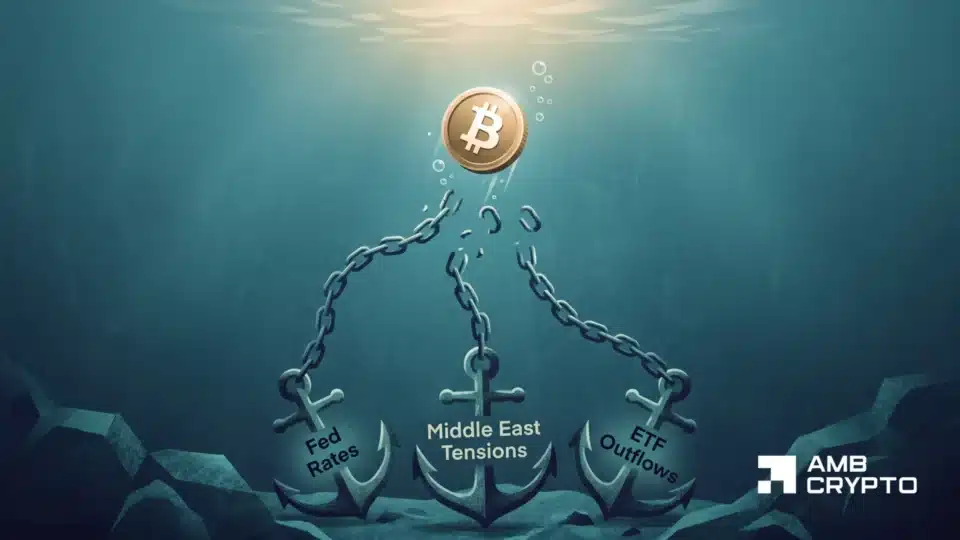
11月13日,币圈恐慌与贪婪指数暴跌至15点,创下今年2月以来最低水平。这一极端恐慌读数令市场警觉:上一次该指数跌破20点是在2月27日,随后一个月内比特币价格下跌25%至7.5万美元。

市场情绪分析平台Santiment的最新报告显示,比特币、以太坊和XRP三大加密货币的负面讨论急剧上升,情绪水平远低于正常值。然而,该机构将这种极端悲观视为潜在的看涨信号,认为市场正接近投降阶段。

行业专家呼吁投资者采取“在恐慌时买入,在贪婪时卖出”的策略。尽管这一策略长期有效,但大多数散户投资者仍因过度杠杆或缺乏耐心而蒙受损失。

恐慌指数创年内新低

恐慌与贪婪指数基于价格波动性、交易量、社交媒体趋势、比特币市场主导地位等多项因素综合计算市场情绪。15点的读数代表"极端恐慌"状态,反映出加密货币社区普遍的悲观情绪。

这是该指数自2月以来首次跌至如此低位。历史数据显示,2月27日指数跌破20点后,比特币在接下来一个月内经历了25%的跌幅。这一先例令市场参与者担忧类似的修正可能再次上演。

自10月11日发生大规模清算事件后,市场情绪始终未能恢复,反而进一步恶化。关键情绪指标显示,投资者信心持续低迷。

负面情绪主导市场叙事

Santiment通过正面/负面情绪比率分析了比特币、以太坊和XRP三大加密货币的社区讨论。当该比率大幅下降时,表明负面讨论主导了市场叙事。目前这三种资产的情绪水平均远低于正常值。

然而,Santiment将这种极端负面情绪解读为潜在的看涨信号。该机构在报告中指出:

当大众对资产转为负面,尤其是对加密货币市场的头部资产,这表明我们正在接近投降点。一旦散户抛售,关键持有者就会收购被抛售的代币并推高价格。这不是“是否”会发生的问题,而是“何时”发生的问题。

分析师建议保持耐心

多位知名市场分析师认同这一观点,主张恐慌性抛售并非正确应对方式。分析师Joe Consorti表示,比特币市场情绪与2月至4月的回调期一样糟糕。随着弱势持有者被清洗出局,局部底部正在形成。耐心是一种美德。

Milk Road的Kyle Reidhead则持更谨慎态度,他认为这种负面情绪可能将比特币推低至9万美元区间,然后才会出现强劲反弹。

历史数据表明,"在恐慌时买入,在贪婪时卖出"的策略多年来对比特币投资者效果良好。然而,大多数散户投资者仍然亏损,原因要么是使用过度杠杆,要么是缺乏耐心来承受长期的极端恐慌情绪。

风险提示及免责条款
市场有风险,投资需谨慎。本文不构成个人投资建议,也未考虑到个别用户特殊的投资目标、财务状况或需要。用户应考虑本文中的任何意见、观点或结论是否符合其特定状况。据此投资,责任自负。

Trending Cryptos

Related Reads

Nearly a Hundred Players Rush into Embodied Data: With 4.47 Billion Yuan in Financing in One Year, Who Can Really Make Money by 'Selling Data'?

The domestic embodied AI data industry has attracted nearly 100 players, with 70 focused on data collection and 27 on data infrastructure. In the past year, 15 independent embodied data service providers raised approximately 4.47 billion yuan. Despite this growth, the sector remains early-stage, fragmented, and faces significant challenges. Data collection methods are diverse, categorized into four main routes: teleoperation of real robots, human demonstration without a robot (using motion capture, exoskeletons, etc.), simulation synthesis, and distillation from internet videos. Most companies (43%) adopt hybrid approaches, combining multiple routes, as no single method can meet all training needs. Teleoperation alone is pursued by 31% of players, often by state-owned platforms and robot companies, while newer firms favor asset-light, no-hardware human demonstration. Independent data service providers now form the largest player group (40%), indicating the emergence of a distinct industry segment rather than just a subsidiary function for robot makers. Two-thirds of all players are "embodied-native" startups, while one-third are companies that pivoted from fields like AI data annotation, which are more prevalent in the data infrastructure layer. Current annual industry capacity is estimated at 1.6-1.8 million hours plus 70-80 million data points, with a short-term goal to increase this 15-20 fold within 1-3 years. Data collection factories are spread across 20 provinces in China, concentrated in the Yangtze River Delta, Beijing-Tianjin-Hebei, and Pearl River Delta regions. Financially, the 4.47 billion yuan raised in the past year pales compared to the 43.8 billion yuan raised by the broader embodied intelligence sector in just the first half of 2026, highlighting that data remains a less "sexy" bet for investors. The 15 funded independent providers show clear stratification: a top tier led by a unicorn (Lightwheel Intelligence, 3.1 billion yuan), a middle tier of 11 firms raising tens to hundreds of millions, and an early-stage tier of 3 companies. Sixty-nine investment institutions have participated, but none have made concentrated bets, reflecting uncertainty about viable business models. Over half of these funded companies are less than a year old, most are at pre-A or A rounds, and profitability remains largely unproven. In summary, the embodied data industry has become an independent track creating jobs and local economic activity. However, it is still nascent, with unformed consensus, unsolved problems, and unproven business models. The coming 1-2 years will be a critical validation window to see if companies can build sustainable, profitable businesses purely by "selling data."

marsbit7m ago

Nearly a Hundred Players Rush into Embodied Data: With 4.47 Billion Yuan in Financing in One Year, Who Can Really Make Money by 'Selling Data'?

marsbit7m ago

Dialogue with Multicoin Partner: The Crypto Market Has Bottomed Out, Favoring Three Cryptocurrencies in This Cycle

In a recent interview, Multicoin Capital managing partner Tushar Jain shared his views on the crypto market. He believes the market has bottomed and is at an inflection point, citing that negative news no longer causes significant price declines and application adoption continues to grow. Jain remains highly bullish on Solana, viewing it as the correct architectural choice for internet capital markets, particularly for spot and tokenized security trading. He is also positive on Hyperliquid, noting its leadership in decentralized derivatives trading. His investment approach focuses on concentrating capital in top convictions rather than equal allocation. A distinct opportunity he highlights is Zcash (ZEC), which he sees as a return to the industry's cypherpunk ethos and a potential top-five asset by market cap. For assets like Zcash without cash flows, his valuation framework is based on relative market cap ranking. Regarding investment strategy, Jain employs a "three-part" entry method to avoid timing pitfalls and emphasizes long-term "active management" over "active trading." He outlines four sources of investment edge: informational, analytical, behavioral/psychological, and structural. On portfolio management, the fund uses Bitcoin as its "cash," selling assets into Bitcoin during market euphoria to reduce beta risk and using Bitcoin to buy dips. Sales occur only if a better opportunity arises, the investment thesis breaks, or valuations become excessively overheated. While respectful of Ethereum's resilience, he questions its unclear scaling roadmap. Finally, Jain reaffirms his commitment to the thesis that blockchains will form the foundational architecture for future capital markets.

marsbit32m ago

Dialogue with Multicoin Partner: The Crypto Market Has Bottomed Out, Favoring Three Cryptocurrencies in This Cycle

marsbit32m ago

Behind Robinhood's Chain Launch and Tokenized Stocks: No Equity Rights, How Far Can This Packaging Game Go?

Robinhood is launching its own Layer 2 blockchain (Robinhood Chain) and "tokenized stocks," but these are not actual equity shares. The tokens are legally structured as debt securities or derivatives, offering economic exposure to a reference stock without granting voting rights or direct ownership. This move represents Robinhood's strategy to expand from a traditional brokerage into a "financial super app," building a user-friendly, programmable financial interface on top of complex, legally compliant, and jurisdiction-specific backend structures. The company's existing business remains strong, driven by options, event contracts, and stock trading. The new blockchain and tokenization efforts are an ambitious layer of infrastructure built atop this core, aiming to make financial products more portable and globally accessible via crypto rails. Key components include the Robinhood Wallet, Bitstamp acquisition (for institutional reach), the Lighter perpetual contracts platform, and Robinhood Earn (DeFi yield). The central challenge is the "brokerage chain paradox": maintaining a simple, intuitive user experience while the underlying assets are highly structured, regulated, and legally distinct from direct ownership. The success of this strategy depends on users, developers, and regulators accepting this model. If the complexity is misunderstood or deemed misleading, it could create product liability issues and stall expansion. The initiative is a significant infrastructure play, but its long-term viability hinges on navigating this fundamental tension between simplicity and legal reality.

marsbit1h ago

Behind Robinhood's Chain Launch and Tokenized Stocks: No Equity Rights, How Far Can This Packaging Game Go?

marsbit1h ago

Trading

Spot

Hot Articles

What is $BITCOIN

DIGITAL GOLD ($BITCOIN): A Comprehensive Analysis Introduction to DIGITAL GOLD ($BITCOIN) DIGITAL GOLD ($BITCOIN) is a blockchain-based project operating on the Solana network, which aims to combine the characteristics of traditional precious metals with the innovation of decentralized technologies. While it shares a name with Bitcoin, often referred to as “digital gold” due to its perception as a store of value, DIGITAL GOLD is a separate token designed to create a unique ecosystem within the Web3 landscape. Its goal is to position itself as a viable alternative digital asset, although specifics regarding its applications and functionalities are still developing. What is DIGITAL GOLD ($BITCOIN)? DIGITAL GOLD ($BITCOIN) is a cryptocurrency token explicitly designed for use on the Solana blockchain. In contrast to Bitcoin, which provides a widely recognized value storage role, this token appears to focus on broader applications and characteristics. Notable aspects include: Blockchain Infrastructure: The token is built on the Solana blockchain, known for its capacity to handle high-speed and low-cost transactions. Supply Dynamics: DIGITAL GOLD has a maximum supply capped at 100 quadrillion tokens (100P $BITCOIN), although details regarding its circulating supply are currently undisclosed. Utility: While precise functionalities are not explicitly outlined, there are indications that the token could be utilized for various applications, potentially involving decentralized applications (dApps) or asset tokenization strategies. Who is the Creator of DIGITAL GOLD ($BITCOIN)? At present, the identity of the creators and development team behind DIGITAL GOLD ($BITCOIN) remains unknown. This situation is typical among many innovative projects within the blockchain space, particularly those aligning with decentralized finance and meme coin phenomena. While such anonymity may foster a community-driven culture, it intensifies concerns about governance and accountability. Who are the Investors of DIGITAL GOLD ($BITCOIN)? The available information indicates that DIGITAL GOLD ($BITCOIN) does not have any known institutional backers or prominent venture capital investments. The project seems to operate on a peer-to-peer model focused on community support and adoption rather than traditional funding routes. Its activity and liquidity are primarily situated on decentralized exchanges (DEXs), such as PumpSwap, rather than established centralized trading platforms, further highlighting its grassroots approach. How DIGITAL GOLD ($BITCOIN) Works The operational mechanics of DIGITAL GOLD ($BITCOIN) can be elaborated on based on its blockchain design and network attributes: Consensus Mechanism: By leveraging Solana’s unique proof-of-history (PoH) combined with a proof-of-stake (PoS) model, the project ensures efficient transaction validation contributing to the network's high performance. Tokenomics: While specific deflationary mechanisms have not been extensively detailed, the vast maximum token supply implies that it may cater to microtransactions or niche use cases that are still to be defined. Interoperability: There exists the potential for integration with Solana’s broader ecosystem, including various decentralized finance (DeFi) platforms. However, the details regarding specific integrations remain unspecified. Timeline of Key Events Here is a timeline that highlights significant milestones concerning DIGITAL GOLD ($BITCOIN): 2023: The initial deployment of the token occurs on the Solana blockchain, marked by its contract address. 2024: DIGITAL GOLD gains visibility as it becomes available for trading on decentralized exchanges like PumpSwap, allowing users to trade it against SOL. 2025: The project witnesses sporadic trading activity and potential interest in community-led engagements, although no noteworthy partnerships or technical advancements have been documented as of yet. Critical Analysis Strengths Scalability: The underlying Solana infrastructure supports high transaction volumes, which could enhance the utility of $BITCOIN in various transaction scenarios. Accessibility: The potential low trading price per token could attract retail investors, facilitating wider participation due to fractional ownership opportunities. Risks Lack of Transparency: The absence of publicly known backers, developers, or an audit process may yield skepticism regarding the project's sustainability and trustworthiness. Market Volatility: The trading activity is heavily reliant on speculative behavior, which can result in significant price volatility and uncertainty for investors. Conclusion DIGITAL GOLD ($BITCOIN) emerges as an intriguing yet ambiguous project within the rapidly evolving Solana ecosystem. While it attempts to leverage the “digital gold” narrative, its departure from Bitcoin's established role as a store of value underscores the need for a clearer differentiation of its intended utility and governance structure. Future acceptance and adoption will likely depend on addressing the current opacity and defining its operational and economic strategies more explicitly. Note: This report encompasses synthesised information available as of October 2023, and developments may have transpired beyond the research period.

734 Total ViewsPublished 2025.05.13Updated 2025.05.13

What is $BITCOIN

Discussions

Welcome to the HTX Community. Here, you can stay informed about the latest platform developments and gain access to professional market insights. Users' opinions on the price of BTC (BTC) are presented below.

活动图片