比特币惊现危险信号!11.1万美元大关恐将失守?

ambcryptoPublished on 2025-07-28Last updated on 2025-07-28

Abstract

11.8 万美元的水平是短期内的关键战场,而鲸鱼比例的上升可能是价格进一步下跌的早期预警。

关键要点

尽管比特币尚未脱离历史高点,但社交媒体参与度已转为看跌。一项指标显示,对比特币进一步回调的预测可能是正确的。

截至发稿时,比特币[BTC]交易价格仅略低于11.8万美元,较历史高点123,091美元下跌了4.24%。这波跌幅相对较小。

在牛市期间,比特币在之前的周期中经历了更深层次的调整。
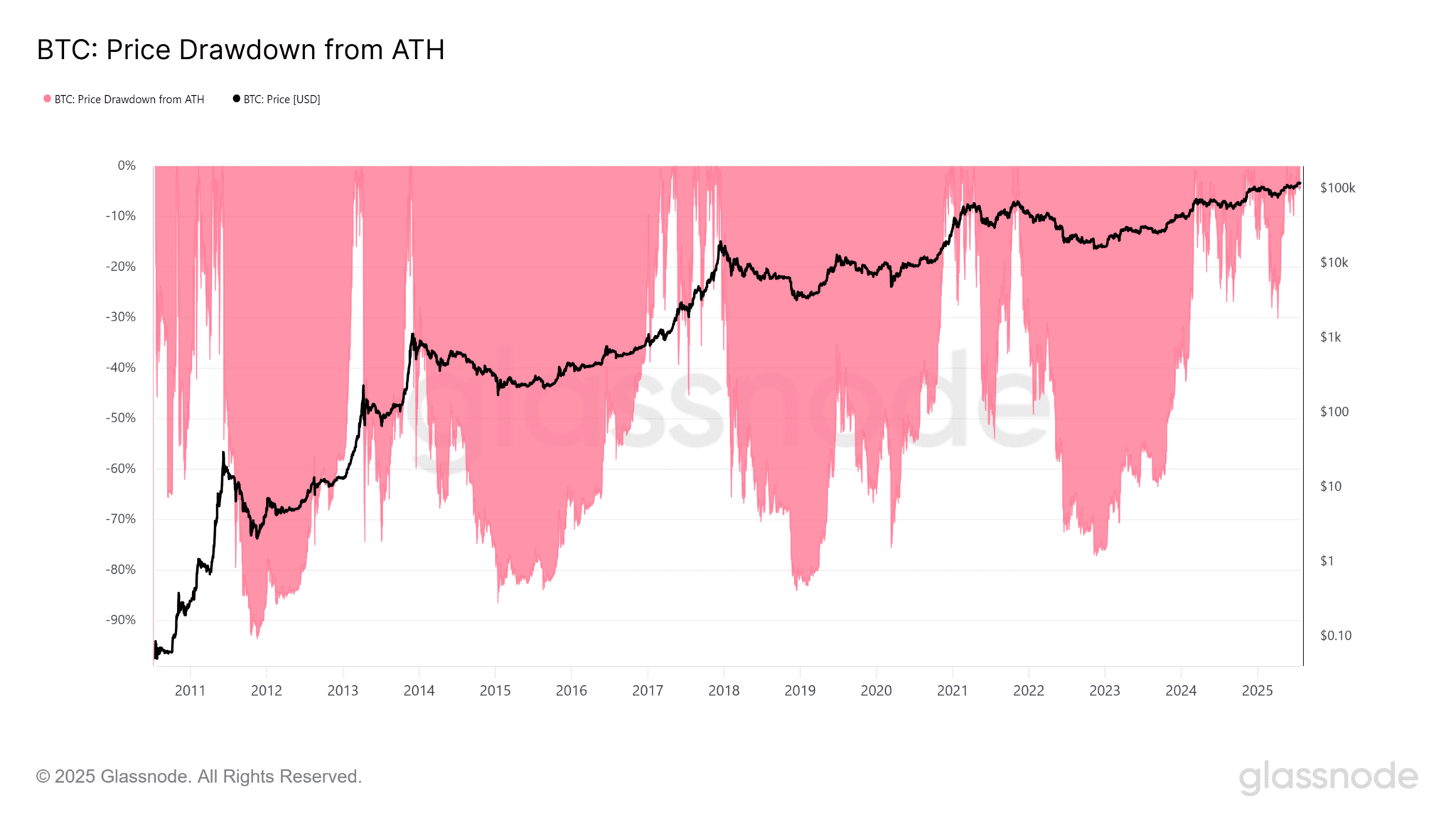
2021年的牛市在2021年7月经历了50%的回撤,随后在当年晚些时候攀升至6.9万美元。因此,交易者和投资者不应该因为5%的回调而犹豫不决。

有迹象表明,经济可能进一步下滑。我们应该如何认真对待这些迹象?

探讨未来几天比特币的看涨和看跌情况
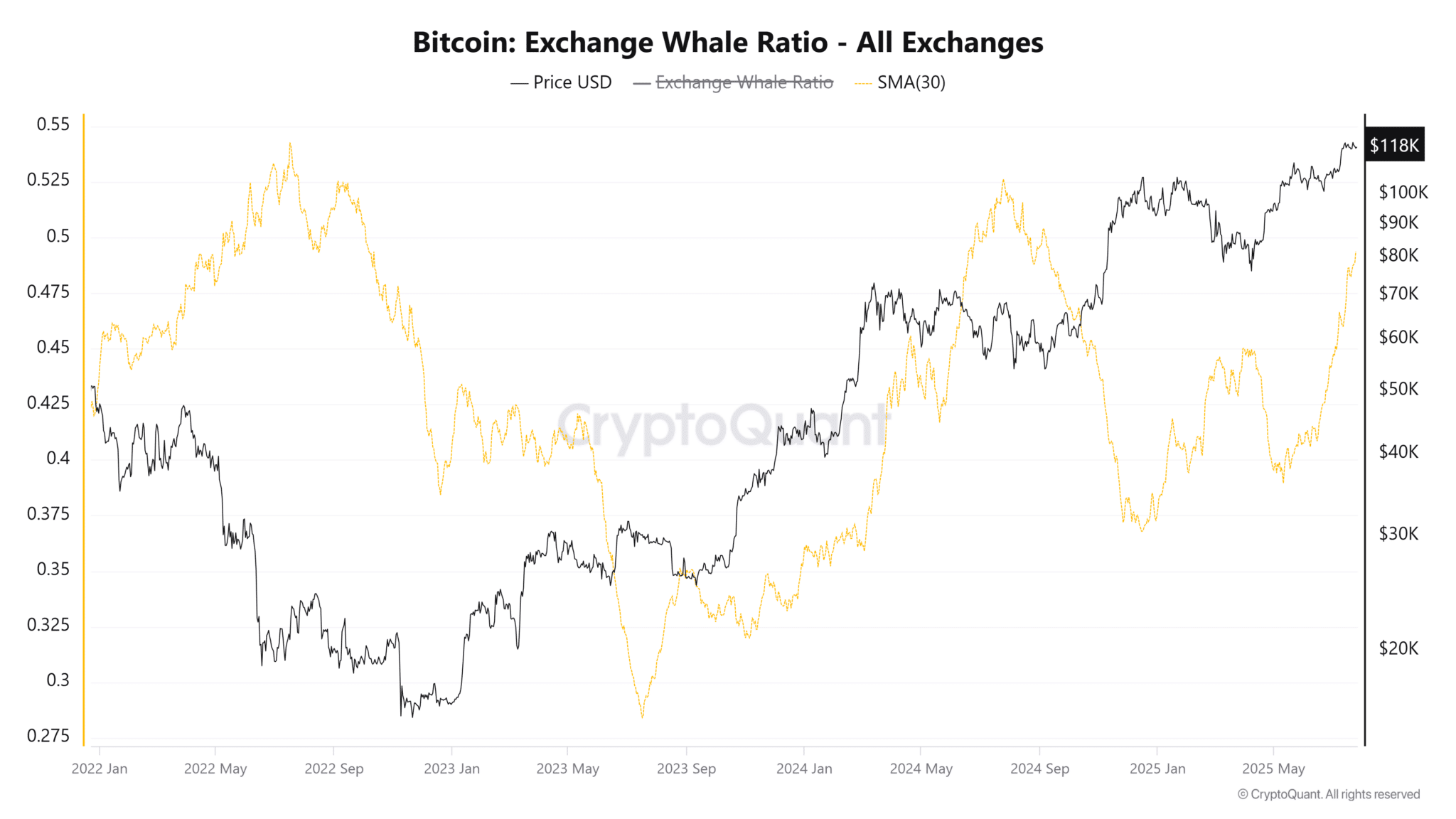
在CryptoQuant Insights的一篇文章中,用户Chair Lee指出,比特币正在努力突破 11.8 万美元的阻力位。与此同时,交易所鲸鱼比例为 0.52。

该指标衡量的是流入交易所的前 10 笔 BTC 资金占总流入量的份额。

该指标目前为0.52,其30天移动平均线自5月以来一直在上升。从历史上看,0.5的读数通常预示着短期内可能出现回调。

在之前的一份报告中,AMBCrypto 强调,近期的损失因长期清算而加剧,导致价格跌至 11.5 万美元,随后反弹走高。

尽管有所反弹,但市场结构依然看跌。11.1万美元至11.2万美元的需求区间仍然是价格上涨的磁力区。

该用户得出结论,11.8万美元的水平是短期内的关键战场。如果价格持续突破11.8万美元,同时交易所鲸鱼比例下降,比特币价格可能会上涨至12.2万至12.4万美元。

另一方面,如果该指标保持在 0.5 以上,且价格无法收回 118,000 美元,则价格可能出现更大幅度的下跌。
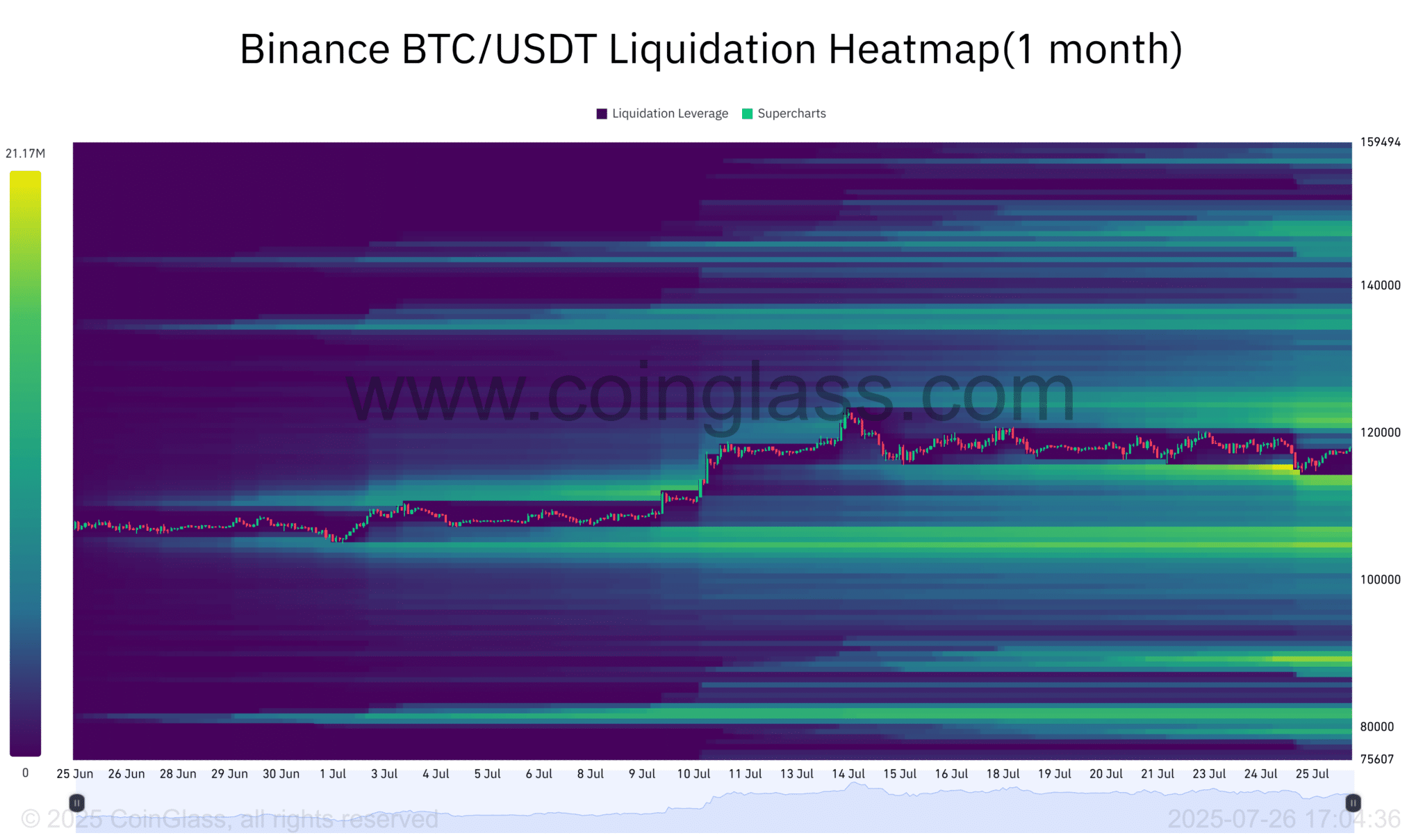
清算热力图与这些发现相符。附近两个值得注意的流动性集群分别为 11.32 万美元和 12.18 万美元。在撰写本文时,由于该价格更接近市场价格,因此似乎有可能进一步上涨。

交易所鲸鱼比例值得关注。如果该指标在周末攀升(超过0.6),交易员需要保持警惕,以免出现更大幅度的回调。

对于目光较长的投资者来说,未来仍然充满希望。

Trending Cryptos

Related Reads

Why Does 'AGI Godfather' Ben Goertzel Believe the Future of AI Relies on Blockchain?

Ben Goertzel, known as the "AGI Godfather," argues that the future of Artificial General Intelligence (AGI) must be built on blockchain to prevent its control by a few corporations or venture capital firms. He believes the core AGI code should be free and open-source, but that this alone is insufficient without a decentralized infrastructure to run it affordably. His blockchain project, SingularityNET, and the broader Artificial Superintelligence Alliance aim to create a user-owned, decentralized network for hosting and deploying AGI, contrasting with the closed models of companies like OpenAI and Anthropic. Goertzel criticizes the shift of other labs from open to closed development. He argues that while a closed path is simpler, an open, decentralized model—akin to Linux and the internet—is both possible and ultimately better for humanity. He envisions an "Agent economy" where individuals orchestrate teams of AI agents to perform tasks, including transactions, on an open network rather than corporate clouds. While his current model relies on cryptocurrency, plans include offering paid AI services to businesses with the decentralized blockchain as the backend. Goertzel predicts human-level AGI could arrive by 2029 and warns that a gap in understanding and access to AGI could drastically worsen inequality. The first test of his decentralized approach will be the upcoming release of the Agent Omega Claw.

Foresight News27m ago

Why Does 'AGI Godfather' Ben Goertzel Believe the Future of AI Relies on Blockchain?

Foresight News27m ago

A Company Once on the Brink of Bankruptcy Just Surpassed Bitcoin in Market Cap

On June 22nd, driven by rising stock prices, SK Hynix’s market capitalization reached $1.35 trillion, surpassing Bitcoin's total market cap of approximately $1.29 trillion. This temporarily made it South Korea's highest-valued company. The core driver of this surge is HBM (High Bandwidth Memory), for which SK Hynix is the primary supplier to NVIDIA, holding over 60% market share. AI's demand for high memory bandwidth has translated into immense profitability, with SK Hynix reporting a 72% operating profit margin in Q1. The company's success follows a 13-year bet on HBM technology, beginning in 2009. It nearly failed after the 2001 dot-com bubble, was acquired by SK Group in 2012, and was subsequently recapitalized to continue its long-term HBM development. The article contrasts this with the Crypto AI narrative. Capital currently favors AI infrastructure players like SK Hynix due to "real orders, physical barriers, and quantifiable profit margins." In comparison, Crypto AI projects, promising decentralized compute and data markets, remain largely conceptual with limited tangible progress. Examples include Bittensor, whose core mechanisms are still under development, and Bitcoin miners transitioning to AI, who face significant funding gaps and execution challenges. The piece cites analysis suggesting the AI sector has absorbed nearly all new market liquidity since 2022, leaving little for crypto. It concludes that the current AI infrastructure红利 is captured by entities with proven technical barriers and supply capabilities, while crypto networks still need to define their concrete role in the value chain.

链捕手1h ago

A Company Once on the Brink of Bankruptcy Just Surpassed Bitcoin in Market Cap

链捕手1h ago

Bittensor Moves Towards Ultimate Decentralization: The Critical 18 Months for the TAO Ecosystem is Here?

Bittensor, a decentralized AI protocol, is accelerating its transition to full decentralization over the next 18 months, as outlined in a recent post by co-founder Const. The project currently operates in a "semi-decentralized" state: ownership and network participation are open and permissionless, with TAO distribution based on competitive contribution. However, protocol upgrades and governance have remained under core team control to enable rapid iteration in the fast-evolving AI sector. This strategic shift comes as the ecosystem matures, boasting 128 subnets and a large community. Const argues that continued centralization now poses risks, including single points of failure and regulatory scrutiny. The upcoming decentralization roadmap includes optimizing validator competition, opening liquidity pools, introducing governance rights for Alpha holders, and refining economic models. The move could fundamentally reshape TAO's value proposition, adding governance premiums to its existing valuation based on AI narrative and scarcity. It also signals a potential maturation of the AI crypto sector, where competition may shift from hype to sustainable protocol design and real economic activity. Bittensor positions itself not just as another AI token, but as foundational infrastructure aiming to decentralize intelligence production—analogous to Bitcoin's role in decentralizing money—with the goal of creating a resilient "Millennium Intelligence Federation."

marsbit1h ago

Bittensor Moves Towards Ultimate Decentralization: The Critical 18 Months for the TAO Ecosystem is Here?

marsbit1h ago

Trading

Spot
Futures

Hot Articles

What is $BITCOIN

DIGITAL GOLD ($BITCOIN): A Comprehensive Analysis Introduction to DIGITAL GOLD ($BITCOIN) DIGITAL GOLD ($BITCOIN) is a blockchain-based project operating on the Solana network, which aims to combine the characteristics of traditional precious metals with the innovation of decentralized technologies. While it shares a name with Bitcoin, often referred to as “digital gold” due to its perception as a store of value, DIGITAL GOLD is a separate token designed to create a unique ecosystem within the Web3 landscape. Its goal is to position itself as a viable alternative digital asset, although specifics regarding its applications and functionalities are still developing. What is DIGITAL GOLD ($BITCOIN)? DIGITAL GOLD ($BITCOIN) is a cryptocurrency token explicitly designed for use on the Solana blockchain. In contrast to Bitcoin, which provides a widely recognized value storage role, this token appears to focus on broader applications and characteristics. Notable aspects include: Blockchain Infrastructure: The token is built on the Solana blockchain, known for its capacity to handle high-speed and low-cost transactions. Supply Dynamics: DIGITAL GOLD has a maximum supply capped at 100 quadrillion tokens (100P $BITCOIN), although details regarding its circulating supply are currently undisclosed. Utility: While precise functionalities are not explicitly outlined, there are indications that the token could be utilized for various applications, potentially involving decentralized applications (dApps) or asset tokenization strategies. Who is the Creator of DIGITAL GOLD ($BITCOIN)? At present, the identity of the creators and development team behind DIGITAL GOLD ($BITCOIN) remains unknown. This situation is typical among many innovative projects within the blockchain space, particularly those aligning with decentralized finance and meme coin phenomena. While such anonymity may foster a community-driven culture, it intensifies concerns about governance and accountability. Who are the Investors of DIGITAL GOLD ($BITCOIN)? The available information indicates that DIGITAL GOLD ($BITCOIN) does not have any known institutional backers or prominent venture capital investments. The project seems to operate on a peer-to-peer model focused on community support and adoption rather than traditional funding routes. Its activity and liquidity are primarily situated on decentralized exchanges (DEXs), such as PumpSwap, rather than established centralized trading platforms, further highlighting its grassroots approach. How DIGITAL GOLD ($BITCOIN) Works The operational mechanics of DIGITAL GOLD ($BITCOIN) can be elaborated on based on its blockchain design and network attributes: Consensus Mechanism: By leveraging Solana’s unique proof-of-history (PoH) combined with a proof-of-stake (PoS) model, the project ensures efficient transaction validation contributing to the network's high performance. Tokenomics: While specific deflationary mechanisms have not been extensively detailed, the vast maximum token supply implies that it may cater to microtransactions or niche use cases that are still to be defined. Interoperability: There exists the potential for integration with Solana’s broader ecosystem, including various decentralized finance (DeFi) platforms. However, the details regarding specific integrations remain unspecified. Timeline of Key Events Here is a timeline that highlights significant milestones concerning DIGITAL GOLD ($BITCOIN): 2023: The initial deployment of the token occurs on the Solana blockchain, marked by its contract address. 2024: DIGITAL GOLD gains visibility as it becomes available for trading on decentralized exchanges like PumpSwap, allowing users to trade it against SOL. 2025: The project witnesses sporadic trading activity and potential interest in community-led engagements, although no noteworthy partnerships or technical advancements have been documented as of yet. Critical Analysis Strengths Scalability: The underlying Solana infrastructure supports high transaction volumes, which could enhance the utility of $BITCOIN in various transaction scenarios. Accessibility: The potential low trading price per token could attract retail investors, facilitating wider participation due to fractional ownership opportunities. Risks Lack of Transparency: The absence of publicly known backers, developers, or an audit process may yield skepticism regarding the project's sustainability and trustworthiness. Market Volatility: The trading activity is heavily reliant on speculative behavior, which can result in significant price volatility and uncertainty for investors. Conclusion DIGITAL GOLD ($BITCOIN) emerges as an intriguing yet ambiguous project within the rapidly evolving Solana ecosystem. While it attempts to leverage the “digital gold” narrative, its departure from Bitcoin's established role as a store of value underscores the need for a clearer differentiation of its intended utility and governance structure. Future acceptance and adoption will likely depend on addressing the current opacity and defining its operational and economic strategies more explicitly. Note: This report encompasses synthesised information available as of October 2023, and developments may have transpired beyond the research period.

421 Total ViewsPublished 2025.05.13Updated 2025.05.13

What is $BITCOIN

Discussions

Welcome to the HTX Community. Here, you can stay informed about the latest platform developments and gain access to professional market insights. Users' opinions on the price of BTC (BTC) are presented below.

活动图片