# Artikel Terkait Applications

Pusat Berita HTX menyediakan artikel terbaru dan analisis mendalam mengenai "Applications", mencakup tren pasar, pembaruan proyek, perkembangan teknologi, dan kebijakan regulasi di industri kripto.

Reddit Stock Market Buzz: Is the Second Wave of AI Here? Funds Are Rotating from Compute Stocks to These Application Stocks

Reddit's r/stocks community is actively debating whether a new rotation is underway in the AI sector. With infrastructure stocks like NVIDIA (NVDA) having completed their major rallies, attention is shifting towards application-layer companies that are translating AI into profits. The primary stock under discussion is Reddit (RDDT). Bulls highlight its strong fundamentals, including 70% revenue growth and 90% margins. The core investment thesis is its "data moat," as most major LLMs have been trained on Reddit data, with ongoing lawsuits against companies like Anthropic and Perplexity for non-payment. Supporters argue RDDT's data, serving as a "trust layer" of human feedback, is crucial for future AI applications in areas like e-commerce. The stock is seen as technically poised for a breakout from its current trading range. Other application stocks mentioned include: - **META**: For its profitable AI-powered ad targeting. - **Palantir (PLTR)**: Noted for strong earnings (government +84%, commercial +133% YoY). - **Snowflake (SNOW)**: Its stock surged post-earnings due to market approval of new AI data products. - **ServiceNow (NOW) & Shopify (SHOP)**: For integrating AI into their platforms. However, there is skepticism. Some doubt the depth of RDDT's data moat, arguing data quality is questionable and its pricing power over tech giants may be overestimated. Others maintain the second wave will remain in semiconductors, with cloud/Mag7 stocks following later. A professional perspective from the options market notes that while infrastructure stocks show post-earnings volatility compression, application-layer stocks like RDDT and SNOW face more two-sided uncertainty, making direct equity investment a cleaner play than options for this potential rotation. The debate reflects a key market question: after the infrastructure boom, where is the next major opportunity in AI? The consensus leans towards application-layer companies with clearer monetization paths, with RDDT's unique data position making it a focal point.

marsbit05/29 06:20

Reddit Stock Market Buzz: Is the Second Wave of AI Here? Funds Are Rotating from Compute Stocks to These Application Stocks

marsbit05/29 06:20

Who Will Make Money in the Age of Agents?

Who will capture value in an era where AI Agents become the primary blockchain users? Existing crypto value capture theories assume human users. "Fat Protocols" (2016) posited that protocols capture the most value as applications commoditize on open data, but this weakened as blockchain infrastructure proliferated and became interchangeable. The emerging "Fat Apps" theory argues applications capturing user relationships (like wallets and aggregators) win by controlling distribution and monetizing user flows. Agents fundamentally disrupt this logic. They don't value UX, brand, or convenience, bypassing the front-end moats of fat apps. This leads to several possible futures: 1. **"Headless" Apps**: Current app leaders (e.g., wallets) strip their front ends and become API infrastructure for Agents, preserving their value capture. 2. **Protocol Renaissance**: If integration is easy, Agents skip aggregators and interact directly with protocols, reviving the fat protocol thesis. 3. **Pricing Power Collapse**: Agents' rational, frictionless price shopping could commoditize the entire stack, compressing margins toward cost. Value flows to Agent owners or end-users. 4. **Unprecedented Activity**: Agents could enable entirely new, high-frequency economic activity (e.g., machine-to-machine commerce), expanding the total value pie. 5. **A New, Unnamed Model**: As with the internet's attention economy, a novel, unforeseen business model may emerge. Likely, human and Agent ecosystems will coexist with distinct value capture dynamics. For builders in the Agent realm, the key question shifts from UX to competitive advantages like liquidity, latency, or settlement guarantees that retain automated users.

链捕手05/27 13:51

Who Will Make Money in the Age of Agents?

链捕手05/27 13:51

Dialogue with Vitalik, Xiao Feng, Aya Miyaguchi, and Joseph Chalom: From the 'Subtraction Principle' to the Agent Economy

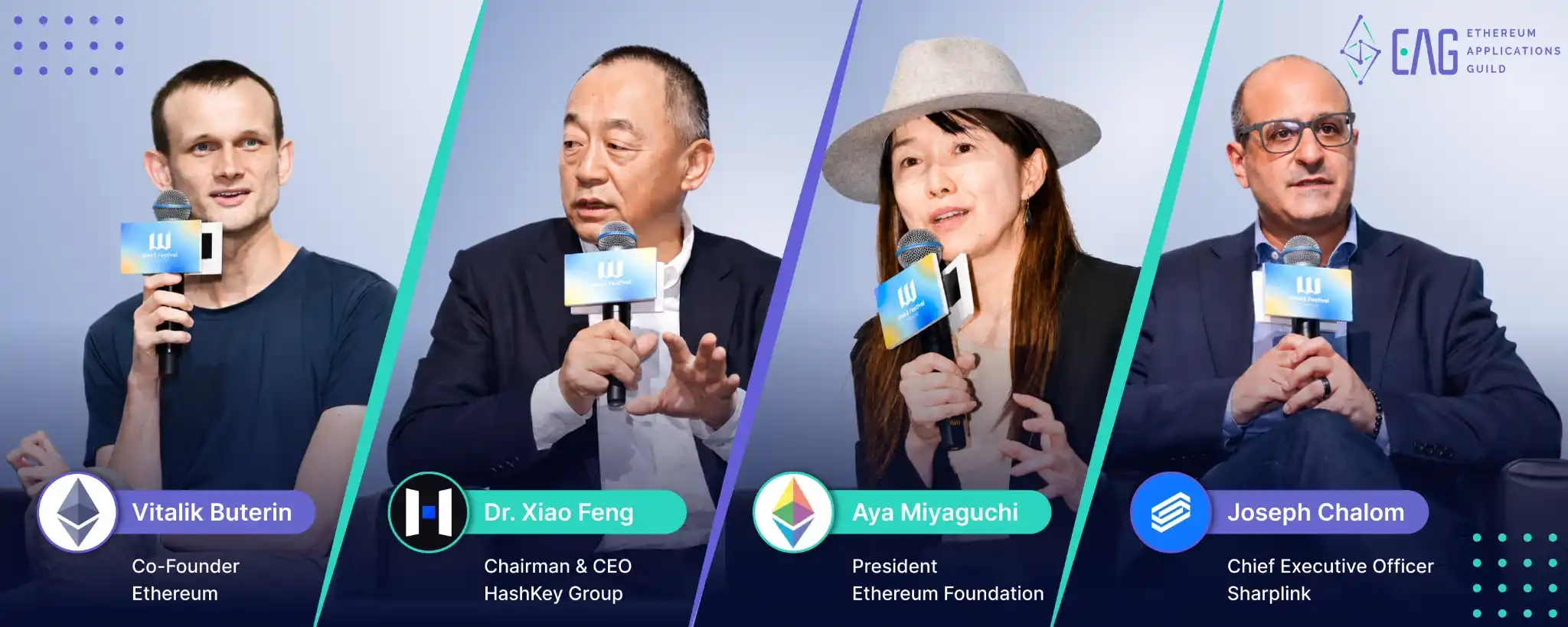
Conversation with Vitalik Buterin, Xiao Feng, Aya Miyaguchi, and Joseph Chalom: Highlights from the Ethereum Application Summit on key future directions. Vitalik Buterin discussed the concept of "Full Stack Open Source Security," extending security from the protocol to hardware layers like wallets and chips. He predicted AI will simplify blockchain interaction, enabling natural language commands for complex operations. He emphasized that Ethereum's future focus should be on security, decentralization, and trustless infrastructure—the areas where it holds its core competitive edge. The fusion of AI, Fully Homomorphic Encryption (FHE), and blockchain is seen as crucial for real-world applications requiring privacy, such as healthcare. Xiao Feng underscored the importance of simplifying technology for mass adoption. He drew parallels to the evolution from command lines to GUIs and apps, suggesting that AI-driven natural language interfaces will be key to bringing more users into Web3. He stressed that while performance is important, Ethereum must continue to uphold its foundational principles of decentralization and user sovereignty. Aya Miyaguchi, Chair of the Ethereum Foundation, explained the evolving role of the Foundation through the "Principle of Subtraction." As the ecosystem matures, the EF is stepping back from areas where the community can take the lead, acting as one of many "gardeners" rather than a central driver. She highlighted that real applications are built on Ethereum's core values: censorship resistance, open source, security, and privacy. The concept of "Local-first" initiatives, like the Ethereum Applications Guild (EAG), was also emphasized for leveraging regional strengths to create global impact. Joseph Chalom, CEO of SharpLink, positioned Ethereum as the future infrastructure for global capital markets, differentiating it from Bitcoin through its "productivity" via staking yields. He envisioned the rise of an "Agent Economy" by 2027, where AI agents, powered by Web3 wallets, will autonomously manage financial tasks like yield optimization and RWA investments. The summit concluded that with core infrastructure maturing, the application layer is now the key driver for Ethereum's next phase of growth and real-world adoption.

marsbit05/12 09:43

Dialogue with Vitalik, Xiao Feng, Aya Miyaguchi, and Joseph Chalom: From the 'Subtraction Principle' to the Agent Economy

marsbit05/12 09:43

From Power to Chips: How Ordinary People Can Participate in the Wealth Opportunities of the AI Era

From Power to Chips: How Ordinary People Can Participate in the Wealth Opportunities of the AI Era This article analyzes the AI industry through a five-layer "AI stack" framework: energy, chips, cloud infrastructure, models, and applications. It argues that while public attention focuses on the top application layer (e.g., ChatGPT), the vast majority of capital investment and profits are currently concentrated in the underlying infrastructure layers. Key points include: - An estimated $700 billion in annual capital expenditure is flowing into AI infrastructure (energy, chips, data centers), not applications. - Infrastructure companies (Nvidia, TSMC, ASML) show massive profits and near-monopolies, while model companies (OpenAI, Anthropic) experience rapid revenue growth but burn enormous cash due to compute costs. - Historical parallels are drawn to the electricity revolution and internet infrastructure boom, where infrastructure builders captured most early value. - The article advises investors to focus on infrastructure layers currently generating concentrated profits, while acknowledging future value may shift to applications as the market matures. - Risks include capital misallocation, supply chain concentration, and efficiency breakthroughs (like DeepSeek's lower-cost models) that could disrupt current assumptions. The conclusion emphasizes understanding this layered structure, tracking capital flow, and participating at appropriate levels based on risk tolerance and expertise.

marsbit03/16 08:17

From Power to Chips: How Ordinary People Can Participate in the Wealth Opportunities of the AI Era

marsbit03/16 08:17

NVIDIA's Jensen Huang Latest Article: The 'Five-Layer Cake' of AI

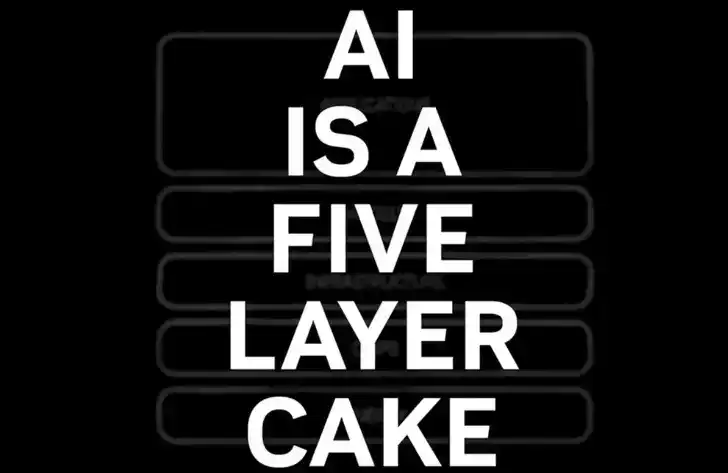
NVIDIA's Jensen Huang articulates AI not merely as a software application but as a fundamental infrastructure, comparable to electricity or the internet, in a layered "five-layer cake" structure. This stack begins with **Energy** as the foundational constraint, powering real-time intelligence generation. Above it, **Chips** convert energy into computational power efficiently. The **Infrastructure** layer comprises data centers and systems that function as "AI factories." **Models** form the next layer, processing diverse data types like language, biology, and physics. At the top, **Applications**—such as drug discovery, autonomous vehicles, and robotics—create economic value. Huang emphasizes that AI is an industrial-scale transformation, driving massive global infrastructure expansion requiring trillions in investment and a skilled workforce—from electricians to network technicians—beyond just computer scientists. He notes that AI has recently crossed a threshold: models are now reliable enough for widespread use, reducing hallucinations and improving reasoning, which accelerates real-world applications. Open-source models, like DeepSeek-R1, further propel growth across the entire stack. This infrastructure revolution will reshape energy consumption, manufacturing, labor, and economic growth. Every company and country will participate, though the field remains early-stage, with vast opportunities and responsibilities ahead.

marsbit03/10 14:18

NVIDIA's Jensen Huang Latest Article: The 'Five-Layer Cake' of AI

marsbit03/10 14:18

Mobile: The Next Battleground for Solana

The era of competing solely on blockchain performance and technical roadmaps is over. Layer-1 blockchains must now compete at the top of the application stack—focusing on applications and users rather than just infrastructure. Solana is well-positioned to lead this shift by targeting the Internet Capital Market (ICM), where capital formation happens at scale, especially on mobile devices. Unlike neutral backend infrastructures of the past, L1s now face competition from regulated entities, high-performance tech, and financial giants. Centralized crypto apps like Binance and Coinbase have built their own chains to capture more value, while new chains from companies like Stripe and Circle leverage existing distribution channels. To stay competitive, established blockchains must adopt opinionated approaches to their tech stack usage. Solana’s performance and foundational components make it an ideal default operating system for mobile crypto applications. However, the current on-chain experience remains fragmented and browser-based. Solana Labs, with its mobile-focused initiatives like Solana Mobile and the recent SKR token, is uniquely equipped to drive ICM adoption on mobile. By building vertically integrated application that reflects its design philosophy—integrating DEXs, perpetuals, and payments—Solana Labs can demonstrate large-scale capital formation in action. While some ecosystem developers may fear competition, Solana’s permissionless nature ensures a level playing field. Solana Labs’ efforts can benefit the entire network by highlighting and integrating ecosystem components in ways independent apps cannot, ultimately making the ecosystem more competitive. The winners in crypto over the next five years will be determined by which core teams make the right opinionated decisions to win at the top of the stack—and Solana is poised to lead in mobile ICM.

比推01/28 20:50

Mobile: The Next Battleground for Solana

比推01/28 20:50

活动图片