ENS Founder Seeks to 'Seize Power' from DAO

Foresight NewsDipublikasikan tanggal 2026-07-02Terakhir diperbarui pada 2026-07-02

Abstrak

On June 29th, the ENS community entered the on-chain voting phase for a proposal to renew the ENS DAO Security Council's veto power for two more years. Shortly after voting began, ENS founder Nick Johnson used his substantial ENS holdings to cast over 3.55 million votes against the proposal, swinging the outcome despite initial strong support. The Security Council was established in July 2024 with a 4/8 multisig veto power to protect the DAO's treasury (valued over $350 million) from malicious proposals during a period of low voter participation. Its powers were limited to vetoing only harmful proposals, not normal ones. Nick Johnson's opposition stems from broader concerns about ENS DAO's governance. In late 2025, he and others expressed frustration that the DAO had become mired in political gamesmanship, with capable contributors leaving and leadership falling to less experienced or misaligned parties. This context set the stage for a major restructuring proposal by ENS COO Katherine Wu on June 19th, titled "Next Era of ENS DAO: Empowering the ENS Foundation." The controversial proposal aims to transfer daily operations, treasury management, and long-term strategy to a restructured ENS Foundation with a professional board, while the DAO would retain core protocol governance powers. Critics, including original ENS constitution author Brantly Millegan, argue this effectively transfers treasury control from token holders to ENS Labs (the core development team), undermining ...


Written by: Eric, Foresight News


On June 29, a proposal by the ENS community to extend the veto power of the ENS DAO Security Committee for two years entered the on-chain voting stage. Shortly after voting began, the over 800,000 votes in favor far exceeded the less than 300,000 votes against. However, ENS founder Nick Johnson used his substantial ENS holdings to significantly increase the opposing votes to 3.55 million in one go.
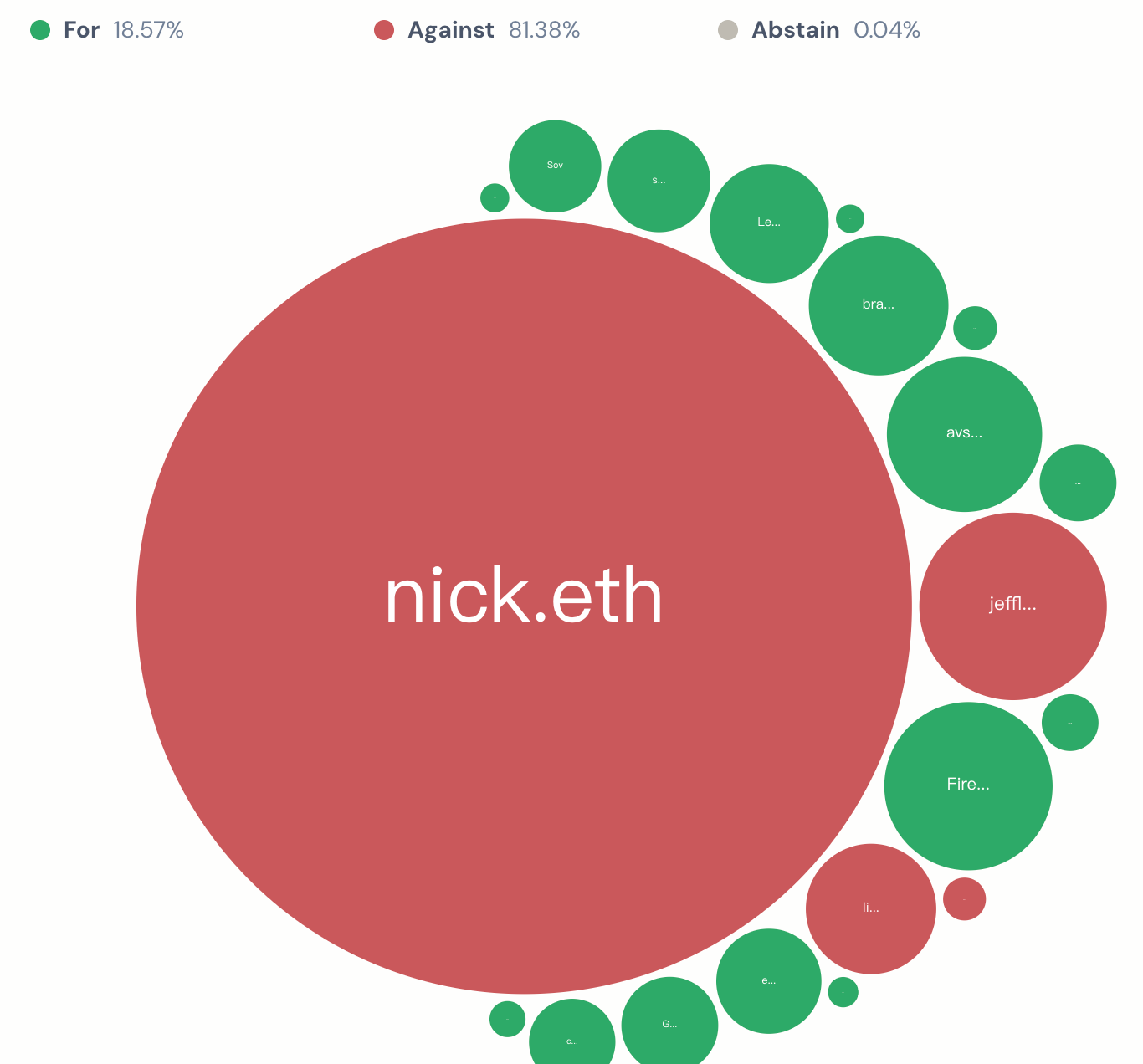


The ENS DAO Security Committee was established in July 2024. At that time, both active participants in ENS DAO proposals and the number of votes were relatively low. To prevent major holders from using this opportunity to launch malicious proposals that could jeopardize the ENS DAO treasury exceeding $350 million, the DAO chose to establish the Security Committee, granting it direct veto power over malicious proposals through a 4/8 multisig.


However, the committee's power is limited to vetoing malicious proposals. It cannot interfere with the process of normal proposals, nor can it initiate proposals. Its authority is retained for only two years at a time for easy adjustment.


Logically, renewing the authority of such an organization protecting the DAO treasury before its term ends should be quite normal. Why would the ENS founder personally step in to vote against a proposal designed to protect the DAO?


To understand this seemingly 'authoritarian' decision, we need to trace back to a discussion about ENS DAO governance in November last year.


I mentioned this incident in the article "Seeing ENS Struggling with Governance, I Think It's Time to Talk About DAO Problems" (https://foresightnews.pro/article/detail/93316): In November 2025, Nick Johnson wrote a meaningful post on the forum, roughly stating that the ENS DAO was now full of political infighting, capable people were gradually leaving, and the leadership of the DAO had fallen into the hands of inexperienced individuals, or even those whose interests were not aligned with the protocol.


Also in that month, ENS DAO Secretary Limes submitted a proposal suggesting that at the end of the sixth term, i.e., December 31, 2025, the operations of the three working groups—Metagovernance, Ecosystem, and Public Goods—be terminated. As for the reasons, firstly, because proposals had become a game of 'you support me, I support you,' with no one caring about what should actually be done; secondly, the lack of entry criteria led to the frequent phenomenon of 'bad money driving out good.' Limes believed that process improvements could not solve this structural deep-rooted problem, and shutting down was the only way out.


Although this proposal ultimately did not pass, Nick's desire for DAO reform was already clear.


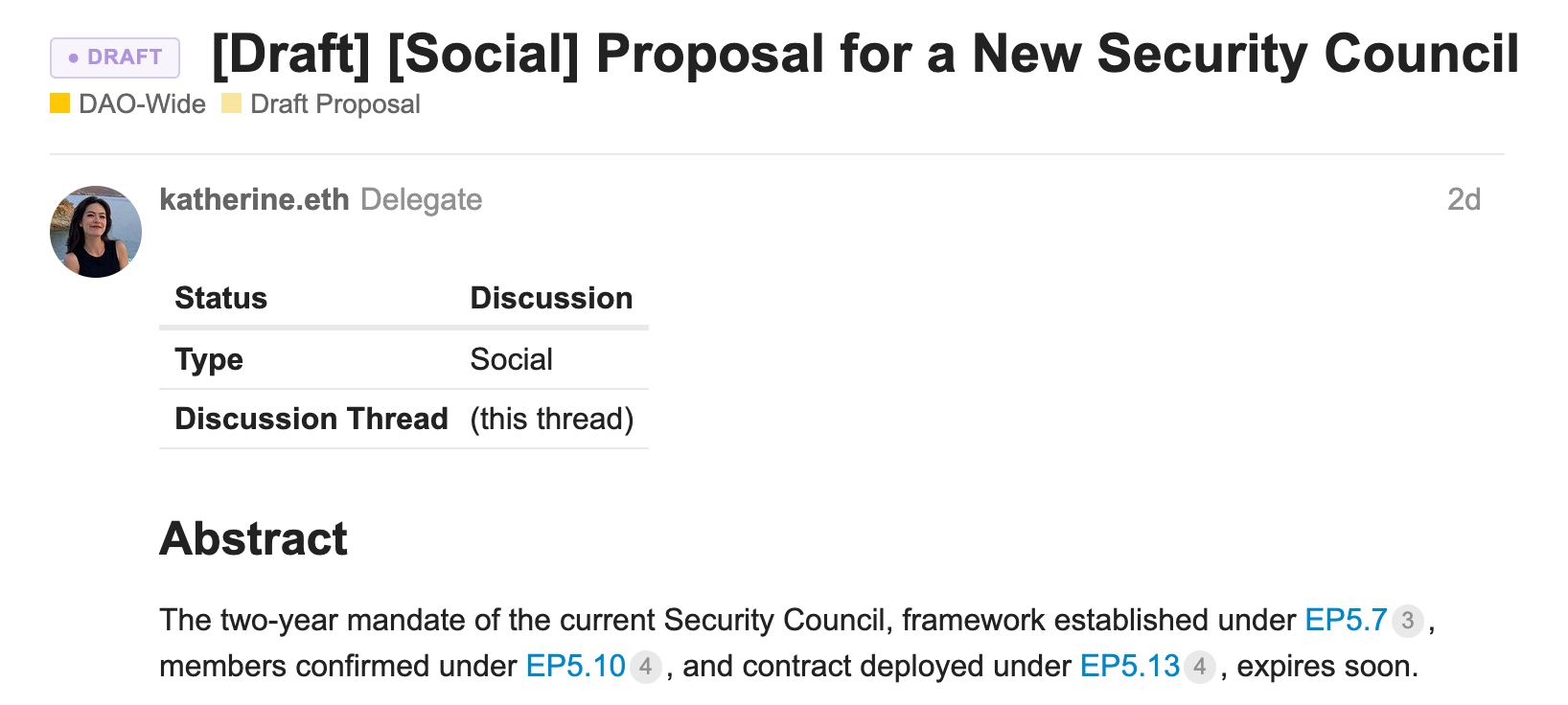
On June 19, ENS COO Katherine Wu posted a new proposal on the ENS forum: "Next Era of ENS DAO: Empowering the ENS Foundation." The core contents of the proposal are twofold: first, to transfer daily operations, treasury management, and long-term capital strategy to a restructured ENS Foundation. The Foundation would be responsible for daily treasury operations, public goods grants, working group coordination, ecosystem strategy, trademark/brand assets, etc. Additionally, the Foundation would establish a 5-member board of directors to enhance professional execution and accountability.


Second, it commits that the DAO and token holders will retain core powers, including protocol-layer governance contract upgrades, registry control, fee structure, constitutional amendments, etc.


The biggest point of contention in this proposal is the DAO treasury. Critics believe this would allow the Foundation and, by extension, ENS Labs behind it, to effectively control the massive funds, weakening the direct influence of token holders. ENS original constitution author Brantly Millegan expressed strong opposition, arguing that it violates the DAO's original design where token holders should simultaneously control both the protocol and the treasury, essentially implying that ENS Labs wants direct control of the treasury.
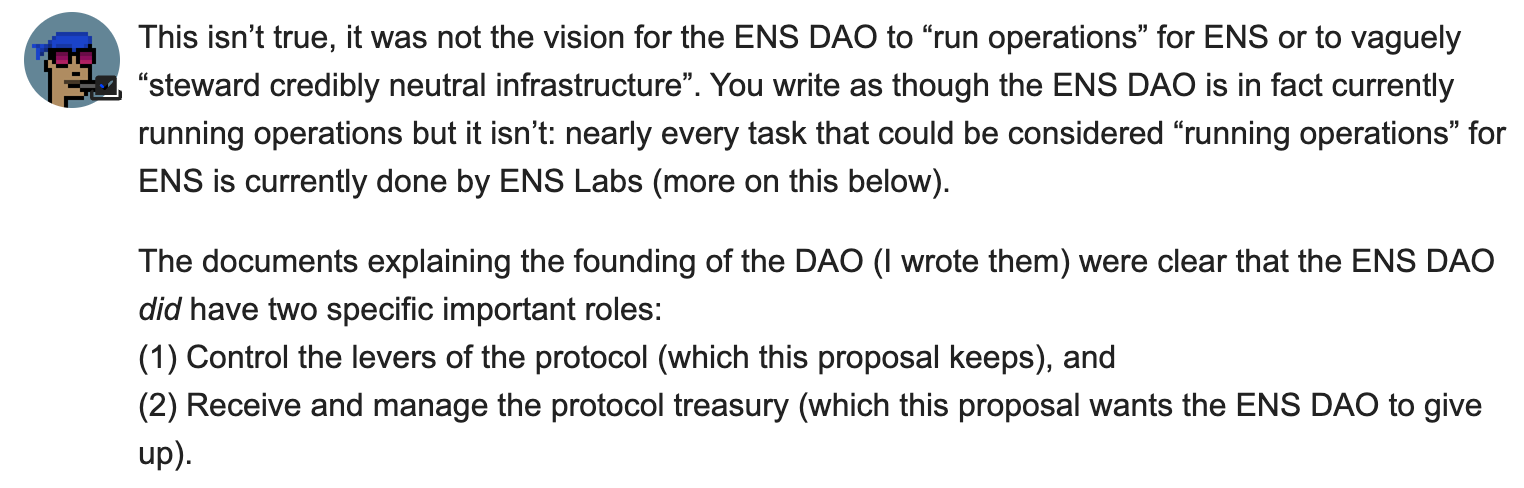


This is a conflict between decentralization fundamentalists and practical operators. One side does not believe inefficiency justifies the Foundation 'seizing power' from the DAO, while the other, after years of ups and downs, still believes that centralization, at least for now, is more beneficial for the project's development.


Nick's over 3 million opposing votes are seen as the first shot fired in the power war.


However, Nick himself also provided an explanation. His opposition stems from concerns that the current committee's power lacks sufficient checks and balances, and a two-year extension would solidify these issues. Additionally, he worries that some members might use the veto power for political purposes, blocking ordinary proposals they personally dislike, rather than limiting it to genuinely urgent situations.


In response, Katherine released a new proposal that raised the threshold for veto execution (from 4/8 to 5/8), implemented stricter power limitations, and added member removal mechanisms, among other things, to prevent power concentration.


Data shows ENS's annual revenue exceeded $10 million in 2023, declined to $7 million in 2024, and had fallen to less than $2 million in 2025. When there is enough money, no one cares how it is spent; but when the industry is in a downturn and revenue is falling, even assets worth several hundred million dollars require careful planning.


Nick's substantial holdings of ENS are enough for him to implement these changes, but the forced implementation of change via the token-holding 'bug' leaves Nick with no retreat. The new Foundation must perform at least better than the DAO. 'How to do it' is the problem Nick must solve in the next phase. Hopefully, the ENS core team already has the answer.


Kripto yang Sedang Tren

Pertanyaan Terkait

QWhy did ENS founder Nick Johnson vote against renewing the security committee's veto power?

ANick Johnson voted against the renewal because he was concerned about a lack of sufficient checks and balances on the committee's power. He worried that a two-year renewal would solidify these issues and that some members might misuse the veto for political purposes to block ordinary proposals they personally disliked, rather than only for genuine emergencies.

QWhat are the two main proposed changes in Katherine Wu's 'Next Era of ENS DAO' proposal?

AThe two main proposals are: 1) Transferring daily operations, treasury management, and long-term capital strategy to a restructured ENS Foundation, which would handle daily treasury operations, public goods grants, working group coordination, ecosystem strategy, and brand assets. 2) Ensuring that the DAO and token holders retain core powers, including protocol-level governance, contract upgrades, registry control, fee structure changes, and constitutional amendments.

QWhat was the core controversy surrounding the proposed new ENS Foundation?

AThe core controversy centered on the DAO treasury. Critics, including ENS's original constitution author Brantly Millegan, argued that the proposal would allow the Foundation (and by extension, ENS Labs) to gain practical control over the massive treasury funds, thereby weakening the direct influence of token holders. This was seen as a move away from the original DAO design where token holders controlled both the protocol and the treasury.

QWhat problems did Nick Johnson and Limes identify with ENS DAO's governance in late 2025?

AThey identified significant political infighting within the DAO, where competent people were leaving and leadership was falling into the hands of individuals who lacked experience or had interests misaligned with the protocol's. Limes specifically noted that proposal-making had become a reciprocal 'you support me, I support you' game, with a lack of focus on necessary work, and that the absence of entry standards led to a 'bad money driving out good' phenomenon.

QHow did Katherine Wu attempt to address the concerns about the security committee's power after Nick's vote?

AIn response to the concerns raised by Nick Johnson's vote, Katherine Wu submitted a new proposal to reform the security committee. The key changes included raising the threshold for executing a veto (from 4/8 to 5/8 members), implementing stricter power limitations, and adding a mechanism for removing committee members, all aimed at preventing the concentration of power.

Bacaan Terkait

Trading

Spot

Artikel Populer

Cara Membeli DAO

Selamat datang di HTX.com! Kami telah membuat pembelian DAO Maker (DAO) menjadi mudah dan nyaman. Ikuti panduan langkah demi langkah kami untuk memulai perjalanan kripto Anda.Langkah 1: Buat Akun HTX AndaGunakan alamat email atau nomor ponsel Anda untuk mendaftar akun gratis di HTX. Rasakan perjalanan pendaftaran yang mudah dan buka semua fitur.Dapatkan Akun SayaLangkah 2: Buka Beli Kripto, lalu Pilih Metode Pembayaran AndaKartu Kredit/Debit: Gunakan Visa atau Mastercard Anda untuk membeli DAO Maker (DAO) secara instan.Saldo: Gunakan dana dari saldo akun HTX Anda untuk melakukan trading dengan lancar.Pihak Ketiga: Kami telah menambahkan metode pembayaran populer seperti Google Pay dan Apple Pay untuk meningkatkan kenyamanan.P2P: Lakukan trading langsung dengan pengguna lain di HTX.Over-the-Counter (OTC): Kami menawarkan layanan yang dibuat khusus dan kurs yang kompetitif bagi para trader.Langkah 3: Simpan DAO Maker (DAO) AndaSetelah melakukan pembelian, simpan DAO Maker (DAO) di akun HTX Anda. Selain itu, Anda dapat mengirimkannya ke tempat lain melalui transfer blockchain atau menggunakannya untuk memperdagangkan mata uang kripto lainnya.Langkah 4: Lakukan trading DAO Maker (DAO)Lakukan trading DAO Maker (DAO) dengan mudah di pasar spot HTX. Cukup akses akun Anda, pilih pasangan perdagangan, jalankan trading, lalu pantau secara real-time. Kami menawarkan pengalaman yang ramah pengguna baik untuk pemula maupun trader berpengalaman.

257 Total TayanganDipublikasikan pada 2024.12.11Diperbarui pada 2026.06.02

Cara Membeli DAO

Diskusi

Selamat datang di Komunitas HTX. Di sini, Anda bisa terus mendapatkan informasi terbaru tentang perkembangan platform terkini dan mendapatkan akses ke wawasan pasar profesional. Pendapat pengguna mengenai harga DAO (DAO) disajikan di bawah ini.

活动图片