This weekend, both Iran and Oman stated that negotiations on shipping channels were nearing completion, with Oman also calling on all parties to cease military actions in the Strait region to create conditions for the implementation of an agreement.
What is really stalling the talks is that Iran has raised its price for reopening the Strait. Iranian Foreign Minister Araghchi refused to resume direct negotiations with the United States, citing the US's continued violation of the provisional peace understanding signed by both sides in June. Tehran's demands include lifting the maritime blockade, withdrawing US troops deployed around Iran, canceling sanctions, unfreezing assets, compensating for war losses, and halting military actions against Iran and its regional allies.
These demands were previously used more in nuclear deal negotiations but are now placed as prerequisites for reopening the Strait. Iran's Revolutionary Guard stated it would continue to control the Strait until all conditions are accepted. The previously reported tripartite passage management arrangement between Iran, Oman, and the US has therefore been shelved for several days and still requires approval from Iran's highest decision-making level.
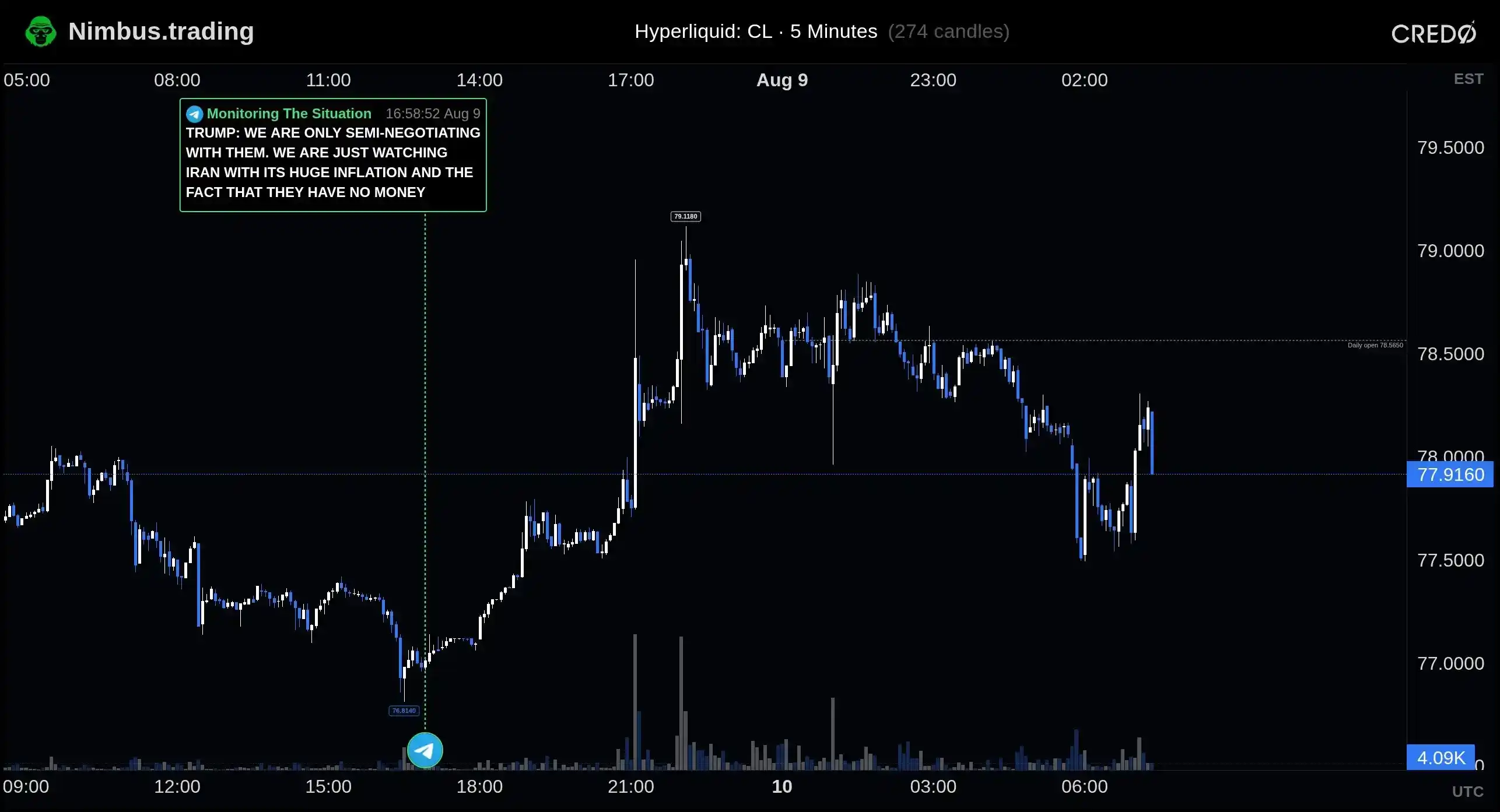
Trump, meanwhile, noticeably toned down his rhetoric. He said on Sunday that the US was "taking it easy" on Iran and that the two sides were only in a state of "half-negotiation." The US side currently chooses to observe Iran's high inflation and financial pressure, relying on the maritime blockade to continue applying pressure.
The diplomatic window remains open, with both sides waiting for the other to make the first concession. In the meantime, the Houthis claimed an attack on the Saudi Jizan refinery, and the UAE reported that a vessel belonging to a national oil company was attacked by Iran.
Crude Oil / Indices
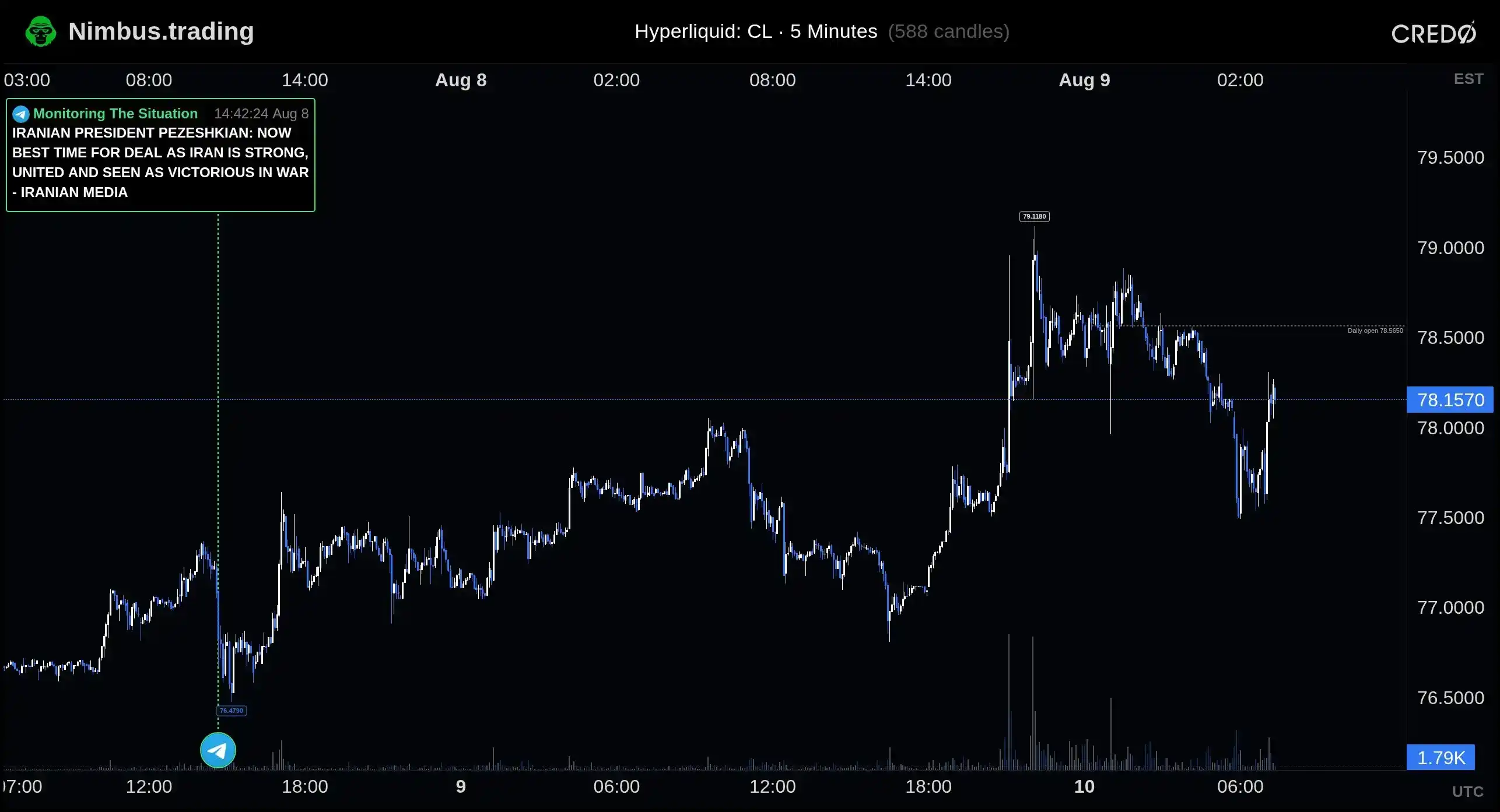
At 10:20 PM Saturday, Iranian President Pezeshkian stated that Iran is currently strong, united, and seen as the winner of the war, making it the best time to reach an agreement. CL subsequently dipped briefly, touching around $76.48, but oil prices quickly recovered.
In the early hours of Monday, Trump's statement that the "US and Iran are in half-negotiation" further confirmed that the US side has shifted from military escalation to waiting for economic pressure to take effect. Oil prices then rose to around $79.12.
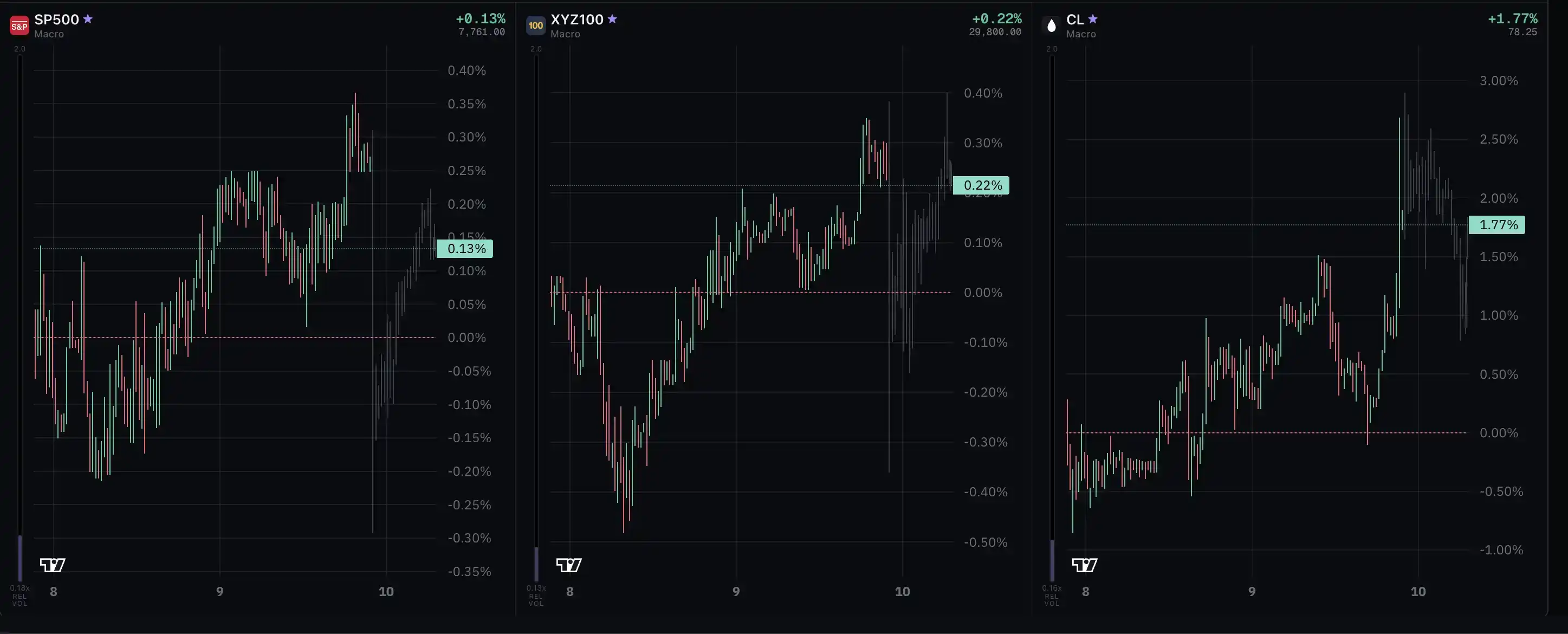
The two major indices performed steadily, with SP500 and XYZ100 rising 0.13% and 0.22%, respectively. Against a backdrop of rising crude oil, the gains in the two major indices signaled strength in US stocks.
Stocks
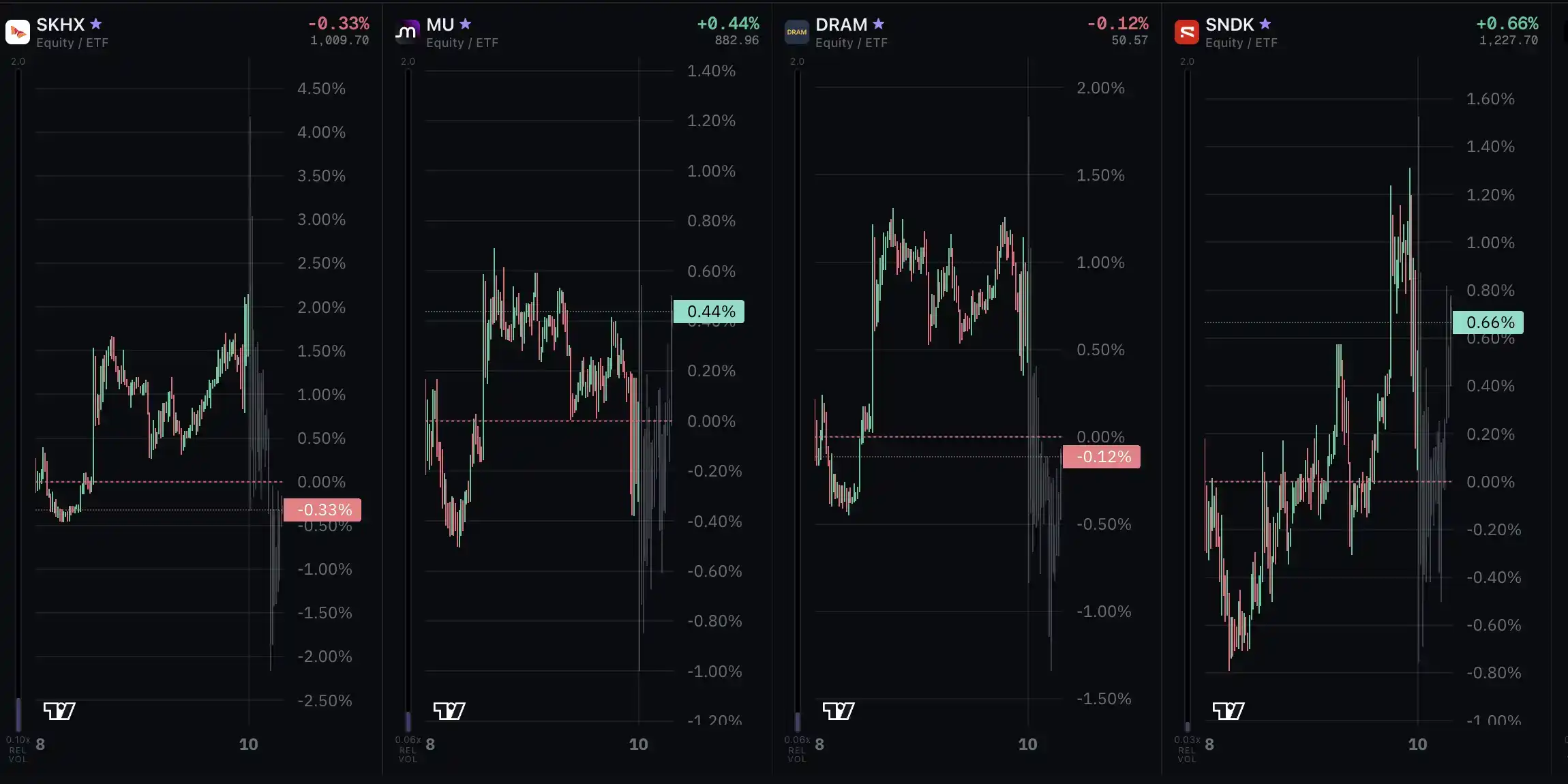
The memory sector was mixed, with Micron up 0.44%, SanDisk up 0.66%, while SK Hynix and DRAM fell 0.33% and 0.12%, respectively.
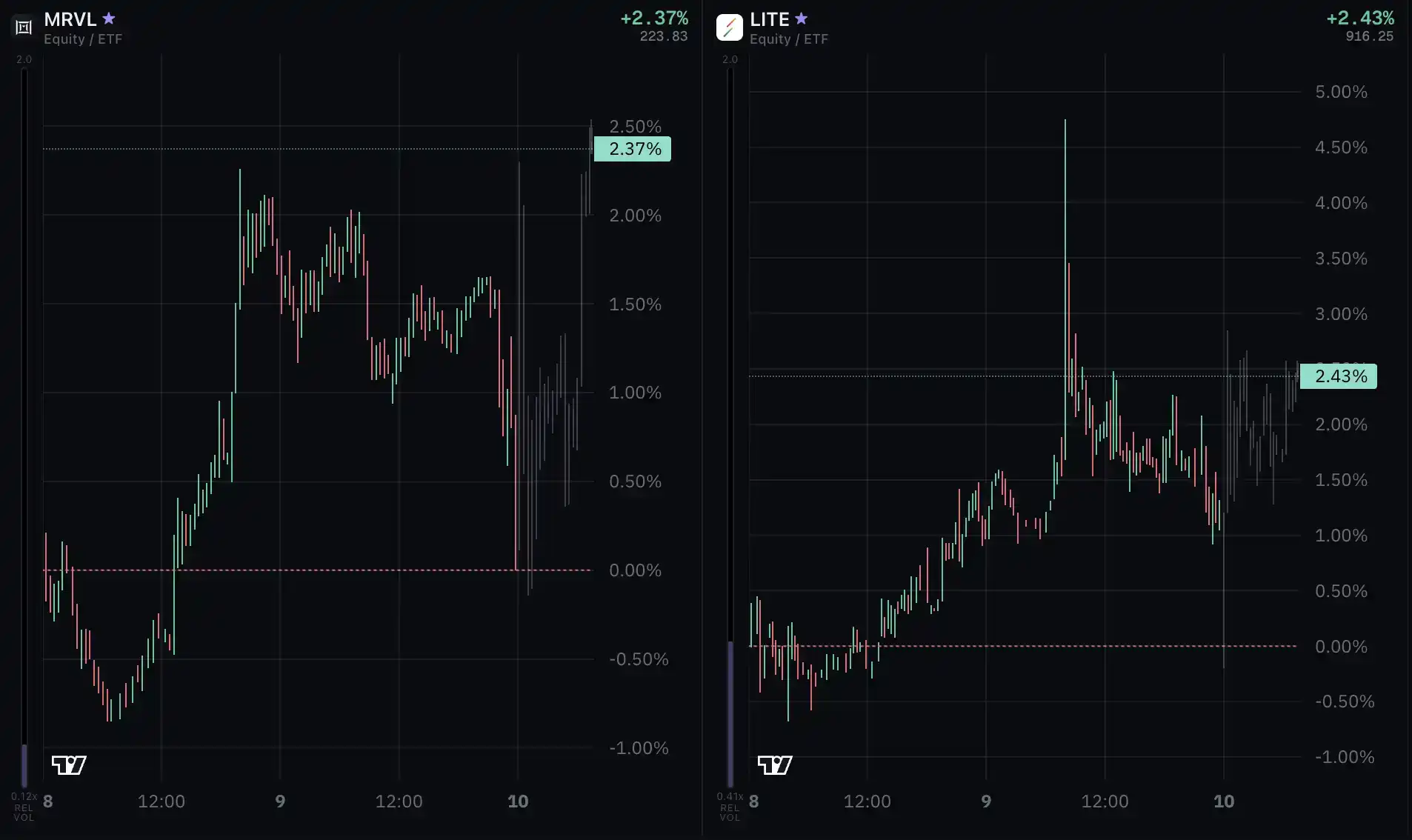
Optical communications performed the strongest, with MRVL and LITE both rising about 2.4%.
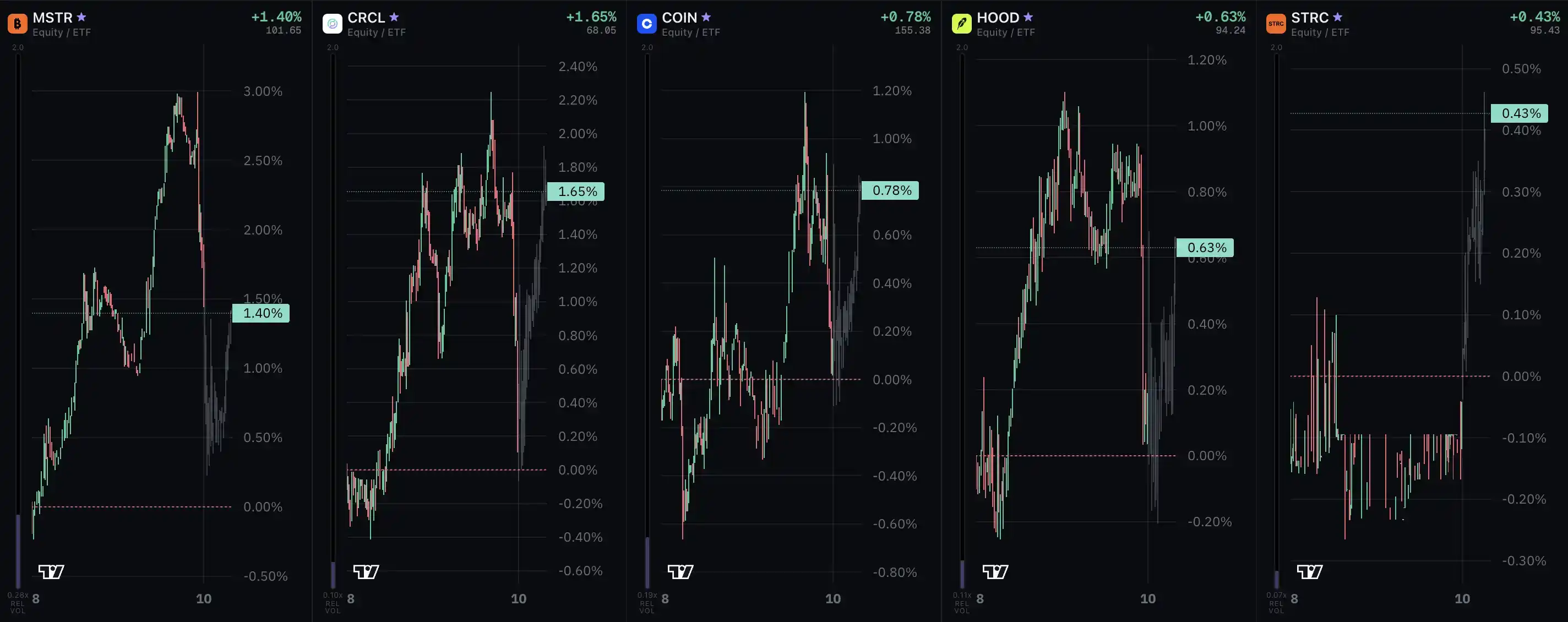
Crypto-related stocks opened high, sold off, then rebounded in pre-market trading. MSTR, CRCL, COIN, HOOD, and STRC all ended higher, with STRC continuing its rally, returning above $95.
Commodity Futures
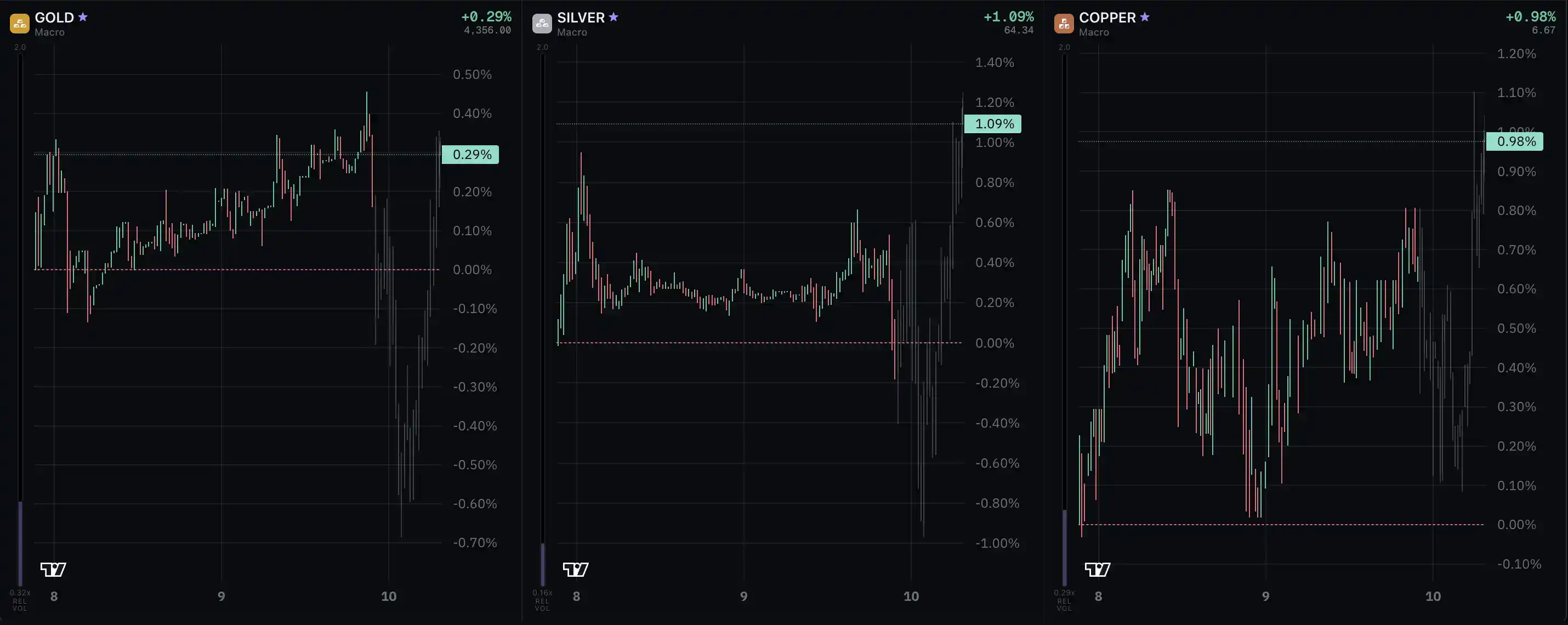
Gold, silver, and copper all rose over the weekend, forming V-shaped rebounds after futures opened. Gold gained 0.29%, silver rose 1.09%, and copper advanced 0.98%.
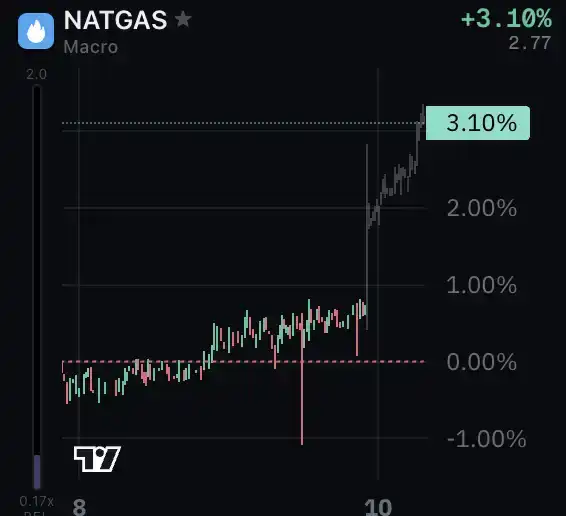
The futures contract with the largest gain was natural gas, which rose 3.10% after opening, primarily driven by mid-term forecasts of hotter weather. The heat dome over the southern US and East Coast is expected to persist into the latter half of August, leading to upward revisions in power generation gas demand expectations. Local pipeline maintenance, slight declines in dry gas production, and high utilization rates at LNG export terminals have also tightened supply and demand margins.