Translation Agency is a translation team under 36Kr, focusing on technology, business, workplace, and life, primarily introducing new technologies, new perspectives, and new trends from abroad.
Editor's Note: Instead of lamenting on social media about jobs being taken over by AI, become an 'unemployable' super-individual and turn the tables outside others' chessboards with your content. The article is from a translation.
Unfortunately, all jobs will probably disappear within the next 5 seconds.
At least, that's what it feels like if you take the alarmists on social media too seriously.
You might even adopt an 'anti-AI' ideology as your new label, shouting 'Screw AI!' to make yourself feel like you're changing the world. But in reality, you haven't made any behavioral changes, expanded your skill set, or adapted to this new world—after all, who would bother changing when you can stick to the status quo and cry about being a poor victim?
AI is not the threat you think it is.
The real threat remains the same as always:
For survival and well-being, you rely on everyone except yourself. Your employer and government have their own survival issues to consider, and when something threatens that, their thinking narrows, and they quickly try to neutralize the threat. It's human nature. You can argue they 'should' care about your well-being, but if you blindly believe they'll take care of you, you're destined to be very, very disappointed.
AI's momentum is too strong to control by complaining.
Venting on social media about how much you hate AI won't stop jobs from being replaced, nor will it halt the evolution of the skills needed for success.
The purpose of this article is to offer you a perspective and a potential solution (one that has existed since ancient times).
I have 4 points to share with you, covering wage slavery, becoming a person of high agency, and why none of this matters if you don't fundamentally change yourself.
At the end of the article, I've also prepared a short exercise with 6 questions that might open the door to a whole new way of life—even if it seems deceptively simple.
1. How to Escape Wage Slavery
Wage slavery is doing meaningless, boring drudgery for someone else—work you didn't voluntarily choose—just to survive.
I'm not against having a job.
I think work is a valuable springboard for gaining practical experience and mastering skills.
But whenever I talk about work in a somewhat 'negative' light, some people inevitably jump in and say, 'You idiot! I actually love my job!'
That's great. But I'm not talking to you (and to some extent, I think you're lying to avoid confronting your potential, and you might not even realize it).
I'm talking to those who understand the psychology of true happiness and can't stand the vision: for over 40 years, one-third of life spent on work they didn't choose, one-third mentally exhausted and unable to do anything valuable, and the remaining third sleeping...
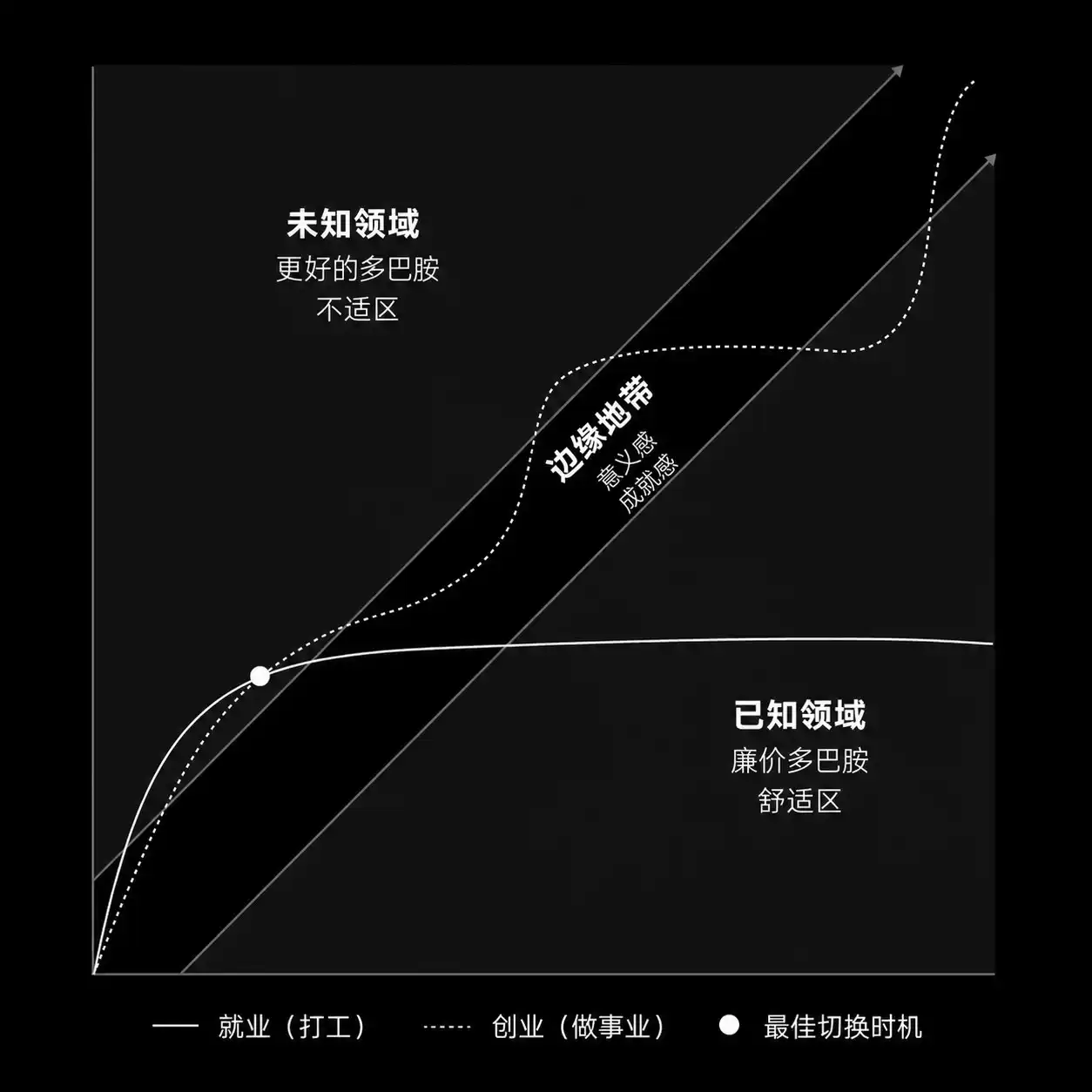
You see, happiness, meaning, and a sense of accomplishment come from testing the limits of your abilities. The research on this is clear. No, I won't cite it. Happiness comes from pursuing a challenge that is just slightly above your current skill level. It can't be so hard it causes anxiety, nor so easy it's boring. Video games exploit this. The tasks you take on are often just the right difficulty because if a level 1 character tackled a level 100 quest, you'd die instantly and hate the game. This is the single biggest driver of entering a flow state. If you can structure your life to increase the probability of triggering this flow, happiness becomes a continuous stream.
The problem with work is that after a few months, you've learned everything you need to know. You just clock in, complete the tasks, clock out. You start getting bored. This goes against your nature. You can feel it. Your attention is no longer immersed in the task; it shifts to: 'What else can I do for fun?' For most people, that 'something else' doesn't involve meaningful goals. It's just opening their phones and letting their brains rot. Very few jobs require you to continuously improve your skills to meet greater challenges.
Climbing the corporate ladder might help, but again, you don't control the difficulty level. You're not working on your own projects. Curiosity, passion, purpose, autonomy, and mastery are destined to be missing—precisely the five key drivers of flow.
What does this have to do with wage slavery?
It can be said that human civilization is built on tribes enslaving other tribes. This dynamic has never disappeared. Instead, it evolved into employment relationships, laws, and culture. Society is essentially a pyramid scheme (Ponzi scheme). There are always more people at the bottom than at the top; mathematically, it's impossible for everyone to reach the top. One boss, many employees, and employees depend on the boss for survival.
Most of us grew up indoctrinated with industrial standards.
Become a specialist. Dive deep into one field. Get a high-paying job so my friends think my son/daughter is successful. And because you did the same, you are blind to most of how the system operates. You mastered only one skill for your job but never tried to understand the system that pays you. You didn't invest time in other areas, so you don't know how to build your own business. All you know is how to be a pawn in someone else's game.
Unknowingly, your ability to think is stifled, even if you were considered 'smart' in your chosen skill. You earn a decent salary but don't feel financially secure, falling into a vicious cycle of stress. Stress narrows your perspective. This makes it even harder to imagine a life where you truly create your own business.
You don't have the capital to do what you want. You don't have time to develop yourself. And you're probably too tired (mentally, not physically) to re-educate yourself because most of your waking life is spent contributing to someone else's vision.
By the way, this is precisely how you survive a massive upheaval: by diving headfirst into your own business.
The problem is, slaves don't know they are slaves.
This goes far beyond wage slavery. To some extent, we are all slaves, often trapped in some ideology and belief system.
Slavery is often associated with coercion, and when we hear the word, we think of physical confinement. But wage slavery is financial confinement. If not working leads to disaster, and you have no skills to create alternative income, then you perfectly fit the definition of a slave—no matter how your 'feelings' deny it.
Worse, if you've fused your identity with your job, you might perceive this as a direct attack. You'll become defensive. You'll want to argue with me. That's fine, but it further proves my point.
You get the idea.
It sucks. It disgusts me just thinking about it.
Now, let's talk about what's possible now and what you can do about it.
2. The Five Elements of Success
If you don't set your own routine, someone will assign you one.
Most people spend the majority of their lives being trained to learn things they don't want to learn, to get a job they don't care about, working for people they'd never want anything to do with in daily life.
While I think AI, technology, and social media have accelerated our awareness that school and a 9-to-5 aren't the only paths, I also believe people are simply tired of the utter emptiness and meaninglessness of the world around them.
For those tired of the conventional path, there are five elements that make you invincible, allowing you to engage in meaningful work even if all jobs are replaced:
Agency — The ability to 'just do it' without permission. To spot opportunities and act decisively when no one asked you to.
Taste — The wisdom, through experience, of what's worth putting out into the world.
Persuasion — The skill of getting people to pay attention to and value what you do, distinct from manipulation.
Persistence — The profound understanding that making mistakes doesn't equal death, and that errors are part of the journey.
Iteration — The process of continuously correcting mistakes and moving toward a goal based on feedback (if something doesn't work, learn the lesson and pivot until it does).
Now everyone is obsessed with becoming a 'high-agency' person.
I get it. It's important. You need the ability to initiate action toward a goal yourself. This is one of the core differences between an entrepreneur and a regular employee. Entrepreneurs are those who bring into the world things no one asked for.
But this is just one piece of the entrepreneurial puzzle.
The five elements above really boil down to two core abilities: problem-solving and the experience to know what to do.
So far, AI is very good at 'asset creation' (content generation), but creating a 'hit' is not the same as ordinary asset creation. Asset creation is a necessary but not sufficient condition for a hit.
Last week, anyone could make a video game, just like anyone could 5 years ago. The technology is available, commoditized, democratized. Do you know how many mobile games are released in a year? Thousands. Do you know how many hits are generated in a year? 0 to 5.
— Strauss Zelnick
Now anyone can build anything, which means the barrier to entry for entrepreneurship (the antidote to wage slavery) is continuously lowering, but that's actually not the important part:

You, right now, can go build an app.
Not the next Notion, but a manageable-scale app or tool focused on something people can genuinely benefit from. Something that doesn't need to be a super-hit to be immensely valuable.
I highly recommend doing this. I think software will become the next 'information product.' What I mean is, building software will become the default choice for creators, soloists (solopreneurs), and other one-person businesses. Information products have been popular for so long because anyone can make them, but of course, that doesn't mean everyone succeeds.
The problem is the picture above (the current state).
You can build anything, but that doesn't mean: (1) it's worth building; (2) people will care; (3) you have the ability to iterate based on feedback and persist until it becomes something truly worth building and that people care about.
If you can truly internalize this sentence, you will thrive.
The second problem is that agency, taste, persuasion, persistence, and iteration are not typical 'high-value skills' you can just learn by watching a few YouTube videos.
Spouting theory and Twitter threads about how to become high-agency won't make you more agential.
The only way to practice them is to start making your own things.
3. The Antidote to Being Employed is to Make Yourself 'Unemployable'
I still remember the day I got my first web design client.
I remember they paid me $300 for an ugly static site I hand-coded. It was a local mattress company that just wanted a webpage where people could see their mattresses.
That's it.
$300.
That was the moment a light bulb went off. I knew that if I could replicate, improve, and continuously iterate the actions I just used to earn that money, I could somehow have more control over my future lifestyle and destiny. It made me 'unemployable.' It planted a deep belief in me: I could never accept going to work again; I would fight for my own survival!
But the number '$300' alone doesn't explain all the precursors to that moment—the identity shift and the initial self-belief that this could work. Nor does it encompass everything I learned in the subsequent 7 years.
I want to give you two things: a catalyst for an identity shift to become truly unwilling and unemployable, not just someone who 'likes the idea'; and an action plan that everyone can execute in their own unique way.
1) Throw yourself into an environment that forces you to grow
The fastest way to change your life is to physically and digitally rip yourself out of your current environment. Change everything overnight. The places you go, the accounts you follow, the information you consume, etc. It's hard, but it absolutely works.
Behavior change = Identity change.
You can try to diet and lose 30 pounds, but if you're not someone who intrinsically values health and enjoys a healthy lifestyle, you'll always feel like you're swimming upstream. Unless you fundamentally change your character, you'll eventually regain all the weight, just like most people.
How do you do it?
First, understanding how you became who you are today helps.
You were born into a family and culture with specific values.
You were indoctrinated with these values, even if your parents didn't force them on you.
You went to a school with specific values, taught by teachers with specific values.
You were exposed to a barrage of information that may have subtly nudged your values toward rebellion, laziness, and victimhood.
You got a phone, and with the help of social media and our primal 'monkey brain' that simply can't self-regulate, this subtle conditioning process began to amplify exponentially.
Sure, there's more nuance, but you get the core idea.
This isn't necessarily bad; it's somewhat essential.
I've heard many 'authentic' guys say they hate 'copying' or imitating, yet they still walk on two feet and speak English—because that's how you grow up. You must imitate; it's called learning.
But it becomes a problem when your behavior starts blocking the life you truly, deeply desire. The one that whispers, 'You're meant for more.'
To start this re-conditioning, re-creation process, begin with your environment.
You must be hyper-aware of all external stimuli because they are all subtly shaping who you are now.
Here's what you do:
Flip the old switches off overnight.
Wake up tomorrow and, for at least that day, do nothing you normally do.
Set your alarm for a completely different time. Plan every step after you wake up precisely. Eat different food. Talk to different people. Consume different content. Change everything.
As we go deeper, you'll gradually understand which direction to deliberately construct your surroundings.
2) Choose a medium where feedback is as close to reality as possible
The most dangerous way to live is to be completely detached from continuous trial and error.
Being detached from the process of correcting errors means you're detached from challenge, exploration, and the hard-won wisdom that comes from struggle—the very wisdom that brings growth and, subsequently, a sense of accomplishment.
This applies not only to jobs where the challenge plateaus rapidly once you're proficient but also to business and entrepreneurship, even to those who bring an 'employee mindset' into their ventures: always needing someone to tell them what to do or an employee handbook to take confident steps.
I want to ask you a question:
Before the internet, how did people figure things out? Before the flood of 'hand-holding' tutorials and step-by-step guides, how was the first rocket built?
By trying. By facing failure. But they didn't let failure convince them 'it's impossible,' nor did they let it derail them into instant gratification. They adjusted their course based on the information reality fed back to them. Eventually, they found the needle in the haystack.
They were wise.
Because the hallmark of a wise system is its ability to correct its course based on feedback. They had a lighthouse in their minds, and when storms blew them off course, they never gave up.
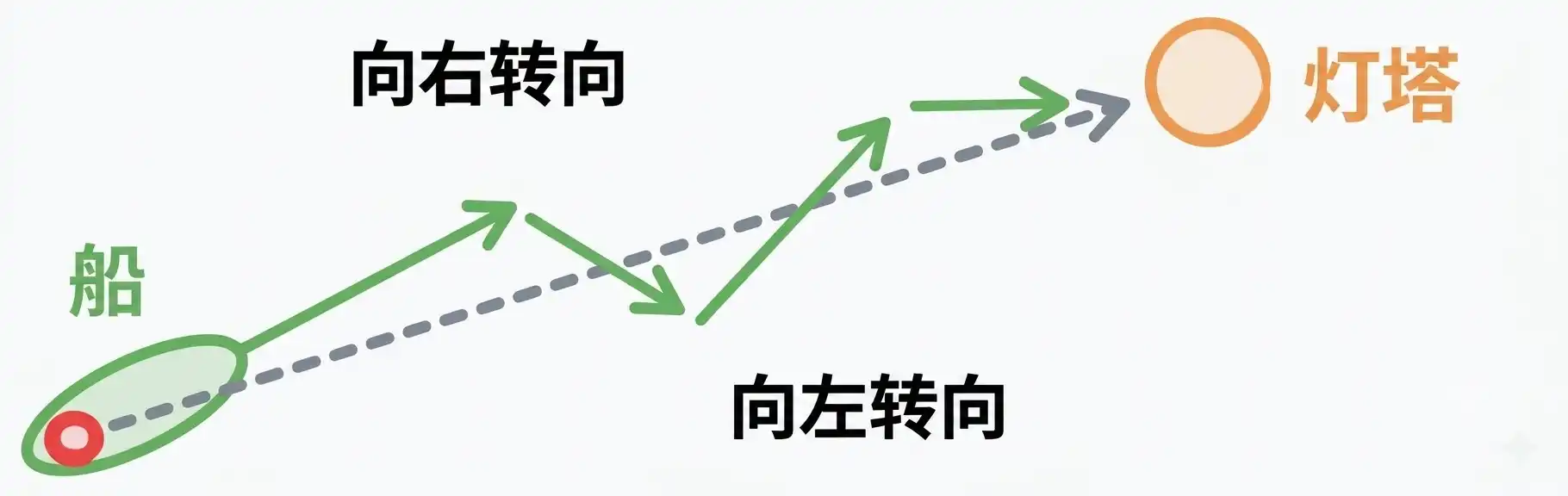
Whenever I talk about entrepreneurship, this is what I truly mean.
I mean returning to your most natural state. Immersing yourself in creation. Pursuing unknown goals that can only be achieved through failure.
This is the only common trait among most successful people.
For them, failure is never a negative concept; it's an essential, normal part of a good life.
This all sounds fantastic, but in today's world, how do you actually put this into practice?
3) If you want to thrive in the future, learn one of these two skills
Code and media are permissionless leverage. They are the super-leverage behind the new rich. You can create software and media that earn money for you while you sleep.
— Naval
As a novice, an individual, you have no idea how much leverage you have at your fingertips, especially with AI now.
I'm not talking about low-level AI use, like casual ChatGPT chatters or artists furious that AI 'stole' their work.
I'm talking about a higher-order understanding—knowing you can build almost anything because AI plunges you into a torrent of trial and error and rapid feedback. Sure, the initial output may be largely unsatisfactory, but if you have agency, if you know how to iterate, if you're persistent, if you cultivate taste, you can build almost anything, and it only gets easier over time. Then, if you can persuade others, what you build can earn you consistent income while you sleep.
Of course, this was possible before AI. The core issue is that most people don't understand that given a long enough time horizon and possessing these five elements of success, anything is possible. AI just lets you do more, faster, and grants you capabilities you couldn't access before—like software development and a supercharged way to learn and research.
That said, I think Media is more important than Code.
And when we talk about media, we're really talking about Content.
Posts, videos, podcasts, or articles that you publish once and can be seen by thousands, even millions. In my view, this is the most valuable core skill to have, especially in an era where more and more people are trying to rely entirely on AI for all creation.
Because with content, you must have an eye for what's truly 'good.'
You still need the discernment and judgment that AI can't directly give you because you haven't personally embarked on the journey of trial and error. You don't even know what questions to ask.
The value of content is subjective. Everyone who reads any sentence in it will interpret it differently. In other words, there is no single correct path to achieving results.
In contrast, the value of code is relatively objective. As long as it produces the desired outcome, how you write it isn't that important. As we saw earlier, there are more mobile game apps than ever, but their downloads and actual usage are declining.
Why?
Because they lack Distribution. They don't understand media and content. They can't attract people to use their creations, nor can they make people care enough to pay for them.
By the way, I'm not talking about the kind of content that hypes on Instagram, like 'I gave my social media permissions to Claude, and it grew my account by 100k followers overnight.' That content is almost worthless unless you can build genuine trust and loyalty through narrative and authority.
As JK Molina says: Likes don't pay bills.
Truly smart content creators operate on a much larger scale than posting clickbait or rage-bait just for likes and follows.
Also, as you might have guessed, exposing yourself to an environment of people, places, and habit triggers aligned with the life you aspire to is a crucial part of completing the identity shift.
4. How to Start — Take 15 Minutes to Change Your Life Trajectory
You've changed your environment.
You've chosen your medium.
You know media trumps code because the value of content is entirely subjective to the audience, making AI-generated content rapidly homogenized and commoditized as it becomes ubiquitous, thereby opening up massive space for true creative talent to grow wildly—whether they use AI or not, because I'll say it again, AI itself was never the problem.
Now, you need to answer the only truly important question:
What is your life's work?
This is what we're going to build. A lifelong pursuit worth dedicating yourself to, not a cold 'personal brand.'
Peterson, Huberman, Watts—they all have so-called 'personal brands,' but these brands are deeply congruent with their life missions. They know exactly what they want and use social media as a tool to achieve it. Because in the current environment, it's the best technological means for you as an individual, amplified by AI, to make a breakthrough, especially if you're starting from scratch—it's hard to make a dent on TV, radio, or with traditional publishers.
(Sure, Alan Watts didn't deliberately build a 'personal brand' back then, but he effectively formed one, so the point still stands.)
Their personal brand is their lived self.
That's their identity tag.
Most people aspire to this but get stuck quickly. They crave instant dopamine hits, constantly searching online for 'what's the most profitable niche for making 6 figures with content creation,' instead of excavating the immensely valuable experience and stories already accumulated over years within themselves—often dismissing them as worthless because they seem too ordinary to them.
The raw material for your life's work is already buried deep within you, just layered over by years of conditioning to 'specialize,' 'be practical,' and 'stop asking so many questions.' The process of discovery isn't about stuffing you with novel, strange ideas. Instead, it's about revealing the treasure you already possess.
Take this seriously.
Close all browser tabs. Open a blank document. Set a 15-minute timer. Answer the following questions in writing one by one. Do not skip the questions that make you uncomfortable.
Step 1: Mine Your Raw Material
Most of what makes you interesting has been ground out of you through past growth and training. Your curiosity was seen as distraction. Your broad interests were labeled as lack of focus. Because the old system only needed a compliant cog.
The only way your content can resonate is if it originates from genuinely authentic material that is truly yours.
Answer these questions. If an answer doesn't come immediately, skip it and let it simmer in your subconscious:
What do you know so well it absolutely couldn't be an accident? What topic have you devoured countless materials on, studying relentlessly for years, even when no one was paying you?
What problem have you solved for yourself that you previously blindly assumed everyone else had already solved? What comes effortlessly to you as instinct yet seems to frustrate everyone around you?
What 'transgressive' thing were you criticized for as a child that was actually the seed of your early unique taste? What were you obsessed with before someone jumped in to tell you 'it's not practical'?
Now, circle one answer. The one that truly stirs something, creates a ripple inside you. This is your core raw material.
Don't worry about niche, content pillars, or other operational jargon. Focus on the depth of your core idea, because in the end, winning comes down to depth of thought.
Step 2: Establish Your 'Contrarian Thesis'
The world doesn't need another person repackaging common sense and dumping it back out. Your content must have a unique perspective only you can see. And this perspective comes precisely from what you firmly believe the mainstream society has gotten wrong.
Taste isn't about knowing what's good. It's about seeing what's flawed, what's broken, and being unable to let it slide.
Answer these questions:
What conventional workplace or life advice, widely accepted as gospel, has actually messed up your life? What deep-seated beliefs did you have to 'uninstall' to get back on track and feel alive again?
In your field of expertise, what ideas do you hold that might be laughed at as naive by so-called experts, but you can't be shaken from them?
What is the 'emperor's new clothes' in your entire industry that everyone tacitly agrees to ignore?
Examine the answers from Step 1 and Step 2 together. Where they intersect is the direction you should go full speed ahead.
Your answers to these questions are the perfect material for your first post.
The world's top brands are essentially the public, open exploration of one living person's inner world.
Step 3: Publish Your First Core Idea Tomorrow
This is a long article, but not a comprehensive course.
I wish I could list 20 detailed modules here, but I can't. That's what a bootcamp is for.
The final element—use it as your starting point to formally bid farewell to dependence on handouts and step into a new era of financial independence—is to actually do it. And actually doing it starts with publishing your first post.
Literally, you just wrote excellent post material in black and white in the previous step.
Pick one.
Think about how to write the opening line (the hook) to instantly grab attention.
Refine the wording of the body to make it most penetrating and impactful.
Accept that your first version might be terrible—remember, you can't optimize something that doesn't exist.
If you need a little help, here's a small trick/prompt to help you brainstorm and draft a few versions from different angles, giving you a feel for what 'good' content is. These are all based on market-validated methodologies.
Your mission is clear.
Pick one answer from Step 1 and one from Step 2. Fuse them organically into a single, highly distinctive sentence that only you could write. Then publish it tomorrow as your first piece of work. A post, a short video, or a long article. The medium is irrelevant at this stage.
At this point, you'll get real feedback from the real world.
If it doesn't make a splash, great, it means you need to learn. You need to research and find a persuasion strategy to try in your next or next-next post until you master this skill—because mastering a skill is essentially the cumulative process of stacking tactical solutions as you continuously run into new problems.
If you're the type currently thinking, 'I wish this were more practical and actionable,' you're really missing the point. Because I just gave you the universal ultimate underlying formula that can be extrapolated to accomplish anything.
And that complaint that just flashed through your mind is a mental error you failed to catch and correct in time.
Alright, that's it for today. Talk next time.
Translator: boxi.




















