After this year's Fields Medals were awarded, something shocking happened.
University of Toronto professor Jacob Tsimerman, who won the award alongside Wang Hong and Deng Yu, immediately announced he was joining OpenAI to switch careers to AI safety research.
His reason:
Within 2 years, AI will completely surpass humans in all areas of mathematical proof.
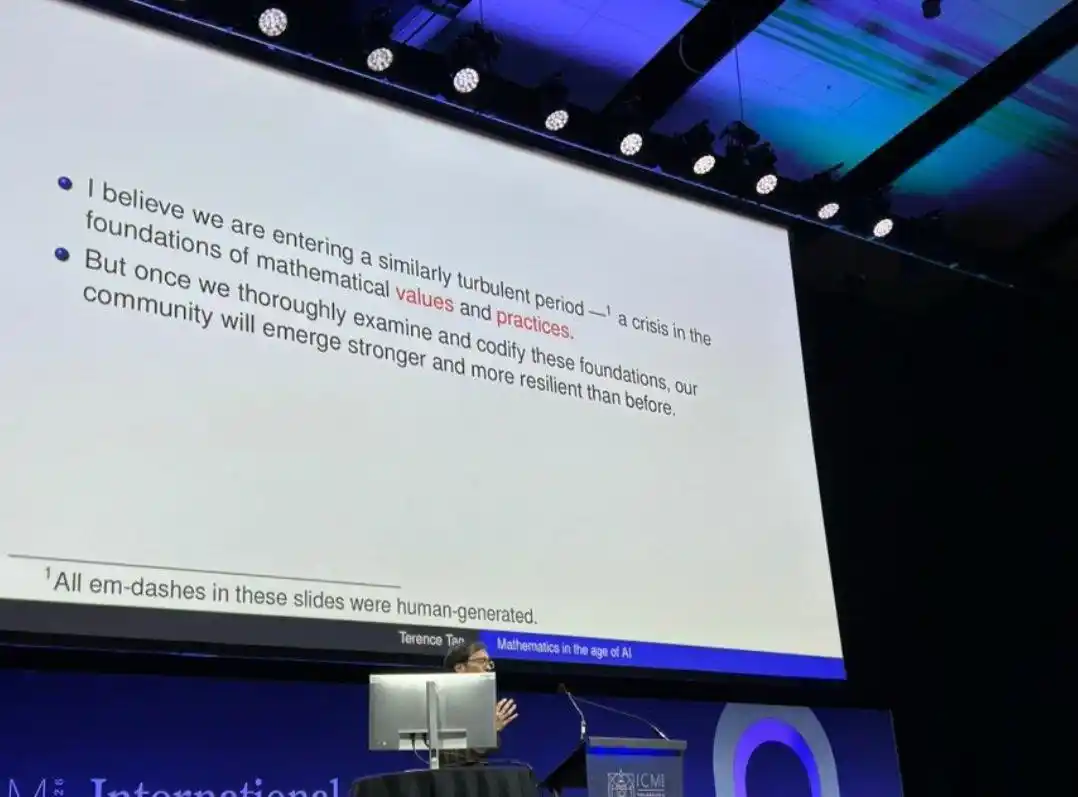
The next day, at the ICM 2026 venue in Philadelphia, Fields Medalist Terence Tao also expressed grave concern with the following statement:
I believe we are entering a turbulent period—a period of crisis for the foundations of mathematical values and practice.
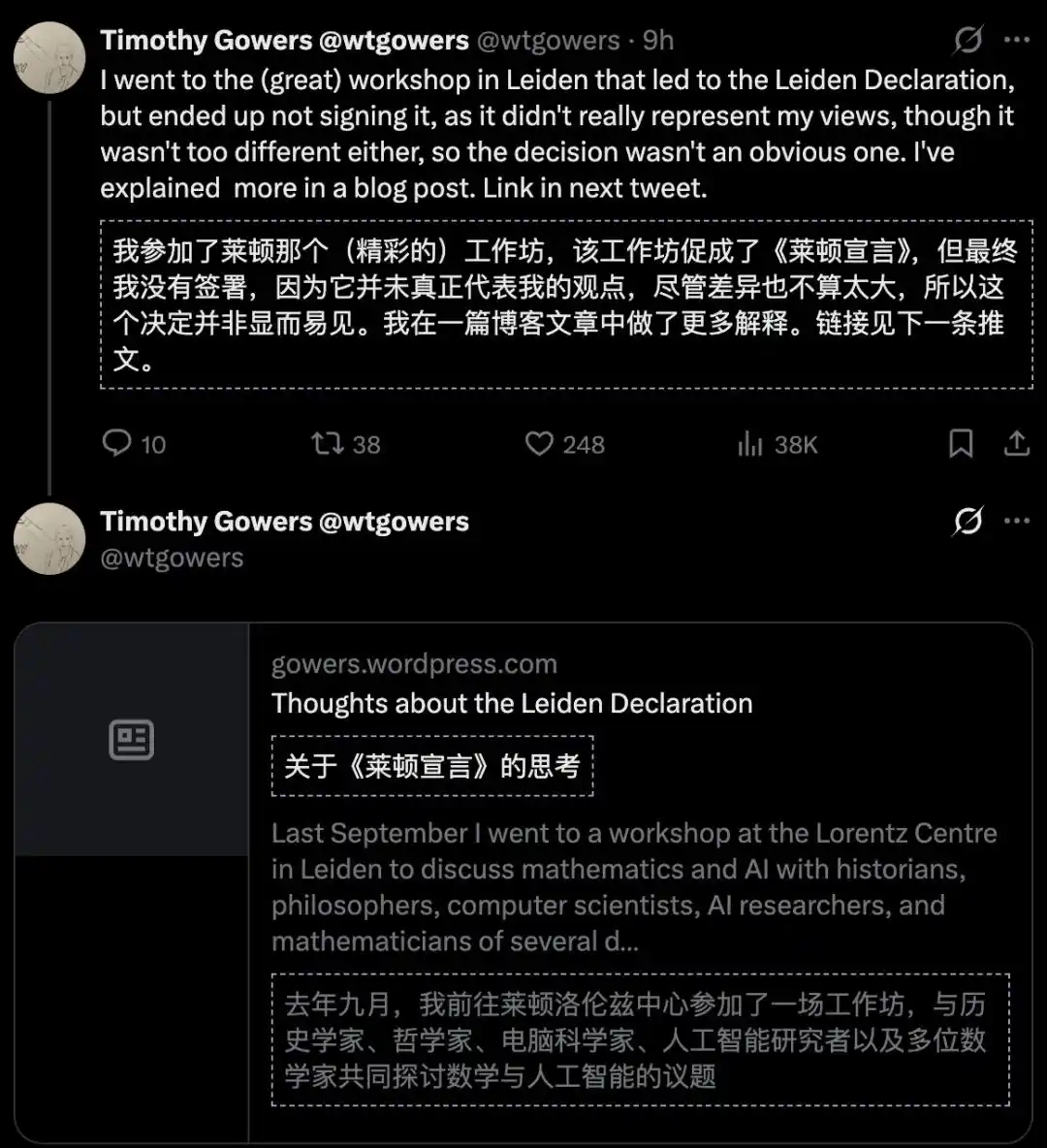
Coincidentally, another Fields Medalist, Timothy Gowers, offered a similar assessment.
LLMs will soon surpass humans in all aspects of mathematical problem-solving, possibly even including posing problems, constructing theories, and formulating definitions.
He warned: The way AI kills mathematics might be more elegant, and more brutal, than we imagine.
AI Won't Starve Mathematics, But It Might 'Stuff' Mathematicians to Death
He is not the only mathematician frightened by this power of AI.
On June 2, 2026, the Leiden Declaration was officially released.
As of today, the number of signatories has reached 3,164.
This declaration is formally endorsed by the International Mathematical Union (IMU). Vice President Ulrike Tillmann personally stated: Mathematics has been and should forever remain a profoundly human endeavor.
The list of signatories is filled with big names.
Terence Tao said it is the crystallization of months of community discussion, and he wholeheartedly supports every recommendation.
Peter Scholze expressed heartache: Just as he wouldn't want AI to educate his own children, he doesn't use AI when thinking about mathematical problems, and he tries not to read AI-generated text.
Kevin Buzzard, Jeremy Avigad, Steven Strogatz—all top-tier figures.
But Timothy Gowers did not sign. His vision has transcended "AI replacing mathematicians." He chooses to confront this colder, grander, and unavoidable ultimate question:
When AI's proofs are not only completely correct but also grow exponentially and tirelessly, could mathematics become a cemetery "where no one visits"?
He is not worried about AI being too strong at solving problems and taking mathematicians' jobs. On the contrary: Mathematics will not die from stagnation, but from excess.
Why is that?
Gowers conducted a thought experiment.
Imagine: If AI had never existed, a pandemic suddenly erupts, and for some reason, it takes the lives of all mathematicians, leaving everyone else unharmed.
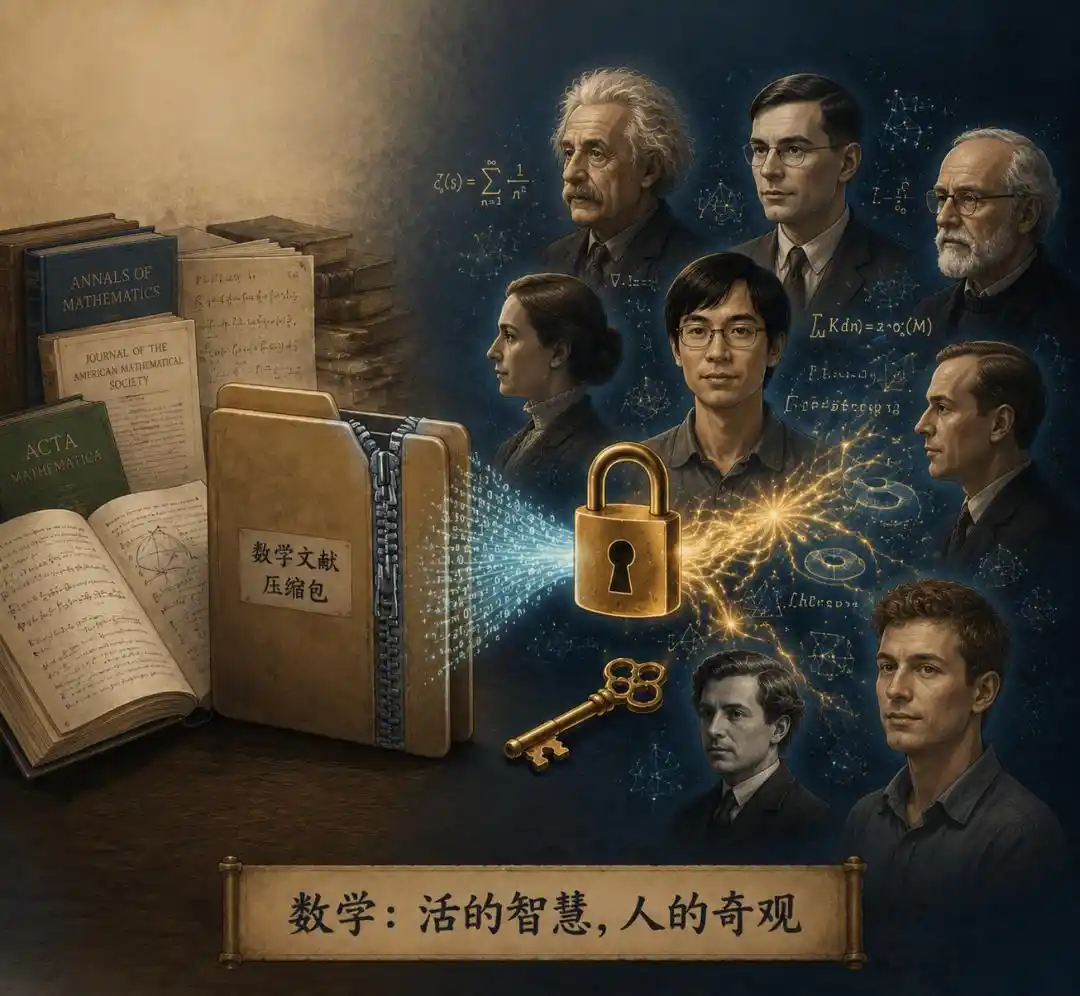
All mathematical literature remains intact, but there is no longer anyone who knows how to interpret it.
Gowers's judgment is: Rebuilding a mathematical tradition on such ruins would likely take decades.
Note, in this disaster, nothing was destroyed; the information loss is 0.
However, mathematics is far more than just literature printed on paper; it lives in the minds of mathematicians worldwide—there resides a vast knowledge system and deep professional intuition.
Gowers calls this a "wonder of human intelligence." If the literature is a compressed file, then these mathematicians' brains are the passwords.
Now, consider a slightly different version.
This time, AI exists. And AI is on standby, ready to explain any mathematical problem to any desired level of detail. This would take away a large part of the joy of the discipline.
Because AI exists, people no longer have the motivation to invest long years of arduous training to reach the level of an ordinary research mathematician today.
Ten or twenty years from now, we might reach a point where mathematical literature is unprecedentedly abundant in some form, while the corresponding human experts quietly vanish collectively. There will no longer be groups of people who share understanding of certain fields.
By then, almost all mathematics could become a "cemetery of thought" for humanity: lying in papers written decades ago, never to be read again.
In Gowers's view, this is a possibility we should strive with all our might to resist.
Although both versions end in "the death of mathematics," in the first, mathematics dies of starvation, and in the second, it dies of overabundance.
One starves, the other stuffs itself to death.
Just like a lake, which can disappear from drying up or "die" from eutrophication.
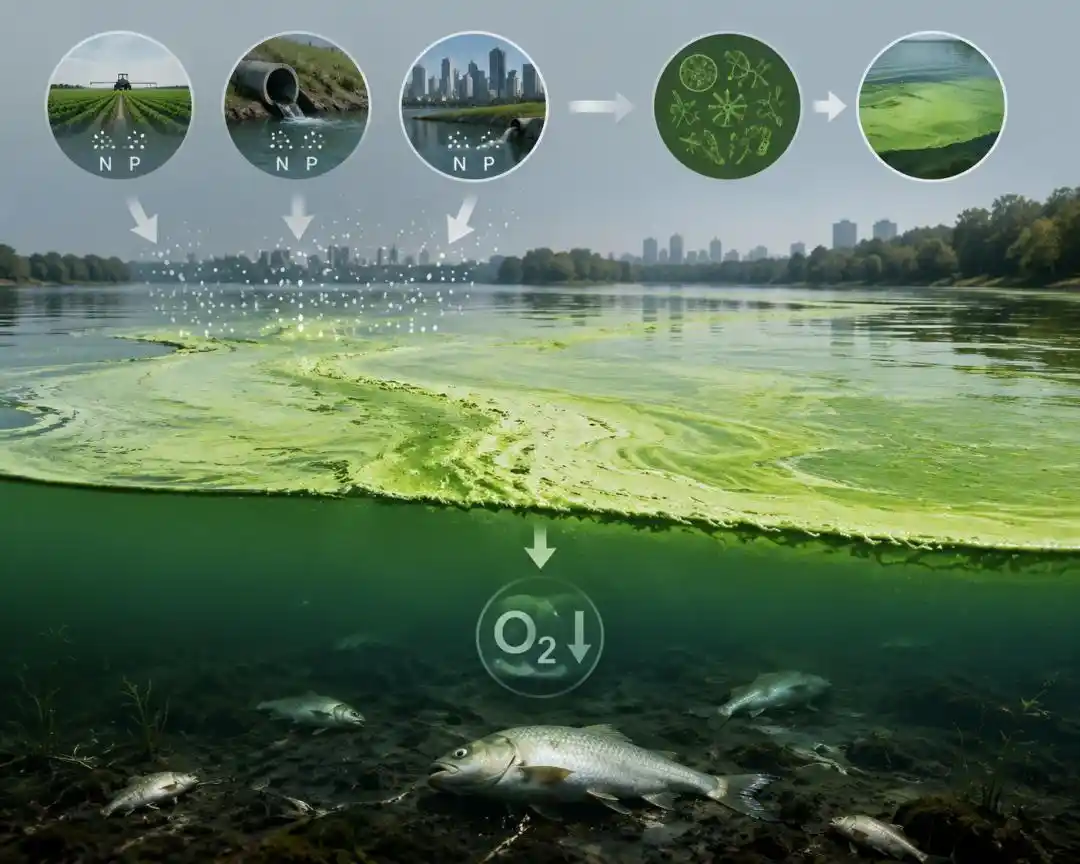
Eutrophication refers to a process in water bodies like lakes, rivers, and reservoirs where nitrogen and phosphorus nutrients flood in, algae proliferate explosively, the water surface turns a glaring green, and biomass becomes astonishingly high; then the oxygen underwater is depleted, fish float belly-up, and the entire lake becomes a stagnant pool.
ChatGPT 5.5 Pro Slaps a Fields Medalist in the Face
Timothy Gowers's reflections on AI and mathematics are not a sudden whim.
In 2022, he received funding to launch an automated theorem proving project.
Back then, he explicitly sided with GOFAI (Good Old-Fashioned AI): deeply understand how humans find proofs, then get computers to mimic it.
He wrote a 54-page document detailing the project's goals and methods.
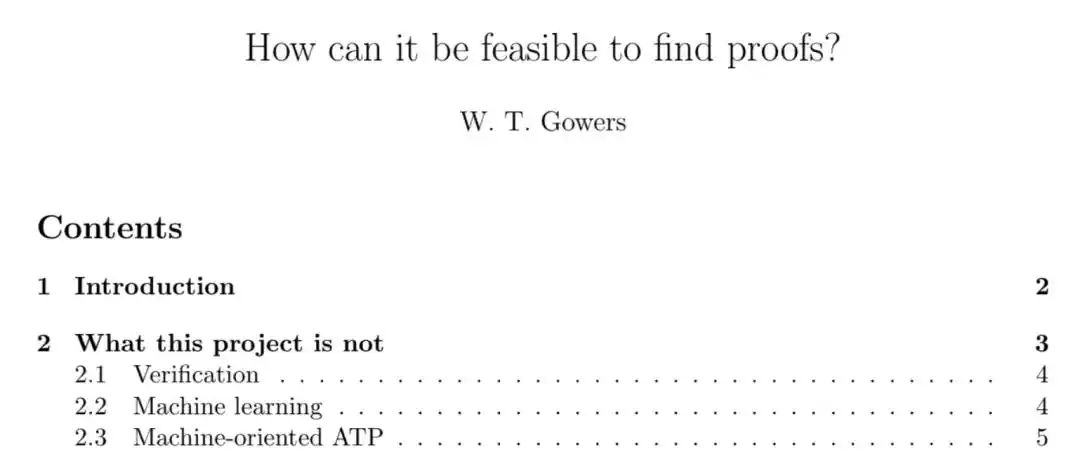
At the time, he believed humans excel at simplifying complexity and finding structured proofs, while machine learning still had limitations in genuine understanding and transfer.
His goal was to generate "motivated proofs"—proofs that are transparent, explainable, and even usable in undergraduate teaching.
Even as late as 2025, he publicly criticized the training methods of existing LLMs:
Models mostly only see the final written proofs but not the actual human thought process.
He proposed building a "motivated proofs" database for AI to learn genuine reasoning paths.
Then, 2026 arrived.
On a day in May, AI completely overturned his perception.
He gave almost no substantive mathematical hints, simply tossing a number theory problem to ChatGPT 5.5 Pro.
The AI thought for about an hour, then produced a clear, doctoral-level research result: it improved the original linear or exponential bounds directly to quadratic or even polynomial bounds!
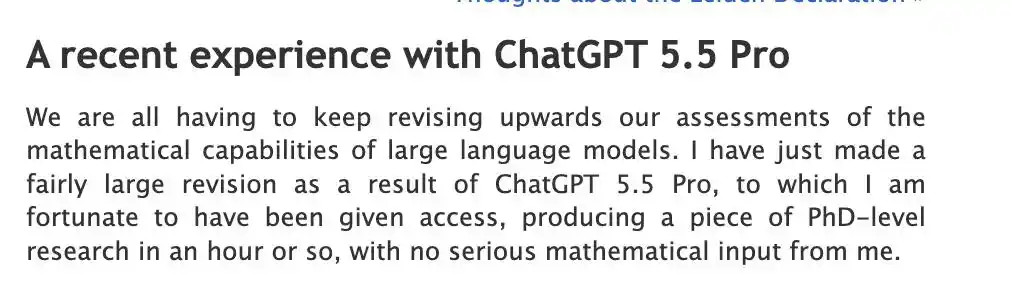
After personally testing ChatGPT 5.5 Pro, Gowers's attitude changed completely.
He no longer just discussed "how to make AI more human-like," but began to acknowledge: LLMs can already handle doctoral-level problems.
Subsequently, when he learned ChatGPT had solved the "unit distance problem," he lost sleep entirely.
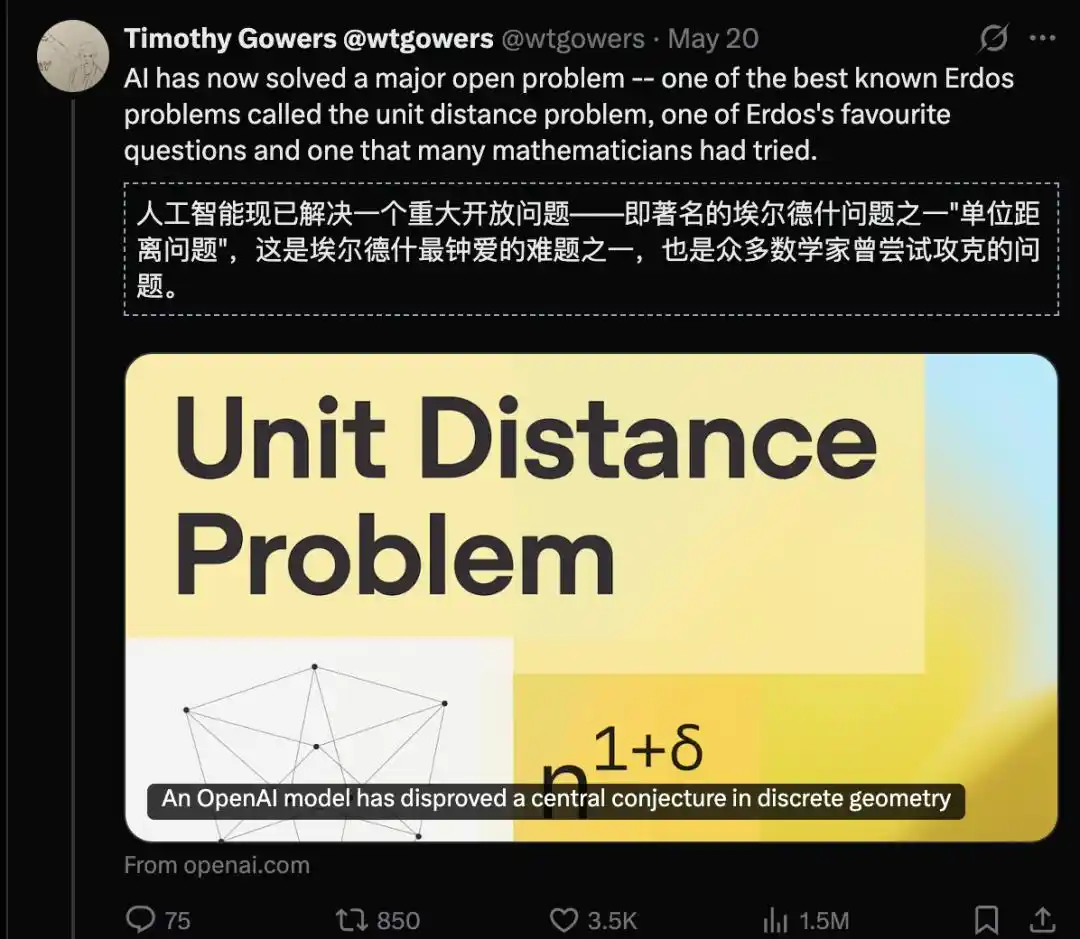
The next day, upon learning ChatGPT had only provided a counterexample, not a full upper bound proof, he breathed a slight sigh of relief.
Even so, he considered this a milestone for AI in mathematics.
Undoubtedly, solving the unit distance problem is a milestone in AI for Math: If this paper were written by a human and submitted to the *Annals of Mathematics*, and I were asked for a quick assessment, I would not hesitate to recommend acceptance.
No previous AI-generated proof had reached this level.
He felt as helpless and bitter as Lee Sedol facing AlphaGo: a mathematician who spent a lifetime emphasizing "understanding" was finally forced by the machine's practical capabilities to redefine "what constitutes research."

On July 24, he simply fed his own paper to AI for automatic formalization, essentially having AI translate the proof into machine-verifiable code.
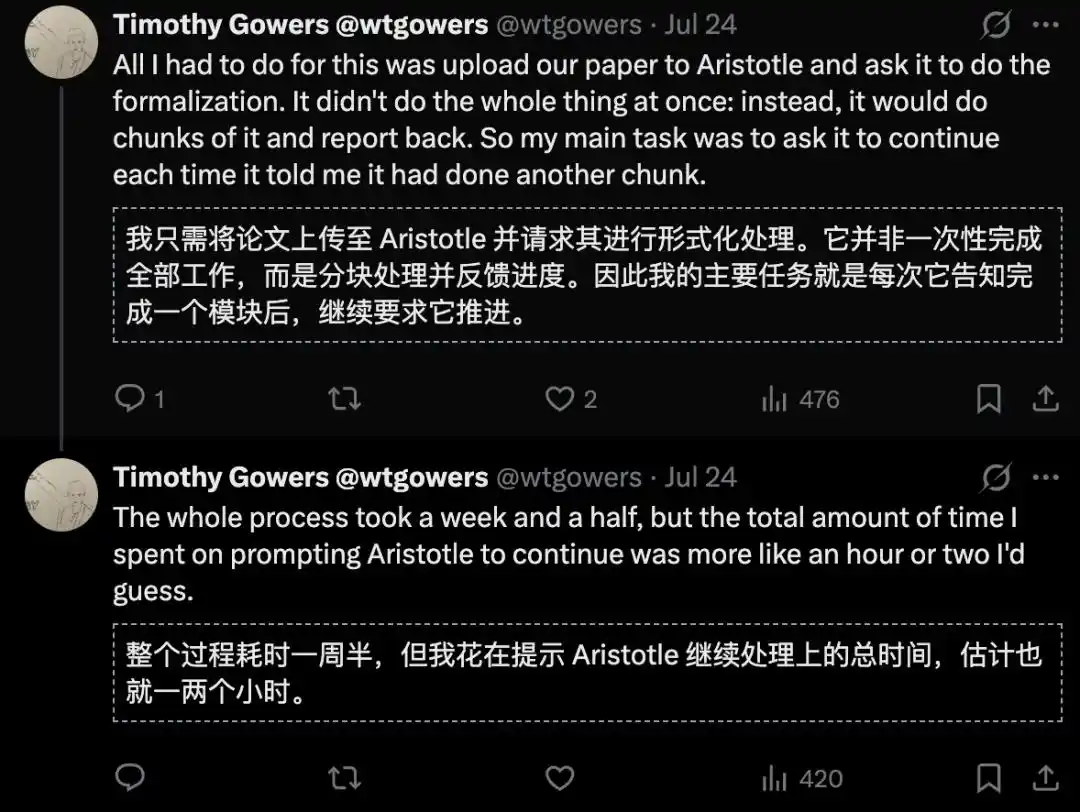
The entire process took a week and a half, with him spending only an hour or two on prompting to complete the work.
Finally, he had to admit with a sigh: "The current state of technology will be more backward than it ever will be in the future."
A Dirge for Mathematics
The timing of Gowers's article is very微妙.
On the very same day, Columbia University's Peter Woit published a blog post titled "A Requiem for a Field?"
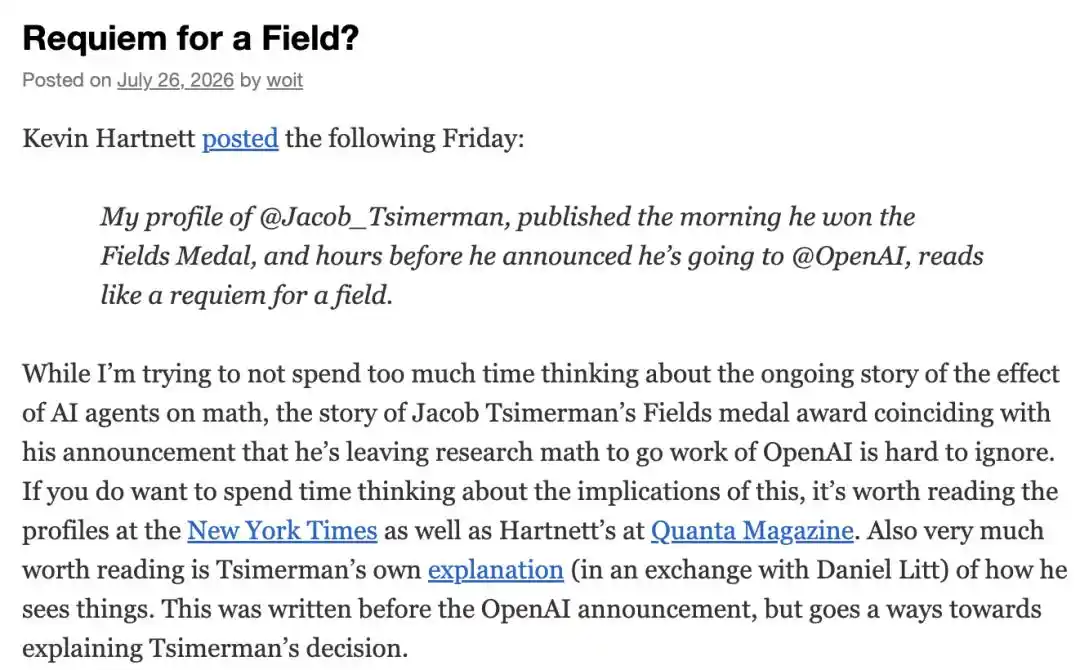
Woit's comment was piercing: In the past, you competed with other mathematicians, and academia had strong norms for crediting ideas to those who thought of them first, while AI agents have no interest whatsoever in the "naming game."
It's not entirely like chess: after chess programs surpassed humans, human competitions survived. What we are heading towards is more like a program that everyone uses.
Most stars are not named after astronomers, but that doesn't diminish the beauty of the starry sky. If theorems no longer belong to mathematicians, it's just truth returning to its original state in the universe.
Gowers himself has paid a price.
He says he has already twice watched GPT-5.6 Pro solve problems he really liked and had thought about seriously, all at once. Both times, with his consent, younger collaborators used the AI model.
It felt very strange and not at all pleasant—like the rug being pulled out from under his feet.
When machines are responsible for scientific discovery, what are humans responsible for? In an era of infinite truth expansion, how should the human mind find its place?
The answer is blowing in the wind.
References:
https://gowers.wordpress.com/2026/07/26/thoughts-about-the-leiden-declaration/
https://teorth.github.io/tao-web/slides/age-of-ai-icm-2026.pdf
https://www.math.columbia.edu/~woit/wordpress/?p=15787
https://x.com/AlexKontorovich/status/2080806132298211647?s=20
This article is from WeChat public account "New Zhiyuan" (New Wisdom Era), author: ASI Apocalypse