Anthropic CEO: AI will help defeat most diseases in 5–10 years

cryptonews.ruPublished on 2026-08-17Last updated on 2026-08-17

Abstract

Dario Amodei, co-founder and CEO of Anthropic, predicts that artificial intelligence could enable humanity to cure or prevent most diseases within 5 to 10 years. He shared this view on social media, acknowledging it may seem overly optimistic but considers it realistic if the rapid development of powerful AI systems continues. Amodei clarifies this does not mean a single universal cure, but rather a scenario where AI dramatically accelerates biological research and therapy development. He elaborated on this concept in his essay "Machines of Loving Grace," estimating that sufficiently powerful AI could accelerate progress in biology and medicine by roughly tenfold, compressing a 50-100 year timeline into 5-10 years. Potential outcomes include significantly reducing cancer mortality, preventing or treating most genetic diseases, advancing the fight against Alzheimer's, and improving therapies for cardiovascular, autoimmune diseases, diabetes, and obesity. However, Amodei notes that real-world progress will still be constrained by the need for lab research, clinical trials, and regulatory approvals—steps AI cannot bypass. Anthropic is reportedly expanding its projects in biology and medicine, expecting initial signs of results soon and more substantial achievements in the coming years. The company has launched its "AI for Science" program, providing researchers access to its models for biology, genetics, and drug discovery projects. The statement is also viewed within a broa...

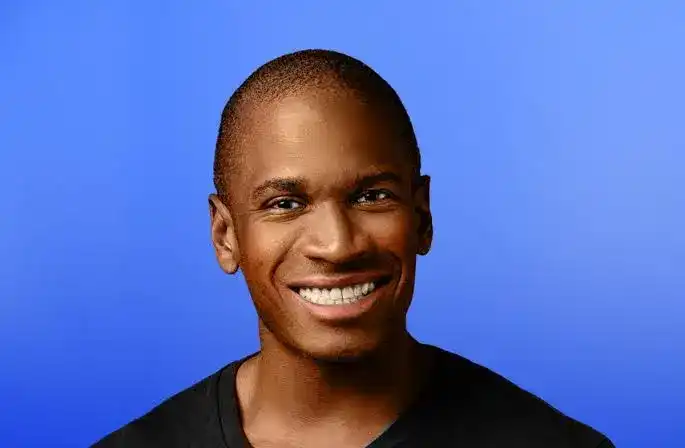
Artificial intelligence could, in the future, give humanity the ability to cure or prevent most diseases within just 5–10 years. This opinion was expressed by Dario Amodei, co-founder and CEO of Anthropic (the developer of Claude).

Amodei published his prediction on the social network X on August 16. He acknowledged that such a forecast might seem overly optimistic even to experts in the field of biology but considers it quite realistic—provided that the development of powerful AI systems continues at the current pace. "I actually think it will be possible to cure most human diseases in about 5–10 years," wrote the head of Anthropic.

An important caveat: this is not about the emergence of some single universal medicine or a confirmed medical prognosis. Rather, it is a scenario of how much artificial intelligence is capable of accelerating biological research and the development of new therapeutic methods.

Ideas from the essay Machines of Loving Grace

Amodei elaborated on this concept earlier in an essay titled Machines of Loving Grace. According to his calculations, a sufficiently powerful AI could potentially accelerate the development of biology and medicine by approximately tenfold—thereby shortening a path that under normal conditions might take 50–100 years down to 5–10 years.

Among the possible results of such acceleration, the head of Anthropic named a sharp reduction in the incidence and mortality from cancer, the prevention or treatment of most genetic diseases, progress in the fight against Alzheimer's disease, more effective therapy for cardiovascular and autoimmune diseases, and new approaches to treating diabetes and obesity.

At the same time, Amodei acknowledged that the actual pace of progress would still be constrained by the need to conduct laboratory research, clinical trials, and obtain regulatory approvals—stages that artificial intelligence cannot bypass.

Anthropic expands projects in biology and medicine

In his new publication, Amodei also stated that Anthropic is rapidly ramping up work in the fields of biology and medicine. According to him, the company expects to see the first signs of noticeable results in the coming months, and more significant achievements in the following years. However, the head of Anthropic emphasized that the artificial intelligence industry as a whole has not yet fulfilled many of its most ambitious promises.

Previously, Anthropic launched the AI for Science program, which gives researchers access to the company's models for projects in biology, genetics, and the search for new drugs.

The AI Opinion

From the perspective of machine data analysis, Amodei's statement should be viewed not only as a scientific forecast but also as part of a broader corporate context. According to The Insider, Anthropic's valuation following the latest funding round exceeded $960 billion, and the company's projected annual revenue has grown to $47 billion compared to $10 billion for the entire year 2025. With such investments, investors have the right to expect not only new versions of Claude but also tangible practical results, and breakthroughs in biology and medicine are one of the few arguments capable of justifying such a valuation in the eyes of the market.

The macroeconomic connection here is obvious: the faster a company's capitalization grows, the stronger the demands on it to show concrete achievements beyond chatbots and code generation. The technical aspect remains open—will the acceleration of research turn into real treatment methods, or will the result be limited to improved data analysis models that only speed up certain stages of scientists' work?


Trending Cryptos

Related Questions

QWhat is the main claim made by Anthropic's CEO Dario Amodei regarding AI and healthcare?

AHe claims that artificial intelligence could enable humanity to cure or prevent most human diseases within the next 5 to 10 years, provided the development of powerful AI systems continues at its current pace.

QAccording to the article, what important clarification does Amodei make about this 5-10 year timeline?

AHe clarifies that this timeline does not refer to a single universal cure or a confirmed medical forecast. Instead, it's a scenario about how much AI could accelerate biological research and the development of new therapies.

QWhat potential medical breakthroughs does Amodei list as possible results of AI-accelerated research in his essay 'Machines of Loving Grace'?

AHe lists a sharp reduction in cancer incidence and mortality, prevention or treatment of most genetic diseases, progress against Alzheimer's, more effective therapies for cardiovascular and autoimmune diseases, and new approaches to treating diabetes and obesity.

QWhat key limitations to AI-driven medical progress does the article mention, even if research is accelerated?

AThe real speed of progress will still be constrained by the need for laboratory research, clinical trials, and regulatory approvals—stages that AI cannot bypass.

QHow does the article frame Amodei's optimistic statement within the broader corporate context of Anthropic?

AIt suggests that given Anthropic's high valuation (exceeding $960 billion) and revenue expectations, investors expect tangible results beyond chatbots and code generation. Breakthroughs in biology and medicine are seen as key justifications for such a valuation.

Related Reads

Arthur Hayes Discusses the Sudden Surge in Bitcoin and the Reasons for Bullish Outlook on Ethereum

In a podcast interview, BitMEX co-founder Arthur Hayes discusses the recent surge in Bitcoin and his optimism for Ethereum. He attributes Bitcoin's rise to mounting concerns over the US's $40 trillion debt, unsustainable interest payments, and recent Treasury actions, including doubling its long-term bond buyback program. Hayes argues these measures signal impending "yield curve control" and will inject significant liquidity into the market, benefiting scarce assets like Bitcoin. He sees this as a replay of the 2008 financial crisis dynamics that led to Bitcoin's creation. Hayes expresses particular bullishness on Ethereum (ETH), citing its underperformance relative to its previous all-time high and other major crypto assets. He highlights Ethereum's strengths: the largest and most innovative developer community, the "Lindy effect" from its longevity since 2015, and narratives like asset tokenization (e.g., Robinhood's involvement). He believes Ethereum is well-positioned to outperform in a liquidity-driven bull market and could significantly reduce Bitcoin's current market dominance. Regarding regulation, Hayes downplays the importance of the US "CLARITY Act" for crypto's core value proposition, stating Bitcoin's primary driver is macroeconomic liquidity, not legislation. He identifies war or catastrophic infrastructure failure as the biggest risk to crypto assets. For year-end predictions, Hayes forecasts Bitcoin reaching $126,000, breaking its previous record high. His advice to new traders emphasizes patience, dedication, and continuous learning.

marsbit5m ago

Arthur Hayes Discusses the Sudden Surge in Bitcoin and the Reasons for Bullish Outlook on Ethereum

marsbit5m ago

DeFi Sector Rebounds Most Strongly, Which High-Revenue Projects Can Be a Good Opportunity to 'Get On Board'?

**Title: DeFi Sector Leads Market Rebound: High-Revenue Projects to Watch** The recent surge in Bitcoin and Ethereum has revitalized the altcoin market, with DeFi emerging as one of the most active sectors. Beyond chasing price rallies, a key fundamental metric for evaluating DeFi projects is their protocol revenue—the actual income retained after paying liquidity providers. This indicates genuine user demand and sustainable business models. **Top Revenue-Generating DeFi Projects:** * **DEX (Decentralized Exchanges):** * **Uniswap (UNI):** Leads with $7.18M in 30-day revenue. It accrues income from protocol fees, which are now active on multiple chains and used to buy back and burn UNI. * **Solana Ecosystem:** Jupiter ($4.69M), Meteora ($1.67M), and Raydium ($1.13M) are top performers, with substantial revenues driven by Solana's vibrant trading activity. Jupiter and Raydium use a portion of fees for token buybacks, while Meteora has also executed significant buybacks. * **PancakeSwap (CAKE):** Generated $5.16M recently, maintaining a strong position on BNB Chain and other networks. Its token CAKE continues a net deflationary trend through buybacks and burns. * **Aerodrome (AERO):** On Base chain, it earned $4.11M. Its revenue is directly distributed to veAERO holders instead of funding buybacks. * **Lending:** * **World Liberty Financial (WLFI):** Topped the lending sector with $10.47M in 30-day revenue. A proposal to use fees from its proprietary market making for WLFI buybacks passed, but token holders' net income remains zero currently. * **Aave (AAVE):** Earned $4.12M. It had an active buyback program until it was paused in April 2026 following a security incident. * **ETH Staking:** * **ether.fi (ETHFI):** Generated $3.03M. Revenue from eETH withdrawals is fully used to buy back ETHFI, which is then distributed to sETHFI stakers. * **Lido (LDO):** Earned $2.31M. Its recently activated NEST mechanism automatically uses 50% of annual revenue above $40M to buy back LDO. In summary, during the market rebound, several DeFi protocols across DEXs, lending, and staking are demonstrating strong revenue generation. Key models include direct fee collection, token buyback/burn programs, and revenue distribution to governance token stakers, providing fundamental strength amidst market volatility.

Odaily星球日报7m ago

DeFi Sector Rebounds Most Strongly, Which High-Revenue Projects Can Be a Good Opportunity to 'Get On Board'?

Odaily星球日报7m ago

HBM at a Crossroads

At Hot Chips 2026, Samsung and SK Hynix outlined diverging strategies for High-Bandwidth Memory (HBM) evolution. The core battlegrounds are base die architecture and advanced packaging. Samsung unveiled a three-phase roadmap for its zHBM technology. The plan transforms the base die from a passive interposer into an active partner. Phase 1 moves the memory controller from the GPU to a logic-node base die, freeing up 5-10% of GPU area for compute and offering potential 10-20% performance gains. Later phases aim to add compute-in-memory capabilities (like attention calculations) and ultimately achieve true 3D integration by stacking DRAM directly on top of the compute die. Samsung claims zHBM could reduce DRAM power by 70% and more than double bandwidth versus HBM4E, with HBM5 targeting 6TB/s bandwidth. SK Hynix is focused on advancing conventional 3D stacking while managing thermal and warpage challenges. It confirmed a 12-layer HBM4 is in production and a 16-layer version is in customer validation. The path to 20+ layers is hybrid bonding, which allows for thicker dies and finer pitches. Its iHBM concept embeds dedicated thermal conduction paths within the stack's hottest areas. However, SK Hynix noted hybrid bonding may not arrive until HBM5, as current thickness limits and manufacturing challenges (like controlling warp in 50-micron thin dies) are being addressed by its Mass Reflow-Molded Underfill (MR-MUF) process. Micron emphasized the growing "memory wall," where AI accelerator compute performance is outpacing HBM bandwidth growth. It detailed HBM's role as a bridge between compute and memory but highlighted the rising complexity and silicon cost (approximately 3x more silicon for equivalent HBM3E capacity vs. DDR5). Key challenges include thermal management, reliability (chip-package interaction, ECC), and the continued push for faster I/O and larger, more advanced system-in-package (SiP) designs. In summary, the HBM market is at a crossroads: Samsung is pursuing a radical architectural shift with active base dies and vertical stacking, SK Hynix is pushing the limits of conventional stacking with advanced thermal solutions, and all players confront significant thermal, packaging, and cost hurdles as they scale bandwidth and capacity for next-generation AI workloads.

marsbit26m ago

HBM at a Crossroads

marsbit26m ago

The Eve of the Bull Market: Undervalued/Innovative Narratives Worth Watching

Author: Haotian With a bull market approaching and many unsure where to invest, which niche or innovative narratives that emerged during the bear market—though perhaps ahead of their time—are worth watching now? (Some are already gaining momentum.) **1) Hooks:** Uniswap V4 Hooks are externally customizable smart contracts that allow custom logic to be inserted at key points in an AMM pool's lifecycle, such as initialization, liquidity actions, swaps, donations, and fee handling. (Examples: uPEG, SATO, Slonks) **2) x402:** This initiative revives the long-reserved but rarely used HTTP 402 "Payment Required" status code, proposing it as a foundational layer for AI agent payments. (Examples: PAYAI, dreams) **3) RWAFI (Real-World Assets Finance):** Extending beyond mere asset tokenization, this narrative focuses on composable DeFi applications built on TradFi assets as underlying liquidity or integrating tokenized assets into DeFi protocols. (Examples: Stonkbroker, INDEX) **4) Agentic Economy:** Based on a Google-proposed open protocol, this framework enables AI agents built on different systems to discover, communicate, delegate tasks, and collaborate, serving as a communication layer for an economy of autonomous agents. It opens possibilities for agent-based social platforms, games, and human-task automation. (Example: Moltbook) Additionally, there is a broad range of innovative narratives around AI + Crypto, including infrastructure, applications, and protocols for AI agents. Established areas like Prediction Markets, Perpetual DEXs, and Privacy narratives remain highly active. (Note: Many projects mentioned above are inactive; this is for informational purposes only, not investment advice.) What other interesting narratives are out there? Feel free to share in the comments.

marsbit26m ago

The Eve of the Bull Market: Undervalued/Innovative Narratives Worth Watching

marsbit26m ago

Trading

Spot

Hot Articles

Discussions

Welcome to the HTX Community. Here, you can stay informed about the latest platform developments and gain access to professional market insights. Users' opinions on the price of AI (AI) are presented below.

活动图片