DeFi Sector Rebounds Most Strongly, Which High-Revenue Projects Can Be a Good Opportunity to 'Get On Board'?

Odaily星球日报Published on 2026-08-25Last updated on 2026-08-25

Abstract

**Title: DeFi Sector Leads Market Rebound: High-Revenue Projects to Watch** The recent surge in Bitcoin and Ethereum has revitalized the altcoin market, with DeFi emerging as one of the most active sectors. Beyond chasing price rallies, a key fundamental metric for evaluating DeFi projects is their protocol revenue—the actual income retained after paying liquidity providers. This indicates genuine user demand and sustainable business models. **Top Revenue-Generating DeFi Projects:** * **DEX (Decentralized Exchanges):** * **Uniswap (UNI):** Leads with $7.18M in 30-day revenue. It accrues income from protocol fees, which are now active on multiple chains and used to buy back and burn UNI. * **Solana Ecosystem:** Jupiter ($4.69M), Meteora ($1.67M), and Raydium ($1.13M) are top performers, with substantial revenues driven by Solana's vibrant trading activity. Jupiter and Raydium use a portion of fees for token buybacks, while Meteora has also executed significant buybacks. * **PancakeSwap (CAKE):** Generated $5.16M recently, maintaining a strong position on BNB Chain and other networks. Its token CAKE continues a net deflationary trend through buybacks and burns. * **Aerodrome (AERO):** On Base chain, it earned $4.11M. Its revenue is directly distributed to veAERO holders instead of funding buybacks. * **Lending:** * **World Liberty Financial (WLFI):** Topped the lending sector with $10.47M in 30-day revenue. A proposal to use fees from its p...

Original | Odaily Planet Daily (@OdailyChina)

Author | Asher (@Asher_ 0210)

In recent days, the rapid rise of BTC and ETH has reignited interest in secondary altcoins, and DeFi has become one of the most active sectors in this rebound, with many familiar projects experiencing significant short-term gains.

However, compared to blindly "chasing the pump," DeFi actually has a more intuitive fundamental indicator—revenue.

DeFi protocols like lending, spot trading, and liquid staking essentially rely on real users and capital continuously using them to generate revenue. Market trends may fluctuate, and narratives may rotate, but the ability to generate income consistently, at the very least, indicates that a protocol still has real demand.

So, within the current DeFi sector, which high-revenue projects are more worth considering for a suitable opportunity to "get on board"?

(Project revenue data in this article comes from Tokenomist and DefiLlama, uniformly using the revenue metric, i.e., the protocol's actual revenue after deducting allocations to supply-side participants like LPs.)

DEX

Uniswap (UNI)

In the past 30 days, Uniswap generated $7.18 million in revenue, making it the most profitable DEX project.

Looking at monthly data, Uniswap's revenue from January to July this year was $2.8 million, $3.2 million, $4.6 million, $4.5 million, $3.8 million, $5.1 million, and $4.4 million respectively, totaling approximately $28.4 million for the first 7 months.
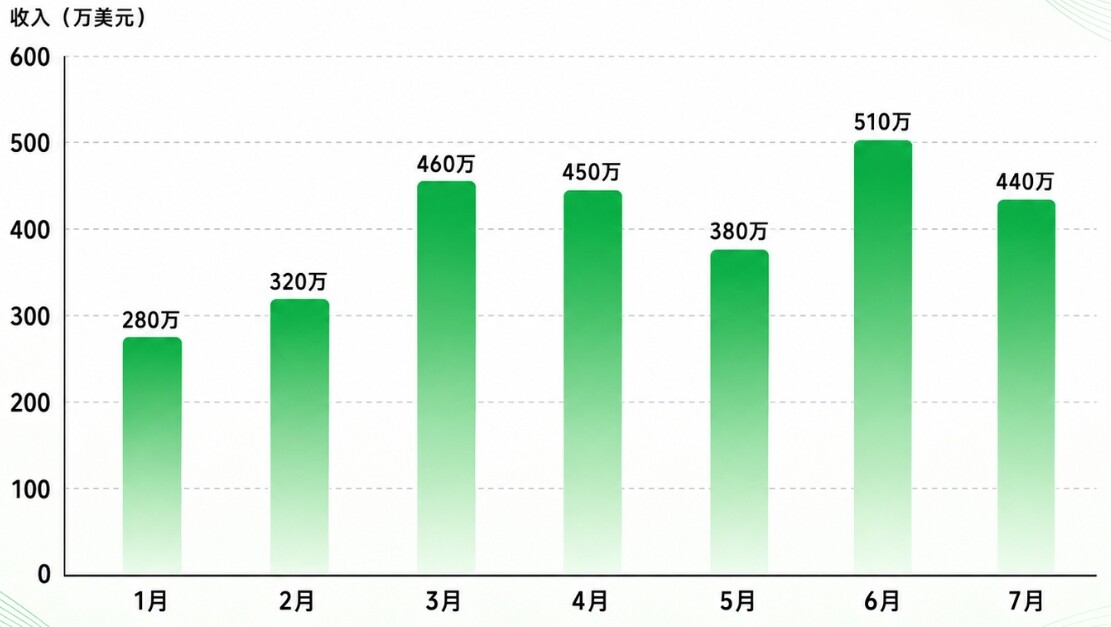
Uniswap's revenue comes from Protocol Fees charged during transactions. The protocol fee is currently enabled on all Uniswap v2 pools and selected v3 pools, and is gradually expanding from Ethereum to multiple chains including Arbitrum, Base, OP Mainnet, BNB Chain, and Polygon. Since the UNIfication proposal was implemented in late 2025, Uniswap officially activated the Protocol Fee and uses the revenue for UNI token burns (For more details, you can read: After Uniswap's Fee Switch Implementation: Is the 'Report Card' of This DeFi Transformation Impressive?). The protocol fees go into the TokenJar, and external participants wishing to withdraw the accumulated assets must simultaneously burn a corresponding amount of UNI.

Solana Ecosystem: Jupiter (JUP), Meteora (MET), Raydium (RAY)

Compared to other public chains, the on-chain trading ecosystem on Solana is more fragmented. Beyond traditional AMMs, different models like aggregators and DLMMs have also generated substantial revenue. Among them, Jupiter, Meteora, and Raydium are the three DEX projects with the highest protocol revenue in the Solana ecosystem over the past 30 days.

First, Jupiter generated $4.69 million in revenue over the past 30 days.

Looking at monthly data, Jupiter's revenue from January to July this year was $9.7 million, $7.5 million, $5.1 million, $4.6 million, $4.2 million, $5.4 million, and $4.3 million respectively, totaling approximately $40.8 million for the first 7 months.
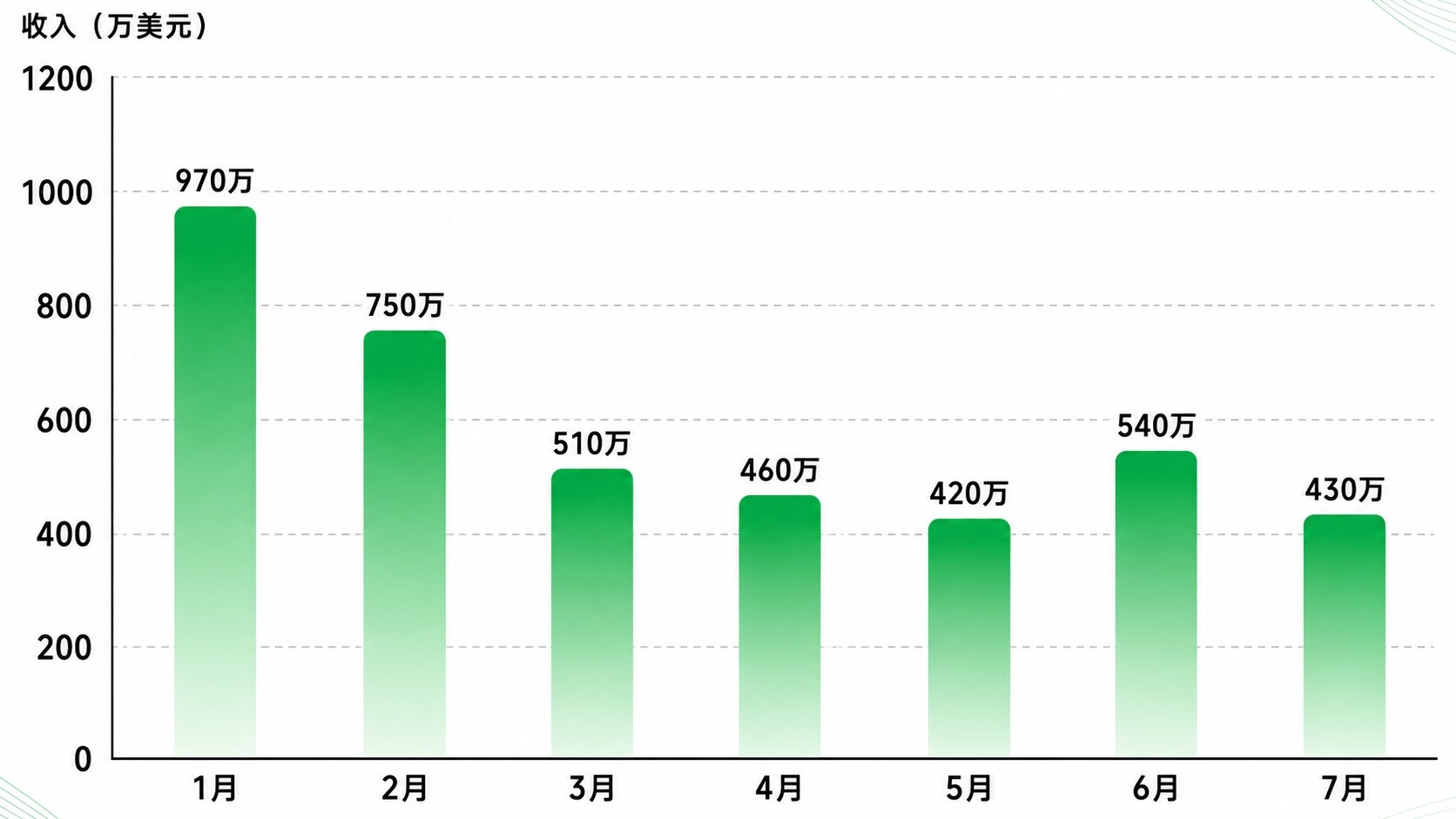
Jupiter uses 50% of its on-chain revenue to repurchase JUP, with funds continuously buying from the open market through the Litterbox Trust. Since the buyback program started in February 2025, the cumulative repurchase volume has exceeded 260 million JUP. As of the end of 2025, approximately 134 million JUP (about 4% of the circulating supply) had been burned, a proposal passed with 86% community support.

Second, Meteora generated $1.67 million in revenue over the past 30 days.

Looking at monthly data, Meteora's revenue from January to July this year was $14.5 million (driven by the concentrated爆发 of new token launches and Meme trading on Solana), $1.9 million, $1.3 million, $1.4 million, $1.7 million, $2 million, and $1.7 million respectively, totaling approximately $24.5 million for the first 7 months.
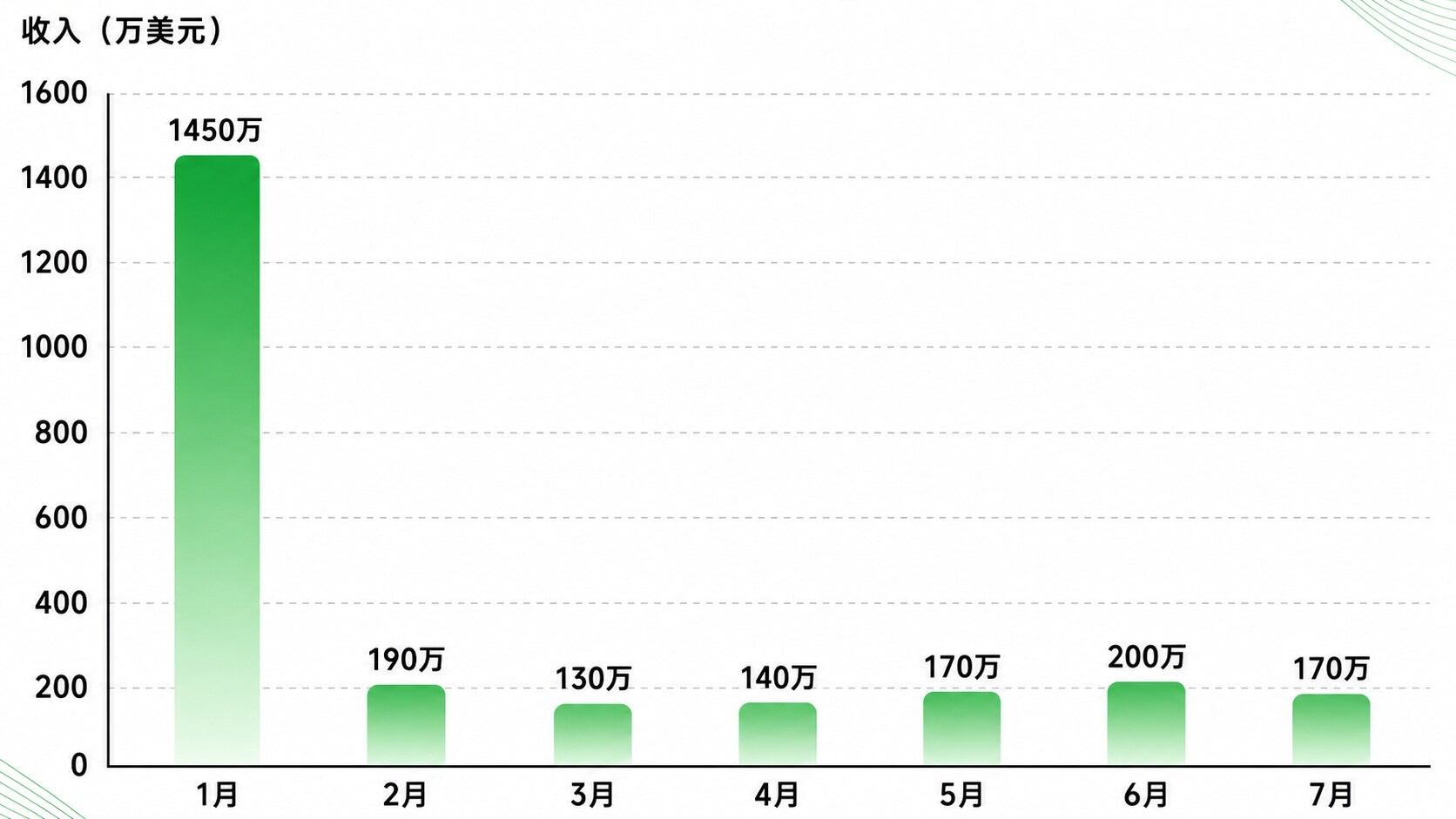
In Q1 2026, Meteora spent 1 million USDC to repurchase approximately 7 million MET, at an average price of $0.1427. As of June 30, 2026, the cumulative repurchase was about 336 million MET, valued at approximately $45.75 million.

Third, Raydium generated $1.13 million in revenue over the past 30 days.

Looking at monthly data, Raydium's revenue from January to July this year was $2.6 million, $1.8 million, $1.3 million, $790k, $1.1 million, $720k, and $520k respectively, totaling approximately $8.83 million for the first 7 months.
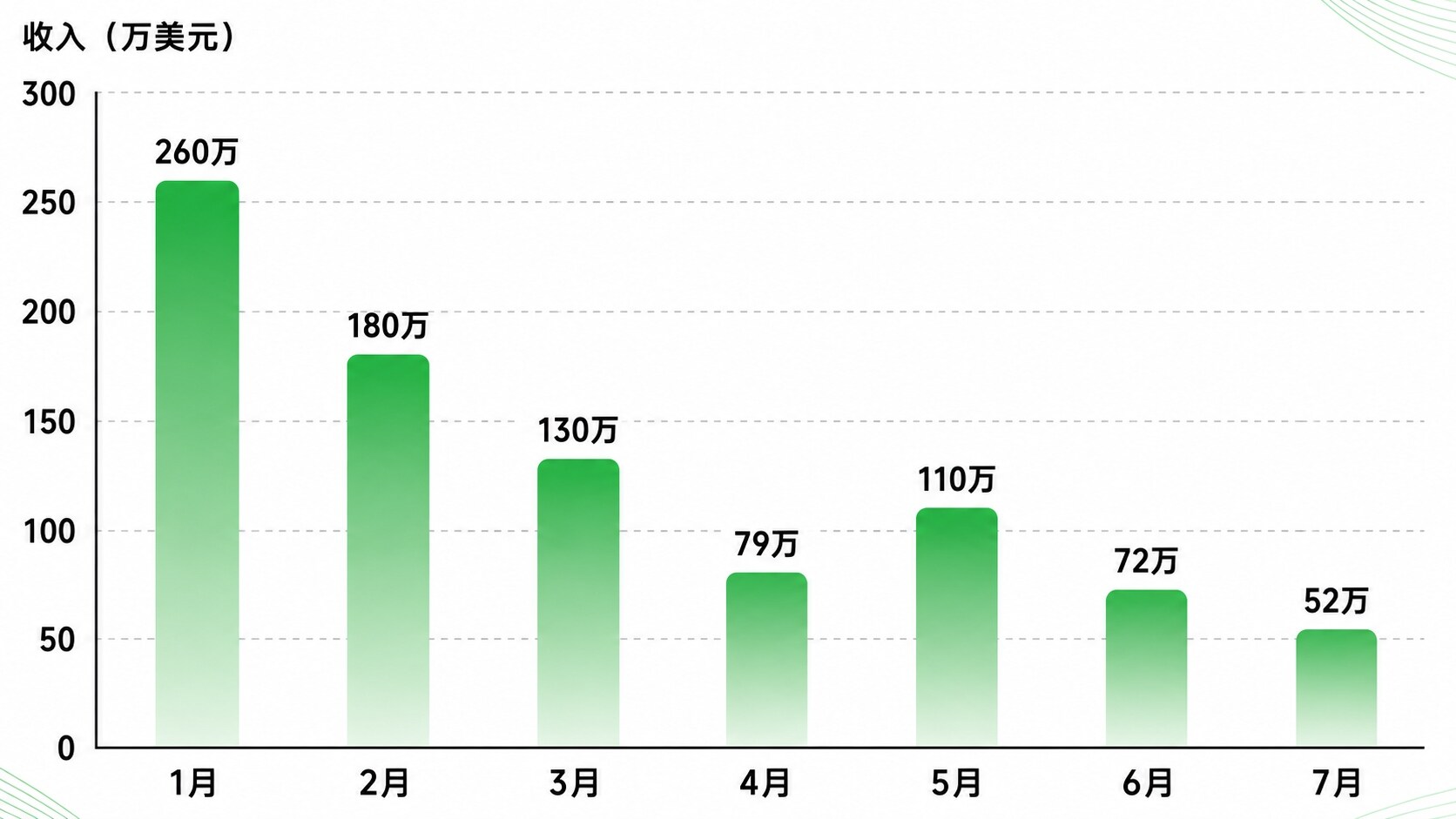
Raydium allocates 12% of its trading fees to repurchase RAY. To date, the cumulative funds used by Raydium for RAY buybacks have reached approximately $200 million; in Q1 and Q2 2026 alone, about $3.31 million and $1.72 million were invested in buybacks, respectively.

BNB Chain Ecosystem: PancakeSwap (CAKE)

PancakeSwap generated $5.16 million in revenue over the past 30 days. Looking at quarterly data, PancakeSwap's revenue in Q1 and Q2 this year was $14.03 million and $10.63 million respectively, totaling approximately $24.66 million for the first half of the year.

PancakeSwap's strength lies in its long-standing position as the core trading gateway on BNB Chain, while also expanding to multiple chains like Base, Solana, and Ethereum. Furthermore, a portion of PancakeSwap's trading fees is used to repurchase and burn CAKE. In July 2026, PancakeSwap burned approximately 1.94 million CAKE. After deducting the 674,000 newly minted in the same period, CAKE saw a net reduction of about 1.27 million. The total supply has experienced net deflation for 35 consecutive months.

Base Ecosystem: Aerodrome (AERO)

Aerodrome generated $4.11 million in revenue over the past 30 days. Looking at quarterly data, Aerodrome's revenue in Q1 and Q2 this year was $18.31 million and $16.10 million respectively, totaling approximately $34.41 million for the first half of the year.

Compared to the previous DEXes, Aerodrome does not rely on repurchasing and burning AERO to absorb protocol revenue. Instead, it directly distributes revenue to veAERO holders. After users lock AERO to obtain veAERO and participate in voting, they receive a share of the trading fees and external incentives generated by the corresponding liquidity pools; according to the official mechanism, 100% of the protocol's generated Exchange Revenue is distributed to veAERO holders.

Lending

World Liberty Financial (WLFI)

World Liberty Financial generated $10.47 million in revenue over the past 30 days. Looking at quarterly data, its revenue in Q1 and Q2 this year was $32.82 million and $34.45 million respectively, totaling approximately $67.27 million for the first half of the year.

Data shows that the net income for WLFI holders is currently still 0. Although a proposal to use 100% of the fees generated from the Protocol Owned Liquidity (POL) for repurchasing and burning WLFI previously passed with 99.84% support, this buyback only covers POL fees, not all the protocol revenue mentioned above.

Aave (AAVE)

Aave generated $4.12 million in revenue over the past 30 days. Looking at quarterly data, Aave's revenue in Q1 and Q2 this year was $25.37 million and $20.17 million respectively, totaling approximately $45.54 million for the first half of the year.

Aave initiated a buyback program in April 2025. By March 2026, it had cumulatively repurchased over 205,000 AAVE, accounting for about 1.28% of the total supply. Following the rsETH cross-chain bridge attack in April 2026, Aave DAO suspended the buyback program starting April 19th.

ETH Staking

ether.fi (ETHFI)

ether.fi generated $3.03 million in revenue over the past 30 days. Looking at monthly data, ether.fi's revenue from January to July this year was $4.4 million, $3.1 million, $3.5 million, $3.6 million, $3.6 million, $2.8 million, and $3 million respectively, totaling approximately $24 million for the first 7 months.
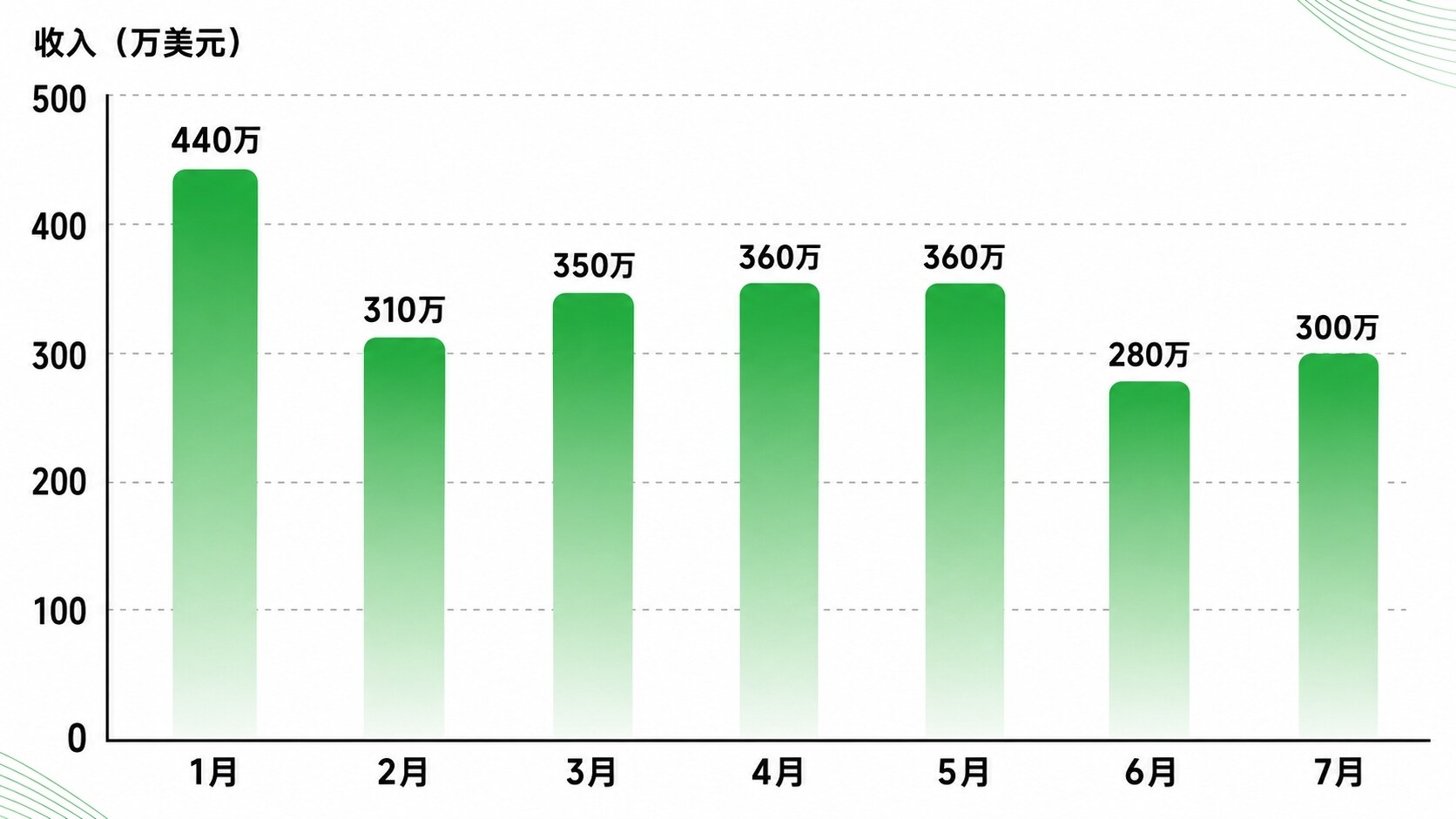
Currently, 100% of the revenue generated from eETH withdrawals is used to repurchase ETHFI; additionally, businesses like Stake, Liquid, and Cash also allocate a portion of their monthly protocol revenue for buybacks. The repurchased ETHFI is not burned but distributed to sETHFI holders, effectively returning protocol revenue back to ETHFI staking users.

Lido (LDO)

Lido generated $2.31 million in revenue over the past 30 days. Looking at monthly data, Lido's revenue from January to July this year was $4 million, $2.5 million, $2.8 million, $2.9 million, $2.7 million, $2.1 million, and $2.2 million respectively, totaling approximately $19.2 million for the first 7 months.
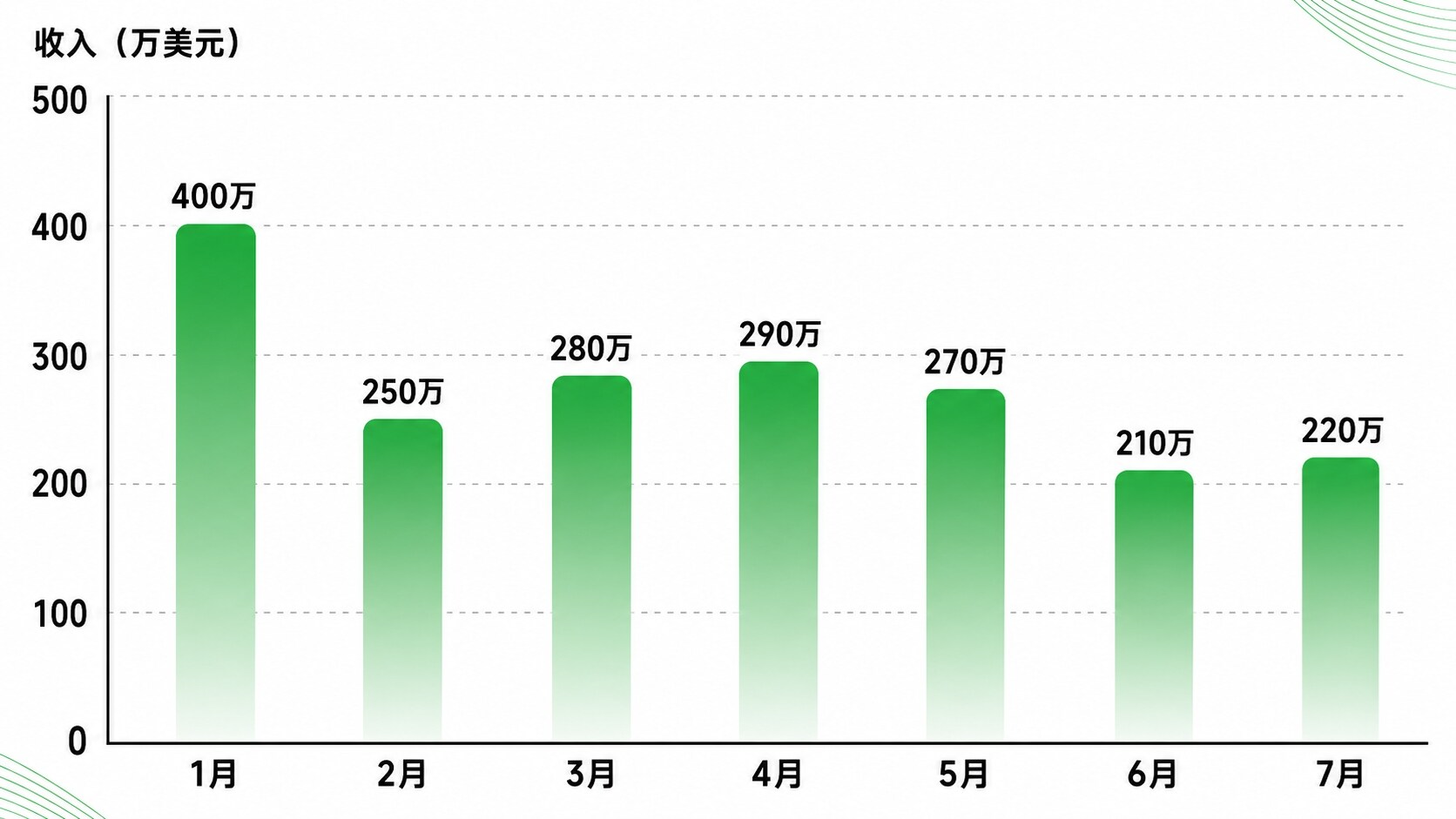
On August 14th, Lido's automated buyback mechanism, NEST, officially went live. When the protocol's annualized revenue exceeds $40 million, 50% of the excess amount is used to automatically repurchase LDO via CoW Swap, with a daily buyback cap of $50,000 and a rolling 365-day cumulative cap of $10 million.


Related Questions

QWhich DeFi project currently has the highest protocol revenue from DEX activities according to the 30-day data mentioned in the article?

AUniswap (UNI) has the highest 30-day revenue among DEX projects mentioned, at $7.18 million.

QWhat mechanism does the Aerodrome (AERO) protocol use to distribute its exchange revenue to token holders?

AAerodrome distributes 100% of its exchange revenue directly to veAERO holders. Users lock AERO tokens to receive veAERO and participate in voting to earn fees and external incentives from corresponding liquidity pools.

QAccording to the article, which lending protocol generated the highest revenue over the past 30 days, and what is its revenue figure?

AWorld Liberty Financial (WLFI) generated the highest 30-day revenue among lending protocols, at $10.47 million.

QWhat is the specific condition that triggers Lido's (LDO) automatic buyback mechanism called NEST?

ALido's NEST automatic buyback mechanism is triggered when the protocol's annualized revenue exceeds $40 million. For revenue above this threshold, 50% of the excess is used to automatically buy back LDO tokens.

QHow does the Jupiter (JUP) protocol utilize a portion of its on-chain revenue, and what has been the cumulative result of this action since its inception?

AJupiter allocates 50% of its on-chain revenue to buy back JUP tokens from the open market through the Litterbox Trust. Since the buyback program started in February 2025, over 260 million JUP tokens have been cumulatively repurchased, with approximately 134 million JUP (about 4% of the circulating supply) burned by the end of 2025.

Related Reads

NVIDIA Stuns with First Vera Rubin Test, DeepSeek Throughput Skyrockets 30x

NVIDIA has unveiled the first on-silicon test results for its next-generation flagship cabinet, the Vera Rubin NVL72, using DeepSeek-V4-Pro on real "agent coding" workloads. The results are staggering: compared to the current leading GB300 NVL72, Vera Rubin delivers up to a 30x increase in throughput per megawatt and reduces token generation cost by up to 35x. The benchmark used was the AgentX test from SemiAnalysis, which captures full AI agent workflows with growing context, tool calls, and sub-agent generation, moving beyond traditional LLM benchmarks. This highlights a shift from the LLM era to the Agent era. Key innovations behind Vera Rubin's performance include extreme co-design, separation of services, distributed KV cache, KV-aware routing, MegaMoE architecture, 4-bit NVFP4 quantization, and 6th-gen NVLink for efficient MoE model execution. Simultaneously, NVIDIA announced the full-scale production of two new chips: 1. **Groq 3 LPX:** A low-latency inference accelerator designed for the Vera Rubin platform. When paired with Rubin GPUs for context processing, it achieves record-breaking output speeds—e.g., running Gemma 4 31B at 3,400 tokens/sec—drastically reducing multi-step agent task times. 2. **Vera CPU:** A processor specifically built for agentic AI, featuring 88 custom Olympus cores and 1.2TB/s memory bandwidth to handle the complex orchestration of agent tasks. SpaceXAI is already deploying it, with plans for space-based Vera Rubin systems by 2028. NVIDIA's strategy has evolved from selling GPUs to providing a complete, optimized "AI factory" stack—encompassing GPU, CPU, and specialized accelerators—to power the emerging Agent AI economy.

marsbit32m ago

NVIDIA Stuns with First Vera Rubin Test, DeepSeek Throughput Skyrockets 30x

marsbit32m ago

Bessent Repurchases U.S. Treasury Bonds, So Why Is Bitcoin Rising?

On August 19, U.S. Treasury Secretary Scott Bessent significantly increased the limits for buying back long-term Treasury bonds (10, 20, and 30-year maturities), calling it a "Treasury Twist Operation." The goal was to lower soaring long-term yields, which had recently hit multi-decade highs, by boosting demand for these bonds. However, the effect on yields was brief and limited. The article explains that the Treasury's bond buybacks, funded by issuing more short-term debt or using its cash reserves, do not create new money but merely restructure government debt. Major factors pushing yields higher—such as large budget deficits, corporate borrowing for AI investments, inflation driven by rising oil prices, and Federal Reserve policy uncertainty—remained unaddressed, limiting the operation's impact. Instead of taming bond yields, the intervention was interpreted by markets as a sign of official concern over debt sustainability and potential future currency depreciation. This triggered a rally in assets perceived as hedges against such risks: Bitcoin surged toward $80,000, gold rose, and the U.S. dollar weakened. Further context includes Bessent's unusual suggestion for corporations to issue more medium-term ("belly") debt and the potential long-term role of dollar-pegged stablecoins (backed heavily by Treasuries) in influencing government borrowing costs. The move broke with the Treasury's traditional "regular and predictable" debt management approach. Analysts warn that such unexpected interventions could ultimately increase long-term borrowing costs if they erode investor confidence, creating a potential "Bessent put" similar to the "Greenspan put" for equities. Ultimately, the operation twisted markets for currencies and alternative assets more than the Treasury yield curve itself.

marsbit38m ago

Bessent Repurchases U.S. Treasury Bonds, So Why Is Bitcoin Rising?

marsbit38m ago

DeFi Sector Bounces Back Strongest: Which High-Revenue Projects Offer Entry Opportunities?

DeFi Sector Leads Recovery: Which High-Revenue Projects Are Worth Watching? DeFi has been one of the most active sectors during the recent market rebound. Beyond chasing price action, a key fundamental metric for evaluating DeFi protocols is sustainable revenue, which indicates real user demand. This analysis highlights high-revenue projects across key categories, using protocol fee data (net of supplier payouts). **DEX** * **Uniswap (UNI)**: Leads with $7.18M in 30-day revenue. Protocol fees from v2 and select v3 pools are used for UNI token burns. * **Solana DEXs**: Jupiter (JUP, $4.69M 30-day revenue) uses 50% of revenue for JUP buybacks. Meteora (MET, $1.67M) and Raydium (RAY, $1.13M) also allocate portions of fees to token buybacks. * **PancakeSwap (CAKE)**: Earned $5.16M in 30 days, with part of its fees used for CAKE burns, maintaining a net deflationary supply. * **Aerodrome (AERO)**: On Base, it generated $4.11M in 30 days. Revenue is directly distributed to veAERO holders rather than used for buybacks. **Lending** * **World Liberty Financial (WLFI)**: Top earner with $10.47M in 30-day revenue. A proposal passed to use 100% of fees from its Protocol-Owned Liquidity (POL) for WLFI buybacks, but holder net income remains zero. * **Aave (AAVE)**: Generated $4.12M in 30 days. Its buyback program was paused in April 2026 following the rsETH bridge attack. **ETH Staking** * **ether.fi (ETHFI)**: Earned $3.03M in 30 days. Revenue from eETH withdrawals is used for ETHFI buybacks, which are then distributed to sETHFI stakers. * **Lido (LDO)**: Generated $2.31M. Its new NEST mechanism automatically uses 50% of annual revenue exceeding $40M for LDO buybacks. In summary, several DeFi protocols are generating significant revenue, with many employing token buyback or direct distribution mechanisms. This revenue provides a fundamental basis for evaluation amid market volatility.

marsbit42m ago

DeFi Sector Bounces Back Strongest: Which High-Revenue Projects Offer Entry Opportunities?

marsbit42m ago

Hyperliquid is also getting a Layer2, what is Elysium?

Hyperliquid, a decentralized exchange, is set to launch its own Layer 2 solution called Elysium, developed by its largest liquid staking protocol, Kinetiq. This move aims to address key limitations in Hyperliquid's current ecosystem, particularly the performance and user experience issues on its existing HyperEVM. The article explains that HyperEVM has struggled with network congestion, high gas fees (sometimes exceeding $10-$20 per simple swap), and a fragmented infrastructure for launching and trading new tokens, especially memecoins. While there is significant speculative interest, the current setup lacks the efficient trading infrastructure to sustain it. Elysium is designed as a high-performance L2 that will use HYPE as its gas token. Its goals are to provide drastically faster block times and higher throughput compared to HyperEVM, create a seamless pipeline for token launches (from initial creation on Elysium to eventual listing as spot and perpetual markets on Hyperliquid's main chain, HyperCore), and offer developers richer access to HyperCore's order book data for better hedging and market-making. The L2 is positioned not as a competitor to HyperCore but as a "value-accrual" layer that aims to drive more activity and volume back to the main chain. Potential use cases extend beyond memecoins to include complex applications like PaperTrade (a novel perpetual DEX) and other DeFi protocols requiring fast settlement and real-time data. Elysium's sequencer revenue is planned to be shared with applications, the Kinetiq treasury, and used to buy back and burn the KNTQ token.

marsbit42m ago

Hyperliquid is also getting a Layer2, what is Elysium?

marsbit42m ago

Trading

Spot
活动图片