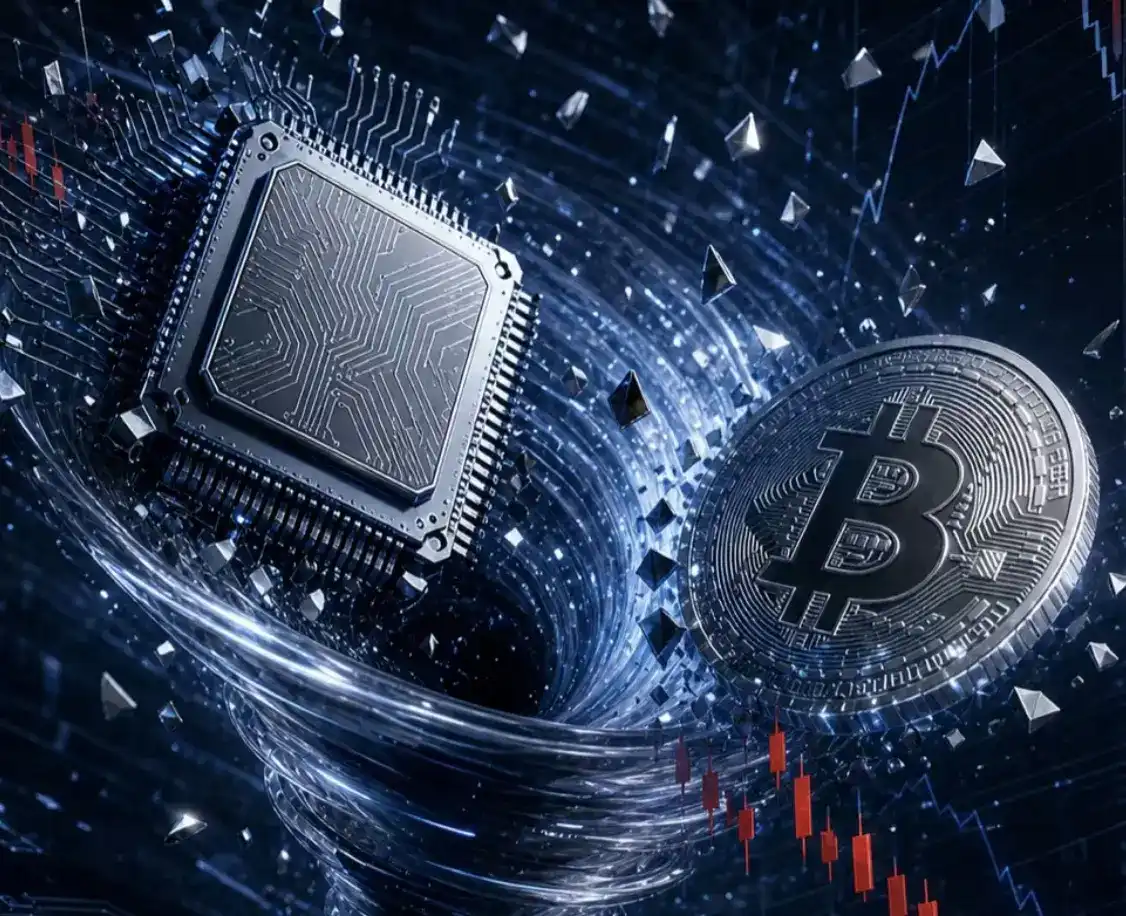
Anthropogenic Artificial Intelligence Breaks HAWK-256 in 60 Hours, Sparking Concerns Over Bitcoin

cryptonews.ru發佈於 2026-07-30更新於 2026-07-30

文章摘要

An unpublished Anthropic AI model, Claude Mythos Preview, broke the post-quantum signature scheme HAWK-256 in about 60 hours at a cost of roughly $100,000. The AI uncovered a previously unknown symmetry in HAWK's design, reducing its security effectiveness by 50% and slashing the required work from ~2^64 to ~2^38 operations. The algorithm, a candidate in NIST's post-quantum cryptography evaluation, was subsequently withdrawn by its creators. This event does not pose an immediate threat to Bitcoin, as Bitcoin never used HAWK-256. Bitcoin currently relies on ECDSA and Schnorr signatures on the secp256k1 elliptic curve, which are unrelated. However, the incident significantly changes a key assumption in Bitcoin's post-quantum roadmap: AI is making the testing and potential breaking of complex cryptographic systems faster and more affordable. The development intensifies the debate on when Bitcoin should begin its transition to quantum-resistant cryptography. Proposals like BIP-360 (introducing P2QRH outputs using NIST-approved ML-DSA/SLH-DSA) and BIP-361 (phasing out ECDSA) are already in motion, having bypassed HAWK. The core challenge is whether AI-assisted cryptanalysis could compromise these intended replacement algorithms before the network completes its migration. Analysts warn that AI is accelerating cryptanalysis, compressing security timelines. Combined with quantum computing advances, this underscores the urgency for Bitcoin's transition. Reports estimate roughly 6.7...

An unreleased anthropogenic AI model broke a post-quantum signature scheme in roughly 60 hours, raising anew a question Bitcoin developers have yet to answer: when should the network begin transitioning to quantum-resistant cryptography?

The findings pose no immediate threat to Bitcoin. HAWK-256 has never been used on the network, and no existing wallets are affected. But it changes an important assumption underlying Bitcoin's post-quantum roadmap: artificial intelligence is making testing and potentially breaking complex cryptographic systems faster and cheaper.

What Mythos Did to Hawk and What It Cost

On July 28, Anthropic announced that its Claude Mythos Preview model, available to a select group of approved users, discovered an attack on HAWK-256, the final candidate for a lattice-based signature still under evaluation in NIST's third round of post-quantum cryptography, which had not been previously documented.

The AI uncovered a hidden symmetry in HAWK's design that experts had overlooked, leading to a security reduction that cut the algorithm's effective strength in half and reduced the estimated work factor from approximately 2^64 to 2^38 operations. According to Anthropic's research blog, the attack took about 60 hours and cost an estimated $100,000 in compute, and was executed by a researcher without formal cryptography training.

The cryptographic community's response was swift. Sophie Schmieg of Google stated, "Effectively, with this paper, the HAWK algorithm is dead." Matthew Green of Johns Hopkins University noted that while the research contained no groundbreaking math, it represented a new combination of existing techniques. Ars Technica reported that HAWK's creators pulled the algorithm from public access the next day.

Why All Bitcoin Wallets Remain Unaffected

The result does not affect Bitcoin.

Bitcoin uses the ECDSA algorithm on the secp256k1 elliptic curve, which is unrelated to HAWK. This algorithm was never implemented in Bitcoin, any blockchain, or commercial software. Its failure occurred during a verification process designed to find flaws before deployment.

Bitcoin's anticipated migration has already moved past HAWK. In February 2026, BIP-360 was submitted to the Bitcoin Improvement Proposal repository, introducing a new output type known as P2QRH, which uses ML-DSA and SLH-DSA—two algorithms finalized by NIST in 2024 after years of public vetting. Furthermore, in April 2026, Jameson Lopp and others presented BIP-361—a proposal for phasing out ECDSA in Bitcoin. HAWK was not included in either BIP-360 or BIP-361.

The Test That Will Define the Start of the Migration

As discussed on TFTC, the key question is whether AI-powered cryptanalysis could ultimately crack the algorithms Bitcoin hopes to use, namely ML-DSA or SLH-DSA. If either of these algorithms is found vulnerable before the network completes its migration, the strategy of waiting for mature standards may become moot.

The economics are also changing. Anthropic reported that significant cryptanalysis can now be conducted in roughly 60 hours for about $100,000, making this type of testing far more reproducible. Intelligence agencies like the NSA or GCHQ are almost certainly conducting similar work behind the scenes, meaning public results likely lag private ones.

Researchers drew parallels between this case and AGU, another post-quantum contender that withstood years of research but was ultimately attacked within an hour on a laptop in 2022. AI seems to be accelerating this trend.

Why the Timeline Keeps Shrinking

Cryptopolitan previously reported that AI cryptanalysis is lowering expectations for when quantum attacks may become viable. A 2026 Forrester quantum security report makes a similar claim, warning that novel algorithms are "overnight" shrinking security timelines by minimizing the computing resources needed to solve complex encryption problems. It predicts alarming Q-Day related security threats by 2030.

Google has also accelerated its efforts, setting a goal to phase out RSA and elliptic-curve cryptography in its systems by 2029 and expressing a desire for other companies to follow suit.

For Bitcoin, the situation is critical, as analysts cited by TheStreet estimated that approximately 6.7 million Bitcoin worth nearly $600 billion sitting in wallets could potentially be vulnerable to a sufficiently advanced quantum computer. Additionally, a study titled "Quantum Horizon" claims that about 2.3 million Bitcoin would be lost forever to quantum attacks, and that there is a one-in-six chance a quantum computer capable of breaking cryptography will be operational by 2035. Therefore, the authors argue Bitcoin's main challenge is no longer hardware, but whether the network can successfully transition before the technology becomes available.

What Cryptography Does Bitcoin Use?

Bitcoin uses several different cryptographic primitives, each serving its purpose. Importantly, Bitcoin does not encrypt transactions. Instead, it relies on cryptography for authentication, integrity, and achieving consensus. Here is a detailed breakdown:

Function Cryptography Used Purpose Vulnerable to Quantum Computing?
Digital Signatures Signatures ECDSA (legacy) and Schnorr (Taproot) on the secp256k1 elliptic curve Prove ownership of bitcoin Yes (Shor's Algorithm)
Hashing (Proof-of-Work) SHA-256 Mining and block hashing Significantly less affected (Grover's algorithm offers only quadratic speedup)
Address Generation RIPEMD-160 + SHA-256 Create Bitcoin addresses from public keys Not directly vulnerable like signatures
Merkle Trees SHA-256 Verify transaction inclusion in blocks Much less impacted

Concerns focus on Bitcoin's digital signatures (ECDSA and Schnorr) being vulnerable to future quantum computers using Shor's algorithm. Therefore, developers and researchers are exploring how Bitcoin could transition to post-quantum signature schemes, such as hash-based or lattice-based alternatives, through future protocol upgrades. Any such transition would require broad consensus in Bitcoin due to its impact on wallets, transactions, and consensus rules.

The HAWK attack did not directly affect Bitcoin because Bitcoin does not use HAWK. However, the result demonstrates how AI can accelerate cryptanalysis and shorten the time required to evaluate or break new cryptographic schemes. Combined with recent advances in quantum algorithms, these developments underscore the urgency of Bitcoin developers' efforts to prepare for a transition to a post-quantum architecture.


熱門幣種推薦

相關問答

QWhat algorithm did the AI successfully attack and why is this significant for Bitcoin?

AThe AI successfully attacked HAWK-256, a lattice-based signature scheme candidate undergoing NIST evaluation. This is significant for Bitcoin because, while HAWK-256 is not used by Bitcoin, the event demonstrates how AI can drastically accelerate the analysis and potential breaking of complex cryptographic systems. It underscores the pressure on Bitcoin to transition to quantum-resistant cryptography before such AI-accelerated attacks, or quantum computers themselves, threaten its current signature algorithms (ECDSA/Schnorr).

QAccording to the article, why are existing Bitcoin wallets currently unaffected by the attack on HAWK-256?

AExisting Bitcoin wallets are unaffected because Bitcoin uses the ECDSA (and Schnorr) digital signature algorithm on the secp256k1 elliptic curve. HAWK-256 has never been implemented or used in the Bitcoin network or any blockchain software. The algorithm's failure occurred during the public vetting process designed to find flaws before any deployment.

QWhat are the names of the proposed Bitcoin Improvement Proposals (BIPs) mentioned for quantum resistance, and which algorithms do they propose?

AThe article mentions BIP-360 and BIP-361. BIP-360 proposes a new output type (P2QRH) using the ML-DSA and SLH-DSA algorithms, which were finalized by NIST in 2024. BIP-361 proposes a phased deprecation of ECDSA in Bitcoin. HAWK-256 is not included in either proposal.

QHow did the capabilities of AI, as shown in the HAWK-256 attack, change the economics and feasibility of cryptographic testing?

AThe AI-powered attack on HAWK-256 was completed in about 60 hours at a cost of approximately $100,000. This makes significant cryptanalysis far more reproducible and accessible. It suggests that intelligence agencies and other entities can conduct similar testing more easily and privately, potentially discovering vulnerabilities faster than the public research community.

QBased on the article, what is the primary threat timeline and concern for Bitcoin regarding quantum computing, and what is the main challenge for the network?

AAnalysts cited in the article suggest a quantum computer capable of breaking current cryptography could be operational by 2035 (with a 1-in-6 chance). The primary concern is that approximately 6.7 million Bitcoin (worth nearly $600 billion) in vulnerable wallets could be at risk. The main challenge for the Bitcoin network is not necessarily the hardware timeline, but whether it can successfully execute a coordinated transition to post-quantum cryptographic standards before such a powerful quantum computer becomes available.

你可能也喜歡

欢迎来到新币圈:只不过这次,亏钱的地方叫股市

文章标题“欢迎来到新币圈:只不过这次,亏钱的地方叫股市”,揭示了当前全球股市,尤其是科技股,呈现出类似加密货币市场的高风险特征。 文章以2026年7月13日韩国股市的暴跌开场,描述了KOSPI指数单日熔断、权重股暴跌、大量杠杆账户爆仓,以及年轻人因炒股亏损引发的极端事件,这些场景过去常与币圈相关联。 核心观点指出,全球股市正在“币圈化”,表现为: 1. **叙事驱动定价**:AI等宏大叙事取代传统估值模型,推动相关产业链公司股价暴涨,社交媒体加速了共识的极端化。 2. **波动性加剧**:部分科技股(如存储芯片股)的下跌速度甚至快过比特币等加密货币,比特币相比之下显得相对“稳定”。 3. **杠杆普遍化**:韩国等地推出的个股杠杆ETF吸引了大量散户,其内置的每日再平衡机制在下跌时会加剧损失并形成恶性循环,是市场异常波动的主因之一。 4. **交易行为趋同**:从币圈转向股市的交易者带来了追逐热点、高杠杆、依赖社交媒体情绪的投机方式。 文章认为,尽管股票背后仍有实体资产和监管,但交易层面正经历“去理性化”革命。具有讽刺意味的是,当比特币正通过ETF等方式努力变得像主流金融资产时,股市却吸收了币圈的投机特性。最终,无论市场名称如何变化,宏大的故事、拥挤的仓位、轻易获得的杠杆以及每个人都想抢先退场的心理,构成了不断重复的亏损机制。正如一位韩国散户的哀叹:“我想回到炒股之前的日子,把我的钱还给我。”但市场从不退款。

marsbit29 分鐘前

欢迎来到新币圈:只不过这次,亏钱的地方叫股市

marsbit29 分鐘前

交易

現貨

熱門文章

什麼是 BITCOIN

理解 HarryPotterObamaSonic10Inu (ERC-20) 及其在加密空間中的地位 近年來,加密貨幣市場見證了迷因幣的流行激增,吸引了不僅是交易者的注意,還有尋求社區參與和娛樂價值的人士。在這些獨特的代幣中,有一個有趣的項目 HarryPotterObamaSonic10Inu (ERC-20),它將文化參考融入加密貨幣的織造中。本文深入探討 HarryPotterObamaSonic10Inu 的關鍵方面,探索其機制、以社區為驅動的精神,以及其與更廣泛的加密生態的互動。 HarryPotterObamaSonic10Inu (ERC-20) 是什麼? 正如其名所示,HarryPotterObamaSonic10Inu 是一種建立在以太坊區塊鏈上的迷因幣,按照 ERC-20 標準分類。與強調實用性或投資潛力的傳統加密貨幣不同,這項代幣依賴於娛樂價值和其社區的力量。該項目旨在促進一個讓互動用戶可以聚在一起、分享想法和參與受不同文化現象啟發的活動的環境。 HarryPotterObamaSonic10Inu 的一個顯著特點是其 交易零稅。這一引人注目的元素旨在鼓勵交易和社區參與,無需擔心可能會阻礙小型交易者的額外費用。該幣的總供應量定為十億個代幣,這一數字標示其意圖在社區內保持較大的流通量。 HarryPotterObamaSonic10Inu (ERC-20) 的創建者 HarryPotterObamaSonic10Inu 的起源有些神秘;對創建者的具體資訊尚不清楚。這個代幣的開發缺乏可識別的團隊或明確的藍圖,這在迷因幣領域並不罕見。相反,該項目是自然產生的,其進展主要依賴於社區的熱情和參與。 HarryPotterObamaSonic10Inu (ERC-20) 的投資者 關於外部投資和支持,HarryPotterObamaSonic10Inu 亦保持模稜兩可。該代幣並未列出任何已知的投資基金或顯著的組織支持。相反,該項目的生命力來自其草根社區,通過集體行動和參與在加密空間促進其增長和可持續性。 HarryPotterObamaSonic10Inu (ERC-20) 如何運作? 作為一種迷因幣,HarryPotterObamaSonic10Inu 主要在傳統的資產價值框架之外運作。以下是幾個定義該項目運作方式的獨特方面: 零稅交易:由於交易沒有稅費,使用者可以自由地買賣該代幣,而不必擔心隱藏成本。 社區參與:該項目依賴於社區互動,利用社交媒體平台創造話題並促進參與。討論、內容分享及互動是幫助擴展其影響力和加強支持者忠誠度的重要元素。 無實用性:需要指出的是,HarryPotterObamaSonic10Inu 在金融生態中並不提供具體的實用性。相反,它被定義為主要用於娛樂和社區活動的代幣。 文化參考:該代幣巧妙地融入了流行文化中的元素,以吸引興趣,與迷因愛好者和加密追隨者建立聯繫。 HarryPotterObamaSonic10Inu 範例展示了迷因幣如何與更傳統的加密貨幣項目運作不同,作為創新的社會構造進入市場,而非實用資產。 HarryPotterObamaSonic10Inu (ERC-20) 的時間線 HarryPotterObamaSonic10Inu 的歷史標誌著幾個值得注意的里程碑: 創建:這個代幣源於一個病毒式的迷因,捕捉了許多加密愛好者的想像力。具體的創建日期目前並不清楚,凸顯其自然興起。 上架交易所:HarryPotterObamaSonic10Inu 已經在多個交易所上架,使社區更容易存取和交易。 社區互動倡議:持續進行旨在增進社區互動的活動,包括比賽、社交媒體活動和來自粉絲和支持者的內容創作。 未來擴展計劃:該項目的路線圖包括推出 NFT 收藏品、周邊商品及相關電子商務網站,進一步與社區互動並嘗試為其生態系統增添更多維度。 關於 HarryPotterObamaSonic10Inu (ERC-20) 的關鍵點 以社區為驅動的特質:該項目優先考慮集體意見和創意,確保用戶參與在其發展過程中居於核心地位。 迷因幣分類:它代表了以娛樂為基礎的加密貨幣的典範,與傳統投資工具大相徑庭。 與比特幣無直接關聯:儘管在代碼名稱上有相似之處,HarryPotterObamaSonic10Inu 是獨特的,並不與比特幣或其他已建立的加密貨幣存在關係。 協作焦點:HarryPotterObamaSonic10Inu 旨在為持有者創造一個共享故事和協作的空間,提供創意和社區聯結的途徑。 未來前景:向超越其初步主題擴展至 NFT 和周邊商品的雄心,描繪了該項目潛在進入數字文化的更主流途徑。 隨著迷因幣繼續吸引加密貨幣社區的想像力,HarryPotterObamaSonic10Inu (ERC-20) 由於其文化聯繫和以社區為中心的方式而脫穎而出。儘管它可能不符合以實用性為導向的代幣的典型模式,其本質在於支持者間培育的快樂和友誼,突顯了在日益數字化的時代中,加密貨幣的演變特性。隨著該項目的持續發展,觀察社區動態如何影響其在不斷變化的區塊鏈技術格局中的軌跡將是重要的。

2.6k 人學過發佈於 2024.04.01更新於 2024.12.03

什麼是 BITCOIN

如何購買BTC

歡迎來到HTX.com!在這裡,購買Bitcoin (BTC)變得簡單而便捷。跟隨我們的逐步指南,放心開始您的加密貨幣之旅。第一步:創建您的HTX帳戶使用您的 Email、手機號碼在HTX註冊一個免費帳戶。體驗無憂的註冊過程並解鎖所有平台功能。立即註冊第二步:前往買幣頁面,選擇您的支付方式信用卡/金融卡購買:使用您的Visa或Mastercard即時購買Bitcoin (BTC)。餘額購買:使用您HTX帳戶餘額中的資金進行無縫交易。第三方購買:探索諸如Google Pay或Apple Pay等流行支付方式以增加便利性。C2C購買:在HTX平台上直接與其他用戶交易。HTX 場外交易 (OTC) 購買:為大量交易者提供個性化服務和競爭性匯率。第三步:存儲您的Bitcoin (BTC)購買Bitcoin (BTC)後,將其存儲在您的HTX帳戶中。您也可以透過區塊鏈轉帳將其發送到其他地址或者用於交易其他加密貨幣。第四步:交易Bitcoin (BTC)在HTX的現貨市場輕鬆交易Bitcoin (BTC)。前往您的帳戶,選擇交易對,執行交易,並即時監控。HTX為初學者和經驗豐富的交易者提供了友好的用戶體驗。

6.0k 人學過發佈於 2024.12.12更新於 2026.06.02

如何購買BTC

什麼是 $BITCOIN

數字黃金 ($BITCOIN):全面分析 數字黃金 ($BITCOIN) 介紹 數字黃金 ($BITCOIN) 是一個基於區塊鏈的項目,運行於 Solana 網絡,旨在將傳統貴金屬的特徵與去中心化技術的創新相結合。雖然它與比特幣同名,常被稱為「數字黃金」,因其被視為價值儲存工具,但數字黃金是一個獨立的代幣,旨在於 Web3 生態系統中創造一個獨特的生態系。其目標是將自己定位為一個可行的替代數字資產,儘管有關其應用和功能的具體細節仍在發展中。 什麼是數字黃金 ($BITCOIN)? 數字黃金 ($BITCOIN) 是一個專門為 Solana 區塊鏈設計的加密貨幣代幣。與比特幣提供廣泛認可的價值儲存角色不同,這個代幣似乎更專注於更廣泛的應用和特徵。值得注意的方面包括: 區塊鏈基礎設施:該代幣建立在 Solana 區塊鏈上,以其處理高速和低成本交易的能力而聞名。 供應動態:數字黃金的最大供應量上限為 100 萬兆代幣(100P $BITCOIN),儘管有關其流通供應的詳細信息目前尚未披露。 實用性:雖然具體功能尚未明確說明,但有跡象表明該代幣可能被用於各種應用,可能涉及去中心化應用(dApps)或資產代幣化策略。 誰是數字黃金 ($BITCOIN) 的創建者? 目前,數字黃金 ($BITCOIN) 的創建者和開發團隊的身份仍然是 未知 的。這種情況在許多創新項目中是典型的,特別是那些與去中心化金融和迷因幣現象相關的項目。雖然這種匿名性可能促進社區驅動的文化,但也加劇了對治理和問責制的擔憂。 誰是數字黃金 ($BITCOIN) 的投資者? 可用的信息顯示,數字黃金 ($BITCOIN) 沒有任何已知的機構支持者或知名的風險投資。該項目似乎運行在一個以社區支持和採用為重點的點對點模型上,而不是傳統的資金籌集途徑。其活動和流動性主要位於去中心化交易所(DEXs),如 PumpSwap,而不是已建立的集中交易平台,進一步突顯其草根方法。 數字黃金 ($BITCOIN) 如何運作 數字黃金 ($BITCOIN) 的運作機制可以根據其區塊鏈設計和網絡特徵進行詳細說明: 共識機制:通過利用 Solana 的獨特歷史證明(PoH)結合權益證明(PoS)模型,該項目確保高效的交易驗證,促進網絡的高性能。 代幣經濟學:雖然具體的通縮機制尚未詳細說明,但巨大的最大代幣供應量暗示它可能適合微交易或尚待定義的利基用例。 互操作性:存在與 Solana 更廣泛生態系統的整合潛力,包括各種去中心化金融(DeFi)平台。然而,關於具體整合的詳細信息仍未明確。 重要事件時間表 以下是關於數字黃金 ($BITCOIN) 的重要里程碑時間表: 2023:該代幣首次在 Solana 區塊鏈上部署,並以其合約地址為標誌。 2024:數字黃金獲得曝光,因其在去中心化交易所如 PumpSwap 上可供交易,允許用戶以 SOL 進行交易。 2025:該項目見證了零星的交易活動和社區主導參與的潛在興趣,儘管截至目前尚未記錄到任何顯著的合作夥伴關係或技術進展。 關鍵分析 優勢 可擴展性:基於 Solana 的基礎設施支持高交易量,這可能增強 $BITCOIN 在各種交易場景中的實用性。 可及性:每個代幣潛在的低交易價格可能吸引零售投資者,促進更廣泛的參與,因為存在分割所有權的機會。 風險 缺乏透明度:缺乏公眾已知的支持者、開發者或審計過程可能引發對該項目可持續性和可信度的懷疑。 市場波動性:交易活動在很大程度上依賴於投機行為,這可能導致價格波動和投資者的不確定性。 結論 數字黃金 ($BITCOIN) 在快速發展的 Solana 生態系統中,作為一個引人入勝但模糊的項目出現。雖然它試圖利用「數字黃金」的敘事,但其與比特幣作為價值儲存工具的既定角色的脫離,突顯了對其預期實用性和治理結構更清晰區分的需求。未來的接受度和採用率可能取決於解決當前的不透明性,並更明確地定義其運營和經濟策略。 注意:本報告涵蓋截至 2023 年 10 月的綜合信息,並且在研究期間可能發生了進展。

304 人學過發佈於 2025.05.13更新於 2025.05.13

什麼是 $BITCOIN

相關討論

歡迎來到 HTX 社群。在這裡,您可以了解最新的平台發展動態並獲得專業的市場意見。 以下是用戶對 BTC (BTC)幣價的意見。

活动图片