Bitcoin's $66K Rebound Meets Warsh Moment: This Week's FOMC is the Crypto Market's Baton

marsbit發佈於 2026-07-29更新於 2026-07-29

文章摘要

Bitcoin Briefly Rebounded to $66,9K, Retreats as Focus Shifts to Fed's FOMC Meeting Bitcoin touched a high of $66,910 last Tuesday but later retreated, with its price movement closely tied to shifting expectations around the Federal Reserve's upcoming policy decision. The market's attention is firmly on the July FOMC meeting, Chair Warsh's second, where the statement and press conference will set the tone for the September path. CME FedWatch indicates a ~64% probability rates remain unchanged. Institutional flows were mixed. Spot Bitcoin ETFs saw their longest inflow streak since May end with net outflows later in the week, while spot Ethereum ETFs recorded a third consecutive week of net inflows. Over 2.52 million ETH is queued for staking, signaling strong structural demand for yield-bearing assets. Corporate holdings showed stability: Tesla maintained its 11,509 BTC position (recording an unrealized loss), while Sarcity (formerly MicroStrategy) held its 843,775 BTC but paused new purchases, boosting its cash reserves. Morgan Stanley filed for spot Ethereum and Solana staking ETFs with a low 0.14% fee, highlighting the growing competition in crypto yield products. The overarching narrative is one of cross-market linkage: crypto prices are increasingly driven by macro signals, with the Fed's guidance acting as a primary short-term directional catalyst.

Author: Coinstack

Compiled by: Deep Tide TechFlow

Deep Tide Intro: Bitcoin briefly broke above $66K last week before falling back to the $63K range, coinciding with a key FOMC window under new Fed Chair Warsh. When markets trade the Fed first and themselves second, macro-crypto cross-market linkages are becoming the strongest short-term directional signals, perfectly aligning with the 'cross-market linkage' theme.

Weekly Snapshot

  • After closing above $64,300 on July 26th (temporarily hitting a high of $66,910 on Tuesday), Bitcoin entered the Fed's rate decision week.
  • Spot Bitcoin ETFs recorded a net inflow of $33.79 million for the week, while Ethereum ETFs recorded a net inflow of $103.9 million (July 24th); Bitcoin's seven-day inflow streak ended with a net outflow of $240.08 million on Friday (SoSoValue).
  • Tesla held 11,509 BTC unchanged in Q2, recording an $112 million after-tax unrealized loss under fair value accounting.
  • Morgan Stanley filed final documents for its MSSE and MSOL spot staking ETFs on July 22nd, to be listed on NYSE Arca with a management fee of 0.14%.
  • CME FedWatch shows a ~64% probability of unchanged rates in July and a 35.5% chance of a 25 bps hike.
  • This Week's Focus: The FOMC statement will be released at 2:00 PM ET on July 29th, followed by a Warsh press conference at 2:30 PM.

Weekly Market Dashboard

Ethereum closed near $1,953 on Sunday, with spot Ethereum ETFs seeing a third consecutive week of net inflows and a second week of inflows surpassing Bitcoin funds. Sunday evening's rebound touched an intraday high of $1,960, boosted by US-Iran ceasefire news lifting risk assets broadly.

All major large-cap coins closed higher for the week. XRP saw the smallest gain, closing near $1.10, consolidating near support; Bitcoin (+1.0%) and Solana (+0.3%) also posted slight gains.

Institutional demand dominated early in the week, fading as Treasury yields rose ahead of the FOMC. Bitcoin ETFs saw their longest inflow streak since May until Thursday, before outflows of about $465 million on Thursday and Friday erased gains. Ethereum was stronger mid-week before following Bitcoin lower. Tesla's earnings and Morgan Stanley's staking ETF application were narrative threads on Wednesday.
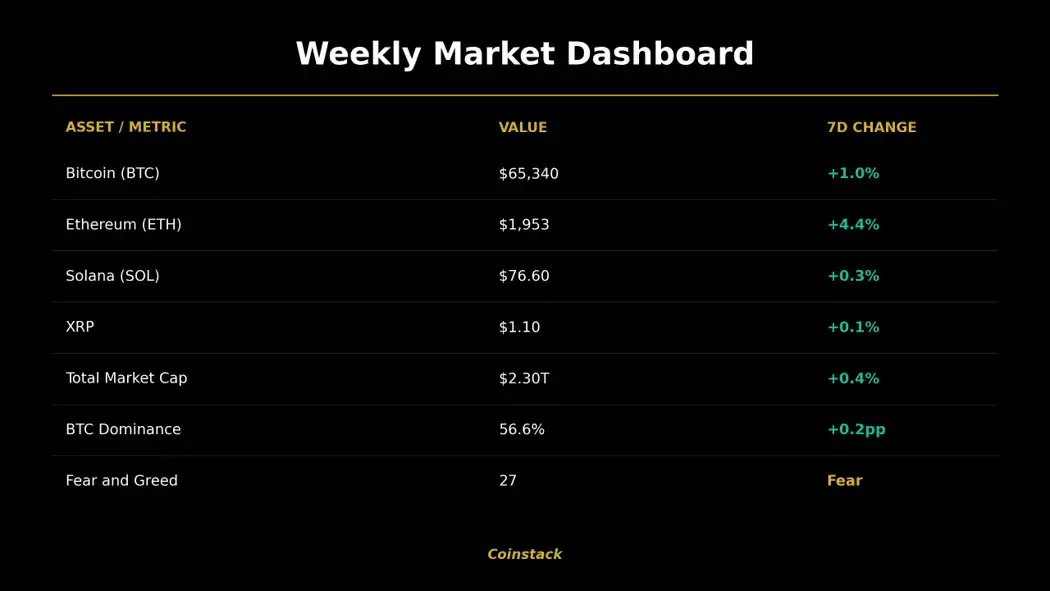
Chart: Crypto Market Weekly Dashboard (as of July 26, 2026). Source: CoinMarketCap, CoinGecko, SoSoValue, Yahoo Finance, Alternative.me.

Bitcoin: Pullback After Rally to $66K

Bitcoin surged on Tuesday, breaking above $66,500, driven by five consecutive days of ETF net inflows (totaling ~$727.25 million from July 14-20, the strongest institutional impulse since May); by Friday, with Treasury yields rising ahead of the FOMC, spot Bitcoin ETFs saw outflows of $465.26 million over two trading sessions (SoSoValue). Ethereum maintained structural buying, extending its net inflow streak to a third week, while Tesla left its 11,509 BTC stash untouched. Attention now turns to Chair Warsh, whose Wednesday press conference will set the tone for the September path.
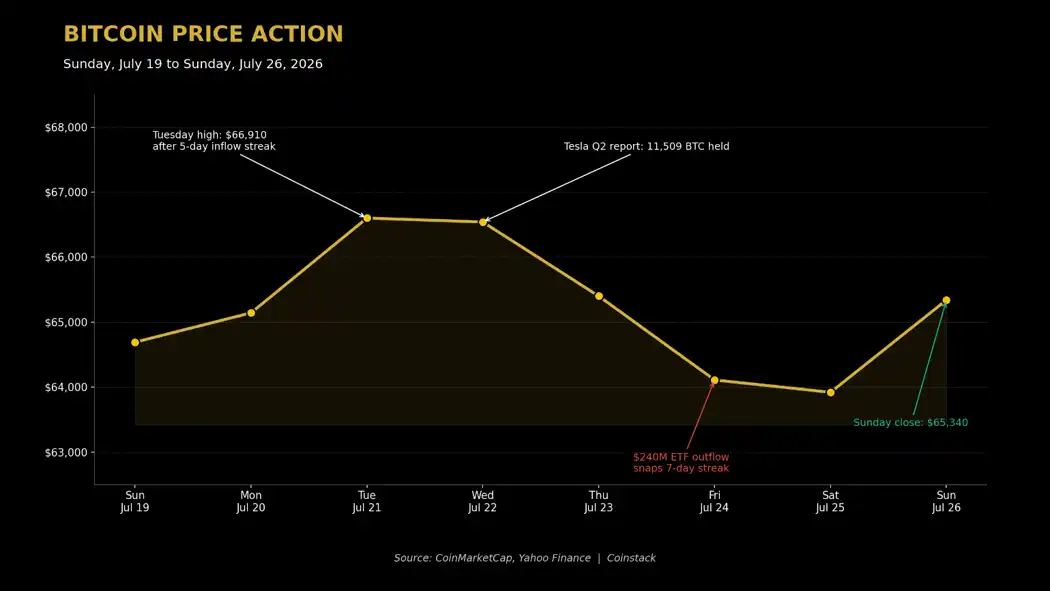
Chart: Bitcoin Price Action (July 19 - 26, 2026).

Focus Turns to FOMC: Warsh's Second Meeting

The July 28-29 FOMC meeting is Warsh's second, with the federal funds rate unchanged for the fourth consecutive time at 3.50%–3.75%.

CME FedWatch as of Friday shows a ~64% chance of no change and a 35.5% probability of a 25 bps hike. No Summary of Economic Projections (SEP) will be released, making the statement wording and press conference solely responsible for any repricing.

Bitcoin's Tuesday rally to $66,910 and Friday's retreat stemmed from shifting Fed expectations, not crypto-native flows. A hawkish hold that brings forward September cut expectations could reignite ETF demand; a press conference reinforcing September hike expectations would extend the tightening trade.

Position for the path, not the point. Watch September and December Fed funds contracts, and the 10-year Treasury yield, until Wednesday afternoon.
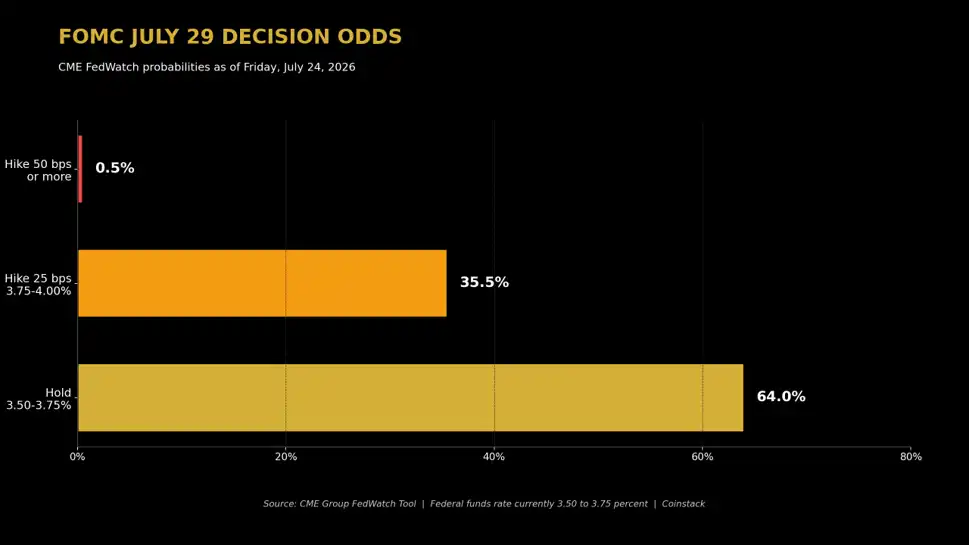
Chart: CME FedWatch Tool Probabilities for July Rate Decision (as of July 24, 2026). Source: CME FedWatch Tool.

Tesla: Unchanged Holdings for Four Years, Yet Records Paper Loss

Tesla held 11,509 BTC unchanged in Q2, recording an $112 million after-tax unrealized loss under the 2024 FASB fair value rules. Adjusted EPS was $0.33, missing market expectations.

This four-year HODL through drawdowns is the clearest institutional endorsement this quarter, while MSTR pivoted to cash reserves.

Fair value accounting will create quarterly noise as long as the price is below cost basis; Tesla's HODL adds no incremental demand at the margin.
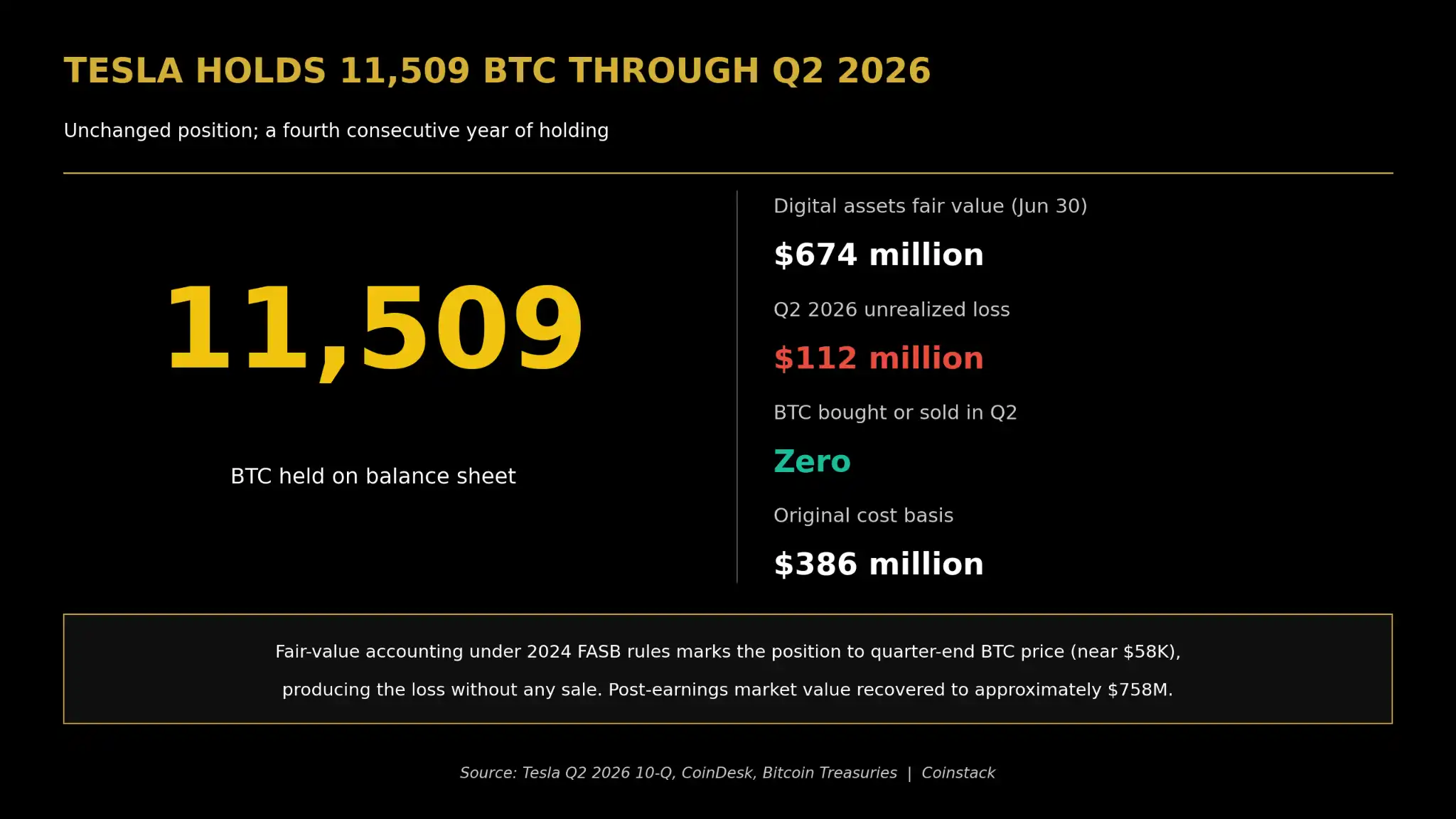
Chart: Tesla's Bitcoin Holdings and Fair Value Change in Q2 2026 Earnings. Source: Tesla Q2 2026 Update.

Morgan Stanley Races Ahead with Staking ETFs

Morgan Stanley filed final documents for its spot Ethereum (MSSE) and Solana (MSOL) staking ETFs on July 22nd, to be listed on NYSE Arca with a fee structure of 0.14%. Coinbase Prime and BNY Mellon serve as custodians; MSSE plans to stake 50%–80% of ETH, MSOL can stake up to 100% of SOL.

A 0.14% fee undercuts most Bitcoin ETFs and packages staking yields into a vehicle accessible to advisors and retirement accounts.

Staking design and tax treatment remain unresolved at the SEC. If final approvals are delayed, this fee-compression selling point loses shelf appeal over time.
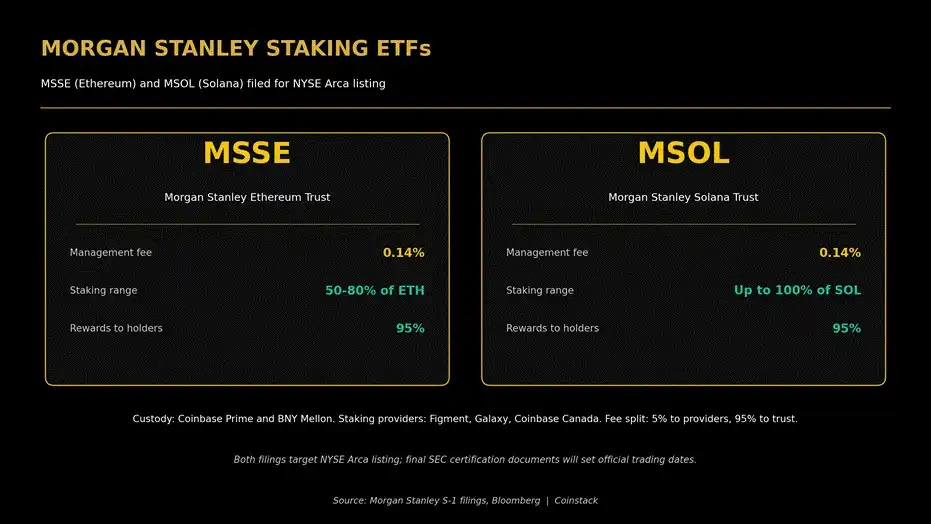
Chart: Morgan Stanley Spot Ethereum (MSSE) & Solana (MSOL) Staking ETF Structure. Source: SEC Filing.

Strategy: Zero Accumulation for Two Weeks, Cash Reserve Hits $3.2B

Strategy (formerly MicroStrategy) disclosed the sale of $263.5 million in MSTR shares from July 13-19, boosting its dollar reserve to $3.225 billion. It bought/sold no BTC, holding 843,775 BTC as of July 20 (Form 8-K).

A larger cash buffer enhances Strategy's ability to pay Digital Credit dividends without being forced to sell BTC.

For the second consecutive week, Strategy made no Bitcoin purchases, pausing its BTC accumulation flywheel.
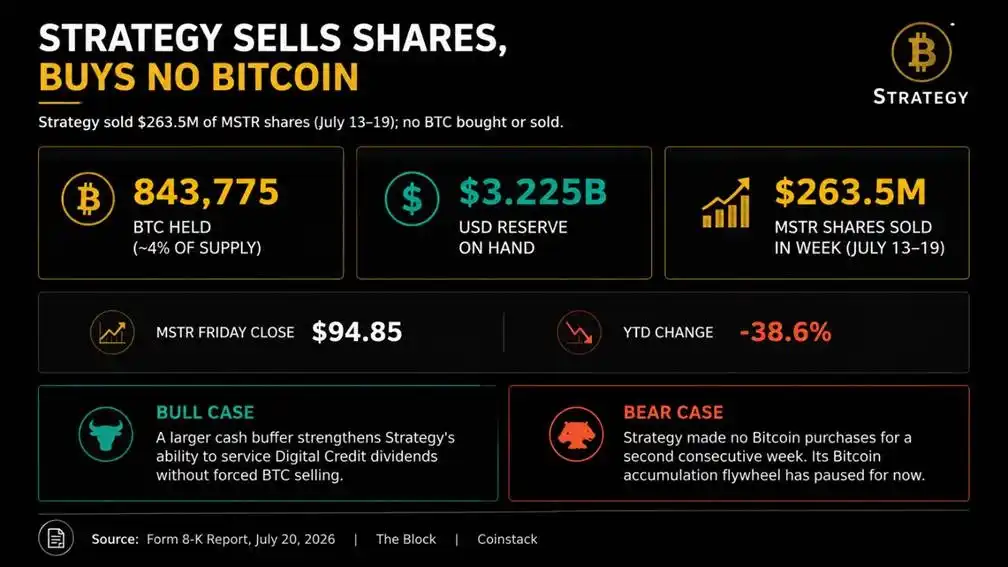
Chart: Strategy (formerly MicroStrategy) Cash Reserve & BTC Holdings Change (as of July 20, 2026). Source: Form 8-K.

Ethereum Staking Queue: 2.52M Tokens Waiting to Enter

Over 2.52 million ETH are in the validator entry queue (~2% of circulating supply), with an activation wait time of 43 days 22 hours (as of 10:30 AM ET, July 27). Exit demand is nearly zero.

New ETH is queuing to be locked, not sold. Similar backlogs have coincided with ETH accumulation phases and rising staking ratios.

Institutional demand for yield-bearing ETH is accelerating, coinciding with Grayscale preparing to distribute Ethereum staking ETF rewards in cash quarterly starting around August 7th (pending SEC approval). Together, they point to a mature structural bid that doesn't require price momentum.
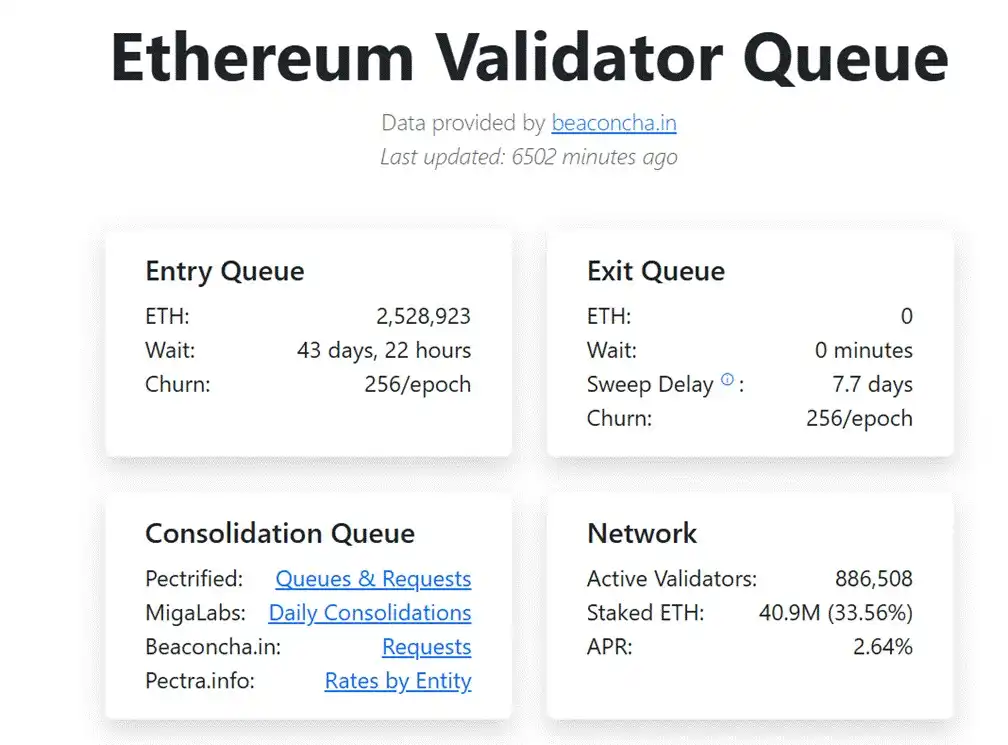
Chart: Ethereum Validator Entry Queue Size & Activation Wait Time (as of July 27, 2026). Source: Validator Queue.

Staking Yields Become New ETF Battleground

With Grayscale soon to distribute ETH staking rewards in cash, Morgan Stanley planning to stake 50%–80% of its ETH and up to 100% of its SOL, and Bitwise's BSOL already employing staking, yield is becoming a differentiating factor among US crypto ETFs.

Staking yields turn crypto ETFs into income products advisors can slot alongside REITs and dividend stocks. The ~44-day ETH entry queue signals real institutional demand.

The SEC hasn't finalized staking treatment under the Investment Company Act; any changes to tax or custody rules could weaken this selling point.
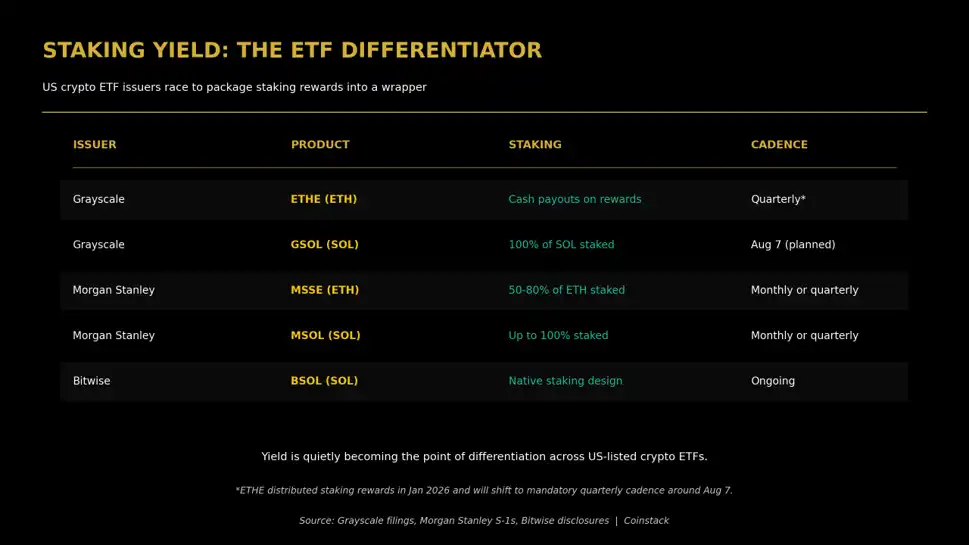
Chart: Overview of US-Listed Crypto Staking ETFs.

Panorama of US-Listed Staking ETFs

US-listed staking ETFs transform ETH and SOL into wrapped yield vehicles with regulated custody and cash distribution, opening access to capital that would never touch a validator directly.

Nodes to watch: Grayscale's August 7th Ethereum staking distribution launch, final SEC action on MSSE & MSOL, and more filings with fees ≤0.14%.

A hawkish Warsh press conference could compress risk appetite for high-beta L1s, and any rules limiting fee capture for staking would repricethis vehicle.
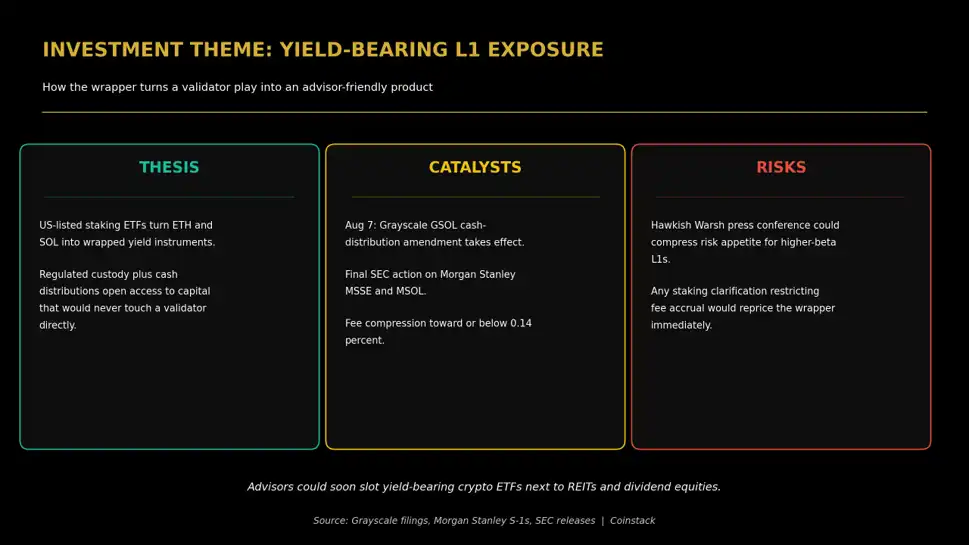
Chart: Ethereum Staking Entry Queue vs. Exit Queue.

Entry Queue: Locked Supply as a Leading Indicator

Ethereum's staking design limits the rate of new validator activation, so when demand spikes, ETH piles up in the entry queue. A long queue means holders are willing to lock capital for weeks in exchange for base-layer yield.

The queue is a leading indicator of committed supply. Coins in line are unlikely to hit exchanges soon, and when the exit queue is empty, the pool of ETH available for sale shrinks. A surge in the exit queue would reverse the signal.
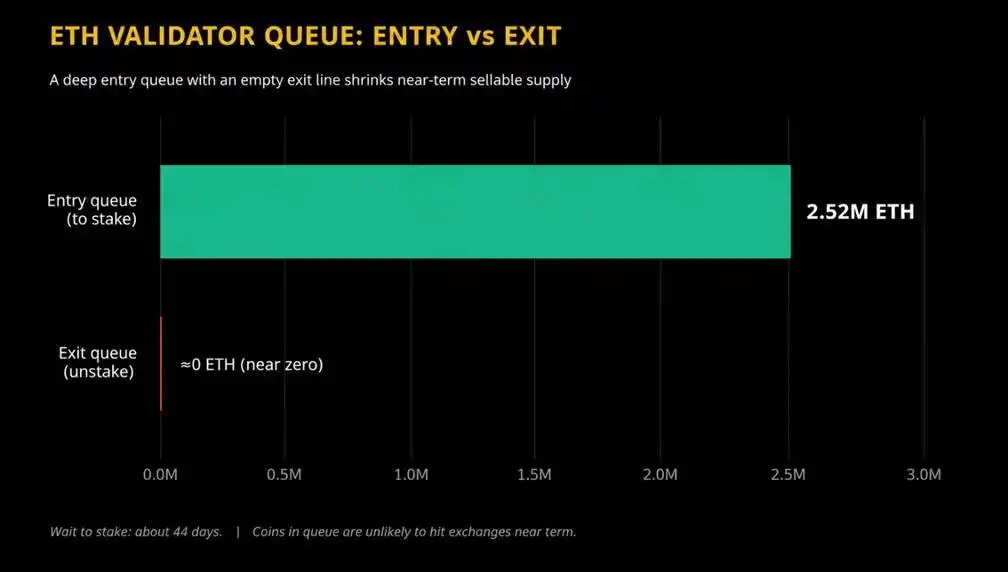
Chart: Ethereum Validator Activation Rate & Entry Queue Mechanism Schematic.


熱門幣種推薦

相關問答

QAccording to the article, what was the main reason for Bitcoin's rebound to near $66,910 on Tuesday and its subsequent pullback by Friday?

AThe main reason for both the rebound and the pullback was shifts in Federal Reserve expectations, rather than native crypto fund flows. The anticipation of the FOMC meeting and its potential outcomes drove market movements.

QWhat significant action did Morgan Stanley take regarding cryptocurrency ETFs, as reported in the article?

AMorgan Stanley submitted final filings for spot Ethereum (MSSE) and Solana (MSOL) staking ETFs, planned for listing on NYSE Arca with a management fee of 0.14%.

QHow did Tesla's Bitcoin holdings affect its Q2 2026 financials, according to the article?

ATesla held 11,509 BTC unchanged in Q2 2026. Under the 2024 FASB fair value accounting rule, this position recorded a $112 million after-tax unrealized loss, contributing to an adjusted EPS of $0.33 that missed market expectations.

QWhat does the large Ethereum validator entry queue (over 2.52 million ETH) indicate about institutional demand, as per the article's analysis?

AThe large entry queue, with a wait time of nearly 44 days, indicates strong institutional demand for yield-bearing ETH. It shows ETH is being queued to be locked up (staked) rather than sold, pointing to mature structural buying that doesn't rely on price momentum.

QWhat change did Strategy (formerly MicroStrategy) report in its recent Form 8-K regarding its Bitcoin accumulation strategy?

AStrategy reported that it made no Bitcoin purchases for the second consecutive week. It sold $263.5 million worth of MSTR stock, boosting its dollar reserves to $3.225 billion, while its Bitcoin holdings remained at 843,775 BTC.

你可能也喜歡

Core Scientific支付4190万美元以加速退出比特币挖矿业务

比特币矿企Core Scientific在季度报告中披露,为终止与Block及其子公司Proto的比特币挖矿芯片供应合同支付了4190万美元违约金。公司正彻底放弃提升算力的计划,并将业务转向人工智能托管服务。 除了已确认的4190万美元损失外,协议未披露其他额外赔偿条款。该协议最初于2024年7月宣布,涉及供应总算力约15 EH/s的3纳米芯片,并包含额外采购期权。取消订单后,Core Scientific表示将不再投资新的挖矿设备以维持或扩大加密货币挖矿产能。 公司计划通过现有设备产生现金流,同时着手改造其数据中心设施,必要时将出售或淘汰ASIC矿机。2026年第二季度,其AI托管收入飙升至1.367亿美元,较上年同期的1060万美元大幅增长,占总营收的83%。同期,自主挖矿收入下降66%至2150万美元,第三方矿机托管收入为600万美元。 公司季度比特币产量同比下降53%,平均实现价格下跌27%。截至2026年6月30日,其AI托管容量为395兆瓦,到7月中旬增至437兆瓦。客户租赁的总功率达到约1.1吉瓦。目前所有托管收入均来自CoreWeave,该公司在2026年上半年贡献了Core Scientific约77%的总收入。 此外,Core Scientific在7月底宣布与AMD达成合作,潜在数据中心容量达2.5吉瓦。初始为期15年的协议覆盖约530兆瓦和五个站点,预计可带来超过140亿美元的合同收入。2026年第二季度,公司总收入增长至1.642亿美元,资本支出跃升至7.975亿美元。截至6月30日,其采购和建设承诺约为10亿美元,长期债务为43亿美元,自由流动性为18.2亿美元。 2026年,随着比特币挖矿盈利压力加剧,多家大型矿企加速向AI领域转型,斯坦福大学数据也证实了这一趋势。

cryptonews.ru1 小時前

Core Scientific支付4190万美元以加速退出比特币挖矿业务

cryptonews.ru1 小時前

交易

現貨

熱門文章

什麼是 $S$

理解 SPERO:全面概述 SPERO 簡介 隨著創新領域的不斷演變,web3 技術和加密貨幣項目的出現在塑造數字未來中扮演著關鍵角色。在這個動態領域中,SPERO(標記為 SPERO,$$s$)是一個引起關注的項目。本文旨在收集並呈現有關 SPERO 的詳細信息,以幫助愛好者和投資者理解其基礎、目標和在 web3 和加密領域內的創新。 SPERO,$$s$ 是什麼? SPERO,$$s$ 是加密空間中的一個獨特項目,旨在利用去中心化和區塊鏈技術的原則,創建一個促進參與、實用性和金融包容性的生態系統。該項目旨在以新的方式促進點對點互動,為用戶提供創新的金融解決方案和服務。 SPERO,$$s$ 的核心目標是通過提供增強用戶體驗的工具和平台來賦能個人。這包括使交易方式更加靈活、促進社區驅動的倡議,以及通過去中心化應用程序(dApps)創造金融機會的途徑。SPERO,$$s$ 的基本願景圍繞包容性展開,旨在彌合傳統金融中的差距,同時利用區塊鏈技術的優勢。 誰是 SPERO,$$s$ 的創建者? SPERO,$$s$ 的創建者身份仍然有些模糊,因為公開可用的資源對其創始人提供的詳細背景信息有限。這種缺乏透明度可能源於該項目對去中心化的承諾——這是一種許多 web3 項目所共享的精神,優先考慮集體貢獻而非個人認可。 通過將討論重心放在社區及其共同目標上,SPERO,$$s$ 體現了賦能的本質,而不特別突出某些個體。因此,理解 SPERO 的精神和使命比識別單一創建者更為重要。 誰是 SPERO,$$s$ 的投資者? SPERO,$$s$ 得到了來自風險投資家到天使投資者的多樣化投資者的支持,他們致力於促進加密領域的創新。這些投資者的關注點通常與 SPERO 的使命一致——優先考慮那些承諾社會技術進步、金融包容性和去中心化治理的項目。 這些投資者通常對不僅提供創新產品,還對區塊鏈社區及其生態系統做出積極貢獻的項目感興趣。這些投資者的支持強化了 SPERO,$$s$ 作為快速發展的加密項目領域中的一個重要競爭者。 SPERO,$$s$ 如何運作? SPERO,$$s$ 採用多面向的框架,使其與傳統的加密貨幣項目區別開來。以下是一些突顯其獨特性和創新的關鍵特徵: 去中心化治理:SPERO,$$s$ 整合了去中心化治理模型,賦予用戶積極參與決策過程的權力,關於項目的未來。這種方法促進了社區成員之間的擁有感和責任感。 代幣實用性:SPERO,$$s$ 使用其自己的加密貨幣代幣,旨在在生態系統內部提供多種功能。這些代幣使交易、獎勵和平台上提供的服務得以促進,增強了整體參與度和實用性。 分層架構:SPERO,$$s$ 的技術架構支持模塊化和可擴展性,允許在項目發展過程中無縫整合額外的功能和應用。這種適應性對於在不斷變化的加密環境中保持相關性至關重要。 社區參與:該項目強調社區驅動的倡議,採用激勵合作和反饋的機制。通過培養強大的社區,SPERO,$$s$ 能夠更好地滿足用戶需求並適應市場趨勢。 專注於包容性:通過提供低交易費用和用戶友好的界面,SPERO,$$s$ 旨在吸引多樣化的用戶群體,包括那些以前可能未曾參與加密領域的個體。這種對包容性的承諾與其通過可及性賦能的總體使命相一致。 SPERO,$$s$ 的時間線 理解一個項目的歷史提供了對其發展軌跡和里程碑的關鍵見解。以下是建議的時間線,映射 SPERO,$$s$ 演變中的重要事件: 概念化和構思階段:形成 SPERO,$$s$ 基礎的初步想法被提出,與區塊鏈行業內的去中心化和社區聚焦原則密切相關。 項目白皮書的發布:在概念階段之後,發布了一份全面的白皮書,詳細說明了 SPERO,$$s$ 的願景、目標和技術基礎設施,以吸引社區的興趣和反饋。 社區建設和早期參與:積極進行外展工作,建立早期採用者和潛在投資者的社區,促進圍繞項目目標的討論並獲得支持。 代幣生成事件:SPERO,$$s$ 進行了一次代幣生成事件(TGE),向早期支持者分發其原生代幣,並在生態系統內建立初步流動性。 首次 dApp 上線:與 SPERO,$$s$ 相關的第一個去中心化應用程序(dApp)上線,允許用戶參與平台的核心功能。 持續發展和夥伴關係:對項目產品的持續更新和增強,包括與區塊鏈領域其他參與者的戰略夥伴關係,使 SPERO,$$s$ 成為加密市場中一個具有競爭力和不斷演變的參與者。 結論 SPERO,$$s$ 是 web3 和加密貨幣潛力的見證,能夠徹底改變金融系統並賦能個人。憑藉對去中心化治理、社區參與和創新設計功能的承諾,它為更具包容性的金融環境鋪平了道路。 與任何在快速發展的加密領域中的投資一樣,潛在的投資者和用戶都被鼓勵進行徹底研究,並對 SPERO,$$s$ 的持續發展進行深思熟慮的參與。該項目展示了加密行業的創新精神,邀請人們進一步探索其無數可能性。儘管 SPERO,$$s$ 的旅程仍在展開,但其基礎原則確實可能影響我們在互聯網數字生態系統中如何與技術、金融和彼此互動的未來。

315 人學過發佈於 2024.12.17更新於 2024.12.17

什麼是 $S$

什麼是 AGENT S

Agent S:Web3中自主互動的未來 介紹 在不斷演變的Web3和加密貨幣領域,創新不斷重新定義個人如何與數字平台互動。Agent S是一個開創性的項目,承諾通過其開放的代理框架徹底改變人機互動。Agent S旨在簡化複雜任務,為人工智能(AI)提供變革性的應用,鋪平自主互動的道路。本詳細探索將深入研究該項目的複雜性、其獨特特徵以及對加密貨幣領域的影響。 什麼是Agent S? Agent S是一個突破性的開放代理框架,專門設計用來解決計算機任務自動化中的三個基本挑戰: 獲取特定領域知識:該框架智能地從各種外部知識來源和內部經驗中學習。這種雙重方法使其能夠建立豐富的特定領域知識庫,提升其在任務執行中的表現。 長期任務規劃:Agent S採用經驗增強的分層規劃,這是一種戰略方法,可以有效地分解和執行複雜任務。此特徵顯著提升了其高效和有效地管理多個子任務的能力。 處理動態、不均勻的界面:該項目引入了代理-計算機界面(ACI),這是一種創新的解決方案,增強了代理和用戶之間的互動。利用多模態大型語言模型(MLLMs),Agent S能夠無縫導航和操作各種圖形用戶界面。 通過這些開創性特徵,Agent S提供了一個強大的框架,解決了自動化人機互動中涉及的複雜性,為AI及其他領域的無數應用奠定了基礎。 誰是Agent S的創建者? 儘管Agent S的概念根本上是創新的,但有關其創建者的具體信息仍然難以捉摸。創建者目前尚不清楚,這突顯了該項目的初期階段或戰略選擇將創始成員保密。無論是否匿名,重點仍然在於框架的能力和潛力。 誰是Agent S的投資者? 由於Agent S在加密生態系統中相對較新,關於其投資者和財務支持者的詳細信息並未明確記錄。缺乏對支持該項目的投資基礎或組織的公開見解,引發了對其資金結構和發展路線圖的質疑。了解其支持背景對於評估該項目的可持續性和潛在市場影響至關重要。 Agent S如何運作? Agent S的核心是尖端技術,使其能夠在多種環境中有效運作。其運營模型圍繞幾個關鍵特徵構建: 類人計算機互動:該框架提供先進的AI規劃,力求使與計算機的互動更加直觀。通過模仿人類在任務執行中的行為,承諾提升用戶體驗。 敘事記憶:用於利用高級經驗,Agent S利用敘事記憶來跟蹤任務歷史,從而增強其決策過程。 情節記憶:此特徵為用戶提供逐步指導,使框架能夠在任務展開時提供上下文支持。 支持OpenACI:Agent S能夠在本地運行,使用戶能夠控制其互動和工作流程,與Web3的去中心化理念相一致。 與外部API的輕鬆集成:其多功能性和與各種AI平台的兼容性確保了Agent S能夠無縫融入現有技術生態系統,成為開發者和組織的理想選擇。 這些功能共同促成了Agent S在加密領域的獨特地位,因為它以最小的人類干預自動化複雜的多步任務。隨著項目的發展,其在Web3中的潛在應用可能重新定義數字互動的展開方式。 Agent S的時間線 Agent S的發展和里程碑可以用一個時間線來概括,突顯其重要事件: 2024年9月27日:Agent S的概念在一篇名為《一個像人類一樣使用計算機的開放代理框架》的綜合研究論文中推出,展示了該項目的基礎工作。 2024年10月10日:該研究論文在arXiv上公開,提供了對框架及其基於OSWorld基準的性能評估的深入探索。 2024年10月12日:發布了一個視頻演示,提供了對Agent S能力和特徵的視覺洞察,進一步吸引潛在用戶和投資者。 這些時間線上的標記不僅展示了Agent S的進展,還表明了其對透明度和社區參與的承諾。 有關Agent S的要點 隨著Agent S框架的持續演變,幾個關鍵特徵脫穎而出,強調其創新性和潛力: 創新框架:旨在提供類似人類互動的直觀計算機使用,Agent S為任務自動化帶來了新穎的方法。 自主互動:通過GUI自主與計算機互動的能力標誌著向更智能和高效的計算解決方案邁進了一步。 複雜任務自動化:憑藉其強大的方法論,能夠自動化複雜的多步任務,使過程更快且更少出錯。 持續改進:學習機制使Agent S能夠從過去的經驗中改進,不斷提升其性能和效率。 多功能性:其在OSWorld和WindowsAgentArena等不同操作環境中的適應性確保了它能夠服務於廣泛的應用。 隨著Agent S在Web3和加密領域中的定位,其增強互動能力和自動化過程的潛力標誌著AI技術的一次重大進步。通過其創新框架,Agent S展現了數字互動的未來,為各行各業的用戶承諾提供更無縫和高效的體驗。 結論 Agent S代表了AI與Web3結合的一次大膽飛躍,具有重新定義我們與技術互動方式的能力。儘管仍處於早期階段,但其應用的可能性廣泛且引人入勝。通過其全面的框架解決關鍵挑戰,Agent S旨在將自主互動帶到數字體驗的最前沿。隨著我們深入加密貨幣和去中心化的領域,像Agent S這樣的項目無疑將在塑造技術和人機協作的未來中發揮關鍵作用。

1.1k 人學過發佈於 2025.01.14更新於 2025.01.14

什麼是 AGENT S

如何購買S

歡迎來到HTX.com!在這裡,購買Sonic (S)變得簡單而便捷。跟隨我們的逐步指南,放心開始您的加密貨幣之旅。第一步:創建您的HTX帳戶使用您的 Email、手機號碼在HTX註冊一個免費帳戶。體驗無憂的註冊過程並解鎖所有平台功能。立即註冊第二步:前往買幣頁面,選擇您的支付方式信用卡/金融卡購買:使用您的Visa或Mastercard即時購買Sonic (S)。餘額購買:使用您HTX帳戶餘額中的資金進行無縫交易。第三方購買:探索諸如Google Pay或Apple Pay等流行支付方式以增加便利性。C2C購買:在HTX平台上直接與其他用戶交易。HTX 場外交易 (OTC) 購買:為大量交易者提供個性化服務和競爭性匯率。第三步:存儲您的Sonic (S)購買Sonic (S)後,將其存儲在您的HTX帳戶中。您也可以透過區塊鏈轉帳將其發送到其他地址或者用於交易其他加密貨幣。第四步:交易Sonic (S)在HTX的現貨市場輕鬆交易Sonic (S)。前往您的帳戶,選擇交易對,執行交易,並即時監控。HTX為初學者和經驗豐富的交易者提供了友好的用戶體驗。

2.3k 人學過發佈於 2025.01.15更新於 2026.06.02

如何購買S

相關討論

歡迎來到 HTX 社群。在這裡,您可以了解最新的平台發展動態並獲得專業的市場意見。 以下是用戶對 S (S)幣價的意見。

活动图片