Source: QbitAI
Huang is a doctor again.
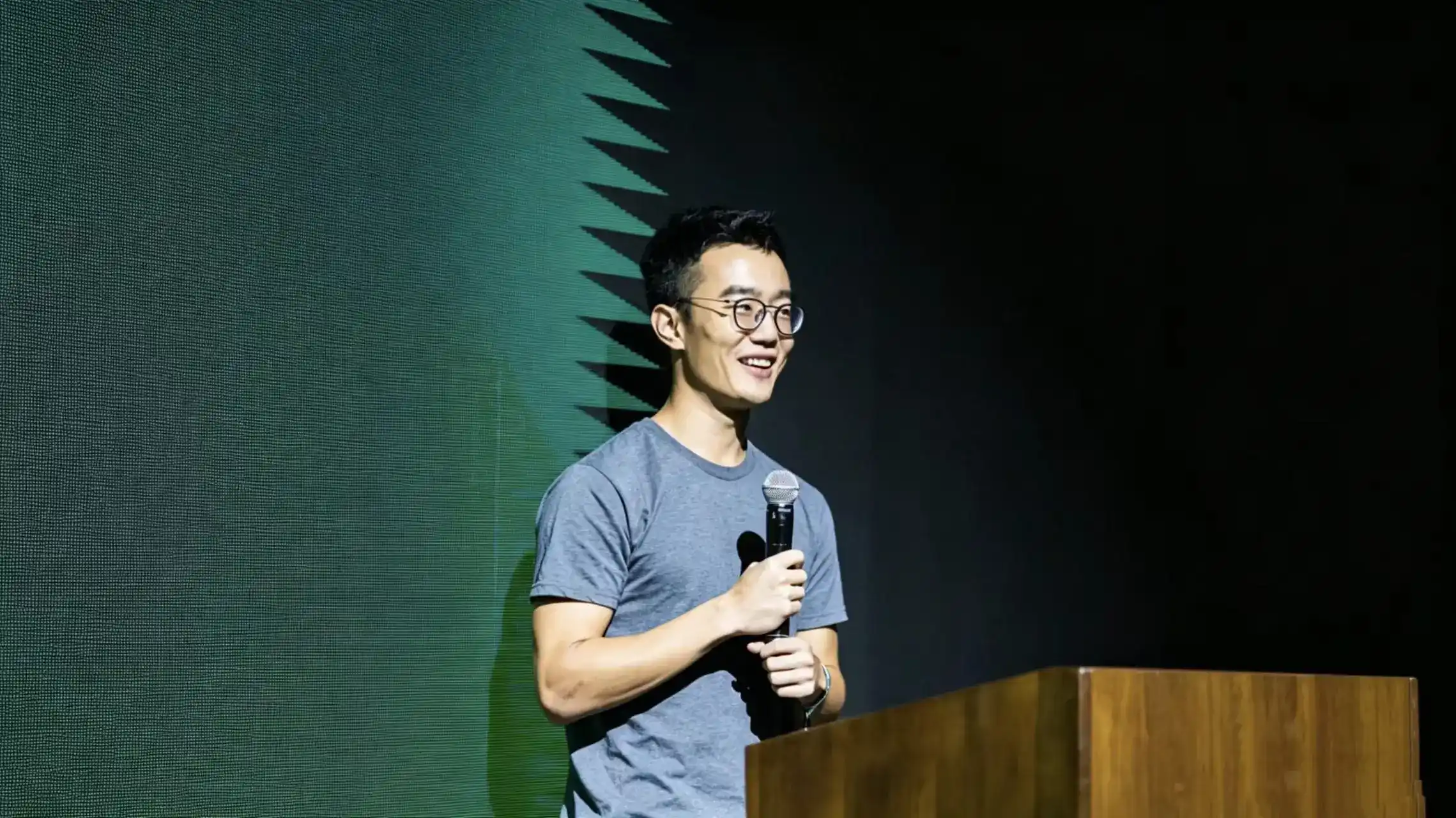
At Carnegie Mellon University's (CMU) latest commencement ceremony, the helmsman was awarded an Honorary Doctorate in Science and Technology and delivered a speech to over 5800 graduates in the rain.
P.S. This is already his 7th honorary doctorate.
As the core driving force of the global AI wave, he made a statement destined to go viral: AI won't replace you, but those who are good at using AI will.
This statement hit the nail on the head for the young audience, as they have encountered arguably the most anxious job market in recent years – the AI wave sweeping Silicon Valley, continuous layoffs at big tech companies, and the difficulty for American graduates finding jobs has reached a four-year peak.
Many young people are seriously thinking for the first time: Will what I studied soon become obsolete?
This sentiment was palpable at the ceremony. The graduation was, of course, still lively, but alongside the excitement, a sense of uncertainty about the future was written on many faces.
Facing this anxiety permeating the entire tech industry, the man standing at the very peak of this AI wave offered a judgment that was quite the opposite:
I can't imagine a better time than now to start your life's work.
This may sound a bit cliché, but coming from Huang, it's hard not to take it seriously, as finding and seizing opportunities in adversity has been his real-life story.
Immigrated to the US at age 9, not speaking a word of English; his mother woke him at 4 a.m. to deliver newspapers; later worked part-time while studying for his Master's in Electrical Engineering at Stanford; started a company at 30, messed up the first product, nearly bankrupting the company. At his most difficult, he flew to Japan to apologize to the Sega CEO, securing a chance for Nvidia to survive... until now, he's the helmsman of a trillion-dollar empire.
So when such a person tells the Class of 2026 graduates "So run, don’t walk," perhaps it's not just empty words.
Below is the full text of Jensen Huang's speech.
Personal Journey: From Dishwasher to Nvidia CEO
(Opening Remarks)
Mr. President, Members of the Board of Trustees, Faculty, Distinguished Guests, Proud Parents, and most importantly – Carnegie Mellon University Class of 2026. It is profoundly meaningful for me to be here, receiving this extraordinary honor. CMU is one of the world's premier universities and one of the few places that genuinely creates the future.
Today is not only the day your dreams come true, but also the day the dreams of your families, teachers, mentors, and friends come true. Before looking ahead, please thank them. Graduates, please stand, turn to your mothers, and wish them a Happy Mother's Day. Seeing you graduate from this great institution is also a dream come true for them.
Alright, please be seated.
CMU students are really like robots – executing one instruction at a time (laughs).
My parents are also incredibly proud of me; my journey is their journey, and I am the proof of their dream come true. Like many of you, I am a first-generation immigrant. My father always dreamed of making a home in America, so at age 9, he sent my brother and me to the US. We ended up at a Baptist boarding school in Oneida, Kentucky, a coal-mining town of just a few hundred people. Two years later, my parents poured everything they had to come to America to reunite with us.
My father was a chemical engineer, and my mother worked as a maid in a Catholic school. She woke me at 4 a.m. to deliver newspapers, and my older brother helped me get my first job – washing dishes at Denny's. At the time, I thought it was a major career leap. That's my view of America: not necessarily easy, but full of opportunities.
I later went to Oregon State University and met my wife, Lori, when I was 17. I was the youngest kid in school, and she was the "older woman" at 19; we were lab partners in a sophomore class. I eventually beat out the other 250 guys in the class to win her heart. We've been married for 40 years now, and both our children currently work at Nvidia.
At 30, I co-founded Nvidia with Chris Malachowsky and Curtis Priem. We wanted to create a new kind of computer to solve problems ordinary computers couldn't. I just thought: "How hard could it be?" Turns out, it was extremely hard.
Our first technology simply didn't work, and the company nearly went bankrupt. I had to fly to Japan to confess to Sega's CEO that we couldn't deliver the technology as contracted and beg them to still pay us, or Nvidia would go under. It was one of the most embarrassing, humiliating, and difficult things I've ever done. And Sega's CEO agreed.
I learned from that that being a CEO is not about power; it's about the responsibility to keep the company alive. Humility and honesty often beget generosity and kindness. With that money, we reinvented ourselves, birthing a new method of chip design that we still use today.
Over the past 33 years, Nvidia has continuously reinvented itself. Every time we asked "How hard could it be?" the answer was always "Harder than we imagined." But these experiences taught us to never see failure as the opposite of success – failure is just another moment for learning, building character, and building resilience.
Today, I am one of the longest-serving CEOs in the tech industry. Nvidia, and everything my 45,000 brilliant colleagues and I have built, is my life's work. And now, it's your turn. Your timing to enter this world couldn't be better.
The Reset of Computer Science: The Dawn of the AI Revolution
My career began at the dawn of the PC revolution, and yours begins at the dawn of the AI revolution. I can't imagine a more exciting time.
In fact, many origins of AI are right here at CMU. I've heard countless AI jokes in the past 24 hours (laughs). But CMU is truly one of the birthplaces of artificial intelligence and robotics. As early as the 1950s, researchers here developed Logic Theorist – widely considered the world's first AI program. In 1979, CMU established the Robotics Institute. I visited the Robo Club this morning, the world's first academic club dedicated to robotics.
And today, AI has fully emerged from the lab and begun reshaping the entire computing industry. I've witnessed nearly every major computing platform shift: mainframes, PCs, the internet, mobile devices, and cloud computing. Each wave built upon the previous one; each made technology more accessible and profoundly changed society. But what's coming next will dwarf any previous shift because computing itself is being redefined.
For the past 60 years, the fundamental model of computing never changed: humans wrote software, and computers executed instructions. But now, that era is over. AI has changed the entire computing paradigm – from "human programming" to "machine learning"; from CPUs executing software to GPUs running neural networks; from "executing commands" to "understanding, reasoning, planning, and using tools."
A brand-new industry is being born: the mass manufacturing of intelligence. Because intelligence will become the fundamental infrastructure for all future industries.
Facing Fear and Opportunity: AI Amplifies Human Capability
Every industry will be transformed, and that makes many people uneasy. They see AI writing code, generating images, driving cars, and start worrying: Will jobs disappear? Will people be replaced? Will technology spiral out of control?
Indeed, every major technological revolution has been accompanied by similar anxieties. But history also tells us that when societies embrace technology with openness, responsibility, and optimism, human capability is ultimately amplified far more than it is diminished.
Of course, we must remain clear-eyed. AI is one of the most powerful technologies in human history, bringing immense promise alongside real risks. Therefore, the responsibility of our generation is not only to advance AI but to advance it in the right way. Scientists and engineers must focus on both capability and safety; policymakers need to establish sensible rules that protect society without stifling innovation and exploration.
Because history has shown that societies that reject technology out of fear don't stop progress; they simply forfeit the chance to shape the future and benefit from it. So, we shouldn't teach young people to fear the future; we should teach them to build the future with responsibility, optimism, and ambition.
In the past, only a tiny fraction of the world could program; now, anyone can create things with AI. A small shop owner can build their own website; a carpenter can use AI to design a kitchen layout; many things that once required specialized engineers can now be done by ordinary people. Code is now being generated by AI. In a sense, now, everyone is becoming a programmer.
For the first time in human history, computing and intelligence have a real chance to be democratized to everyone, bridging the technological divide. Like the electricity revolution and the internet revolution, AI also requires massive infrastructure build-out. In the future, the US will build numerous chip factories, supercomputer factories, data centers, and advanced manufacturing facilities. This is not just a technological revolution; it's also an opportunity for reindustrialization.
Electricians, plumbers, steelworkers, construction workers, technicians – your time is also coming. AI is not only creating a new computing industry; it is also ushering in a new industrial era.
Of course, AI will change all jobs. Some positions will disappear; many tasks will be automated. But "tasks" are not the same as "the meaning of work." AI can auto-generate code, but software engineers are still vital because they can solve more complex problems with AI; AI can assist in medical image analysis, but radiologists are still vital because they are truly responsible for diagnosing illness and caring for patients.
AI will not replace human purpose; it will amplify human capability. So, rather than saying "AI will replace you," it's more accurate to say, people who are better at using AI might replace you. Therefore, the real question we should be asking is: Do we want our children to be empowered by AI, or left behind by those who have already mastered it? The answer is quite obvious. So, we must both develop AI safely and encourage more people to engage with it.
AI shouldn't belong only to those who can code; it should belong to everyone.
Conclusion: Run, and Put Your Heart in the Work
Class of 2026, you stand at the beginning of an extraordinary era. A new industry is being born; a new epoch of science and discovery is unfolding. AI will accelerate the expansion of human knowledge, helping us solve problems we couldn't before.
We have the opportunity to bridge the technological divide, giving billions of people real computing and intelligent capability for the first time; the opportunity to drive reindustrialization, rebuilding the capacity to "build"; and the opportunity to create a future that is more prosperous, more capable, and more hopeful than the world you inherited.
No generation has had more powerful tools and broader opportunities than yours. And all of us are now standing on the same starting line. This is your moment to shape what comes next. So run, don't walk.
Finally, I'd like to end with a phrase from CMU that I love: My heart is in the work.
So, truly put your heart into your work. Create things worthy of your education, your potential, and the expectations of those who believed in you long before the world recognized you.
Congratulations. Congratulations to the entire Carnegie Mellon University Class of 2026.
One More Thing
Huang, with only a Master's degree, is now being fervently awarded "honorary doctorates" by universities worldwide.
With CMU's addition, it's almost enough for a whole row (doge).
In the current climate, this isn't surprising. Post-AI era, it's almost become standard practice for global universities to invite tech CEOs for commencement speeches and conveniently hand them a doctoral robe.
The logic isn't complicated. On one hand, schools want to boost their influence by borrowing the halo of industry leaders; on the other, they need figures who most symbolically represent the "future" their graduates are heading towards.
And Huang is undoubtedly a particularly special one among them.
After all, a man who climbed from dishwasher to helmsman of a 5 trillion dollar empire naturally speaks with a bit more weight.
And finally, one last reminder: next time you see him, don't forget to call him:
Dr. Huang.