# Safe Haven Related Articles

HTX News Center provides the latest articles and in-depth analysis on "Safe Haven", covering market trends, project updates, tech developments, and regulatory policies in the crypto industry.

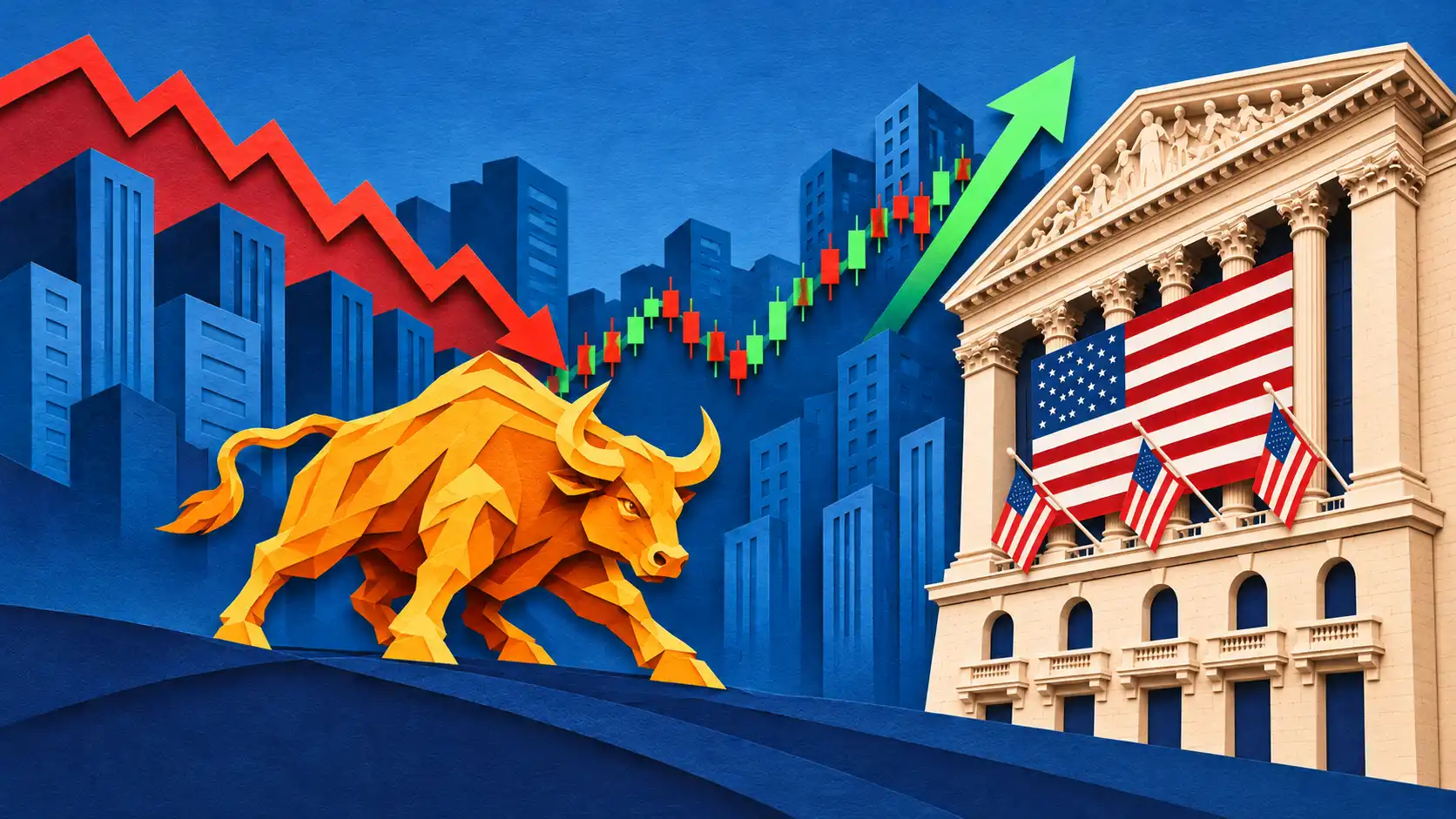
Behind the US Stock Market Crash and Rebound: Is Deleveraging Nearing Its End, or the Prelude to Medium- and Long-Term Risks?

U.S. stocks experienced extreme volatility over two trading days. On November 5, the market suffered its sharpest single-day selloff in 19 months, led by AI-related stocks, fueling social media rumors of hedge fund liquidations. The next day, however, chip stocks spearheaded a rebound: the Philadelphia Semiconductor Index rose 4.2%, AMD jumped 11%, and the Nasdaq gained 1.1%. Vanda Research showed retail investors turned net buyers in the final ten minutes of the previous session, purchasing over $100 million. A key factor was leveraged ETFs, which Nomura estimated needed to sell about $47 billion in equity exposure before the close on November 5—the second-largest single-day sale since records began in 2006. Once this passive selling concluded, short-term pressure eased, and dip buyers, short covering, and portfolio rebalancing combined to drive prices higher. JPMorgan noted the deleveraging cleared crowded trades, improving positioning. However, longer-term issues—policy expectations and doubts over AI capital spending returns—remain unresolved. The "hedge fund blowup" narrative was exaggerated. Bloomberg reported Tiger Global's flagship fund lost about 8.5% in October, Walleye Capital fell 5.9%, and Lone Pine lost 8.8%. Yet business contraction does not equal liquidation. Importantly, hedge funds began deleveraging in October. Goldman Sachs data showed global fundamental equity long/short funds lost about 3.5% in October, with systematic strategies down 3.6%—the first time both exceeded 3% losses in the same month since 2016. In mid-October, Goldman's hedge fund clients net sold $20 billion in tech stocks in just two weeks, fully unwinding AI long positions built since early 2025. By end-October, net leverage fell to 73.4%, down 4.2 percentage points—the largest monthly drop since March. Morgan Stanley reported the largest active reduction in stock-picking hedge funds in over a decade. Performance varied widely: Coatue gained 0.2%, Citadel rose 1.7%, and Quantedge surged 7.2%. Capital did not disappear but migrated. The first destination was U.S. Treasuries, with the 10-year yield falling to 4.84%, a September low. The second was the dollar, which regained safe-haven support. Meanwhile, oversold Korean won and Taiwan dollar drew attention; Bank of America noted their large current account surpluses would support long positions, and AI supply chain capital spending and export orders would not be canceled due to U.S. stock declines, providing underlying support over 6-12 months. The rapid rebound raises the question: is this the end of the decline or just a temporary recovery? History offers parallels. In August 2007, quant fund deleveraging saw the sharpest drop concentrated in four days, but the process lasted until year-end. In March 2020, the S&P 500 fell about 34% over a month with violent single-day rebounds, only recovering by August. Current action resembles the first case: the most intense selling may be over, but full positioning rebalancing and risk appetite recovery are far from complete. Optimists like Tom Lee see the selloff as a short-term buying opportunity, while analyst Mark Minervini warns of a possible 10-15% SPY decline or a 20-25% Nasdaq drop resembling a cyclical bear market. The Nasdaq's 1.1% gain barely offsets the prior 5.52% drop. After two days of turbulence, U.S. stocks stand at a crossroads—short-term leverage clearing may be ending, but mid-term debates over industrial policy and AI investment returns are just entering deep waters.

marsbit11/07 13:51
Behind the US Stock Market Crash and Rebound: Is Deleveraging Nearing Its End, or the Prelude to Medium- and Long-Term Risks?

marsbit11/07 13:51

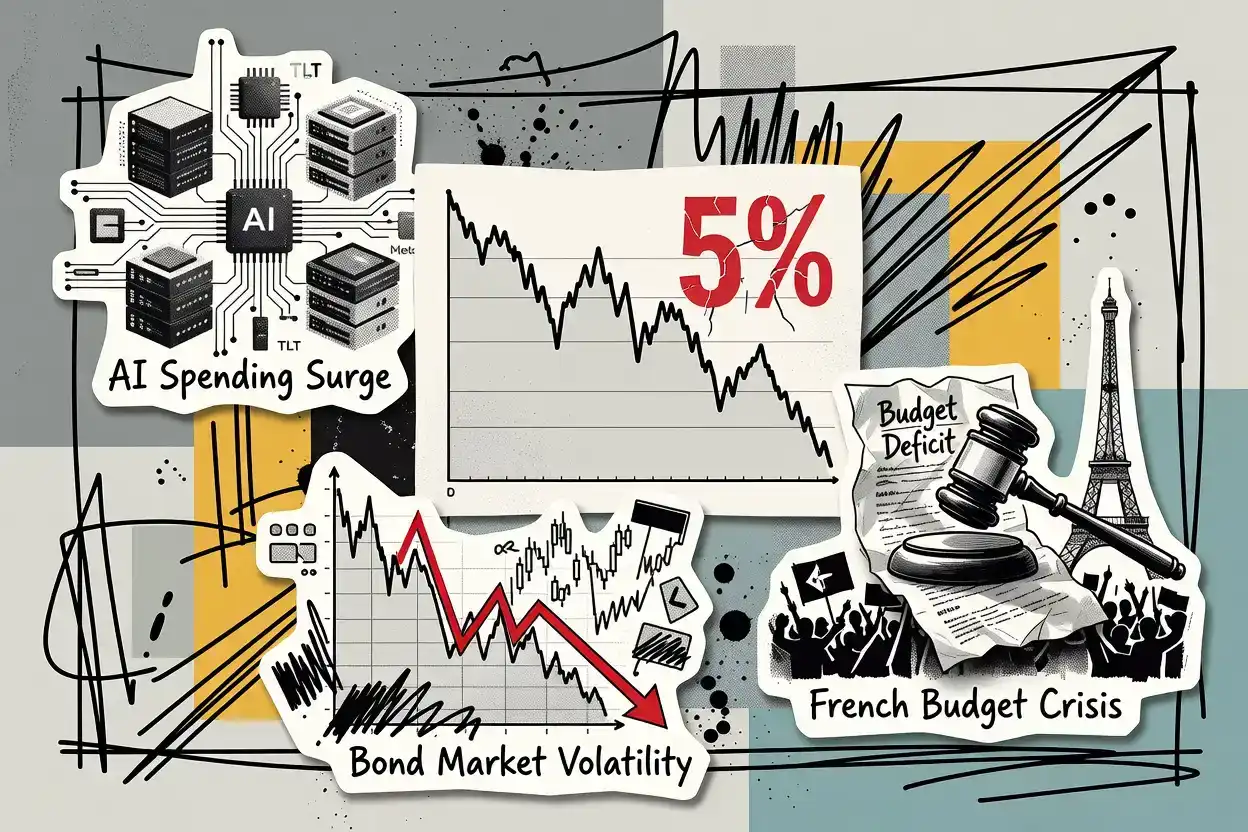
Cash Floods into Treasuries for Safe Haven—What Does Wall Street Think Now?

On October 22, the 10-year U.S. Treasury yield fell below 5% to about 4.95%, down roughly 17 basis points—one of the largest single-day drops since the March 2023 Silicon Valley Bank episode—while the 30-year settled near 5.29%, down about 15 basis points. The move reflected a flight to safety rather than bad news: investors rushed into bonds, pushing prices up and yields down. The trigger was a sharp equity selloff, with the Nasdaq down about 2.6% and the Philadelphia Semiconductor Index falling more than 6% intraday, after Meta's earnings showed free cash flow turning negative at roughly $2.1 billion, an upward revision to AI capital spending guidance, about $825 billion in future lease and contract commitments, and plans to issue non-voting shares. Nomura's Charlie McElligott said markets were repricing the odds of a U.S. "growth scare." France added a second layer of safe-haven demand. The French 10-year yield touched 5.1415%, the highest since mid-2002, with the spread over German bunds widening to about 174–178 basis points, the widest since November 2011, amid a deficit near 5.4% of GDP, a proposed €54 billion austerity plan, budget and election uncertainty, and protests. German and U.S. bonds benefited together, and oil's rise on Middle East tensions was overshadowed by risk aversion. Options pricing also leaned toward further bond gains, and CME long-bond futures showed shorts still piling up. Falling yields meant rising prices and mounting losses for shorts, forcing buybacks that added to the rally. DoubleLine's Jeff Sherman called it only an oversold repair, remaining significantly underweight the long end and even short the back end of the curve, citing heavy government borrowing and weaker overseas demand, while criticizing Treasury Secretary Bessent. Yet he also began buying AI-related high-yield corporate debt, including bonds from hyperscalers and GPU rental cloud firms, where 12%–15% yields cover bad outcomes—bearish on AI equity valuations, constructive on beaten-down AI credit. The key question is whether the 10-year can hold below 5%; if supply pressure pushes it back, the 17-basis-point drop looks more like crowded short covering than a trend reversal. French politics and upcoming AI earnings remain critical variables.

marsbit10/23 10:32

Cash Floods into Treasuries for Safe Haven—What Does Wall Street Think Now?

marsbit10/23 10:32

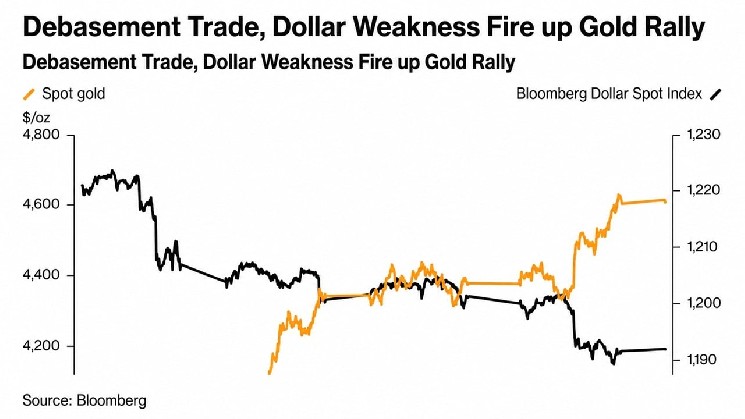
Why Does Gold Remain 'Resilient' Despite Surging Interest Rate Expectations and U.S. Treasury Yields Breaking 5%?

Despite surging expectations of a Fed rate hike and the 10-year U.S. Treasury yield breaking above 5%, gold prices have shown notable resilience. Key downward pressures, including higher rates, a stronger dollar, and rising oil prices, are being effectively countered by safe-haven demand fueled by geopolitical risks and persistent structural buying interest. The recent escalation in the Middle East, marked by attacks on Saudi oil infrastructure, has heightened fears of prolonged inflation and supply disruptions, supporting gold's role as a hedge. While higher yields typically reduce the appeal of non-interest-bearing assets like gold, this dynamic is currently balanced by significant geopolitical and inflationary concerns. Market focus is shifting from the near-certainty of a September rate hike to the Fed's longer-term policy signals. Analysts debate whether rates will stay "higher for longer," with some predicting further yield increases. Institutions like OCBC have raised their long-term gold price forecast to $4,600 per ounce by December 2026, citing structural demand and an improved investment backdrop. The core narrative for gold is the ongoing tension between the opportunity cost of holding it in a high-rate environment and its value as a hedge against the very inflation and geopolitical instability driving those rate hike expectations. As long as Middle East tensions persist, gold's safe-haven premium is likely to remain intact.

marsbit09/15 16:06

Why Does Gold Remain 'Resilient' Despite Surging Interest Rate Expectations and U.S. Treasury Yields Breaking 5%?

marsbit09/15 16:06

The Correlation Between Bitcoin and Gold Has Reached Such a Level That, According to Bitfinex, Its History Continues to Shatter

Bitcoin's correlation with gold has reached a historically high and unstable level, according to analysts at Bitfinex. They argue that both assets are increasingly viewed by investors as hedges against currency devaluation driven by concerns over government debt and loose monetary policy, with Bitcoin acting as a "higher-beta version" of this hedge. This correlation is now near the upper limit of its typical range, a point at which it has not persisted for long in the past. Bitfinex suggests the market is entering a stress test. A risk-off shock will reveal whether Bitcoin maintains its link with gold or falls in line with equities. The firm's analysis indicates Bitcoin has moved out of its accumulation phase and into an expansion phase, with its Delta-Thermo Market Multiple at 2.03, nearing the 2.5x threshold that signals a bull market commencement. The context includes rising long-term bond yields, a significant US Treasury buyback program, and hawkish comments from Fed Chair Kevin Warsh hinting at potential rate hikes—which contradicts the currency devaluation thesis. Meanwhile, the Crypto Fear & Greed Index hit "Extreme Greed" for the first time in 616 days, and funding rates are at a 20-month high. This combination of leveraged price increases and profit-taking by large, short-term holders creates a precarious situation vulnerable to a sharp market downturn.

cryptonews.ru08/29 20:25

The Correlation Between Bitcoin and Gold Has Reached Such a Level That, According to Bitfinex, Its History Continues to Shatter

cryptonews.ru08/29 20:25

Scott Bessent's Risky Bond Buyback Operation Could Fuel Bitcoin Price Surge

Bitcoin returned to the $80,000 level on Thursday, breaking past a key $79,000 resistance point, on news of an upcoming $92 billion U.S. Treasury bill auction scheduled for August 31st. The price recovery saw Bitcoin reach a daily high of $80,808, though it faced brief selling pressure. The cryptocurrency was trading around $80,400 by late morning EST, marking a roughly 3% daily increase and pushing its market cap back to $1.61 trillion. This surge positions Bitcoin for a monthly gain of over 20%, a sharp reversal from July's flat performance. The volatility led to $105 million in leveraged Bitcoin positions being liquidated in 24 hours, with short positions accounting for the majority of losses. Analysts note the large-scale Treasury auction could drain short-term market liquidity, potentially pushing yields higher and pressuring risk assets like stocks and crypto. Furthermore, a recent article in The Economist warns that U.S. Treasury Secretary Scott Bessent's policies risk undermining confidence in the American financial system. The report criticizes measures to artificially cap long-term bond yields and a shift towards issuing more short-term T-bills, which shortens the overall debt duration and increases vulnerability to future rate hikes. This approach, along with distorting market pricing mechanisms, could jeopardize long-term investor trust in U.S. sovereign debt. Prominent figures like Ray Dalio suggest such policies are reducing the inflation-adjusted yield of traditional fixed-income assets, potentially driving capital seeking a store of value towards alternatives like gold and Bitcoin, whose prices have risen since the Treasury's announcements.

cryptonews.ru08/28 04:06

Scott Bessent's Risky Bond Buyback Operation Could Fuel Bitcoin Price Surge

cryptonews.ru08/28 04:06

U.S. Financial Risks Benefit Gold and Bitcoin! Record Capital Inflow Over the Last Five Trading Days! Here's All the Data

Concerns over U.S. fiscal prospects and growing government debt are driving investors towards both gold and Bitcoin. Over the last five trading days, a record $7 billion flowed into gold and Bitcoin ETFs. Approximately $3.4 billion entered the SPDR Gold Shares (GLD) fund, while BlackRock's spot Bitcoin ETF (IBIT) saw around $1.5 billion in inflows, placing both among the top ten U.S. ETFs by weekly capital inflow. Bloomberg notes the simultaneous strong inflows into both assets as particularly remarkable, a shift from past behavior where investors typically favored gold as a safe haven during market stress. Recent investor behavior has changed due to expectations of increased U.S. government borrowing, concerns about the dollar, and policies aimed at lowering long-term interest rates, boosting demand for assets with limited supply. The concurrent rise in the value of gold and Bitcoin indicates investors are turning to alternative assets to hedge against risks within the traditional financial system, especially amid heightened debates on U.S. debt sustainability. Experts suggest this strong ETF inflow may signal that institutional investors are increasingly viewing Bitcoin as a portfolio diversification tool similar to gold, though Bitcoin's high price volatility means the risk profiles of the two assets remain significantly different.

cryptonews.ru08/27 15:33

U.S. Financial Risks Benefit Gold and Bitcoin! Record Capital Inflow Over the Last Five Trading Days! Here's All the Data

cryptonews.ru08/27 15:33

Japanese Interest Rates Return to 1996 Levels: Can Bitcoin's 'Decoupling Narrative' Withstand the September Rate Hike?

Japan's borrowing costs have hit their highest level since 1996, with 30-year and 10-year government bond yields rising significantly. This marks a major shift for a country long reliant on negative rates. Meanwhile, Bitcoin surged 22% in a week, topping $80,000. The core question is whether crypto's apparent decoupling from traditional market turbulence can withstand potential interest rate hikes by the Bank of Japan (BOJ) in September. For years, the yen carry trade—borrowing cheap yen to invest in higher-yielding assets—has fueled global risk assets. This leverage, estimated at up to $500 billion, relies on near-zero Japanese rates. The BOJ raised its policy rate to 1.0% in June, a 31-year high, with a further hike expected in September. A rapid yen appreciation could quickly wipe out carry trade profits and trigger deleveraging, as seen in August 2024 when Bitcoin and Japanese stocks fell sharply. Currently, however, the yen is weakening, which could temporarily support the carry trade and risk assets. Japan faces a debt dilemma. Its national debt has soared to a record ¥1,346 trillion. Raising rates could stabilize the yen but drastically increase debt servicing costs. The BOJ has signaled a slower pace of policy normalization to ensure market stability. Japan's large-scale selling of US Treasuries to fund currency intervention has also contributed to rising global yields. Bitcoin's recent resilience challenges traditional risk-asset logic. A pessimistic view holds that significant BOJ tightening and a stronger yen would force global deleveraging, pulling Bitcoin down. Higher yields also make interest-bearing assets relatively more attractive than Bitcoin. An optimistic scenario suggests that continued yen weakness could make Bitcoin an appealing hedge for Japanese investors. Japanese institutional interest is growing, with regulatory progress potentially paving the way for spot crypto ETFs by 2027. The key event is the BOJ's September 17-18 meeting. Market focus will be less on the expected rate hike to 1.25% and more on the future policy guidance. A hawkish signal aiming for higher rates could strengthen the yen and unwind carry trades. A dovish stance, constrained by debt concerns, could further weaken the yen, potentially benefiting Bitcoin via a weaker dollar and local demand. The current market prices in a slow evolution of Japan's debt issues. While Bitcoin may be trading on yen weakness and institutional adoption, the 30-year yield near 4% is a significant risk signal. The correlation between the yen's direction and Bitcoin remains crucial and could reverse swiftly if the BOJ alters market expectations in September.

marsbit08/26 17:55

Japanese Interest Rates Return to 1996 Levels: Can Bitcoin's 'Decoupling Narrative' Withstand the September Rate Hike?

marsbit08/26 17:55

活动图片