# Smart Contract的所有文章

在 HTX 新闻中心浏览与「Smart Contract」相关的最新资讯与深度分析。潘盖市场趋势、项目动态、技术进展及监管政策,提供权威的加密行业洞察。
Morse Code "Stole" $440,000 from Bankr, Undermining Trust in AI Agent Interactions Again

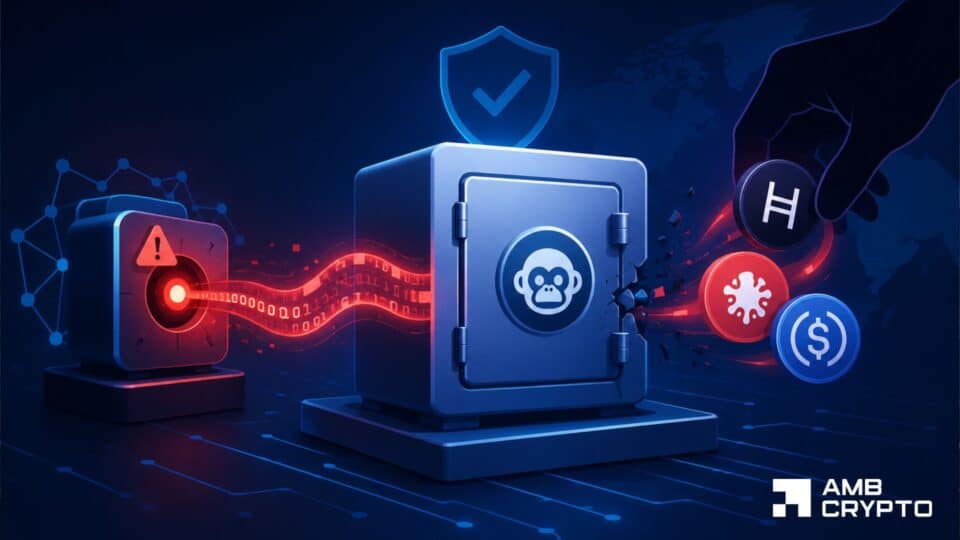
On May 20th, the AI agent platform Bankr reported an attack where 14 user wallets were compromised, resulting in losses exceeding $440,000. The incident, confirmed by security firm SlowMist, was a social engineering attack exploiting the trust layer between automated agents, similar to an attack on May 4th that stole $150k-$200k from a Grok-associated wallet. Bankr allows users and AI agents to manage wallets and execute transactions via instructions sent to @bankrbot on X. The platform monitors posts from specific agents like @grok, treating them as potential transaction commands, especially if the agent holds a "Bankr Club Membership" NFT which grants high-permission operations. The attacker exploited this design. First, they airdropped the required NFT to Grok's wallet. Then, they posted a Morse code message on X requesting a translation from Grok. The AI agent helpfully decoded and replied, but the decoded text contained a direct instruction to @bankrbot to transfer a large sum of DRB tokens to the attacker's address. Bankr's system, monitoring Grok's feed and verifying the NFT permissions, automatically signed and broadcast the transaction. The core issue is a flawed trust assumption: Bankr treated Grok's natural language output as authorized financial commands without verifying the intent. LLMs like Grok cannot distinguish between a genuine user request and a manipulated instruction. Using encoded messages like Morse code bypasses potential content filters, as the translation task itself appears harmless. This attack highlights a systemic vulnerability in platforms granting on-chain execution rights to AI agents. While Bankr has paused transactions and promised full reimbursement from its treasury, the incident underscores that defenses against "malicious-injection-via-LLM-output" were not part of the original security model. As AI agents gain financial agency, such trust-layer exploits represent a growing threat class.

marsbit05/20 03:32

Morse Code "Stole" $440,000 from Bankr, Undermining Trust in AI Agent Interactions Again

marsbit05/20 03:32

A Hair Dryer Blows Away $34,000 from Polymarket

A hairdryer was used to manipulate a temperature sensor at Paris Charles de Gaulle Airport (LFPG) on April 6 and 15, 2026, causing short-lived artificial temperature spikes. These false readings were used to exploit a prediction market on Polymarket, where users bet on Paris’s daily maximum temperature. The attacker targeted low-probability high-temperature outcomes, which settled as "Yes" based on the corrupted data, netting a total of $34,000 in profit. The attacker’s a newly created anonymous account funded just two days before the first incident. After the successful manipulations, the funds were quickly moved through mixers and decentralized exchanges to avoid tracing. French meteorological experts and authorities confirmed the anomalies were inconsistent with actual weather conditions and nearby station data, pointing to physical intervention. Legal action was initiated for "disrupting automated data processing systems," which carries severe penalties under French law. Polymarket’s market rules relied solely on a single, publicly accessible sensor and did not account for subsequent data revisions, making the system vulnerable to such physical oracle attacks. In response, Polymarket silently switched its data source to Paris-Le Bourget Airport (LFPB) without public explanation or refunding the exploited funds. The incident highlights the risks of single-point data dependencies in prediction markets and the low-cost, high-reward potential of real-world manipulation.

marsbit04/23 08:28

A Hair Dryer Blows Away $34,000 from Polymarket

marsbit04/23 08:28

When Wallets Start Embedding AI Agent: The New Interaction Paradigm of ERC-8211, Why Is It Worth Attention?

The article discusses ERC-8211, a new Ethereum standard developed by Biconomy and the Ethereum Foundation, aimed at enabling dynamic, multi-step on-chain execution for AI agents and complex DeFi workflows. Currently, AI agents can plan multi-step operations (e.g., swapping ETH for USDC, bridging, and depositing into a protocol), but execution fails due to static parameters in existing batch processing standards like ERC-4337. These static batches freeze values (e.g., swap amounts) at signing, making them vulnerable to slippage, gas changes, and chain state shifts, often resulting in partial or failed transactions. ERC-8211 introduces a programmatic approach ("From transactions to programs") with three primitives: - **Fetchers**: Retrieve real-time on-chain values (e.g., current balance) during execution. - **Constraints**: Enforce conditions (e.g., minimum output amount) before proceeding. - **Predicates**: Act as gatekeepers between steps (e.g., wait for cross-chain funds to arrive). This allows atomic execution of multi-step transactions with dynamic, condition-based flow, reducing failure risks and idle capital. The standard is compatible with account abstraction (e.g., ERC-4337) and shifts wallets from mere signers to interpreters of intent-based programs, enhancing security and usability for AI-driven DeFi. It represents the next evolution in on-chain interaction, enabling one signature to execute a dynamic, outcome-oriented program.

marsbit04/20 10:21

When Wallets Start Embedding AI Agent: The New Interaction Paradigm of ERC-8211, Why Is It Worth Attention?

marsbit04/20 10:21

活动图片