Ripple CTO Explains How The XRP Ledger ‘Will Take Over The World’

bitcoinist发布于2025-12-24更新于2025-12-24

文章摘要

Ripple CTO David Schwartz emphasized that sustained usage, real value movement, and institutional-grade infrastructure are key to the XRP Ledger's global adoption. He highlighted metrics like over 4 billion transactions processed, consistent 4-5 second settlement, and minimal fees. Schwartz stressed the importance of deep liquidity and real-world asset tokenization, noting involvement from major institutions like Guggenheim and Franklin Templeton. He distinguished between mere token issuance and active on-chain financial activity, asserting that practical financial products—not retail speculation—will drive mainstream adoption. At the time of reporting, XRP was trading at $1.88.

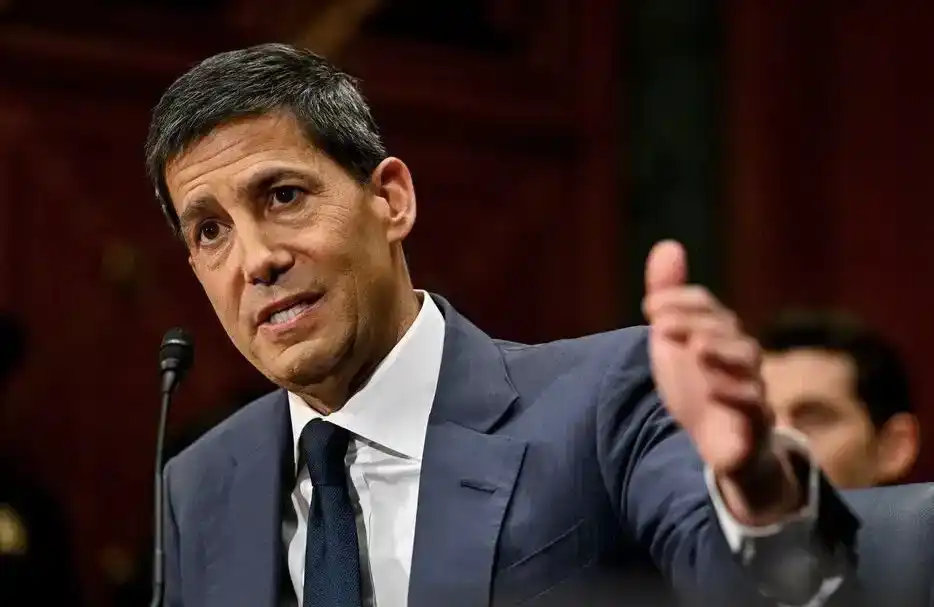
On a Token Relations webinar for the XRP ecosystem on Dec. 20, Ripple CTO David Schwartz was asked the sort of question that usually produces a tidy dashboard answer, what on-chain metrics actually matter, what’s “real” economic activity, and what trends are showing up across the ledger (and, yes, the ETF chatter in the background). He went straight to the point: usage that sticks, value that moves, and the boring-but-decisive plumbing that financial institutions actually care about will “take over the world.”

How Ripple Wants To Make The XRPL Mainstream

“I definitely focus on metrics that show sustained usage and real value moving through the network,” Schwartz said. “Transaction activity is probably the clearest signal. The XRP ledger has now processed more than four billion transactions with pretty consistent settlement in about four to five seconds at a fairly predictable fee.”

That’s the pitch in one breath: scale, predictable finality, and fees so low you don’t have to pretend they’re a feature.“You know, a transaction on the XRP ledger costs a tiny fraction of a penny,” the Ripple CTO added. “It’s not trying to extract value from people’s transactions. That’s trying to enable people to do what they need to do.”

Then he pivoted to liquidity, the kind of line XRP holders love to hear, but framed as infrastructure rather than tribal scoreboard-watching. “Liquidity is another huge factor,” Schwartz said. “XRP is a top five digital asset by market capitalization and has been for I think 10 years now, about 109 billion dollars deep global liquidity for real financial activity. That depth matters.”

The bigger point he kept coming back to was momentum in actual network use, not just “we issued a token and it sat there.”

“The XRP ledger itself is now one of the top 10 blockchains for real world activity this year with a rate of increase that’s just absolutely astonishing from a use case that was you know almost unthinkable just a year ago,” he said. “We now have institutional issuers like Guggenheim, Ondo [Finance], Aberdeen [Standard Investments], Franklin [Templeton].”

And then the part that’s meant to separate “RWA theater” from RWAs that matter: “And it’s not just issuance, you know, it wouldn’t be super exciting if they were just sort of issuing an asset on chain that just sort of sat on chain,” the Ripple CTO said. “What’s interesting is that these assets are actually moving and settling on chain. So the financial activity is getting the benefit.”

That little distinction is where a lot of tokenization narratives either hold up or collapse. Anybody can “issue” a thing on a ledger. The harder bit is getting it to behave like financial infrastructure, moving, settling, plugging into workflows that aren’t built for crypto vibes.

Schwartz also threw a bit of cold water on the current retail mix. XRPL has users who love the tech (and users who love leverage), but he was pretty blunt that this isn’t the endgame.

But obviously that’s not how we’re going to take over the world. We’re going to take over the world with solid financial products that solve real world use cases. And we are actually starting to see that now enabled by things like stablecoins and tokenized real world assets that let us handle these use cases like payments and like reasonable investments, tokenized money, market funds and treasuries,” he said. “

And retail might follow the institutions, not the other way around. The Ripple CTO pointed to “more than 500,000 new wallets” created, framing it as early evidence that institutional rails can drag everyday users in behind them.

At press time, XRP traded at $1.88.
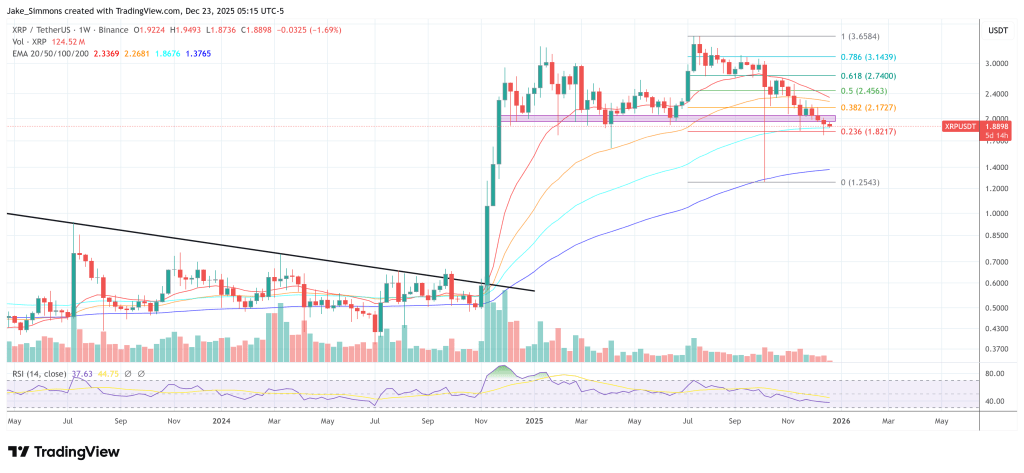
XRP falls below key support, 1-week chart | Source: XRPUSDT on TradingView.com

相关问答

QWhat are the three key metrics that Ripple CTO David Schwartz believes will help the XRP Ledger 'take over the world'?

AThe three key metrics are sustained usage, real value moving through the network, and the 'boring-but-decisive plumbing' (reliable infrastructure) that financial institutions care about.

QAccording to Schwartz, what is the current transaction fee and settlement time on the XRP Ledger?

AA transaction costs a tiny fraction of a penny and settles in about four to five seconds.

QWhat distinction does Schwartz make to separate real 'tokenization' from mere issuance?

AHe states that it's not exciting to just issue an asset on-chain; what matters is that the assets are actually moving, settling, and being used for financial activity, thereby getting the full benefit of the infrastructure.

QHow does Schwartz describe the current growth and ranking of the XRP Ledger in terms of real-world activity?

AHe said the XRP Ledger is now one of the top 10 blockchains for real-world activity this year, with a rate of increase that is 'absolutely astonishing' from a use case that was almost unthinkable a year ago.

QWhat does Schwartz suggest is the primary driver for mass adoption of the XRP Ledger, and what evidence does he cite?

AHe suggests that solid financial products solving real-world use cases, enabled by institutional adoption (like stablecoins and tokenized assets), will be the primary driver. He cites the creation of more than 500,000 new wallets as early evidence that institutional rails can attract everyday users.

你可能也喜欢

交易

现货
合约

热门文章

什么是 XRP 2.0

XRP 2.0:加密货币领域的新前沿 XRP 2.0 简介 在不断演变的加密货币领域,各种新项目不断涌现,争夺关注和采用。其中一个颇具前景的倡议是 XRP 2.0,这是一个旨在利用先进区块链技术和强大加密方法的新型加密货币项目。尽管其名称与 Ripple 的 XRP 存在一定的相似性,但必须指出的是,XRP 2.0 独立运营,专注于提升交易安全性、隐私和可扩展性。随着数字金融领域越来越多地采用去中心化解决方案,XRP 2.0 旨在为 web3 和加密项目的整体扩展做出重要贡献。 XRP 2.0 是什么? 从根本上说,XRP 2.0 是一个旨在创建安全、去中心化数字货币生态系统的加密货币项目。其基础技术将复杂的区块链原理与前沿的加密技术相结合。XRP 2.0 的总体目标是建立一个可靠、高效的平台,以实现快速的交易执行,同时优先考虑用户的隐私保护。 该项目被宣传为克服现有加密货币面临的许多局限的解决方案,提出了一个可以处理更高交易量且速度和隐私得到改善的系统。这种多功能性使 XRP 2.0 在充满各种数字货币的市场中成为一个重要竞争者。 XRP 2.0 的创造者是谁? XRP 2.0 的创建者被标记为“Wilbur”。然而,关于 Wilbur 或其相关实体的详细信息仍然难以捉摸。许多加密货币创造者的匿名性在行业中并不少见,通常旨在保持一定程度的隐私和安全。 XRP 2.0 的投资者是谁? 目前,有关支持 XRP 2.0 的投资基础或组织的具体信息尚未公开。在加密货币领域,知名投资者的支持可以显著影响项目的可信度和成功,但关于 XRP 2.0 财务支持者的透明度尚未建立。 XRP 2.0 如何运作? XRP 2.0 的一个亮点是采用了区块链技术与先进加密算法的结合,以确保安全和去中心化的交易。其创新结构包括旨在促进用户参与和拓宽功能的独特特性,超越了传统加密货币交易。 在这些特性中,XRP 2.0 集成了 AI 驱动的能力,如文本转图像和文本转语音功能。这些添加旨在增强用户的交互体验,促进在各个行业中更广泛的应用。通过将技术进步与以用户为中心的设计相结合,XRP 2.0 旨在吸引寻求将加密货币解决方案融入其运营框架的多样化个体和企业的注意。 XRP 2.0 时间线 要理解 XRP 2.0,就需要审视定义其迄今为止旅程的里程碑: 2023年7月23日:XRP 2.0 作为一个新型加密货币项目被推出,旨在革新区块链领域的安全和去中心化交易能力。 2023年9月8日:另一个项目 XRP20 启动,这标志着在以太坊区块链上出现一个与 XRP 2.0 无关的 ERC-20 代币。 2023年11月13日:XRP 分类账经历重大更新,发布了 rippled 服务器软件版本 2.0.0。值得注意的是,此发展与 XRP 2.0 加密货币项目无关。 XRP 2.0 的关键点 要提炼出 XRP 2.0 的本质,有几个关键因素浮现: 独特特性:诸如 AI 驱动的文本转图像和文本转语音的功能进一步丰富了 XRP 2.0 的潜在应用。 区块链技术:该框架利用先进的区块链机制和加密协议,确保交易的安全和去中心化环境。 可扩展性和隐私:XRP 2.0 优先考虑交易过程中的增强隐私保护以及满足日益增长的用户基础所需的可扩展性。 与 Ripple 无关:重要的是,尽管名称相似,XRP 2.0 与 Ripple 的 XRP 并无任何忠诚或合作关系,区分了其在加密货币生态系统中的运营框架和目标。 结论 XRP 2.0 代表了在加密货币领域的一项雄心勃勃的探索,旨在在数字交易中提供安全、隐私和效率的结合。通过集成复杂技术和用户友好的功能,该项目希望拓宽加密货币在当今数字经济中所能实现的可能性。 尽管其创造者的匿名性和缺乏公开投资者的信息可能引起一些人的疑问,但 XRP 2.0 对先进功能和去中心化的关注增强了它在日益拥挤的加密市场中的吸引力。随着加密货币领域的持续演变,XRP 2.0 可能会成为安全和可扩展区块链解决方案扩展的关键参与者。

163人学过发布于 2024.04.01更新于 2024.12.03

什么是 XRP 2.0

相关讨论

欢迎来到HTX社区。在这里,您可以了解最新的平台发展动态并获得专业的市场意见。以下是用户对XRP(XRP)币价的意见。

活动图片