Over the past two years, enterprises have been accelerating the integration of AI agents into real-world workflows: from customer service and back-office operations to high-stakes decision-making processes like finance and compliance. As these systems are increasingly embedded into actual business operations, a new issue is emerging: agents can retrieve information, but when tasks become "messy," multi-step, or high-risk, they often struggle to deliver stable, explainable, and reproducible reasoning processes.
Today, the open-source AI lab Sentient officially launched Arena—a real-time, production-ready environment for thousands of AI developers worldwide to stress-test and iteratively compete on some of the toughest enterprise reasoning problems. The initial phase of Arena features participation from Founders Fund, Pantera, and Franklin Templeton, which manages over $1.5 trillion in assets—a signal that institutions are developing early, clear interest in "structured evaluation of AI agents before deployment."
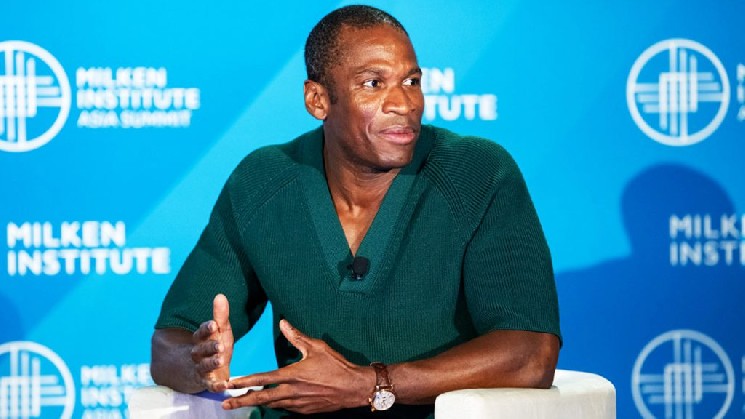
"As enterprises apply AI agents to research, operations, and customer-facing workflows, the question is no longer whether these systems are powerful enough... but whether they are reliable in real workflows," said Julian Love, Managing Partner at Franklin Templeton Digital Assets. Love added that structured environments like Arena will help the industry distinguish between "promising ideas" and "truly production-ready capabilities."
Sentient co-founder Himanshu Tyagi stated: "AI agents are no longer just experiments within enterprises; they are entering critical processes that impact customers, funds, and operational outcomes. This shift changes the evaluation criteria. It's not enough for systems to look impressive in demos. Enterprises need to know: in production environments, where the cost of failure is high and trust is fragile, can agents reason stably? Enterprises need comparability, repeatability, and a method to track reliability improvements over time, independent of underlying models or tool stacks."
Arena simulates the real-world chaos of enterprise workflows: incomplete information, long contexts, ambiguous instructions, and conflicting sources. Arena doesn't just judge whether agents provide the "correct answer," but records the complete reasoning trace, enabling engineering teams to pinpoint failure causes and validate improvements over time.
This provides a neutral, vendor-agnostic benchmark for cross-model, cross-tech-stack reasoning evaluation. Arena emphasizes production-ready performance over demo performance, fostering verifiable, high-stakes agent capabilities that enterprises can migrate to their private data and internal tools.
In the first challenge, developers joining Arena will focus on a fundamental enterprise problem: document reasoning. AI agents need to reason and compute with complex, unstructured data—a core requirement for scenarios like financial analysis, root cause investigation, investment memo writing, and customer service.
Other initial participants include alphaXiv, Fireworks, OpenHands, OpenRouter, and more; as Arena expands in tasks, industries, and model integrations, additional participants are expected to join.
Recent surveys highlight the gap Arena aims to address: 85% of enterprises express desire to become "agentic enterprises," nearly three-quarters plan to deploy autonomous agents, but fewer than a quarter have mature governance systems; many struggle to scale pilots to full production deployment. Enterprises are already running an average of about a dozen agents, often in isolated scenarios; many believe that without better orchestration and coordination, adding more agents will only increase complexity without adding value.
"At OpenHands, we've always been eager to support developers using agents to solve real, practical problems," said Graham Neubig, Chief Scientist and Co-founder of OpenHands. "We're also excited to support participants using the OpenHands Software Agent SDK to tackle these complex challenges."
OpenRouter Co-founder and CEO Alex Atallah stated: "Arena is exactly the kind of initiative that pushes open-source AI forward—it allows researchers to compete, iterate, and innovate in a public arena. We look forward to deepening our collaboration with Sentient and providing infrastructure to make experiments faster and easier to scale."
Arena will launch globally, inviting thousands of AI developers to apply for the first cohort, with in-person events in San Francisco starting March 2026.
Notes To Editor:
-
Julian Love, Managing Partner at Franklin Templeton Digital Assets, said: "As enterprises apply AI agents to research, operations, and customer workflows, the question is no longer whether these systems are powerful or can generate an answer, but whether they are reliable in real workflows. Sandbox environments like Arena, where agents are tested in real, complex workflows with inspectable reasoning processes, will help the ecosystem distinguish promising ideas from production-ready capabilities and build confidence in how this technology can be integrated and scaled."
-
Alex Atallah, Co-founder and CEO of OpenRouter, said: "Arena is exactly the kind of initiative that pushes open-source AI forward—it allows researchers to compete, iterate, and innovate in a public arena. We look forward to deepening our collaboration with Sentient and providing infrastructure to make experiments faster and easier to scale!"
-
Graham Neubig, Chief Scientist and Co-founder of OpenHands, said: "At OpenHands, we've always been eager to support developers using agents to solve real, practical problems. We're also excited to support participants using the OpenHands Software Agent SDK to tackle these complex challenges."
About Sentient Labs
Sentient Labs is a leading technology research and product organization dedicated to advancing open-source AI. As the innovation engine under the Sentient Foundation, Sentient Labs conducts cutting-edge research in AI reasoning, alignment, and agent collaboration. Sentient is a core developer of high-performance frameworks like ROMA and open-source models like Dobby. Sentient's mission is to transition open-source AI from "experimental" to "essential." By providing the infrastructure to build powerful, composable agent systems, Sentient enables developers to commercialize open-source tools and achieve enterprise-grade usability. Sentient is committed to making open source the default standard for mission-critical AI operations globally.