Ethereum’s Vitalik Buterin challenges Europe’s “no space” vision for digital assets

ambcrypto发布于2025-12-27更新于2025-12-27

文章摘要

Ethereum co-founder Vitalik Buterin has criticized the European Union’s Digital Services Act (DSA), warning that it risks creating a digital environment with "no space" for controversial ideas or products. Buterin argues that the DSA’s approach to making platforms safer is flawed, as it may lead to excessive surveillance and enforcement rather than addressing the real issue—algorithmic amplification of extreme content. He advocates for a "Pirate Party approach" focused on user empowerment and pluralism. Amid tightening regulations, privacy coins like Zcash and Monero have become the best-performing crypto sector in 2025, with Zcash surging over 700% as investors seek assets that preserve financial autonomy. This trend coincides with the EU’s enforcement of MiCA and other strict crypto regulations, which have increased scrutiny on stablecoins, anti-money laundering measures, and operational risks. Buterin’s comments reflect broader concerns that restrictive policies may inadvertently fuel demand for privacy-focused tools, as seen in earlier bans on privacy coins in Japan and U.S. sanctions on Tornado Cash. The ongoing regulatory clampdown in Europe appears to be driving capital toward cryptographic assets designed to uphold user privacy and freedom.

The privacy coin boom taking place in 2025 is no coincidence.

Key industry stakeholders have time and again pushed back strongly against rules that leave no breathing space for crypto. The latest to have his say is Ethereum co-founder Vitalik Buterin.

What’s happening?

Buterin has strong opinions against the European Union’s Digital Services Act (DSA). In a recent X post, the Ethereum co-founder warned that the law risks creating a digital environment where there is “no space” for controversial ideas or products to exist at all.

“I hope European govs do not go this way, and instead take a Pirate Party approach of user empowerment.”

While the DSA aims to make online platforms safer and more accountable, Buterin argued that this philosophy is flawed. He believes the problem isn’t that unpopular or extreme ideas exist, but that algorithms often amplify them at scale. Trying to erase such ideas entirely, he said, risks encouraging excessive surveillance and enforcement.

“There is a real opportunity to reaffirm freedom of speech in a unique and different way, that emphasizes pluralism and pushes against unbalanced attempts to manipulate the discourse…”

Privacy coins take the lead

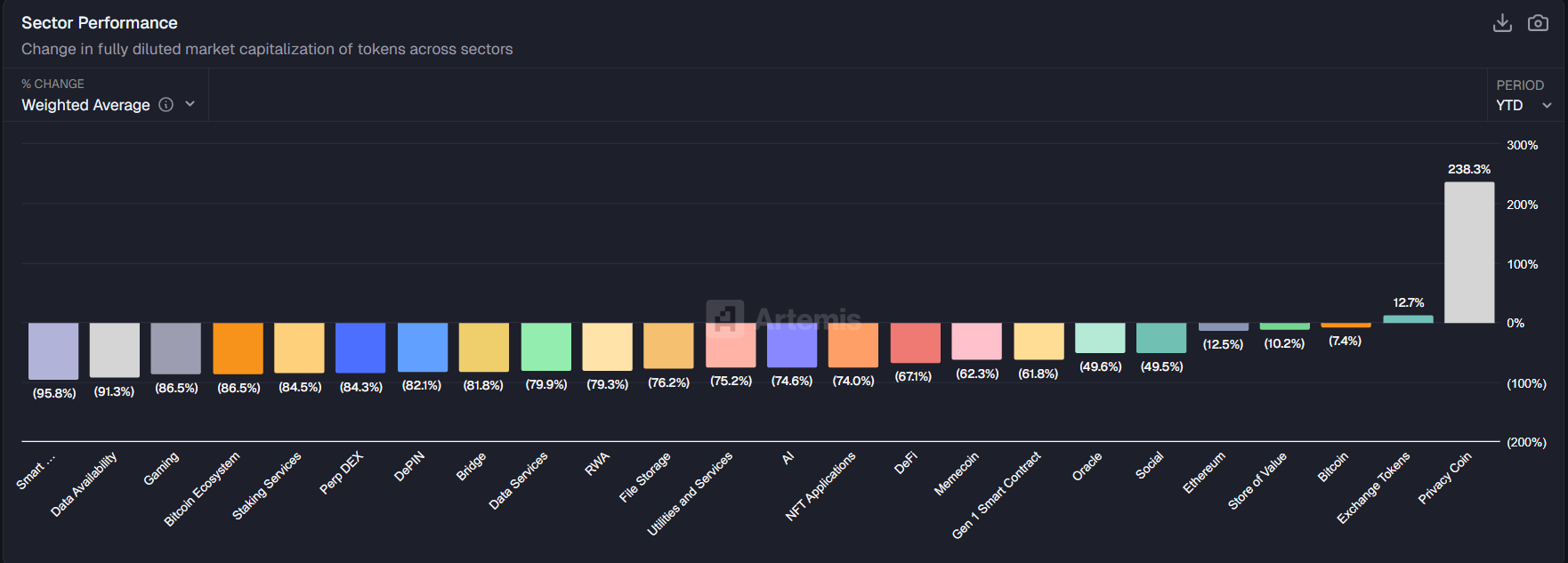
Source: Artemis

This control and freedom discord is starting to impact the numbers. While most crypto sectors have struggled this year, privacy coins are moving in the opposite direction.

In fact, data from Artemis revealed that they are the best-performing sector YTD, far outperforming everything else.

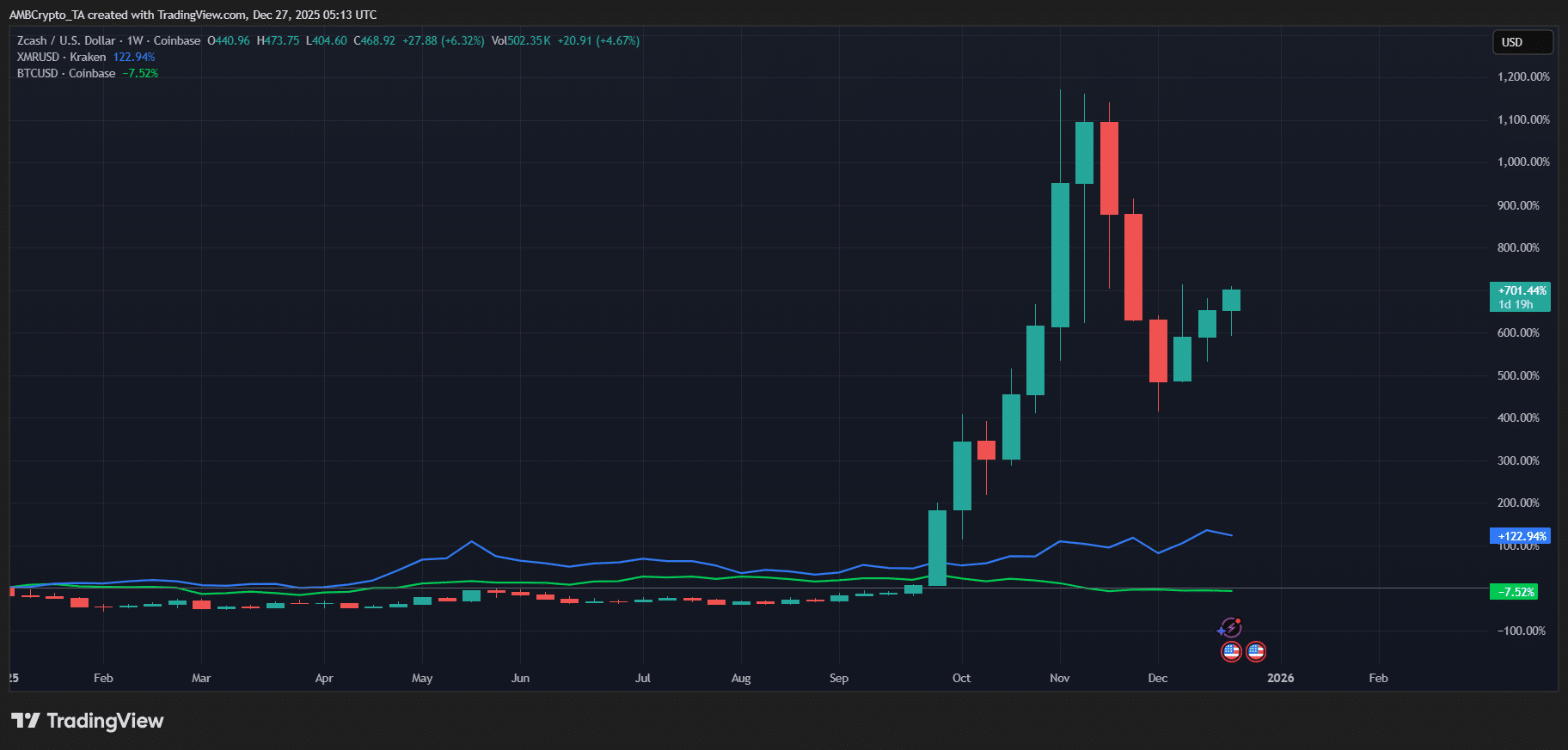
Source: TradingView

While Bitcoin [BTC] remains the market’s anchor, its performance this cycle has been relatively restrained.

Over the same period that Bitcoin has struggled to push higher, Zcash [ZEC] has surged by more than 700%. Monero [XMR] has held its ground with far less downside too.

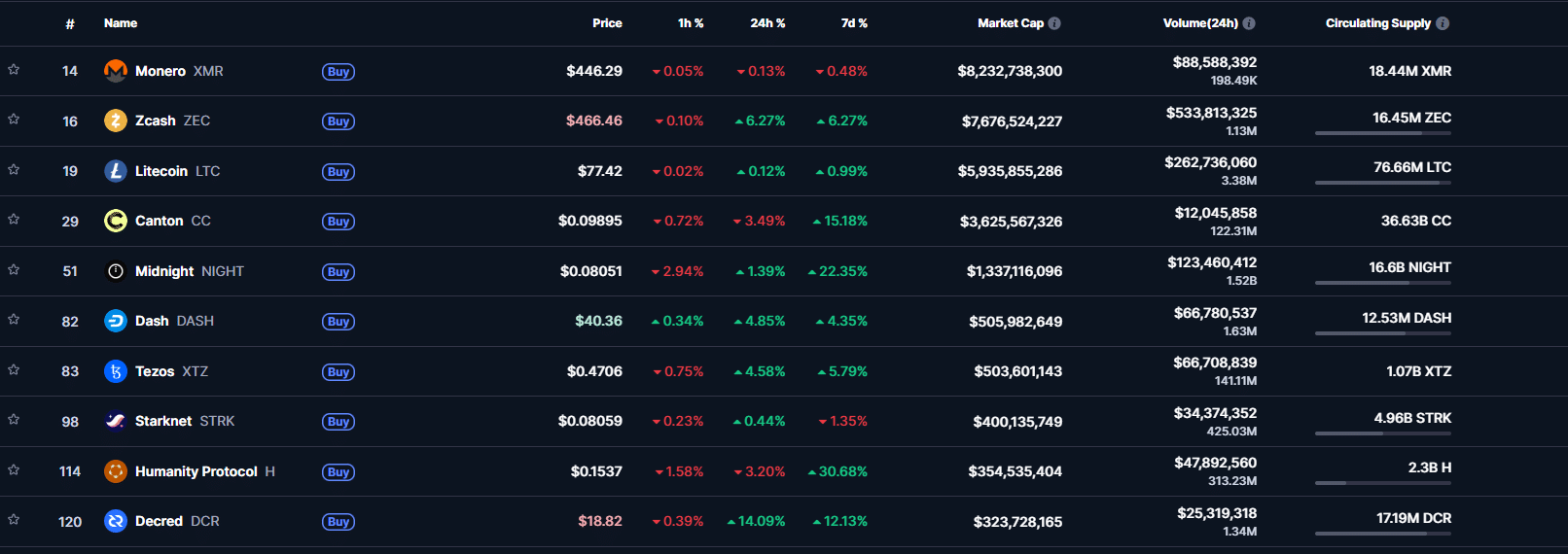
Source: Coinmarketcap

Trading activity is rising as well, with privacy coins climbing the rankings by volume and market cap. As regulations increase, capital is rotating towards assets built to preserve the holder’s autonomy.

Europe’s push gains pace

All of this is playing out against a busy year for crypto regulation in Europe. In 2025, the EU went from talking about rules to actually enforcing them. MiCA officially kicked in, forcing crypto firms to get licensed, get their disclosures in place, and rethink which tokens they can offer users.

Stablecoins have been under scrutiny, with regulators asking platforms to phase out non-compliant options. At the same time, new rules around cybersecurity and operational risk took effect. Anti-money laundering bodies made it clear that crypto is now a priority area too.

There’s also new sanctions and stricter oversight. Europe’s crypto market is now a heavily controlled arena.

This isn’t new…

U.S sanctions on Tornado Cash turned a niche crypto tool into a big debate about privacy and control. Since then, exchanges have delisted privacy coins like Monero because compliance got harder.

Japan banned privacy coins years ago and other countries followed with restrictive rules. Interest moves elsewhere when access is restricted. Even recent court decisions around Tornado Cash were followed by attention on privacy coins.

That’s why this matters. Europe is pulling the strings tighter, and privacy coins are rising again. Buterin’s warning about leaving “no space” for controversial tools fits into this pattern.

When systems squeeze out privacy, people look for it even harder, don’t they?


Final Thoughts

  • Privacy coins are the best-performing crypto sector of 2025.
  • As Europe enforces MiCA and the DSA, capital is rotating towards privacy-first cryptos.
Next: Just 1–2% – Here’s how retirement funds can change crypto forever
Share
  • Share
  • Tweet

热门币种推荐

相关问答

QWhat is Vitalik Buterin's main criticism of the European Union's Digital Services Act (DSA)?

AVitalik Buterin argues that the DSA risks creating a digital environment with 'no space' for controversial ideas or products, warning that it could lead to excessive surveillance and enforcement instead of addressing the real issue of algorithms amplifying extreme content.

QWhy are privacy coins performing exceptionally well in 2025 according to the article?

APrivacy coins are the best-performing crypto sector in 2025 because as regulations like MiCA and the DSA tighten control, capital is rotating toward assets designed to preserve user autonomy and privacy.

QHow does Buterin suggest the European Union should approach digital regulation instead of the DSA?

AButerin advocates for a 'Pirate Party approach of user empowerment,' which emphasizes pluralism and resists unbalanced attempts to manipulate discourse, rather than erasing controversial ideas entirely.

QWhat specific examples of privacy coin performance are highlighted in the article?

AZcash (ZEC) surged over 700% during a period when Bitcoin struggled to advance, while Monero (XMR) also held its ground with significantly less downside volatility.

QHow has regulatory action in Europe and the U.S. influenced the focus on privacy coins?

AU.S. sanctions on Tornado Cash and EU enforcement of MiCA and DSA have made compliance harder for exchanges, leading to delistings of privacy coins—yet this has increased interest and investment in privacy-focused cryptocurrencies as users seek alternatives.

你可能也喜欢

以太坊上形成了长达43天的质押队列:但专家认为,这并非真正的看涨信号

以太坊网络上因希望进行质押的验证者数量激增,形成了约250万枚ETH的激活队列,新参与者需等待约43天才能激活其代币。然而,Sygnum Bank的托管与质押部门负责人托马斯·布伦纳指出,这种漫长的等待不应被直接解读为强烈的看涨信号。 布伦纳表示,验证者队列的拥堵虽然反映了机构需求,但也受到以太坊协议技术特性的显著影响。他提到,自Dencun升级后,每日验证者吞吐量被限制在约57,600枚ETH,且这一限制在Pectra升级中并未提高。Pectra升级允许单个验证者最多持有2048枚ETH并支持自动复利功能,大型质押运营商可以向现有验证者追加ETH而非创建新验证者。但即便仅向现有验证者添加1枚ETH,该交易也会与新的质押者一同进入相同的激活队列。 因此,布伦纳认为,并非队列中的所有ETH都源自新投资者的需求,其中部分积累来自于已质押ETH的再分配、对现有验证者的补充以及复利过程。他指出,一个更重要的市场信号是提款队列几乎为空,这表明现有参与者正在维持其网络头寸,显示出真实的信心。 目前,以太坊网络上已质押约4120万枚ETH,约占流通总量的33.8%。布伦纳还强调,尽管ETH价格有所疲软,机构投资者并未放弃质押。许多机构将质押收益视为以太坊内在的基本特性,但机构参与的最大障碍之一仍是隐私问题。由于验证者地址、存款地址和提款交易在区块链上可被追踪,机构投资者对扩大其质押规模持谨慎态度,隐私问题仍是制约以太坊机构质押市场更快增长的主要障碍。

cryptonews.ru40分钟前

以太坊上形成了长达43天的质押队列:但专家认为,这并非真正的看涨信号

cryptonews.ru40分钟前

韩国银行公布代币化存款测试结果

韩国央行公布了其代币化存款测试结果。该试点项目涉及28家央行及国际金融机构,韩方参与者包括KB国民银行、NH农协银行、新韩银行、友利银行和韩亚银行。 测试显示,从支付指令到最终结算的整个过程平均耗时约1分20秒,其中最终结算平均需80秒。在测试中,参与者执行了30笔交易,覆盖17种不同场景,包括企业和银行间转账,并涉及韩元、美元和欧元等六种货币。交易总额约合99.5万美元。 央行表示,平台在整个测试期间运行稳定,尽管仅在部分连接现有银行基础设施的环境下运作。即使在支付网络和银行系统兼容性有限的情况下,代币化存款结算仍能无缝、快速、透明地完成。 此外,韩国央行还通过Project Agora平台,在NH农协银行和新韩银行之间完成了一笔2000万韩元(约1.389万美元)的内部转账测试。该交易涉及手动连接其批发型央行数字货币(CBDC)平台Project Hangang至央行现有网络,以验证兼容性。 同时,韩国KB国民银行与日本三菱日联金融集团(MUFG Bank)也完成了使用存款代币的支付测试。这些代币是银行在试点中发行的数字凭证,并非由央行直接发行。韩国央行计划继续测试存款代币支付。 去年,韩国当局曾承诺加强对韩元稳定币的监管,要求其发行必须获得韩国央行和金融服务委员会(FSC)的批准。

cryptonews.ru1小时前

韩国银行公布代币化存款测试结果

cryptonews.ru1小时前

交易

现货

热门文章

如何购买S

欢迎来到HTX.com!我们已经让购买Sonic(S)变得简单而便捷。跟随我们的逐步指南,放心开始您的加密货币之旅。第一步:创建您的HTX账户使用您的电子邮件、手机号码注册一个免费账户在HTX上。体验无忧的注册过程并解锁所有平台功能。立即注册第二步:前往买币页面,选择您的支付方式信用卡/借记卡购买:使用您的Visa或Mastercard即时购买Sonic(S)。余额购买:使用您HTX账户余额中的资金进行无缝交易。第三方购买:探索诸如Google Pay或Apple Pay等流行支付方法以增加便利性。C2C购买:在HTX平台上直接与其他用户交易。HTX场外交易台(OTC)购买:为大量交易者提供个性化服务和竞争性汇率。第三步:存储您的Sonic(S)购买完您的Sonic(S)后,将其存储在您的HTX账户钱包中。您也可以通过区块链转账将其发送到其他地方或者用于交易其他加密货币。第四步:交易Sonic(S)在HTX的现货市场轻松交易Sonic(S)。访问您的账户,选择您的交易对,执行您的交易,并实时监控。HTX为初学者和经验丰富的交易者提供了友好的用户体验。

3.2k人学过发布于 2025.01.15更新于 2026.06.02

如何购买S

相关讨论

欢迎来到HTX社区。在这里,您可以了解最新的平台发展动态并获得专业的市场意见。以下是用户对S(S)币价的意见。

活动图片