Author: Nancy, PANews
After more than three months, the price of Ethereum has finally broken above the $2,300 mark.
Externally, the recovery in macro risk appetite, improved regulatory expectations, and a short squeeze have provided direct impetus for ETH's rise. Internally, the continuous influx of funds into spot ETFs, accelerated institutional allocations, and the ever-increasing scale of ETH staking are also persistently improving the market's medium- to long-term expectations for Ethereum.
Ethereum Strongly 'Bounces Back', First Time Standing Above the Golden Line Since This Bear Market Began
E-army, the long wait for Ethereum's strong 'bounce back' is finally over.
CoinGecko data shows that as of August 21, the ETH price has risen to around $2,354, returning to levels seen in early May of this year.
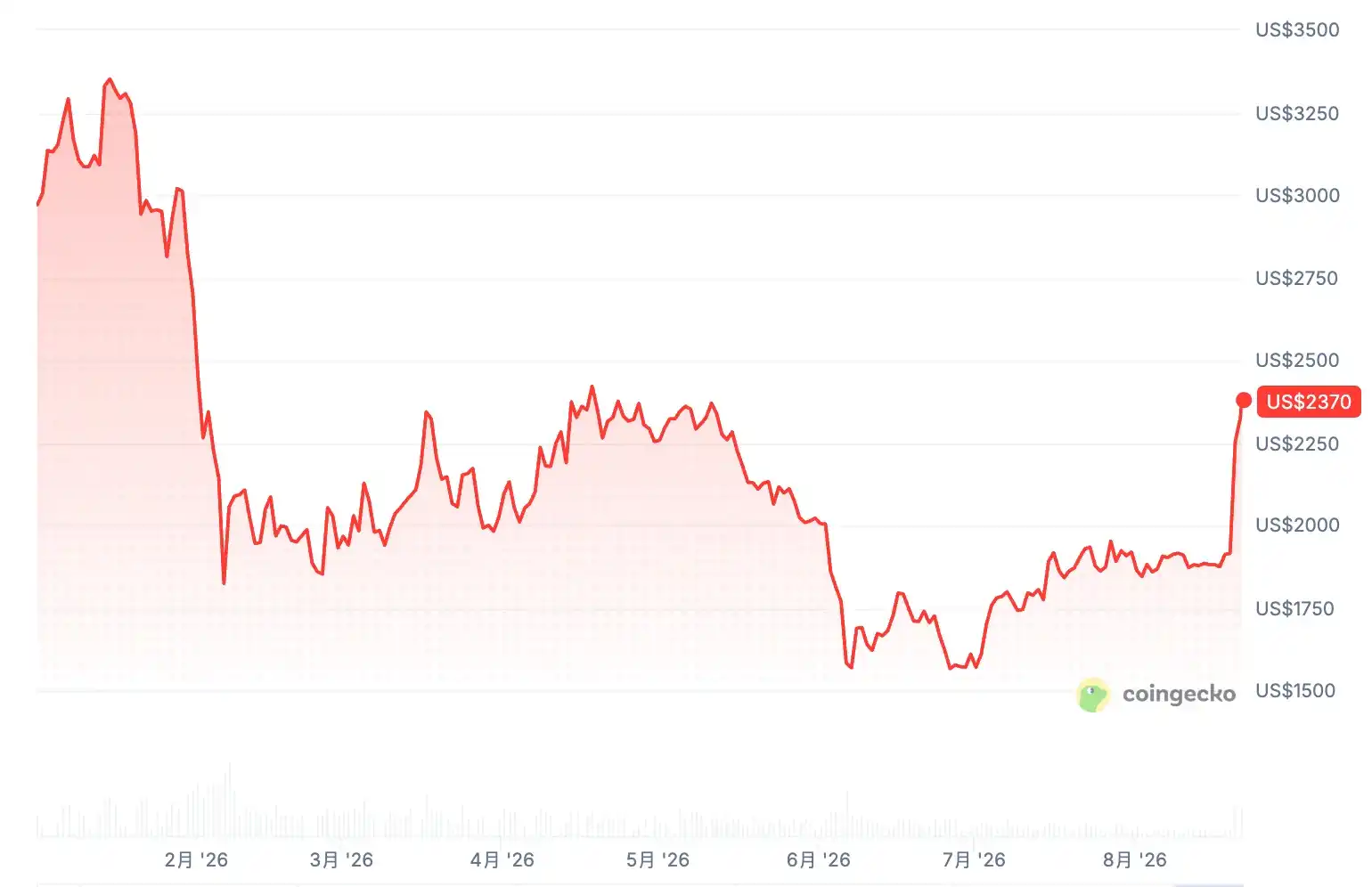
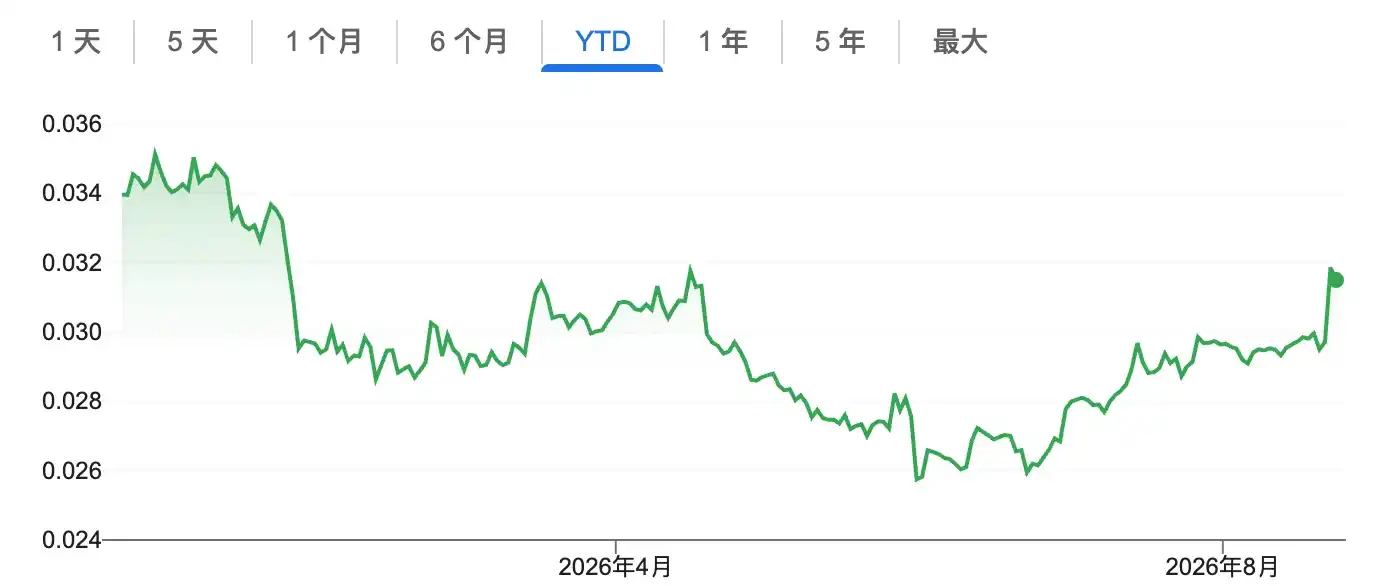
In just one week, ETH rose about 25%, ranking among the top ten gainers in the top 100 crypto assets by market cap, significantly outperforming Bitcoin over the same period. The ETH/BTC exchange rate is also continuing to break its long-term downtrend, currently rebounding to around 0.031, returning to April levels.
With Ethereum's price surging, its market capitalization has also re-entered the forefront of global mainstream assets. Data from 8 Market shows that Ethereum's total market cap has now risen to approximately $284.3 billion, surpassing Dell and ranking 72nd among global assets by market cap. Several months ago, dragged down by continuous price declines, Ethereum's market cap once fell out of the top 100 global assets.
In this rapid rebound, short sellers have been forced to become the biggest 'payers'. CoinGlass data shows that since August 19, the cumulative liquidation amount for Ethereum contracts has exceeded $1.33 billion, with short liquidations accounting for a staggering 88.4%. Of course, the large-scale short covering has further amplified ETH's upward momentum, leading to a significant short squeeze.
Noted trader Doctor Profit pointed out that Ethereum has now thoroughly broken through key resistance zones of the bear market phase and has, for the first time since the start of this bear market, re-crossed above what he calls the 'Golden Line (Weekly EMA50)'. In his view, this breakthrough is an important technical signal for ETH, and he bluntly advised to 'buckle up', while warning that short sellers might face further pressure.
BitMine Chairman Tom Lee noted that the rise in the ETH/BTC exchange rate indicates the market is starting to focus on the actual implementation of tokenization and AI agent applications, which will benefit Ethereum. Historically, the ETH/BTC exchange rate tends to rise during crypto bull markets as Ethereum's usage relative to Bitcoin increases, with previous drivers being the ICO boom of 2017-2018, the NFT wave of 2020-2021, and the stablecoin wave of 2025. The driving force for this cycle will be Wall Street's on-chain tokenization business and the large-scale use of blockchains by AI agents. Easing financial conditions will also provide a tailwind for the crypto market.
As a major Ethereum bull, BitMine has also ushered in a long-awaited 'bounce-back moment'. As of August 16, Ethereum's largest institutional holder, BitMine, holds 5.815164 million ETH with an average cost basis of $3,366. With Ethereum's recovery, BitMine's floating losses have narrowed from over $8.5 billion to $5.8 billion.
Ethereum ETF Inflows Outperform Bitcoin's, Multiple Institutions Buck the Trend to Increase Holdings
On the capital front, Ethereum spot ETFs continue to send positive signals.
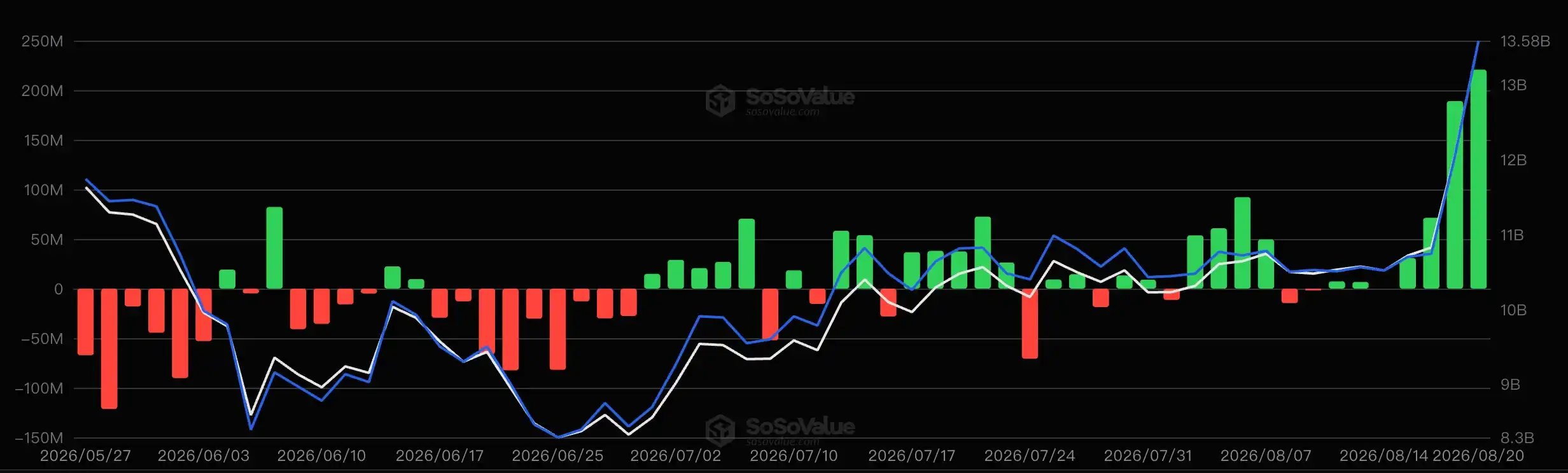
Sosovalue data shows that Ethereum spot ETFs have seen net inflows for four consecutive trading days, with cumulative net inflows exceeding $510 million this week. Among them, the net inflow on August 20 alone exceeded $220 million, the highest level since October last year. BlackRock's ETHA remains the primary source of funds, with the latest single-day net inflow reaching $173 million.
In recent times, the capital performance of Ethereum spot ETFs has also begun to significantly outperform that of Bitcoin spot ETFs. A recent report from DWF Labs shows that in June, ETH ETF net outflows accounted for 4.65% of fund size, significantly lower than BTC ETF's 8.09%. By July, ETH ETFs turned to net inflows, accounting for 3.19% of fund size, while BTC ETFs were only 0.34%, with the former being about 9.4 times the latter.
Institutional allocations are also changing. DWF Labs points out that Wall Street banks significantly increased their exposure to ETH in Q2, with growth rates noticeably higher than for BTC. For example, Morgan Stanley's BTC exposure grew 3.7% quarter-over-quarter, while its ETH exposure grew 18.6%; JPMorgan's BTC exposure grew 12.2%, while its ETH exposure grew 67.3%.
In addition, several other institutions have also increased their holdings of Ethereum ETFs against the trend. According to 13F filings, Bank of America's holdings of ETHA increased from about 67,500 shares to about 1.98 million shares, an expansion of about 29 times, with a reported value of about $23.6 million at the end of Q2; Italy's largest bank significantly reduced its holdings of BlackRock's Bitcoin ETF IBIT while nearly doubling its holdings of BlackRock's Staked Ethereum Trust; Spain's Santander Bank also disclosed holdings of BlackRock's Bitcoin and Ethereum ETFs for the first time in Q2.
Compared to the short-term price rebound, this shift in capital structure is perhaps more noteworthy.
Recently, several ETF issuers have also continued to enhance the appeal of their products. For instance, BlackRock's Ethereum ETF ETHA plans to implement a 1-for-3 reverse stock split on October 6, while Fidelity has applied to add a staking function to its Ethereum ETF FETH.
Over One-Third of ETH Staked, Declining Yields May Weaken Attractiveness
Unlike the recent persistent downtrend in Ethereum's price, its staking scale has maintained a growth trajectory.
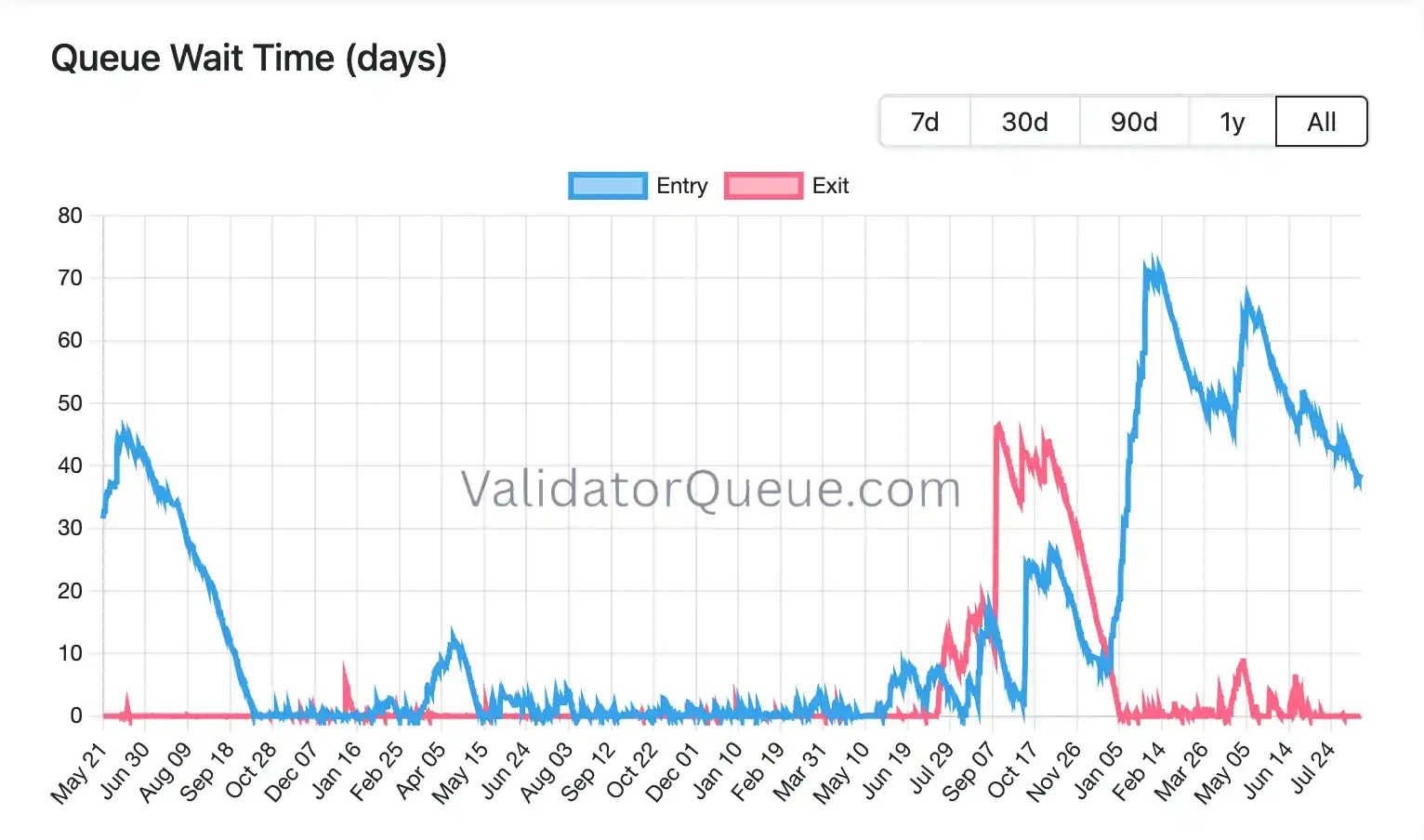
ValidatorQueue data shows that Ethereum's current staking ratio has climbed to a new all-time high, with over 41.1 million ETH in staking, accounting for nearly 33.7% of the total supply. Meanwhile, the validator exit queue is nearly zero, while the entry queue for staking still has about 2.21 million ETH waiting, with an estimated wait time exceeding 38 days.
On-chain data also confirms the market's long-term holding intent. Santiment data shows that from May 20 to August 20, large wallets holding over 1,000 ETH collectively reduced their holdings by about 1.7 million ETH, accounting for 2.9% of holdings in this tier. During the same period, the share of holdings in small wallets holding 1 to 10 ETH increased from 4.38% to 4.52%, with increases on 65 trading days and decreases on only 27.
However, the decline in large holder balances does not entirely mean ETH was sold. Santiment notes that of this outflowing ETH, only about 300,000 can be traced to smaller wallets, with most of the remainder likely entering staking or contract addresses. Concurrently, exchange ETH balances also fell from about 7.07 million to 6.54 million during this period.
The continuous rise in staking scale has also raised market concerns. Recently, Ethereum researchers Justin Drake and Jerome de Tychey proposed a new EIP-8363, suggesting that when Ethereum's staking rate reaches 50% of the total supply, a progressive burn mechanism would gradually reduce and eventually zero out the new issuance rewards for consensus layer validators. However, this proposal has faced opposition from the community.
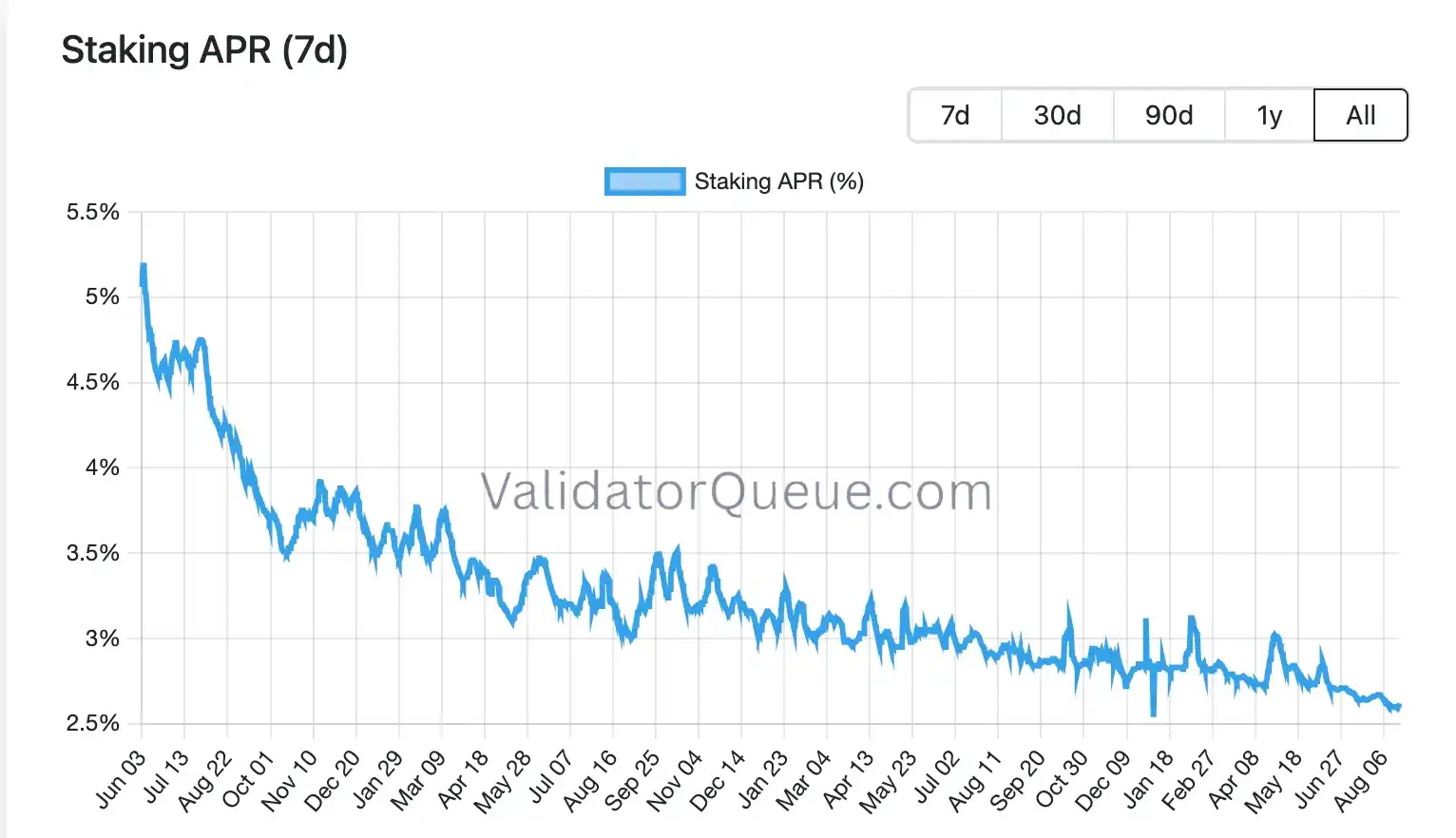
Meanwhile, as the amount of ETH and the number of validators participating in staking continue to increase, staking yields have also begun to decline. Data shows that over the past three months, ETH staking yields have fallen from a high of 2.86% to 2.59%, significantly lower than the peak of around 5.2% three years ago. If staking yields fall further, their attractiveness to new capital could be somewhat impacted.
Notably, Ethereum's next major upgrade, Glamsterdam, is scheduled for Q4 2026, and EIP-8061 is being considered for inclusion. This proposal aims to eliminate the validator exit queue limit and increase exit processing speed to about 4 times the current rate, thereby improving the efficiency and flexibility of ETH unstaking. If relevant proposals are finalized, stakers could manage capital liquidity more flexibly while earning yields. For institutional investors, higher unstaking efficiency means lower liquidity risk, potentially further boosting willingness to participate in staking.
Overall, this Ethereum rally has gained support from sentiment, capital, and fundamentals. However, whether it can truly mark a return to form will require time and more fundamental developments to provide the answer.