Decoding why Bitcoin remains quiet despite Fed’s first Yen warning in decade

ambcrypto发布于2026-01-25更新于2026-01-25

文章摘要

Bitcoin experienced a 6.5% decline this week but avoided a full sell-off, trading quietly while lagging behind other assets. The market's attention shifted to currency stress as the New York Federal Reserve expressed concern over the Japanese yen for the first time in over a decade, signaling potential intervention risks due to Japan's rising bond yields and weak currency. Bitcoin's recent price action has been more sensitive to timing than specific price levels, with volatility typically increasing around the 20th-21st of the month, while weekends remain quiet due to reduced trading activity. Despite dipping from the mid-$90K range to $88-$89K, selling pressure eased quickly. Technical indicators like RSI stayed neutral, and the Capital Movement Flow (CMF) remained slightly positive, indicating underlying support and capital retention. The market is now consolidating, awaiting potential triggers from broader currency movements, particularly regarding the yen.

Bitcoin is down around 6.5% this week, but the move hasn’t turned into a full-blown sell-off. Instead, BTC has been moving slowly, lagging behind other assets.

Currency stress is back in focus, with the New York Fed concerned about the Japanese yen for the first time in over a decade. That has shaken greater markets, and crypto isn’t immune.

Why the yen is back on the global radar

One of the most important macro bookmarks this week has come from the currency market.

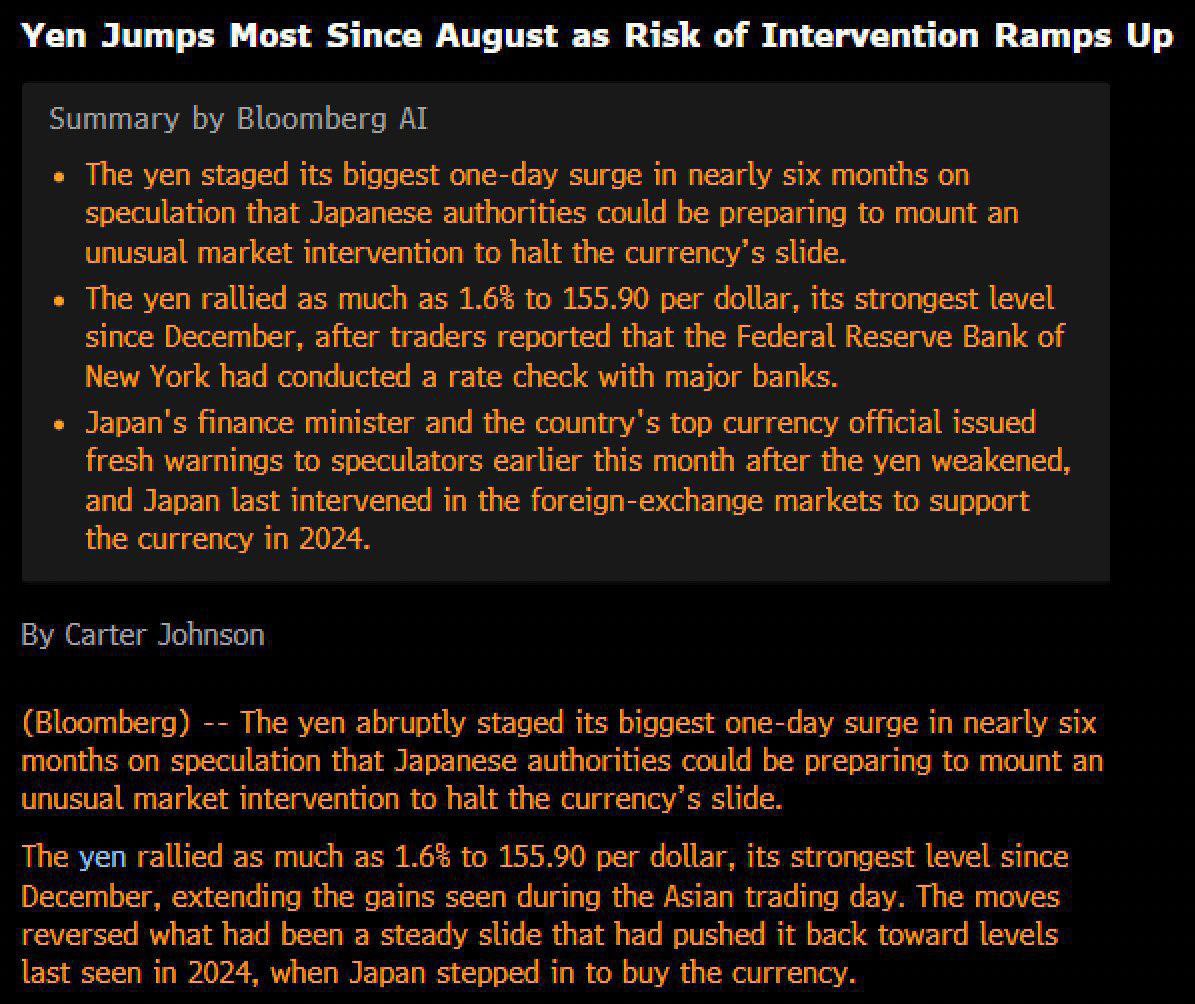
The Japanese yen saw its most shocking one-day jump in months after reports that the New York Fed checked rates with major banks. That is widely regarded as a warning sign.

Source: X

For the first time in over a decade, U.S. policymakers appeared openly concerned about yen weakness.

Japan’s bond yields are rising while its currency continues to fall, so this matters. There’s growing stress in Japan’s economy, and it raises the risk of intervention.

Why timing matters more than price

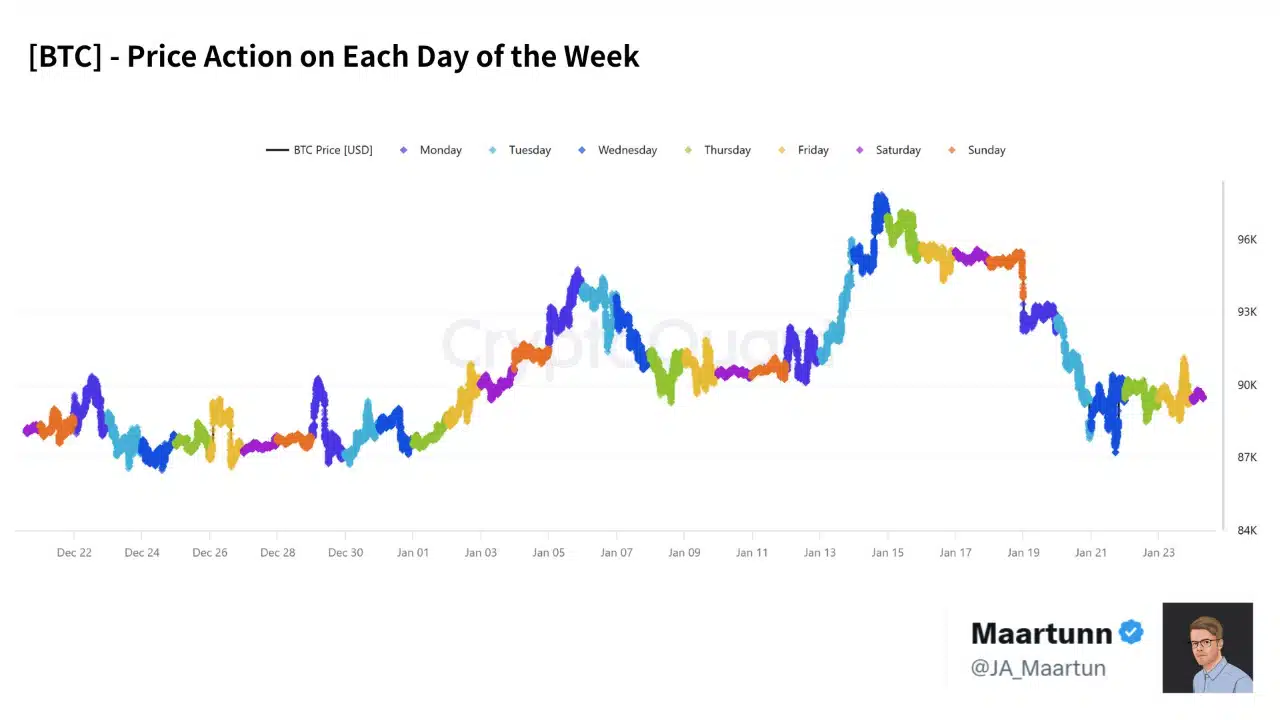
Recent data showed that Bitcoin [BTC] wasn’t reacting to levels as much as it was to timing.

Volatility has consistently picked up between the 20th and 21st of January, when short-term moves tend to form. By contrast, weekend sessions (especially Saturdays) were quiet, with price moving in tight ranges.

Source: CryptoQuant

This showed who was active in the market. Big players tend to step in mid-week, while weekends lack fresh capital.

BTC falls, but it’s not so bad

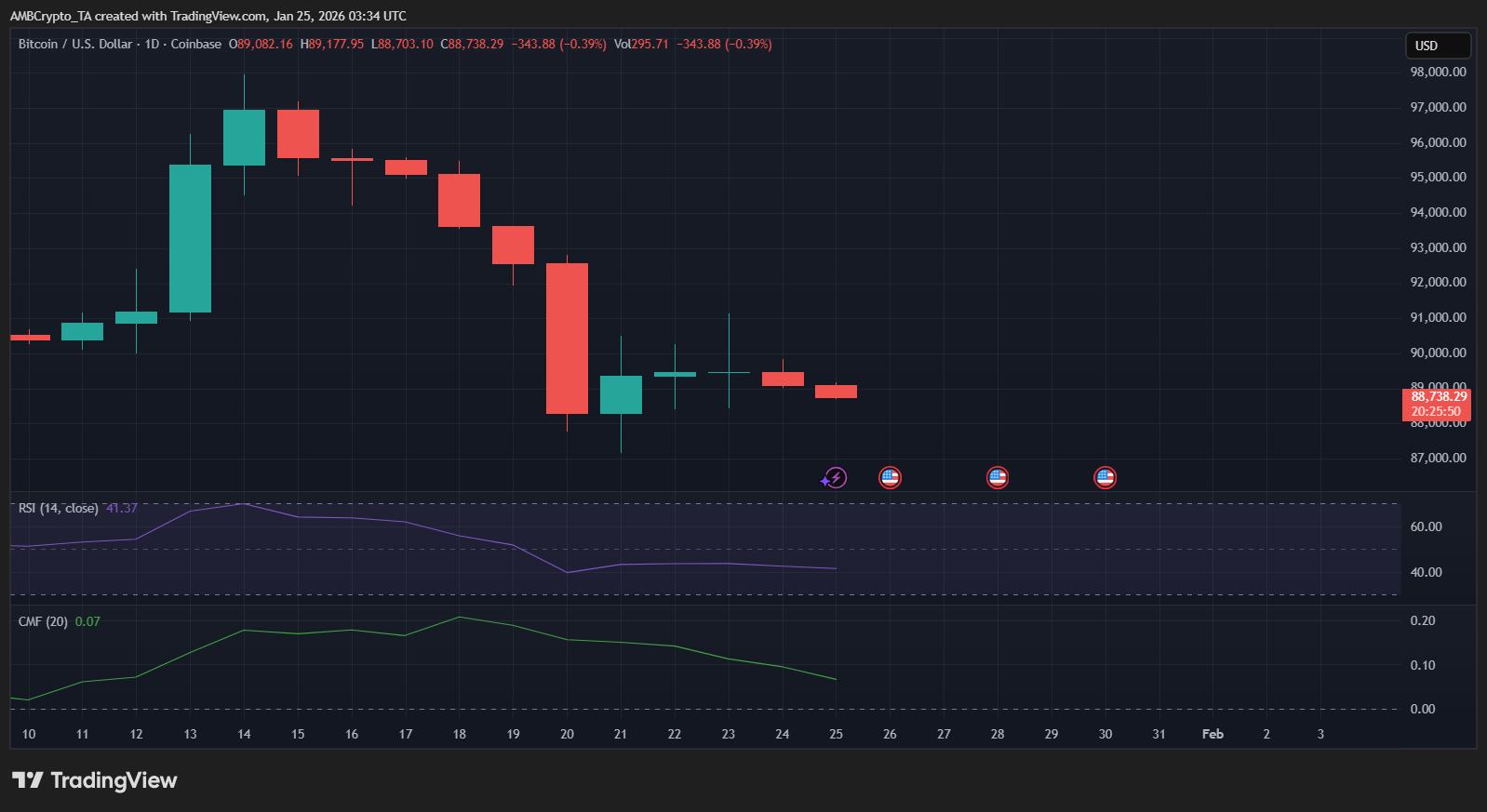
Bitcoin spent the past week going lower, pulling back from the mid-$90K range toward the $88-$89K range. The move was quick at first, but selling pressure calmed quickly.

Source: TradingView

The RSI was at neutral levels. Meanwhile, CMF stayed slightly positive with capital staying despite the dip – the underlying support still holds. Bitcoin is consolidating while traders wait for a sign.


Final Thoughts

  • Bitcoin’s weekly dip came with no panic or capital flight.
  • Rising currency stress around the yen may act as the next trigger.
Next: LayerZero: Identifying if 57mln ZRO accumulation can stop 14% slide
Share
  • Share
  • Tweet

相关问答

QWhy has Bitcoin's recent price decline not turned into a full-blown sell-off?

ABitcoin's decline of around 6.5% this week did not escalate into a major sell-off because selling pressure calmed quickly, and the move has been slow with BTC lagging behind other assets. Underlying support remains as capital stayed despite the dip, indicated by the slightly positive CMF.

QWhat event caused the Japanese yen to experience a significant one-day jump recently?

AThe Japanese yen saw its most shocking one-day jump in months after reports that the New York Fed checked rates with major banks, which is widely regarded as a warning sign about yen weakness.

QWhy is the timing of market activity more significant than price levels for Bitcoin currently?

ABitcoin has been reacting more to timing than price levels, with volatility consistently picking up between the 20th and 21st of January when short-term moves form, while weekends (especially Saturdays) remain quiet with tight price ranges.

QWhat does the New York Fed's concern about the yen weakness indicate for the first time in over a decade?

AIt indicates that U.S. policymakers are openly concerned about yen weakness for the first time in over a decade, highlighting growing stress in Japan's economy and raising the risk of intervention.

QWhat technical indicators suggest that Bitcoin's underlying support remains strong despite the price dip?

AThe RSI was at neutral levels and the CMF (Chaikin Money Flow) stayed slightly positive, showing that capital remained in the market despite the price dip, indicating underlying support is still holding.

你可能也喜欢

交易

现货
合约

热门文章

如何购买S

欢迎来到HTX.com!我们已经让购买Sonic(S)变得简单而便捷。跟随我们的逐步指南,放心开始您的加密货币之旅。第一步:创建您的HTX账户使用您的电子邮件、手机号码注册一个免费账户在HTX上。体验无忧的注册过程并解锁所有平台功能。立即注册第二步:前往买币页面,选择您的支付方式信用卡/借记卡购买:使用您的Visa或Mastercard即时购买Sonic(S)。余额购买:使用您HTX账户余额中的资金进行无缝交易。第三方购买:探索诸如Google Pay或Apple Pay等流行支付方法以增加便利性。C2C购买:在HTX平台上直接与其他用户交易。HTX场外交易台(OTC)购买:为大量交易者提供个性化服务和竞争性汇率。第三步:存储您的Sonic(S)购买完您的Sonic(S)后,将其存储在您的HTX账户钱包中。您也可以通过区块链转账将其发送到其他地方或者用于交易其他加密货币。第四步:交易Sonic(S)在HTX的现货市场轻松交易Sonic(S)。访问您的账户,选择您的交易对,执行您的交易,并实时监控。HTX为初学者和经验丰富的交易者提供了友好的用户体验。

2.0k人学过发布于 2025.01.15更新于 2025.03.21

如何购买S

相关讨论

欢迎来到HTX社区。在这里,您可以了解最新的平台发展动态并获得专业的市场意见。以下是用户对S(S)币价的意见。

活动图片