Elon Musk Building Terafab: The Largest Chip Factory for AI, Robots, and Space Data Centers

cryptonews.ru发布于2026-08-15更新于2026-08-15

文章摘要

Elon Musk's SpaceX and Tesla have launched the Terafab project to build a massive semiconductor facility in Grimes County, Texas. The plant, exceeding 9.3 million square meters, aims to integrate logic chip manufacturing, memory production, advanced packaging, and testing. The initial phase requires $16.8 billion in capital investment, with a long-term goal of producing over 1 terawatt of computing power annually. This capacity will support Tesla's Optimus robots and Cybercab autonomous vehicles, as well as SpaceX's orbital data centers. Texas Governor Greg Abbott confirmed the project's start in August 2026, highlighting 3,000 new jobs and a $30 million state grant. Elon Musk emphasized the strategic advantage of combining logic, memory, and packaging under one roof. Musk called the future complex the "largest and most valuable building on Earth," with an area roughly 50 times that of the Pentagon. Intel is the key technology partner, with plans to use its 14A process node for chip production. This partnership aims to diversify supply chains currently dominated by TSMC. The project aligns with the U.S. Pax Silica initiative to secure semiconductor supply chains. An AI analysis notes the project's scale and potential challenges, comparing it to delays seen in other U.S. megafab projects like Intel's Ohio facility. It questions whether Terafab can avoid similar pitfalls related to timelines, budgets, workforce, and supply chain stability. The facility's success could signif...

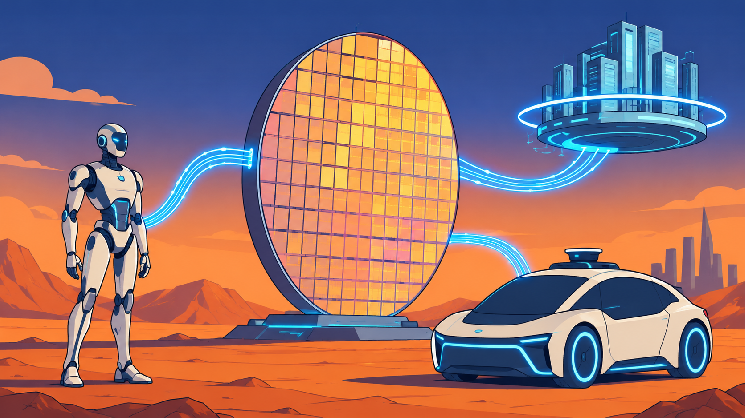
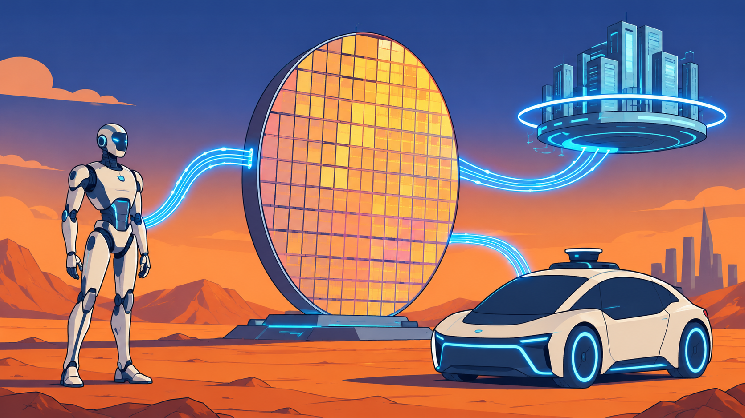
SpaceX and Tesla have launched the large-scale Terafab project to build a semiconductor plant in Grimes County, Texas, which will integrate the production of logic chips, memory, chip packaging, and testing across an area exceeding 9.3 million square meters. The first phase of the complex will require capital investments of $16.8 billion, and its stated long-term goal is to produce computing equipment with a capacity of over 1 terawatt per year to supply Optimus robots, Cybercab autonomous vehicles, and orbital data centers.

State Support and First-Phase Parameters

Texas Governor Greg Abbott confirmed the project's start on August 6, 2026, noting the creation of 3,000 new jobs and the provision of a $30 million grant from the Texas Enterprise Fund. The initiative also qualified for the Texas Jobs, Energy, Technology, and Innovation (JETI) program, securing additional benefits. SpaceX and Tesla CEO Elon Musk emphasized the strategic importance of combining logic design, memory production, and advanced packaging under one roof to accelerate hardware solution development.

On social media X, Elon Musk called the future complex "the largest and most valuable building on Earth," indicating that when fully equipped, its size will exceed that of the Pentagon by approximately 50 times. The planned distribution of production capacity is as follows: about 25% of the output is intended for Tesla robotics, with the remaining 75% for SpaceX's space-based artificial intelligence systems. Earlier tax incentive documents featured estimates for the initial phase of around $55 billion, with a possible total reaching up to $119 billion upon completion of all stages; however, an official confirmation of the total investment amount is currently unavailable.

Technological Partnership and Geopolitical Context

Intel is the key partner for design and production: Musk stated plans back in April 2026 to utilize Intel's 14A process technology for chip manufacturing at the new plant. This decision aims to diversify supply chains, as TSMC maintains a dominant position in contract manufacturing with a market share of about 70–73%, and concentration is even higher on advanced nodes below 5 nm. Vertical integration helps reduce dependence on external suppliers and control critical stages of microelectronics creation.

The Pax Silica initiative, launched by the U.S. Department of State in December 2025, forms an international coalition to ensure reliable supply chains from critical minerals to AI infrastructure. The program unites Japan, the Republic of Korea, the Netherlands, the EU, and the UK, creating an alternative security ecosystem. According to the Stanford AI Index Report 2026, in 2025, the U.S. produced 59 notable AI models compared to 35 from China, and the number of data centers in the country reached 5,427 units, highlighting the need to expand domestic manufacturing capacity.

Construction of the Terafab plant will begin in the coming months following the official announcement, and its commissioning will become a significant milestone in forming a national semiconductor base. The project's realization could shift the balance of power in chip manufacturing and strengthen the U.S. position in global technological competition by establishing a closed-loop cycle for computing equipment development and production.

AI Opinion

From the perspective of machine data analysis, the scale of Terafab should be compared to the history of major semiconductor construction projects in the U.S. in recent years. A similar Intel project in Ohio (New Albany) has been repeatedly delayed: the launch, initially scheduled for 2026, was postponed by the company to 2030 due to corporate difficulties and shifting priorities. Such experience demonstrates that announced timelines and budgets for megafabs often diverge from reality by years, and factors like workforce availability, power supply, and stability of partner chains (in this case, cooperation with Intel on the 14A process) are rarely factored into initial forecasts.

The situation also illustrates an interesting paradox: the larger the project, the higher the dependence on external factors that are difficult to control even for companies like SpaceX and Tesla. Whether Terafab will avoid the fate of similar giant construction projects is a question whose answer will likely not be clear until the end of this decade.

end-content
热门币种推荐

相关问答

QWhat is the main purpose and scale of Elon Musk's Terafab semiconductor factory project as described in the article?

AThe Terafab project, led by SpaceX and Tesla, aims to build the world's largest semiconductor manufacturing facility in Grimes County, Texas. It will integrate logic chip production, memory manufacturing, advanced packaging, and testing on an area exceeding 9.3 million square meters. Its long-term goal is to produce computing hardware with an annual capacity of over 1 terawatt to support Tesla's Optimus robots, Cybercab autonomous vehicles, and SpaceX's orbital data centers.

QWhat are the key details regarding state support and the first phase of the Terafab project?

ATexas Governor Greg Abbott confirmed the project's start in August 2026, highlighting the creation of 3,000 new jobs and a $30 million grant from the Texas Enterprise Fund. The project also qualifies for the Texas Jobs, Energy, Technology, and Innovation (JETI) program, providing additional benefits. The initial phase requires capital investments of $16.8 billion, with earlier tax incentive documents suggesting the total investment could reach up to $119 billion if all phases are completed.

QWhich company is a key technological partner for Terafab, and what is the strategic reason behind this partnership?

AIntel is the key technological partner. Elon Musk announced plans in April 2026 to use Intel's 14A process technology for chip production at Terafab. This partnership is aimed at diversifying the semiconductor supply chain, reducing dependence on the dominant contract manufacturer TSMC, and gaining greater control over critical stages of microelectronics production through vertical integration.

QHow does the article's 'AI Opinion' section assess the feasibility and challenges of the Terafab project?

AThe 'AI Opinion' section expresses skepticism by comparing Terafab to other large U.S. semiconductor projects, such as Intel's delayed Ohio fab. It notes that timelines and budgets for mega-fabs often diverge from reality due to unforeseen challenges like workforce availability, energy supply, and stability of partner chains (like the collaboration with Intel on the 14A process). It concludes that the larger the project, the higher its dependence on uncontrollable external factors, and the true success of Terafab will only be clear by the end of the decade.

QAccording to the article, what broader geopolitical and industrial context makes projects like Terafab significant for the United States?

AThe article highlights the U.S. initiative 'Pax Silica,' launched to build a reliable international supply chain for AI infrastructure, as part of a broader effort to reduce reliance on concentrated manufacturing, particularly in advanced nodes. Citing the Stanford AI Index Report 2026, the U.S. produced 59 notable AI models in 2025 compared to China's 35 and has over 5,400 data centers, underscoring the need for domestic chip manufacturing. Terafab is positioned as a strategic move to strengthen the U.S. position in global tech competition by creating a closed-loop cycle for computing hardware development and production.

你可能也喜欢

交易

现货

热门文章

如何购买ELON

欢迎来到HTX.com!我们已经让购买Dogelon Mars(ELON)变得简单而便捷。跟随我们的逐步指南,放心开始您的加密货币之旅。第一步:创建您的HTX账户使用您的电子邮件、手机号码注册一个免费账户在HTX上。体验无忧的注册过程并解锁所有平台功能。立即注册第二步:前往买币页面,选择您的支付方式信用卡/借记卡购买:使用您的Visa或Mastercard即时购买Dogelon Mars(ELON)。余额购买:使用您HTX账户余额中的资金进行无缝交易。第三方购买:探索诸如Google Pay或Apple Pay等流行支付方法以增加便利性。C2C购买:在HTX平台上直接与其他用户交易。HTX场外交易台(OTC)购买:为大量交易者提供个性化服务和竞争性汇率。第三步:存储您的Dogelon Mars(ELON)购买完您的Dogelon Mars(ELON)后,将其存储在您的HTX账户钱包中。您也可以通过区块链转账将其发送到其他地方或者用于交易其他加密货币。第四步:交易Dogelon Mars(ELON)在HTX的现货市场轻松交易Dogelon Mars(ELON)。访问您的账户,选择您的交易对,执行您的交易,并实时监控。HTX为初学者和经验丰富的交易者提供了友好的用户体验。

1.2k人学过发布于 2024.12.12更新于 2025.03.21

如何购买ELON

相关讨论

欢迎来到HTX社区。在这里,您可以了解最新的平台发展动态并获得专业的市场意见。以下是用户对ELON(ELON)币价的意见。

活动图片