Saeed Al-Marri: How Tokenization Unlocks New Opportunities for Shipping Funds

cryptonews.ru发布于2026-07-31更新于2026-07-31

文章摘要

Said Al-Marri: How Tokenization Opens New Opportunities for Shipping Funds For centuries, commercial shipping has been a capital-intensive asset class limited to institutional funds and shipping dynasties. Said bin Saleh Al-Marri, CEO of Ethra Invest and Ethra Ship, aims to break down these barriers by combining Real World Asset (RWA) tokenization with conservative private equity principles. This bridges decentralized finance (DeFi) with the physical realities of global trade. Tokenization allows fractional ownership of ships on a blockchain, giving smaller investors access to previously inaccessible markets. However, Al-Marri warns it is not a regulatory loophole or a cure for asset illiquidity. The core physical risks are isolated in Special Purpose Vehicles (SPVs) for qualified investors. While tokenization enhances transparency and ownership record-keeping, Al-Marri stresses that a liquid secondary market depends on transparent asset valuation and must not interfere with ship operations managed by professionals. Regarding legal enforcement, smart contracts cannot physically seize a ship. Legal recourse still relies on traditional maritime courts, ship mortgages, and flag state laws, with blockchain records needing to mirror legal ownership in the SPV perfectly. Beyond ownership, the industry faces administrative hurdles like paper-based bills of lading. Al-Marri argues the bottleneck is legal and operational standardization, not technology. He advocates for a hybrid m...

For centuries, commercial maritime shipping has remained one of the most capital-intensive and exclusive asset classes in the global financial system. With the cost of a single dry bulk carrier or container ship ranging from $30 million to over $100 million, ship ownership has traditionally been confined to institutional funds, state-backed syndicates, and historic shipping dynasties.

Saeed Bin Saleh Al-Marri, CEO of Ethra Invest and Ethra Ship, is working to remove these barriers by combining real-world asset (RWA) tokenization with the conservative principles of private capital management. By bridging decentralized finance (DeFi) with the physical realities of global trade, Al-Marri is paving the way for everything from on-chain asset ownership and trade settlement to decarbonizing the multi-trillion dollar global fleet.

By fractionalizing physical assets on the blockchain, Al-Marri's approach allows retail investors access to previously inaccessible markets. However, Al-Marri cautions that tokenization is neither a loophole around regulatory constraints nor a magic solution for asset illiquidity.

"Traditionally, it has been difficult for retail investors to access shipping," Al-Marri explains. "Tokenization allows the ownership interest in a properly structured shipping investment vehicle to be broken down into smaller digital units. This lowers the barrier to entry, improves efficiency in recording ownership rights, and provides better transparency regarding vessel usage, freight revenue, expenses, and profit distribution."

Importantly, Ethra separates its utility and governance tokens from the regulated investment layer. Physical risks associated with the ships are ring-fenced within special purpose vehicles (SPVs) designed for qualified investors. When it comes to secondary market liquidity, Al-Marri urges realism over hype:

"Tokenization cannot automatically turn an illiquid ship into a perfectly liquid one. Any platform claiming otherwise is setting false expectations. A robust secondary market relies on transparent asset valuation... And most crucially, secondary market trading must never interfere with operational activities. A professional manager remains fully responsible for chartering, maintenance, insurance, and financing—regardless of how often the tokens change hands."

In practice, tokenizing a vessel operating in international waters presents significant legal complexities: in the event of default, how can a blockchain smart contract enforce claims on a physical ship located thousands of miles offshore?

Yet, according to Al-Marri, code alone cannot override centuries of established maritime law.

"A smart contract cannot be physically enforced against a ship. Legal enforcement still relies on recognized property rights, security documentation, and courts. The vessel is owned by an SPV, and the legal, corporate, and blockchain records must fully mirror identical investor rights."

While smart contracts can automate administrative holds or on-chain transaction pauses, physical enforcement actions—such as vessel arrest or sale—still require traditional maritime courts, ship mortgages, and flag-state legislation.

Overcoming Trade Documentation Hurdles

Beyond equity ownership, global shipping remains hampered by administrative barriers. Despite billions lost annually to delays from bulky paper documentation, demurrage fees, and trade finance bottlenecks, the industry has struggled to achieve widespread adoption of digital bills of lading. For Al-Marri, the bottleneck is more legal than technical.

"The greater challenge is getting governments, banks, carriers, insurers, customs authorities, and cargo owners to adopt the same legal and operational standards. A bill of lading is more than a receipt: it evidences title to the cargo and serves as collateral for banks."

Replacing paper silos with digital ones—where platforms operate in isolation—doesn't solve the core issue. True digital transformation requires global legal recognition and open, cross-border standards.

While round-the-clock stablecoin settlements offer instant liquidity, Al-Marri dismisses the idea that smart contracts will completely displace traditional Letters of Credit (LC). He notes that shipping involves complex real-world contingencies that simple payment mechanisms cannot address.

"A Letter of Credit represents an obligation by a regulated bank to make payment upon fulfillment of documentary conditions. Stablecoins accelerate payment execution, but shipping depends on physical verification: is the cargo loaded correctly, does its quality meet standards, are the documents authentic, and are sanctions applicable?"

Instead of a full crypto displacement, Al-Marri's Ethra advocates for a hybrid model combining electronic trade documents and programmable settlements with legal backing from regulated financial institutions.

The paramount challenge for the maritime sector is achieving net-zero emissions by 2050. Transitioning to clean fuels like green ammonia, methanol, and hydrogen requires enormous upfront capital for unproven propulsion technologies and developing port infrastructure.

For private equity fund managers, financing this transition requires balancing environmental imperatives with capital preservation.

"Decarbonization is undoubtedly the direction of travel, but we must be realistic," notes Al-Marri. "It would be irresponsible to expose investors to all these risks at once. We take a holistic view: vessel technology, fuel availability along routes, safety certifications, crew requirements, operating costs, and resale value."

To protect capital while funding green fleets, Ethra Invest relies on conservative underwriting, long-term charters, dual-fuel capability, and dedicated SPVs.

"The investment must make sense even under conservative projections," Al-Marri emphasizes. "We do not back projects that will only be profitable if fuel prices, carbon emission norms, and subsidies all align in their favor."

By blending pragmatic risk management with digital infrastructure, leaders like Saeed Bin Saleh Al-Marri demonstrate that the evolution of maritime finance goes beyond simply putting ships on a blockchain—it's about mobilizing capital to build a modernized and sustainable global fleet.

end-content

热门币种推荐

相关问答

QAccording to Said Al-Marri, what is the primary benefit of tokenization for maritime shipping funds?

ATokenization allows small investors to access previously inaccessible markets by breaking down ownership in maritime shipping assets into smaller digital units, lowering entry barriers, improving record-keeping efficiency, and enhancing transparency regarding vessel use, freight revenues, expenses, and profit distribution.

QWhat is Al-Marri's key warning about tokenization and asset liquidity?

AAl-Marri warns that tokenization is not a magic solution to turn an illiquid physical asset like a ship into a fully liquid one. A robust secondary market depends on transparent asset valuation, and trading should not interfere with the vessel's core operational management.

QWhat is the main challenge for global digital transformation in shipping, particularly regarding bills of lading, according to the article?

AThe main challenge is legal and operational standardization, not technical. It requires governments, banks, carriers, insurers, customs, and cargo owners to adopt common legal and operational standards, as a bill of lading is a title document and bank collateral, not just a receipt.

QHow does Ethra approach the funding of decarbonization (e.g., green fuel transition) in the shipping industry?

AEthra takes a conservative underwriting approach. It balances environmental goals with capital preservation by thoroughly assessing vessel technology, fuel availability, safety, operational costs, and resale value. They rely on long-term charters, dual-fuel capabilities, and targeted SPVs, rejecting projects that are only profitable under overly optimistic scenarios.

QAccording to Al-Marri, what role do smart contracts and traditional legal systems play in enforcing claims on a tokenized vessel?

AWhile smart contracts can automate administrative functions on-chain, they cannot physically enforce claims on a ship. Legal enforcement for actions like ship arrest or sale still depends on traditional maritime courts, ship mortgages, and flag state legislation. Legal, corporate, and blockchain records must fully align to reflect identical investor rights.

你可能也喜欢

少投入不是苹果的免死金牌

《少投入不是苹果的免死金牌》一文指出,虽然苹果在AI浪潮中因资本开支克制而一度受到市场青睐,但其面临的挑战正在显现。 文章首先描述了市场的反差:当Meta、谷歌等巨头因巨额AI投入引发担忧时,苹果在AI领域的迟缓进展反而被视为“亮点”,其股价一度上涨。然而,这种“全靠同行衬托”的领先难以持续。 随后,文章分析了苹果最新财报。尽管2026财年第三财季营收与净利润均创同期历史新高,主要得益于iPhone和Mac的强劲销售,但财报发布后股价却大幅下跌。原因在于苹果对下一季度的增长指引低于市场预期。 核心问题在于供应链。AI热潮导致内存和芯片需求激增、价格上涨及产能紧张,严重波及苹果。其Mac产品线已因高端芯片供应不足而受限,并被迫提价。外界预测iPhone新品也将大幅涨价,这可能影响未来销量。为应对供应链风险,苹果库存大幅增加,并寻求与中企合作采购内存芯片,但此举面临政治阻力。 与其他科技巨头动辄数千亿美元的AI资本开支相比,苹果的资本开支不仅未增,反而下降,这使其保持了健康的现金流。但同时,苹果研发费用大幅增长,却未能在AI领域取得显著成果,形成反差。 文章总结,苹果虽未在AI烧钱竞赛中陷得太深,却无法避免由这场竞赛引发的供应链与成本冲击。即将卸任的库克对公司未来表示信心,但苹果能否在AI时代保持领先,仍存疑问。

marsbit41分钟前

少投入不是苹果的免死金牌

marsbit41分钟前

一周精选丨股市史诗级震荡,长鑫科技上市重塑存储格局,Saylor目标9月8日前后推动STRC回锚

PANews精选一周要闻。AI领域热度持续,智能体钱包成为加密支付新战场,Coinbase等巨头布局小额支付以抢占AI经济入口。韩国股市经历剧烈震荡,多次熔断并引发清算风暴,科技股暴跌堪比币圈行情。算力产业进入系统化竞争阶段,国产GPU与AI智能体(Agent)结合成为焦点。 宏观方面,长鑫科技上市后市值巨大,在经历长期亏损后单季度盈利显著。花旗银行预警未来大宗商品市场可能出现的极端风险。美联储维持利率不变,但内部出现罕见分歧,释放鹰派信号。 机构观点显示,有分析认为当前AI板块调整是去杠杆过程,长期牛市逻辑不变。中国散户在传统投资渠道收窄后,正转向加密资产等新途径。市场讨论未来货币形态,比特币价值受关注。比特币矿企被指出需向能源综合服务商转型。 市场热点包括NFT交易通过“抽卡”等新玩法激活流动性,但部分加密协议面临收入增长与代币价格脱钩的问题。RWA(真实世界资产)链上规模增长但利用率不足。以太坊公布2030年长期发展蓝图,Lido也进行了大规模升级。 行业动态方面,新银行领域面临洗牌,稳定币竞争加剧。重点资讯包括:美股收涨,Coinbase股价波动;MicroStrategy增持比特币并计划推动STRC回锚;多家AI与加密公司获得融资;韩国股市与长鑫科技股价出现大幅波动;巨鲸交易员在AI相关交易中获利了结。

marsbit1小时前

一周精选丨股市史诗级震荡,长鑫科技上市重塑存储格局,Saylor目标9月8日前后推动STRC回锚

marsbit1小时前

当市场开始质疑AI资本开支:五家科技巨头Q2财报全解析

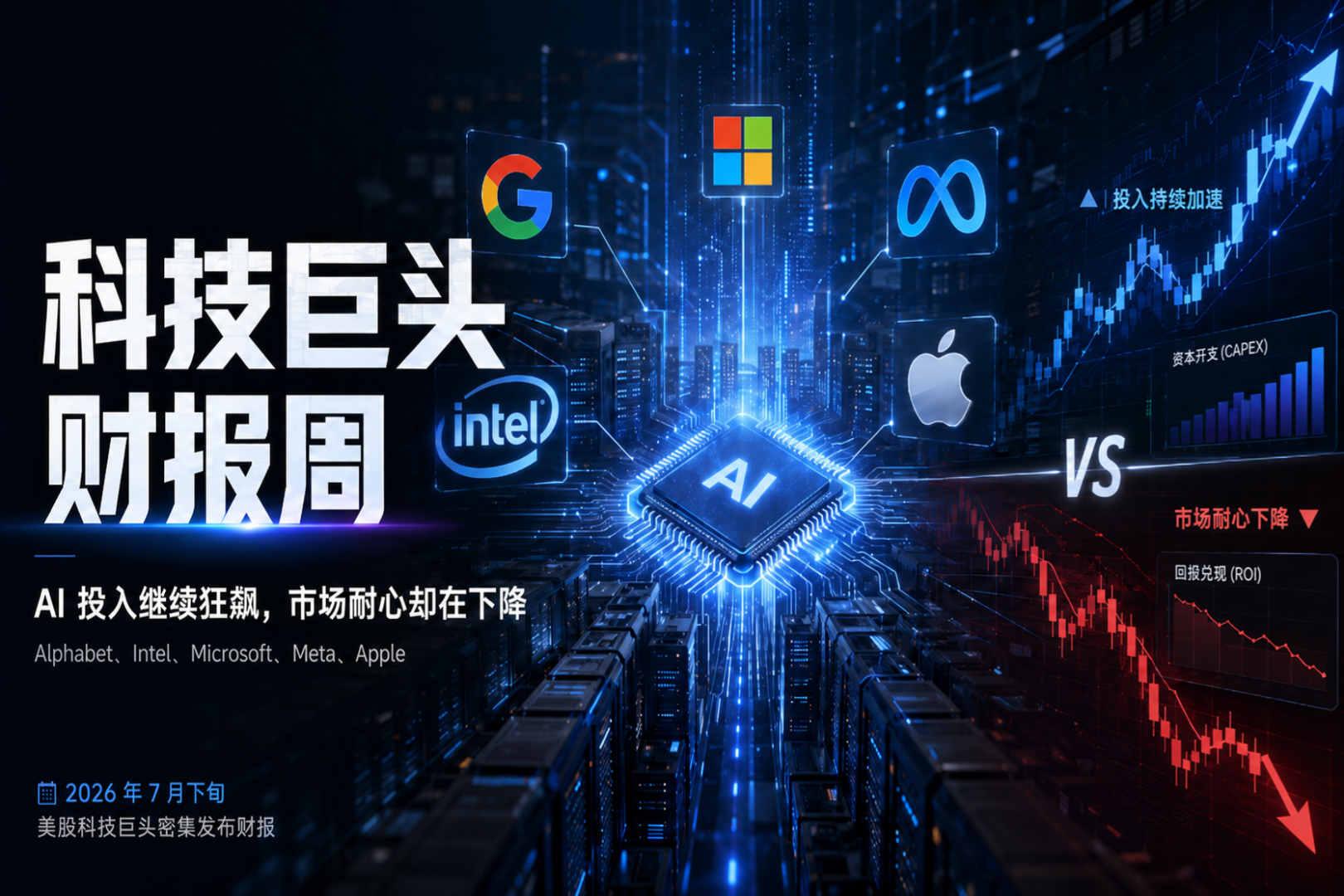
2026年7月下旬,谷歌、英特尔、微软、Meta、苹果五家科技巨头相继发布第二季度财报。尽管各家营收和利润普遍超预期,且AI相关业务(如谷歌云、英特尔数据中心、Azure)增长强劲,但市场反应出现显著分化,焦点已从需求转向资本开支与现金流回报。 **谷歌**营收创十二季度双位数增长纪录,云业务同比大增82%,但资本支出同比翻倍至449亿美元,并上调全年指引,导致上市以来首次录得负自由现金流,股价下跌。 **英特尔**营收创十五年来最强增速,数据中心与AI业务表现突出,但因大幅上调资本支出指引引发对自由现金流的担忧,股价经历“过山车”式反转。 **微软**业绩超预期,Azure年收入首破千亿美元,同时通过会计调整下调资本支出指引并承诺正自由现金流,股价创十八年来最佳单日表现。 **Meta**广告业务稳健,营收增长28%,但因成本费用大增55%及资本开支指引上调,自由现金流同比萎缩逾90%,遭遇猛烈抛售。 **苹果**营收利润创同期新高,但下一季度营收指引上限低于预期,叠加供应链瓶颈担忧,股价大跌,市值单日蒸发超3000亿美元。 总结而言,本财报季显示AI需求依然强劲,但市场对巨额资本开支何时转化为实际回报的耐心正在消耗。各公司对资本开支节奏与现金流前景的表述,已成为影响股价的关键因素。

Odaily星球日报1小时前

当市场开始质疑AI资本开支:五家科技巨头Q2财报全解析

Odaily星球日报1小时前

交易

现货

热门文章

如何购买ONE

欢迎来到HTX.com!我们已经让购买Harmony(ONE)变得简单而便捷。跟随我们的逐步指南,放心开始您的加密货币之旅。第一步:创建您的HTX账户使用您的电子邮件、手机号码注册一个免费账户在HTX上。体验无忧的注册过程并解锁所有平台功能。立即注册第二步:前往买币页面,选择您的支付方式信用卡/借记卡购买:使用您的Visa或Mastercard即时购买Harmony(ONE)。余额购买:使用您HTX账户余额中的资金进行无缝交易。第三方购买:探索诸如Google Pay或Apple Pay等流行支付方法以增加便利性。C2C购买:在HTX平台上直接与其他用户交易。HTX场外交易台(OTC)购买:为大量交易者提供个性化服务和竞争性汇率。第三步:存储您的Harmony(ONE)购买完您的Harmony(ONE)后,将其存储在您的HTX账户钱包中。您也可以通过区块链转账将其发送到其他地方或者用于交易其他加密货币。第四步:交易Harmony(ONE)在HTX的现货市场轻松交易Harmony(ONE)。访问您的账户,选择您的交易对,执行您的交易,并实时监控。HTX为初学者和经验丰富的交易者提供了友好的用户体验。

1.3k人学过发布于 2024.03.29更新于 2026.06.02

如何购买ONE

相关讨论

欢迎来到HTX社区。在这里,您可以了解最新的平台发展动态并获得专业的市场意见。以下是用户对ONE(ONE)币价的意见。

活动图片