Author: Nancy, PANews
While the crypto market remains deeply entrenched in a bear market, with many projects facing significant revenue declines or even exiting, Pump.fun remains one of the few top-tier protocols maintaining relatively strong profitability.
Recently, the PUMP token defied expectations by rising after a major unlock. Simultaneously, despite the entry of new competitor Robinhood Chain, the platform has not yet seen significant user or market share loss, once again drawing market attention.
Why Did PUMP Defy the Trend and Rise After a Major Unlock?
Contrary to market expectations, which typically anticipate selling pressure from large-scale token unlocks, PUMP's price chart tells a different story.
Since mid-July when PUMP underwent a significant unlock, its price has risen instead of fallen. CoinGecko data shows that over the past 30 days, PUMP's price has increased by approximately 47.9% at its peak.
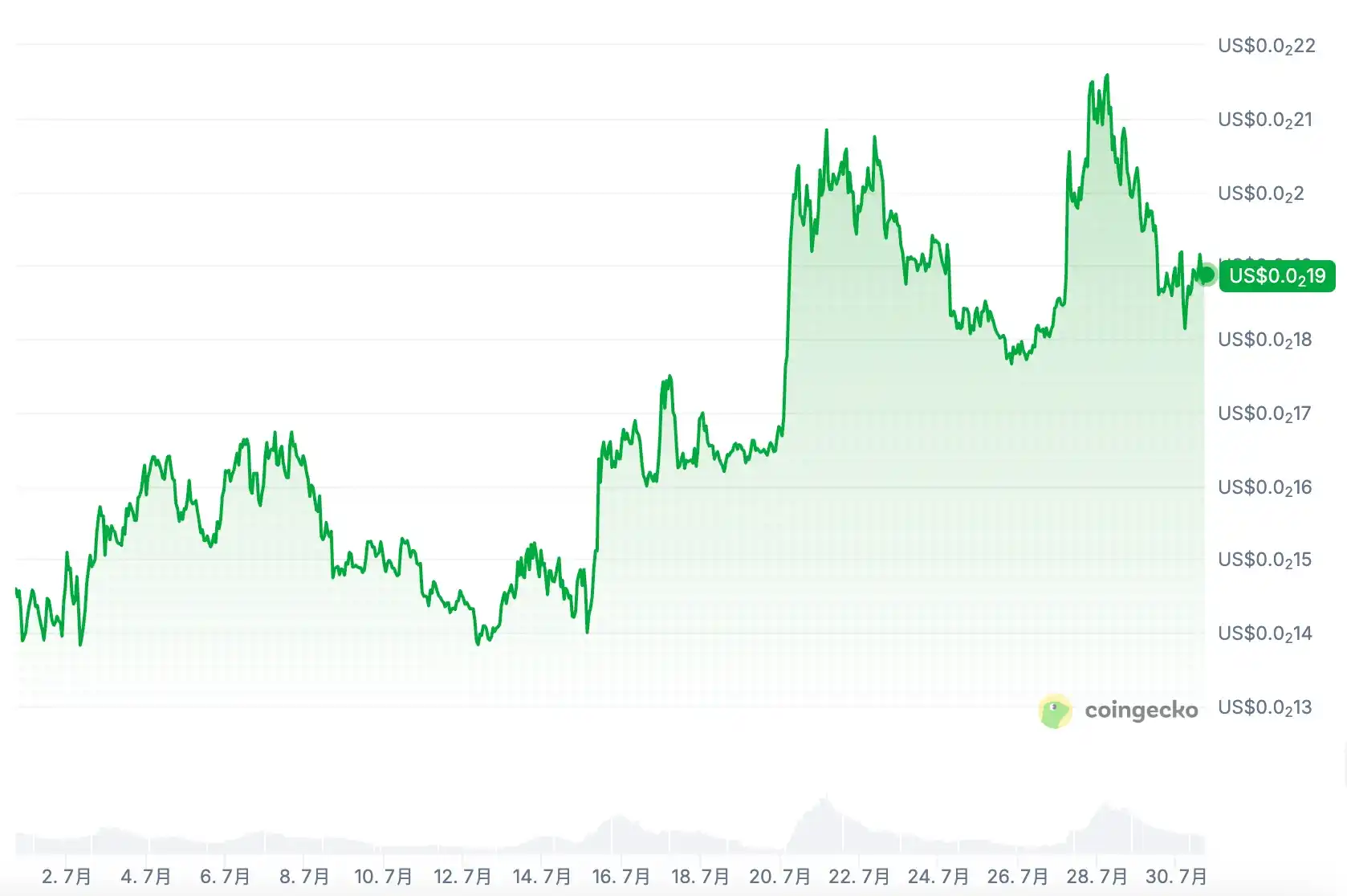
The rise in PUMP's price is attributed, in part, to the alleviation of selling pressure from the large unlock. On July 14th, PUMP initiated its first major unlock for the team and investors post-TGE, releasing over $86 million worth of tokens. The market had widely feared this could trigger investor sell-offs.
However, according to the latest analysis from Lbexplorer, out of Pump.fun's 79 investor wallets, only 3 have sold their allocated shares so far. The largest sale came from a wallet holding 625 million PUMP, cashing out approximately $1.2825 million; the other two wallets sold a combined amount slightly over $100,000. Over the past 13 days, investors have cumulatively sold about 770 million PUMP, worth roughly $1.574 million. Currently, about 92% of the investor-allocated tokens remain unsold.

Simultaneously, the buyback and burn mechanism is another crucial factor supporting PUMP's price. Pump.fun's official website shows that, to date, the platform has cumulatively burned over 15.45 million PUMP, valued at more than $416 million, accounting for approximately 15.4% of PUMP's total supply. In the past 7 days alone, Pump.fun has bought back and burned about 2.236 billion PUMP, worth around $4.359 million. However, while the buyback mechanism can provide short-term price support, its long-term boosting effect still depends on the platform's revenue growth capabilities.
In fact, Pump.fun's recent buyback intensity has noticeably decreased. Data shows its daily buyback funds have dropped from a previous high of over $3.06 million to about $690,000 currently, a decrease of approximately 77.5%.
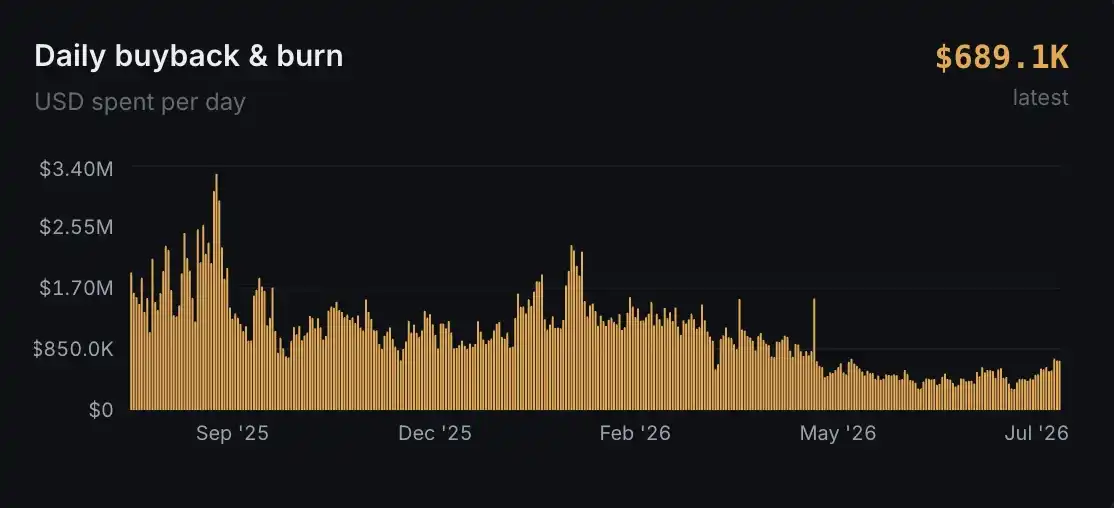
The contraction in buyback funds is partly due to adjustments made to Pump.fun's token economic model several months ago, when the platform announced it would reduce the revenue proportion used for PUMP buyback and burn to 50%. On the other hand, it also reflects how the market downturn is impacting the platform's revenue performance. Its daily revenue has fallen from a historical high of nearly $5.2 million to about $1.608 million currently, a drop of roughly 69.1%.
Still a Bear Market Profit Machine, But Revenue Growth Cannot Escape Cyclical Fluctuations
Compared to most crypto protocols, Pump.fun still maintains relatively strong profitability and remains one of the few leading protocols with stable cash flow in the bear market environment.
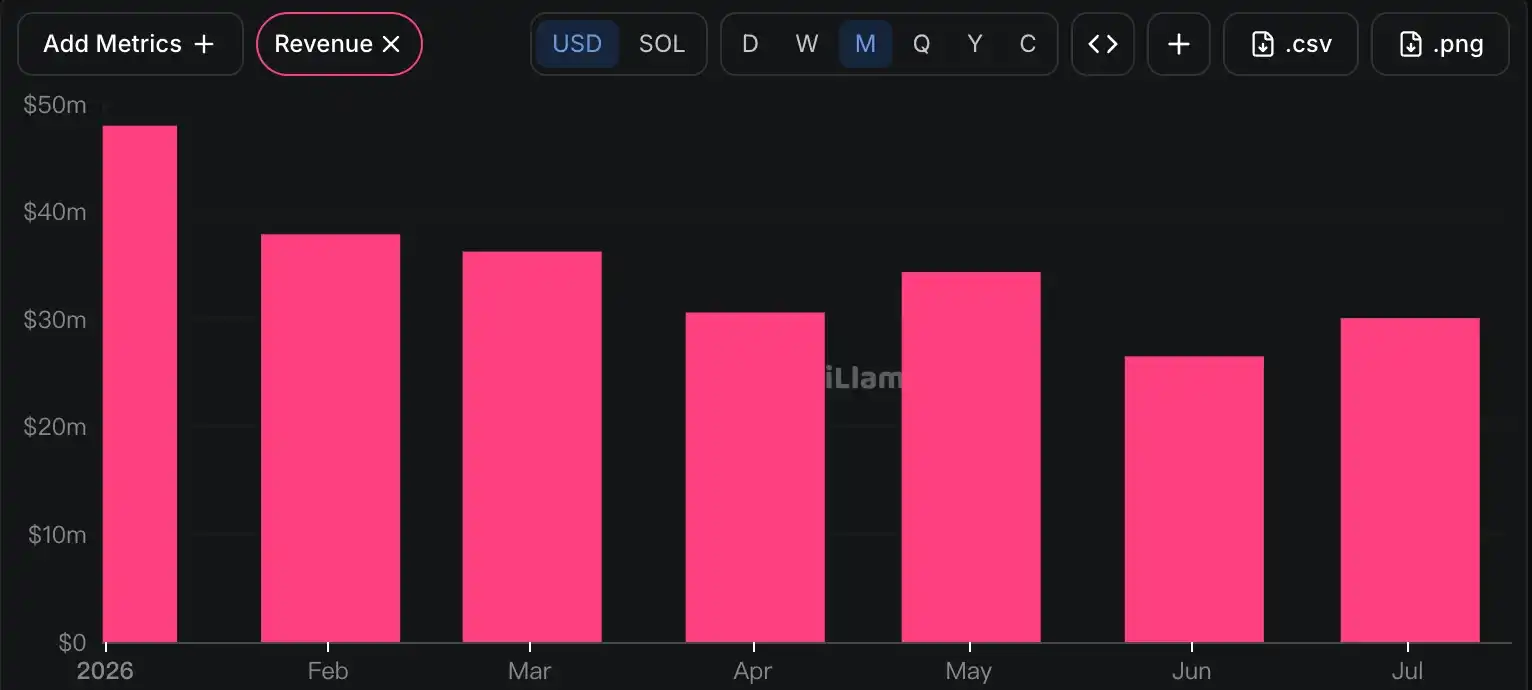
DeFiLlama data shows that as of July 30th, Pump.fun's annualized revenue reached approximately $450 million. Its daily revenue is second only to Tether, Circle, and Hyperliquid, accounting for nearly 4.2% of the overall crypto market revenue. Since the beginning of this year, Pump.fun's monthly revenue has mostly stayed above $30 million.
Recently, Pump.fun's revenue even briefly surpassed that of the perp DEX leader Hyperliquid. In response, Pump.fun co-founder Sapijiju stated that Pump.fun's long-term Total Addressable Market (TAM) would exceed the global perpetual contracts market where Hyperliquid operates, calling it "much larger... just not yet proven."
In addition to consistently generating revenue, the Pump.fun team has also reaped massive fee income. Since the beginning of 2024, Pump.fun has cumulatively sold approximately 4.812 million SOL worth of fee revenue, valued at over $810 million, primarily from its 1% trading fee.
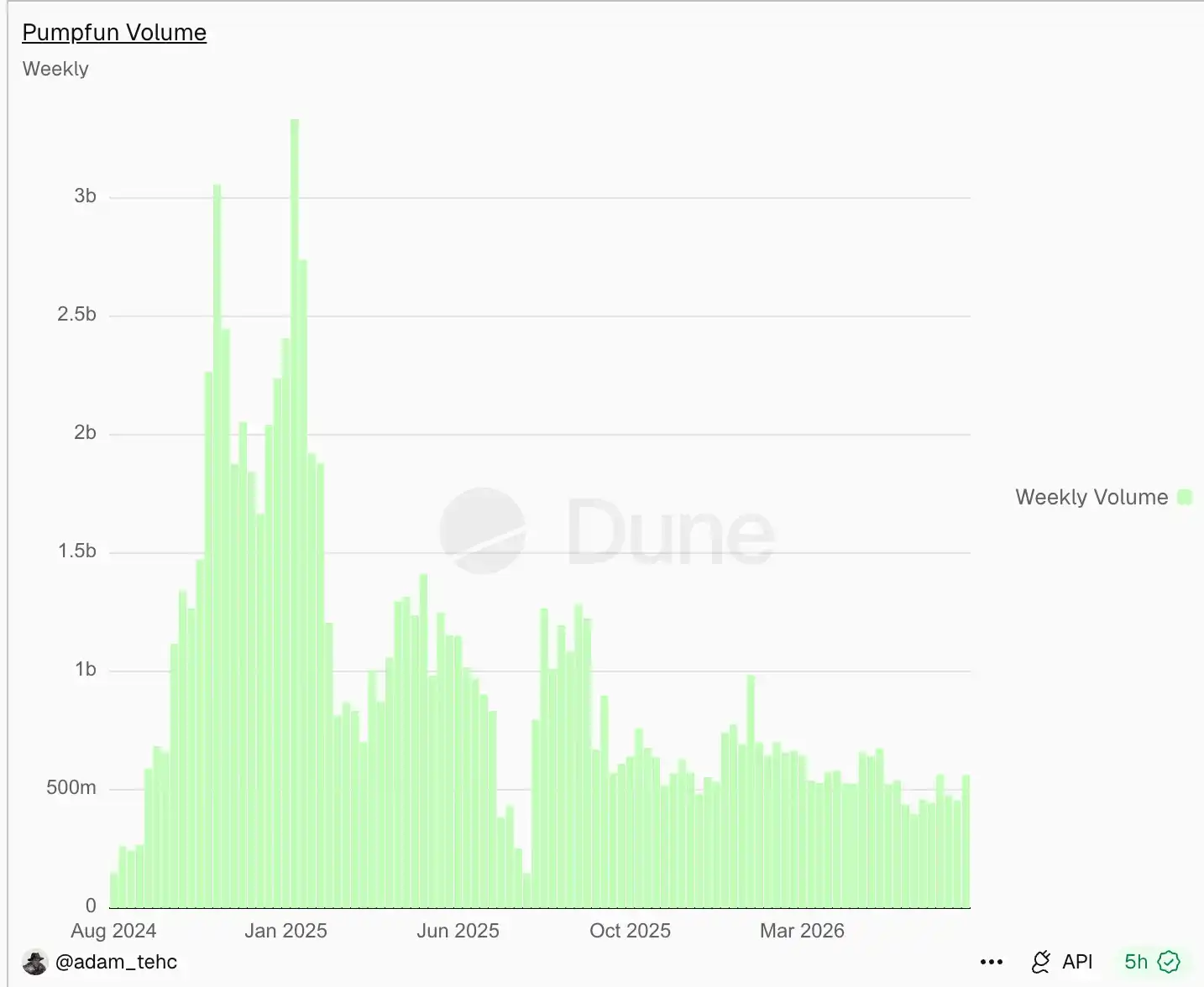
However, Pump.fun's current performance still shows a noticeable gap compared to its peak period. Dune data indicates that as of July 30th, Pump.fun's weekly trading volume is only about 17% of its historical peak, and its daily active address count has also declined to 38.1% of the peak period. The cooling of trading fervor has directly impacted the platform's revenue. Dune data shows Pump.fun's current daily revenue is only about 30% of its historical peak. This suggests that Pump.fun's business model still relies heavily on market sentiment and Meme coin hype, making its revenue growth highly cyclical.
It is worth noting that Pump.fun is currently facing a class-action lawsuit, accused of involving insider preferential trading, manipulating the Meme coin market, selling unregistered securities, and violating RICO-related laws. Facing potential compliance risks, at the end of June this year, Pump.fun's parent company, Baton Corporation, announced a high-salary recruitment for a Chief Legal Officer, with a base salary range of $1 million to $5 million, responsible for regulatory affairs, product counseling, corporate governance, cross-border compliance, and other matters.
Robinhood's Aggressive Entry, Pump.fun Faces Direct Competition
Besides bear market pressures, the recent aggressive offensive from Robinhood Chain has brought new competitive pressure to Pump.fun.
According to Dune data, the Launchpad on Robinhood Chain saw a trading volume of $1.23 billion last week, higher than Pump.fun's $447 million and close to Pumpswap's $1.22 billion during the same period. In terms of active addresses, the Robinhood Chain Launchpad had about 191,000 active addresses, while Pump.fun, which dominates the Solana ecosystem, had approximately 141,000.
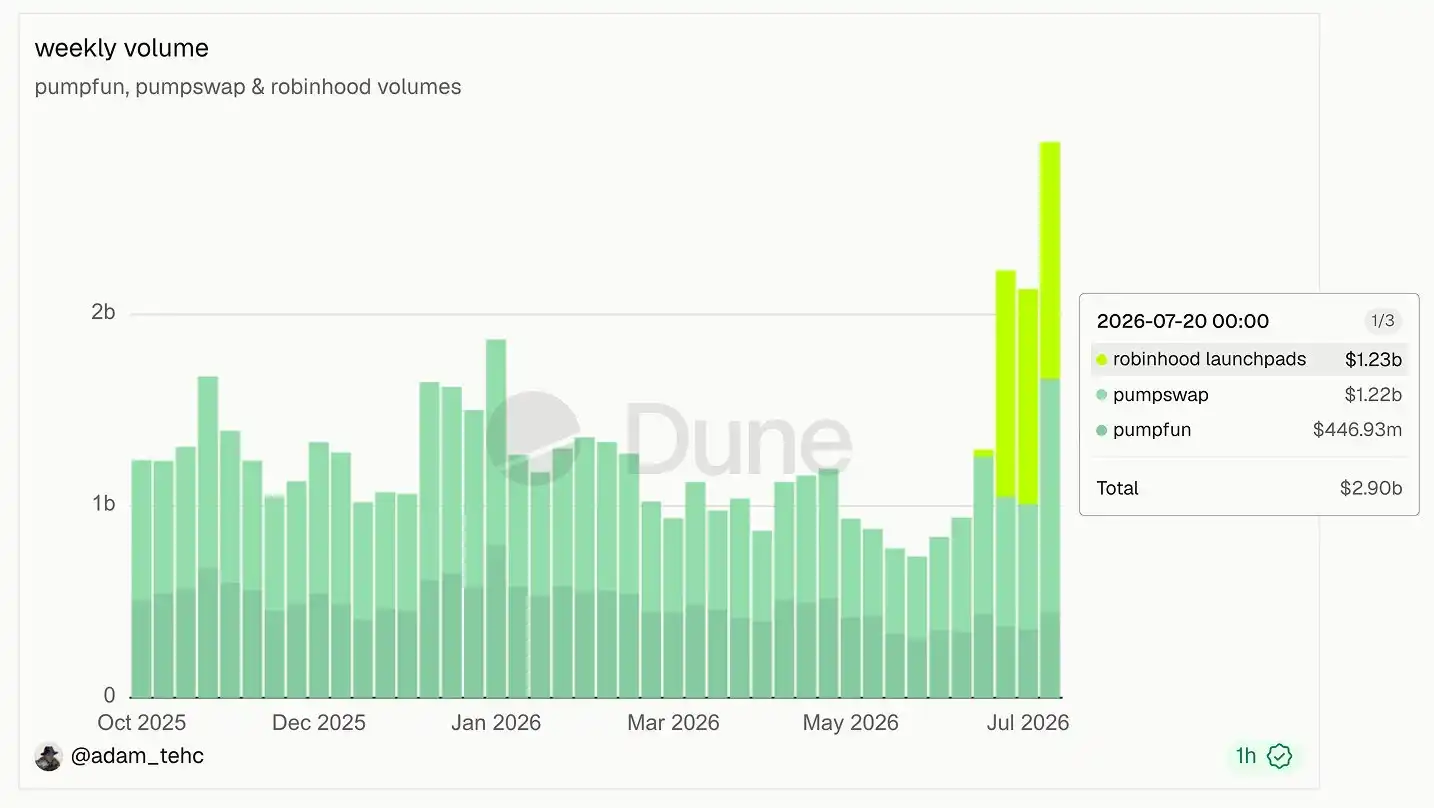
However, the Robinhood Launchpad has not yet significantly eroded Pump.fun's market share. Both in terms of trading volume and active address count, Pump.fun has maintained a growth trend recently. Yet, setting aside market environment factors, with competitors continuously entering the field, how long Pump.fun can maintain its leading position in the Meme launch market remains uncertain.
To enhance competitiveness, Pump.fun has also begun adjusting its product strategy. Recently, Pump.fun launched a new standard launch mechanism called BOOST, attempting to address the issue of large amounts of dead liquidity generated during the migration of tokens from the bonding curve to the liquidity pool. According to co-founder Alon Cohen, this mechanism can add about 20% more liquidity for each newly migrated token without altering the trading experience on the bonding curve or liquidity pool, and is expected to inject billions of dollars in liquidity into the ecosystem over time.
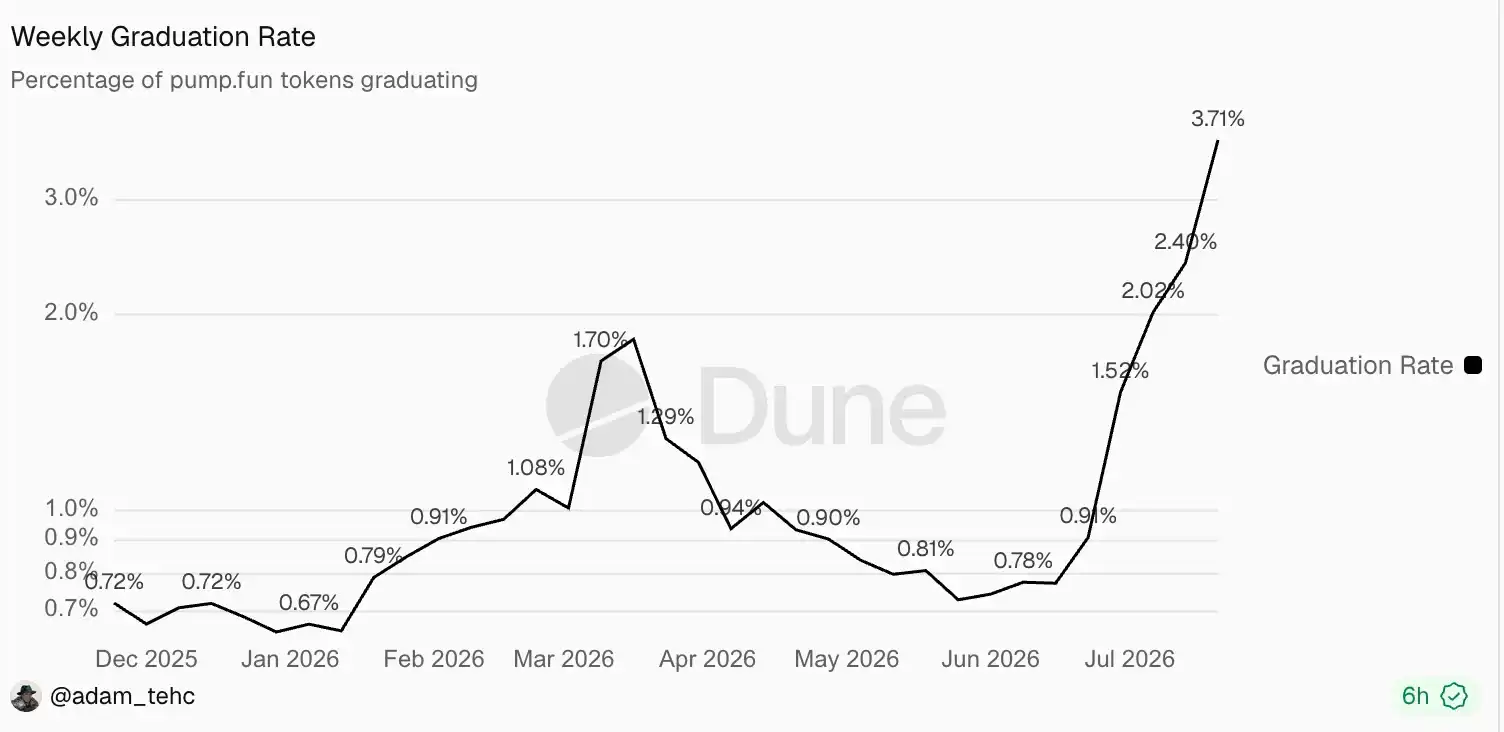
Following the launch of the new mechanism, Pump.fun's market activity has seen significant improvement. Dune data shows the platform's weekly token graduation rate has climbed to 3.7%, compared to just 0.67% at the beginning of the year; the average daily token creation has also exceeded 36,000, nearing a four-month high.
However, some community users have pointed out that this mechanism essentially provides free buying pressure and a deflationary effect for tokens about to graduate, significantly reducing bonding costs and incentivizing traders to push the price aggressively. Developers might exploit this mechanism to package bonded tokens nearing graduation, attracting retail investors by creating liquidity and trading hype, and easily profiting from it, thereby spawning more low-quality tokens reliant on bonding and short-term speculation.
Overall, Pump.fun's revenue flywheel is still built on Meme market hype and speculative fund flows. While this model can generate high cash flow during market frenzies, it also means the platform's revenue and PUMP price performance remain susceptible to market cycle fluctuations.