Iran Launches 'Sudden Strike' on US Base in Jordan; Oil Prices Jump Nearly 4%, Threatening Bitcoin Rally

cryptonews.ru发布于2026-07-29更新于2026-07-29

文章摘要

Iran launched a "sudden strike" with ballistic missiles targeting a US base near Jordan's Muwaffaq Salti Air Base on July 28. US Central Command reported all missiles were intercepted by Patriot air defense systems, with no casualties. Iran claimed the attack was retaliation for perceived US actions against its interests. This strike broke a brief ceasefire that began after President Trump paused offensive operations against Iran days earlier. The attack triggered immediate financial market reactions. WTI crude oil prices surged nearly 4% to $83.08 per barrel, while Brent crude rose to $87.34. US stock index futures also saw gains as traders priced in renewed Middle East risks. This price jump reversed a significant portion of the oil price decline that followed the initial ceasefire announcement. Bitcoin's price movement mirrored this volatile cycle. It had recovered to around $65,200 as oil prices fell during the ceasefire, but dropped back to the $63,600-$63,800 range following news of the missile strike. While Bitcoin has shown some resilience compared to purely risk-on assets during the conflict, the July 28 attack directly challenged the "truce" narrative that had supported its recent stability. The pattern of price declines following escalations and recoveries during pauses has become familiar since the conflict began in February.

In a statement, CENTCOM reported that at 5:45 PM Eastern Time on July 28, Islamic Revolutionary Guard Corps forces launched several ballistic missiles from Iran as part of an "attempted surprise attack" against U.S. troops in the Middle East; the missiles were aimed at U.S. positions near Jordan's Muwaffaq Salti Air Base. The Command reported that Patriot air defense batteries intercepted all inbound missiles, and there were no casualties.
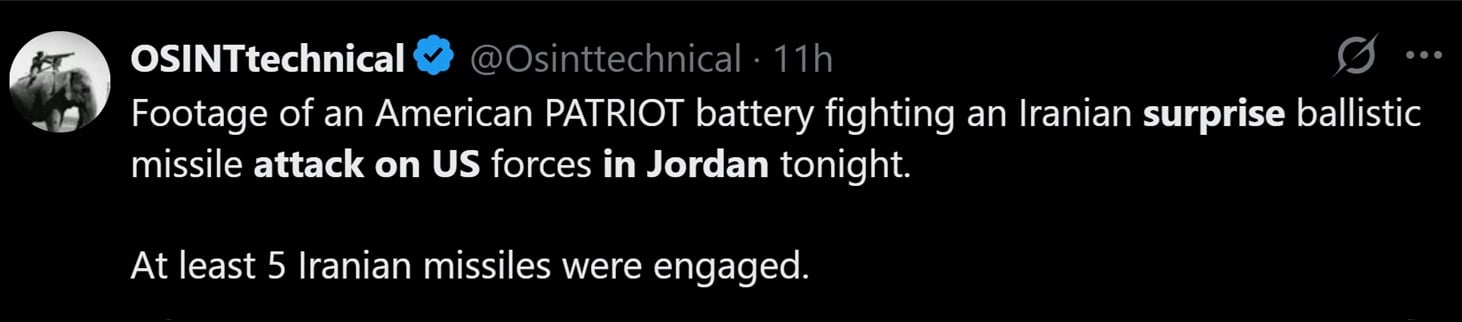
Iranian military forces claimed responsibility for the attack, calling it a response to what they identified as "illegal and malicious actions" by Washington against Iranian interests. This attack marks the first strike by Iranian ballistic missiles on a U.S. base in the region since President Trump paused offensive strikes against Iran several days ago to give diplomacy with Tehran a chance, thereby breaking a brief lull in the war that began on February 28.

That previous pause had already been tested, given that an Iranian strike on Jordan's Al-Azraq air base on July 18 resulted in the deaths of two U.S. service members, with a third listed as missing—this was one of several flare-ups that have accompanied the five-month-long conflict. Jordanian military officials reported that this time, they also shot down some of the projectiles flying toward them, with no damage or casualties recorded on their territory.

Oil Futures and Stocks Surge Sharply

Financial markets reacted within hours: the price of WTI crude oil rose by 3.95% to $83.08 per barrel, while the price of Brent crude, the global benchmark, increased by 3.86% to $87.34. Dow Jones futures rose by 63 points, or 0.12%, to 53,007, while S&P 500 futures gained 26 points, and Nasdaq 100 futures rose by nearly 133 points, as traders priced in a resumption of Middle East risks.
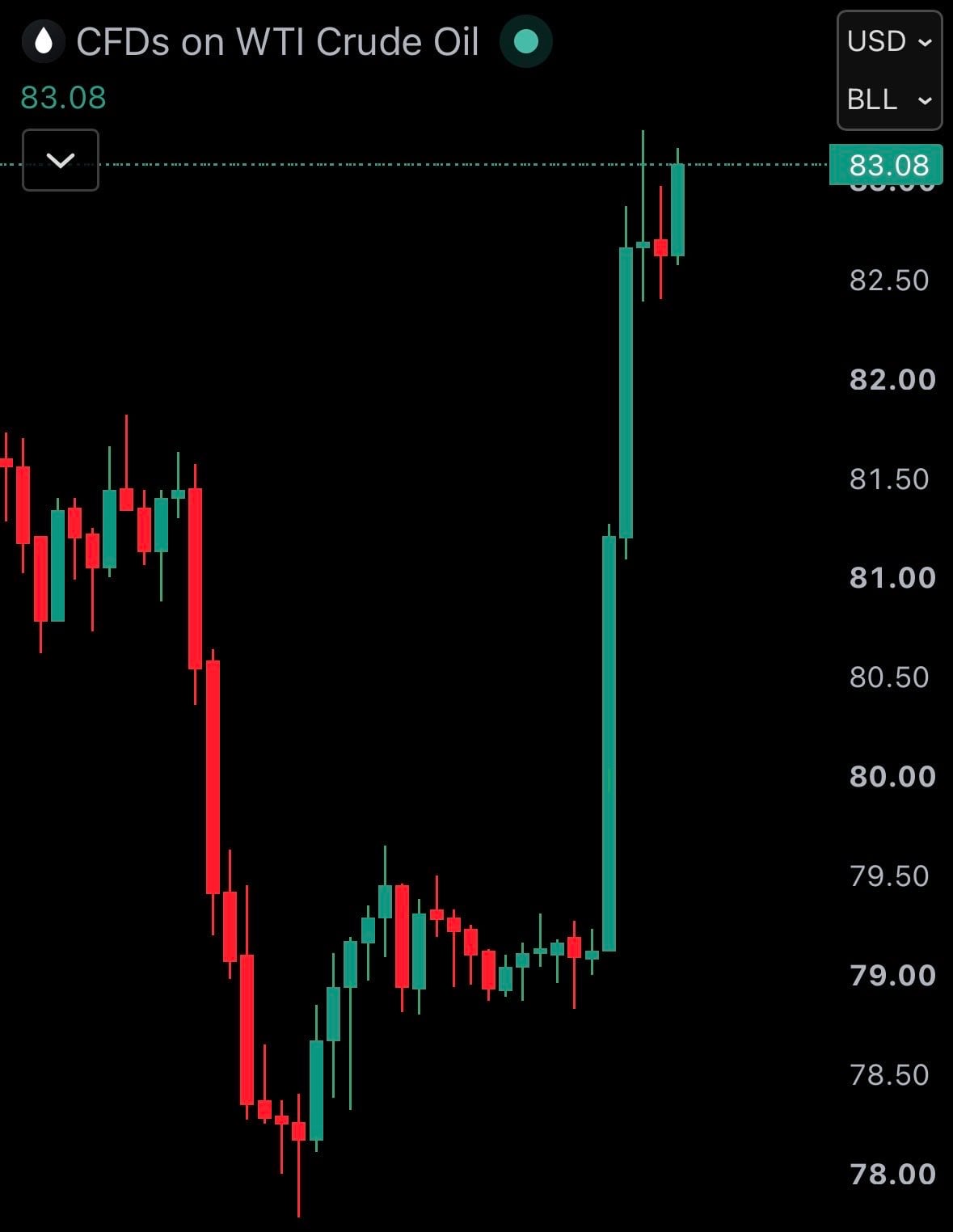
This rebound partially offset a sharp move in the opposite direction just days earlier. Oil prices had plunged by as much as 8% after the Trump administration first signaled the pause, with the price of Brent crude falling from above $100 per barrel to around $87 as mediators negotiated over the Strait of Hormuz. The July 28 attack erased a significant portion of that relief within hours—a pattern now familiar to traders tracking the start-stop rhythm of this conflict since February.

Bitcoin Rally Amid 'Truce' Faces Next Test

Cryptocurrency markets have moved in step with this same cycle, as by July 27 (when Brent crude collapsed to $87), Bitcoin had recovered to around $65,200, briefly reaching $65,600 at the start of futures trading. This recovery gave way to a decline the next day: by July 28, Bitcoin dropped to around $64,000 even before the evening strike, then continued to fall into the $63,600 to $63,800 range once news of the missile strike spread.

Bitcoin.com News previously reported that Bitcoin held near $63,000 during a previous escalation of the conflict in July—part of a trend where the network repeatedly recouped losses within days of each escalation, only to lose some of those gains again at the next flare-up.

Nevertheless, throughout this year, BTC has at times shown signs of decoupling from purely risk-on asset behavior amid the conflict, maintaining support even amid sharp swings in oil and stock prices (unlike the sharper and more consistent sell-offs observed for assets like Ether during the same periods). However, the July 28 strike posed the most direct challenge yet to the 'truce' narrative that underpinned last week's calm.

end-content


热门币种推荐

相关问答

QWhat did the Iranian attack on an American base in Jordan target, and what was the immediate military outcome according to CENTCOM?

AThe Iranian attack targeted American positions near Jordan's Muwaffaq Salti Air Base. According to CENTCOM, Patriot air defense batteries intercepted all of the incoming ballistic missiles, and there were no casualties reported.

QHow did the Iranian military justify their missile attack on the American base in Jordan?

AThe Iranian military claimed responsibility for the attack, justifying it as a response to what they identified as 'unlawful and malicious actions' by Washington against Iranian interests.

QWhat was the immediate impact of the July 28th attack on global oil prices?

AFollowing the attack, WTI crude oil prices rose by 3.95% to $83.08 per barrel, and Brent crude oil prices increased by 3.86% to $87.34 per barrel.

QHow did Bitcoin's price react in the hours surrounding the July 28th attack on the Jordanian base?

ABefore the evening attack on July 28th, Bitcoin had dropped to around $64,000. After news of the missile strike spread, its price fell further into the range of $63,600 to $63,800.

QWhat pattern has been observed regarding Bitcoin's price movements in relation to Middle East conflict escalations earlier in the year, according to the article?

AAccording to the article, Bitcoin has shown a pattern of repeatedly recovering losses within days after each escalation of the conflict, only to lose some of those gains again during the next escalation. However, it has also shown signs of decoupling from purely risk-on asset behavior, maintaining support even during sharp swings in oil and stock prices.

你可能也喜欢

Core Scientific支付4190万美元以加速退出比特币挖矿业务

比特币矿企Core Scientific在季度报告中披露,为终止与Block及其子公司Proto的比特币挖矿芯片供应合同支付了4190万美元违约金。公司正彻底放弃提升算力的计划,并将业务转向人工智能托管服务。 除了已确认的4190万美元损失外,协议未披露其他额外赔偿条款。该协议最初于2024年7月宣布,涉及供应总算力约15 EH/s的3纳米芯片,并包含额外采购期权。取消订单后,Core Scientific表示将不再投资新的挖矿设备以维持或扩大加密货币挖矿产能。 公司计划通过现有设备产生现金流,同时着手改造其数据中心设施,必要时将出售或淘汰ASIC矿机。2026年第二季度,其AI托管收入飙升至1.367亿美元,较上年同期的1060万美元大幅增长,占总营收的83%。同期,自主挖矿收入下降66%至2150万美元,第三方矿机托管收入为600万美元。 公司季度比特币产量同比下降53%,平均实现价格下跌27%。截至2026年6月30日,其AI托管容量为395兆瓦,到7月中旬增至437兆瓦。客户租赁的总功率达到约1.1吉瓦。目前所有托管收入均来自CoreWeave,该公司在2026年上半年贡献了Core Scientific约77%的总收入。 此外,Core Scientific在7月底宣布与AMD达成合作,潜在数据中心容量达2.5吉瓦。初始为期15年的协议覆盖约530兆瓦和五个站点,预计可带来超过140亿美元的合同收入。2026年第二季度,公司总收入增长至1.642亿美元,资本支出跃升至7.975亿美元。截至6月30日,其采购和建设承诺约为10亿美元,长期债务为43亿美元,自由流动性为18.2亿美元。 2026年,随着比特币挖矿盈利压力加剧,多家大型矿企加速向AI领域转型,斯坦福大学数据也证实了这一趋势。

cryptonews.ru1小时前

Core Scientific支付4190万美元以加速退出比特币挖矿业务

cryptonews.ru1小时前

交易

现货

热门文章

如何购买4

欢迎来到HTX.com!我们已经让购买4(4)变得简单而便捷。跟随我们的逐步指南,放心开始您的加密货币之旅。第一步:创建您的HTX账户使用您的电子邮件、手机号码注册一个免费账户在HTX上。体验无忧的注册过程并解锁所有平台功能。立即注册第二步:前往买币页面,选择您的支付方式信用卡/借记卡购买:使用您的Visa或Mastercard即时购买4(4)。余额购买:使用您HTX账户余额中的资金进行无缝交易。第三方购买:探索诸如Google Pay或Apple Pay等流行支付方法以增加便利性。C2C购买:在HTX平台上直接与其他用户交易。HTX场外交易台(OTC)购买:为大量交易者提供个性化服务和竞争性汇率。第三步:存储您的4(4)购买完您的4(4)后,将其存储在您的HTX账户钱包中。您也可以通过区块链转账将其发送到其他地方或者用于交易其他加密货币。第四步:交易4(4)在HTX的现货市场轻松交易4(4)。访问您的账户,选择您的交易对,执行您的交易,并实时监控。HTX为初学者和经验丰富的交易者提供了友好的用户体验。

1.6k人学过发布于 2025.10.20更新于 2026.06.02

如何购买4

相关讨论

欢迎来到HTX社区。在这里,您可以了解最新的平台发展动态并获得专业的市场意见。以下是用户对4(4)币价的意见。

活动图片