Author: Wall Street News
NVIDIA is positioning Japan as a core pivot point in its global Physical AI blueprint.
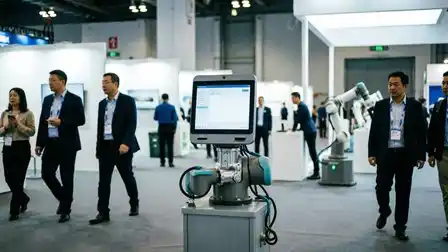
NVIDIA CEO Jensen Huang made an appearance in Tokyo this week, engaging in a series of intensive partnership signings and business meetings. According to reports, NVIDIA announced on Thursday collaborations with Japanese robotics giants Fanuc and Yaskawa Electric to jointly advance robotics and AI technology development.
Simultaneously, NVIDIA announced the expansion of its partnership with Toyota, covering areas such as autonomous driving, factory simulation, and smart cities. Huang remarked at a Tokyo media event, "With AI, robots will become intelligent, easily adaptable, and accessible."
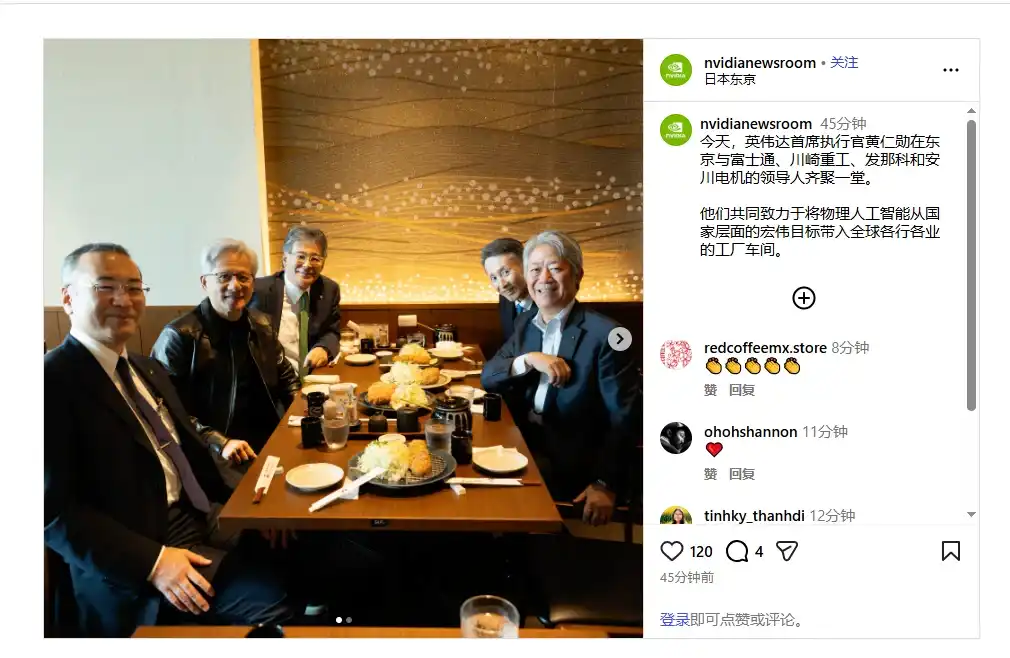
The strategic intent of this Japan trip is clear: NVIDIA is systematically and deeply binding Japan's manufacturing foundation and semiconductor supply chain with its full-stack AI technologies.
In an interview, Huang dismissed concerns about an AI investment bubble, stating "We are far from an AI bubble, the demand is extremely strong", and emphasized that "we need to build infrastructure for at least ten years." He also indicated that NVIDIA would announce partnership plans related to Japan's sovereign AI later this week.
Additionally, notably, this visit was accompanied by a historically poignant reunion—Huang shared the stage in Akihabara with former SEGA president Shoichiro Irimajiri, who had thrown NVIDIA a lifeline when it was on the brink of bankruptcy 30 years ago, adding an emotional layer to this business trip.
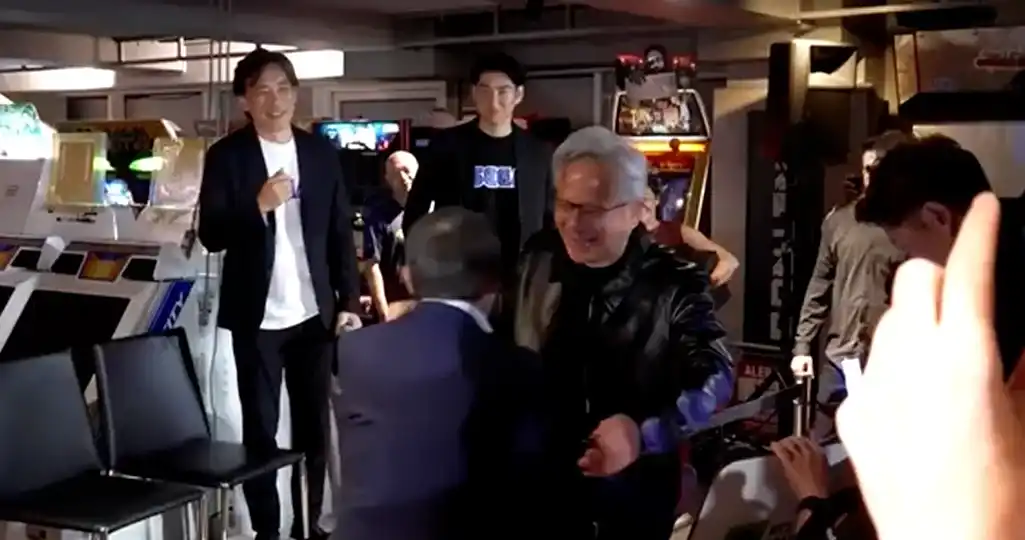
(Video Screenshot: Jensen Huang embracing former SEGA president)
Reunion in Akihabara: The "Life-Saving Favor" 30 Years Ago
Beyond business meetings, the most emotionally charged moment of Huang's trip occurred at the former site of the SEGA Game Center in Tokyo's Akihabara district.
According to SEGA, Huang attended an event hosted by SEGA on July 15 (local time), sharing the stage again after many years with former SEGA president Shoichiro Irimajiri. Huang remarked emotionally at the event: "Without everything that SEGA did, without everything that Shoichiro Irimajiri did, NVIDIA wouldn't be here today."
This connection dates back to around 1996. At the time, NVIDIA, then a newly founded company, was developing a graphics chip for SEGA's next-generation console. A misjudged technological path led to the project's complete failure, pushing NVIDIA to the brink of bankruptcy.
Huang proactively admitted the failure to Irimajiri, then SEGA's vice president. Instead of pursuing accountability, Irimajiri pushed for SEGA to invest approximately $5 million in the cash-strapped startup. Huang once recalled:
"I told Irimajiri that if they invested this money in us, they would likely lose it all; but if they didn't, we would go under... He thought about it for a few days and then told me: We'll invest."
With this capital infusion, NVIDIA, after laying off 60% of its workforce, started anew. It launched the RIVA 128 in 1997, and subsequently established its market position in the GPU field with products like RIVA TNT and GeForce 256.
Somewhat dramatically, after NVIDIA's 1999 IPO at a valuation of around $300 million, SEGA quickly chose to cash out, selling its shares for about $15 million. Today, NVIDIA's market capitalization exceeds $5 trillion.
At this reunion, both parties announced an extension of their cooperation—SEGA's future titles will support NVIDIA's newly released RTX Spark platform, including the upcoming "VIRTUA FIGHTER CROSSROADS." The collaboration between NVIDIA and SEGA began 30 years ago when NVIDIA's NV1 chip provided graphics support for the PC version of the original "Virtua Fighter," one of the world's earliest 3D fighting games.
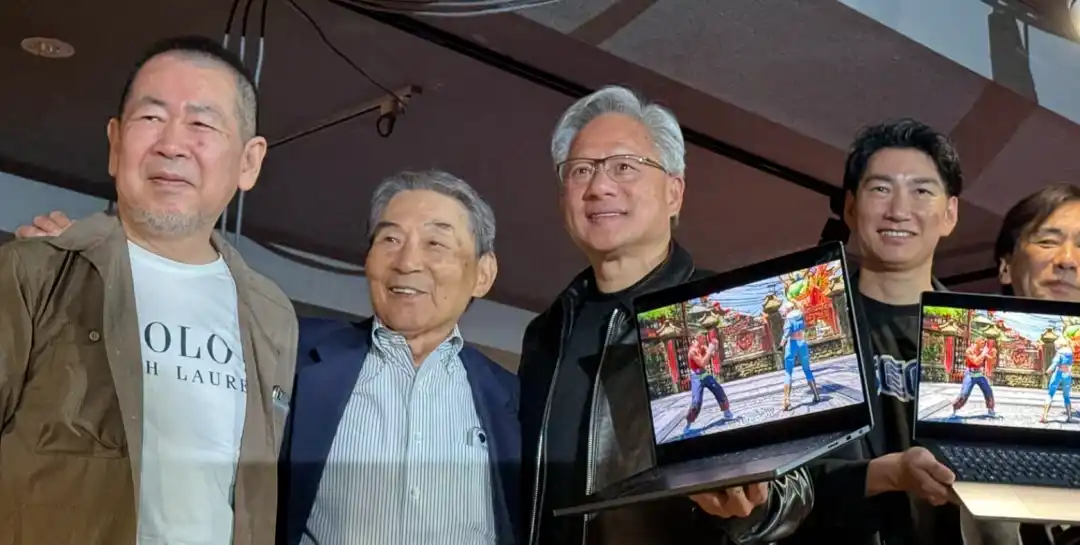
(Image source: NVIDIA website)
Izakaya Dinner: Wooing the Core of Japan's Semiconductor Supply Chain
On the eve of the formal partnership announcements, Huang completed a collective "public relations" effort with a low-key yet significant dinner gathering for key nodes in Japan's AI supply chain.
According to Singapore's The Straits Times, on the evening of July 15 (local time), Huang appeared at an izakaya in Tokyo's Kanda district, dining with a group of executives from core Japanese supply chain companies for about two hours.

(Image source: The Straits Times, Singapore)
Attendees included:
The CEO of advanced flash memory chipmaker Kioxia; the head of leading global silicon wafer supplier Shin-Etsu Chemical; the chief of chip equipment maker Tokyo Electron; an executive from advanced chip packaging film sole supplier Ajinomoto; and the heads of fiber optic cable maker Sumitomo Electric Industries and advanced capacitor producer Taiyo Yuden. Yuki Kusumi of Panasonic Holdings was also present.
It is reported that Huang's group enjoyed yakitori skewers and motsunabe (offal hot pot), and drank Japanese whisky.
The lineup of this gathering nearly outlines the entire spectrum of Japan's hardware supply chain crucial for NVIDIA's next-generation AI systems. According to attendees, conversations at the table included phrases like "let's work together to promote the prosperity of industries like semiconductors and keep driving up stock prices."
Outside the izakaya, a crowd gathered with smartphones, hoping to catch a glimpse of the AI era icon known on social media as "kawajan-san" (Mr. Leather Jacket). It was reported that a 57-year-old tourist from Taiwan, Chang Hui-Yu, said outside the SEGA event, "I think he is the most influential person on Earth."
Betting on Physical AI: Japan's Manufacturing Industry as a "Natural Ally"
The core strategic narrative of Huang's trip is positioning Japan as a critical battleground for global Physical AI development.
According to Kyodo News, Huang said in an interview in Tokyo, "This is a historic moment for Japan because Japan has traditionally excelled in precision manufacturing and mass production."
He believes AI can help Japan address its severe labor shortage, "Through automation, AI, and robotics, we can enhance the capabilities of the existing workforce and boost the nation's overall productivity."
At the practical collaboration level, the partnerships with Fanuc and Yaskawa directly target the intelligent upgrade of industrial robots. The collaboration with Toyota is more comprehensive:
Toyota is developing next-generation vehicles with L2++ functionality based on NVIDIA's DRIVE AGX platform and DriveOS operating system; it's also using NVIDIA's Megatron-LM to train MISRA-compliant code assistant AI models to accelerate vehicle software engineering; and leveraging NVIDIA's Omniverse and Isaac Sim frameworks to advance factory digital twins and robot simulation.
Toyota subsidiary Woven by Toyota has also developed a multimodal vision-language model for urban traffic intelligence using NVIDIA H100 GPUs.
NVIDIA Vice President Rishi Dhall stated, "Physical AI will bring intelligence to every moving machine, from cars, robots, trucks, to the cities and factories they operate in."
Full-Stack Deployment: From Healthcare and Finance to Quantum Computing
Beyond robotics and automotive, NVIDIA's collaboration map in Japan extends to multiple key industries, demonstrating a systematic full-stack penetration.
In healthcare and life sciences, several Japanese pharmaceutical giants are leveraging NVIDIA's BioNeMo platform to accelerate AI drug discovery, including Eisai, Astellas, Daiichi Sankyo, and Ono Pharmaceuticals. Canon launched Japan's first photon-counting CT system accelerated by NVIDIA. Fujifilm commercialized Japan's first full-body CT system equipped with NVIDIA Blackwell. Kawasaki Heavy Industries plans to use NVIDIA's Holoscan IGX, Isaac GR00T, and Cosmos platforms to develop surgical assistant robots and hospital transport robots. In the financial sector, Mizuho Bank plans to build Japan's largest local AI factory in the financial industry, starting with NVIDIA DGX B200 systems; Japan Research Institute (JRI) under SMBC Group has already deployed an AI factory, using NVIDIA's Nemotron open model to transform financial data into intelligence; Rakuten Bank will leverage NVIDIA's Agent Toolkit to develop trading foundational models. In quantum computing, two supercomputers powered by NVIDIA GB200 at Japan's RIKEN institute have begun operation: RIKYU, equipped with 1,600 NVIDIA Blackwell GPUs, supports open foundational model development; the quantum-HPC system ROQUO integrates 540 Blackwell GPUs, tightly connected with the quantum computer on the RIKEN campus. In collaboration with NVIDIA, institutions including Mitsubishi Chemical, Mizuho Bank, Keio University, and AIST achieved a 13.4x speedup in molecular spectroscopy analysis workflows compared to pure CPU nodes.
Additionally, according to reports, there is market speculation that NVIDIA may announce a collaboration with Japan's "Physical AI Model National Team," Noetra. Noetra is led by SoftBank and brings together 44 Japanese companies including Honda and NEC. The Japanese government has also provided 1 trillion yen in fiscal subsidies for the initiative.