Bitcoin banking adoption hits 32%, but ‘we’re still early,’ says Strategy’s Saylor

ambcrypto发布于2026-07-15更新于2026-07-15

文章摘要

Major banks are accelerating Bitcoin adoption, reaching a 32% overall adoption rate according to Michael Saylor's Bitcoin Banking Adoption Index. However, Saylor notes this adoption is "still early." Fidelity leads with a 71% rating, followed by BNY Mellon and Goldman Sachs. A key finding is banks' preference for using Spot Bitcoin ETFs, rather than physical BTC, as collateral for credit—a practice that remains relatively low. This is significant for Saylor's vision of turning his firm, Strategy, into a "Bitcoin bank" that uses its BTC holdings to create new credit instruments. The current data suggests treating Bitcoin as high-quality collateral is not yet widespread, making this vision a longer-term prospect. In related news, Strategy has increased its cash reserves to $3 billion, providing 20 months of coverage for its obligations, following analyst recommendations to bolster financial stability. While the "Bitcoin bank" concept faces hurdles, growing bank engagement indicates potential future viability.

Bitcoin has seen accelerated adoption by major global banks, but the traction is “still early.” This, according to Michael Saylor, founder of Strategy, the world’s largest BTC treasury firm. In a newly released Bitcoin Banking Adoption Index, covering ETF trading, credit and more, Saylor added,

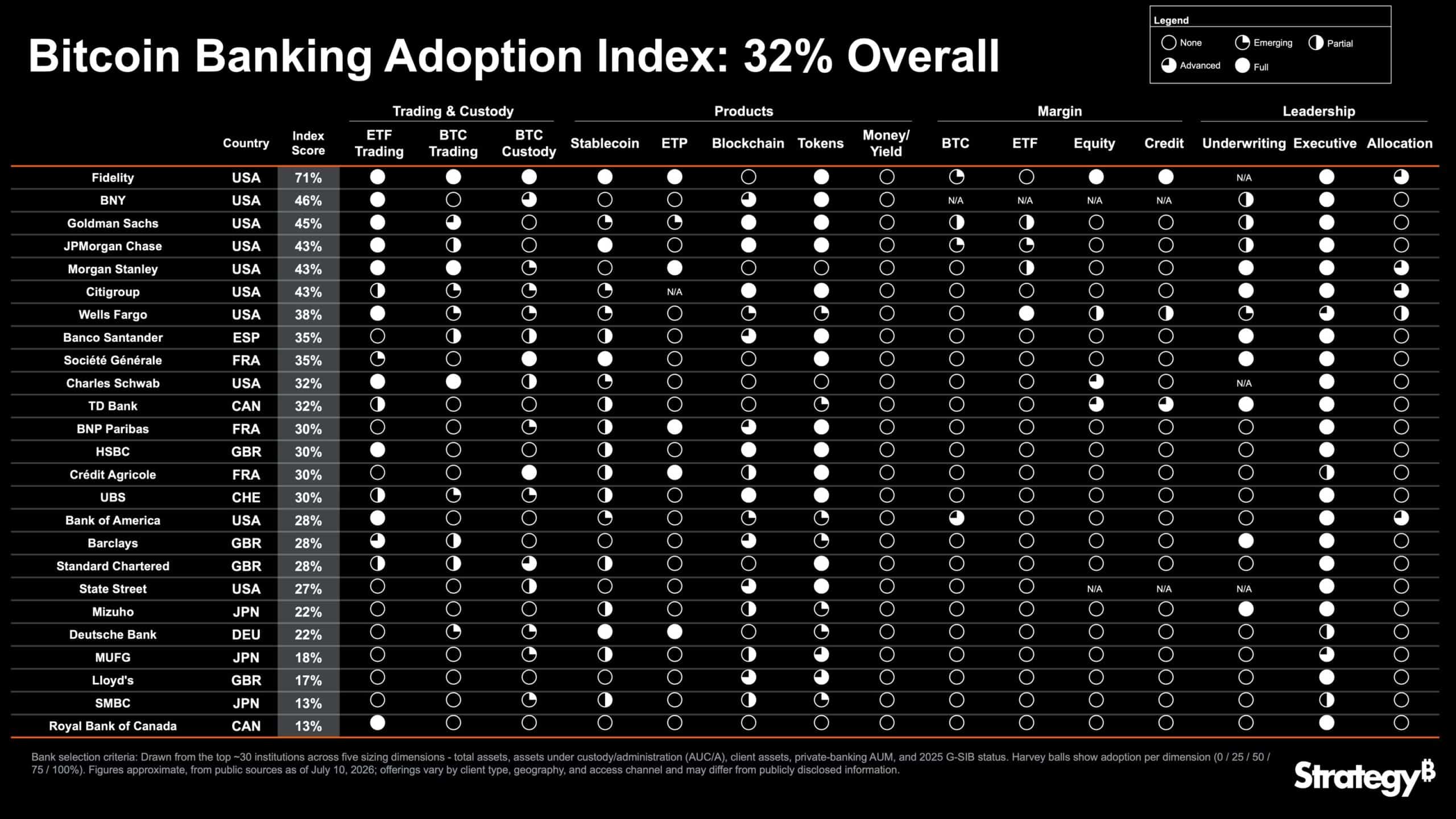
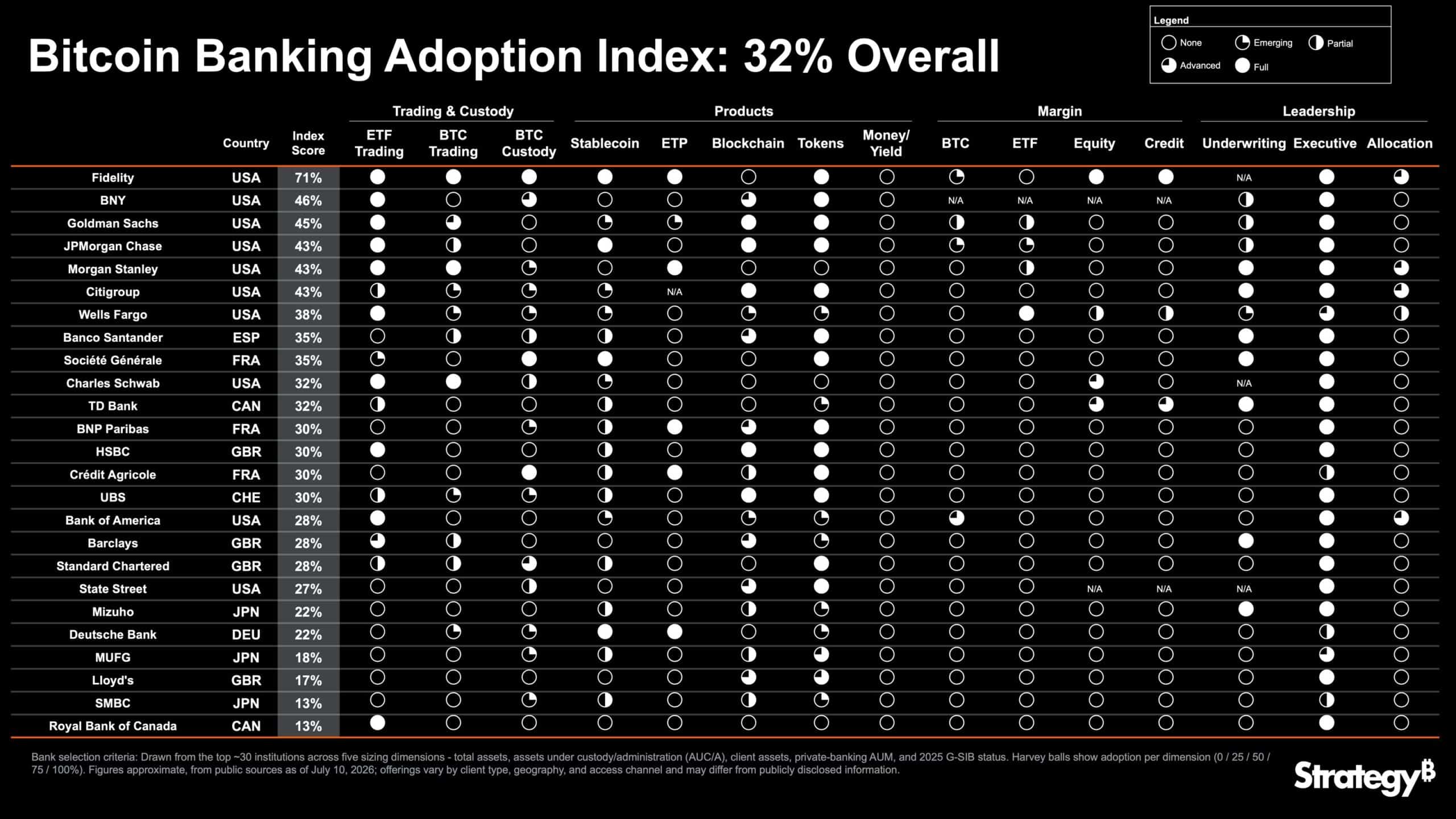
Major-bank Bitcoin adoption is accelerating, but still early: 32% overall as measured by the index.
Source: Strategy

Fidelity leads in the adoption race with a 71% rating, with a full score for custody, BTC, and ETF trading alongside stablecoin issuance. BNY Mellon comes in second with a 46% score, while Goldman Sachs closed the top three list with a 45% rating.

Other top-ranking global players were Spain’s Banco Santander, France’s Société Générale, and the UK’s Standard Chartered.

Is Strategy still eyeing ‘Bitcoin bank’ vision?

The most interesting part of the new composite index is the ‘credit’ section, or banks enabling credit against spot BTC or derivatives like BlackRock’s iShares Bitcoin Trust (IBIT). In other words, banks that allow leverage or offer credit using Spot BTC or ETFs as collateral.

As of 2026, most banks were more inclined towards Spot BTC ETFs for collateral, rather than spot BTC. However, given the empty circles, it meant adoption of BTC or ETF margin was still relatively low.

This is particularly important because Saylor has floated positioning Strategy as the “world’s first Bitcoin bank.” According to him, the firm could use its vast BTC holdings as collateral to create new credit instruments beyond STRC and partner with leading banks for the same.

The 32% bank adoption is commendable. However, the adoption index clearly shows that BTC is not fully treated as high-quality collateral, at least as of 2026. By extension, it means its vision of being a “BTC bank” could still be far from being viable.

Interestingly, Metaplanet is exploring something similar but for the Japanese bond market.

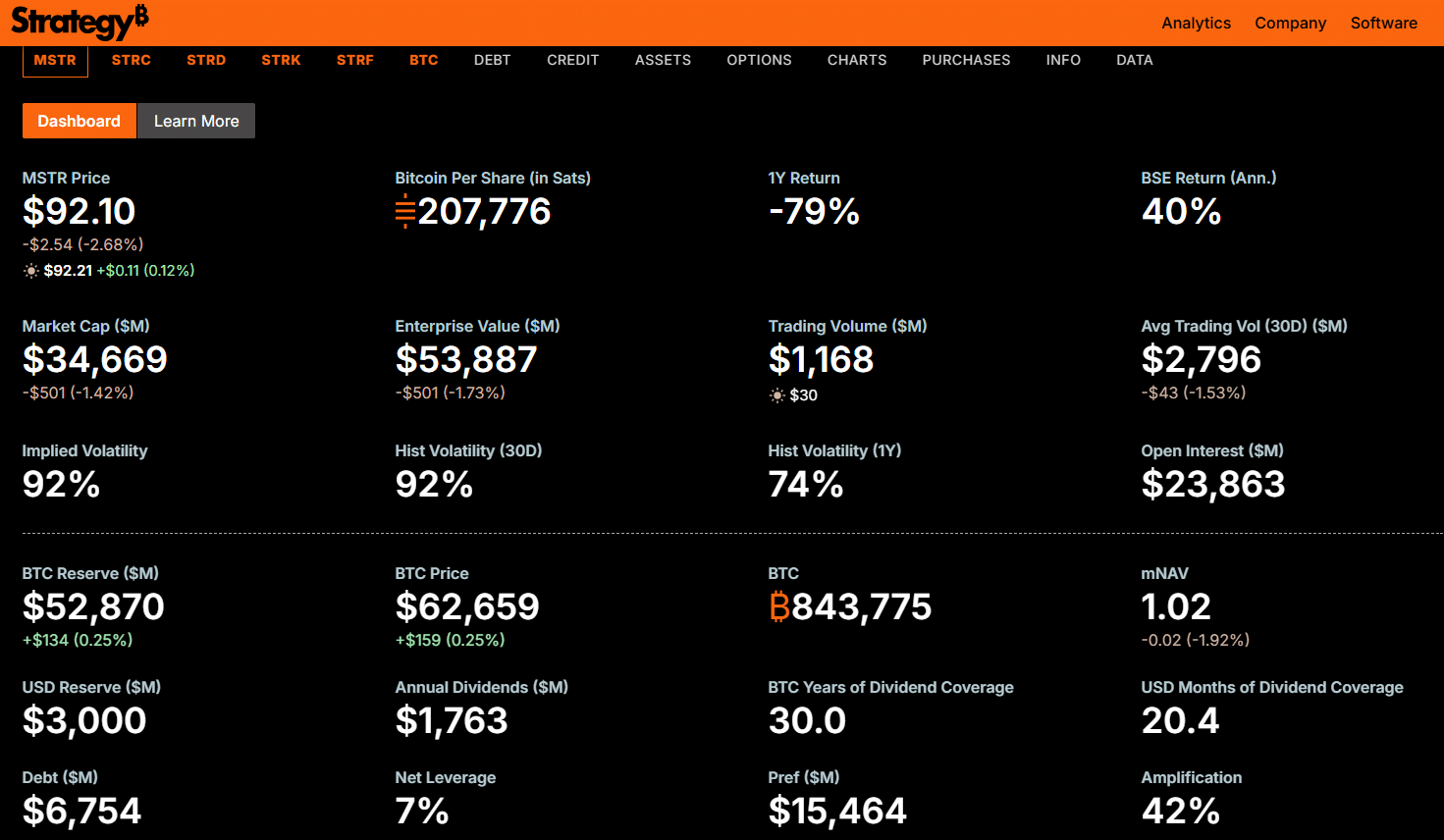
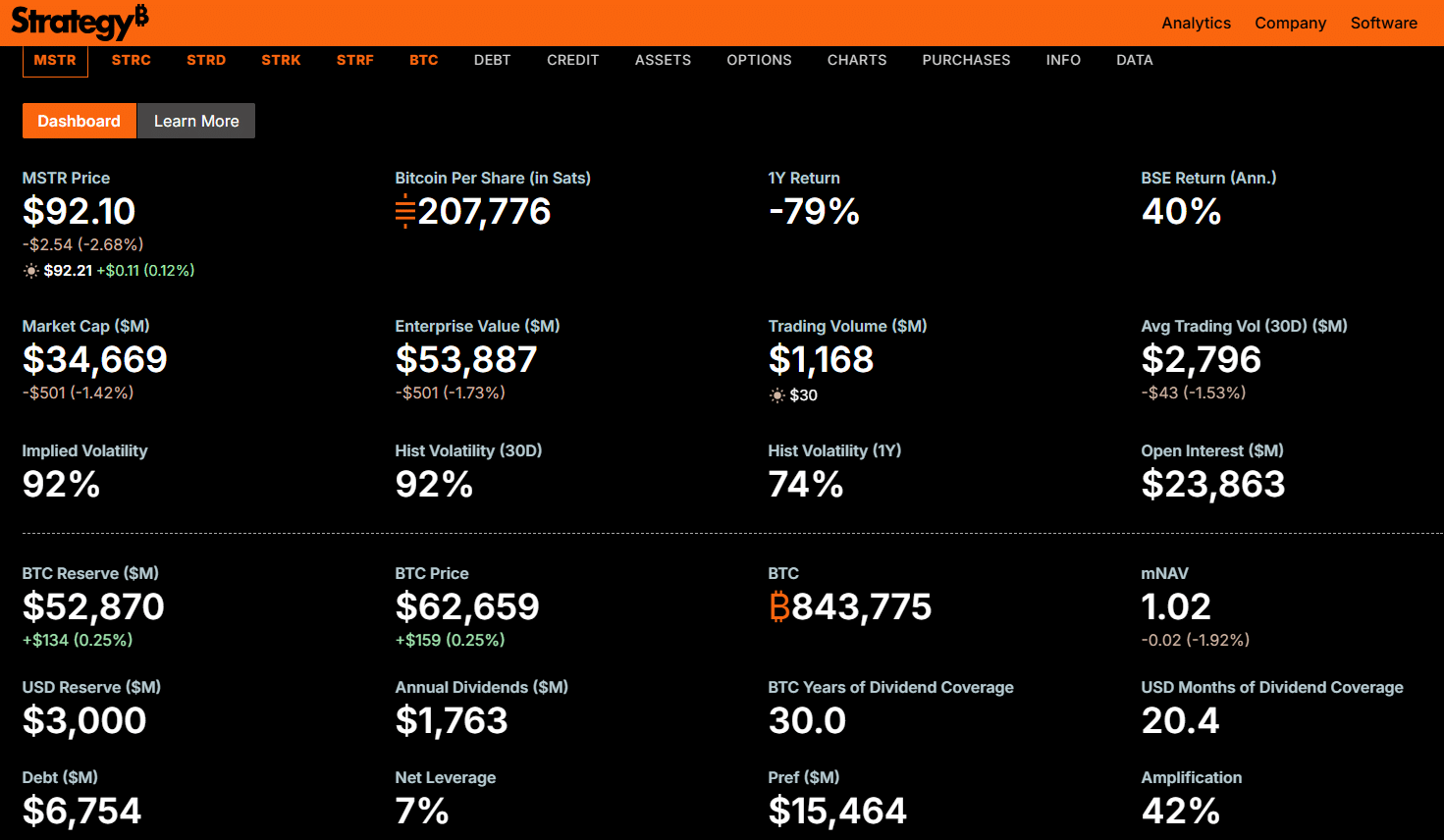
In other developments, Strategy has increased its cash reserve to $3B after a $467M MSTR share sale. This has effectively increased its coverage for its financial obligations to 20 months.
Source: Strategy

It seems that the firm was partly following the recommendations by JPMorgan analysts who urged for a 24-36 months cash reserve by selling more MSTR, not its BTC holdings.

Overall, Strategy’s “Bitcoin bank” dreams may still be far from reach right now. Even so, there is traction across banks that could determine whether it will be viable in the future.


Final Summary

  • Bitcoin adoption among banks has surged by 32%, but Spot BTC ETFs may be preferred for margin than physical BTC.
  • Strategy increased its cash reserves to $3B and 20 months of coverage, just shy of 24 months recommended by JPMorgan.


热门币种推荐

相关问答

QAccording to the article, what is the overall Bitcoin banking adoption rate as of 2026 according to Michael Saylor's index?

AThe overall Bitcoin banking adoption rate is 32% as measured by the Bitcoin Banking Adoption Index.

QWhich three major banks lead in Bitcoin adoption according to the index, and what are their scores?

AFidelity leads with a 71% rating, BNY Mellon comes second with a 46% score, and Goldman Sachs is third with a 45% rating.

QWhat is the key reason the article suggests Strategy's vision of becoming a 'Bitcoin bank' is still far from viable?

AThe adoption index shows that Bitcoin is not yet fully treated as high-quality collateral by banks, particularly for credit and margin purposes, which is crucial for a Bitcoin banking model.

QWhat did Strategy do to increase its cash reserves and financial coverage, and what was the recommended target from JPMorgan?

AStrategy increased its cash reserve to $3 billion after a $467 million MSTR share sale, giving it 20 months of coverage for its financial obligations. JPMorgan analysts had recommended a 24-36 month cash reserve.

QAccording to the index, are banks in 2026 more inclined to use Spot BTC or Spot BTC ETFs as collateral for credit?

AAs of 2026, most banks were more inclined towards using Spot Bitcoin ETFs for collateral, rather than spot BTC itself.

你可能也喜欢

Strategy的545亿美元比特币豪赌,是否已不再仅仅关乎BTC价格?

多年来,迈克尔·塞勒的比特币策略似乎无懈可击:通过持续融资增持比特币,其价值增长也支撑了股东权益的稀释。然而,随着其持有的比特币达到843,775枚(价值约545亿美元),但平均成本(75,482美元)高于当前市值,成功本身带来了新的挑战。模型可持续性正取代单纯的数量累积,成为焦点。 策略的核心曾是利用市场估值(mNAV)溢价发行股票,再将资金投入比特币。但随着mNAV从高点大幅回落至约1.03倍,这种“飞轮”效应已显著放缓,通过股权融资继续低成本增持比特币变得困难。公司已开始出售少量比特币以支持股息和充实现金储备。 衡量标准随之改变。投资者不再只看持仓规模,更关注关键指标如“每股比特币持有量”和“比特币收益率”是否能持续增长。尽管这些指标在过去表现强劲,但近期已出现下滑。与此同时,公司面临约17.6亿美元的年度股息等固定支出,而其软件业务年收入仅约5亿美元,存在巨大的资金缺口。 与采取低成本日元融资的Metaplanet或更为保守的Semler Scientific等同行相比,Strategy的规模虽大,但其融资模式也最为复杂且负担沉重。分析指出,坚定的资产信念并不等同于为其持续融资的能力。若比特币价格长期疲软导致mNAV持续低迷,Strategy可能不得不更多依赖现金储备或出售比特币来应对财务压力。 总而言之,Strategy的成功已不仅仅取决于比特币价格的上涨,更取决于其能否在波动的市场中构建具有韧性的资本结构,从而维持投资者信心并保障长期增长。

ambcrypto38分钟前

Strategy的545亿美元比特币豪赌,是否已不再仅仅关乎BTC价格?

ambcrypto38分钟前

代币化市场规模达23亿美元——为何效用比TVL更重要

代币化市场市值已达23亿美元——效用比总锁仓价值(TVL)更重要 随着受监管的链上金融超越早期采用阶段,代币化美国基金持续吸引机构资本。机构仍偏爱那些拥有成熟流动性和分销渠道的发行方,这种模式因此形成。在此偏好下,Arbitrum 凭借 Theo 等主要支持,以约12,500个独立持有者钱包领先,Solana 以约8,200个钱包紧随其后。Sui、HyperEVM 和 Base 也贡献了大量持有者。相比之下,尽管以太坊支持多个发行方,但持有者数量仅约2,000,这表明发行方声誉而非单纯的链可用性,是流动性和用户增长的关键驱动力。 代币化股票也在重新定义区块链效用,行业市值达到23亿美元的历史新高。以太坊以7.832亿美元(占总价值的34%)领先,主要扮演托管层角色。BNB Chain 和 Solana 分别以6.798亿美元和5.359亿美元紧随其后。值得注意的是,Solana 处理了约95%–97%的代币化股票交易,表明交易执行正日益与资产托管分离。这反映出机构开始区分托管和交易功能。 这种转变意味着区块链的竞争力评判标准正在发生全行业变化。投资者越来越关注执行质量与真实经济活动,而非仅仅看重TVL。去中心化交易所交易量、交易活动和费用生成已成为衡量网络效用的关键指标,取代了被动的流动性指标。机构投资者继续青睐那些能够以低成本快速结算、同时保持合规代币架构的平台。随着代币化发展,能提供更强资本效率和运营弹性的网络将可能吸引更多流动性,进一步巩固“效用”作为区块链主要竞争优势的地位。

ambcrypto5小时前

代币化市场规模达23亿美元——为何效用比TVL更重要

ambcrypto5小时前

交易

现货

热门文章

加密市场宏观研报:《GENIUS Act》法案取得重大进展,BTC突破历史新高,后市全新展望

2025年5月22日,比特币价格正式突破11万美元大关,创下历史新高。在政策面、宏观经济、资金面与投资者结构共同作用下,一场结构性牛市浪潮正在展开。而此轮上涨背后的核心驱动,是美国《GENIUS稳定币法案》的实质性进展以及多项利好的叠加。本文将从政策端突破、宏观环境转向、链上与ETF资金结构、交易行为演化,以及重点受益赛道五大维度,全面解析此轮BTC再创新高的深层逻辑,并前瞻下半年市场的潜在趋势。

1.8k人学过发布于 2025.05.22更新于 2025.05.22

加密市场宏观研报:《GENIUS Act》法案取得重大进展,BTC突破历史新高,后市全新展望

相关讨论

欢迎来到HTX社区。在这里,您可以了解最新的平台发展动态并获得专业的市场意见。以下是用户对BTC(BTC)币价的意见。

活动图片