U.S. stocks rallied across the board on Monday, with tech stocks leading the gains, interrupting last week's consecutive losses. Meanwhile, a sharp price cut by Saudi Arabia exacerbated supply glut concerns, putting pressure on international oil prices.
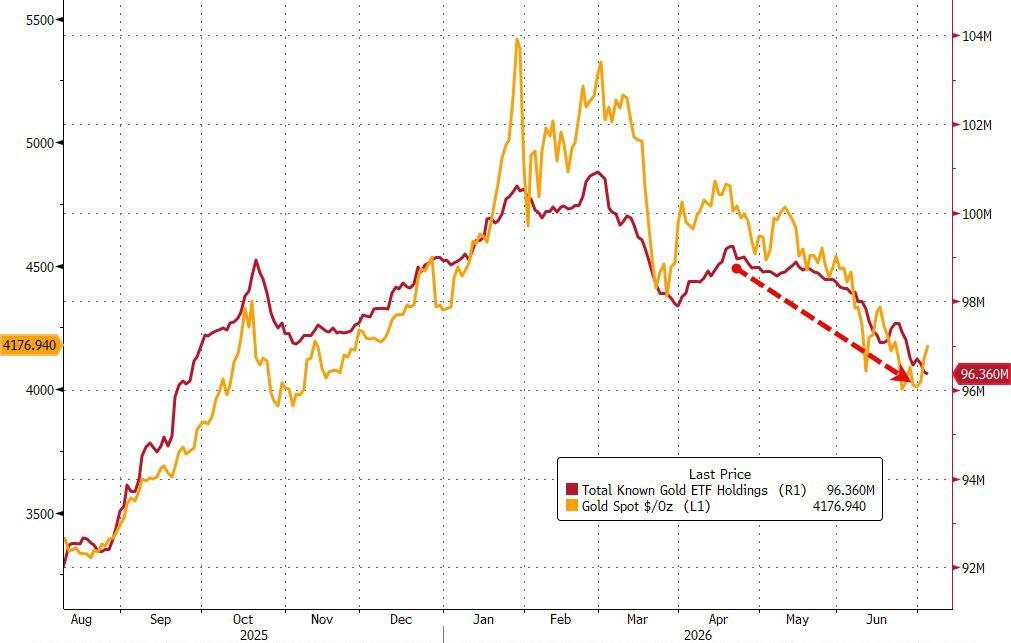
Gold edged lower due to persistent ETF outflows; Bitcoin staged a strong rebound after Trump publicly voiced support for cryptocurrencies.
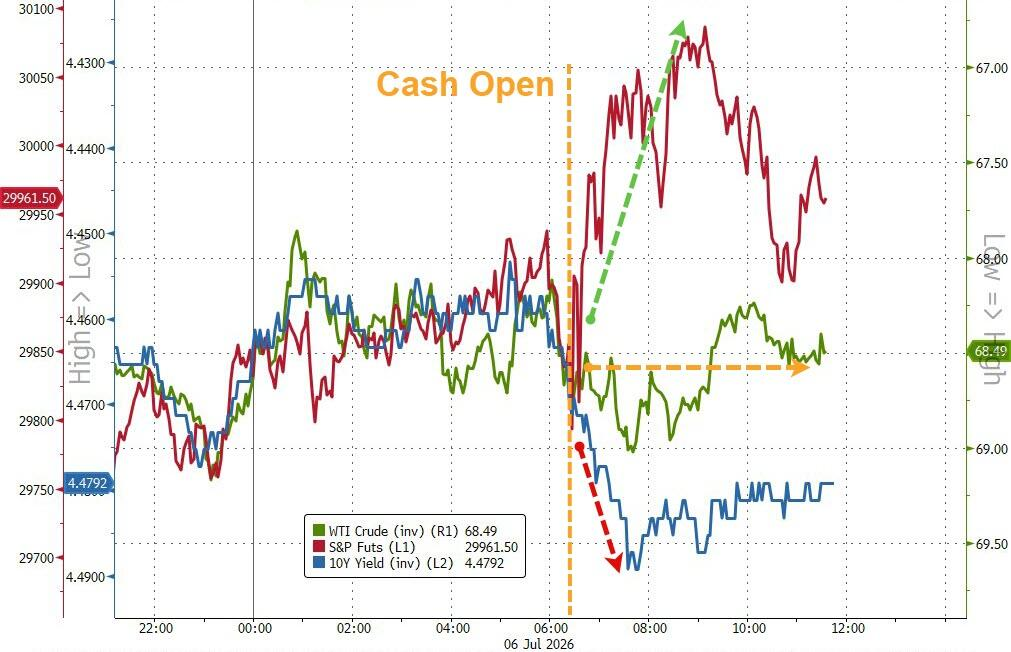
The Nasdaq 100 index rose 1.3% on Monday, the S&P 500 gained 0.7%, and the Dow Jones Industrial Average advanced 0.3%, breaching the 53,000-point milestone during the session. Nvidia's confirmation that its server roadmap remained unaffected and Broadcom's announcement of an extended chip partnership with Apple until 2031 bolstered confidence in the sustainability of AI infrastructure investment.
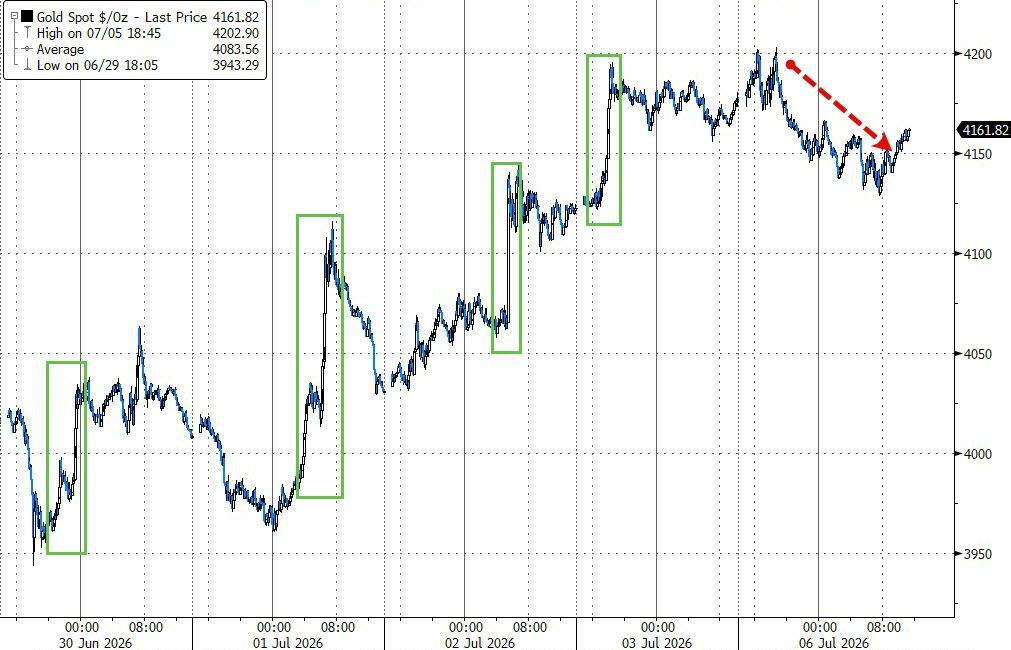
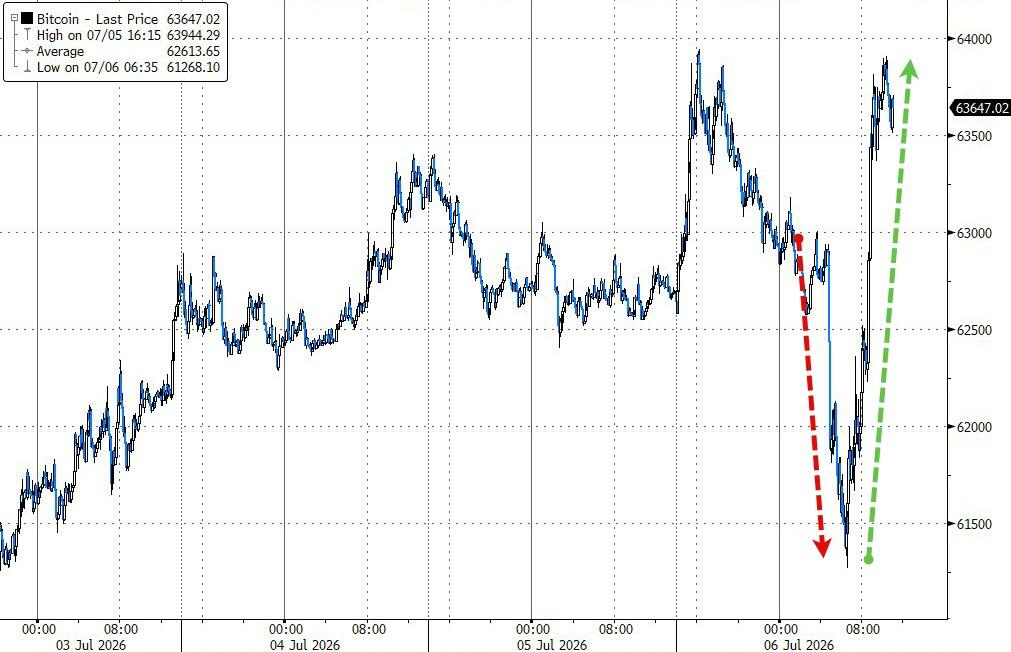
Trump stated in the White House Oval Office, "I have become a firm believer in cryptocurrency," directly pushing Bitcoin to its intraday high, with gains widening to about 1.4%, reaching $63,571. Gold fell 0.4% to $4,162 per ounce, with hawkish comments from Fed officials maintaining pressure on precious metals.
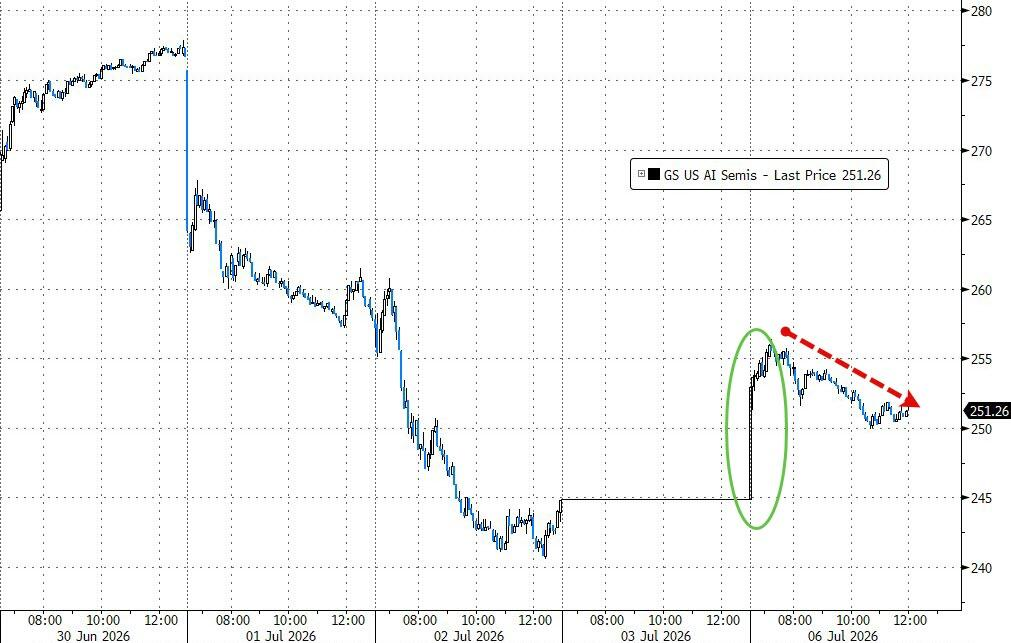
Foxconn, a Nvidia partner, reported quarterly revenue grew approximately 40% year-on-year, beating market expectations, and indicated that AI demand continues to expand.
South Korean memory chip giant SK Hynix also launched a formal U.S. IPO roadshow on Monday, planning to raise up to 43 trillion won (approximately $280 billion), having received up to $70 billion in indicative subscriptions from major investors.
However, a comparison by Morgan Stanley chief strategist Mike Wilson drew attention. He noted that the current trajectory of the semiconductor sector highly resembles that of silver before its crash, hinting at bubble risks that should not be overlooked.
A team led by Jean Boivin at BlackRock Investment Institute argues that whether AI constitutes a bubble depends not on current valuations, but on whether future profits can sustain at supernormal levels. The team wrote:
The market is increasingly pricing in this outcome, expecting AI to sufficiently boost productivity and growth to support current supernormal profits.
Jean Boivin's team pointed out that currently still-high profit margins are evidence supporting earnings resilience.
Mark Haefele, CIO of UBS, said investors this week will look for signs of stabilization in tech stock volatility while assessing whether pressure on hyperscale cloud providers' stock prices affects market expectations for the AI capital expenditure path.
He noted that if capital expenditure plans remain unchanged, it would help alleviate market doubts about the sustainability of AI infrastructure demand.
The oil market remained weak on Monday, with WTI crude largely flat within the $68-$69 range, while Brent crude fell to $71.75, its lowest level since late February this year.
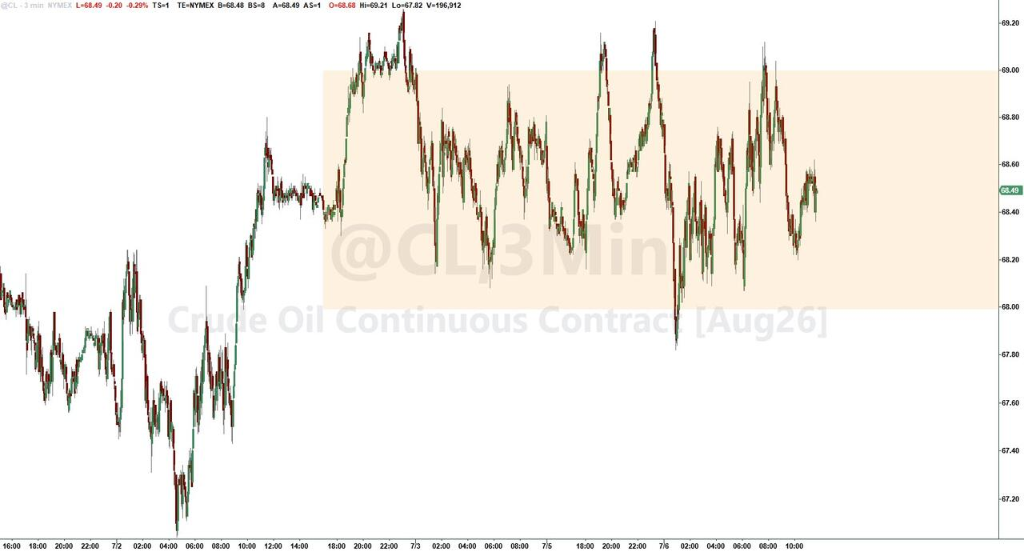
The key trigger for this round of oil price pressure was Saudi Arabia's significant price cut for August-loading crude oil.
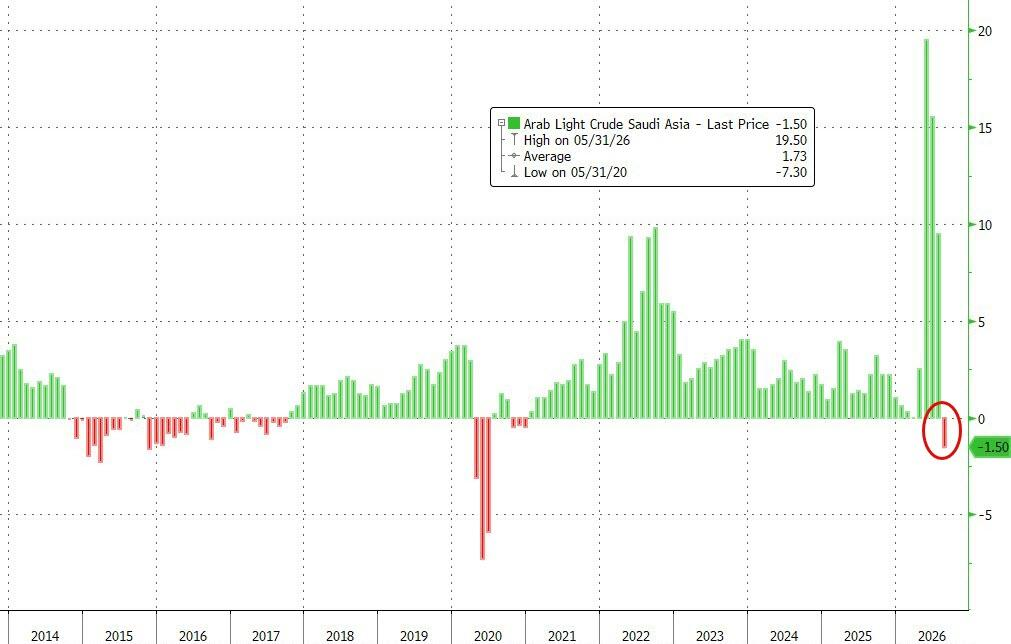
This is Saudi Arabia's largest official selling price cut in at least 26 years and its first time selling crude at a discount since the 2020 price war.
This raises concerns about whether other Middle Eastern producers will be forced to follow suit with price cuts, with official prices from other regional producers expected to be announced in the coming days. OPEC+ also agreed to further increase production targets by 188,000 barrels per day starting in August.
Ahmed Mehdi, an oil market analyst at Renaissance Energy Advisors, said Saudi Arabia's price cut reflects an inventory buildup of spot cargoes, not a new price war, and is more a result of "normalization of disorder in the Strait of Hormuz." He added:
Prices need to be competitive enough to reignite buying interest from Asian countries.
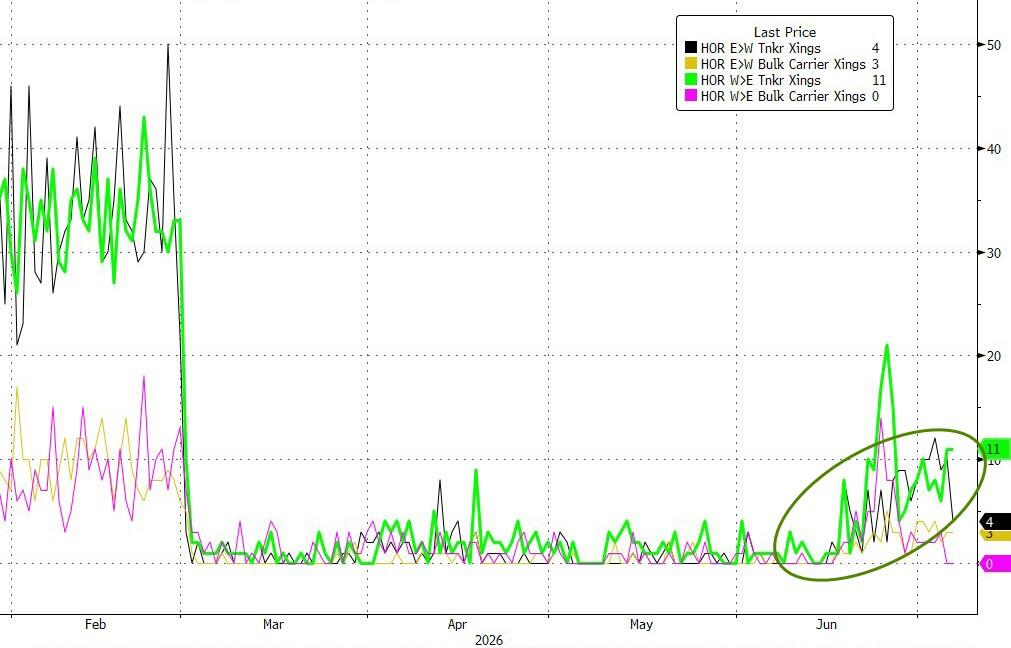
The number of vessels passing through the Strait of Hormuz continued to recover, with 160 vessels reported passing through from Monday to Saturday last week, but overall levels remain well below pre-war norms.
Gold fell on Monday, with spot gold down about 0.4% to $4,162 per ounce, despite briefly testing the $4,200 level overnight.
According to Bloomberg, the core logic behind gold's pressure is: despite falling oil prices, both the dollar and interest rates—two key financial drivers for gold—have moved in directions unfavorable to gold due to the Fed's hawkish signals.
Fed Governor Waller, speaking at a conference in Rome, reiterated that forward guidance remains valuable if used prudently, while emphasizing that the Fed's risk balance has clearly tilted toward inflation.
The ISM services data released on Monday showed a slight slowdown in the pace of U.S. service sector expansion in June, but employment improved and cost pressures eased. The ISM report also noted that multiple industries plan to raise prices due to geopolitical conflicts and industry cost pressures, reinforcing sticky inflation expectations.
Lawrence Gillum, chief fixed income strategist at LPL Financial, said:
The rates market has clearly calmed down; it's no longer an oil price story, and there aren't any particularly stimulative drivers.
The 10-year Treasury yield edged down 2 basis points to 4.47% on Monday, while the 30-year yield rose 1 basis point, with overall curve movement mild.
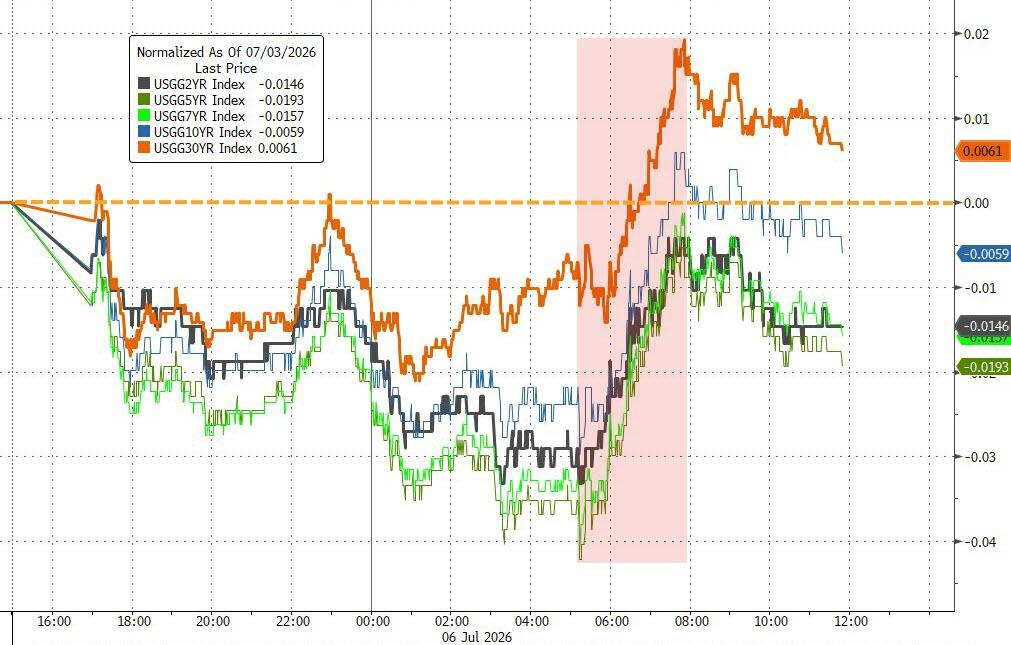
Expectations for 2026 rate hikes remained at about 30 basis points, still significantly higher than market pricing before new Fed Chair Wash took office.
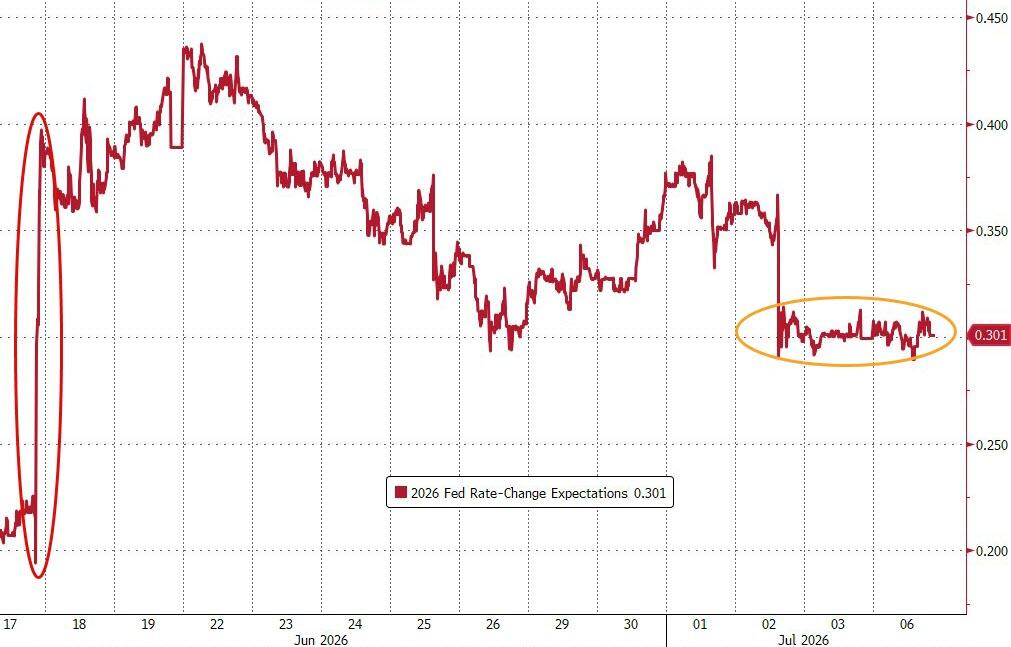
The market generally expects Wash to dilute the policy guidance content in FOMC meeting minutes. Steve Englander of Standard Chartered wrote in a report:
We expect Wash to make the FOMC minutes less informative in reflecting participants' views.
The cryptocurrency market experienced notable volatility on Monday.
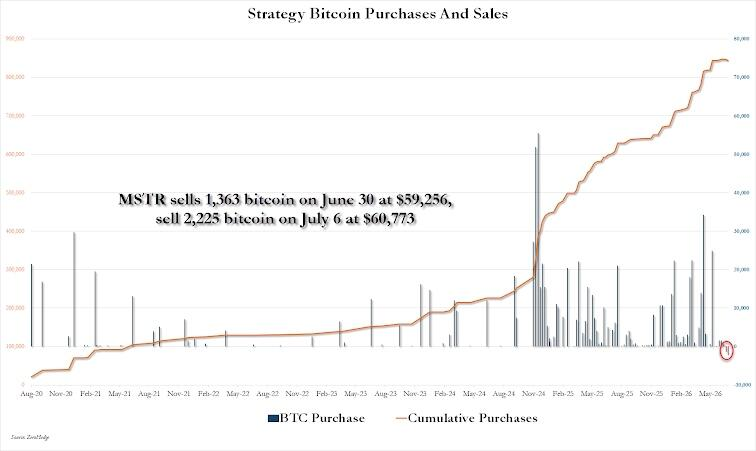
Bitcoin initially fell toward $61,000, triggered by Strategy's sale of approximately $216 million in Bitcoin holdings. This was the company's second major divestment this year, part of its recently announced financing structure adjustment plan.
However, Trump's subsequent public remarks in the Oval Office quickly reversed market sentiment. Responding to a reporter's question, he said, "I have become a firm believer in cryptocurrency," prompting Bitcoin to rally to its daily high, eventually closing up about 1.4% at $63,571. Ethereum also gained 0.7% to $1,787.
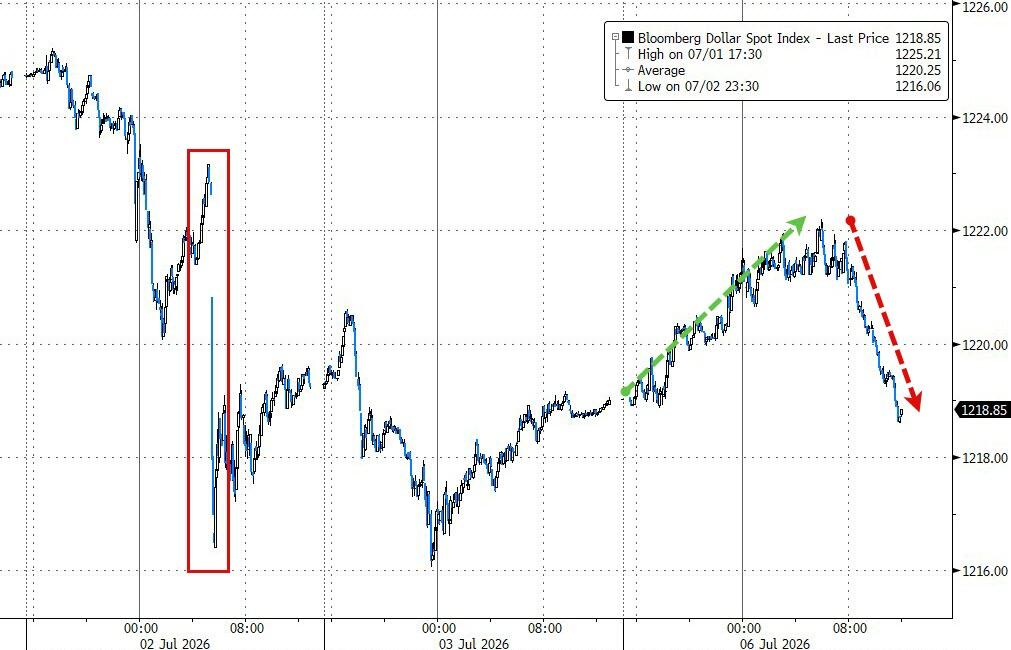
The U.S. dollar index closed largely flat on Monday, rising during the session to retest the gap left after last week's non-farm payrolls report, but ultimately gave up those gains.
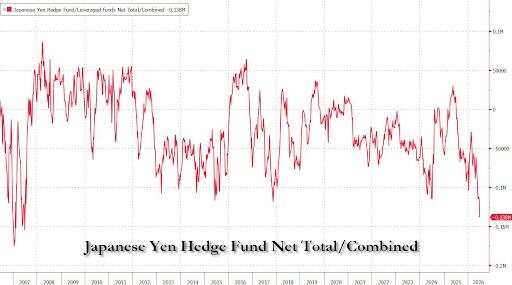
Regarding the yen, the dollar rose 0.4% against the yen to 162.03, nearing its 40-year high of 162.84, indicating the market continues to test Japanese authorities' intervention willingness. Meanwhile, hedge fund short positions on the yen are near historic highs.
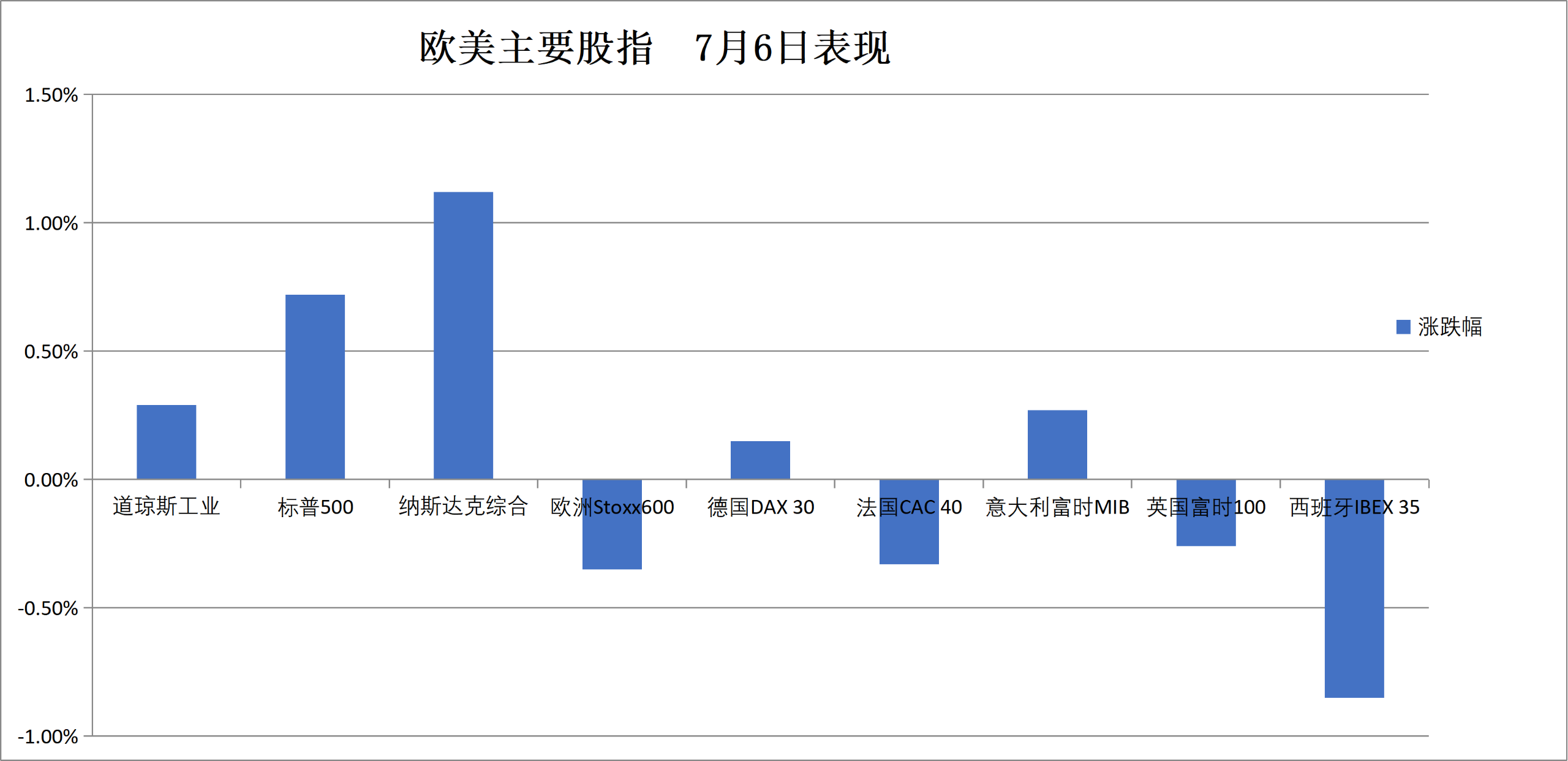
U.S. stocks rebounded broadly on Monday, with tech stocks (Nasdaq) leading gains, and the Dow breaking above 53,000 points for the first time. Buying resumed after the long weekend following last week's sell-off post-non-farm payrolls.
Major U.S. Stock Indices:
Returning from the long weekend, the S&P 500 closed up 54.19 points, or 0.72%, at 7,537.43.
The Dow Jones Industrial Average closed up 155.84 points, or 0.29%, at 53,055.91, surpassing its previous closing record high set on non-farm payrolls day (July 2).
The Nasdaq closed up 288.488 points, or 1.12%, at 26,121.16. The Nasdaq 100 index closed up 368.66 points, or 1.26%, at 29,697.873.
The Russell 2000 closed up 0.45%, at 3,009.541.
The VIX volatility index closed down 1.58%, at 15.56, having stabilized around 10.30 since 15:00 Beijing time and declining persistently as U.S. stocks opened.
U.S. Stock Sector ETFs:
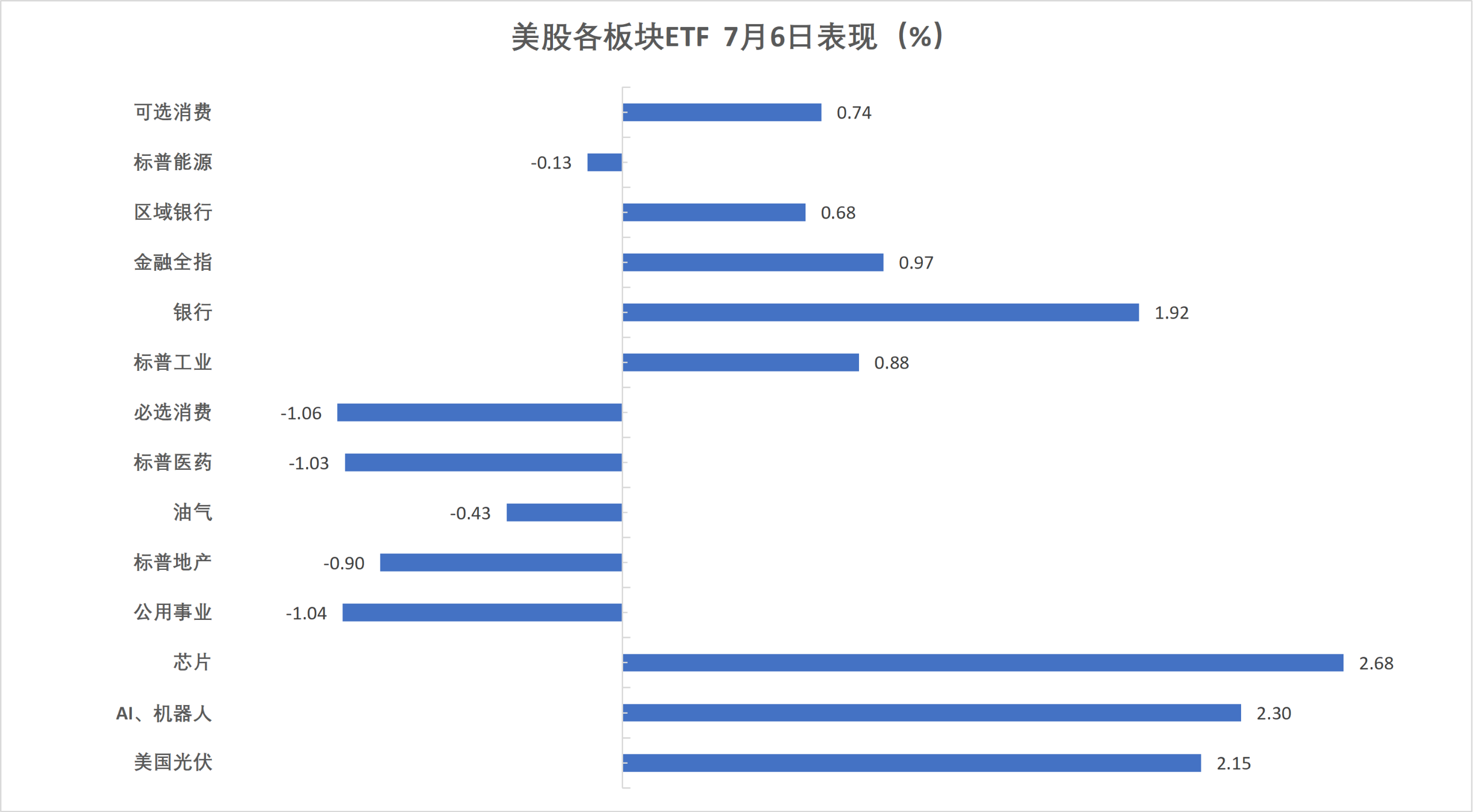
Most U.S. stock sector ETFs closed higher. The Global Tech Stocks Index ETF rose 2.18%, the Semiconductor ETF rose 2.03%, the Technology Sector ETF and Internet Index ETF gained up to 1.67%, while the Energy Sector ETF and Biotechnology Index ETF fell up to 0.20%.
(July 6: U.S. Stock Sector ETFs)The "Magnificent Seven":
The Wind U.S. Tech Stock Magnificent 7 index rose 1.42%.
Tesla closed up 6.69%, Meta up 2.98%, Google A up 1.82%, Apple up 1.31%, Amazon up 0.61%, Nvidia up 0.37%, Microsoft down 0.96%.
Chip Stocks:
The Philadelphia Semiconductor Index closed up 2.17%, at 12,900.142.
TSMC ADR rose 4.07%, AMD rose 6.61%.
Chinese Stocks:
The Nasdaq Golden Dragon China Index closed up 1.71%, at 6,013.62.
- Among popular Chinese stocks, BYD, Tencent, ASE Technology, and Canadian Solar closed up 4.5%, Nio and Meituan up 4.1%, XPeng up 3.6%, New Oriental and NetEase up 3%, Alibaba up 1.9%.
Other Individual Stocks:
Circle rose 6.24%.
The European STOXX 600 index retreated from its record closing high of 652.77 set last Friday (July 3, the day after the U.S. non-farm payrolls report) but hit an intraday record high of 654.44 early Monday.
Pan-European Indices:
The European STOXX 600 index closed down 0.35%, at 650.50.
The Eurozone STOXX 50 index closed down 0.23%, at 6,398.01.
National Indices:
Germany's DAX 30 index closed up 0.15%, at 25,817.89, setting a record closing high for the third consecutive session and rising for five straight days (gaining 4.84% over the period).
France's CAC 40 index closed down 0.33%, at 8,479.87.
Britain's FTSE 100 index closed down 0.26%, at 10,651.77.
(July 6: Performance of Major U.S. and European Indices)Sectors and Stocks:
Among Eurozone blue-chips, Anheuser-Busch InBev closed down 4.11%, Bayer down 4.09%, Iberdrola down 3.81% (third biggest decliner), L'Oréal down 1.16%, and Hermès down 0.88% performed poorly.
Among all components of the European STOXX 600, BE Semiconductor Industries closed down 5.49%, Maersk B-shares down 5.45%, Kongsberg Maritime down 4.79% (third biggest decliner).