Are the "Magnificent Seven" No Longer Enough? SpaceX IPO Attracts Retail Frenzy, Wall Street Serves Up the "AI Tech Ten"

marsbit发布于2026-06-16更新于2026-06-16

文章摘要

The article discusses a potential shift in Wall Street's categorization of major tech stocks, driven by SpaceX's highly successful IPO. On its first day of trading, SpaceX attracted $117 million in net purchases from retail investors, accounting for 56% of all U.S. retail stock buys that day. This surge has prompted research firm Vanda to propose a new group called the "FAB 10" (Frontier AI & Big Tech 10). This concept suggests replacing the long-standing "Magnificent Seven" with ten companies believed to define the next decade of AI and technology. The proposed FAB 10 would include the original seven giants plus SpaceX and the yet-to-be-public AI firms OpenAI and Anthropic, both anticipated to go public later this year with valuations potentially reaching trillions. This contrasts with another proposed grouping, Bank of America's "AI Big 10," which adds semiconductor companies like Broadcom, AMD, and Micron to the core seven, focusing more on hardware. The divergence highlights different bets on the future drivers of tech growth. Analysts note that the massive influx of retail money into new listings like SpaceX might divert capital from other hot sectors, such as chip stocks, and warn that high valuations across the tech sector may indicate bubble risks.

Author: Claude, TechFlow Deep Tide

Deep Tide TechFlow Introduction:SpaceX's debut on Friday attracted $117 million in net retail purchases, accounting for 56% of the total U.S. retail stock buying that day. Based on this, research firm Vanda proposed the new "FAB 10" concept, advocating for replacing the long-standing "Magnificent Seven" with a frontier AI and tech top ten, including SpaceX, OpenAI, and Anthropic. The latter two are not yet public, but are expected to list later this year with valuations potentially exceeding a trillion dollars each.
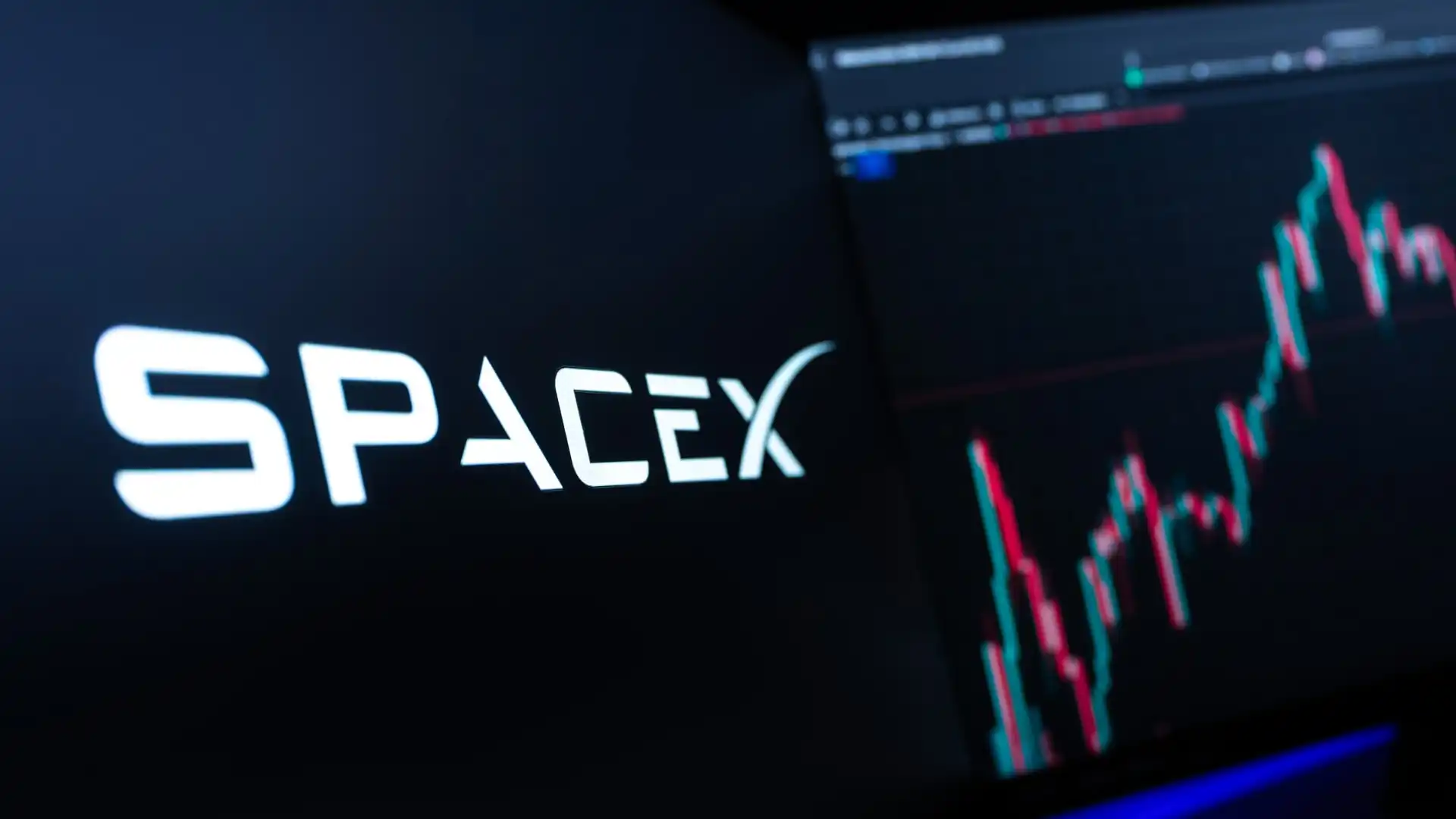
SpaceX's market debut is rewriting the way Wall Street labels tech stocks.

According to a report released by Vanda Research last Sunday, cited by Cailian Press, the frenzy among retail investors for SpaceX's IPO last Friday was a huge success, sparking discussions in the market about redefining the entire tech industry. Prior to this, this fundraising round of approximately $75 billion was already the largest IPO on record. SpaceX priced its shares at $135 each, giving it a valuation of about $1.75 trillion, placing it among the world's ten most valuable publicly listed companies.

On SpaceX's Debut, Retail Buying Constituted 56% of the Day's Entire Market

Vanda's data quantifies this frenzy. The report stated that SpaceX attracted $117 million in net retail purchases on its first trading day, accounting for 56% of the total retail stock buying across the entire U.S. market that day.

This figure only reflects secondary market buying on the first day and does not include funds from retail investors who participated in the IPO allocation through brokers. Separate data indicates that retail investors ultimately received about 20% of the allocation in this $75 billion offering, above average; hedge funds got 10%, while long-term institutional investors took 70%.

The concentrated bets by retail investors are further channeling capital towards a handful of mega-cap tech companies. Vanda believes these companies are not only dominating stock market performance but are also driving the entire wave of tech investment.

Vanda: Replace the "Magnificent Seven" with the "FAB 10"

It is based on this judgment that Vanda proposed a new classification framework.

"If markets were dominated by the 'Magnificent Seven' over the past few years, then last Friday might be the clearest signal yet that investors are starting to focus on what we call the 'FAB 10'," Vanda wrote in the report. FAB 10 is short for Frontier AI & Big Tech 10, referring to the ten frontier AI and big tech giants.

According to Vanda's definition, the FAB 10 adds SpaceX, OpenAI, and Anthropic to the original seven giants. The latter two are not yet public, but the market expects them to enter the capital market later this year, with valuations potentially reaching hundreds of billions or even trillions of dollars.

Vanda's reasoning is straightforward: these companies collectively represent the direction of the AI and tech industry for the next decade.

The Same Concept, But Bank of America's Version is Different

Vanda is not the only player packaging mega-cap tech stocks into a new index.
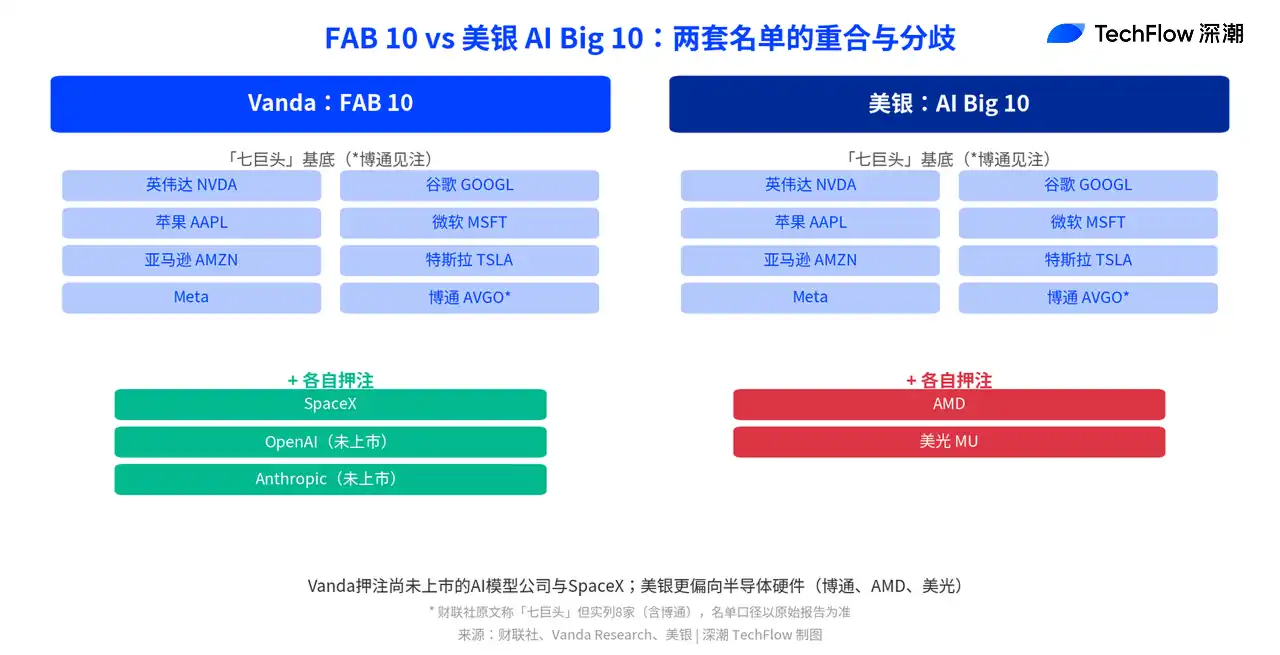
Bank of America's chief strategist, Michael Hartnett, previously proposed an "AI Big 10" portfolio in his "Guide to the Investment Universe." The difference from the FAB 10 lies in the stock selection: BofA's version is the Magnificent Seven plus Broadcom, AMD, and Micron, leaning more towards semiconductor hardware, while Vanda is betting on unlisted AI model companies and SpaceX.

The divergence between the two lists is essentially a different bet on "who defines the next ten years." One side favors the chipmakers, the other favors the model builders and rocket launchers.

Retail Floods into SpaceX, Chip Stocks May Suffer Capital Drain

The other side of the new concept is the redistribution of capital.

Vanda researchers noted that the fervor for SpaceX may be drawing funds away from other hot sectors, especially previously soaring chip stocks, which may be losing favor with retail investors. In other words, even within the FAB 10, favor might not be evenly spread; the capital-attracting effect of new entrants could come at the cost of pullbacks for older members.

However, analysts also caution that valuations across the tech sector are already showing signs of froth. SpaceX's IPO at a $1.75 trillion valuation itself is built on optimistic expectations for AI infrastructure. How long this optimism can last remains for the market to answer.

相关问答

QWhat is the concept of 'FAB 10' proposed by Vanda Research, and which companies does it include?

AThe concept of 'FAB 10' (Frontier AI & Big Tech 10), proposed by Vanda Research, is a new classification framework aiming to replace the long-standing 'Magnificent Seven.' It includes the original seven tech giants (like Apple, Microsoft, etc.) and adds SpaceX, OpenAI, and Anthropic. These ten companies are seen as representing the direction of the AI and tech industry for the next decade.

QHow did retail investors contribute to SpaceX's IPO debut, and what was their market share?

AAccording to Vanda Research, on SpaceX's first day of trading, retail investors made a net purchase of $117 million, which accounted for 56% of all retail stock buying in the U.S. market that day. In the overall $75 billion IPO, retail investors ultimately received about 20% of the allocated shares, which is higher than the average allocation.

QWhat is the difference between Vanda's 'FAB 10' and Bank of America's 'AI Big 10' list?

AThe key difference lies in the selected companies. Vanda's 'FAB 10' includes the Magnificent Seven plus SpaceX, OpenAI, and Anthropic, focusing on AI models and space tech. Bank of America's 'AI Big 10' includes the Magnificent Seven plus Broadcom, AMD, and Micron, with a stronger emphasis on semiconductor hardware companies.

QWhat potential market impact does Vanda suggest the rise of 'FAB 10' might have?

AVanda suggests that the influx of capital into new members like SpaceX could draw funds away from other hot sectors. Specifically, semiconductor stocks, which previously experienced significant gains, might lose favor with retail investors. This indicates a potential redistribution of capital within the tech sector, where new entrants' success might come at the expense of older members' performance.

QWhat was SpaceX's valuation at its IPO, and what caution do analysts express regarding this?

ASpaceX went public with a valuation of approximately $1.75 trillion at a share price of $135, making it one of the top ten most valuable publicly traded companies globally. Analysts caution that this valuation, built on optimistic expectations for AI infrastructure, shows signs of a bubble in the overall tech sector, and its sustainability remains to be tested by the market.

你可能也喜欢

XRP Ledger 发布 3.2.0 版本升级并启用 XRPLd 新品牌名

XRP Ledger发布了3.2.0版本,这是对其底层区块链基础设施的一次重要升级。本次更新的核心是将运行网络的软件名称从“rippled”更名为“xrpld”,以更好地反映整个项目生态。 与此前侧重于前端功能的版本不同,3.2.0版本优先进行了后端升级和效率提升,旨在增强网络性能并为未来的扩展做准备。关键改进包括内存优化措施,预计可节省高达40%的服务器内存使用。 此次升级引入了名为“fixCleanup3_2_0”的修改,为单资产金库、借贷协议、权限系统、去中心化交易所、多用途代币和权限域等多个模块带来了安全性增强。开发团队还新增了不变性检查,以确保已删除账户不会在账本上留下不一致的数据,从而加强整个网络的完整性和可靠性。 对于开发者而言,新版本增加了一项重要功能:应用程序无需连接服务器即可检索XRP Ledger协议和服务器定义信息,这将极大便利钱包、区块链浏览器和API等的开发工作。 在可扩展性和稳定性方面,更新包括可配置的区块大小、通过nuDB实现的高效数据库存储,以及将gRPC服务器的TLS/双向TLS支持改为可选,以提升企业用户的性能和连接性。此外,默认对等端口从51235更改为2459,并修复了涉及自动做市商、支付、代币托管、多用途代币、订单簿和RPC等多个方面的问题。出于性能考虑,3.2.0版本暂时禁用了交易不变性检查,但开发团队表示这不会构成安全威胁。

TheNewsCrypto5小时前

XRP Ledger 发布 3.2.0 版本升级并启用 XRPLd 新品牌名

TheNewsCrypto5小时前

交易

现货
合约

热门文章

如何购买S

欢迎来到HTX.com!我们已经让购买Sonic(S)变得简单而便捷。跟随我们的逐步指南,放心开始您的加密货币之旅。第一步:创建您的HTX账户使用您的电子邮件、手机号码注册一个免费账户在HTX上。体验无忧的注册过程并解锁所有平台功能。立即注册第二步:前往买币页面,选择您的支付方式信用卡/借记卡购买:使用您的Visa或Mastercard即时购买Sonic(S)。余额购买:使用您HTX账户余额中的资金进行无缝交易。第三方购买:探索诸如Google Pay或Apple Pay等流行支付方法以增加便利性。C2C购买:在HTX平台上直接与其他用户交易。HTX场外交易台(OTC)购买:为大量交易者提供个性化服务和竞争性汇率。第三步:存储您的Sonic(S)购买完您的Sonic(S)后,将其存储在您的HTX账户钱包中。您也可以通过区块链转账将其发送到其他地方或者用于交易其他加密货币。第四步:交易Sonic(S)在HTX的现货市场轻松交易Sonic(S)。访问您的账户,选择您的交易对,执行您的交易,并实时监控。HTX为初学者和经验丰富的交易者提供了友好的用户体验。

2.6k人学过发布于 2025.01.15更新于 2026.06.02

如何购买S

相关讨论

欢迎来到HTX社区。在这里,您可以了解最新的平台发展动态并获得专业的市场意见。以下是用户对S(S)币价的意见。

活动图片