Restoring Crypto Privacy: ZCASH (ZEC) Makes A Move After 50% Crash

bitcoinist发布于2026-06-11更新于2026-06-11

文章摘要

Following a severe price crash of over 50% triggered by the discovery of a critical counterfeiting vulnerability in its Orchard privacy pool, Zcash (ZEC) is taking steps to restore confidence. The bug, found by a security researcher using AI, could have allowed undetected creation of fake ZEC tokens. Developers from the Zcash Open Development Lab (ZODL) and others quickly patched the flaw, helping the price rebound over 70%. However, Orchard's privacy features make it impossible to verify if any counterfeit tokens were actually created before the fix. To address this, key ecosystem groups including Shielded Labs and The Zcash Foundation have proposed a new system called Ironwood. Its primary goal is to restore users' ability to independently verify Zcash's total circulating supply. Once activated, node operators could confirm the supply hasn't been tampered with. The Ironwood proposal would also block any new coin minting in the Orchard pool and restrict fund movement through a controlled mechanism. This system could provide evidence on whether the vulnerability was ever exploited. If no excess ZEC attempts to leave the pool, it suggests no counterfeiting occurred. Any attempted exit of fake coins would be blocked and destroyed, publicly revealing any attack while protecting the legitimate supply.

Zcash (ZEC) is making a push to restore confidence in its privacy-focused network after a major exploit scare triggered a sharp market selloff. Following a more than 50% price crash in ZEC, developers moved quickly to patch the network vulnerability. They are now proposing a new system designed to help users independently verify the cryptocurrency’s circulating supply and solidify the network’s security protocols.

Zcash Price Rebounds After Exploit Scare and Iron Wood Proposal

Last week, Zcash suffered a steep decline of more than 50%, falling to $250 after reports of a dangerous counterfeiting bug in its Orchard zero-knowledge proof circuit spread across the market. The incident rattled investors and contributed to $116 million in liquidations across the market.

Notably, the flaw was discovered by Taylor Hornby, a security researcher, using an AI auditing framework powered by Claude Opus 4.8. Developers said the vulnerability could have allowed an attacker to create fake ZEC tokens within the Orchard pool without detection.

Despite the sharp selloff and price crash that followed the news, ZEC’s price recovered some of its losses after developers released an emergency fix. CoinMarketCap data shows that the cryptocurrency rebounded by more than 70% to $433 after the Orchard vulnerability was quickly patched through a coordinated effort involving the Zcash Open Development Lab (ZODL) and other ecosystem participants.
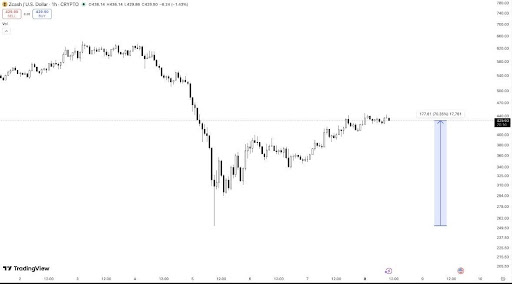
Source: Chart from Simon Dedic on X

While the team successfully fixed the flaw, it remains unclear whether counterfeit ZEC was created before the patch. This concern is more unsettling because the bug had existed within the Zcash network without being detected until recently. Although developers believe exploitation was unlikely, they also noted that Orchard’s privacy features make it impossible for users to verify whether any fake tokens were minted.

To address that issue, Shielded Labs, a non-profit supporting Zcash, is working alongside The Zcash Foundation, Tachyon Group, Valar Group, and the ZODL on a proposal known as Ironwood. The initiative aims to restore users’ ability to verify the soundness of Zcash’s circulating supply without relying on assumptions about other participants or waiting for funds to migrate out of the Orchard pool.

Ironwood Proposal To Restore Zcash Supply Verification

The new proposal was announced in an X post on June 6, in a report authored by the founder and former CEO of Zcash, Jason McGee, founder of Shielded Labs, and Hornby.

The primary goal of Ironwood is to give each user the ability to independently verify Zcash’s supply. Developers said that once activated, users running a node would be able to confirm that the circulating supply has not been tampered with.

The proposal also blocks any transaction that tries to mint a new coin in the Orchard pool. As a result, ZEC would no longer freely circulate within that pool, and funds would only move out through a turnstile mechanism.

The report said Ironwood could also provide evidence about whether the vulnerability was ever exploited during last week’s incident. As users move funds into a new pool, any potential counterfeiter would face a difficult choice: either try to transfer fake coins, risking exposure, or leave the coins behind.

If no extra ZEC tries to leave the Orchard pool, the report noted that it would strongly suggest the flaw was never exploited. If excess funds actually try to exit, they would be blocked and effectively destroyed, preserving the current circulating supply while publicly showing that counterfeiting had occurred.

ZEC trading at $426 on the 1D chart | Source: ZECUSDT on Tradingview.com

相关问答

QWhat caused Zcash (ZEC) to experience a sharp price crash of over 50% last week?

AThe price crash was triggered by reports of a dangerous counterfeiting bug in its Orchard zero-knowledge proof circuit, which could have allowed an attacker to create fake ZEC tokens without detection.

QWho discovered the vulnerability in Zcash's Orchard circuit and how was it found?

AThe flaw was discovered by security researcher Taylor Hornby using an AI auditing framework powered by Claude Opus 4.8.

QWhat is the main purpose of the proposed Ironwood system for Zcash?

AThe primary goal of the Ironwood proposal is to give each user the ability to independently verify Zcash's circulating supply, confirming it has not been tampered with, without relying on assumptions about other participants.

QHow would the Ironwood proposal potentially reveal if the Orchard vulnerability was ever exploited?

AAs users move funds out of the Orchard pool through a new turnstile mechanism, any attempt to transfer counterfeit coins would be blocked and exposed. If no extra ZEC tries to leave, it suggests the flaw was never used. If excess funds try to exit, they are blocked and destroyed, publicly showing counterfeiting occurred.

QWhich organizations are collaborating on the Ironwood proposal for Zcash?

AThe organizations involved are Shielded Labs, The Zcash Foundation, Tachyon Group, Valar Group, and the Zcash Open Development Lab (ZODL).

你可能也喜欢

交易

现货
合约

热门文章

如何购买ZEC

欢迎来到HTX.com!我们已经让购买Zcash(ZEC)变得简单而便捷。跟随我们的逐步指南,放心开始您的加密货币之旅。第一步:创建您的HTX账户使用您的电子邮件、手机号码注册一个免费账户在HTX上。体验无忧的注册过程并解锁所有平台功能。立即注册第二步:前往买币页面,选择您的支付方式信用卡/借记卡购买:使用您的Visa或Mastercard即时购买Zcash(ZEC)。余额购买:使用您HTX账户余额中的资金进行无缝交易。第三方购买:探索诸如Google Pay或Apple Pay等流行支付方法以增加便利性。C2C购买:在HTX平台上直接与其他用户交易。HTX场外交易台(OTC)购买:为大量交易者提供个性化服务和竞争性汇率。第三步:存储您的Zcash(ZEC)购买完您的Zcash(ZEC)后,将其存储在您的HTX账户钱包中。您也可以通过区块链转账将其发送到其他地方或者用于交易其他加密货币。第四步:交易Zcash(ZEC)在HTX的现货市场轻松交易Zcash(ZEC)。访问您的账户,选择您的交易对,执行您的交易,并实时监控。HTX为初学者和经验丰富的交易者提供了友好的用户体验。

898人学过发布于 2024.03.29更新于 2026.06.02

如何购买ZEC

相关讨论

欢迎来到HTX社区。在这里,您可以了解最新的平台发展动态并获得专业的市场意见。以下是用户对ZEC(ZEC)币价的意见。

活动图片