A fresh leak published late Thursday has ignited the most charged governance dispute in Bitcoin since the SegWit2x era. In a report by The Rage, journalist L0la L33tz published messages attributed to Bitcoin Knots maintainer Luke Dashjr that outline a hard fork concept introducing a trusted multisignature “committee” empowered to retroactively alter data on the blockchain in order to remove illicit content, with the removals cryptographically attested by zero-knowledge proofs (ZKPs).
Hard Fork Puts Bitcoin Immutability At Risk
“Text messages shared with The Rage show that the Knots maintainer is considering a hardfork to implement a trusted multisig committee that can retrospectively alter the blockchain to remove illicit content,” the article states. It was updated on September 25, 2025.
L33tz summarized the stakes starkly in her accompanying X thread: “This phrase has been greatly inflated over the years, but what Luke is proposing here is an attack on Bitcoin.” She added that a hard fork “that would implement a trusted committee with the power to retroactively alter the blockchain goes too far,” arguing that such a design “would turn Bitcoin into a permissioned network.”
The published chat excerpts show Dashjr exploring a buried-state modification technique intended to deal with the risk that child sexual abuse material (CSAM) might be mined into a block. “I’m trying to come up with mitigation strategies for the risk CSAM gets mined — so my thought is after a block is identified as having CSAM, flag that one tx and use a ZKP for it,” one message reads, followed by: “Technically a hardfork, but since it’s buried, should be safe,” and “Probably would have a multisig sign-off on each ZKP.”
The leak lands amid a year-long policy schism over inscriptions/ordinals, “spam” filtering, and the growing influence of Bitcoin Knots, a distribution maintained by Dashjr that ships stricter default policies for what a node relays or mines. Although debates about content filtering predate 2025, the notion of an explicit on-chain remediation mechanism ratified by a committee has provoked unusually sharp pushback from prominent industry figures.
Reactions From X
BitMEX Research called the idea “more and more like an attack on Bitcoin’s key censorship resistance characteristics.”
Blockstream CEO Adam Back reacted: “Ugh. far worse than i could’ve imagined. Skipped past slippery slope arguments, @lukedashjr / knots plan is to jump straight to the censorship tech that myself and @csuwildcat were specifically warning about with legal citations from prior internet cases.”
Abra founder Bill Barhydt warned that “Bitcoin War 2 seems imminent,” adding: “If hard fork rumors are true, I fear my maxi friends have bought into a narrative that could lead to a bait-and-switch by a small faction (e.g., one rogue developer)… Bottom line: Censoring the mempool is a bad idea. Let fee markets do their job.”
JAN3’s Samson Mow urged restraint and a long time-horizon for protocol changes: “There exists a third faction that isn’t Core or Knots. We simply want Bitcoin to be secure, unchanging, and conservative. We believe development should be framed on a centuries-long timescale, with any proposed change approached with utmost care and caution. Primum non nocere.” In a separate message he reassured users: “There’s no need to pick a side… You are the network.”
Will JPEGs Burn Bitcoin To The Ground?
L33tz’s article also asserts that attorneys are preparing public letters advocating for sanctions targeting illicit content on Bitcoin and that Dashjr has been involved “behind the scenes,” though, according to the article, “feels [it is] better to stay out of [it] publicly on advice of counsel.” The piece argues that formalizing any committee with authority to rewrite history would “effectively erase Bitcoin’s censorship resistance” and could expose node operators to liability if they decline to implement removals—concerns that touch the core of Bitcoin’s immutability ethos.
If implemented, a buried-state rollback ratified by a trusted sign-off—even one paired with ZKPs—would mark a decisive departure from Bitcoin’s consensus model, where reorgs are emergent, permissionless, and economically disincentivized beyond shallow depth. The leaked concept suggests memorializing a special-case pathway to excise data post-confirmation, which critics fear could become a vector for compelled takedowns, politicized censorship, or regulatory capture over time. That risk profile is precisely why some are labeling the proposal an attack on Bitcoin’s “key censorship resistance characteristics.”
As of publication, Dashjr has not posted a public technical specification or BIP for the mechanism described in the leaked messages, and no activation pathway has been formally proposed. But the reaction has been immediate and polarizing.
“No matter what side you stand on in this debate… proposing the implementation of such a decree in the form of a hardfork that would implement a trusted committee with the power to retroactively alter the blockchain goes too far,” L33tz wrote, concluding: “Burning Bitcoin to the ground over JPEGs is not worth it.”
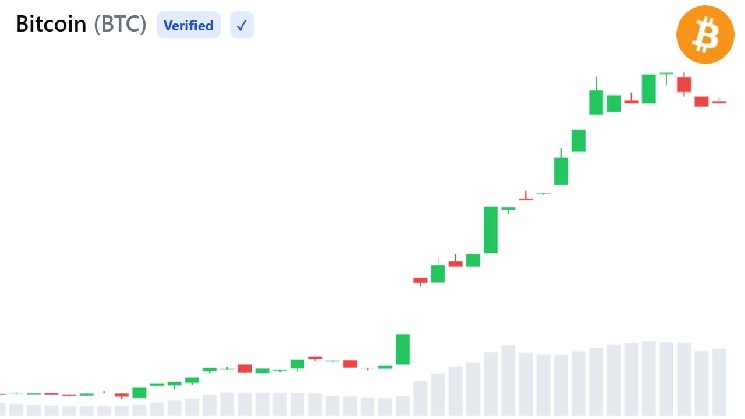
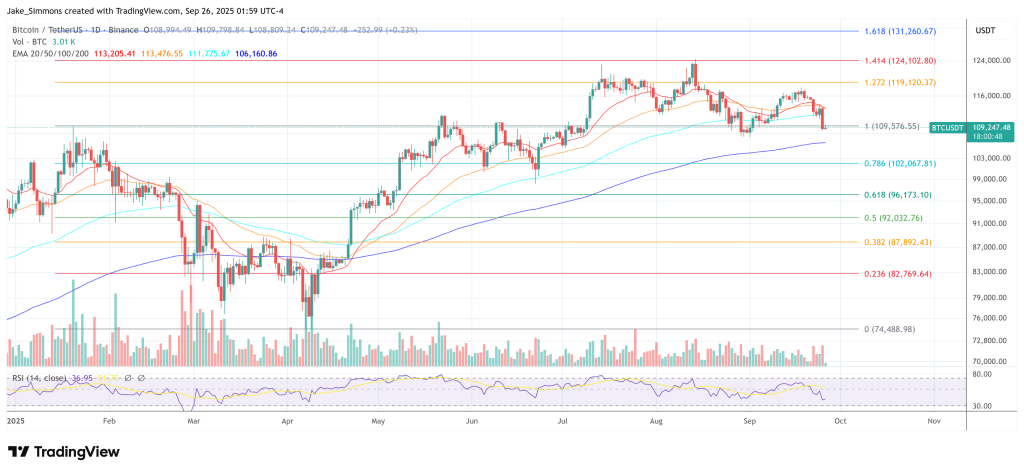
At press time, BTC traded at $109,247.

Related Posts