Latest Speech by Dan Bin: Do Not Miss Out on a Great Era

链捕手Xuất bản vào 2026-07-02Cập nhật gần nhất vào 2026-07-02

Tóm tắt

Dan Bin, Chairman of Dongfang Harbor, delivered a keynote speech titled "Don't Miss a Great Era" at the Glonghui "2026—All in Silicon-Based New纪元" Mid-Year Strategy Summit on June 29th. Addressing concerns about an AI bubble, he argued from an industrial cycle perspective that the risk of missing an entire epoch far outweighs the risk of short-term泡沫. He positioned humanity at the dawn of the AI era, which he views as potentially more disruptive than the electronic, internet, and mobile internet eras. Dan Bin suggested the AI wave is unlikely to end in just three to four years. Drawing a parallel to the internet era's decade-long cycle starting from the 1994 Netscape IPO, he indicated that with ChatGPT's late-2022 launch as a marker, a key risk assessment point might not arrive until around 2033. He emphasized that technological progress is the primary driver of long-term capital market growth, with factors like trade wars and interest rates being secondary. Expanding his perspective to a civilizational scale, Dan Bin presented a thought experiment on silicon-based life potentially replacing carbon-based life as a direction for延续 Earth's civilization, especially given cosmic timescales and interstellar travel challenges. He noted AI's必然 weaponization, citing examples from the Russia-Ukraine war, and stated that neither the U.S. nor China can afford to lose the AI race, with each having distinct competitive advantages. Reflecting on investment lessons, he mentioned Warren B...

Author: Dan Bin

On June 29th, Dan Bin, Chairman of Oriental Harbor, delivered a keynote speech titled Do Not Miss Out on a Great Era at the Gelonghui "2026--All in Silicon-based New Era" Mid-Term Strategy Summit.

Addressing market concerns about AI bubbles from an industry cycle perspective, Dan Bin pointed out:"The risk of missing an entire era may be greater than the risk of worrying about short-term bubbles."

In his view, humanity is standing at the starting point of the artificial intelligence era—this era may be even more disruptive than the electronic era, the internet era, and the mobile internet era.

He judges that the AI wave is unlikely to conclude in just three or four years. At the industry level, it might follow the ten-year rhythm of the internet era. With the release of ChatGPT at the end of 2022 as the starting point, a key reference point for risk assessment could be around 2033.

He pointed out that the "primary driver" of long-term capital market growth is technological progress, while factors like trade wars, interest rate hikes, and wars are secondary. He also discussed the long-term logic of silicon-based life replacing carbon-based life from the perspective of human civilization, emphasizing the importance of focusing on primary drivers, respecting corporate innovation, and market fundamentals in investment.

Finally, he stressed the importance of not failing this great era.

"The tide never turns back, the wheel of the era rolls forward silently. Being born in such times is a great fortune itself; don't let hesitation trap your steps, don't let short-sightedness waste the years—never miss this magnificent, grand era that belongs to us."

The following are excerpts from Dan Bin's speech compiled by Gelonghui, shared with everyone.
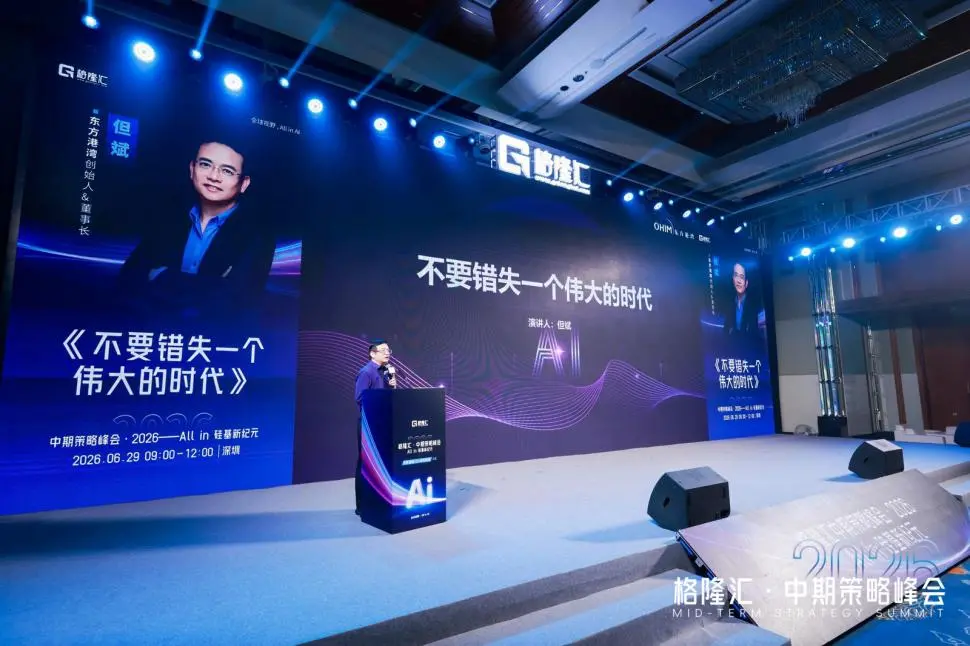
01 From an Industry Cycle Perspective, the Risk of Missing the AI Era is Greater Than the Risk of Worrying About Short-Term Bubbles

Recently, people keep asking: Is there a bubble in AI? What's the short-term view?

Dan Bin's response is: From the perspective of long-term industry development, for market participants, the risk of missing an entire era may be greater than the risk you worry about regarding short-term bubbles. Of course, in the face of short-term volatility and uncertainty, investors also need to make independent judgments based on their own investment horizon and risk tolerance.

Looking back at the 55-year history of Nasdaq from its establishment in 1971 to the present, the core driving force that has truly propelled long-term capital market growth is technological progress, not short-term factors like interest rates or macroeconomic policies.
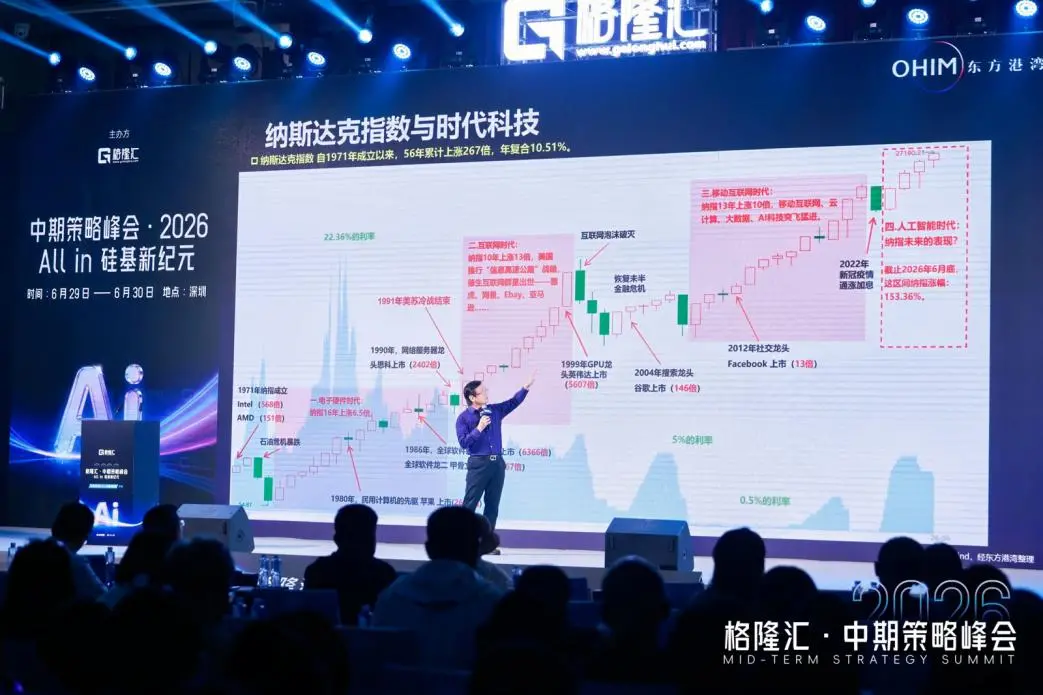
Some worry that a high-interest-rate environment will cause market collapse.

Let's look at history: The US benchmark interest rate once reached as high as 22% in the 1970s, yet the electronic hardware era gained 6.5x over 16 years; the internet era experienced a full interest rate cut-hike cycle and surged for a full 10 years; the same was true for the mobile internet era. Interest rates have never been the primary cause; technological progress is the primary driver.

02 The AI Era is More Disruptive Than the Previous Three Eras; Its Industry Cycle Might Follow the Ten-Year Rhythm of the Internet Era

He further pointed out that at last year's annual meeting, he predicted that 2026 might resemble 1994—forming a cross-star pattern followed by a significant rise. The years '23, '24, and '25 have already seen three years of strong gains, and this year continues to show strong industry momentum.

"Why? Because the AI era is more disruptive than the previous three eras—the electronic era, the internet era, and the mobile internet era."

Dan Bin's basic judgment is: The artificial intelligence era will have a relatively long industry cycle, similar to the internet eraChatGPT was released at the end of 2022. If we reference the historical "ten-year" rhythm of the internet, that point (around 2033) is likely a reference window when risk needs to be examined. Before that, the industry development of AI is unlikely to conclude in just three or four years. However, short-term market fluctuations and local bubbles objectively exist, and investors still need to make rational assessments based on their own situations.

03 The Long-Term Vision of Silicon-Based Life: A Thought Experiment from a Civilizational Perspective

Dan Bin presented two videos, shifting the perspective from capital markets to the dimension of human civilization.

His viewpoint is highly imaginative: Silicon-based life replacing carbon-based life is a highly probable direction. If Earth's civilization is to continue, silicon-based life will likely replace carbon-based life or become the dominant productive force.

He provided a set of vastly different time coordinates:

In 4.1 billion years, the Sun may expand into a red giant and engulf Earth, or it may collapse into a white dwarf.

The Voyager spacecraft has been flying for 77 years and still has about 70,000 light-years to go before leaving the solar system.

In 10 billion years, the Andromeda Galaxy may collide with the Milky Way—by then, humanity must fly out of the Milky Way.

"Carbon-based life cannot fly out of the Milky Way. But silicon-based life—it is a million times smarter than us, thinking and working non-stop 24/7. The revolutionary changes it brings may propel civilization far beyond our understanding."

Dan Bin stated that this is not a short-term investment judgment but provides a framework for thought: The economic growth paradigm brought about by silicon-based intelligence may have infinite possibilities and a longer industry chain. Understanding this helps to transcend immediate distractions and examine long-term trends.

04 Technology Rewrites the Rules of War; Neither China Nor the US Can Afford to Lose the AI Competition

Dan Bin showed a recent example from the Russia-Ukraine battlefield: a Russian soldier was captured by a Ukrainian drone and robot.

"The weaponization of AI is an exponential change, an inevitable process."

He believes that neither China nor the United States can afford to lose this AI race. The US has a first-mover advantage in foundational technology and top talent, while China has formed differentiated competitive strengths in application scenarios, data scale, and industry chain completeness. Both sides are continuously increasing their long-term AI investments.

05 Buffett's "Regret" and Oriental Harbor's Evolution in Cognition

Dan Bin compared the portfolio changes of the "old-timers" in China and the US.

Buffett bought Google in the third quarter of last year and continued to add to the position this year. Google has now entered Berkshire Hathaway's top five holdings.

"Before his passing, Charlie Munger said in an interview that in his era, he should have made $100 billion or even $1 trillion. He had such a close relationship with Bill Gates, yet he only symbolically bought 100 shares of Microsoft. Microsoft rose 7,000 times."

"If he had taken $100 million from Coca-Cola to buy Microsoft, that would have become $700 billion, more than all the money he ever made."

Dan Bin admitted that these historical fragments cannot predict the future, but they remind us that investment requires constantly breaking cognitive boundaries. Oriental Harbor is also iterating and evolving: our company's research team continues to conduct in-depth tracking in AI foundational computing power, storage, and other areas.

06 Settle the Mind, Maintain Perspective, and Rationally Grasp the Chips Endowed by the Era

Dan Bin concluded with a poem he wrote:

"The tide never turns back, the wheel of the era rolls forward silently.

Some are trapped in the immediate noise and details; some stand above the cycles, gazing at the starry river.

Don't dwell on momentary ups and downs, don't blindly follow fleeting trends of heat or cold.

Mountains and rivers are reborn amidst upheavals; opportunities blossom through prolonged perseverance.

Being born in such times is a great fortune itself; don't let hesitation trap your steps, don't let short-sightedness waste the years.

Live well, move forward earnestly, and never miss this magnificent, grand era that belongs to us."


Tiền kỹ thuật số thịnh hành

Câu hỏi Liên quan

QAccording to Dan Bin's speech, what is the primary driver of long-term capital market growth, and how does it compare to short-term factors like interest rates?

AAccording to Dan Bin, technological progress is the primary driver of long-term capital market growth. He argues that short-term factors like interest rates, trade wars, or macro policies are secondary influences. Historical examples from the Nasdaq show that markets have experienced significant growth during periods of high interest rates when driven by major technological eras like electronics, the internet, and mobile internet.

QWhat is Dan Bin's perspective on the AI bubble concern? What does he believe is the greater risk?

ADan Bin believes that the risk of missing out on the AI era is far greater than the risk of short-term market bubbles. From an industrial cycle perspective, he argues that fearing short-term泡沫 and staying on the sidelines could mean missing a transformative technological shift. While acknowledging short-term volatility exists, he emphasizes that the potential cost of missing the era outweighs bubble concerns.

QHow does Dan Bin characterize the AI era in comparison to previous technological eras like the internet?

ADan Bin characterizes the AI era as more disruptive than previous technological eras, including the electronics era, the internet era, and the mobile internet era. He suggests it has the potential to be the most transformative period yet.

QWhat is the long-term, civilization-level vision that Dan Bin discusses regarding the future of intelligence?

ADan Bin discusses a long-term vision where silicon-based life (AI/advanced intelligence) may replace or become the dominant form of productivity compared to carbon-based life (humans). He frames this within a cosmic timescale, suggesting that for Earth's civilization to persist and expand beyond the solar system and galaxy, silicon-based intelligence, with its superior capabilities for continuous work and problem-solving, is a probable and necessary evolutionary direction.

QWhat historical investment example does Dan Bin use to illustrate the importance of adapting to new technological paradigms?

ADan Bin uses the example of Warren Buffett and Charlie Munger missing the massive opportunity in Microsoft. He mentions that Munger, despite being close friends with Bill Gates, only bought 100 shares of Microsoft symbolically. Dan Bin calculates that if Berkshire Hathaway had invested just $100 million from Coca-Cola into Microsoft early on, it could have grown to $700 billion—far surpassing many of their other gains—highlighting the cost of not fully embracing a transformative tech shift.

Nội dung Liên quan

Anthropic tạo ra một bộ 'hình phạt' cho AI vượt ngục: Yêu cầu của bạn, bốn cách chết

Bài viết thảo luận về hệ thống phân loại và đánh giá mức độ nghiêm trọng của các yêu cầu "jailbreak AI" (vượt rào an ninh AI) mới được Anthropic công bố, có tên là Khung Đánh giá Mức độ Nghiêm trọng Vượt Rào AI (CJS). Hệ thống phân loại của Anthropic chia các yêu cầu liên quan đến an ninh mạng thành bốn loại: (1) Nguy hiểm cao (ví dụ: phần mềm tống tiền) bị chặn hoàn toàn; (2) Công cụ kép rủi ro cao (như thử nghiệm thâm nhập); (3) Công cụ kép rủi ro thấp (như quét lỗ hổng đã biết); và (4) Vô hại (như gỡ lỗi). Tuy nhiên, hệ thống được thiết kế quá nhạy, dẫn đến việc chặn nhiều yêu cầu hợp pháp (ví dụ đếm chữ cái, debug). Để đánh giá mức độ nguy hiểm của một lần vượt rào, Anthropic đề xuất khung CJS với bốn thang đo: Mức độ tăng cường khả năng tấn công (0-4), Phạm vi khả năng (0-2), Độ khó vũ khí hóa (0-2) và Tính dễ phát hiện (0-2). Tổng điểm 0-10 xác định mức độ nghiêm trọng từ CJS-0 (thông tin) đến CJS-4 (khủng hoảng). Điểm số phụ thuộc vào bối cảnh thời gian và kiến thức của người dùng. Bài viết chỉ ra rằng Anthropic, thông qua liên minh Glasswing với các tập đoàn công nghệ lớn, đang nắm quyền định nghĩa "nguy hiểm" và thiết lập tiêu chuẩn này. Điều này có thể ảnh hưởng đến việc kiểm duyệt mô hình và trải nghiệm người dùng. Bối cảnh được đặt trong lệnh cấm xuất khẩu của Mỹ lần đầu tiên nhắm vào API mô hình AI (như với Fable 5), cho thấy sự kiểm soát công nghệ ngày càng chặt chẽ. Khung CJS được xem như một công cụ để hợp thức hóa các quyết định kiểm soát đó. Cuối cùng, bài viết đưa ra một số lời khuyên cho người dùng khi bị chặn: điều chỉnh từ ngữ trong lệnh, cảnh giác với tín hiệu bị giáng cấp chất lượng phản hồi, hoặc kiên nhẫn chờ đợi các cải tiến không rõ thời hạn từ Anthropic.

marsbit27 phút trước

Anthropic tạo ra một bộ 'hình phạt' cho AI vượt ngục: Yêu cầu của bạn, bốn cách chết

marsbit27 phút trước

Thu nhập 100 triệu đô la mỗi năm, hai bạn cùng phòng Berkeley thế hệ 9x tạo ra mô hình kinh doanh AI sinh lời nhất

Công ty không tạo ra AI nào nhưng kiếm được 100 triệu USD mỗi năm! Đó là Arena, nền tảng bảng xếp hạng và đánh giá mô hình AI khổng lồ, bắt nguồn từ một dự án nghiên cứu mã nguồn mở có tên Chatbot Arena do một nhóm từ UC Berkeley khởi xướng vào năm 2023. Cốt lõi của Arena là một bảng xếp hạng được xây dựng dựa trên hàng chục triệu lượt bình chọn "mù" của người dùng thực. Người dùng nhập prompt, hai mô hình ẩn danh trả lời và họ chọn câu trả lời tốt hơn. Cơ chế "đấu trường" đơn giản này đã thu hút hơn 1000 triệu lượt đánh giá, trở thành điểm tham chiếu quan trọng. Tất cả các gã khổng lồ như OpenAI, Google, Anthropic, Meta đều đưa mô hình hàng đầu của họ lên đây để kiểm tra, thậm chí cả GPT-5 dưới bí danh. Bí quyết kiếm tiền của Arena nằm ở dịch vụ thương mại AI Evaluations, ra mắt tháng 9 năm ngoái. Các công ty phát triển mô hình và doanh nghiệp lớn trả phí để Arena huy động cộng đồng hàng triệu người dùng đánh giá chuyên sâu mô hình của họ, cung cấp phân tích hiệu suất trong thế giới thực mà các bài kiểm tra tiêu chuẩn không có được. Đây là mô hình kinh doanh "bán dụng cụ" trong cơn sốt AI: khi các công ty đua nhau cải thiện mô hình, nhu cầu cho dịch vụ đánh giá và tinh chỉnh sau khi triển khai càng lớn. Dự án này được đồng sáng lập bởi hai bạn cùng phòng tại Berkeley: CEO Anastasios Angelopoulos (chuyên gia học máy) và CTO Wei-Lin Chiang (người đứng sau chatbot mã nguồn mở Vicuna nổi tiếng). Dự án tách ra thành công ty vào mùa xuân 2025, nhanh chóng huy động được 100 triệu USD vốn hạt giống, định giá 6 tỷ USD. Đến tháng 1 năm nay, họ đã hoàn thành vòng gọi vốn Series A 150 triệu USD, định giá 1.7 tỷ USD. Arena không ngừng mở rộng, gần đây ra mắt Chế độ Tác nhân (Agent Mode) để đánh giá các AI thực hiện nhiệm vụ dài, phức tạp như viết mã, nghiên cứu. Arena đặt cược vào một tương lai nơi việc đánh giá khách quan, dựa trên dữ liệu thực tế về hiệu suất AI sẽ ngày càng quan trọng và có giá trị.

marsbit31 phút trước

Thu nhập 100 triệu đô la mỗi năm, hai bạn cùng phòng Berkeley thế hệ 9x tạo ra mô hình kinh doanh AI sinh lời nhất

marsbit31 phút trước

Thu về 24.000 sao: Một lệnh duy nhất, AI tự tìm kiếm kỹ năng

Vercel, công ty đứng sau Next.js, đã ra mắt công cụ Skills - một trình quản lý gói (package manager) dành cho AI Agent, cho phép cài đặt các "kỹ năng" (skill) chuyên biệt vào các công cụ lập trình AI như Claude Code, Cursor, Codex... chỉ bằng một dòng lệnh `npx skills add <package>`. Kho lưu trữ chính thức đã đạt 24,000 sao GitHub trong vòng 5 tháng. Một skill là một thư mục chứa tài liệu hướng dẫn (SKILL.md), tài liệu tham khảo và cả script có thể thực thi, giúp AI tuân thủ các quy tắc, phong cách code cụ thể của dự án một cách tự động và lâu dài. Tính năng nổi bật là "Find Skills", một skill giúp AI tự động tìm kiếm và cài đặt skill phù hợp nhất dựa trên yêu cầu của người dùng, hoạt động như một công cụ tìm kiếm năng lực cho AI. Tuy nhiên, tiện ích đi kèm rủi ro bảo mật lớn. Các nghiên cứu từ Snyk và Koi Security cho thấy hàng trăm skill chứa mã độc, có khả năng đánh cắp khóa, thực hiện prompt injection hoặc phân phối phần mềm độc hại. Khác với npm, skill hợp nhất lệnh, mã code và quyền truy cập đầy đủ, tạo ra mối đe dọa trực tiếp đến hệ thống cục bộ. Vercel, thông qua sáng kiến này, đang tìm cách định hình lại lớp công cụ AI, biến trải nghiệm "một dòng lệnh" từng thành công với Next.js thành chuẩn mực mới trong việc mở rộng năng lực cho trợ lý lập trình AI, đồng thời cũng đặt ra những thách thức bảo mật cần được quản lý cẩn thận.

marsbit32 phút trước

Thu về 24.000 sao: Một lệnh duy nhất, AI tự tìm kiếm kỹ năng

marsbit32 phút trước

Claude Engineer Cuối Cùng Đã Giao Ra Fable 5 Đốt Quyết, Hướng Dẫn Bạn Phá Vỡ Khoảng Cách Thông Tin Với Mô Hình

Fable 5 ra mắt với sự chú ý toàn cầu, từ kỳ vọng cao đến lệnh cấm và hạn chế truy cập. Claude Code kỹ sư Thariq Shihipar chia sẻ hướng dẫn sử dụng Fable 5 hiệu quả, giải quyết vấn đề chênh lệch thông tin giữa người dùng và mô hình. Ông so sánh "bản đồ" (prompt, kỹ năng, ngữ cảnh người dùng cung cấp) với "lãnh thổ" (môi trường thực tế cần xử lý). Khoảng cách này là "điểm chưa biết". Chất lượng công việc phụ thuộc vào khả năng làm rõ các điểm chưa biết này. Bài viết phân loại "điểm chưa biết" thành bốn loại: Đã biết mình biết (nội dung trong prompt), Đã biết mình chưa biết, Chưa biết mình đã biết (điều hiển nhiên không nói ra), và Chưa biết mình chưa biết. Để thu hẹp khoảng cách, tác giả đề xuất các phương pháp lặp đi lặp lại trước, trong và sau khi thực hiện công việc: - **Trước khi thực hiện:** Quét điểm mù, động não tạo nguyên mẫu, đặt câu hỏi ngược, tham khảo tài liệu, lập kế hoạch triển khai. - **Trong khi thực hiện:** Ghi chú lại các quyết định và điều chỉnh trong quá trình thực thi. - **Sau khi thực hiện:** Tạo tài liệu giải thích/giới thiệu và tự kiểm tra kiến thức. Ví dụ, chính video ra mắt Fable đã được Claude Code biên tập bằng cách áp dụng các bước trên: học về kỹ thuật phụ đề, tạo nguyên mẫu đồng bộ hóa, và học về chỉnh màu video. Bài học cốt lõi: Mô hình càng mạnh, việc xác định rõ các "điểm chưa biết" của bạn trước khi bắt đầu càng quan trọng để dẫn đến kết quả tốt hơn. Hãy để Claude giúp bạn tìm ra chúng.

marsbit36 phút trước

Claude Engineer Cuối Cùng Đã Giao Ra Fable 5 Đốt Quyết, Hướng Dẫn Bạn Phá Vỡ Khoảng Cách Thông Tin Với Mô Hình

marsbit36 phút trước

Token ăn mất 30% lương, hóa đơn AI ở Thung lũng Silicon mất kiểm soát

Token hiện đang tiêu tốn tới 30% tổng lương nhân viên tại SemiAnalysis, một viện nghiên cứu bán dẫn Silicon Valley, nhưng đổi lại mang lại hiệu suất cao gấp nhiều lần chi phí lao động truyền thống. CEO NVIDIA, Jensen Huang, thậm chí khuyến khích các kỹ sư sử dụng Token với ngân sách bằng nửa lương, coi đây là "tư liệu sản xuất" mới. Tuy nhiên, mặt khác, nhiều gã khổng lồ công nghệ như Uber và Microsoft đang vật lộn với hóa đơn AI tăng vọt ngoài tầm kiểm soát, trong khi mối liên hệ giữa việc sử dụng AI và đổi mới sản phẩm thực tế vẫn chưa rõ ràng. Một nghiên cứu của MIT năm 2024 chỉ ra trong 77% công việc liên quan đến thị giác, thuê người vẫn rẻ hơn dùng AI. Báo cáo của SemiAnalysis nhấn mạnh đừng chỉ nhìn vào chi phí hiện tại. Với sự tối ưu hóa phần mềm (như tăng tốc độ xử lý token lên 14 lần) và phần cứng mới (hiệu suất cao gấp 17-32 lần), chi phí token dự kiến sẽ giảm mạnh. Gartner dự báo đến 2030, chi phí suy luận cho mô hình lớn có thể giảm hơn 90% so với 2025. Bài viết kết luận rằng dù các công ty công nghệ đang đầu tư hàng nghìn tỷ USD vào AI và cắt giảm nhân sự, tác động kinh tế rộng lớn vẫn chưa thấy rõ. Đây là giai đoạn "xây đường ống" cần thiết, tương tự như điện lưới hay internet trước đây. SemiAnalysis, với 30% chi phí lương chuyển thành token, đã thấy được đòn bẩy sản xuất khổng lồ và đứng về phía bên kia của dòng chảy. Câu hỏi đặt ra cho các công ty khác là bắt đầu ngay hay chờ đợi và bị tụt lại phía sau.

marsbit36 phút trước

Token ăn mất 30% lương, hóa đơn AI ở Thung lũng Silicon mất kiểm soát

marsbit36 phút trước

Giao dịch

Giao ngay

Bài viết Nổi bật

Làm thế nào để Mua ERA

Chào mừng bạn đến với HTX.com! Chúng tôi đã làm cho mua Caldera (ERA) trở nên đơn giản và thuận tiện. Làm theo hướng dẫn từng bước của chúng tôi để bắt đầu hành trình tiền kỹ thuật số của bạn.Bước 1: Tạo Tài khoản HTX của BạnSử dụng email hoặc số điện thoại của bạn để đăng ký tài khoản miễn phí trên HTX. Trải nghiệm hành trình đăng ký không rắc rối và mở khóa tất cả tính năng. Nhận Tài khoản của tôiBước 2: Truy cập Mua Crypto và Chọn Phương thức Thanh toán của BạnThẻ Tín dụng/Ghi nợ: Sử dụng Visa hoặc Mastercard của bạn để mua Caldera (ERA) ngay lập tức.Số dư: Sử dụng tiền từ số dư tài khoản HTX của bạn để giao dịch liền mạch.Bên thứ ba: Chúng tôi đã thêm những phương thức thanh toán phổ biến như Google Pay và Apple Pay để nâng cao sự tiện lợi.P2P: Giao dịch trực tiếp với người dùng khác trên HTX.Thị trường mua bán phi tập trung (OTC): Chúng tôi cung cấp những dịch vụ được thiết kế riêng và tỷ giá hối đoái cạnh tranh cho nhà giao dịch.Bước 3: Lưu trữ Caldera (ERA) của BạnSau khi mua Caldera (ERA), lưu trữ trong tài khoản HTX của bạn. Ngoài ra, bạn có thể gửi đi nơi khác qua chuyển khoản blockchain hoặc sử dụng để giao dịch những tiền kỹ thuật số khác.Bước 4: Giao dịch Caldera (ERA)Giao dịch Caldera (ERA) dễ dàng trên thị trường giao ngay của HTX. Chỉ cần truy cập vào tài khoản của bạn, chọn cặp giao dịch, thực hiện giao dịch và theo dõi trong thời gian thực. Chúng tôi cung cấp trải nghiệm thân thiện với người dùng cho cả người mới bắt đầu và người giao dịch dày dạn kinh nghiệm.

Tổng lượt xem 612Xuất bản vào 2025.07.17Cập nhật vào 2026.06.02

Làm thế nào để Mua ERA

Thảo luận

Chào mừng đến với Cộng đồng HTX. Tại đây, bạn có thể được thông báo về những phát triển nền tảng mới nhất và có quyền truy cập vào thông tin chuyên sâu về thị trường. Ý kiến ​​của người dùng về giá của ERA (ERA) được trình bày dưới đây.

活动图片