XRP Ledger Security Debate Intensifies After BatchGate Scare

bitcoinistОпубликовано 2026-03-03Обновлено 2026-03-03

Введение

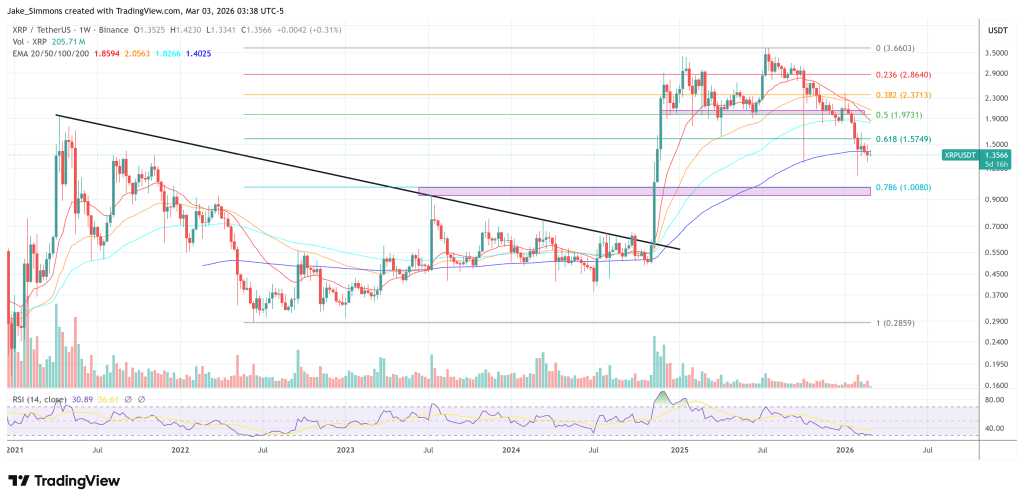
Following the near-miss incident known as BatchGate, a significant security concern has sparked a broader debate around governance and safety protocols on the XRP Ledger. Validator operator Daniel Keller criticized the existing review process as a "systemic failure" and withdrew support for all pending amendments. He emphasized that validators are governance participants, not unpaid auditors, and called for amendment proposers—particularly Ripple—to provide comprehensive documentation, testing, and security proofs. Keller also urged Ripple to increase investment in core protocol engineering and security. Other community members, like validator Vet, advocated for slower amendment rollouts, paid audits, and larger bug bounty programs. Keller disagreed with simply slowing down development, instead pushing for better incentives and resources to maintain progress without compromising security. The incident has raised fundamental questions about whether the XRPL’s amendment process has sufficient safeguards for the scale of changes being proposed. At the time of reporting, XRP was trading at $1.3566.

The fallout from the XRP Ledger’s BatchGate scare is turning into a broader argument about who is actually responsible for protocol safety and how much scrutiny major amendments should face before they get anywhere near mainnet. In a statement published Monday, longtime validator operator Daniel Keller said the near-miss around XLS-56 exposed “a systemic failure in review processes” and prompted him to withdraw support for all amendments currently under consideration.

Keller’s post was framed as a clarification of what dUNL validators are supposed to do, after what he described as widespread confusion following the Batch incident. His central point was that validators are governance participants, not unpaid auditors. “The role of dUNL validators is specific and limited: We coordinate the activation (or rejection) of amendments by casting ‘Yay’ or ‘Nay’ votes once an amendment is proposed,” he wrote. “We are supposed to judge pending amendments. That is our primary governance function.”

That distinction matters because XLS-56, also known as Batch, was halted only after a logic flaw in signature validation was uncovered shortly before mainnet activation. The bug could have enabled unauthorized transaction execution and potentially put billions in XRP at risk before the amendment was paused and patched in rippled 3.1.1.

XRP Ledger Governance Concerns, With Ripple in Focus

For Keller, the episode was not an isolated mistake but the latest example of a deeper structural problem. “The dUNL is not a free code-review or protocol-auditing body. Expecting validators to spend dozens of unpaid hours reviewing complex amendment code was never part of the design and never will be,” he wrote. “Instead, parties proposing amendments should be required to deliver comprehensive documentation, test suites, security analyses, and formal proofs upon request. If you want my vote, prove the change is safe and beneficial.”

He argued that the burden now falls on Ripple to fund that process more aggressively. “I will not vote in favour of any future amendments until Ripple makes a credible, concrete commitment to substantially increase investment in XRPL core protocol engineering, security review, and long-term sustainability,” Keller said. “If XRP is truly Ripple’s ‘North Star,’ as repeatedly stated, then the network’s foundational security and decentralisation must receive the attention and resources they deserve.”

Keller’s immediate response was blunt: withdraw all current “Yay” votes, except for pending fixes, and refuse to upgrade to rippled 3.1.1 unless staying on the earlier version risks removal from the network. He also said the fact that an independent researcher and an AI tool were ultimately needed to prevent harm underscored how thin the current safety net has become.

Other prominent XRPL voices agreed that the process needs to change, though not all backed a slowdown. Vet, a well-known XRPL validator, called the Batch incident “a massive opportunity” for the community and the XRPL Foundation to rethink how the protocol evolves. He argued for a slower amendment schedule, more paid reviews, multiple audits for larger changes, “attackathons” on testnet, and a bug bounty program big enough to attract elite researchers.

Keller, however, pushed back on the idea that the answer is simply to move slower. “In the short term, we need some sort of agreement with Cantina. They have proven themself and it’s the best we have right now,” he wrote. “Mid-term, the bug bounties need to be elevated and pay serious money. First, people need to be incentivised to look at the code; second, it must pay off to do a responsible disclosure.”

He went further in a follow-up that captured the mood of the debate: “I do not want to slow down our dev speed; it took us years to get to the current level, and we are still slow. More resources need to be allocated, and the process needs to start yesterday.”

That leaves the XRP Ledger in a tense but familiar place: a network trying to add functionality without compromising the credibility of its base layer. BatchGate did not become a live exploit. But it did force a sharper question into the open, whether XRPL’s amendment pipeline is still operating with enough review depth for the scale of change now being proposed.

At press time, XRP traded at $1.3566.

XRP falls below the 200-week EMA agan, 1-week chart | Source: XRPUSDT on TradingView.com

Связанные с этим вопросы

QWhat was the main issue with the XLS-56 (Batch) amendment that caused the 'BatchGate scare'?

AThe main issue was a logic flaw in signature validation that could have enabled unauthorized transaction execution, potentially putting billions in XRP at risk before the amendment was paused and patched.

QAccording to Daniel Keller, what is the specific and limited role of dUNL validators in the XRP Ledger governance?

AKeller stated that the role of dUNL validators is to coordinate the activation or rejection of amendments by casting 'Yay' or 'Nay' votes once an amendment is proposed, and that they are governance participants, not unpaid auditors.

QWhat specific commitment does Daniel Keller demand from Ripple before he will vote in favor of future amendments?

AKeller demands that Ripple make a credible, concrete commitment to substantially increase investment in XRPL core protocol engineering, security review, and long-term sustainability.

QWhat was the immediate response of Daniel Keller following the Batch incident?

AHis immediate response was to withdraw all current 'Yay' votes (except for pending fixes) and refuse to upgrade to rippled 3.1.1 unless staying on the earlier version risked removal from the network.

QWhat broader structural problem does the Batch incident represent, according to the validator Daniel Keller?

AKeller believes the incident is not an isolated mistake but the latest example of a deeper structural problem, highlighting a systemic failure in review processes and that the dUNL is not a free code-review or protocol-auditing body.

Похожее

Dalio Warns: AI Boom Shows Signs of a Bubble, Day of Reckoning Will Be the Time of Burst

Ray Dalio, founder of Bridgewater Associates, warns that the current artificial intelligence investment boom shows classic signs of a bubble, which he expects will eventually burst. In a Bloomberg Television interview, he noted that great technological revolutions often lead to capital inflows that create bubbles, making it difficult for investors and companies to calibrate their spending accurately—either overspending to capture market share or underspending and losing their competitive position. This caution comes amid significant rallies in AI-related assets, particularly chipmakers, driven by soaring demand for data centers and high-bandwidth chips, raising debates about overheating valuations. In contrast, Nvidia CEO Jensen Huang recently asserted that investors embracing the AI wave would see "crazy" returns and dismissed concerns over return on investment for data center spending as outdated. Dalio, however, focuses on the risks in the profit realization phase. He argues that bubbles tend to show signs of破裂 when markets transition from investment to the need for tangible returns, describing the burst as a process of converting paper wealth into cash. While acknowledging AI's intrinsic value, he expressed concern over the future profitability of some AI companies, suggesting the market is repeating a familiar pattern. The 76-year-old billionaire, who fully exited Bridgewater in 2025, has a net worth estimated at $21.5 billion according to the Bloomberg Billionaires Index.

marsbit4 мин. назад

Dalio Warns: AI Boom Shows Signs of a Bubble, Day of Reckoning Will Be the Time of Burst

marsbit4 мин. назад

Privacy Coin Crisis of Confidence! ZEC Plunges Over 56% in a Single Day

Zcash (ZEC), a leading privacy-focused cryptocurrency, experienced a severe crash on June 5th, plummeting over 56% in a single day and erasing nearly two months of gains. The flash crash was triggered by the disclosure of a critical zero-knowledge proof vulnerability within Zcash's Orchard privacy pool, which had existed since the pool's launch in May 2022. The flaw theoretically allowed an attacker to forge unlimited ZEC undetectably due to the pool's privacy features. The vulnerability was discovered on May 29th by independent security researcher Taylor Hornby during a proactive audit commissioned by Shielded Labs, utilizing AI-assisted analysis. The Zcash development team responded swiftly, implementing an emergency soft fork to disable Orchard transactions on June 2nd and executing a permanent hard fork fix (NU6.2) on June 3rd. Despite the technical fix, a major crisis of confidence emerged. The core issue is that Orchard's privacy design makes it cryptographically impossible to prove whether the vulnerability was exploited over the past four years, casting permanent doubt on the historical supply integrity of ZEC. While Shielded Labs argues exploitation was unlikely, the inability to provide definitive proof has severely damaged market trust. This sentiment was exacerbated when BitMEX co-founder Arthur Hayes, a prominent ZEC supporter, announced he was selling his entire position. He stated that privacy assets require "perfect security" rather than "probable safety." The combined effect of the disclosure and Hayes's exit ignited widespread panic selling, leading to massive liquidations and significant price decline. Analysts note the event highlights a fundamental tension within privacy coins: the conflict between verifiable supply and cryptographic privacy.

链捕手7 мин. назад

Privacy Coin Crisis of Confidence! ZEC Plunges Over 56% in a Single Day

链捕手7 мин. назад

Торговля

Спот
Фьючерсы

Популярные статьи

Как купить S

Добро пожаловать на HTX.com! Мы сделали приобретение Sonic (S) простым и удобным. Следуйте нашему пошаговому руководству и отправляйтесь в свое крипто-путешествие.Шаг 1: Создайте аккаунт на HTXИспользуйте свой адрес электронной почты или номер телефона, чтобы зарегистрироваться и бесплатно создать аккаунт на HTX. Пройдите удобную регистрацию и откройте для себя весь функционал.Создать аккаунтШаг 2: Перейдите в Купить криптовалюту и выберите свой способ оплатыКредитная/Дебетовая Карта: Используйте свою карту Visa или Mastercard для мгновенной покупки Sonic (S).Баланс: Используйте средства с баланса вашего аккаунта HTX для простой торговли.Третьи Лица: Мы добавили популярные способы оплаты, такие как Google Pay и Apple Pay, для повышения удобства.P2P: Торгуйте напрямую с другими пользователями на HTX.Внебиржевая Торговля (OTC): Мы предлагаем индивидуальные услуги и конкурентоспособные обменные курсы для трейдеров.Шаг 3: Хранение Sonic (S)После приобретения вами Sonic (S) храните их в своем аккаунте на HTX. В качестве альтернативы вы можете отправить их куда-либо с помощью перевода в блокчейне или использовать для торговли с другими криптовалютами.Шаг 4: Торговля Sonic (S)С легкостью торгуйте Sonic (S) на спотовом рынке HTX. Просто зайдите в свой аккаунт, выберите торговую пару, совершайте сделки и следите за ними в режиме реального времени. Мы предлагаем удобный интерфейс как для начинающих, так и для опытных трейдеров.

1.4k просмотров всегоОпубликовано 2025.01.15Обновлено 2026.06.02

Как купить S

Sonic: Обновления под руководством Андре Кронье – новая звезда Layer-1 на фоне спада рынка

Он решает проблемы масштабируемости, совместимости между блокчейнами и стимулов для разработчиков с помощью технологических инноваций.

2.3k просмотров всегоОпубликовано 2025.04.09Обновлено 2025.04.09

Sonic: Обновления под руководством Андре Кронье – новая звезда Layer-1 на фоне спада рынка

HTX Learn: Пройдите обучение по "Sonic" и разделите 1000 USDT

HTX Learn — ваш проводник в мир перспективных проектов, и мы запускаем специальное мероприятие "Учитесь и Зарабатывайте", посвящённое этим проектам. Наше новое направление .

1.8k просмотров всегоОпубликовано 2025.04.10Обновлено 2025.04.10

HTX Learn: Пройдите обучение по "Sonic" и разделите 1000 USDT

Обсуждения

Добро пожаловать в Сообщество HTX. Здесь вы сможете быть в курсе последних новостей о развитии платформы и получить доступ к профессиональной аналитической информации о рынке. Мнения пользователей о цене на S (S) представлены ниже.

活动图片