Will Bitcoin Developer Keonne Rodriguez Be the Next Crypto Figure Pardoned by Trump?

marsbitОпубликовано 2025-12-16Обновлено 2025-12-16

Введение

On December 16, Bitcoin developer Keonne Rodriguez, co-founder of privacy-focused Samourai Wallet, was brought to President Donald Trump’s attention during a meeting at the Oval Office. Although not a pardon, Trump acknowledged the case and directed the Attorney General to look into it. Rodriguez is scheduled to begin a five-year prison sentence on December 20. Rodriguez developed Samourai Wallet, a non-custodial Bitcoin privacy tool offering features like Whirlpool (coin mixing) and Ricochet (transaction obfuscation). U.S. prosecutors arrested him and co-founder William Hill in April 2024, arguing that the service operated as an unlicensed money-transmitting business. Both later pleaded guilty, with Rodriguez receiving a five-year sentence. Evidence included internal messages where Rodriguez described mixing as “money laundering for bitcoin.” The case has sparked debate over whether privacy tools constitute innovation or criminal infrastructure. Trump has previously pardoned several crypto figures, including Ross Ulbricht, BitMEX executives, and Binance’s CZ, raising speculation about a possible pardon for Rodriguez. Even if pardoned, Samourai Wallet is unlikely to revive. However, its code has been forked into more decentralized successors like Ashigaru, reflecting persistent demand for financial privacy tools. The case underscores the tension between privacy technology and regulatory enforcement, with implications for future innovation and legal boundaries in the crypto...

In the early morning of December 16th Beijing time, Washington’s spotlight gave the crypto world a long-awaited adrenaline rush. In the Oval Office of the White House, someone brought the name of Samourai Wallet developer Keonne Rodriguez to President Donald Trump. Trump’s response was brief: he had heard of the case, would look into it, and immediately instructed Attorney General Pam Bondi to follow up.

This was not a pardon, but it was enough to make a programmer who was about to report to prison the center of public discourse once again.

How close is Rodriguez to prison? According to the disclosed timeline, he is required to report to the federal prison system by this Friday, December 19th, Eastern Time (December 20th, Beijing time), to begin serving a five-year sentence. Countdowns are not common parlance in the crypto world, but a hard number on the calendar: from December 16th, he has less than four days left.


Who is Keonne Rodriguez?

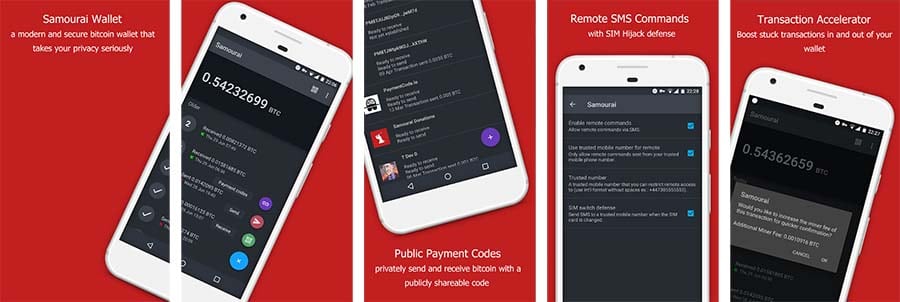
Keonne Rodriguez is not a traditional crypto magnate. He did not build an exchange, lending platform, or stablecoin, but rather a Bitcoin privacy tool: allowing users to make it harder for chain analysis to trace them, without surrendering private keys or custodizing funds.

Samourai Wallet’s core selling points are supported by two types of features:

Whirlpool is a coin-mixing service that coordinates transactions from multiple users, blending the sources of funds in the on-chain records to sever traceability. Ricochet, on the other hand, adds multiple-hop intermediate transactions, lengthening and complicating the path from A to B, reducing the likelihood of being directly flagged by risk control or monitoring systems.

These features may sound like a natural evolution of privacy enhancement in tech circles, but Rodriguez’s troubles have never been solely about the technology itself—they lie in the business model and expression it was accused of adopting: prosecutors emphasized that Samourai operated centralized servers to coordinate the transaction process while charging fees for related services. This made it, in the legal narrative, more like an active business operation rather than passively released code.

The timeline of the case is clear.

In April 2024, U.S. prosecutors announced the arrest of Rodriguez and another co-founder, William Lonergan Hill, accompanied by law enforcement seizing their servers and domain. By July 2025, both pleaded guilty, admitting to conspiracy to operate an unlicensed money transmitting business, with a maximum sentence of 5 years. In November, Rodriguez was sentenced to 5 years, Hill to 4 years, and both were ordered to pay fines and undergo supervised release.

The decisive blow came from materials showing subjective knowledge and active catering to usage. Official disclosures revealed that Rodriguez described mixing as “money laundering for bitcoin” in chat software; Hill was accused of answering users on dark web forums about how to turn dirty BTC into untraceable clean coins and directly recommending Whirlpool.

This narrative pushed the case from “tools being misused” to “you knew what it would be used for, and you were promoting its use that way.” Under such premises, it’s not hard to understand why the judge sentenced Rodriguez to the statutory maximum.


Why “Pardon” Has Become a Hot Topic at This Juncture

Pardons are not uncommon in Trump’s second term: on January 22, 2025, he pardoned Silk Road founder Ross Ulbricht; on March 29, 2025, he pardoned several former BitMEX executives; and on October 24, 2025, he pardoned Binance founder Changpeng Zhao (CZ). This has led many to believe that the Samourai case might not be entirely beyond the reach of White House intervention.

At the same time, the U.S. attitude towards privacy tools is not uniformly tightening. In March 2025, the U.S. Treasury removed Tornado Cash from its sanctions list, seen as a strategic adjustment after regulatory and legal tussles. But this does not mean the U.S. has abandoned combating money laundering and sanctions evasion; it’s more of a correction in a situation where “the tool’s form is too decentralized, making enforcement difficult.”

Samourai’s awkward position lies in being portrayed by prosecutors as the type that is easier to “pin down”: having operators, charging fees, and running centralized coordination services. For the crypto industry, such cases are most likely to create a chilling effect—even if you don’t like coin mixing, it’s hard to accept a precedent being set: developers of non-custodial privacy tools ultimately being sent to prison under the logic of operating a money transmitting business.

Thus, Trump’s statement, “I’ll look into it,” feels more like a political probe: whether to pardon or not concerns not only one person’s freedom but also the most sensitive nerve of crypto voters—whether the U.S. will treat privacy tools as innovation or as criminal infrastructure.


Samourai May Be Dead, but the Questions It Leaves Behind Are Not

Even if a pardon occurs, Samourai Wallet as a “service-based” product is unlikely to be revived: its infrastructure was dismantled by law enforcement in 2024, and the team and distribution channels have been scattered by real-world costs.

More noteworthy is the subsequent evolution. In September 2024, a project named Ashigaru announced a hard fork of Samourai’s code to continue the privacy wallet path in a more open-source, decentralized manner—striving to remove single points of failure, making definable, targetable components越来越少.

This points to a colder outcome: strong regulation can dismantle a specific team, shut down a specific website, but it is difficult to make privacy demands disappear. As long as the demand exists, tools will evolve—from products with centralized coordination and fees to more covert, distributed, and legally ambiguous engineering puzzles. You take down one “company-like” target, and the next generation often becomes even less like a company.

The reason Keonne Rodriguez was suddenly thrust into the spotlight in December 2025 is precisely because he stands at the dividing line: on one side is the ideal of privacy technology, on the other is the enforcement system’s need for governable entities. Whether Trump pardons him or not can change one person’s fate, but may not make this dividing line any clearer.

Связанные с этим вопросы

QWho is Keonne Rodriguez and what was his role in the cryptocurrency space?

AKeonne Rodriguez was a developer and co-founder of Samourai Wallet, a non-custodial Bitcoin privacy wallet. He focused on creating tools like Whirlpool for coin transactions and Ricochet for obfuscating transaction paths, aiming to enhance user privacy by making it harder to trace Bitcoin transactions on the blockchain.

QWhat legal charges did Keonne Rodriguez face, and what was the outcome of his case?

AKeonne Rodriguez was charged with conspiracy to operate an unlicensed money-transmitting business. He pleaded guilty in July 2025 and was sentenced to five years in prison in November 2025, along with fines and supervised release, due to evidence showing he knowingly facilitated money laundering through his wallet's features.

QWhy has the possibility of a pardon for Keonne Rodriguez by Donald Trump gained attention?

AThe possibility gained attention because Trump has previously pardoned several figures in the crypto industry, such as Ross Ulbricht, BitMEX executives, and Binance's CZ. Rodriguez's case involves key issues around privacy tools and innovation, making it a focal point for crypto advocates seeking leniency.

QWhat impact did the Samourai Wallet case have on the cryptocurrency privacy tool landscape?

AThe case highlighted regulatory risks for centralized privacy tools, leading to projects like Ashigaru forking Samourai's code to create more decentralized, less legally targetable solutions. It underscored that while enforcement can shut down specific services, privacy demand persists, driving evolution toward more distributed architectures.

QHow did the U.S. government's stance on privacy tools like Tornado Cash relate to the Samourai Wallet case?

AThe U.S. Treasury removed Tornado Cash from sanctions in March 2025, reflecting a nuanced approach to decentralized tools. However, Samourai's centralized operations and fee-based model made it an easier target for prosecution, emphasizing that enforcement prioritizes entities with clear operational control and profit motives.

Похожее

$292 Million KelpDAO Cross-Chain Bridge Hack: Who Should Foot the Bill?

On April 18, 2026, an attacker stole 116,500 rsETH (worth ~$292M) from KelpDAO’s cross-chain bridge in 46 minutes—the largest DeFi exploit of 2026. The stolen assets were deposited into Aave V3 as collateral, causing $177–200M in bad debt and triggering a cascade of losses across nine DeFi protocols. Aave’s TVL dropped by ~$6B overnight. This legal analysis argues that KelpDAO and LayerZero Labs share concurrent liability, with fault apportioned 60%/40%. KelpDAO negligently configured its bridge with a 1-of-1 decentralized verifier network (DVN)—a single point of failure—despite LayerZero’s explicit recommendation of a 2-of-3 setup. LayerZero, which operated the compromised DVN, failed to secure its RPC infrastructure against a known poisoning attack vector. Both protocols’ terms of service cap liability at $200 (KelpDAO) or $50 (LayerZero), but these limits are likely unenforceable due to unconscionability, gross negligence exceptions, and potential securities law invalidation (if rsETH is deemed a security under the Howey test). Aave’s governance also faces fiduciary duty claims for raising rsETH’s loan-to-value ratio to 93%—far above competitors’ 72–75%—without adequately assessing bridge risks, amplifying the systemic fallout. Practical recovery targets include LayerZero Labs (a registered Canadian entity), KelpDAO’s founders, auditors, and identifiable Aave governance delegates. The incident underscores escalating legal risks for DeFi protocols, infrastructure providers, and governance participants.

marsbit32 мин. назад

$292 Million KelpDAO Cross-Chain Bridge Hack: Who Should Foot the Bill?

marsbit32 мин. назад

Insider Trading in War: 5 People Involved, the Highest Earner Was Arrested

On April 24, the U.S. Department of Justice arrested U.S. Army Special Forces Staff Sergeant Gannon Ken Van Dyke for insider trading related to the capture of Venezuelan President Nicolás Maduro on January 3. Van Dyke allegedly profited over $400,000 by placing bets on a prediction market, Polymarket, using insider knowledge of the covert operation. According to the indictment, Van Dyke registered an account (0x31a5) on December 26 and made a series of bets predicting Maduro’s capture and U.S. military involvement in Venezuela. He withdrew most of his funds on the day of the operation and attempted to obscure his tracks by transferring assets through crypto and brokerage accounts. This case marks the first time the DOJ has prosecuted insider trading on Polymarket. PolyBeats had previously identified five suspicious accounts, including Van Dyke’s—the highest earner—in January. The other accounts, with profits ranging from $34,000 to $145,000, remain under unofficial scrutiny but have not been charged. Their lower profits, indirect access to information, and unclear legal boundaries may complicate prosecution. Polymarket has since strengthened its market integrity rules, explicitly prohibiting trading based on confidential or insider information. Van Dyke’s arrest, nearly four months after his trades, signals increased regulatory attention and the persistent traceability of blockchain-based transactions.

marsbit34 мин. назад

Insider Trading in War: 5 People Involved, the Highest Earner Was Arrested

marsbit34 мин. назад

Bitwise: Bullish on Bitcoin's Performance in the Second Half of the Year, AI and Regulation Will Spark a New Altcoin Season

Bitwise CIO Matt Hougan and Research Lead Ryan Rasmussen express strong bullish sentiment on Bitcoin's long-term prospects, suggesting that its $1 million price target may be too conservative. They argue Bitcoin serves a dual role: as digital gold and a potential global settlement asset, especially amid declining trust in traditional monetary systems. Despite a weak Q1 2026 where nearly all crypto assets and prices saw double-digit declines, the analysts remain optimistic due to strong forward-looking catalysts, including institutional adoption via Bitcoin ETFs from major firms like Morgan Stanley and Goldman Sachs. Geopolitical instability, such as Iran’s mention of using Bitcoin for international payments, increases the value of Bitcoin’s “out-of-the-money call option” as a non-political, global settlement currency. This enhances its appeal beyond a mere store of value. . Additionally, Hougan highlights that a clearer regulatory token framework under current SEC leadership, combined with AI efficiency gains and high-performance blockchains, could fuel a new “altseason” by late 2026. This may lead to a wave of legitimate, value-capturing token projects, unlike the earlier ICO boom. . Bitwise also announced an Avalanche ETF, citing its unique architecture and rapid growth in real-world asset (RWA) tokenization, which has surged 10x to nearly $30 billion in two years. The firm believes Layer 1 blockchains are still early in their growth cycle, with significant potential ahead.

marsbit1 ч. назад

Bitwise: Bullish on Bitcoin's Performance in the Second Half of the Year, AI and Regulation Will Spark a New Altcoin Season

marsbit1 ч. назад

Торговля

Спот
Фьючерсы

Популярные статьи

Тест по Bitcoin Биткоина

HTX Learn: Изучите Bitcoin halving и Заработаете Токены USDT

3.0k просмотров всегоОпубликовано 2024.04.16Обновлено 2024.04.16

Тест по Bitcoin  Биткоина

Что такое $BITCOIN

ЦИФРОВОЕ ЗОЛОТО ($BITCOIN): Комплексный анализ Введение в ЦИФРОВОЕ ЗОЛОТО ($BITCOIN) ЦИФРОВОЕ ЗОЛОТО ($BITCOIN) — это проект на основе блокчейна, работающий в сети Solana, который стремится объединить характеристики традиционных драгоценных металлов с инновациями децентрализованных технологий. Хотя он носит имя Биткойн, часто называемого “цифровым золотом” из-за его восприятия как средства хранения ценности, ЦИФРОВОЕ ЗОЛОТО является отдельным токеном, предназначенным для создания уникальной экосистемы в ландшафте Web3. Его цель — позиционировать себя как жизнеспособный альтернативный цифровой актив, хотя детали его применения и функциональности все еще развиваются. Что такое ЦИФРОВОЕ ЗОЛОТО ($BITCOIN)? ЦИФРОВОЕ ЗОЛОТО ($BITCOIN) — это токен криптовалюты, специально разработанный для использования в блокчейне Solana. В отличие от Биткойна, который выполняет широко признанную роль хранения ценности, этот токен, похоже, сосредоточен на более широких приложениях и характеристиках. Примечательные аспекты включают: Инфраструктура блокчейна: Токен построен на блокчейне Solana, известном своей способностью обрабатывать высокоскоростные и недорогие транзакции. Динамика предложения: ЦИФРОВОЕ ЗОЛОТО имеет максимальное предложение, ограниченное 100 квадриллионами токенов (100P $BITCOIN), хотя детали о его обращающемся предложении в настоящее время не раскрыты. Утилита: Хотя точные функциональные возможности не описаны, есть указания на то, что токен может быть использован для различных приложений, потенциально связанных с децентрализованными приложениями (dApps) или стратегиями токенизации активов. Кто создатель ЦИФРОВОГО ЗОЛОТА ($BITCOIN)? На данный момент личность создателей и команды разработчиков, стоящих за ЦИФРОВЫМ ЗОЛОТОМ ($BITCOIN), остается неизвестной. Эта ситуация типична для многих инновационных проектов в области блокчейна, особенно тех, которые связаны с децентрализованными финансами и феноменом мем-криптовалют. Хотя такая анонимность может способствовать культуре, ориентированной на сообщество, она усиливает опасения по поводу управления и ответственности. Кто инвесторы ЦИФРОВОГО ЗОЛОТА ($BITCOIN)? Доступная информация указывает на то, что у ЦИФРОВОГО ЗОЛОТА ($BITCOIN) нет известных институциональных спонсоров или значительных венчурных капиталовложений. Проект, похоже, функционирует по модели пирингового взаимодействия, сосредоточенной на поддержке и принятии сообществом, а не на традиционных путях финансирования. Его активность и ликвидность в основном сосредоточены на децентрализованных биржах (DEX), таких как PumpSwap, а не на устоявшихся централизованных торговых платформах, что еще больше подчеркивает его подход, ориентированный на grassroots. Как работает ЦИФРОВОЕ ЗОЛОТО ($BITCOIN) Операционные механизмы ЦИФРОВОГО ЗОЛОТА ($BITCOIN) можно подробно описать на основе его дизайна блокчейна и характеристик сети: Механизм консенсуса: Используя уникальный механизм доказательства истории (PoH) Solana в сочетании с моделью доказательства доли (PoS), проект обеспечивает эффективную валидацию транзакций, что способствует высокой производительности сети. Токеномика: Хотя конкретные дефляционные механизмы не были подробно описаны, большое максимальное предложение токенов подразумевает, что оно может быть предназначено для микротранзакций или нишевых случаев использования, которые еще предстоит определить. Интероперабельность: Существует потенциал для интеграции с более широкой экосистемой Solana, включая различные платформы децентрализованных финансов (DeFi). Однако детали относительно конкретных интеграций остаются неуточненными. Хронология ключевых событий Вот хронология, которая подчеркивает значимые вехи, касающиеся ЦИФРОВОГО ЗОЛОТА ($BITCOIN): 2023: Первоначальное развертывание токена происходит в блокчейне Solana, отмеченное его адресом контракта. 2024: ЦИФРОВОЕ ЗОЛОТО приобретает видимость, когда оно становится доступным для торговли на децентрализованных биржах, таких как PumpSwap, позволяя пользователям обменивать его на SOL. 2025: Проект наблюдает спорадическую торговую активность и потенциальный интерес к инициативам, возглавляемым сообществом, хотя на данный момент не зафиксировано никаких значительных партнерств или технических достижений. Критический анализ Сильные стороны Масштабируемость: Основная инфраструктура Solana поддерживает высокие объемы транзакций, что может повысить полезность $BITCOIN в различных сценариях транзакций. Доступность: Потенциально низкая цена торговли за токен может привлечь розничных инвесторов, способствуя более широкому участию благодаря возможностям дробного владения. Риски Отсутствие прозрачности: Отсутствие публично известных спонсоров, разработчиков или процесса аудита может вызвать скептицизм относительно устойчивости и надежности проекта. Волатильность рынка: Торговая активность сильно зависит от спекулятивного поведения, что может привести к значительной волатильности цен и неопределенности для инвесторов. Заключение ЦИФРОВОЕ ЗОЛОТО ($BITCOIN) является интригующим, но неоднозначным проектом в быстро развивающейся экосистеме Solana. Хотя он пытается использовать нарратив “цифрового золота”, его отход от установленной роли Биткойна как средства хранения ценности подчеркивает необходимость более четкого различения его предполагаемой утилиты и структуры управления. Будущее принятие и усвоение, вероятно, будут зависеть от решения текущей непрозрачности и более четкого определения его операционных и экономических стратегий. Примечание: Этот отчет охватывает синтезированную информацию, доступную на октябрь 2023 года, и с тех пор могут произойти события.

99 просмотров всегоОпубликовано 2025.05.13Обновлено 2025.05.13

Что такое $BITCOIN

Fractal Bitcoin: масштабирование Биткоина с помощью рекурсивной системы

Fractal Bitcoin — масштабное Layer-1-решнение, созданное на базе кода Биткоина, позволяющего достигать бесконечного масштабирования с помощью рекурсивного подхода.

2.2k просмотров всегоОпубликовано 2025.06.30Обновлено 2025.06.30

Fractal Bitcoin: масштабирование Биткоина с помощью рекурсивной системы

Обсуждения

Добро пожаловать в Сообщество HTX. Здесь вы сможете быть в курсе последних новостей о развитии платформы и получить доступ к профессиональной аналитической информации о рынке. Мнения пользователей о цене на BTC (BTC) представлены ниже.

活动图片