Wall Street goes on-chain: DTCC gets SEC nod to tokenize $99T market

ambcryptoОпубликовано 2025-12-12Обновлено 2025-12-12

Введение

The Depository Trust & Clearing Corporation (DTCC) has received a critical No-Action Letter from the SEC, allowing its subsidiary DTC to begin tokenizing traditional securities. This regulatory milestone permits the use of blockchain technology to introduce features like 24/7 trading and programmable assets into the $99 trillion market. The initial phase will focus on highly liquid assets like Russell 1000 stocks and U.S. Treasuries. DTCC will leverage its proprietary ComposerX platform to ensure these digital tokens maintain the same legal rights, investor protections, and operational resiliency as their counterparts. This move is a major step in bridging traditional finance and DeFi, accelerating the global shift toward real-world asset (RWA) tokenization.

The foundation of U.S. securities trading is officially preparing to go digital.

On the 11th of December, the Depository Trust & Clearing Corporation (DTCC) made an important announcement.

DTCC, which processes the majority of U.S. securities transactions, revealed that its subsidiary, the Depository Trust Company (DTC), had secured a critical No‐Action Letter (NAL) from the SEC.

This development marks a significant regulatory milestone for the organization and its operations.

Why was it important?

That said, the SEC’s approval allows DTCC to bring blockchain features, such as 24/7 trading and programmable assets, into its $99 trillion market.

This ensures digital assets maintain established legal rights and investor protections.

All in all, it is the strongest step so far toward Wall Street adopting distributed ledger technology.

Additionally, the NAL lets DTC offer this tokenization service on pre-approved blockchains for three years, but with clear limits to keep the rollout cautious.

Investors are guaranteed that the digital asset will carry the same rights, protections, and ownership claims as the traditional version.

In this process, DTC will also maintain the same high standards of safety and resiliency.

Notably, the first phase focuses only on highly liquid, blue-chip assets like Russell 1000 stocks, major-index ETFs, and U.S. Treasury bills, bonds, and notes.

This ensures the earliest tokenized assets come from the most trusted and stable markets.

Execs weigh in...

Expressing the same, Frank La Salla, President & CEO, DTCC, noted,

“We welcome this opportunity to further enable and innovate for the industry, our participants and their clients.”

Echoing similar sentiments, Brian Steele, Managing Director, President of Clearing & Securities Services at DTCC, added,

“In partnership with our clients and the broader market, we will tokenize securities with uncompromising security, sound legal footing and seamless interoperability, all backed by the resilience that has anchored traditional markets for decades.”

DTCC leverages ComposerX

In support of this strategic move, DTCC will use its proprietary ComposerX platform to power the new tokenization service.

This technology will support their goal of giving DTC participants a more resilient, inclusive, cost-effective, and efficient financial system.

Importantly, DTCC aims to create a single pool of liquidity that connects traditional finance and DeFi. This unified structure is intended to reduce the fragmentation and inefficiencies that currently exist between the two systems.

For those unaware, this momentous step by DTCC is the culmination of nearly a decade of institutional exploration into DLT.

The goal has been to harness blockchain’s core benefits while preserving the bedrock protections and accountability of the DTC.

By authorizing a limited production environment across L1 and L2 providers for three years, the SEC is enabling a controlled integration.

What’s more?

Finally, the DTCC’s entry is not an isolated event but accelerates a massive paradigm shift.

The global financial system is now definitively moving toward real-world asset (RWA) tokenization, a sector projected to swell into a $13–$30 trillion opportunity by 2030.

This acceleration is perhaps best exemplified by the explosion of tokenized gold.

Fuelled by a 50% price surge in 2025 and growing geopolitical instability, gold’s $29 trillion market value has intensified institutional interest.


Final Thoughts

  • The No-Action Letter finally provides regulatory clarity, allowing trillions in traditional assets to move on-chain without risking legal rights or investor protections.
  • It also aligns U.S. finance with the global shift toward real-world asset tokenization, a market expected to reach $30 trillion by 2030.
Похожее

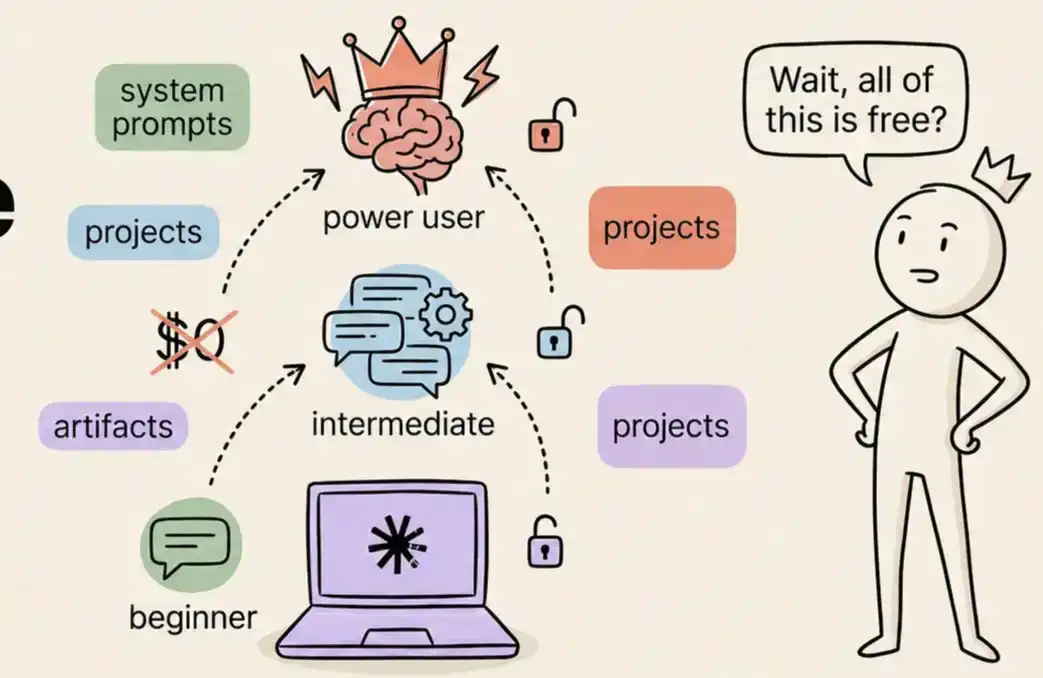
Five Core Forms of AI Agent in YC's Eyes

The article outlines five core architectural patterns for effective AI Agents, emerging from tools like Codex and Claude, that move beyond simple prompts towards reusable, process-based capabilities. 1. **Skills**: Reusable, parameterized workflows that function like method calls, allowing a single process (e.g., "/investigate") to handle various tasks based on input parameters. 2. **Thin Harness**: A lightweight execution framework (~200 lines) that manages the AI model's "hands and feet"—handling loops, file I/O, and context—without becoming bloated. 3. **Resolvers**: Routing tables that map tasks to specific Skills, preventing "context corruption" when managing dozens of Skills and ensuring outputs go to the correct locations. 4. **Latent vs. Deterministic Layer**: A critical separation where LLMs handle judgment, synthesis, and pattern recognition, while deterministic code handles tasks requiring precision, consistency, and low cost (like calculations). 5. **Memory**: A persistent, accumulating knowledge base (e.g., a markdown folder) with a "current trusted conclusion" section and an append-only timeline, enabling the system to learn and retain context over time. Together, these patterns create a "process power"—a durable competitive advantage. Unlike one-off prompt-based applications whose value quickly commoditizes, a well-designed AI Agent system encodes experience into reusable, parameterized workflows, offloads stable rules to code, and continuously learns through memory. This creates a structured, hard-to-replicate capability that can provide sustained value for individuals or businesses, such as an accountant automating client reviews while preserving privacy and accumulating expertise.

marsbit1 ч. назад

Five Core Forms of AI Agent in YC's Eyes

marsbit1 ч. назад

Tiger Research: On-Chain Risk Operators, The Market Cap Gap Between 147 Trillion and 70 Billion

This report by Tiger Research examines the evolution of risk management in decentralized finance (DeFi) lending. It highlights a power shift from protocol developers to specialized professional risk operators who manage on-chain capital. The era of protocols and community governance solely dictating DeFi lending is ending. A new professional asset management layer has emerged. While the sector is nascent, capital and distribution channels are rapidly consolidating around top risk operator teams, whose past performance is now a key criterion for institutional entry. The industry's development, accelerated by modular infrastructures like Morpho, has led to a clear division of labor mirroring traditional finance: distribution channels (e.g., exchanges), strategy/risk management (the risk operators), and product infrastructure/asset custody (smart contract protocols). This structure lowers the entry barrier for traditional institutions. Currently, the total value managed by risk operators is approximately $70 billion, dominated by a few leading teams like Steakhouse (RWA focus), Sentora (AI models), and Gauntlet (crisis management). Competition now centers on collateral standards, distribution access, and crisis response capabilities. The report outlines three primary entry paths for institutions: 1) **Distribution Model**: Leveraging external risk operators as backend service providers (common for exchanges). 2) **Asset Supply Model**: Onboarding real-world assets to DeFi as collateral. 3) **Independent Operator Model**: Building an in-house team to become a risk operator (e.g., Bitwise). The core opportunity lies in the strategy/risk management layer, where traditional financial institutions can leverage their existing expertise in due diligence and risk assessment without deep technical development. A vast opportunity gap exists: the global traditional asset management industry manages ~$147 trillion, while the entire DeFi sector is only ~$800 billion, with the risk operator niche at ~$70 billion. This disparity signifies immense growth potential. Once robust risk frameworks and clearer regulations are established, even a minor allocation from traditional markets could trigger exponential DeFi growth. Early movers who help build these foundational systems will gain significant rule-setting influence and first-mover advantages.

marsbit1 ч. назад

Tiger Research: On-Chain Risk Operators, The Market Cap Gap Between 147 Trillion and 70 Billion

marsbit1 ч. назад

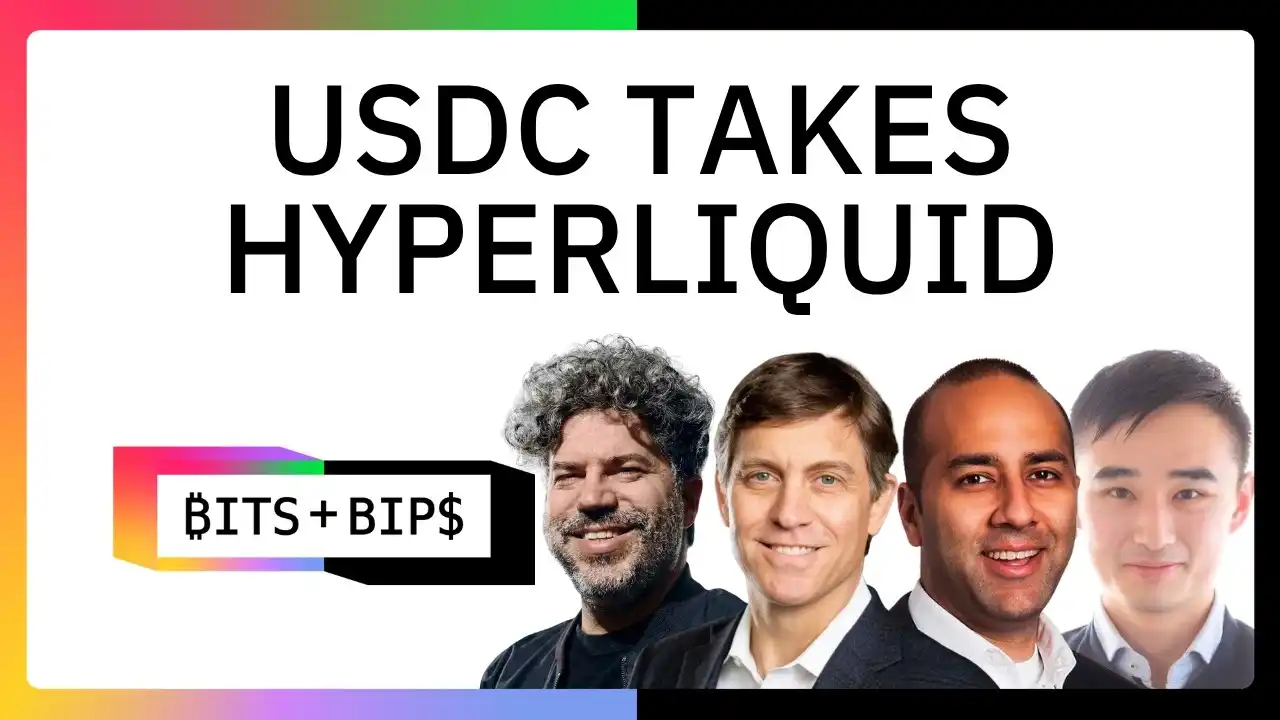
Interview with Circle's Chief Economist: USDC's Entry into Hyperliquid Benefits Circle and HYPE, Stablecoins Are Becoming Marginal Buyers of U.S. Treasuries

In an interview with Circle's Chief Economist Gordon Liao, the conversation covers the strategic significance of USDC replacing USDH as the reference asset on the decentralized perpetual exchange Hyperliquid. This shift, facilitated by Coinbase as the reserve manager and Circle providing technical infrastructure, aims to capture net interest income for the platform, with 90% of reserve earnings directed back to Hyperliquid for HYPE token buybacks. Liao discusses how stablecoins like USDC, with their substantial on-chain settlement volumes (e.g., $21 trillion in Q1 2026), are emerging as marginal buyers of U.S. Treasuries, concentrating on short-term debt and effectively reducing the weighted duration of the market, which may provide underlying support for long-term rates. The dialogue also explores the evolving nature of stablecoins as both a medium of exchange and a vehicle for capital and collateral liquidity. Additionally, the panel touches on the CLARITY Act's legislative progress, noting compromises around "activity-based rewards" and remaining hurdles like ethics concerns. On AI, there's debate over value capture, with predictions that distribution and application layers, rather than foundational model companies like OpenAI, will accrue most value. Regarding the bond market, Liao attributes the rise in 30-year yields primarily to an increased term premium (around 80 bps) driven by supply-demand dynamics, including fiscal expansion and changing investor demand, rather than expectations of Fed rate hikes.

marsbit1 ч. назад

Interview with Circle's Chief Economist: USDC's Entry into Hyperliquid Benefits Circle and HYPE, Stablecoins Are Becoming Marginal Buyers of U.S. Treasuries

marsbit1 ч. назад

Торговля

Спот
Фьючерсы

Популярные статьи

Как купить T

Добро пожаловать на HTX.com! Мы сделали приобретение Threshold Network Token (T) простым и удобным. Следуйте нашему пошаговому руководству и отправляйтесь в свое крипто-путешествие.Шаг 1: Создайте аккаунт на HTXИспользуйте свой адрес электронной почты или номер телефона, чтобы зарегистрироваться и бесплатно создать аккаунт на HTX. Пройдите удобную регистрацию и откройте для себя весь функционал.Создать аккаунтШаг 2: Перейдите в Купить криптовалюту и выберите свой способ оплатыКредитная/Дебетовая Карта: Используйте свою карту Visa или Mastercard для мгновенной покупки Threshold Network Token (T).Баланс: Используйте средства с баланса вашего аккаунта HTX для простой торговли.Третьи Лица: Мы добавили популярные способы оплаты, такие как Google Pay и Apple Pay, для повышения удобства.P2P: Торгуйте напрямую с другими пользователями на HTX.Внебиржевая Торговля (OTC): Мы предлагаем индивидуальные услуги и конкурентоспособные обменные курсы для трейдеров.Шаг 3: Хранение Threshold Network Token (T)После приобретения вами Threshold Network Token (T) храните их в своем аккаунте на HTX. В качестве альтернативы вы можете отправить их куда-либо с помощью перевода в блокчейне или использовать для торговли с другими криптовалютами.Шаг 4: Торговля Threshold Network Token (T)С легкостью торгуйте Threshold Network Token (T) на спотовом рынке HTX. Просто зайдите в свой аккаунт, выберите торговую пару, совершайте сделки и следите за ними в режиме реального времени. Мы предлагаем удобный интерфейс как для начинающих, так и для опытных трейдеров.

790 просмотров всегоОпубликовано 2024.03.29Обновлено 2025.03.21

Как купить T

Обсуждения

Добро пожаловать в Сообщество HTX. Здесь вы сможете быть в курсе последних новостей о развитии платформы и получить доступ к профессиональной аналитической информации о рынке. Мнения пользователей о цене на T (T) представлены ниже.

活动图片