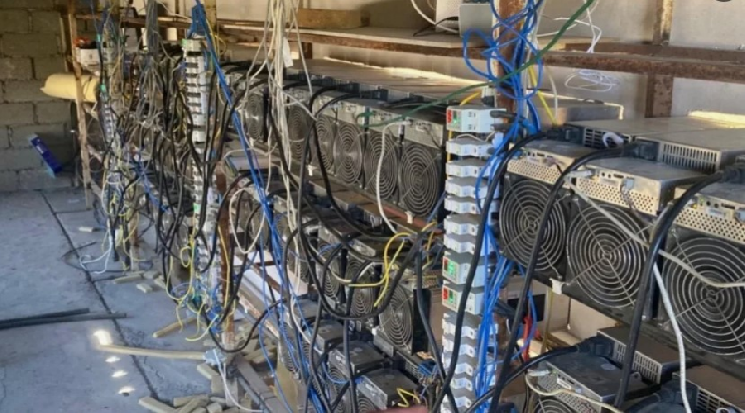
В волне ИИ на американском фондовом рынке 2026 года наиболее прибыльными оказались не акции таких известных компаний, как NVIDIA, Microsoft, Amazon и Google. Эти гиганты с триллионной капитализацией, конечно, тоже растут, но слону сложно танцевать.
Новое поколение гуру, специализирующихся на «снайперской торговле по цепочке поставок», массово появляется на Reddit, X, Substack, оставляя далеко позади доходы старых последователей баффетовского стоимостного инвестирования. Они владеют множеством микро-капитализационных акций стоимостью от нескольких сотен миллионов до нескольких миллиардов долларов, на которые аналитики Уолл-стрит не обращают внимания, а обычные инвесторы даже не могут правильно произнести их названия.
А человеком, превратившим эти микро-капитализационные акции в рыночный консенсус и тренд, стал Леопольд Ашенбреннер, 22-летний немец, который со стартовым капиталом в 200 миллионов долларов заработал на бирже 14 миллиардов долларов и стал синонимом «нового гуру».
После Леопольда развенчание баффетовской школы ускорилось. Новое поколение гуру, специализирующихся на «снайперской торговле по цепочке поставок», массово появляется. Они в основном не смотрят финансовые отчеты, а изучают микро-капитализационные акции в верхних звеньях цепочек поставок, которые являются «узкими местами». Редакция The Blockwave, следуя этой логике, нашла несколько новых гуру для вашего анализа.
«Новые гуру» все из Reddit?
Среди этого нового поколения гуру в последнее время самым популярным и выходящим за рамки сообщества стал Serenity из канала WallStreetBets на Reddit.
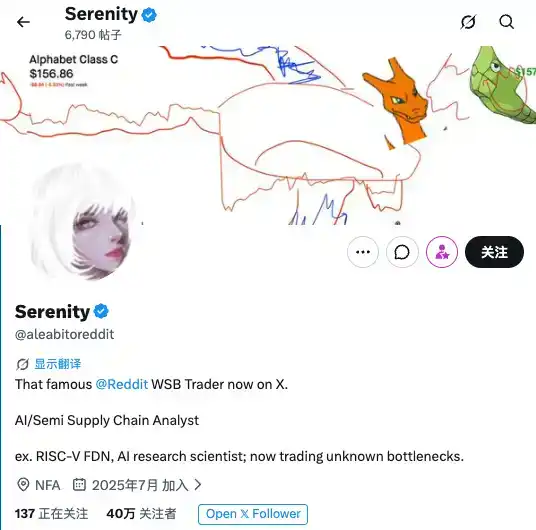
Историю Serenity многие читатели, торгующие на американском рынке, вероятно, уже хорошо знают. Вкратце, он был научным сотрудником в области ИИ, участвовал в фонде RISC-V, публиковал статьи в Nature и даже в шутку рассказывал, что отказался от оффера команды ИИ NVIDIA, когда акция стоила 6 долларов.
То, что действительно закрепило за Serenity статус «нового гуру», — это не его автобиография, а его пост на WSB об акции под названием AXTI. Его основная мысль очень прямая: все строительство индустрии ИИ зависит от этой компании с монополией и капитализацией в 7 миллиардов долларов, включая всех игроков, таких как Google, NVIDIA и Microsoft, которые зависят от её подложек и материалов из фосфида индия. Он считает, что вся индустрия ИИ переходит от Google TPU к фотонике, используя технологии оптической интерконнекции. Без подложек из фосфида индия вся история «роста» ИИ закончится в 2026 году.
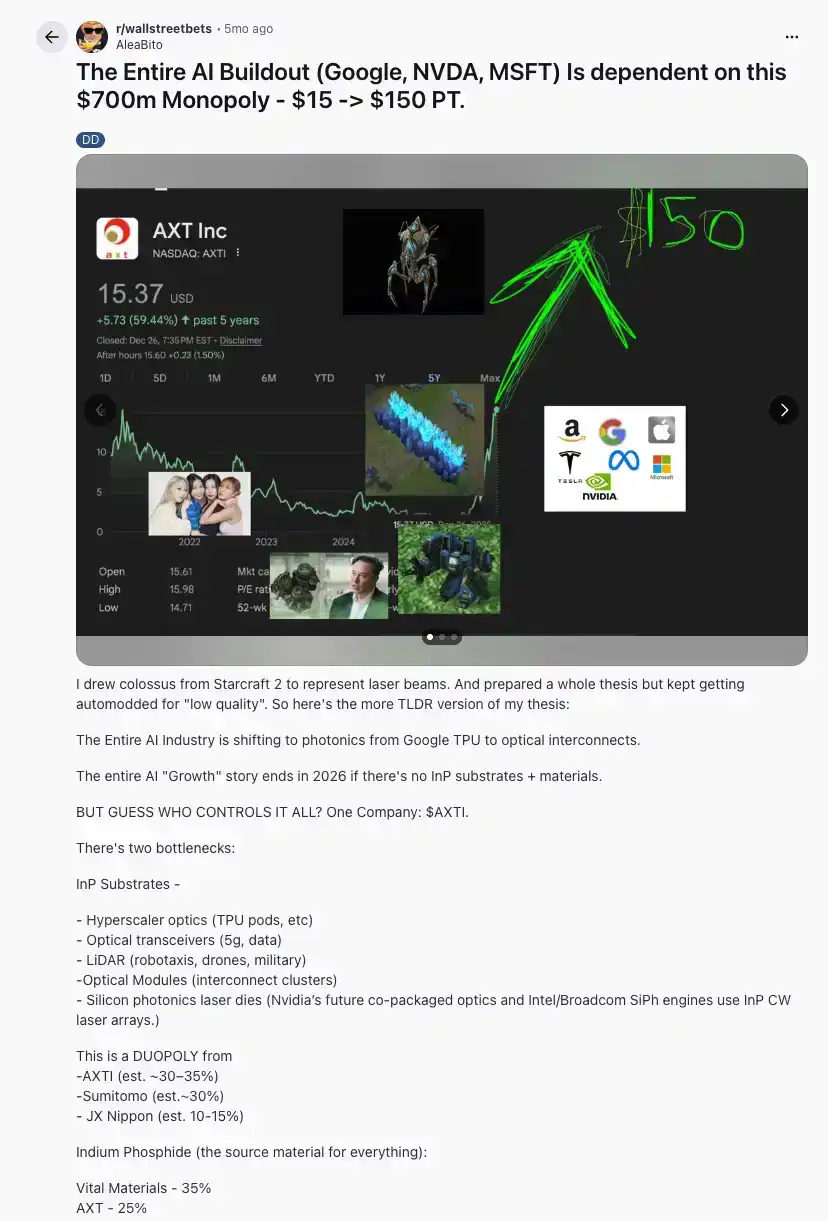
В том горячем посте про AXTI он прямо назвал целевую цену от 15 до 150 долларов, и заголовок был очень прямым.
По теме: «Отказавшись от оффера NVIDIA по цене 6 долларов, он сказал, что заработает на бирже больше».
Цена акции стала лучшим подтверждением слов Serenity. Когда Serenity обсуждал AXTI, цена акции была около 12 долларов. После этого AXTI постоянно росла, сначала до 70 долларов, и Serenity сам заявил, что эта сделка принесла прибыль до 1000%. По состоянию на время написания статьи, публичные данные показывают, что AXTI закрылась на уровне 140,83 доллара, всего в шаге от его первоначальной целевой цены в 150 долларов.
Это делает образ Serenity более сложным и многогранным, он не просто удачливый игрок в WSB, а глубокий исследователь новой технологической цепочки создания стоимости в области ИИ.
Почему такие люди сначала появляются в канале WallStreetBets на Reddit?
Нам нужно потратить немного времени, чтобы рассказать историю WallStreetBets.
WallStreetBets, сокращенно WSB, — самое известное сообщество розничных инвесторов на американском фондовом рынке в Reddit. Оно известно не потому, что здесь все рациональны, и не потому, что здесь всегда можно найти правильный ответ.
Как раз наоборот, WSB изначально прославилось тем, что выставило напоказ две самые крайние стороны розничных инвесторов на американском рынке: с одной стороны — краткосрочные опционы, обнуление, олл-ин на банкротов, взаимные насмешки; с другой стороны — время от времени появляются посты, способные изменить рыночную нарратив.
Та «битва розничных инвесторов против Уолл-стрит» в 2021 году началась именно с WSB. Множество розничных инвесторов столкнулись лицом к лицу с шортирующими фондами вокруг GameStop, превратив акции ритейлера видеоигр, которые рынок считал пережитком прошлой эпохи, в мировые финансовые новости. После этого WSB перестало быть просто форумом. Оно превратилось в культуру торговли: грубую, преувеличенную, рискованную, неконтролируемую, но иногда способную выкопать настоящие жемчужины из шума.
WSB изначально было местом, крайне благоприятным для прорастания «торговли на неконсенсусных идеях». А Serenity — это новая разновидность WSB в бычьем рынке ИИ.
Раньше это были GameStop, AMC, краткосрочные опционы и мемы; теперь все больше постов обсуждают облачную инфраструктуру, автоматизацию предприятий, AI-агентов, HBM, оптические модули, энергоснабжение дата-центров, фотонику и узкие места в цепочках поставок.
Культура «раскрутки» акций в WSB осталась, просто изменился предмет раскрутки.
Это поколение гуру никогда не смотрит финансовые отчеты
И такая культура распространилась с Reddit на X.
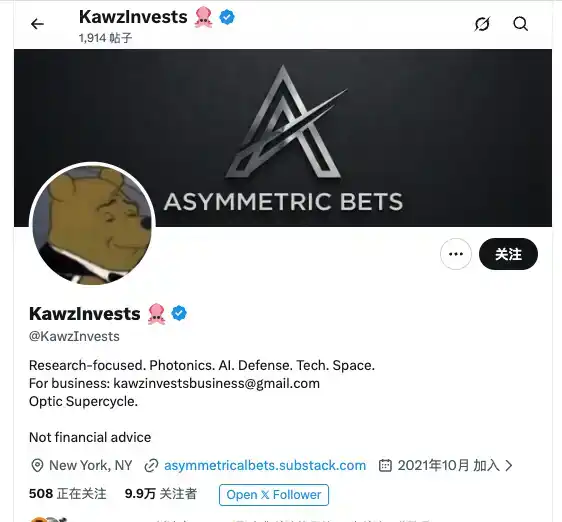
KawzInvests также является представителем нового поколения гуру, аккаунт в основном посвящен торговым идеям на американском рынке и тематическим исследованиям. Подобно Serenity, его контент больше ориентирован на «тематическое инвестирование», а не на традиционный анализ финансовой отчетности.
KawzInvests обычно смотрит на высоковолатильные направления, такие как инфраструктура ИИ, оптическая связь, оборонная робототехника, биотехнологии, автомобильное программное обеспечение, акции роста с малой капитализацией, а затем ищет логику в позиции в цепочке поставок, подсказках о заказах, партнерах, изменениях в руководстве, возможностях слияний и поглощений и пространстве для переоценки.
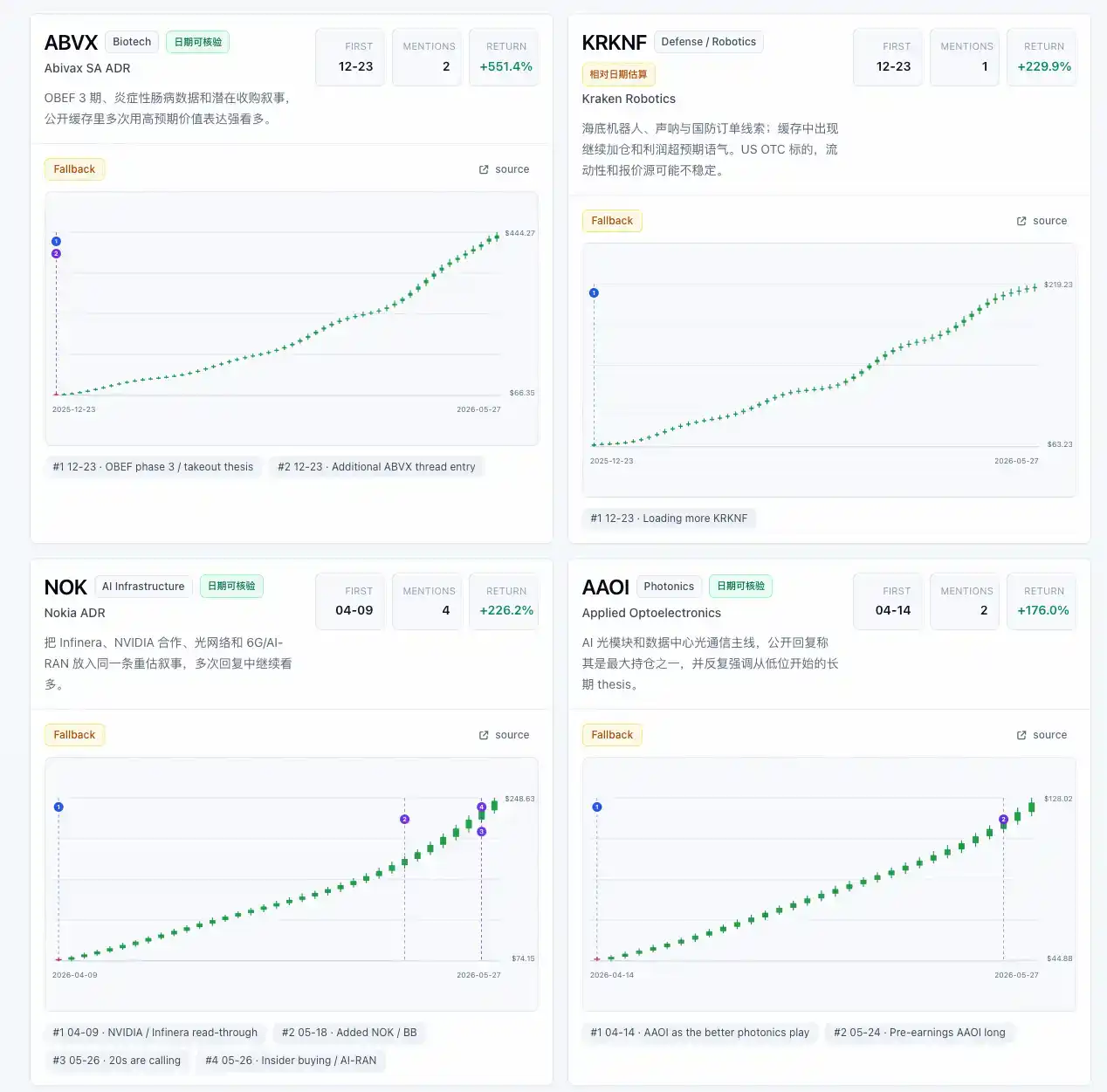
Рекомендации KawzInvests
PhotonCap — еще один типичный пример.
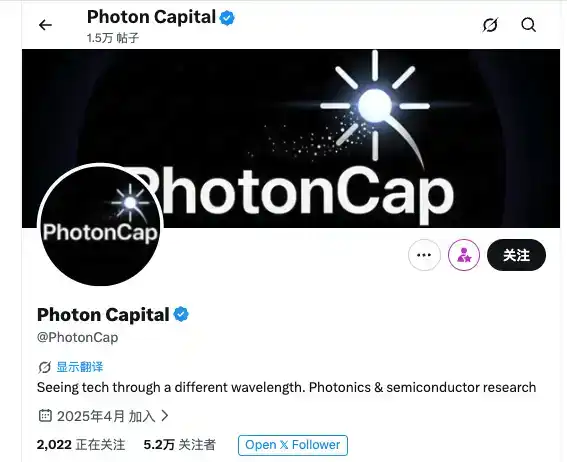
На рынке ходят слухи, что PhotonCap может быть институциональным аккаунтом, стоящим за Serenity, или другой оболочкой Serenity. Это звучит очень по-бандитски и соответствует представлениям людей об анонимных гуру. Однако в открытых источниках такой связи не прослеживается. PhotonCap в своем Substack писал, что это исследовательский аккаунт, созданный инженером в области оптики и фотоники, который ежедневно работает с лазерами, оптическими волокнами, трансиверами и поэтому хочет изучить, как эти вещи оцениваются на фондовом рынке. Он также в статье о раскрытии портфеля благодарил Serenity за вдохновение.
Возвращаясь к месту, откуда начал Serenity, на Reddit есть и другие подобные «гуру».
Например, пользователь с ID u/imacompnerd.
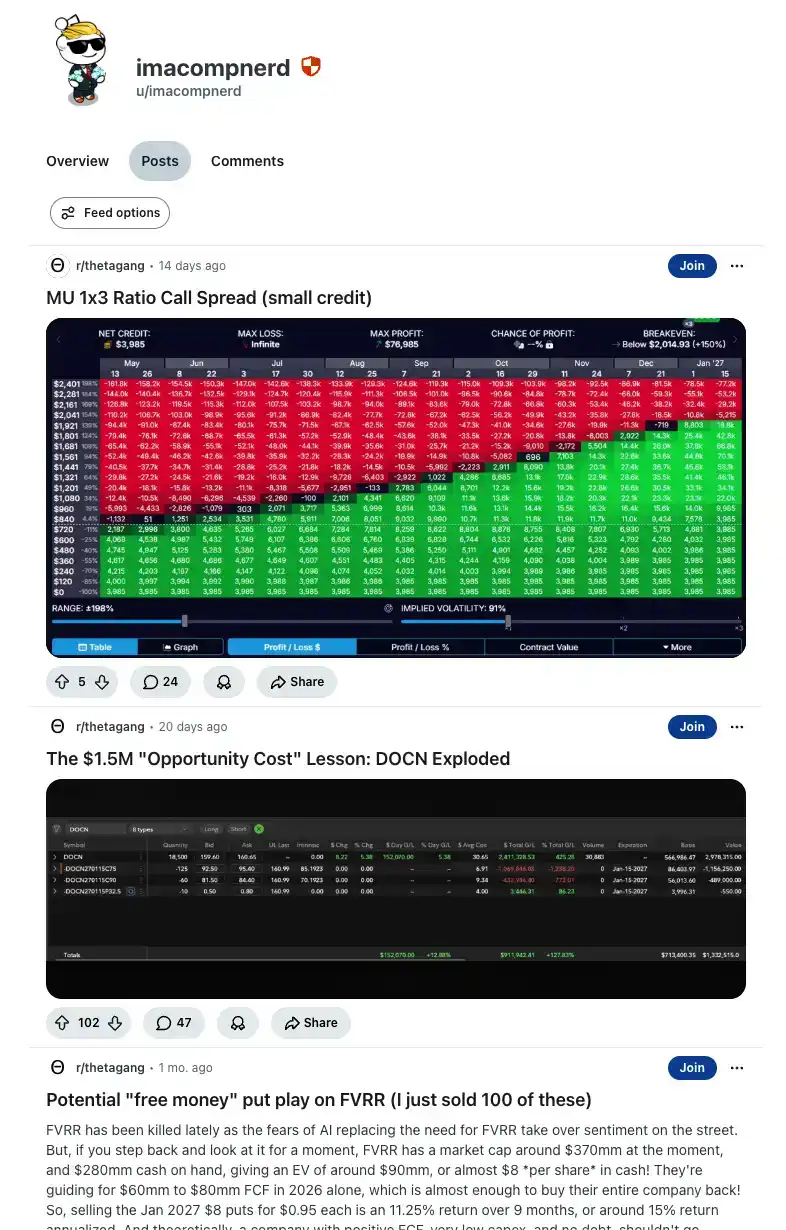
Самая известная сделка u/imacompnerd — это DOCN DigitalOcean. Эта компания не является самым известным лидером в области ИИ, но её можно поместить в средний слой нарратива о торговле ИИ в 2026 году: не каждый разработчик и малый бизнес будет напрямую использовать AWS, Azure или GCP, и не все развертывания ИИ/машинного обучения требуют сложных систем гигантских облачных провайдеров.
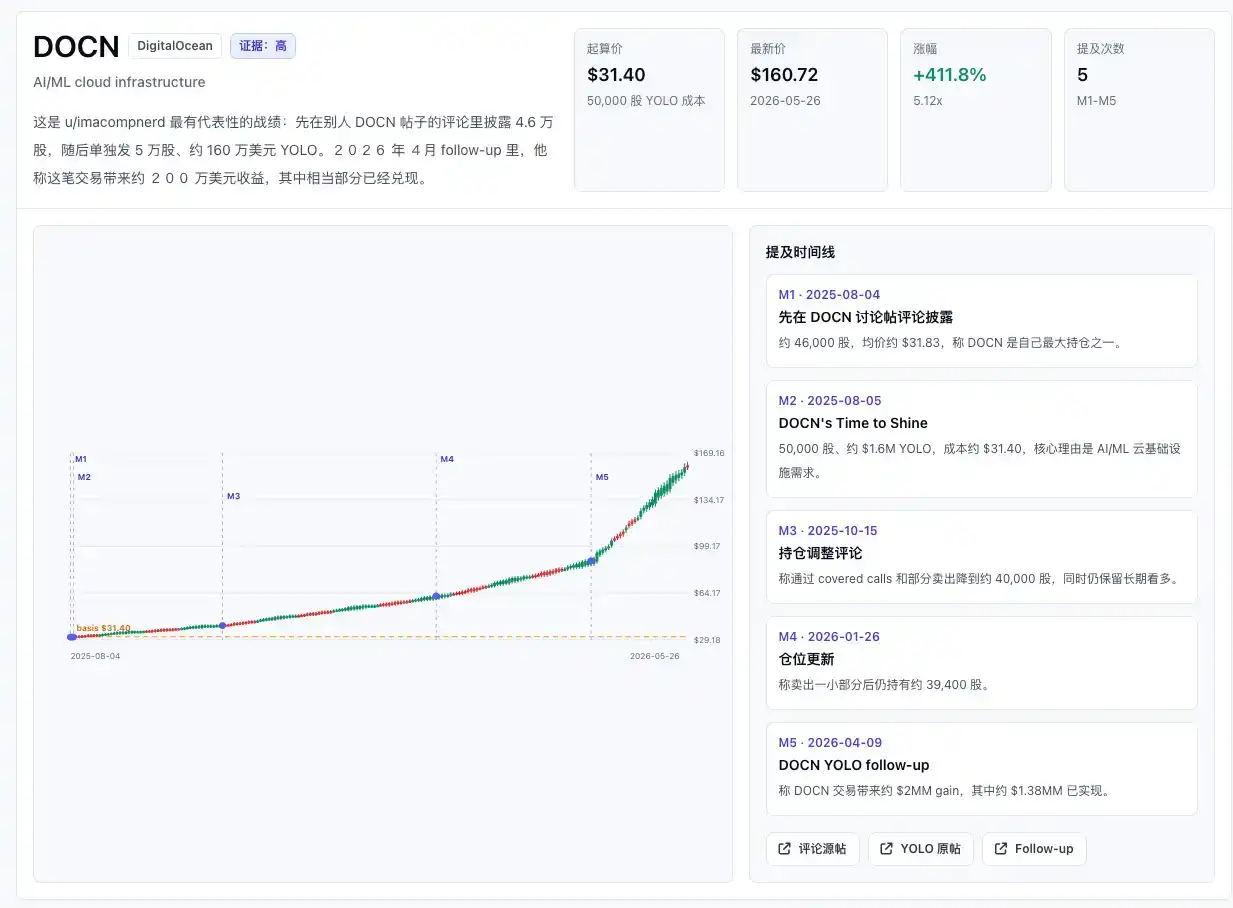
История DigitalOcean заключается в том, что она может стать более легким, дешевым и удобным входом в облачную инфраструктуру ИИ. Imacompnerd сделал ставку именно на эту позицию. Он публично раскрыл владение 50 000 акций DOCN на сумму около 1,6 миллиона долларов со средней ценой около 31,4 доллара; позже он опубликовал follow-up, заявив, что эта сделка принесла около 2 миллионов долларов прибыли. По текущей цене это уже не просто обычный «бычий настрой», а крупная концентрированная инвестиция с явным эффектом создания богатства.
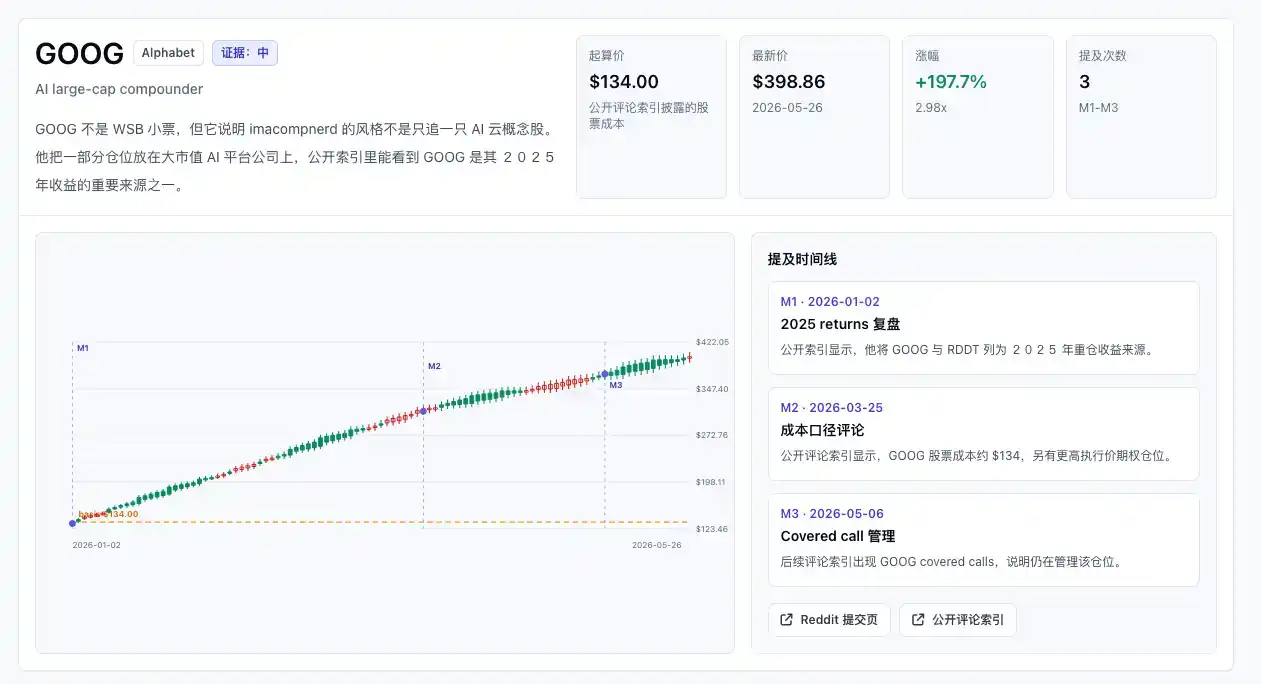
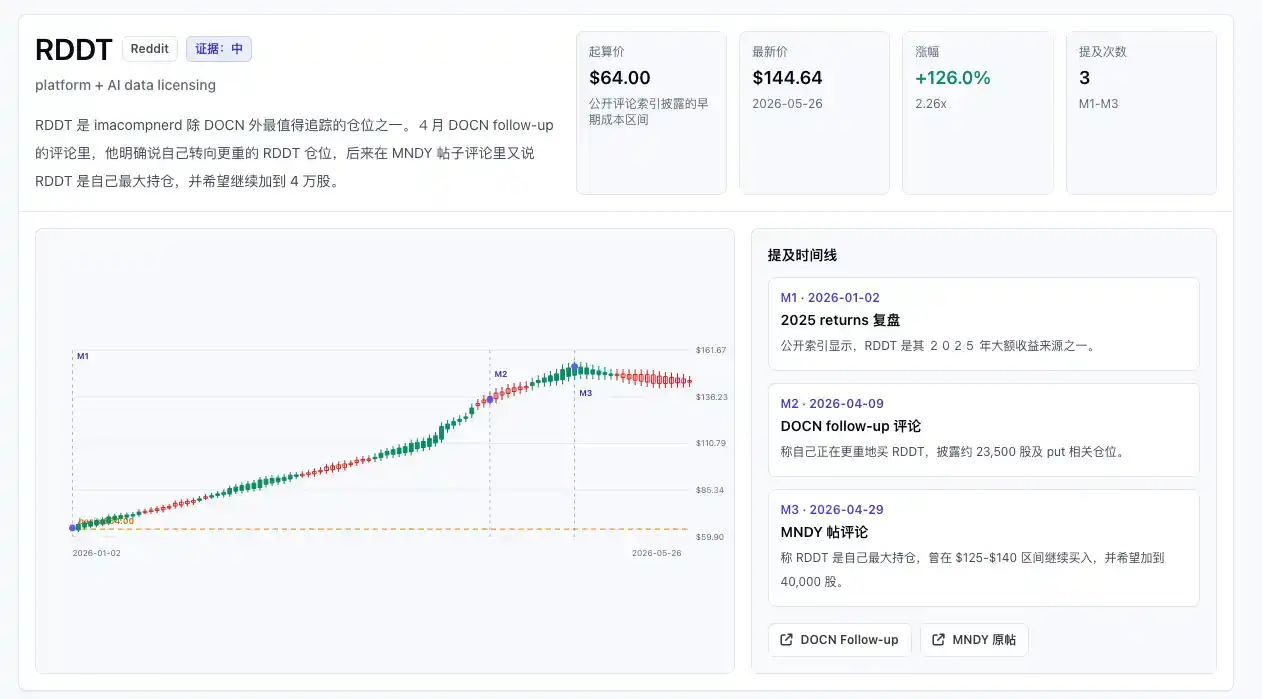
Что еще интереснее, он не стал гуру только благодаря одной сделке с DOCN. В публичных записях также видны его крупные позиции и анализ по RDDT, GOOG, MNDY. RDDT соответствует трафику, сообществу и возможностям монетизации данных ИИ самой платформы Reddit; GOOG — более традиционная крупная компания-платформа в области ИИ; MNDY — еще одна попытка переоценки в корпоративном программном обеспечении. Сделка с MNDY особенно заслуживает упоминания, потому что это не красивый скриншот победы: он раскрывал позицию примерно на 1,9 миллиона долларов, но его средняя цена была выше цены на момент публикации, что на том этапе выглядело не очень хорошо. Именно поэтому этот человек более реален, чем обычный «аккаунт, демонстрирующий прибыль». В его аккаунте есть крупные победы, но также и убытки; есть облачная инфраструктура ИИ, но также и акции платформ и корпоративного ПО; есть концентрированные ставки, но также и управление позициями.
Сектор ИИ на американском фондовом рынке в 2026 году яростно борется за внимание рынка.
Сектор ИИ на американском рынке корректируется в течение получаса в течение торговой сессии, и очень быстро находятся деньги, которые идут на покупку на дне; акции памяти, такие как Micron и SK Hynix, движутся, за ними следует южнокорейский рынок, а затем полупроводники, память, связь, CPO и оптические модули на китайском рынке A-shares. Рынки движутся как огонь, перекидываясь с одного рынка ИИ на другой.
С другой стороны, традиционные активы становятся все более неудобными. Китайские крепкие алкогольные напитки, недвижимость, страхование, фармацевтика, высокие дивиденды — все это раньше можно было обосновать логикой. Теперь во многих случаях они превратились в другую форму психологических мучений: когда ИИ растет, они не растут, когда рынок падает, они падают вместе с ним. Раньше, если ты ошибался с сектором, можно было утешать себя ожиданием смены стиля; теперь, чем больше растет главный тренд ИИ, тем больше он похож на выкачивание крови из других секторов.
В такие времена люди боятся не столько потерять деньги, сколько оказаться не в своей эпохе. Видя, как другие постоянно зарабатывают на памяти, оптических модулях, CPO, облаке ИИ, полупроводниковых акциях с малой капитализацией, держателям традиционных активов трудно не усомниться в жизни. Как только формируется тревога, она продолжает толкать деньги в главный тренд ИИ.
А когда самые заметные лидеры ИИ становятся слишком дорогими, самые агрессивные деньги продолжат движение в более узкие ниши, более верхние звенья, более холодные цепочки поставок.
Это также самая большая характеристика этого поколения «гуру» и самое большое отличие этого поколения гуру от предыдущего.
Рабочий стиль Баффета — читать 500 страниц материалов в день, питаясь финансовыми отчетами, формами 10-K, 10-Q. Он однажды поднял толстую стопку бумаг и сказал журналисту, что знания накапливаются так же, как сложный процент. Он смотрит на ROE, свободный денежный поток, соотношение долга к собственному капиталу, честно ли руководство признает ошибки в письмах акционерам. Его объект — компания, которая работает уже несколько десятилетий, имеет полную финансовую отчетность, стабильный денежный поток. После покупки он готов держать десять, двадцать лет.
Все искусство школы стоимостного инвестирования основано на предпосылке, что «финансовая отчетность — это душа компании».
Но Леопольд Ашенбреннер, Serenity и это поколение «новых богов» в основном этого не читают. Это поколение «гуру» смотрит на: все детали конференц-звонков о финансовых результатах, циклы сертификации клиентов, ритмы цепочек поставок и производственных линий, монополизированы ли исходные материалы наверху, переходит ли определенный технологический путь из научных статей в массовое производство, считается ли компания рынком пережитком старого цикла.
Они также отличаются от традиционных аналитиков sell-side. Аналитики sell-side смотрят на DCF, EPS, guidance, целевую цену. А это поколение гуру напрямую обходит финансовые отчеты, перепрыгивает в верхние звенья цепочки создания стоимости, чтобы найти то «узкое место», например, небольшую компанию с капитализацией в несколько миллиардов долларов, в списке клиентов которой, однако, значатся NVIDIA и Google, материал подложки, монополизированный определенной компанией, цикл сертификации, который еще не охвачен аналитиками sell-side.
Не смотреть на финансовую отчетность, а смотреть на логику цепочки поставок — это секретное оружие этого поколения «раскрутчиков» с WallStreetBets.
Эти люди вышли из одного и того же климата эпохи и вместе сформировали новую школу в бычьем рынке ИИ 2026 года.
Бычий рынок экономики внимания
Активы с низкой ликвидностью, ранний нарратив, сильные символы для распространения, распространение в сообществах и чувство «еще не обнаружено основными деньгами».
Если перечислить эти слова вместе, вы обнаружите, что их можно использовать как для описания meme coin, так и для описания самых горячих микро-капитализационных акций на сегодняшнем американском рынке. Разница в том, что meme coin всегда признавали, что они являются игрой на внимании, в то время как микро-капитализационные акции носят одежду «исследования жестких технологических цепочек поставок».
Но суть одна и та же. Маленькая капитализация, тонкие объемы торгов, малое покрытие со стороны институтов, но часто находящиеся внутри достаточно большой индустриальной истории. Компания с капитализацией в 7 миллиардов долларов представляется как узкое место эпохи ИИ, облачный провайдер с капитализацией в 30 миллиардов долларов представляется как вход в ИИ для малого и среднего бизнеса, неизвестный производитель подложек представляется как общий поставщик для NVIDIA, Google и Microsoft. Как только нарратив устанавливается, цена начинает двигаться первой, а реализуется ли фундаментальная картина на самом деле, станет известно только через несколько кварталов.
Самое интересное в микро-капитализационных акциях заключается в том, что они не являются полем битвы, на котором институты от природы более искусны. Как раз наоборот, чем дальше в сторону малой капитализации и низкой ликвидности, тем больше преимущества Уолл-стрит могут превратиться в оковы.
Управляющий активом размером в несколько сотен миллиардов или даже несколько триллионов долларов, глядя на небольшую компанию с капитализацией в три-четыре миллиарда долларов, сначала думает не «является ли это лучшей возможностью», а «смогу ли я войти в позицию и смогу ли я выйти из нее». У него есть ограничения по долям в портфеле, правила по ликвидности, комитет по рискам, требования к раскрытию информации и стоимость торгового проскальзывания. Для розничного инвестора акция с капитализацией в три миллиарда долларов и ежедневным объемом торгов в несколько десятков миллионов долларов может быть достаточно крупной; для института уровня BlackRock это может быть настолько маленькой позицией, что её нельзя уменьшить. Покупка слишком малого количества не имеет смысла, покупка слишком большого количества может напрямую поднять цену и даже вызвать требование раскрытия владения. Когда придет время продавать, также из-за слишком мелкой ликвидности можно сильно просесть на проскальзывании.
Поэтому они не столько не видят, сколько часто не могут играть. Чем больше денег у института, тем больше силы у него в активах с большой капитализацией; но в микро-капитализационных акциях масштаб становится клеткой. Пруд микро-капитализационных акций слишком мелкий, большой корабль не может войти.
Но у экономики внимания есть свои собственные физические законы.
Поэтому, будет ли эта межрыночная альфа устойчивой, зависит от трех вещей.
Во-первых, сохраняется ли информационный разрыв. Если лишь несколько аккаунтов FinTwit могут четко объяснить цепочку поставок фотоники, CT, следуя за ними, действительно может раньше получить доступ к группе активов с низким покрытием. Но как только основные sell-side аналитики, ETF, количественные фонды начнут их покрывать, нарративная премия будет быстро сжата.
Во-вторых, сможет ли фундаментальная картина поспевать за вниманием. Оптическая связь в ИИ — это не пустой нарратив, но самая большая проблема малых акций — неопределенность заказов, концентрация клиентов, разводнение капитала, длительный цикл проверки производственных мощностей. Компания может находиться в правильном тренде, но не получить реальной экономической ценности.
В-третьих, сама скорость распространения создает переполнение при выходе. Рост активов с низкой ликвидностью легко объяснить как «рынок подтверждает нарратив», но это также может быть просто кратковременный приток внимания. Чем больше это похоже на meme coin, тем больше нужно опасаться отлива ликвидности, как у meme coin — история все еще там, но покупателей уже нет.
Это также дает нам подсказку о миграции на рынках: крипто-трейдеры применяют нюх к нарративам, натренированный на блокчейне, к микро-капитализационным акциям США, аппаратному обеспечению ИИ, энергетике, электроэнергии и активам цепочек поставок. Возможно, это также самое значимое изменение торговой культуры в криптосообществе в этом году.
Атрибут экономики внимания у микро-капитализационных акций США существовал задолго до появления meme coin.
Эпоха рождает героев, и эпохе никогда не бывает недостатка в новых богах.