Редакционное примечание: В этой статье подробно анализируется шокирующие манипуляции капиталом Дэвида Бейли и контролируемой им Nakamoto Holdings ($NAKA). От безумного роста во время обратного поглощения (reverse merger) до падения на 99% после входа розничных инвесторов и до покупки за счет компании по завышенной цене его же частных активов на фоне полного краха — это тщательно спланированный перенос богатства, использующий информационную асимметрию и лазейки в правилах.
Это суровое расследование о жадности, игре на грани правил и инфлюенсер-капитализме. Оно предупреждает нас: когда вера упаковывается в финансовый продукт, а лозунги о децентрализации сталкиваются с централизованной жадностью, розничные инвесторы часто становятся той самой ликвидностью для выхода. Понимание этой истории, возможно, заставит вас быть более осознанными и менее доверчивыми, когда в следующий раз крупная шишка будет звать вас вложиться.
Ниже следует полное содержание:
Сегодня утром Дэвид Бейли (David Bailey) использовал публичную компанию, чья рыночная капитализация уже испарилась на 99%, чтобы выкупить две свои частные компании с премией в 4 раза к текущей цене акций — и все это без необходимости голосования акционеров.
Что самое удивительное? Эта схема по переводу активов была предопределена еще до того, как розничные инвесторы купили свою первую акцию.
Чтобы понять, как это было сделано, нужно начать с начала.
В мае 2025 года компания-«зомби» под названием KindlyMD объявила о слиянии с созданным Дэвидом Бейли инструментом резервирования биткоинов Nakamoto Holdings.
Цена акций взлетела с 2 долларов до более чем 30 долларов за несколько дней, розничные инвесторы хлынули толпой. Биткоин-инфлюенсеры ликовали, а Бейли даже сравнил себя с семьями Морганов, Медичи и Ротшильдов.
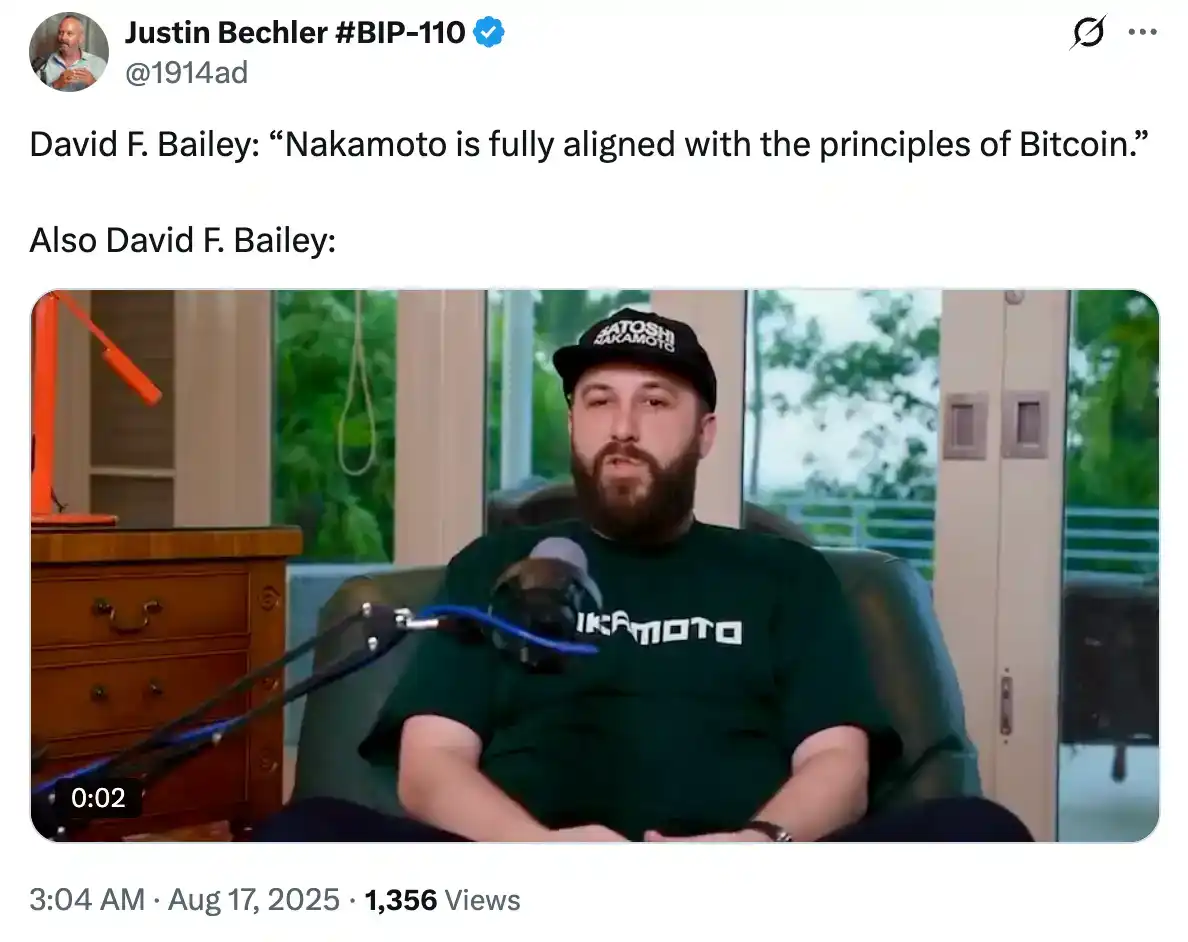
Спустя девять месяцев цена акций упала до 29 центов, и Бейли только что использовал эти акции, чтобы купить свои же компании.
Накачка (The Pump)
Механизм был продуман весьма изощренно.
KindlyMD изначально была никому не интересной микрокаповой акцией на Nasdaq. Nakamoto Holdings вышел на биржу через обратное поглощение, поддержанное финансированием в размере 510 млн долларов через PIPE (Private Investment in Public Equity) и 200 млн долларов через конвертируемые облигации.
На бумаге это выглядело как рождение гиганта по резервированию биткоинов, и инфлюенсеры нового поколения наперебой рассказывали, почему нужно покупать $NAKA (конечно же, чтобы владеть большим количеством биткоинов).
За несколько дней мультипликатор P/BV (Цена/Чистые активы) NAKA достиг ошеломляющих 23x. Это означало, что спекулянты платили 23 доллара за каждый 1 доллар биткоинов, которыми владела компания.
Микростратегия (MicroStrategy) Майкла Сэйлора (Michael Saylor) никогда не достигала такой премии. Разница в том, что у MicroStrategy была многолетняя история операционной деятельности, бизнес по разработке ПО, приносящий реальный доход, и CEO, который не манипулировал структурой сделки, чтобы нажиться на бэкенде.

Инсайдеры знали то, чего не знали розничные инвесторы. Инвесторы PIPE — включая печально известных противников BIP-110 Уди Вертхаймера (Udi Wertheimer), Джеймсона Лоппа (Jameson Lopp) и Адама Бэка (Adam Back) — получили свои доли по цене 1,12 доллара за акцию. В то время как розничные инвесторы покупали по 28, 30, 31 доллару и выше.
Эта асимметрия информации была заложена в структуру с первого дня.
В июне Бейли завершил еще один раунд финансирования PIPE на 51,5 млн долларов по цене 5,00 доллара за акцию. Второй пул инвесторов, хотя и вошел по цене значительно ниже, чем розничные, но все же намного выше начальной цены в 1,12 доллара, в конечном итоге тоже был обрезан.
Бейли отпраздновал завершение раунда, заявив, что на это ушло менее 72 часов, а спрос со стороны инвесторов был чрезвычайно высок.
Давайте внимательнее посмотрим на эту стратегию.
Сброс (The Dump)
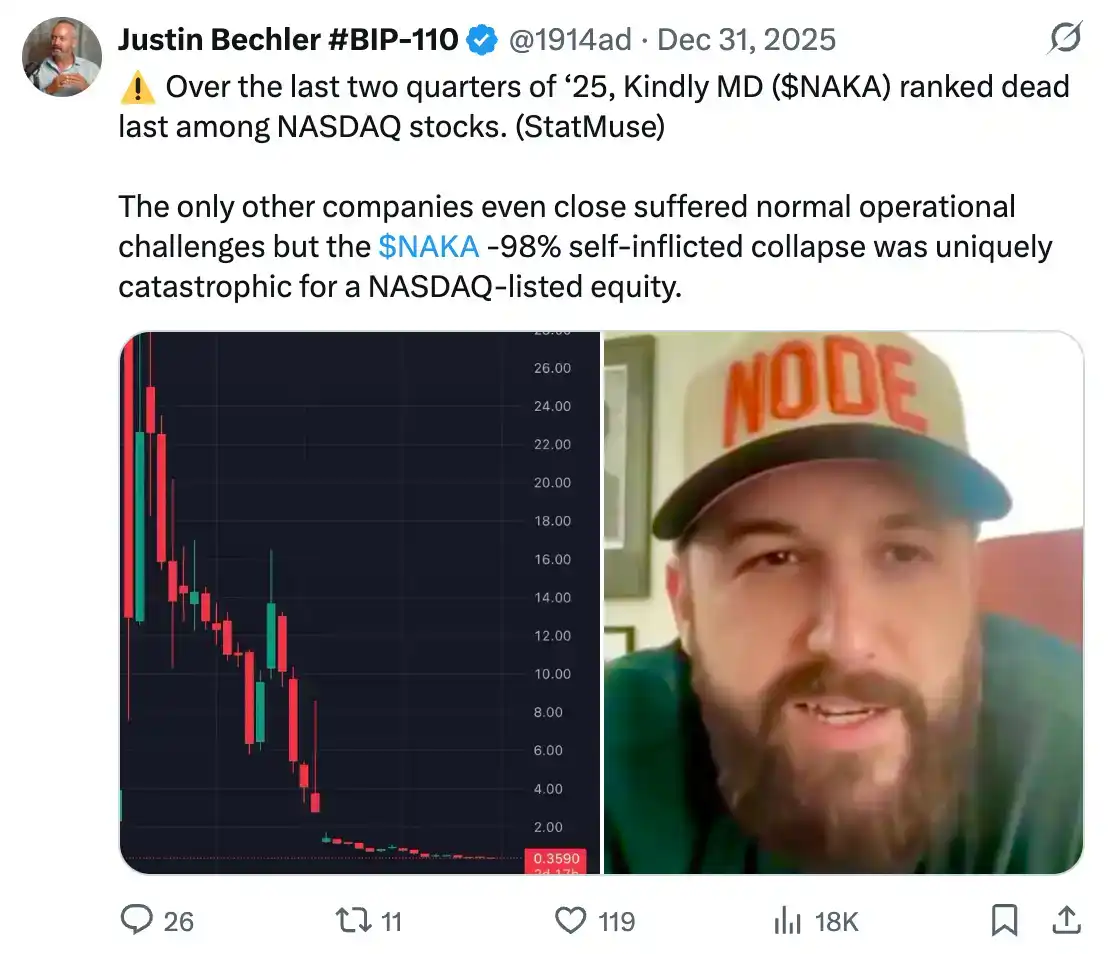
К сентябрю NAKA уже рухнула на 96%.
Ранние инвесторы PIPE, получившие акции по 1,12 доллара, наконец-то смогли выйти из позиций в августовского завершения слияния, что они и сделали.
Ответ Бейли для CEO публичной компании был довольно своеобразным: он сказал акционерам, которые пришли лишь для скальпирования, чтобы они убирались.
И они действительно ушли.
Цена акций продолжала падать. Ниже 1 доллара. Ниже 50 центов. Ниже 30 центов. Компания, владеющая около 5765 биткоинами (стоимостью более 500 млн долларов), теперь имеет рыночную капитализацию менее 300 млн долларов.

То, что рынок оценивает Nakamoto даже ниже стоимости биткоинов на ее балансе, красноречиво говорит о том, как инвесторы воспринимают управленческую команду и корпоративную структуру, в которую завернуты эти биткоины.
Долговая спираль
Когда цена акций обрушилась, Бейли, словно игрок, занимающий деньги на полу казино, часто менял кредиторов.
Первоначальная структура капитала включала конвертируемые облигации на 200 млн долларов от Yorkville Advisors с ценой конвертации 2,80 доллара. По мере того как цена NAKA проваливалась ниже этого уровня, конвертируемые облигации стали долгом, способным поглотить капитал. Поэтому 3 октября Nakamoto взяла срочный заем на 203 млн долларов у Two Prime Lending, чтобы выкупить облигации и проценты Yorkville.
Четыре дня спустя, 7 октября, они заняли 206 млн USDT под 7% у Antalpha, чтобы погасить Two Prime. Срок займа Antalpha составлял всего 30 дней (с опцией продления на 30 дней). Они за неделю заменили конвертируемые облигации срочным займом, а затем заменили срочный займ 30-дневным мостовым кредитом.
План состоял в том, чтобы конвертировать этот мостовой кредит в обеспеченные конвертируемые облигации Antalpha на 250 млн долларов сроком на 5 лет. Новые конвертируемые облигации погашают мостовой кредит, мостовой кредит погашает срочный займ, срочный займ погашает старые конвертируемые облигации.
Но эти конвертируемые облигации на 250 млн долларов так и не были предоставлены Antalpha на согласованных условиях.
16 декабря Nakamoto заняла 210 млн USDT под 8% у Kraken, предоставив в качестве залога биткоины из своего казначейства с превышением в 150%.
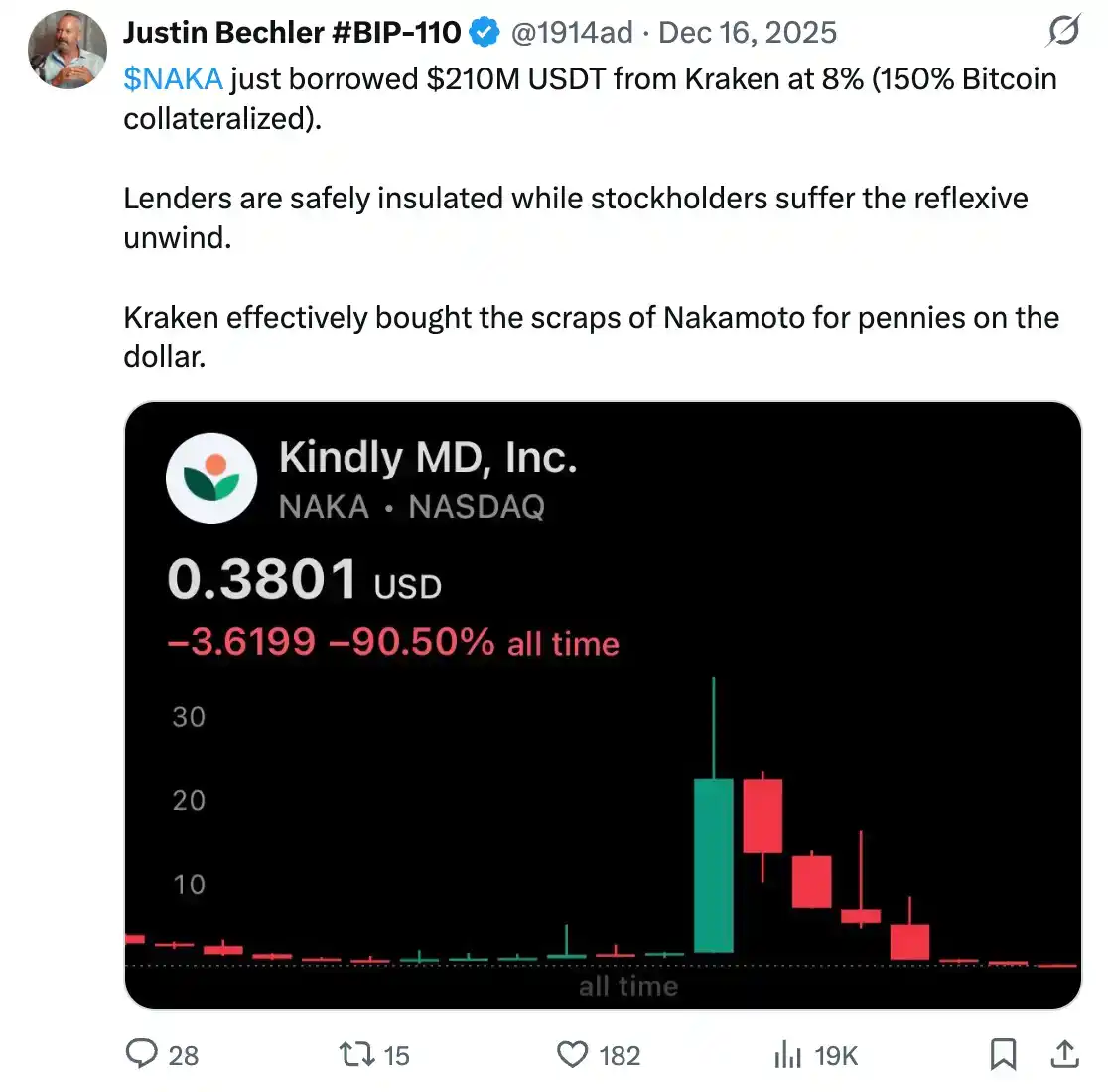
Посчитайте: кредитор имеет биткоины стоимостью 315 млн долларов в качестве залога под кредит в 210 млн долларов. Если цена акций NAKA упадет до нуля, Kraken забирает залог. Если биткоин упадет на 33%, Kraken все равно остается в безопасности. На каждом этапе этой драмы кредитор был надежно защищен, в то время как обычные акционеры несли на себе весь удар рефлексивного обвала.
Каждый новый заем затягивал петлю.
Обратный отсчет
10 декабря Nasdaq уведомила Nakamoto о риске делистинга из-за того, что цена акций в течение 30 рабочих дней была ниже 1 доллара. Компания должна была вернуться к соответствию требованиям до 8 июня 2026 года, то есть чтобы цена закрытия была выше 1 доллара в течение 10 последовательных торговых дней.
Текущая цена акций — 29 центов.
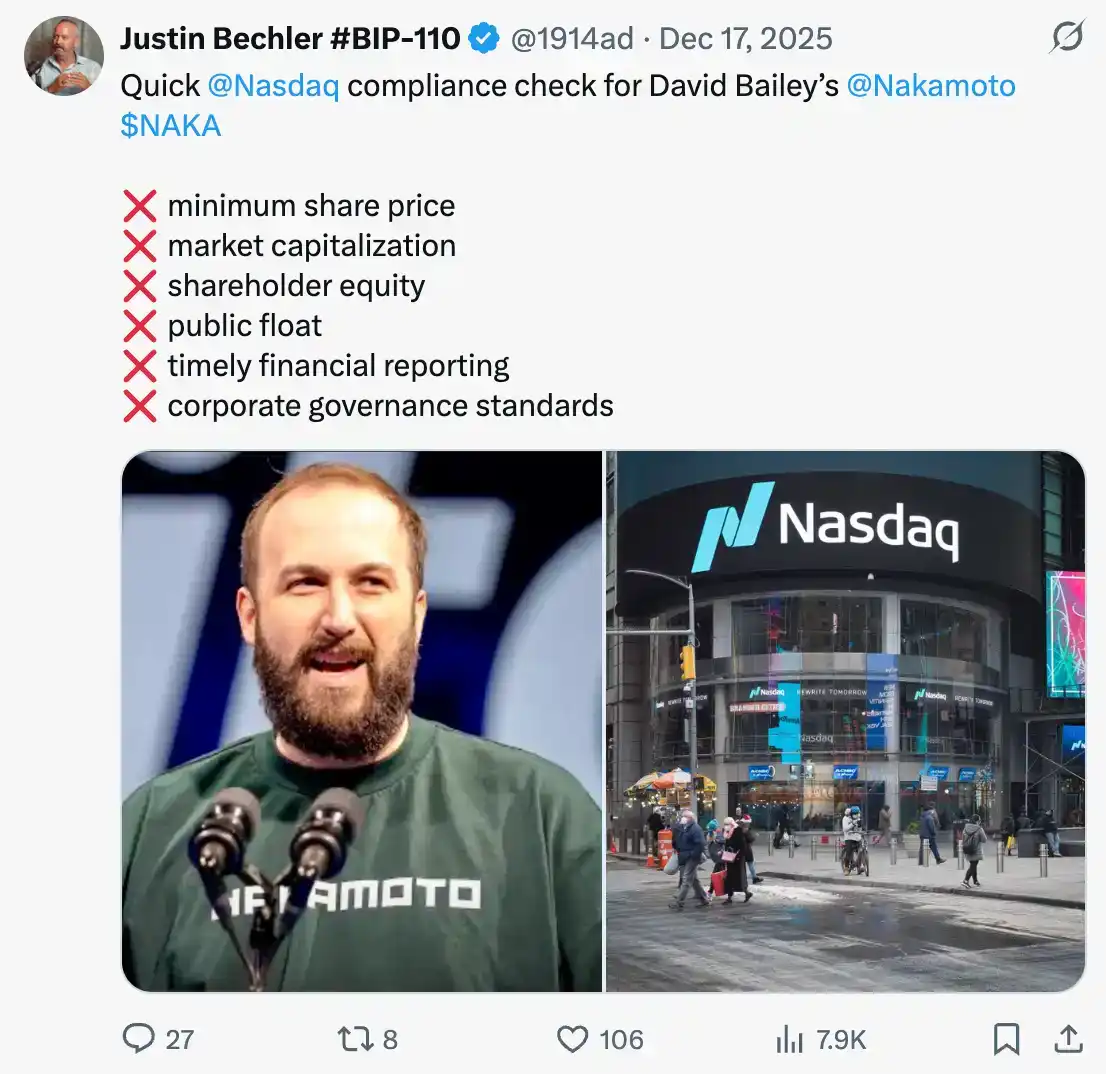
В случае делистинга Nakamoto не сможет проводить ATM-эмиссии (at-the-market), выпускать конвертируемые облигации или использовать акции в качестве валюты для приобретений. Все, что Бейли собрал в этой оболочке, зависело от листинга на Nasdaq, который сейчас не может быть поддержан.
Бухгалтерская катастрофа
В ноябре Nakamoto подала в SEC форму 12b-25, признав, что не может вовремя подать квартальный отчет из-за сложностей бухгалтерского учета, вызванных слиянием. Предварительные данные revealed истину:
Убыток от приобретения Nakamoto в размере 59,75 млн долларов (цена покупки превысила стоимость чистых активов)
Нереализованный убыток от цифровых активов в 22,07 млн долларов
Реализованный убыток от продажи биткоинов в 1,41 млн долларов
Убыток от погашения долга в 14,45 млн долларов из-за рефинансирования
Квартальный убыток составил около 97 млн долларов, частично компенсированный бухгалтерским доходом в 21,8 млн долларов от условных обязательств. Эта компания, которая должна была быть идеальным инструментом резервирования биткоинов, не может вовремя сдать отчетность.
Ограбление
Это возвращает нас к сегодняшнему утру.
Nakamoto объявила о подписании окончательного соглашения о слиянии по приобретению BTC Inc и UTXO Management. BTC Inc владеет Bitcoin Magazine и проводит конференции по биткоину. UTXO управляет хедж-фондом, ориентированным на биткоин.
Бейли является председателем совета директоров и CEO покупателя — Nakamoto.
Он же является основателем продавцов — BTC Inc и UTXO.</p
Он — покупатель, он — продавец, и он же — CEO, утверждающий условия.
Но за несколько недель до приобретения он тихо передал титул CEO Брэндону Грину (Brandon Greene), создав тончайшую прослойку между собой и实体, которые он собирался купить за счет акционерного капитала.
Сегодняшняя сделка полностью финансировалась за счет акций Nakamoto, оцененных в 1,12 доллара на основе опциона колл, встроенного в оригинальное соглашение о маркетинговых услугах. В то время как $NAKA все еще отчаянно пытается подняться обратно к 0,29 доллара.
Компании Бейли получили оценку акций почти в четыре раза выше текущей рыночной цены. Держатели ценных бумаг BTC Inc и UTXO получат 363,6 млн акций, что по рыночной цене составляет 107,3 млн долларов.
Но эти акции были эмитированы по цене 1,12 доллара, что означает, что сделка была структурирована, когда цена акций NAKA была высокой, и когда цена обрушилась, условия никогда не корректировались.
Забудьте о фиктивных ценах в контракте. Что действительно важно, так это то, что 363,6 млн новых акций только что попали в обращение. Независимо от того, что написано в документах — 1,12 доллара или 0,29 доллара, — существующие акционеры были размыты этим количеством. Ярлык в 1,12 доллара — это любезность для продавца, разводнение — реальность.
Дополнительного одобрения акционеров не потребовалось, потому что опцион колл был заранее встроен в первоначальные документы о слиянии, и акционеры проголосовали за них, когда цена акций NAKA еще была на уровне 20-30 долларов.
Розничные инвесторы, одобрившие эти условия, даже не подозревали, что они санкционировали будущее приобретение частного бизнеса Бейли по зафиксированной высокой цене в то время, как их собственные акции превращались в пыль.
Структура сделки в личных интересах
Если отступить и посмотреть, вся структура просто восхитительно элегантна.
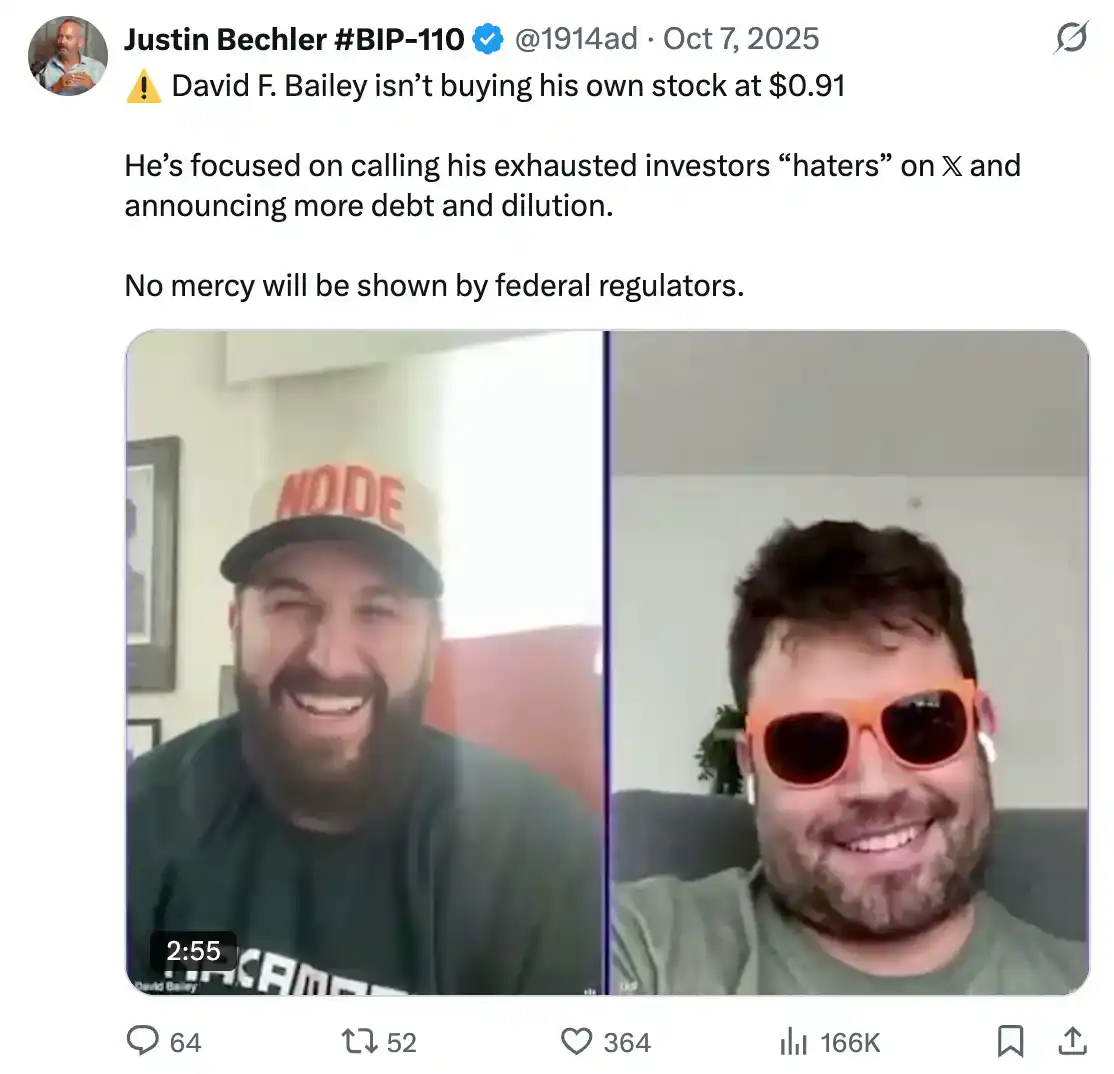
Бейли создал Nakamoto Holdings. Объединил его с публичной компанией-оболочкой через KindlyMD, в процессе привлек 710 млн долларов. На энтузиазме розничных инвесторов цена акций взлетела до 23x к NAV. Инвесторы PIPE вошли по 1,12 доллара, а публика платила в 20-30 раз больше. Цена акций затем рухнула на 99%.
За это время компания сменила трех кредиторов за неделю, пытаясь управлять долгом в 200 млн долларов, который изначально был структурирован для конвертации в акции при цене намного выше текущей.
Теперь, когда цена этих развалин упала ниже 30 центов, Бейли использует этот опустошенный инструмент, чтобы поглотить свою частную империю на условиях, согласованных, когда акции были в сотни раз выше. Первоначальное слияние с KindlyMD было троянским конем, приобретение BTC Inc было полезной нагрузкой (payload).
Бейли сказал нам это с самого начала. В первоначальном пресс-релизе он заявил, что Nakamoto приобретет BTC Inc при условии аудита и исполнения опциона колл. MSA было подано публично, условия опциона были раскрыты. Все было законно, полностью прозрачно — как и все сложные финансовые инженерные схемы, правда была похоронена в куче документов, которые никто не читает.
Человек, который управляет Bitcoin Magazine, организует крупнейшие в мире биткоин-конференции и позиционирует себя как лидер биткоин-движения, создал публичную компанию, уничтожил 99% акционерной стоимости и теперь использует ее, чтобы выкупить свои же предприятия с премией.
Он сравнивал себя с Медичи. По крайней мере, Медичи создавали ценность для Флоренции, прежде чем брать свою долю.
Nakamoto — это уродец, который получается, когда культура инфлюенсеров сталкивается с публичным рынком акций.
Ликвидность для выхода
Дэвид Бейли привлек 710 млн долларов от более чем 200 инвесторов с шести континентов. Он обещал им будущее, подобное Морганам, Медичи, Ротшильдам, финансовую династию, построенную на биткоине. Он говорил им, что Nakamoto выведет биткоин в центр мировых капиталистических рынков. Он сказал, что их имена будут звучать в истории.
Но он delivered убыток в 99%.
Он установил цену PIPE в 1,12 доллара, в то время как розничные инвесторы покупали по 28 долларов. Он встроил в документы опцион на покупку своих компаний без понимания акционерами, на что они дают согласие. Он сменил трех кредиторов за неделю, чтобы 200-миллионный долг не раздавил капитал, накопив в процессе 14 млн долларов убытков от погашения долга. Он продавал биткоины с убытком из казначейства, которое должно было только накапливать, а не продавать. Он даже не мог вовремя подать квартальный отчет. И когда цена акций наконец упала до 29 центов...
Когда rubble был расчищен и доверившие ему розничные инвесторы были ограблены дочиста, он исполнил тот опцион колл, используя обломки их инвестиций, чтобы купить свою частную империю по цене в четыре раза выше рыночной.
У Бейли 11 млн акций по себестоимости 1,12 доллара. У Адама Бэка почти 9 млн акций. Баладжи, Лопп, Юско, Салинас, У Цзихань — все они вошли по ценам, которые учителя, дальнобойщики или начинающие инвесторы никогда не могли получить. Эти люди формируют нарратив о биткоине. Они проводят конференции, издают журналы, управляют фондами, пишут твиты. Они — цепочка поставок веры, превращающая скептиков в believers, а believers — в мешкодержателей.
Теперь Бейли владеет Bitcoin Magazine, биткоин-конференциями и хедж-фондом, все это помещено в публичную компанию, чья рыночная capitalization составляет лишь fraction ее биткоин-холдингов, все приобретения совершены акциями по цене в четыре раза выше рыночной, и все это было одобрено до того, как первый цент розничного инвестора поступил.
И он еще не закончил.
Nakamoto уже подала в SEC заявку на ATM-эмиссию акций на 5 млрд долларов. Бейли теперь контролирует медиаподразделение, конференционное подразделение, хедж-фонд и shelf registration, который позволяет ему продолжать выпускать акции под залог биткоин-казначейства, пока не будет выжата последняя капля стоимости.
Когда именно биткоин-сообщество отдало ключи организаторам конференций и инфлюенсер-капиталистам? И почему кто-то удивляется, когда они уезжают на машине?





















