Автор: Nunchuk
Компиляция: AididiaoJP, Foresight News
Оригинальное название: «Человек ушел» — как биткоин должен быть унаследован?
Самостоятельное хранение меняет подход к планированию наследства. Хороший план наследования биткоинов должен: защищать ваши биткоины при жизни и позволять назначенным лицам顺利找回 эти активы после вашей смерти.
Биткоин дает человеку редкую возможность: хранить богатство без необходимости полагаться на банки, брокеров или кастодиальные учреждения. Это одно из его greatest преимуществ.
Но именно это также делает наследование чрезвычайно трудным.
Для традиционных активов обычно есть посредническое учреждение. Банки могут заморозить счета, проверить документы, сотрудничать с судом, передать контроль. С биткоином все иначе. Сеть не признает наследников, свидетельства о смерти, документы о завещании и не обрабатывает запросы в службу поддержки. Она признает только ключи и условия траты.
Это приводит к простому, но серьезному вопросу: характеристики, которые делают биткоин трудным для кражи, также делают его трудным для наследования.
Почему биткоин отличается
Наследование биткоинов по своей сути является проблемой «дизайна восстановления»: кто, при каких условиях и с какими гарантиями может получить биткоины.
Первая проблема — это противоречие между безопасностью и доступностью. При жизни вам нужна сильная защита от кражи, принуждения и ошибок操作; после вашей смерти или потери дееспособности вы хотите, чтобы доверенные лица имели четкий путь восстановления. Эти две цели часто конфликтуют.
Вторая проблема — сложность. Многие мощные схемы работы с биткоином (особенно мультиподпись) могут быть ясны для самого разработчика, но для редко использующих биткоин супругов, детей, доверенных лиц или исполнителей завещания могут быть совершенно непонятны. Схема, которую может操作只有冷静的技术人员, скорее всего, окажется неэффективной, когда восстановление действительно понадобится.
Третья проблема — конфиденциальность. Планирование наследования раскрывает敏感信息: кто владеет биткоинами, примерно сколько, кто унаследует. Слабый дизайн схемы создает ненужные риски для владельца и наследников.
Четвертая проблема — время. Настоящий план наследования может потребоваться через годы или даже десятилетия и оставаться действительным. Это означает, что оценка схемы должна учитывать не только то, работает ли она сегодня, но и сможет ли она пережить устройства, предположения и даже компании, участвовавшие в ее создании.
Это важнее, чем многие осознают. Схема наследования, зависящая от вечного существования某家公司, может быть удобна, но绝不持久тельна.
Шесть вопросов, которые нужно задать себе
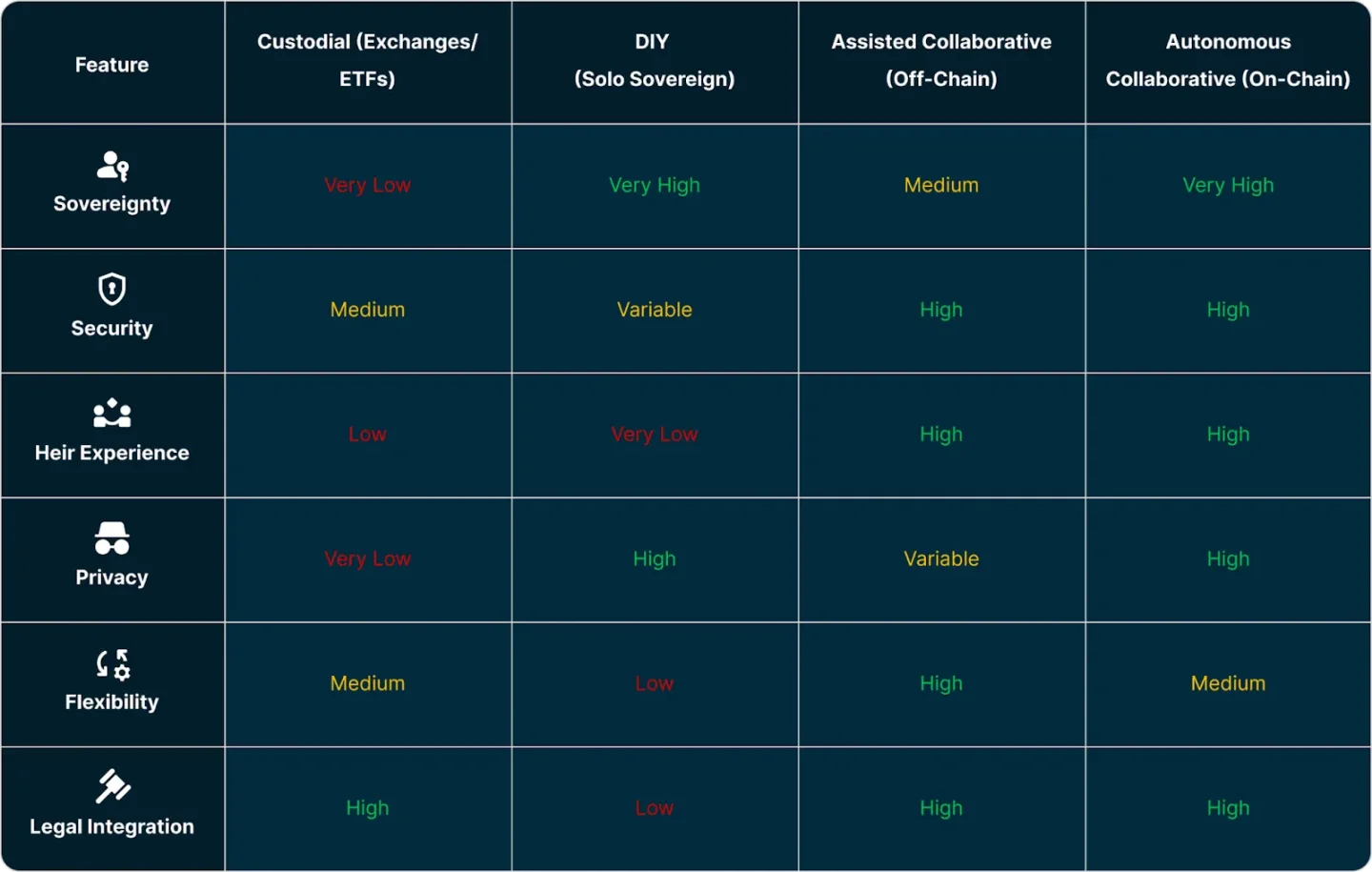
Каждая схема наследования биткоинов предполагает компромиссы. Проще всего сравнить их, задав шесть вопросов:
-
Автономность: Сохраняет ли она ваш полный контроль над активами или должна полагаться на某家公司, кастодиана, доверенное лицо или юридические процедуры для работы?
-
Безопасность: Защищает ли она эффективно ваши биткоины от кражи, принуждения к выдаче или случайной потери при вашей жизни?
-
Опыт наследника: Смогут ли ваши назначенные наследники真正找回资金 без замешательства и без совершения роковых ошибок?
-
Конфиденциальность: Сколько敏感信息 о вас или вашей семье раскрывает эта схема?
-
Гибкость: Удобно ли обновлять план при изменении бенефициаров, сроков или семейных обстоятельств?
-
Юридическая совместимость: Может ли она, при необходимости, использоваться совместно с завещанием, трастом или институтом доверительного управления?
Ни одна схема не может быть лучшей во всех измерениях, но эти шесть вопросов позволяют clearly видеть компромиссы.
Четыре распространенных решения
1. Кастодиальное наследование
Самый традиционный способ — хранить биткоины на бирже, в ETF, у брокера или другом кастодиальном учреждении, позволяя традиционной legal системе处理转移.
Его привлекательность очевидна: счета привязаны к личности, есть выписки, служба поддержки, для наследников есть относительно четкие юридические процедуры.
Но цена также очевидна: учреждение держит приватные ключи. Это означает, что возможность вывода активов зависит от политики этого учреждения, compliance процедур, юрисдикции и его способности выжить в долгосрочной перспективе. Наследникам, возможно, придется столкнуться с двойным барьером: legal системы и торговой платформы. Концентрация большого количества敏感ных данных клиентов в одном месте также создает риски конфиденциальности и безопасности, которых нет при самостоятельном хранении.
Этот способ可行, но он решает проблему наследования ценой отказа от самого核心的价值 самостоятельного хранения биткоинов.
2. Наследование своими силами (DIY)
DIY наследование охватывает широкий спектр. На простом конце — простая передача单签: просто оставить наследникам сид-фразу, аппаратный кошелек или полную резервную копию для восстановления. На сложном конце — мультиподписные схемы и схемы с временными замками, созданные с помощью开源工具.
Эти два подхода не следует путать.
С точки зрения безопасности,最脆弱的就是 простая单签 передача. Каждая дополнительная резервная копия сид-фразы — это дополнительная цель для кражи, особенно когда один человек или одно место может разблокировать весь кошелек. Если поместить полные материалы для восстановления в домашний сейф, офисный ящик или банковскую ячейку без какой-либо дополнительной защиты,风险就更高.
Добавление BIP39 пароля может улучшить ситуацию, но introduces новые риски: нет контрольной суммы для обнаружения ошибок копирования; короткий пароль может быть взломан bruteforce; длинный и сложный пароль может стать невозможным для точного воспроизведения владельцем или наследниками спустя годы, заблокировав их самих вне кошелька.
С другой стороны, хорошо продуманные DIY мультиподписные схемы или схемы с временными замками могут быть очень надежными. Многие опытные пользователи биткоина выбирают этот путь по веским причинам. Но цена — операционная: вся ответственность за настройку,维护和恢复 ложится на владельца и его наследников, и не у кого спросить, когда возникают проблемы.
При правильном выполнении DIY может обеспечить极高的自主性和安全性,只是对所有人的要求都更高了.
3. Совместное хранение с помощью сервиса
Есть и промежуточный путь: совместное хранение (collaborative custody). В этой модели владелец по-прежнему использует мультиподписную схему, но сервис помогает с открытием счета, управлением ключами, операциями восстановления и процессами наследования.
По сравнению с чистым кастодианством или чистым DIY, это действительно шаг вперед. Владелец сохраняет больший контроль, а наследники получают помощь в случае необходимости.
Большинство таких сервисов处理逻辑 наследования вне блокчейна: периоды ожидания, проверка жизнеспособности,安排 бенефициаров, процессы восстановления координируются через систему сервиса, а не直接写入比特币的链上花费条件.
У этого есть очевидные преимущества. Внеchain наследование легче обновлять. Если владелец хочет сменить бенефициаров, скорректировать период ожидания или установить более сложную схему поэтапного распределения, внеchain операции обычно намного удобнее, чем полностью on-chain схемы.
Цена — надежность пути восстановления. Реализация наследования по-прежнему зависит от того, будет ли существовать этот сервис и будет ли он сотрудничать, когда наследники подадут запрос.
Для многих семей это仍然是一个不错的选择,尤其是当引导式恢复和操作灵活性比较重要的时候.
4. Совместное наследование on-chain
Более новая модель — это добавление on-chain резервного плана к совместной поддержке.
Владелец по-прежнему получает безопасность мультиподписи и руководство от сервиса, но путь восстановления для наследования также записывается в правила траты биткоина в блокчейне. Например, использование временного замка для установки срока, по истечении которого условия траты автоматически меняются, позволяя наследникам восстановить доступ самостоятельно, даже если сервис не может предоставить услуги.
Это важное изменение в управлении рисками: путь восстановления锚定 в правилах биткоина, а не仅仅依赖一家服务商的持续配合.
У этой модели, конечно, тоже есть цена. Поскольку часть плана принудительно выполняется on-chain, его корректировка становится менее удобной. Изменение времени наследования или структуры плана может потребовать转移资金、支付网络手续费.
Но для держателей, желающих получить协同支持 при наличии долгосрочного надежного резерва, on-chain наследование является важным шагом вперед.
Где же真正的 компромисс
Сравнивая современные схемы наследования,更有意义的不是 спрашивать «какая лучше», а «что вы больше всего хотите оптимизировать».
Внеchain协同方案通常在гибкости上胜出: удобство обновления, способность адаптироваться к изменениям в семье, легкость корректировки со временем.
On-chain协同方案通常在持久性上胜出: резервный путь разработан с целью работы в случае отказа сервиса, что крайне важно для планов наследования, которые должны оставаться действительными десятилетиями.
Многие семьи могут обоснованно выбрать любой вариант. Ключ в том, что для вас最重要.
Если вы рассматриваете биткоин как поколенческое богатство, то持久性 должна быть核心考量.
Плавный путь + последний рубеж
Большинство схем наследования биткоинов склоняются к двум крайностям.
С одной стороны — это жертва автономностью ради удобства: легко понять, но сильно зависит от учреждений, проверки личности или сотрудничества сервиса.
С другой стороны — это жертва удобством ради автономности:减少了对第三方的信任,却把复杂的技术负担甩给了继承人,而且是在他们最脆弱的时候.
最稳健的方案 — это兼顾两条路径.
Первый — плавный путь: когда сервис доступен и все работает нормально, наследники восстанавливают активы через управляемый процесс, который проходит гладко, с минимальным стрессом и низкой вероятностью ошибок.
Второй — последний рубеж: путь восстановления, принудительно выполняемый сетью биткоина, который работает, даже если сервис исчезает.
Такая комбинация важна, потому что она соответствует реальным сценариям наследования: большинство людей希望家人得到帮助,而不是独自面对复杂的技术操作;同时,很少有人愿意把遗产托付给一家「必须永远存在」的公司.
Планирование наследства по-прежнему важно
Распространенное заблуждение: считается, что наследование биткоинов要么完全脱离传统体系,要么完全纳入传统金融体系.
На самом деле, многим семьям需要的是混合模式.
Одни владельцы希望, чтобы биткоины передавались семье напрямую и конфиденциально. Другие希望 участие доверенных лиц, например, для поэтапного распределения, защиты несовершеннолетних детей или интеграции с существующими трастами. Третьи希望 четко выразить намерения в юридических документах, одновременно обеспечив фактический путь восстановления в обход публичных записей о завещании.
Хорошая схема наследования биткоинов должна поддерживать эти разные варианты.
因此,把两个问题分开思考会有帮助: кто должен получить эти активы? Кто может фактически их восстановить?
Завещание или траст могут明确意图、界定受益人、设定法律义务, но сами по себе не решают проблему «как восстановить». И наоборот, чисто техническая схема восстановления не может обойти требования к отчетности, налогообложению и законы о наследовании.
最周全的方案 — это учитывать оба этих уровня.
Распространенные ошибки
Многие планы наследования терпят неудачу по очень обычным причинам.
Одна ошибка — предположение, что супруг(а), дети или исполнитель завещания «разберутся сами». Наличие аппаратного кошелька не равно пониманию процесса восстановления.
Другая ошибка — концентрация слишком большой власти в одной точке: один документ, одно устройство, один конверт могут полностью разблокировать средства. Это действительно удобно для наследования, но также удобно и для кражи.
Еще одна ошибка — переоценка безопасности «пароля» без учета человеческого фактора при восстановлении. Пароль действительно может усилить безопасность单签 схемы, но только при наличии настоящей дисциплины на каждом этапе создания, сохранения и сообщения.
Наконец, многие люди составляют план один раз и больше к нему не возвращаются. Бенефициары могут измениться, устройства сломаться, семейные отношения измениться. План наследования биткоинов — это не статичный предмет, а система, требующая定期检视.
Простой список действий
План наследования можно начать с простого, если каждый шаг является осознанным и定期回顾.
-
Шаг 1: Определите, кто должен унаследовать ваши биткоины, и способны ли эти люди直接处理 самостоятельное хранение. Некоторые могут получать биткоины напрямую, другим может потребоваться доверенное лицо, поэтапная передача или управляемая помощь.
-
Шаг 2: Выберите подходящую модель безопасности в зависимости от размера активов и ситуации наследников. Чем больше сумма, тем выше важность мультиподписи и формального设计 наследования.
-
Шаг 3: Храните секреты и инструкции分开. Приватные ключи, аппаратные устройства и «инструкцию по эксплуатации» (объясняющую, как восстановить)最好 не хранить вместе и не передавать одному и тому же человеку.
-
Шаг 4: Определите, что для вас最重要. Некоторые семьи更适合灵活的 внеchain协调, другим更需要 on-chain резерв, переживающий срок службы сервиса.
-
Шаг 5: Протестируйте план. Не всеми активами, но достаточно, чтобы проверить, действительно ли путь восстановления可用. Никогда не испытанный план — это всего лишь теория.
-
Шаг 6: Пересматривайте вашу схему после重大事件 в жизни и定期. Женитьба, развод, рождение ребенка, смерть, переезд, смена сервиса — все это может повлиять на то, остается ли первоначальный план разумным.
Последний вопрос: настоящее испытание самостоятельного хранения
Легко откладывать наследование на «потом». Но на самом деле, это окончательный тест на то, является ли схема хранения по-настоящему robust.
Кастодиальные схемы提供熟悉感,但代价是重新引入对机构的依赖. DIY схемы при технической грамотности могут быть превосходны,但要求更高 к владельцу и наследникам. Внеchain协同 наследование повышает可用性和гибкость. On-chain协同 наследование добавляет robust долгосрочный резерв.
Важнейший прогресс в этой области в последние годы — это设计 наследования, сочетающие управляемое восстановление и автономный on-chain резерв.
Для тех, кто希望 биткоин стал поколенческим богатством, это изменение направления很有意义. Цель больше не просто «оставить инструкции», а «оставить долгосрочный безопасный, конфиденциальный и работающий путь восстановления».
Twitter:https://twitter.com/BitpushNewsCN
Группа общения比推 TG:https://t.me/BitPushCommunity
Подписка比推 TG: https://t.me/bitpush





















