# Сопутствующие статьи по теме Super App

Новостной центр HTX предлагает последние статьи и углубленный анализ по "Super App", охватывающие рыночные тренды, новости проектов, развитие технологий и политику регулирования в криптоиндустрии.

Coinbase's Walled Garden

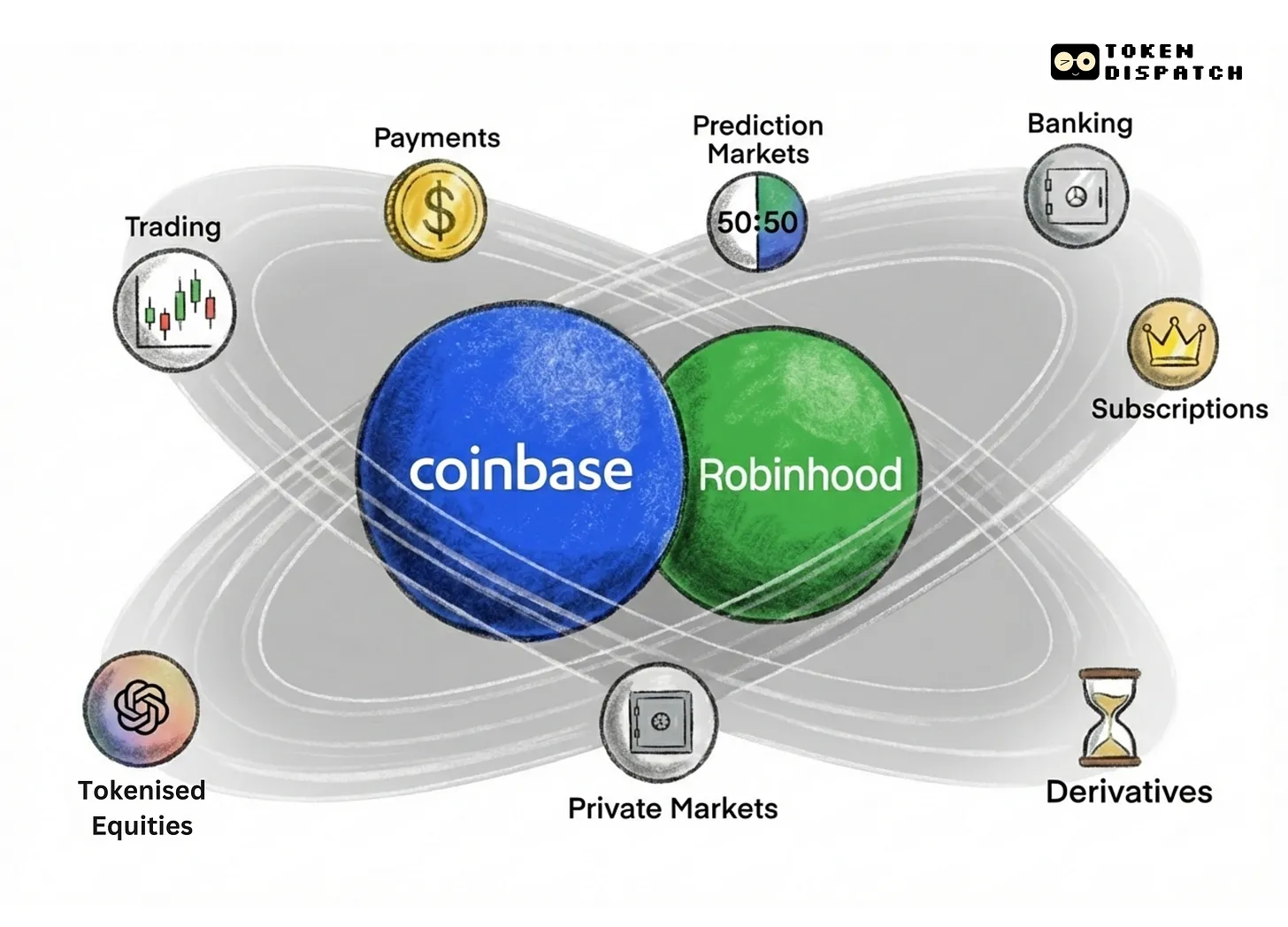
Coinbase is strategically shifting from being a simple crypto on-ramp to building a comprehensive "everything exchange" to combat fee compression and cyclical trading volumes. This mirrors a common industry pattern where initial specialization gives way to integrated platforms that win through convenience, not perfection. The company is aggregating diverse assets—cryptocurrencies, stocks, perpetual futures, and prediction markets—into a single app. The thesis is that users, after a single KYC and bank link, prefer a unified platform over managing multiple specialized apps. This strategy aims to boost engagement; for instance, prediction markets keep users active during calm crypto periods. While the core business remains monetizing users through various fees and subscriptions, the real long-term differentiation is its control over the Base blockchain. This infrastructure could enable truly on-chain, 24/7 trading with instant settlement, something traditional brokers like Robinhood can't easily replicate. However, this move towards a centralized super-app conflicts with crypto purists who value decentralization. Coinbase's bet is that convenience and a seamless user experience will create a powerful ecosystem lock-in through low switching costs, not contracts. It aims to serve the mass market that prioritizes ease of use, even if it means sacrificing ideological purity. The challenge is to avoid becoming a bloated app while executing this Amazon-like strategy of being "good enough" at everything to become the default financial platform.

marsbit12/23 13:12

Coinbase's Walled Garden

marsbit12/23 13:12

In-Depth Analysis of Coinbase's Transformation into an 'Everything Exchange'

The article "Coinbase's Walled Garden" analyzes the company's strategic pivot from being a simple crypto on-ramp to an "Everything Exchange." Historically, Coinbase derived over 90% of its revenue from transaction fees, but as that business faced pressure from fee compression and volatile trading volumes, it has diversified. Now, less than 55% of revenue comes from trading. Coinbase's new strategy bets on aggregation over specialization, integrating stock trading, prediction markets, and perpetual contracts into its platform. The thesis is that once users complete KYC and link a bank account, they prefer the efficiency of a single platform rather than managing multiple specialized apps. This approach aims to capture more user engagement and revenue streams through various fees, spreads, interest, and subscriptions. A key engagement tool is prediction markets (like those from Kalshi), which provide social, event-driven reasons for users to stay active on the app even during stagnant crypto markets. The long-term differentiator could be Base, Coinbase's Layer 2 blockchain, which might enable true on-chain stock trading and programmable money. Ultimately, Coinbase is prioritizing scale over purity, targeting mainstream users who value convenience over decentralization. The goal is to create a "walled garden" held together by convenience—where the friction of leaving outweighs the benefits of using best-in-class specialists—similar to Amazon’s strategy of being "good enough" at many things to retain users across a closed loop of earn, trade, hedge, borrow, and pay activities.

比推12/19 22:38

In-Depth Analysis of Coinbase's Transformation into an 'Everything Exchange'

比推12/19 22:38

Didi in Latin America: Already a Digital Banking Giant

Didi, known in China primarily as a ride-hailing giant, has transformed into a digital banking powerhouse in Latin America, serving over 25 million users. While its financial ambitions were stifled in China by the dominance of Alipay and WeChat Pay—which left little room for competitors—Didi found fertile ground in Latin America’s underbanked markets. Facing a cash-dominated economy and low banking penetration, Didi built its own financial infrastructure from scratch. It partnered with OXXO, a ubiquitous convenience store chain in Mexico, to allow cash top-ups via its DiDi Pay system—effectively creating an alternative banking network. This move not only improved transaction efficiency but also addressed critical safety issues, as drivers carrying cash were often targets of robbery. Leveraging its vast data on driver and passenger behavior, Didi developed a unique "behavioral credit" system, enabling it to offer loans to individuals with no formal banking history. Products like DiDi Préstamos and high-yield savings accounts (DiDi Cuenta) helped capture and retain user funds, turning Didi into a central financial hub. Beyond finance, Didi now facilitates broader economic activities: it supports e-commerce partnerships (like AliExpress’ "buy now, pay later" service) and accelerates the adoption of Chinese electric vehicles by providing auto loans to drivers. This evolution from ride-hailing to integrated fintech and industrial enabler highlights Didi’s adaptability and the success of its "infrastructure-first" strategy in emerging markets. The company’s journey in Latin America underscores a broader lesson for Chinese tech firms expanding abroad: success requires not just exporting technology, but rebuilding the foundational systems that make it relevant—especially in regions where basic services are lacking. Didi’s growth in the region reflects a return to the gritty, ground-up innovation that once defined China’s internet boom.

marsbit12/10 12:08

Didi in Latin America: Already a Digital Banking Giant

marsbit12/10 12:08

活动图片