Оригинал | Odaily星球日报(@OdailyChina)
Автор | Дин Дан (@XiaMiPP)
«Альткойны мертвы» — это почти консенсус, который пользователи криптовалют не хотели признавать, но вынуждены были смириться с ним в прошлом году. Даже бывшие голубые фишки на фоне продолжающегося ослабления общего рынка погрузились в длительные боковые движения или плавное падение, не показывая признаков оживления.
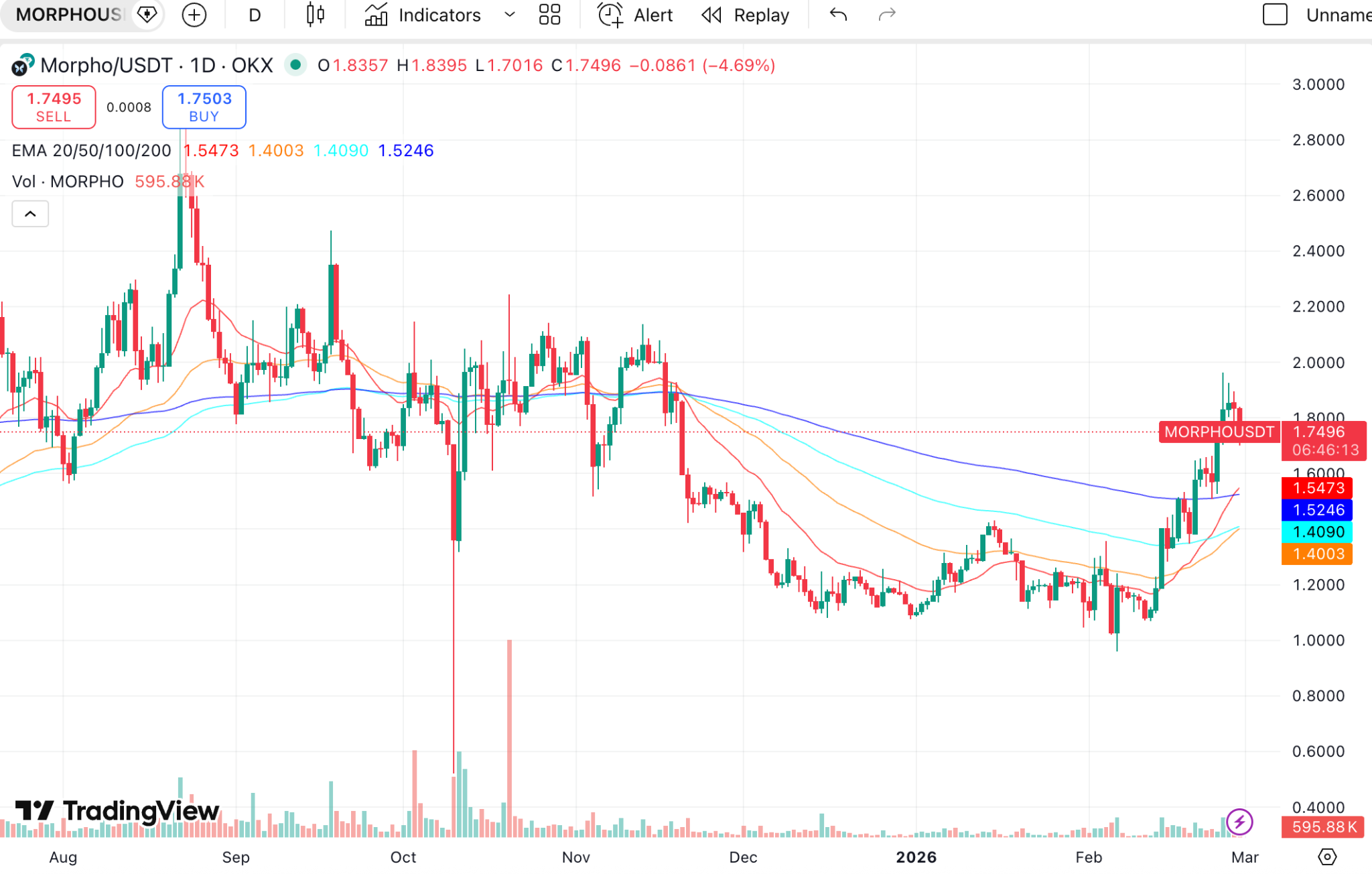
Однако, именно в условиях такой общей вялости, токен MORPHO отскочил с минимума в 0,96 доллара в начале февраля до диапазона 1,8-1,9 доллара, удвоившись вопреки тенденции. На дневном графике этот отскок в основном сформировал фигуру закругленного дна, что, возможно, является сигналом разворота на дне. Является ли этот рост результатом кратковременного импульса рыночных настроений или же запуском тренда, вызванного резонансом фундаментальных и структурных переменных?
Когда старая династия начинает пожирать себя
Morpha — это кредитный протокол, запущенный в 2021 году. Изначально его механизм был похож на такие кредитные протоколы, как Aave и Compound, но в 2023 году Morpha начала выпускать Morpho Blue (ныне основная версия), полностью трансформировавшись в независимый, беспермиссивный базовый уровень для кредитования, прочно заняв лидирующие позиции в экосистеме Ethereum.
Однако, на кредитном треке Aave по-прежнему остается крупнейшим по объему и самым сильным по бренду лидером, это неоспоримый факт. Но в последнее время Aave снова погрузился в серьезные управленческие споры из-за предложения основателя Стани о создании фонда «Aave Will Will» размером в 51 миллион долларов.
Эти средства изначально планировалось использовать для поддержки разработки новых продуктов, и в предложении четко указывалось, что будущие связанные с брендом доходы будут на 100% возвращаться в казну DAO — что казалось идеальной операцией «передачи контроля сообществу, принесения пользы сообществу» со стороны проектной команды, но неожиданно разожгло давно накопившиеся внутренние противоречия в DAO.
Причиной стало то, что представитель управления DAO, основатель ACI Марк Зеллер, 25 февраля обнародовал «аудиторский» отчет, в котором обвинил Labs в низкой эффективности использования средств, утверждая, что за последние несколько лет они взяли из DAO около 86 миллионов долларов без прозрачного раскрытия информации. В то же время, ключевой разработчик DAO, BGD Labs, из-за трений в управлении объявил о выходе в апреле 2026 года. Высокие права голоса основателя также一度 доминировали в спорном предложении, что еще больше подтолкнуло все DAO к открытой борьбе за власть и распределение средств. Еще в декабре прошлого года внутри сообщества Aave уже появились трещины, подробности см. в статье «Второй по величине брат распродал активы с убытком, можно ли еще покупать AAVE, погруженный в противостояние?».
Теперь, когда Aave замедлил темпы из-за управленческих трений, «простота» модели управления Morpho начала привлекать внимание многих. Aave можно считать управленческой парадигмой кредитования первого поколения — «DAO主导、全局参数调整» («управление через DAO, глобальная корректировка параметров»), где все параметры риска (такие как коэффициент залога, порог ликвидации) определяются глобальным голосованием DAO. Такая конструкция, хотя и обеспечивает общую стабильность, легко приводит к управленческим узким местам — любая微小кая корректировка параметров требует широкого консенсуса сообщества, малейшие разногласия могут задержать процесс, особенно в спорные периоды, что легко парализует принятие решений.
В отличие от этого, Morpho пошла по пути второго поколения — модульному, рыночно-ориентированному: сам протокол является высоко беспермиссивным, позволяя любому человеку в любое время создавать изолированные рынки. Параметры риска каждого рынка (такие как LTV, кривая процентных ставок, стимулы для ликвидации) устанавливаются независимыми профессиональными управляющими рисками (curator), а не зависят от голосования всей сети DAO. Это означает, что риск строго локализован внутри отдельного рынка, ответственность распределена между конкретными кураторами, скорость принятия решений значительно повышается, нет необходимости ждать глобального консенсуса, кураторы могут быстро итерировать параметры в соответствии с фактической ситуацией на рынке, преимущество такой конструкции — значительное сокращение управленческих трений и задержек в принятии решений.
Когда старая династия начинает внутреннюю борьбу, возможно, это шанс для новых сил обогнать на повороте.
Проверка данными: Достойно ли оно этого окна возможностей?
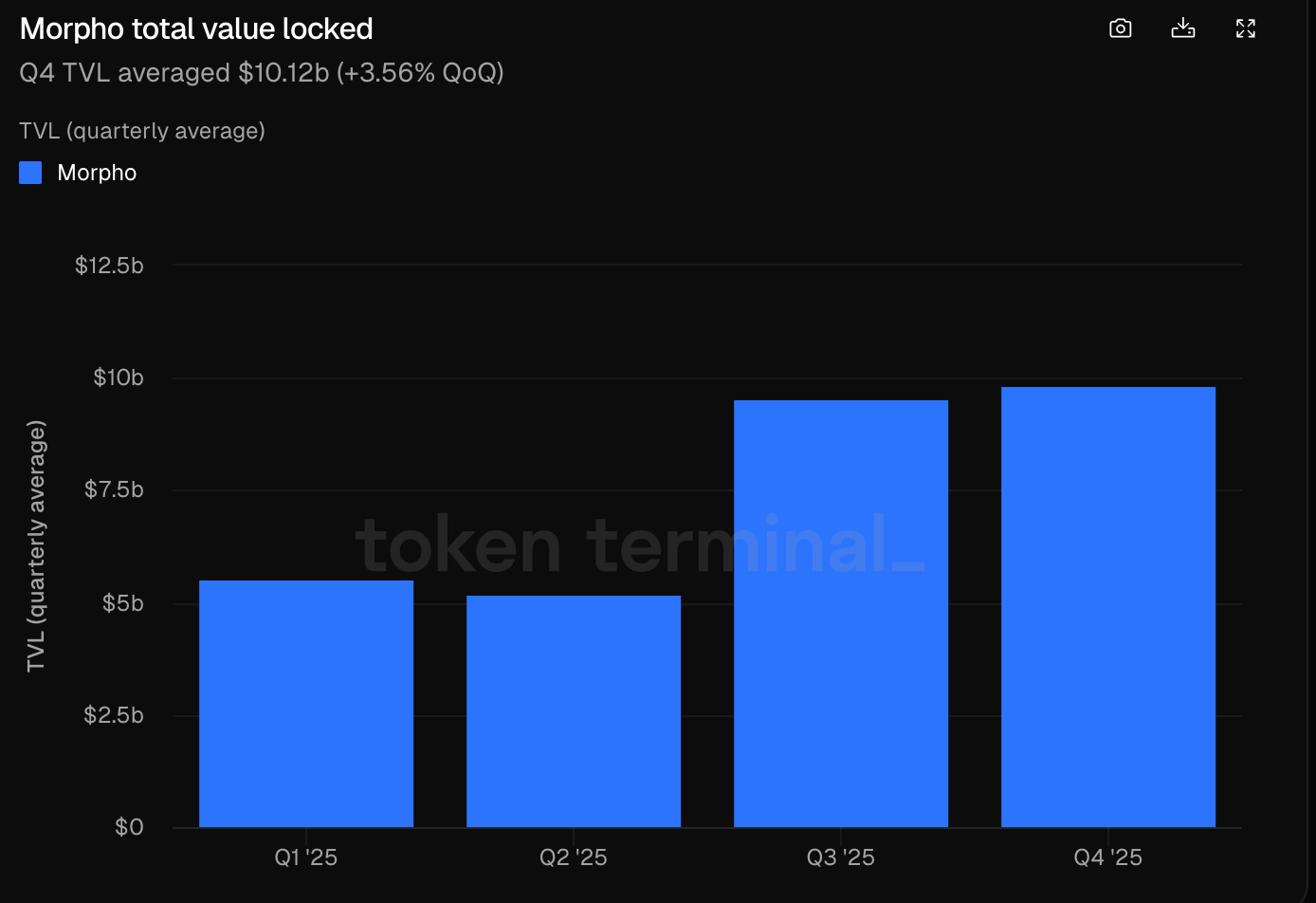
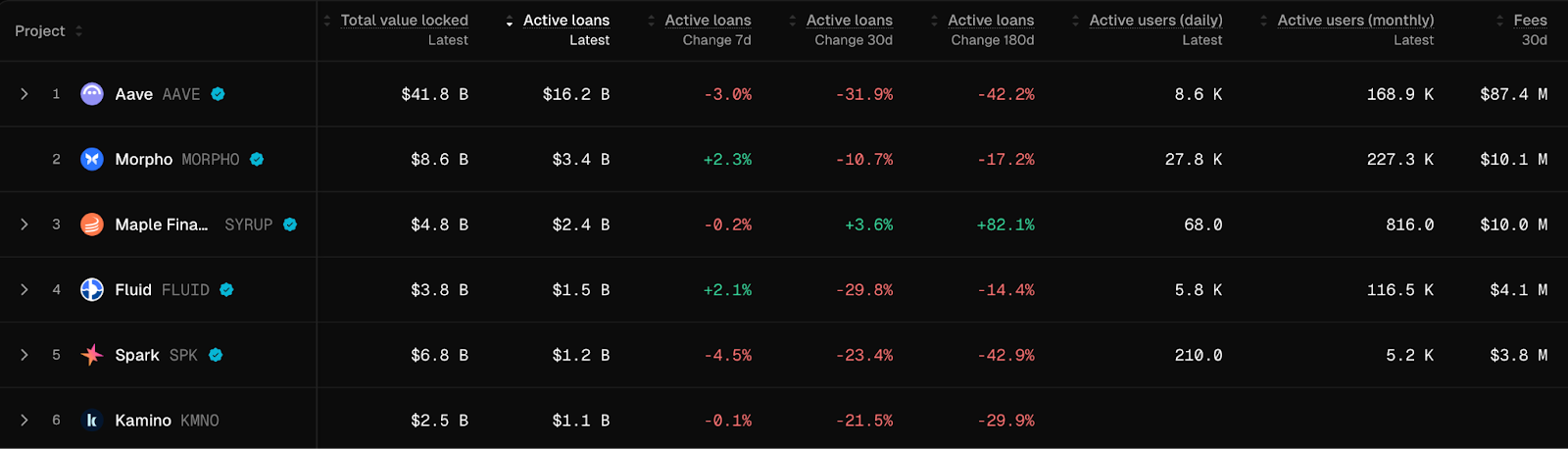
Давайте посмотрим на фундаментальные показатели Morpho, есть ли у него потенциал бросить вызов кредитному трону Aave. Согласно данным Tokenterminal, в третьем и четвертом кварталах 2025 года TVL протокола Morpho стабильно维持在(поддерживался) на уровне выше 9,5 миллиардов долларов, что примерно на 80% больше, чем в первой половине года;
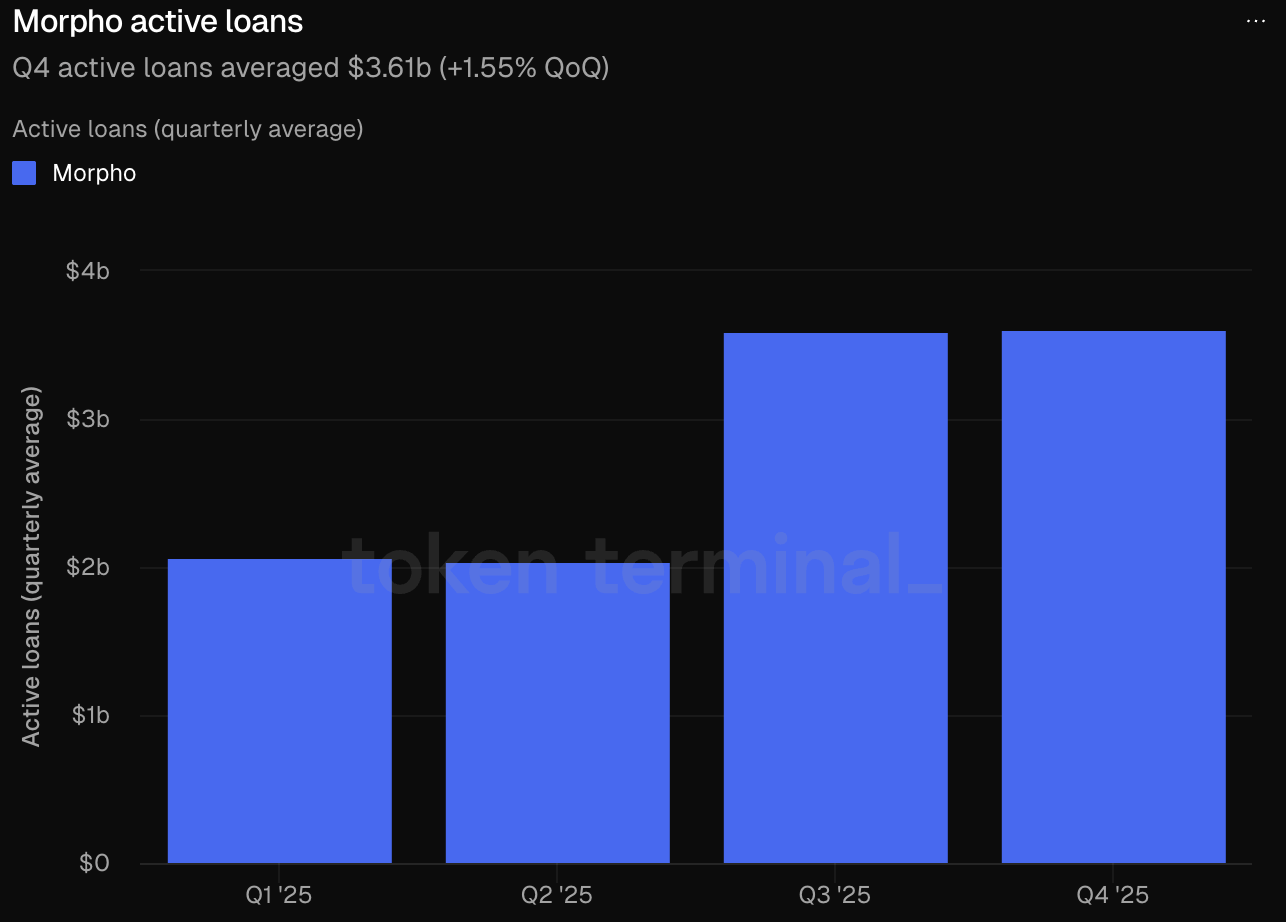
Объем активных кредитов внутри протокола в третьем и четвертом кварталах также составлял более 3,5 миллиардов долларов, с годовым ростом примерно на 80%.
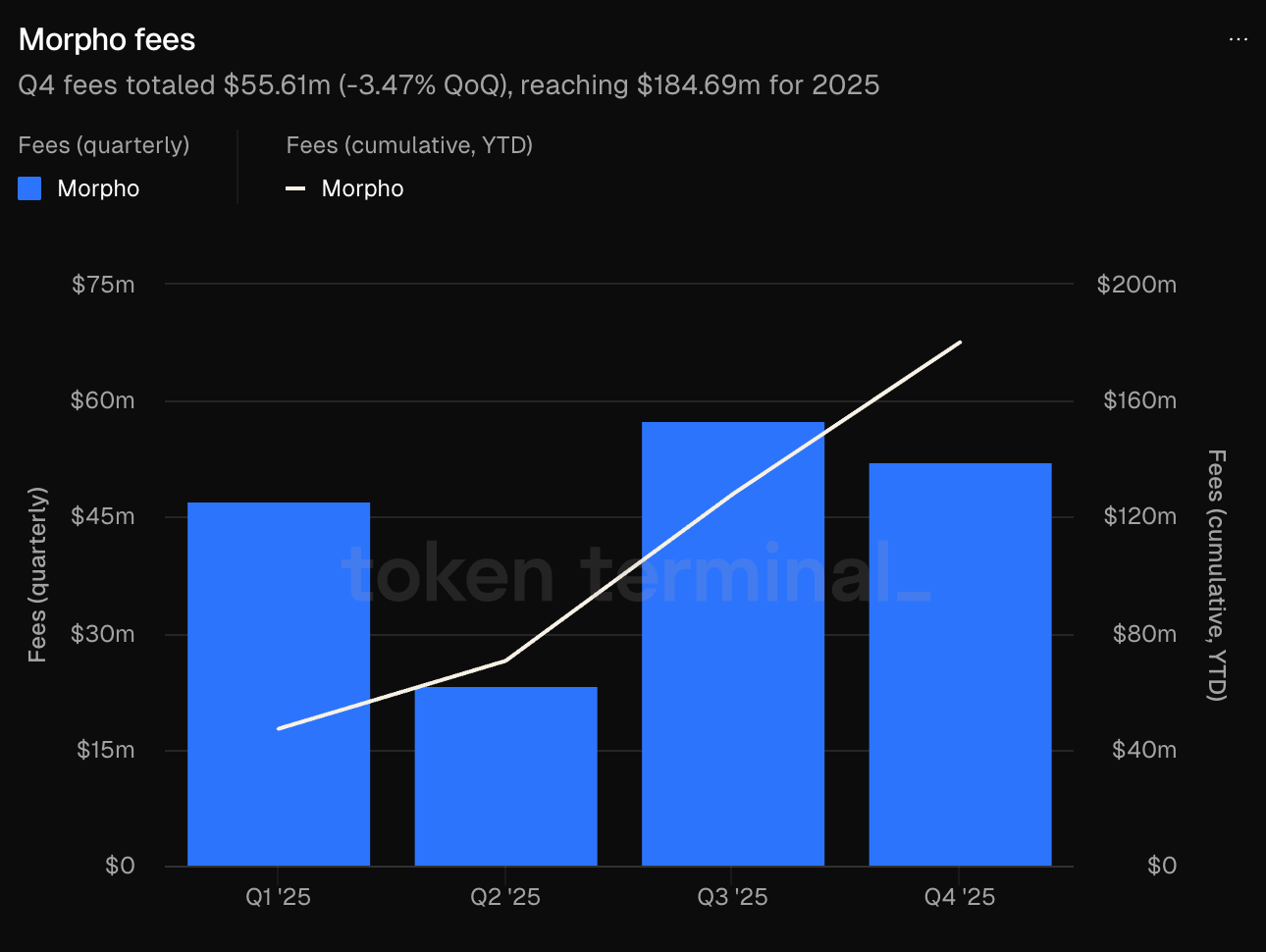
Что касается одного из ключевых показателей протоколов DeFi — дохода протокола, то, за исключением относительно слабых показателей во втором квартале, в остальных кварталах он基本上(в основном) стабилизировался на уровне около 50 миллионов долларов.
Рост пользователей является еще более наглядным: количество активных адресов в квартал быстро расширилось с около 30 тысяч в первом квартале до уровня 400 тысяч, демонстрируя强劲(сильный) органический рост.
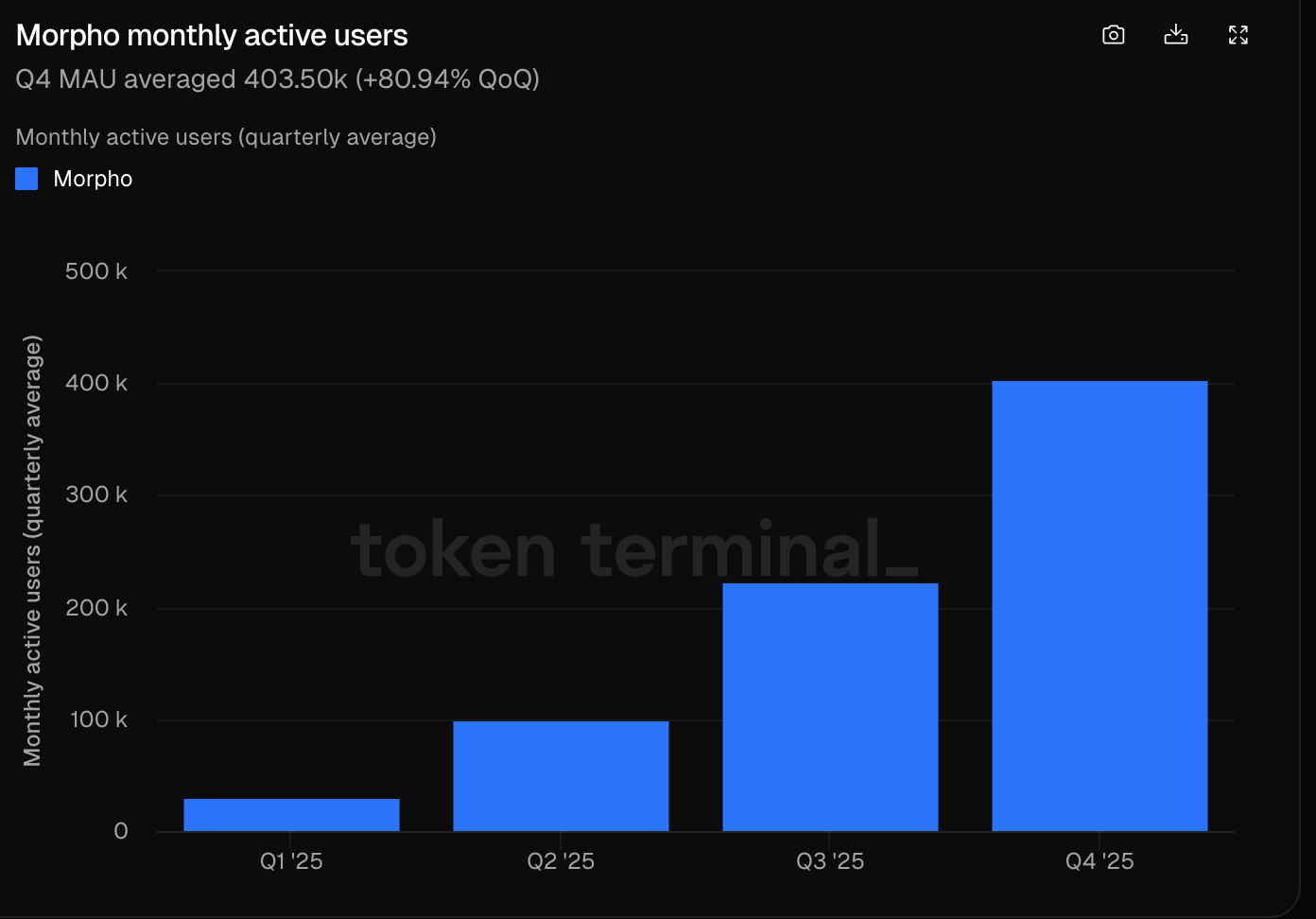
Хотя текущий TVL и объем активных кредитов Morpho все еще уступают Aave, скорость роста пользователей уже сделала его одним из самых ярых «темных лошадок» на кредитном треке. Особенно на фоне общего давления на весь трек DeFi в 2025 году и переживаемых им мук, показатели Morpho можно считать реализацией高增长(высокого роста) вопреки тенденции, что достаточно доказывает, что его продуктовая модель выдержала проверку рынком. А протоколы, способные продолжать привлекать капитал и пользователей в условиях медвежьего рынка, часто обладают более сильной взрывной силой в следующем цикле.
Институциональная переменная: Когда традиционный капитал начинает делать ставки
Хорошие фундаментальные данные могут доказать только то, что у протокола неплохая основа, но настоящим更大的 катализатором, меняющим кривую рыночной капитализации, является вход традиционных финансовых гигантов.
13 февраля управляющий гигант с Уолл-стрит Apollo Global Management и некоммерческая организация Morpho Association, стоящая за Morpho, подписали важное соглашение о сотрудничестве, согласно которому Apollo планирует в течение следующих 48 месяцев постепенно приобрести до 90 миллионов токенов MORPHO, что составляет около 9% от общего предложения Morpho, по текущей цене 1,8 доллара это стоит около 162 миллионов долларов.
Если рассматривать это только с точки зрения торговли, это создаст постоянный спрос на покупку MORPHO. Но если вы знаете Apollo, то понимаете, что это, скорее всего, больше похоже на его стратегическое проникновение в DeFi.
Под управлением Apollo находится активов на сумму почти 940 миллиардов долларов, его бизнес частного кредитования изначально славится поиском высокой доходности, а ончейн-мир может предоставить возможности для leveraged(левериджа) и глобальной мгновенной ликвидности. С 2024 года он начал пробовать силы в加密行业(криптоиндустрии), выбрав RWA в качестве основного поля деятельности, сотрудничая с Securitize, токенизируя свою диверсифицированную кредитную стратегию в ACRED, текущий объем которой достиг 130 миллионов долларов.
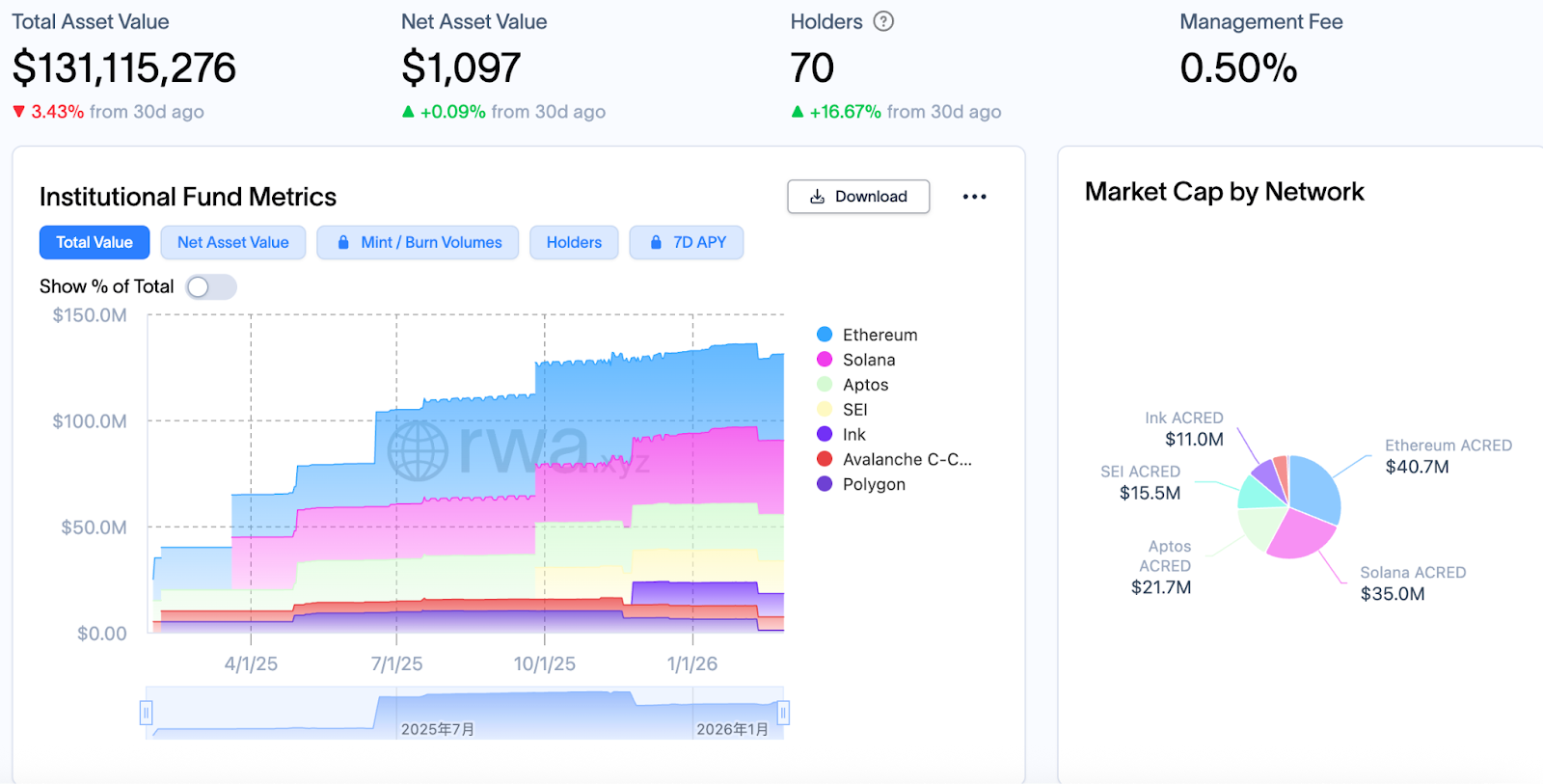
Однако, ключевая проблема после ончейнинга RWA никогда не заключалась в выпуске, а в释放 ликвидности(высвобождении ликвидности). Активы можно токенизировать, но при отсутствии эффективного кредитного рынка и среды с leveraged(левериджем), их потенциал доходности难以释放(трудно высвободить). Судя по布局(расстановке) Apollo,不难合理推测(нетрудно разумно предположить), что он, вполне вероятно, намерен использовать кредитный рынок Morpho для увеличения доходности своих кредитных продуктов. Потому что модульная кредитная структура Morpho предоставляет естественную адаптированную сцену для RWA — изолированные рынки, независимые параметры риска, настраиваемая среда leveraged(левериджа), эти механизмы для институтов гораздо привлекательнее, чем博弈 параметров(игра в параметры) под единым управлением.
Это предположение并非无据可依(имеет основания), потому что хотя Morpho является высоко беспермиссивным,但关键参数选项仍需通过 Morpho DAO 治理扩展选项库(но ключевые опции параметров все еще требуют расширения библиотеки опций через управление Morpho DAO). Если Apollo будет владеть значительным количеством токенов MORPHO, он получит соответствующие права голоса и может способствовать добавлению дружественных к RWA параметров. Если намерения Apollo действительно реализуются, как предполагается, модульный дизайн Morpho может привлечь ускоренный приток большего количества институциональных средств, сделав его ключевой инфраструктурой для ончейн-усиления институциональных кредитных продуктов. Такого уровня поддержка со стороны институтов не только укрепит конкурентное преимущество Morpho, но и сократит разрыв с Aave — особенно когда Aave погружен во внутренний управленческий кризис.
Заключение
Управленческий кризис Aave в краткосрочной перспективе может продолжать тянуть вниз его рыночную капитализацию и ликвидность, в то время как Morpho, используя преимущества продуктовой структуры и институциональный катализ, тихо改写(переписывает) конкурентный ландшафт кредитного трека. Однако, сможет ли Morpho действительно пошатнуть трон Aave, все еще требует наблюдения за его постоянным追赶 TVL(догоняющим TVL), а также за присоединением большего количества игроков из TradFi. Но по крайней мере сейчас, эта «смена власти второго поколения в кредитовании» уже началась.
Предупреждение о рисках: В марте токены MORPHA ожидает крупный разблокировка, получателями являются Morpho DAO, резервный фонд ассоциации Morpho и ключевые контрибьюторы, необходимо следить за краткосрочными冲击 ликвидности(потрясениями ликвидности).