# Сопутствующие статьи по теме KOSPI

Новостной центр HTX предлагает последние статьи и углубленный анализ по "KOSPI", охватывающие рыночные тренды, новости проектов, развитие технологий и политику регулирования в криптоиндустрии.

Short Positions Have Been Squeezed Out: Will the Next Leg of the U.S. Stock AI Rally Continue in Seoul?

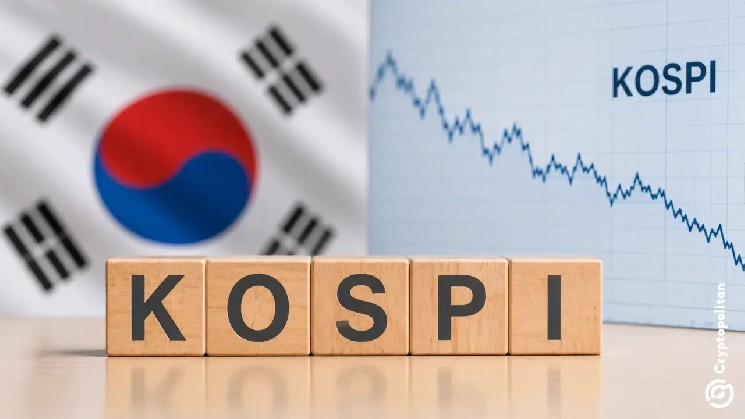
"Short Squeeze Exhausted: Will the Next Leg of the AI Rally Continue in Seoul?" A Nomura report suggests the US AI stock rally, which saw the S&P 500 rise ~16.6% in 28 days largely driven by 10 key stocks, may be pausing. The fuel from short covering, CTA fund positioning, and volatility-control strategies is nearing its limit. For the rally to continue, new momentum from retail and sentiment-driven FOMO (Fear Of Missing Out) is needed. South Korea's market provided a potential answer on the very day the report was published. The KOSPI index surged 4.32%, triggering a buy-side circuit breaker, led by massive gains in chip giants SK Hynix (+11.98%) and Samsung. This surge is characterized by retail "hynix FOMO" and overseas funds precisely buying into AI themes via chip-focused ETFs, shifting from broad Korean market ETFs. The Korean rally is a high-beta extension of the US AI capital expenditure story, as major cloud providers plan massive infrastructure spending, directly benefiting memory chip leaders. However, this linkage also implies vulnerability. The sustainability of this next leg depends on whether US tech stocks correct, the trajectory of US inflation (with upcoming CPI data key), and geopolitical tensions around the Strait of Hormuz. Seoul has emerged as the new epicenter of the AI trade, but its fate remains tied to these broader macro and market dynamics.

marsbit05/12 07:24

Short Positions Have Been Squeezed Out: Will the Next Leg of the U.S. Stock AI Rally Continue in Seoul?

marsbit05/12 07:24

From 6000 Points to Two Circuit Breakers: A Missile Exposes South Korea's Stock Market Weakness

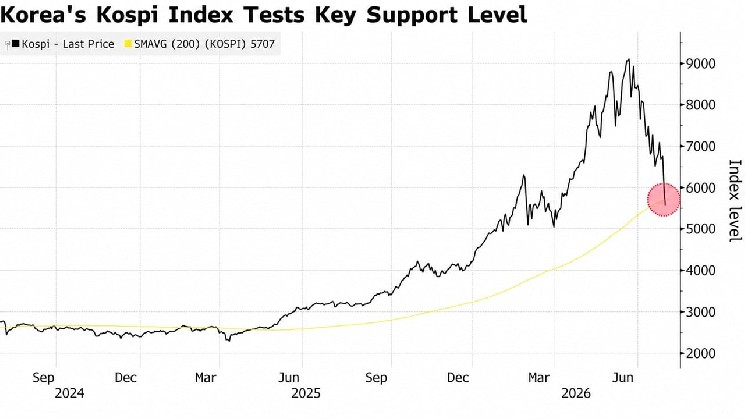
The South Korean Stock Exchange (KOSPI) experienced two consecutive trading halts (circuit breakers) on March 3 and 4, 2026, plunging nearly 13% from a recent high of 6,244 points. This sharp decline, triggered by escalating U.S.-Iran tensions and the closure of the Strait of Hormuz, exposed the extreme vulnerability of South Korea's stock market, which is heavily reliant on semiconductor stocks, particularly Samsung Electronics and SK Hynix. These two companies, dominating the global HBM (high-bandwidth memory) market crucial for AI and GPUs, had driven KOSPI's 75.6% surge in 2025. However, the market's concentration on chip exports, which account for over a third of total exports, became its Achilles' heel. The closure of the Strait of Hormuz—a vital shipping route for liquefied natural gas (LNG), which fuels nearly a third of Korea's power generation—threatened energy supplies and semiconductor manufacturing costs. While defense stocks surged on geopolitical tensions, foreign investors sold a record $8.5 billion in Korean shares over two days, highlighting the market's liquidity and its status as a prime target for rapid capital flight during global panic. Retail investors attempted to buy the dip, but were overwhelmed by the sell-off. The crash underscored deeper structural risks beyond corporate governance reforms: South Korea's market is exceptionally exposed to a single industry dependent on imported energy and vulnerable to global shocks. The incident demonstrated that while fundamentals may drive long-term growth, sentiment and geopolitics can erase gains rapidly.

比推03/04 13:31

From 6000 Points to Two Circuit Breakers: A Missile Exposes South Korea's Stock Market Weakness

比推03/04 13:31

Global Asset Plunge: Hormuz, Chips, and a Korean Holiday

A major geopolitical shock occurred on February 28th when a US-Israel coalition launched a massive airstrike on Iran, resulting in significant global market turmoil. This event served as a severe stress test for popular financial narratives, particularly the "debasement trade" which posits that gold and Bitcoin act as hedges against currency devaluation during crises. Initially, gold spiked but then fell over 4%, while silver plummeted 8%. Bitcoin remained largely stagnant. Contrary to expectations, the US Dollar Index rose 1.1%. The core insight was that in an acute crisis, the US dollar, due to its deep liquidity, became the primary safe-haven asset as investors rushed to cover margins and deleverage. South Korea's market, closed for a holiday, experienced a delayed and extreme reaction, with the KOSPI crashing 7.24% upon reopening. This sell-off was exacerbated by high retail leverage and concentrated exposure in key semiconductor firms like Samsung and SK Hynix, critical to the global AI supply chain. The conflict also raised fears about oil supply disruptions via the Strait of Hormuz, directly impacting energy-dependent economies and manufacturing. The event demonstrated that while long-term narratives about dollar debasement and the rise of hard assets remain valid, acute crises overwhelmingly favor dollar liquidity. In moments of panic, the financial system's architecture ensures that the dollar remains the ultimate refuge.

marsbit03/04 05:58

Global Asset Plunge: Hormuz, Chips, and a Korean Holiday

marsbit03/04 05:58

South Korean Youth Trading Stocks Overnight, Diving Headfirst into Samsung and SK Hynix

The article details a significant shift in South Korea's investment landscape, where young retail investors are moving from volatile cryptocurrencies to the booming semiconductor stocks, particularly Samsung Electronics and SK Hynix. This transition is driven by the explosive demand for AI-related chips, specifically High Bandwidth Memory (HBM), where these two Korean giants hold a near-oligopoly alongside Micron. Due to unprecedented demand from cloud providers, AI firms, and electronics manufacturers, HBM supply is critically low, with SK Hynix's inventory at a historic low of just four weeks. This scarcity has led to massive price increases for HBM and DRAM chips, fueling a dramatic surge in the companies' stock prices—SK Hynix's stock is up sixfold and Samsung's has quadrupled since early 2025. This rally has propelled the Korean KOSPI index past 6000 points, making it a top-performing global market. The piece explains that the AI era has inverted the traditional tech profit structure. HBM, now a critical and irreplaceable component for advanced GPUs, has given upstream memory suppliers unprecedented pricing power over downstream customers like NVIDIA. This has led to a fundamental "re-rating" of these semiconductor stocks. Consequently, online forums once dominated by crypto talk are now focused on "AI semiconductor concept stocks." Trading volume on crypto exchanges has plummeted, while stock market activity has soared. This shift is further encouraged by government policies aimed at strengthening the stock market and retaining domestic capital. The trend is so powerful that crypto exchanges have begun offering leveraged perpetual contracts on Korean stocks, symbolizing that in the AI age, semiconductors have become a more compelling investment than cryptocurrencies.

marsbit02/27 13:21

South Korean Youth Trading Stocks Overnight, Diving Headfirst into Samsung and SK Hynix

marsbit02/27 13:21

活动图片