# Сопутствующие статьи по теме Gas

Новостной центр HTX предлагает последние статьи и углубленный анализ по "Gas", охватывающие рыночные тренды, новости проектов, развитие технологий и политику регулирования в криптоиндустрии.

The Economic Calculus Behind Polymarket's Exit from Polygon

Polymarket, a leading prediction market platform, has announced plans to migrate from the Polygon network to its own Ethereum Layer 2 solution, named POLY. This move, confirmed by a team member on Discord, is driven by both product and economic motivations. Product-wise, the migration aims to provide a more stable and customizable infrastructure tailored to Polymarket’s specific needs, addressing limitations posed by Polygon’s occasional network instability. Economically, Polymarket seeks to capture and retain the full value of its ecosystem, preventing economic spillover to external networks. Data highlights Polymarket’s significant contribution to Polygon’s ecosystem: it accounts for approximately one-quarter of Polygon’s total value locked (~$326M vs. $1.19B) and around 23% of its gas consumption. The platform also drives substantial USDC liquidity and user activity on Polygon. The timing of the migration appears strategic, coinciding with Polymarket’s anticipated token generation event (TGE). Moving before token issuance reduces complexity and allows the project to reposition itself as a full-stack “app + chain” system, potentially unlocking higher valuation and narrative appeal. This shift reflects a broader trend where top-tier applications, having achieved scale and economic independence, may choose to decouple from underlying networks that no longer provide sufficient added value.

marsbit12/23 06:03

The Economic Calculus Behind Polymarket's Exit from Polygon

marsbit12/23 06:03

Ethereum Completes Another Key Technical Advancement, Can It Achieve a Leap Forward by 2026?

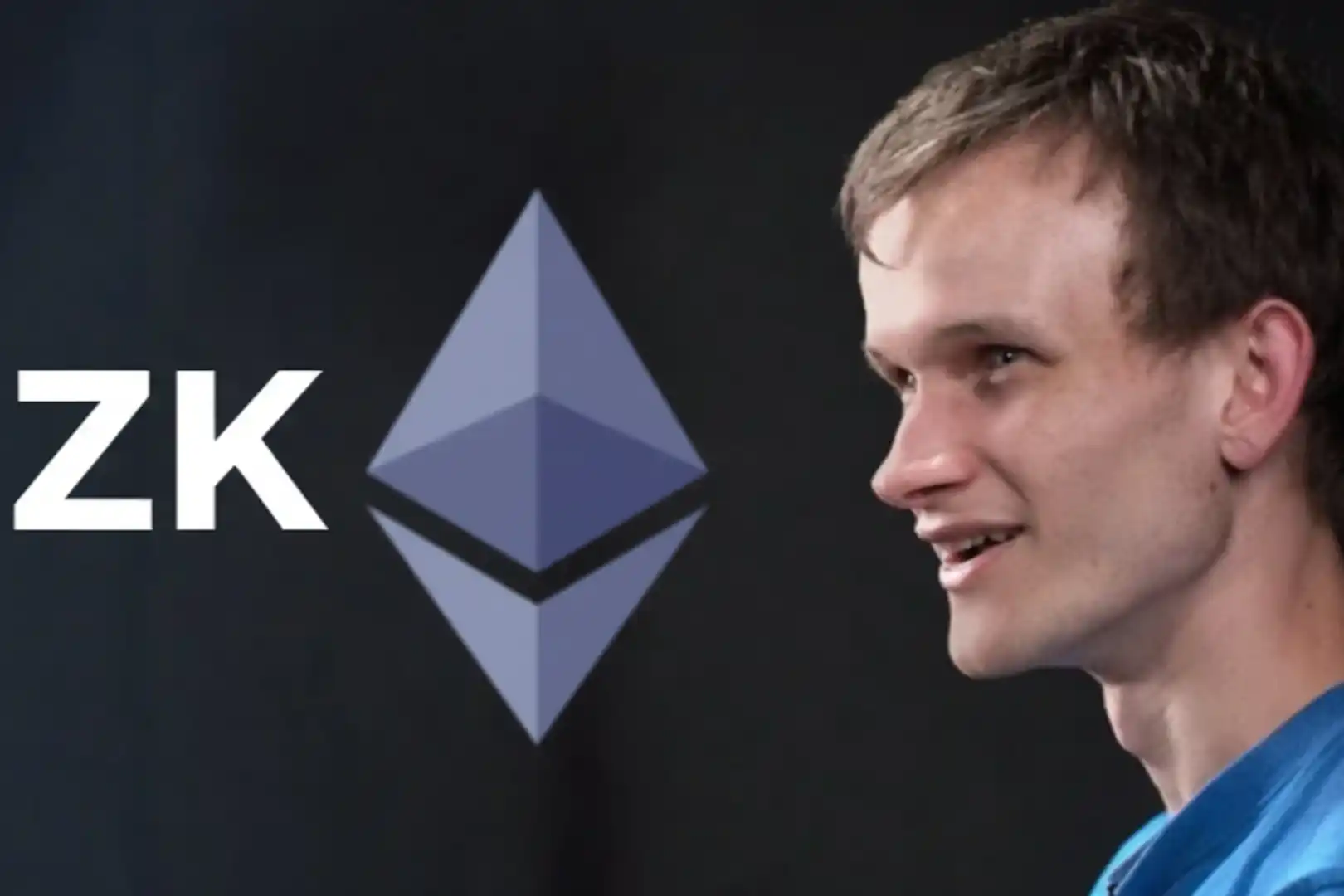
The Ethereum Foundation (EF) has announced a major technical breakthrough in zkEVM development, achieving a dramatic reduction in block proof generation time—from 16 minutes to just 16 seconds—with a 45-fold decrease in cost. Certain zkVMs can now prove 99% of mainnet blocks in under 10 seconds on target hardware. However, EF emphasizes that raw speed is meaningless without proven security. Several mathematical conjectures underlying popular STARK-based zkEVMs have recently been disproven, reducing their security guarantees. The core focus has now shifted from throughput to provable safety, with L1 zkEVMs required to meet a 128-bit security standard to prevent risks like token forgery or state corruption. EF released a three-phase roadmap aiming for full compliance by December 2026: 1. By end-February 2026, all zkEVM teams must integrate with EF’s soundcalc security tool. 2. By end-May, achieve intermediate goals like 100-bit provable security. 3. By end-December, reach 128-bit provable security with formal verification of recursive proof systems. Key technologies like WHIR and JaggedPCS are being deployed to improve efficiency. Challenges remain, including on-chain implementation, dynamic security parameter adjustments, and uneven progress among teams. Once achieved, secure zkEVMs could allow Ethereum to increase gas limits safely, enhance L1 capacity, and blur the lines between L1 and L2 execution. The race for reliability is now the central theme for Ethereum in 2026.

marsbit12/22 09:17

Ethereum Completes Another Key Technical Advancement, Can It Achieve a Leap Forward by 2026?

marsbit12/22 09:17

New Huo Tech Livio: Ethereum Fusaka Upgrade Value Underestimated

New Huo Tech's Livio argues that the Ethereum Fusaka upgrade, completed on December 3, is significantly undervalued by the market. Occurring during a period of extreme pessimism and a major crypto market correction, the upgrade went largely unnoticed but represents a critical strategic improvement to Ethereum’s economic model and ecosystem performance. Fusaka systematically tackles two core bottlenecks: high costs and poor user experience. It achieves a "cost revolution" by dramatically reducing Layer-2 (L2) transaction fees—potentially as low as $0.001 per transaction—without overburdening the Layer-1 (L1) mainnet. This enables economically viable high-frequency applications like on-chain gaming, social dApps, AI agent settlements, and RWA (Real World Asset) trading. The upgrade also delivers a user experience leap by natively supporting Passkey authentication, allowing users to sign transactions using biometrics like fingerprints or FaceID instead of managing complex seed phrases. This shift makes using crypto wallets as seamless as conventional apps, lowering the barrier to entry for mainstream adoption. Most importantly, Fusaka fundamentally overhauls Ethereum’s tokenomics. It establishes a structured "taxation" system where L2s must pay fees to the L1 for security and data capacity. These fees are burned, creating a stable, endogenous "buyback" mechanism for ETH. As L2 activity grows, this is projected to result in an additional 3,000–10,000 ETH burned annually, shifting Ethereum from an inflationary to a deflationary or slightly inflationary model. This ties ETH's value directly to network usage, strengthening its role as the risk hub and settlement layer for the entire L2 economy. With Fusaka, Ethereum’s scaling roadmap is affirmed, with potential L2 TPS reaching 10,000 and eventually 100,000+. The upgrade is a pivotal step towards mass Web3 commercialization, and its strategic long-term value is currently underestimated by the market.

marsbit12/10 04:45

New Huo Tech Livio: Ethereum Fusaka Upgrade Value Underestimated

marsbit12/10 04:45

活动图片