# Сопутствующие статьи по теме Compliance

Новостной центр HTX предлагает последние статьи и углубленный анализ по "Compliance", охватывающие рыночные тренды, новости проектов, развитие технологий и политику регулирования в криптоиндустрии.

Global Crypto Regulation "Closing the Net": Hong Kong, EU, US Simultaneously Take Action, Is the Compliance Window Closing?

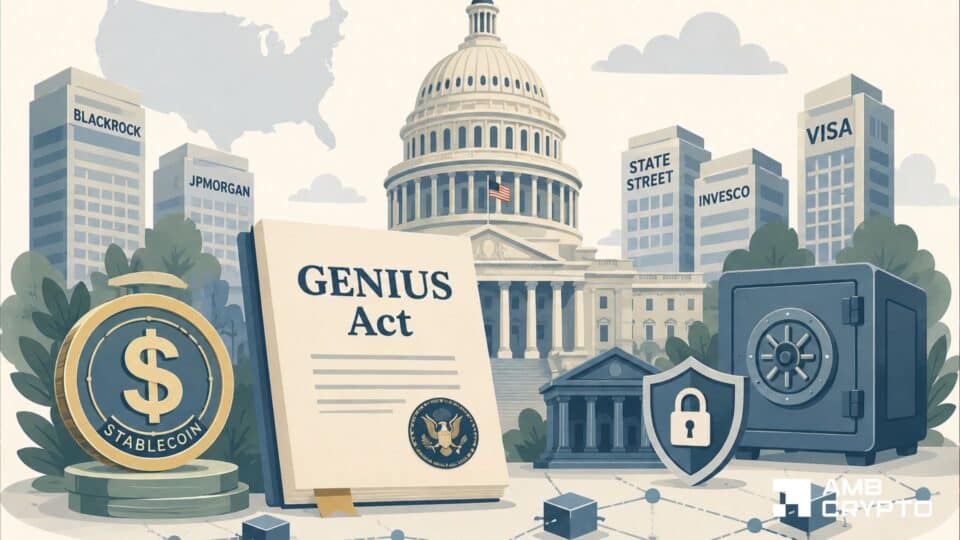
Global Crypto Regulation Tightens: Hong Kong, EU, and US Simultaneously Enforce Rules, Closing the Compliance Window? The global virtual asset regulatory landscape is shifting from rule-making to enforcement. Recent moves by Hong Kong, the EU, and the US signal a coordinated push towards market restructuring based on licensing, product classification, custody, and client segmentation. **Hong Kong**'s SFC issued a circular on "Relevant Stablecoins" on May 27, formally establishing a two-tier regulatory architecture where the HKMA oversees issuance and the SFC oversees trading and distribution. This creates differentiated, often lighter-touch, rules for compliant, licensed stablecoins compared to other virtual assets, fitting into a broader strategy to develop stablecoins as settlement infrastructure, tokenized securities as investment products, and licensed VATP platforms as distribution channels. The **European Union** is approaching a critical deadline, with the MiCA transition period ending on July 1. After this date, unlicensed Crypto-Asset Service Providers (CASPs) must cease serving EU clients. With only about 210 authorized CASPs across 23 member states so far, a significant market consolidation is expected, as the application process now takes 6-9 months. In the **United States**, the CLARITY Act passed a key Senate committee vote on May 14. This landmark bill aims to clarify jurisdiction between the SEC and CFTC, establish registration rules for trading platforms and custodians, and create a federal framework for stablecoin regulation. A key compromise prohibits "passive yield" on stablecoin balances but allows "activity rewards" tied to specific functions like payments. The convergence of these regulatory actions highlights a fundamental shift: stablecoins, with a payment volume rivaling major card networks, are being treated as critical financial infrastructure rather than unregulated digital assets. The core message is clear: compliance is transitioning from an operational cost to a mandatory license for market access, determining which players will participate in the next phase of the digital asset economy.

marsbitВчера 13:51

Global Crypto Regulation "Closing the Net": Hong Kong, EU, US Simultaneously Take Action, Is the Compliance Window Closing?

marsbitВчера 13:51

Cross-Chain Bridges Actively Adapt, LI.FI Leverages Intent Architecture to Become the Liquidity Hub for TradFi Institutions

Cross-Chain Bridge LI.FI Transforms with Intents Architecture to Serve as Liquidity Hub for TradFi Institutions Facing declining cross-chain transaction volumes and overall crypto market liquidity, cross-chain bridge protocol LI.FI is proactively shifting its strategy. Moving beyond its role as a "liquidity transfer protocol," LI.FI is targeting new assets, clients, and operational systems. Key to this transformation is the launch of LI.FI Intents, an intent-based execution architecture. This product positions itself as a foundational layer for stablecoin payments, Real World Assets (RWA), and compliant on-chain liquidity, catering specifically to fintech companies, neobanks, wallets, and regulated financial institutions. LI.FI Intents simplifies user experience by offering a turnkey solution. It leverages a solver network for market-maker level execution, enabling precise cross-chain swaps (e.g., between USDC and USDT) without users managing gas tokens or complex blockchain steps. It lowers barriers to entry by integrating with applications like Jumper and Rabby, allowing enterprise users to bypass direct wallet interactions for transactions like payments and asset transfers. The architecture emphasizes compliance. Its network consists of verified legal entities, and enterprises can review and approve orders within their compliance frameworks before processing. All interacting wallets undergo OFAC screening. For ecosystem coverage, LI.FI Intents supports major networks including EVM chains, Solana, and Tron, mitigating risks associated with single-chain dependency. In essence, as tokenized assets like RWAs gain traction, LI.FI Intents focuses on efficiently integrating stablecoin payments and compliant liquidity into enterprise ecosystems. By automating complex execution steps—allowing users to simply declare their intent (the "destination")—it aims to enhance operational efficiency and capital utilization for institutional clients.

Odaily星球日报Вчера 06:07

Cross-Chain Bridges Actively Adapt, LI.FI Leverages Intent Architecture to Become the Liquidity Hub for TradFi Institutions

Odaily星球日报Вчера 06:07

Global Card Issuance Enters a Compliance-Driven Era: WasabiCard is Building the Next-Generation Payment Infrastructure

Global card issuance is entering a compliance-driven era, with WasabiCard building next-generation payment infrastructure. The platform asserts that as stablecoins increasingly enter cross-border payments, corporate settlements, and global commerce, the industry is shifting focus from "availability" and "growth-driven" models to long-term, compliant operation under global frameworks. Competition will center on sustainable compliance and global infrastructure capabilities. Stablecoins are evolving from on-chain assets into key payment tools in global business, with card issuance acting as critical infrastructure connecting digital assets to traditional payment networks like Visa and Mastercard. This expansion has revealed structural issues, including cross-regional issuance, BIN resource management, and insufficient AML and risk controls. In response, the industry is moving away from reliance on "grey efficiency" towards prioritizing compliance, risk management, and long-term operational stability. WasabiCard outlines its strategy: collaborating with licensed principals and local partners for localized operations, building robust KYC/AML systems, strictly separating commercial and consumer BIN usage, and enhancing global issuance, payment, and cross-border fund flow infrastructure. The goal is to build stable, scalable payment infrastructure amid evolving global regulations, shifting industry competition from scale to infrastructure capability. As stablecoins integrate further with global commerce, payment infrastructure will become a fundamental, embedded component of internet business. WasabiCard will continue to develop capabilities in global card issuance, stablecoin payments, cross-border fund flows, and API-driven financial workflows.

marsbit06/02 02:16

Global Card Issuance Enters a Compliance-Driven Era: WasabiCard is Building the Next-Generation Payment Infrastructure

marsbit06/02 02:16

Comics Illustration: Helping You Understand China's New Regulations on Outbound Investment

Summary: Understanding China's New Regulations on Overseas Investment The State Council has announced new regulations on overseas investment, effective July 1, 2026. The core message is not a prohibition on international investment, but a call for both companies and individuals to operate with strong regulatory awareness. Here are the key points: 1. **Scope is Broad:** The rules apply not only to companies but also to other organizations and individual residents. 2. **Definition of Investment is Wide:** It encompasses not just capital transfers but also asset contributions, obtaining equity or rights, financing, providing guarantees, and direct or indirect acquisition of rights related to overseas entities or assets. 3. **Companies Must Plan Comprehensively:** Beyond simple ownership charts, firms need clear plans covering the investing entity, required approvals or filings, fund transfer paths, and compliance with technology, data, and security reviews. 4. **Individuals Should Prioritize Compliance:** Before focusing on returns, individuals must first assess their eligibility, understand legal channels for capital outflow, know what they are acquiring, and identify responsible parties in case of issues. 5. **Penalties are Significant:** Violations can result in fines and potentially restrictions on future overseas investment activities. In essence, overseas investment remains possible, but it must be approached with regulatory compliance as a fundamental priority, not solely based on commercial opportunity. *Note: This is a general informational summary and does not constitute legal advice or investment recommendations.*

marsbit06/01 09:06

Comics Illustration: Helping You Understand China's New Regulations on Outbound Investment

marsbit06/01 09:06

活动图片