# Сопутствующие статьи по теме Agent

Новостной центр HTX предлагает последние статьи и углубленный анализ по "Agent", охватывающие рыночные тренды, новости проектов, развитие технологий и политику регулирования в криптоиндустрии.

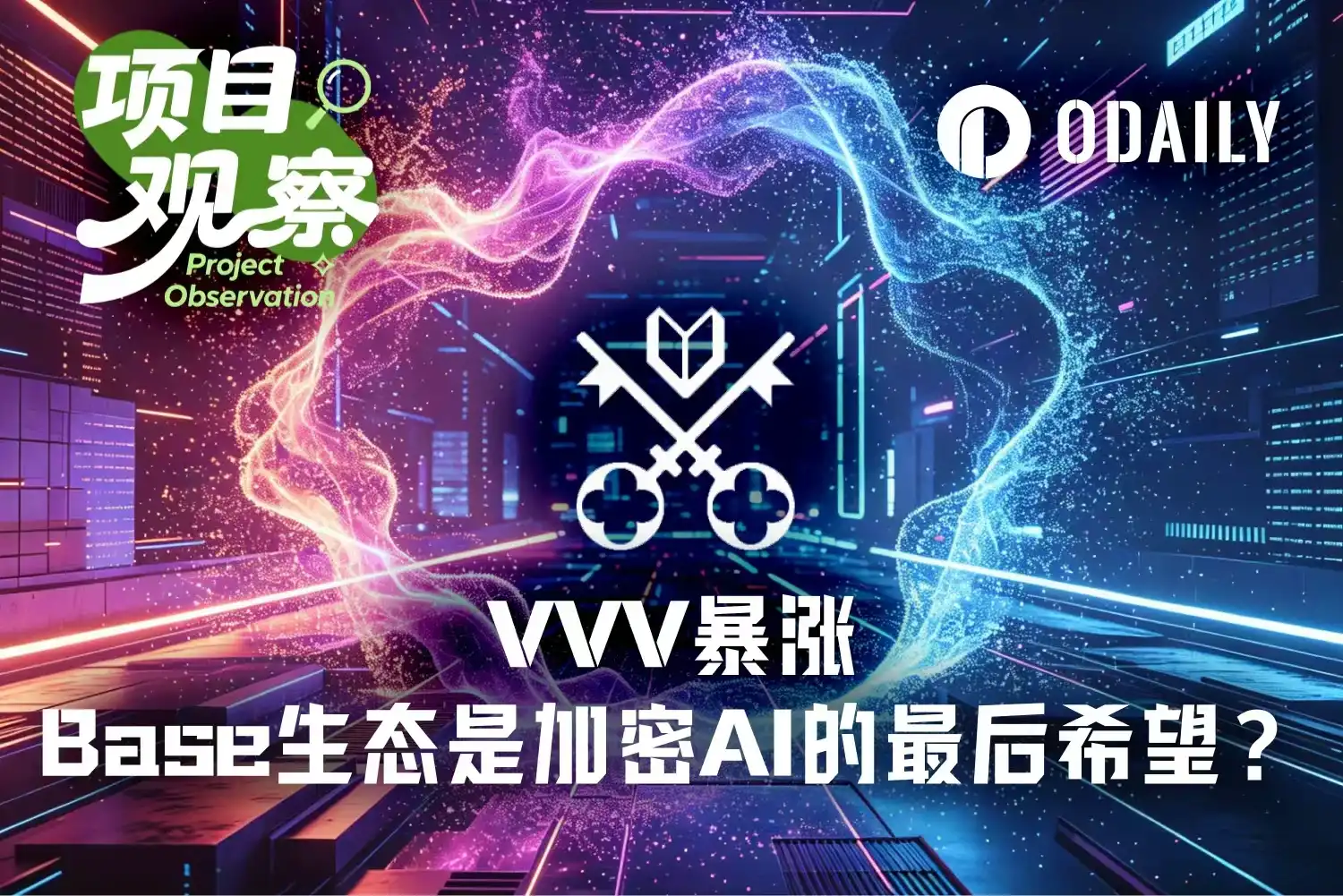
OpenClaw Endorses Venice.ai, VVV Token Surges Over 500% in One Month

OpenClaw, an open-source self-hosted AI agent platform, has listed Venice.ai—a privacy-focused, uncensored generative AI platform—as a recommended model provider. This endorsement comes shortly after OpenClaw’s founder publicly discouraged young people from engaging with cryptocurrency, creating a notable contrast. Venice.ai, founded by crypto OG Erik Voorhees, positions itself as a decentralized alternative to ChatGPT. It emphasizes user privacy by not storing any data on its servers; all content remains encrypted on the user’s local device. The platform offers two privacy modes: Private (using open-source models on decentralized GPUs) and Anonymized (removing user metadata from prompts). The project features a dual-token economy: - VVV: A capital asset used for staking (currently ~19% APY) and minting DIEM. - DIEM: Represents perpetual AI compute credit. 1 DIEM = $1 daily API credit, usable across Venice’s models. This structure allows high-frequency users to access AI services at a lower marginal cost over time. VVV’s price surged over 500% in a month, rising from ~$1.5 to ~$8.4. This growth is attributed to both supply constraints—including a permanent burn of unclaimed airdropped tokens and reduced annual emissions—and rising demand, especially after OpenClaw’s integration. With over 25,000 API users and a staking rate of 38.8% for VVV, Venice is positioning itself as a privacy-backend solution for the expanding AI agent ecosystem, blending crypto-economic incentives with scalable AI infrastructure.

Odaily星球日报03/04 02:31

OpenClaw Endorses Venice.ai, VVV Token Surges Over 500% in One Month

Odaily星球日报03/04 02:31

Behind OpenAI's $110 Billion Financing: The Game Between Amazon and Microsoft

OpenAI has secured $110 billion in new funding at a $730 billion pre-money valuation, with major investments from Amazon ($50 billion), Nvidia ($30 billion), and SoftBank ($30 billion). Notably, CEO Sam Altman’s public acknowledgment included Microsoft—an existing investor and partner—immediately after Amazon, signaling strategic alignment shifts. A key insight lies in two technical distinctions: “Stateless API” and “Stateful Runtime Environment.” Stateless API, the current mainstream model, handles single-request tasks without retaining context, but faces commoditization and margin pressure. In contrast, Stateful Runtime Environment supports persistent, autonomous AI agents capable of complex multi-step workflows, representing the future of enterprise AI adoption. Microsoft’s existing agreement ensures Azure remains the exclusive cloud provider for OpenAI’s Stateless API, securing present-day revenue streams. Meanwhile, Amazon’s expanded $100 billion partnership with OpenAI focuses on co-developing Stateful Runtime Environments via AWS Bedrock, positioning AWS as the infrastructure backbone for next-generation AI agents. This dual-cloud strategy enhances OpenAI’s leverage, reducing dependency on Microsoft while pitting Amazon and Microsoft in competition for future AI dominance. OpenAI gains negotiating power by diversifying its infrastructure partnerships and aligning each cloud giant with distinct—yet complementary—AI futures.

Odaily星球日报02/28 08:37

Behind OpenAI's $110 Billion Financing: The Game Between Amazon and Microsoft

Odaily星球日报02/28 08:37

The Silicon-Carbon Co-Governance Journey of a Crypto Company — Cobo's Internal AI Transformation

From its core crypto custody and stablecoin payment operations, Cobo began exploring AI integration in late 2024. Initially, the team experimented with an MCP-based app store but pivoted due to high development costs and lack of standardization. Facing high talent costs and internal resistance, Cobo shifted focus inward, aiming to transform internal operations rather than client-facing products first. A major challenge was security: the company implemented a permission-based internal knowledge system and agent framework using Claude and Gemini with zero-data-retention agreements, ensuring strict data isolation and auditability. Adoption was slow until management enforced AI integration top-down, starting with an OKR Agent that automated goal-setting, progress tracking, and performance reviews. This “silicon-carbon co-governance” approach made AI use mandatory and performance-linked. Over 100 department-specific agents were developed—for customer service, legal, sales, and more—shifting the company’s mindset from hiring more people to deploying AI systems first. Key learnings: healthy cash flow is essential for such transformations; change must be driven from leadership; enforced usage is necessary; and internal AI maturity must precede external AI products. As an outcome, Cobo recently launched WaaS Skill, an AI-agent-integrated financial API layer, reducing development cycles from weeks to conversation-level interactions—a direct result of its internal AI transformation.

marsbit02/25 09:05

The Silicon-Carbon Co-Governance Journey of a Crypto Company — Cobo's Internal AI Transformation

marsbit02/25 09:05

From 24 to 1 to 5: YC No Longer Invests in Crypto, But Crypto Hasn't Disappeared

The article analyzes Y Combinator's shifting investment focus in crypto-related startups, highlighting a transition from direct crypto infrastructure to applications leveraging crypto as an underlying utility. Key data shows YC's crypto investments peaked in 2022 with 44 companies (e.g., DeFi protocols, NFT infrastructure), then sharply declined to just 1 in Summer 2024. The Winter 2026 batch includes 5 crypto-related companies, but they represent a fundamental shift: none are building traditional crypto products like chains or protocols. Instead, they focus on practical solutions where crypto is invisible to end-users. Examples include Unifold (Stripe-like API for crypto deposits), SpotPay (stablecoin-based neobank for cross-border payments), and Sequence Markets (execution engine for digital assets). Two notable projects are highlighted: Orthogonal, building a payment gateway for AI agents using crypto for machine-to-machine microtransactions, and Forum, creating a regulated "attention exchange" to trade quantified cultural focus, potentially involving tokenization. YC's recent Request for Startups (RFS) guidance confirms this trend, explicitly prioritizing "stablecoin financial services" and "new financial primitives" over generic crypto/Web3 themes. The author concludes that YC is no longer investing in crypto for its own sake, but in companies using crypto as a tool to solve real problems—often without users realizing it. This signals a maturation where crypto's value lies in becoming embedded infrastructure for other industries, particularly AI and finance, rather than a standalone ecosystem.

marsbit02/14 10:34

From 24 to 1 to 5: YC No Longer Invests in Crypto, But Crypto Hasn't Disappeared

marsbit02/14 10:34

In the Era of Agent Explosion, How Should We Cope with AI Anxiety?

The article addresses the widespread anxiety around AI and Agent technologies, arguing against the view that AI advancement is merely a race in token consumption. It critiques recent viral claims suggesting that burning more tokens—such as 100 million or even 1 billion per day—equates to greater power or evolutionary advantage, pointing out the impractical cost and lack of inherent value in pure token usage. Instead, the author frames AI as a force for technological democratization, similar to historical innovations like steam engines, electricity, and the internet. These technologies eventually became accessible to all, rather than remaining exclusive to elites. AI, particularly through tools like ChatGPT, offers a form of knowledge and capability equality—it responds based on parameters, not the user's identity. The key differentiator in using Agents effectively is not the volume of tokens consumed, but the clarity of goals, structural design, and quality of questioning. Efficiency—achieving more with fewer tokens—is where true value lies. Human judgment and creativity remain essential. The piece also explores AI anxiety through the lens of Max Weber’s concept of "instrumental rationality," where AI excels at optimizing for efficiency without questioning underlying values. While AI may outperform humans in task execution, the author suggests that humans must focus on "value rationality"—pursuing meaning, beauty, and purpose beyond pure utility. Just as围棋 (Go) persists as an art form despite AI dominance, human activities can retain significance through aesthetic, emotional, and ethical dimensions. The conclusion urges readers not to fear replacement by AI, but to reaffirm what makes us human: the pursuit of joy, meaning, and values—qualities that AI, despite its power, does not inherently possess or prioritize.

marsbit02/12 03:25

In the Era of Agent Explosion, How Should We Cope with AI Anxiety?

marsbit02/12 03:25

活动图片